Pain guide · Back pain

Spondylolisthesis and spondylolysis: exercises for a slipped or cracked vertebra, at any age

Spondylolisthesis means a vertebra in the lower back has slipped forward on the one below. Spondylolysis is a crack, usually a stress fracture, in the thin bridge of bone at the back of a vertebra. In teenagers and young athletes, a crack from sports that arch and twist the back is a common cause of back pain that lasts. In later life, slips mostly come from wear in the discs and joints, and often come with spinal stenosis.

Both are often found by chance in people with no pain, and most people improve without surgery. Your own clinician's advice comes first. For a young athlete with a fresh stress fracture, one trial in 64 young athletes found that stopping the painful sport but starting physiotherapy straight away did better than resting first. This guide sets out that approach, what helps adults with a slip, what the surgery trials found, and the warning signs.

When to get help first

Exercise is for pain that has been checked or is clearly mild and settling.

Get urgent medical help if

  • Call 999 or go to A&E: loss of feeling or numbness around the genitals or bottom, new trouble peeing or controlling your bladder or bowels, changes in genital sensation during sex or problems with erections or orgasm, or pain, tingling, weakness or numbness in both legs. These are signs of cauda equina syndrome, which needs treating in hospital urgently. Don't drive yourself.
  • Call 999 or go to A&E: back pain with chest pain, or back pain that started after a serious accident, such as a car crash.
  • Same day: leg weakness that is getting worse.
  • Same day (GP or NHS 111): back pain and you feel hot, cold, shivery or generally unwell, or severe pain that starts suddenly or is getting worse quickly.
  • Same day: you have or have had cancer, and new back pain that is severe and doesn't let up, is getting steadily worse, is worse at night and disturbs your sleep, is worse when you cough, sneeze or strain, or comes with tenderness over the spine. Contact your cancer team or GP urgently. With cancer, new weakness, difficulty walking, numbness or bladder or bowel problems are an emergency.

See a doctor or physiotherapist if

  • Lower back pain, or pain in your thighs or bottom, that doesn't go away after 3 to 4 weeks, or pain, numbness and tingling down one leg for more than 3 or 4 weeks: see a GP.
  • You're finding it difficult to walk or stand up straight, or you're worried about the pain or struggling to cope: see a GP.
  • Other symptoms as well as the pain, such as a high temperature, sweating at night or losing weight without trying: see a GP.
  • A teenager in a sport that arches or twists the back, such as gymnastics, diving, cricket fast bowling, weightlifting, football or rugby, with back pain that lasts more than a couple of weeks, is worse arching back or stops them training: get it checked by a GP or sports physiotherapist. It can be a stress fracture in the spine.
  • Back pain and stiffness that persists in a teenager or young adult. Ankylosing spondylitis tends to start at that age and can affect the whole spine.
  • Leg ache when you walk that goes after a few minutes' rest: possible peripheral arterial disease (narrowed leg arteries), especially if you smoke or have diabetes.

Understand it

Two words, two problemsStrong evidence

Each vertebra in the lower back has a solid block at the front and a ring of bone at the back. The pars interarticularis is a thin bridge in that ring, and the American Academy of Orthopaedic Surgeons calls it "the weakest portion of the vertebra". A crack or stress fracture there is spondylolysis. It is most often in the lowest lumbar vertebra (L5), on one side or both.

Spondylolisthesis is a vertebra that has slipped forward on the one below. It isn't the same as a slipped disc, and it doesn't always cause symptoms. Slips are graded by how far the vertebra has moved: up to a quarter of its width is grade I, the commonest, and more than half is a high-grade slip, which is more likely to press on nerves.

Sources 1, 2, 3

Three different groups

Young athletes: the crack is a stress injury from repeated arching and twisting, in sports such as gymnastics, football and weightlifting. When both sides crack, the vertebra can slip, most often during a growth spurt, though an NHS children's team calls a slip in children very rare.

Adults with an isthmic slip: the crack usually dates from childhood and went unnoticed. Symptoms often start in middle age, and the slip very rarely gets much worse.

Older adults with a degenerative slip: the whole vertebra slips forward as the discs and the small joints at the back of the spine wear, mostly after 50 and more often in women. Narrowing of the spaces the nerves run through (spinal stenosis) is common with it.

Sources 1, 4, 5

Common, and often painlessStrong evidence

In 500 US schoolchildren followed from the age of 6, 4.4% had a crack at 6, rising to 6% by adulthood. Slips reached at most 28% of the vertebra's width and rarely progressed after the teenage years. Forty-five years on, people with a crack on one side only had never slipped, slips had slowed with each decade and none had passed 40%, and their quality-of-life scores matched the general population's.

In a US community study using CT (computed tomography) scans, 11.5% of 188 adults aged 40 to 80 had a crack, men about 3 times as often as women, and it wasn't linked with back pain. Degenerative slips were about 3 times as common in women and became commoner with age. In 4,151 Danish adults, degenerative slips were found in 8.4% of women and 2.7% of men, linked with age but not with lifting at work.

Sources 6, 7, 8, 9

In young athletes, a common cause of back pain that lastsEmerging evidence

In a US sports clinic, spondylolysis explained the back pain of 47 of 100 teenage athletes, against 5 of 100 adults. In 1,025 non-elite teenage athletes with back pain, 30% had it. A review put the highest rates in diving (35% of athletes), cricket (32%), baseball and softball (27%), rugby (22%) and weightlifting (19%). In 40 English academy fast bowlers aged 14 to 17, 20.5% had a bone stress injury in the lower back on screening MRI (magnetic resonance imaging), and a national screening programme found 197 such injuries in 142 young fast bowlers over 15 years.

Back pain in general is common at this age: about 12% of children and teenagers have it at any one time, and 34% over a year. An NHS paediatric orthopaedic team says spondylolysis is a recognised cause, but "by far the most common cause of low back pain is simple muscle pain".

Sources 10, 11, 12, 13, 14, 15, 5

How it's recognised

The NHS lists lower back pain that is often worse standing or walking and eased by sitting or bending forward, pain spreading to the bottom or thighs, tight hamstrings, and pain, numbness or tingling down one leg (sciatica). In young athletes the pain typically builds with activity, eases when they stop the sport, and hurts on arching back.

A GP may arrange an X-ray, and an MRI scan if there is leg pain, numbness or weakness. For teenagers, an NHS children's team uses MRI first, because X-rays are not very good at picking up an early crack, and CT or X-rays to follow healing. A specialist review found MRI picked up about 83% of the cracks CT showed, and says the one-legged arching test is of little use.

Sources 2, 5, 16

What usually happensEmerging evidence

Young athletes: most do well. In the 2026 trial described below, both groups had low pain and disability scores by 3 and 12 months. Whether the crack knits depends on how early it is caught: in 60 Japanese children treated with rest, no sport and a brace, very early cracks all healed, in about 2.5 months, and more advanced ones healed in 80%, in about 3.6 months, but 26% came back. Across 10 studies, 68% of fresh cracks healed, 28% of more advanced ones and none of the long-standing ones, and one-sided cracks healed far more often than two-sided ones (71% against 18%).

A crack that doesn't knit can still stop hurting: in pooled studies, 84% of young people did well although only 28% of cracks healed. In a Finnish study of 57 children, those whose crack healed had better quality of life at 2 years, and 5 developed a small slip. Back pain often comes back: in one cohort, 45% had significant symptoms again within about 3 years.

Adults: in people followed for 45 years, slips slowed with each decade. In 145 people with a degenerative slip managed without surgery for 10 years or more, the slip got worse in 34%, with no link to their symptoms. Of those without nerve problems at the start, 76% stayed free of them; of those with nerve symptoms who declined surgery, 83% got worse.

Sources 17, 18, 3, 19, 20, 7, 21

What helps, and how strong the evidence is

Teenagers: start physiotherapy early, out of the sport that hurtsEmerging evidence

One trial in 64 young athletes (aged 10 to 19) with an active stress fracture compared starting physiotherapy within a week with resting until pain-free first. Both groups stopped their sport, wore no brace and had two 1-hour physiotherapy sessions a week once they started. Starting straight away gave much better pain and function at 1 month, a return to sport 38 days sooner (a median of 74 against 112 days), and fewer people needing treatment for back pain again over the next year (3% against 29%). Healing on MRI at 3 months was similar (84% against 71%).

Smaller studies from the same team point the same way: a pilot of the same programme got 11 of 12 athletes back to their sport at a median of 75 days, and in a chart review of 196 athletes, starting physiotherapy within 10 weeks meant returning about 25 days sooner. Still, this is one small trial from two US children's hospitals, with patients and therapists aware of their group, so it isn't settled practice. Your clinician may advise differently, and their advice comes first.

Sources 17, 22, 23

Teenagers: most don't need a rigid braceEmerging evidence

In 57 children with a fresh stress fracture, the crack healed in 69% with a rigid brace and 60% with a soft elastic support, a difference that could be chance, and quality of life didn't differ at 4 months or 2 years. Only the first 14 children were randomised, so this is weaker than a full trial. Across 15 observational studies, wearing a brace didn't change how many young people did well.

A specialist review suggests a brace only if symptoms persist, while the American Academy of Orthopaedic Surgeons says a brace may suit sudden-onset pain but not pain that has lasted longer. In the 2026 trial nobody wore one.

Sources 24, 19, 3, 16, 1

Most young people do well without surgeryStrong evidence

Across 15 studies of 665 young people treated without surgery, 84% had a good result after at least a year. In 11 studies of 376 athletes, 92% returned to their sport after non-surgical care, and in 14 studies of 592 athletes, 89% got back to their previous level, at an average of 4.6 months. These are mostly observational studies, but they agree.

Surgery is for the few. An NHS children's team considers it only if there is no sign of healing after 6 to 9 months, or a slip of more than 25%; the American Academy of Orthopaedic Surgeons lists a high-grade or worsening slip, pressure on a nerve, or pain that doesn't improve with non-surgical treatment.

Sources 3, 25, 26, 5, 1

Adults with a slip: exercise first, though the trials are fewEmerging evidence

In 44 adults with long-lasting back pain and spondylolysis or spondylolisthesis, a 10-week programme training the deep tummy and back muscles together, then using them in the positions and tasks that hurt, reduced pain and disability, and the gains lasted 30 months; the comparison group, treated as their own practitioners chose, didn't change. The report doesn't give the size of the effect. Across long-lasting back pain in general, this kind of motor control exercise works but is no better than other exercise.

The North American Spine Society found too little evidence to recommend for or against physiotherapy or exercise for adult slips, and the National Institute for Health and Care Excellence (NICE) has no advice specific to spondylolisthesis. Its general advice for back pain applies: stay active, consider a group exercise programme, and don't use belts or corsets. The NHS lists physiotherapy to strengthen and stretch the muscles of the lower back, tummy and legs. So the adult advice here is borrowed from back pain in general, and the evidence for slips themselves is thin.

Sources 27, 28, 29, 30, 31, 2

Bending forward or arching back?Mixed evidence

In 48 people with spondylolisthesis, those given bending-forward exercises had far less moderate or severe pain than those given arching exercises: 27% against 67% at 3 months, and 19% against 67% at 3 years. The study looked back at past records rather than randomising, so it supports favouring the comfortable direction, not a rule. The NHS describes pain that eases on sitting or bending forward.

In the teenage trial, arching was brought back on purpose once bending both ways was pain-free, because sport and daily life need it. So the plan here keeps the spine still at first, then reintroduces arching gradually, and adults whose legs object to arching lean forward instead.

Sources 32, 2, 17

Surgery for an adult isthmic slipMixed evidence

In 111 adults aged 18 to 55 with at least a year of severe pain, fusion surgery gave better function and pain than an exercise programme at 1 and 2 years. At an average of 9 years, 101 were followed up (9 from the exercise group had had surgery by then), and the only clear difference left was in how people rated their overall result: 76% against 50% said they were much better or better.

Sources 33, 34

Surgery for a degenerative slip with stenosisMixed evidence

In the US Spine Patient Outcomes Research Trial (SPORT), 304 people were randomised to surgery or non-surgical care and 303 more chose for themselves. About 40% of the randomised group crossed over in each direction, and comparing the groups as randomised showed no significant difference. Comparing people by the treatment they actually had, surgery gave greater improvement at 2 years (about 18 points out of 100 for pain and physical function), still present at 4 years. That comparison is weaker, because people chose their treatment.

Which operation: in a Swedish trial of 247 people with stenosis (135 with a slip), adding a fusion to decompression didn't improve disability at 2 or 5 years and nearly doubled the hospital stay (7.4 against 4.1 days). In a Norwegian trial of 262 people with a slip, decompression alone did as well: 71% and 73% improved their disability score by at least 30%. In a US trial of 66 people, fusion gave a slightly greater gain in physical quality of life (5.7 points out of 100) without a clear difference in disability, and fewer repeat operations (14% against 34%).

The decision belongs to you and your surgeon. The American Academy of Orthopaedic Surgeons suggests discussing surgery after 3 to 6 months of non-surgical treatment for a degenerative slip, or 6 to 12 months for an isthmic one, sooner if nerve symptoms are getting worse.

Sources 35, 36, 37, 38, 39, 40

Injections: for severe sciatica, not back pain aloneStrong evidence

The NHS lists steroid injections to relieve pain, numbness and tingling in the leg. NICE says to consider an epidural injection for acute, severe sciatica, not to use one for leg symptoms on walking from central spinal stenosis, and not to offer spinal injections for low back pain.

Sources 31, 2

How much pain is OK while you exercise?

Teenagers: the back stays pain-free. Adults: the back pain ruleEmerging evidence

Young athletes with an active stress fracture: exercises and daily activities shouldn't bring on the back pain. Move to the next stage only when you can bend forwards and backwards 10 times standing without pain, and later run, jump and train without pain. Ordinary muscle effort and stretch are fine; back pain is not. If an exercise brings the pain back, tell your physiotherapist and step back for a few days. In the trial, athletes were told that pushing through pain could slow their return to sport, and a specialist programme stops or changes any activity that makes the pain worse during or after it.

Adults with an established slip: some discomfort is fine and doesn't mean damage, as the Chartered Society of Physiotherapy explains. Aim for no more than about 5 out of 10, settling within an hour or so and no worse the next morning. If it is worse, do less next time, not nothing. Stop or shrink any move that sends pain, pins and needles or numbness further down a leg. The 5 out of 10 figure is editorial, matching this site's other back guides.

If leg symptoms build as you walk and ease when you sit or bend forward, walk in intervals: walk until they build, sit or lean forward until they ease, then go again, as in the spinal stenosis guide.

Sources 17, 16, 41

The exercise plan: 3 stages

Start at the first stage. Each move opens a full guide with a 3D demo.

Stage 1

Calm it, and strengthen with the spine still

Teenagers with a fresh stress fracture: out of the sport that hurts and out of training that arches or twists the back, but not out of activity, as your clinician advises. In the 2026 trial, starting this stage within a week did better than resting first, with no brace. Walking, in water too, and cycling on a static bike are fine if they're pain-free, as in a specialist programme. Adults: the same moves, plus walking or cycling; if bending forward eases your back, add the double knee-to-chest stretch. Two or three sessions a week. Doses are editorial; the moves follow the trial's first phase: trunk strength with the spine still, hip and shoulder-blade strength, and flexibility.

Dead bug heel taps demonstrated on the 3D figure3D demoDead bug heel tapsBeginner · No equipment

2 to 3 sets of 6 to 8 each side · Keep the lower back still against the floor

Harder: Forearm plank

Bird dog, one limb at a time demonstrated on the 3D figure3D demoBird dog, one limb at a timeBeginner · No equipment

2 to 3 sets of 6 to 8 each side, 3 to 5 s holds · Back level, with no arching

Harder: Bird dog

Knee side plank demonstrated on the 3D figure3D demoKnee side plankBeginner · No equipment

3 holds of 15 to 20 s each side

Harder: Side plank

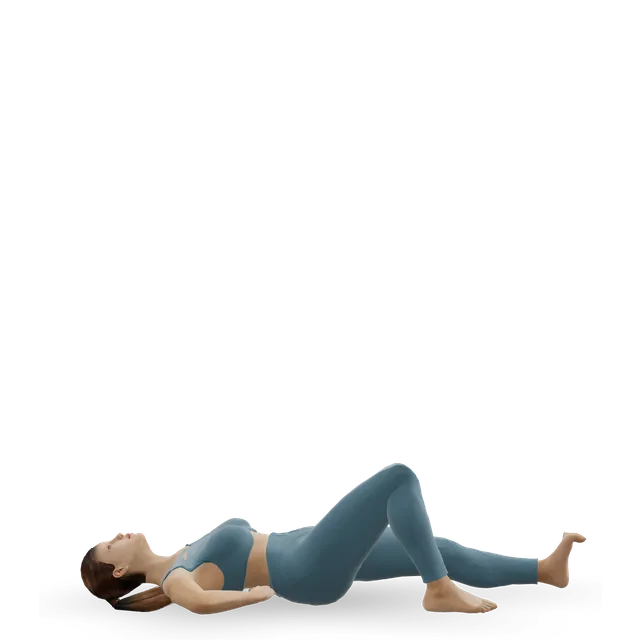
Glute bridge demonstrated on the 3D figure3D demoGlute bridgeBeginner · No equipment

2 to 3 sets of 10 · Lift only to a straight line from shoulders to knees, without arching

Easier: Pelvic tilt into bridge · Harder: Glute kickback (quadruped hip extension)

Supine hamstring stretch with a strap demonstrated on the 3D figure3D demoSupine hamstring stretch with a strapBeginner · No equipment

2 to 3 holds of 20 to 30 s each side · To the first feeling of stretch, with the pelvis still; tight hamstrings are common with this condition

Easier: Leg-up hamstring stretch · Harder: Contract-relax hamstring stretch (PNF)

Move on when: Your back stays still and comfortable through these, and you can bend backwards 10 times and forwards 10 times, standing, without pain (the trial's test). Adults: walking and daily tasks are easier, and any ache settles by the next morning.

Follow along: a timer, a cue and the next move, one step at a time.
Stage 2

Bring back bending, arching and twisting, gradually

In the trial, arching and twisting were brought back on purpose in this phase, not avoided: first back-muscle work with the spine level, then about half-range arching, then full arching. Keep the stage 1 moves going. Adults with a degenerative slip: if arching brings on leg pain, tingling or numbness, leave out the sphinx and the press-up and follow the spinal stenosis guide's bending-forward moves. Walking builds towards 30 minutes, a specialist programme's target. Doses are editorial unless marked.

Bird dog demonstrated on the 3D figure3D demoBird dogBeginner · No equipment

3 sets of 8 each side, 3 to 5 s holds · Back-muscle work with the spine level, the first step towards arching

Easier: Bird dog, one limb at a time · Harder: Bear Crawl

Cat-cow demonstrated on the 3D figure3D demoCat-cowBeginner · No equipment

8 slow waves, building to your full pain-free range · The move's own dose

Harder: Half lord of the fishes (Ardha Matsyendrasana)

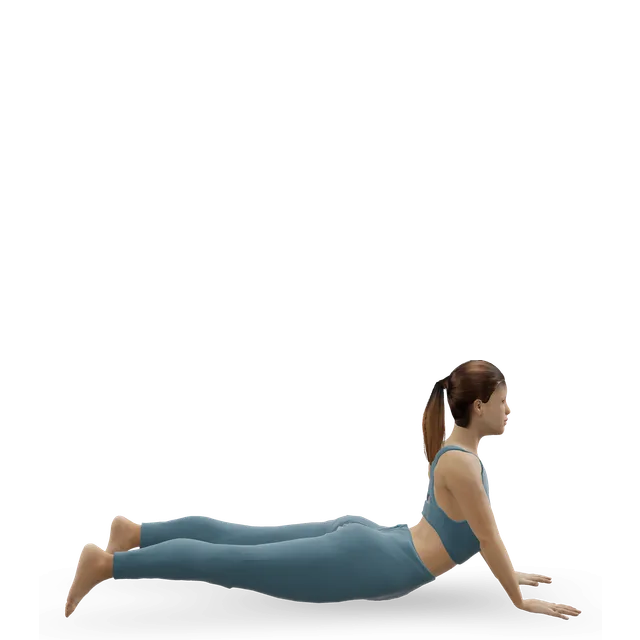
Sphinx pose (Salamba Bhujangasana) demonstrated on the 3D figure3D demoSphinx pose (Salamba Bhujangasana)Beginner · No equipment

3 holds of 20 to 30 s · Partial arching. Adults: leave it out if it brings on leg symptoms

Harder: Cobra pose (Bhujangasana)

Prone press-up (McKenzie press-up) demonstrated on the 3D figure3D demoProne press-up (McKenzie press-up)Beginner · No equipment

10 slow reps, once the sphinx is pain-free · Full arching. Skip it with spinal stenosis or if arching brings on leg symptoms

Easier: Sphinx pose (Salamba Bhujangasana)

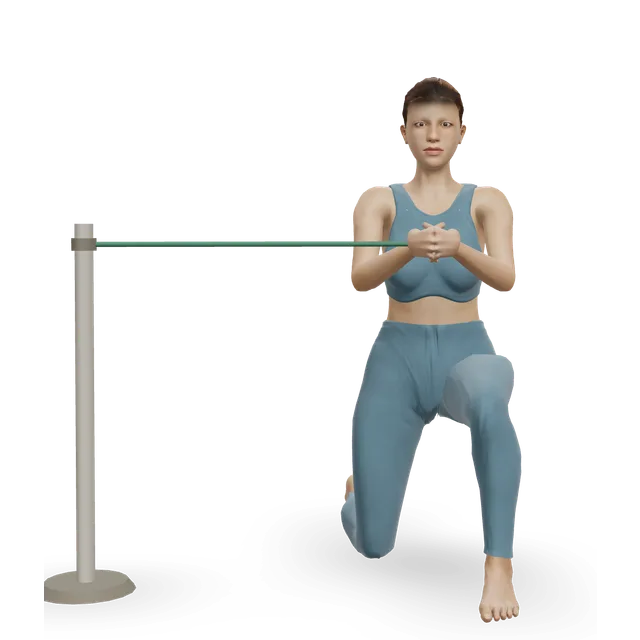
Half-kneeling Pallof press demonstrated on the 3D figure3D demoHalf-kneeling Pallof pressBeginner · A band + An anchor point

2 to 3 sets of 8 to 10 each side · Trains the trunk to control twisting; the trial brought rotation back in this phase

Harder: Pallof press

Move on when: Bending and arching to the end of your range are pain-free, you can sit through the school or working day without pain, and two sessions in a row have been pain-free (the trial's criteria).

Follow along: a timer, a cue and the next move, one step at a time.
Stage 3

Strength, running and return to sport, or walking further

Young athletes: build from jogging to full-speed running, then hops and your sport's own drills, guided by your physiotherapist. In the trial, jogging and jumping started late in the second phase once bending and arching were pain-free; here they open this stage. Keep the programme going, especially through growth spurts. Adults: leave out the jogging and the bounces, walk or cycle on most days, and keep two strength days a week. Doses are editorial.

Kettlebell deadlift demonstrated on the 3D figure3D demoKettlebell deadliftBeginner · A kettlebell

3 sets of 8 to 10, light, with the back long

Harder: Dumbbell Romanian deadlift

Treadmill jogging demonstrated on the 3D figure3D demoTreadmill joggingIntermediate · Cardio machine

Young athletes: easy jogging, building over 2 to 3 weeks to full-speed running · Adults: brisk walking instead

Easier: Treadmill walking · Harder: Sprint intervals

Ankle bounces (mini pogo) demonstrated on the 3D figure3D demoAnkle bounces (mini pogo)Beginner · No equipment

Young athletes only: 2 to 3 sets of 10 small bounces, once running is pain-free

Harder: Pogo hops

Move on when: Young athletes: your physiotherapist or doctor clears you when every direction is pain-free at the end of its range, after 2 weeks of pain-free training for your sport, with no pain or limits in daily life. In the trial, nobody returned before their 4-week doctor's review, and the median time to meet these criteria was 74 days: an average, not a promise. Adults: add load one change at a time, with walking on most days.

Follow along: a timer, a cue and the next move, one step at a time.

What to change for now

Teenagers: time out of the sport, not out of activity

An NHS children's team says almost all spondylolysis heals over a few months with less sport, that it may be necessary to avoid sport entirely until it has healed, and that a physiotherapist will give "parameters for recommended activity levels". In the 2026 trial both groups stopped their sport; the difference was that one group started exercising straight away.

So stop the sport that hurts, keep walking, swimming or cycling if they're pain-free, and start the stage 1 moves as your clinician allows. Return to sport is your clinician's decision, guided by symptoms and sometimes a scan.

Sources 5, 17, 16

Adults with leg symptoms: lean forward

If arching back brings on pain, tingling or numbness in your legs, leave the arching moves out and favour bending forward: the double knee-to-chest stretch, cycling, and walking in intervals. The spinal stenosis guide has a full bending-forward plan for leg symptoms that build with walking.

Sources 32, 2

Lifting and the gym

No trial has tested lifting in people with spondylolisthesis, so this is our suggestion. Build up gradually with the back long, as in stage 3, and leave heavy backbends and heavy barbell lifts until arching is pain-free and the lighter versions feel easy.

Keep it going, and report pain early

In one cohort of young athletes, 45% had significant back pain again within about 3 years and 34% needed more treatment, though two-thirds were playing at the same or a higher level. Being female, having cracks at more than one level and a setback during treatment predicted a worse long-term outcome. A specialist review advises returning to the basic trunk routine during growth spurts.

Sources 20, 16

Positions to swap, and why

Habit or positionWhy it mattersInstead
Carrying on with the sport that hurts (teenagers)Time out of the painful sport is the usual first step, and both groups in the trial stopped their sport.Stop the sport, not all activity: walk, or cycle on a static bike, if it's pain-free.Try: Treadmill walking
Complete rest until it has healedIn one trial in 64 young athletes, resting first meant a slower return and more relapses, with no better healing.The stage 1 moves, which keep the spine still.Try: Dead bug heel taps
The cobra, and other deep backbends such as walkovers, early onRepeated arching and twisting are thought to cause the crack. The cobra's own page says to clear it with a clinician if you have spondylolisthesis or a pars stress injury, which is why this plan leaves it out.The bird dog now. The sphinx and the press-up come in stage 2, once bending forwards and backwards is pain-free.Try: Bird dog
Never arching your back againIn the trial, arching and twisting were brought back on purpose once bending was pain-free, because sport and daily life need them.Graded arching in stage 2: the bird dog, the sphinx, then press-ups.Try: Sphinx pose (Salamba Bhujangasana)
A rigid brace by default (teenagers)In 57 children, a rigid brace gave no better healing or quality of life than a soft elastic support.Follow your clinician: most young people don't need one.
Press-ups and other arching moves that bring on leg pain, tingling or numbness (older adults)Arching tends to bring on stenosis symptoms, and bending-forward exercise did better in one comparison.Bending-forward moves and cycling, as in the spinal stenosis guide.Try: Double knee-to-chest stretch
Heavy barbell good mornings and deadlifts while it's soreOur precaution while symptoms are irritable: no trial has tested heavy lifting with a slip.Light kettlebell deadlifts and goblet squats in stage 3.Try: Kettlebell deadlift
Training through pain to get back soonerAthletes in the trial were told pushing through pain could slow their return, and a setback during treatment predicted a worse long-term outcome in one cohort.Report the pain, and step back a stage for a few days.

Routines to follow

More moves for this area

Questions people ask

What's the difference between spondylolysis and spondylolisthesis?

Spondylolysis is a crack, usually a stress fracture, in the thin bony bridge at the back of a vertebra, most often the lowest one. Spondylolisthesis is a vertebra that has slipped forward on the one below, either because both sides have cracked or, in later life, because of wear in the discs and joints.

Is spondylolisthesis the same as a slipped disc?

No. A slipped disc is the soft cushion between the vertebrae bulging out, while spondylolisthesis is a vertebra slipping forward. They can cause similar leg symptoms, and the exercise advice overlaps.

Can spondylolisthesis get worse?

Usually not by much. In people followed for 45 years, slips slowed with each decade and none passed 40%, and in older adults a degenerative slip got worse in about a third over 10 years without any link to symptoms. New leg weakness, numbness, or bladder or bowel changes need urgent help.

Can spondylolisthesis be fixed without surgery?

Often, yes. In pooled studies, 84% of young people did well without surgery. In adults, non-surgical treatment won't move the slip back, but many people find it relieves their symptoms.

What exercises should I avoid with spondylolisthesis?

Early on, avoid the activity that hurts and repeated forceful arching, such as back bends, walkovers and the cobra. Arching comes back gradually once bending forwards and backwards is pain-free. If you're older and arching brings on leg pain or tingling, favour bending-forward exercises instead.

My teenager has a stress fracture in their back. Should they stop all sport?

They usually need a break from their sport, but not from all activity. One trial in 64 young athletes found that starting physiotherapy within a week, instead of resting until pain-free, meant less pain at a month, a quicker return to sport and fewer relapses. An NHS children's team notes that some young people need to stop sport entirely until it heals, so follow their clinician.

How long until my child can play sport again?

In that trial, the median was about 2.5 months with immediate physiotherapy and nearly 4 months with rest first, and a review of 14 studies averaged 4.6 months. More than 9 in 10 young athletes get back to their sport. These are averages, not a promise for your child.

Does my child need a back brace?

Usually not. A rigid brace gave no better healing or quality of life than a soft elastic support, and the athletes in the 2026 trial wore none. Some clinicians still use one for a fresh, painful crack, so ask yours.

Is walking good for spondylolisthesis?

Yes, at a comfortable pace, building towards 30 minutes. If your legs ache or tingle as you walk and ease when you sit or lean forward, walk in intervals, as the spinal stenosis guide describes.

Will I need surgery for spondylolisthesis?

Most people with a slip don't: many slips are found by chance, and most young people do well without it. For an adult isthmic slip, fusion beat exercise at 2 years, but by 9 years only people's overall rating of their result differed. For a degenerative slip with stenosis, trials found decompression alone did about as well as adding a fusion on disability.

Can I lift weights with spondylolisthesis?

Yes, built up gradually: the last stage of the plan adds squats, deadlifts and carries with the back long. No trial has tested lifting in spondylolisthesis, so the doses are our suggestion. Heavy loaded backbends wait until arching is pain-free.

Is Pilates or yoga OK with spondylolisthesis?

Generally yes, with care: this plan brings arching back only once bending forwards and backwards is pain-free, so test backbends gently or skip them until then. See a physiotherapist first if you have leg symptoms or have been told the slip is unstable.

Other pain guides

Sources

  1. AAOS OrthoInfo · Spondylolysis and spondylolisthesis
  2. NHS · Spondylolisthesis
  3. Klein 2009 · Non-operative treatment of spondylolysis and grade I spondylolisthesis in young people (meta-analysis of observational studies, J Pediatr Orthop)
  4. AAOS OrthoInfo · Adult spondylolisthesis in the low back
  5. NHS Fife · Spondylolysis and spondylolisthesis: advice sheet for children and young people (paediatric orthopaedics, 2024)
  6. Fredrickson 1984 · The natural history of spondylolysis and spondylolisthesis (cohort of 500 children, J Bone Joint Surg Am)
  7. Beutler 2003 · Spondylolysis and spondylolisthesis: 45-year follow-up (cohort, Spine)
  8. Kalichman 2009 · Spondylolysis and spondylolisthesis in adults, and back pain (CT study of 188 adults, Spine)
  9. Jacobsen 2007 · Degenerative spondylolisthesis in the Copenhagen Osteoarthritis Study (population study of 4,151, Spine)
  10. Micheli 1995 · Back pain in young athletes: how its causes differ from adults' (case series, Arch Pediatr Adolesc Med)
  11. Selhorst 2019 · How often spondylolysis causes back pain in non-elite adolescent athletes (cohort of 1,025, Clin J Sport Med)
  12. Tawfik 2020 · Pars defects in athletes, sport by sport (systematic review, Global Spine J)
  13. Keylock 2022 · Lumbar bone stress injuries in adolescent cricket fast bowlers (cohort of 40, J Sports Sci)
  14. White 2025 · MRI screening for lumbar bone stress injuries in young fast bowlers (15-year cohort, BJSM)
  15. Calvo-Muñoz 2013 · Prevalence of low back pain in children and adolescents (meta-analysis, BMC Pediatr)
  16. Goetzinger 2020 · Spondylolysis in young athletes: an overview of non-operative management (review, J Sports Med)
  17. Selhorst 2026 · Immediate physiotherapy vs resting first for adolescent athletes with active spondylolysis (RCT of 64, BJSM)
  18. Sakai 2017 · Bony healing with conservative treatment of spondylolysis in children (cohort of 60, Spine)
  19. Virkki 2025 · Rigid brace vs elastic support for adolescent spondylolysis: 2-year outcomes (controlled study, Spine)
  20. Selhorst 2016 · Long-term outcomes after acute spondylolysis in athletes (retrospective cohort, JOSPT)
  21. Matsunaga 2000 · Degenerative spondylolisthesis managed without surgery, 10 to 18 years on (cohort of 145, J Neurosurg)
  22. Selhorst 2021 · An immediate functional progression programme for adolescent athletes with spondylolysis (case series of 12, Phys Ther Sport)
  23. Selhorst 2017 · Timing of physiotherapy referral in adolescent athletes with spondylolysis (chart review of 196, Clin J Sport Med)
  24. Virkki 2023 · Elastic lumbar support vs rigid brace for acute spondylolysis in children (controlled study of 57, Spine)
  25. Overley 2018 · Return to play in adolescent athletes with spondylolysis (meta-analysis of 11 studies, Global Spine J)
  26. Grazina 2019 · Return to sport after conservative or surgical treatment of spondylolysis (systematic review of 14 studies, Phys Ther Sport)
  27. O'Sullivan 1997 · Specific stabilising exercise for back pain with spondylolysis or spondylolisthesis (RCT of 44, Spine)
  28. Saragiotto 2016 · Motor control exercise for chronic non-specific low back pain (Cochrane review)
  29. North American Spine Society 2014 · Diagnosis and treatment of degenerative lumbar spondylolisthesis (clinical guideline, 2nd edition)
  30. North American Spine Society 2014 · Diagnosis and treatment of adult isthmic spondylolisthesis (clinical guideline)
  31. NICE NG59 · Low back pain and sciatica in over 16s: assessment and management (updated 2026)
  32. Sinaki 1989 · Bending-forward vs arching exercise programmes for spondylolisthesis (retrospective comparison of 48, Arch Phys Med Rehabil)
  33. Möller 2000 · Fusion vs an exercise programme for adult isthmic spondylolisthesis (RCT of 111, Spine)
  34. Ekman 2005 · Fusion vs exercise for adult isthmic spondylolisthesis: 9-year follow-up (RCT, Spine J)
  35. Weinstein 2007 · Surgery vs non-surgical care for degenerative spondylolisthesis: SPORT (RCT and cohort of 607, NEJM)
  36. Weinstein 2009 · Surgery vs non-surgical care for degenerative spondylolisthesis: SPORT at 4 years (J Bone Joint Surg Am)
  37. Försth 2016 · Decompression with or without fusion for lumbar spinal stenosis (RCT of 247, NEJM)
  38. Karlsson 2024 · Decompression with or without fusion for spinal stenosis: 5-year results (RCT, Bone Joint J)
  39. Austevoll 2021 · Decompression with or without fusion for degenerative spondylolisthesis: NORDSTEN-DS (RCT, NEJM)
  40. Ghogawala 2016 · Laminectomy with or without fusion for degenerative spondylolisthesis: SLIP (RCT of 66, NEJM)
  41. Chartered Society of Physiotherapy · Back pain myth busters (leaflet)
  42. NHS · Back pain
  43. NICE NG234 · Spinal metastases and metastatic spinal cord compression (2023)

Exercise education, not a diagnosis or treatment plan. It is written from the guidelines and studies listed above; review by a clinician is pending. If your pain follows an injury, is severe, is getting worse, or comes with any warning sign listed on this page, get it assessed. Health disclaimer.