Pain guide · Leg pain

Stress fractures of the foot, shin and hip: recovery and getting back to running

A stress fracture is a small crack in a bone, usually from more running, walking or jumping than the bone was ready for. It hurts in one spot you can point to, worse with every step and later at night. Most heal in about 6 to 8 weeks with less load, sometimes in a boot or on crutches.

Where it is matters. Stress fractures of the hip, the top of the midfoot, the front of the shin bone and the outer edge of the foot heal more slowly and need a specialist's plan, and groin pain in a runner needs checking the same day. This guide explains how a stress fracture differs from shin splints, why eating enough and bone health matter, and the step-by-step return to running an NHS sports medicine service uses.

When to get help first

Exercise is for pain that has been checked or is clearly mild and settling.

Get urgent medical help if

  • Same day, and stop running now: groin or front-of-hip pain in a runner, sometimes felt in the thigh or knee, that builds with running, hurts with every step or at night, or hurts when the hip is turned to the end of its range. Keep weight off the leg, using crutches if you have them, and get an urgent GP appointment or help from NHS 111 the same day: a stress fracture of the hip (femoral neck) needs urgent imaging.
  • Go to A&E: severe pain after an injury, which can mean a broken bone, or you cannot put any weight on the leg. A stress fracture can become a complete break if you keep loading it.
  • Call 999: calf or leg pain or swelling with breathlessness or chest pain. It could be a clot that has reached the lungs. Do not drive yourself to A&E.
  • Same day (GP or NHS 111): throbbing pain and swelling in one calf or thigh, with red or darker skin. It could be a blood clot (deep vein thrombosis, DVT). Watch for it while you're in a cast or boot, or moving about much less than usual.
  • Same day: in a cast or boot, pain that is getting worse, toes that are numb or burning, a cast that feels too tight, toes that are swollen, blue or white, or a bad smell from under the cast.

See a doctor or physiotherapist if

  • Pain in one spot on the shin or a foot bone that you can point to with a fingertip, worse with impact and later present at rest or at night: a possible stress fracture. Stop running and jumping until it has been checked.
  • Pain in the middle of the foot that is hard to pinpoint, on the outer edge of the midfoot, or on the front of the shin bone in a running or jumping athlete. These sites heal less well and need prompt assessment, often with a scan.
  • A stress fracture from ordinary activity, more than one stress fracture, periods that have stopped or become irregular, or worries that you're eating too little for your training: see a GP about bone health and energy intake.
  • Bone pain that comes back during the return to running and doesn't settle when you cut back, or no improvement after 6 to 8 weeks of taking load off the bone: stop running and contact your GP or physiotherapist.

Understand it

What it isStrong evidence

A stress fracture is a small crack in a bone from repeated load, such as running, marching or jumping, rather than one injury. Bone is always clearing old tissue and laying down new; when the load builds faster than the bone can repair itself, a crack can form.

Doctors see it as part of a scale: a stress reaction (bone under strain), then a stress fracture, then, if loading carries on, a complete break. Whether it happens depends both on the load and on how strong the bone is.

Sources 1, 2, 3, 4

Who gets itStrong evidence

Runners, people in running and jumping sports such as football and basketball, ballet dancers and military recruits. Common triggers are a sudden increase in training, a new sport, or walking long distances, especially on uneven ground, when you aren't used to it. Stress fractures make up 15 to 20% of runners' bone, joint and muscle injuries.

Weaker bones raise the risk: low bone density (osteoporosis), low calcium or vitamin D, a low body weight, and the years after the menopause. Flat feet or high arches may play a part. In a meta-analysis of runners, only two risk factors were strongly supported: a previous stress fracture (about 5 times the odds) and being female (about 2.3 times).

Sources 1, 2, 5, 6

How it's recognisedStrong evidence

Pain in one spot you can point to with a fingertip, which builds over days or weeks. At first it hurts with impact and eases with rest; later it aches even at rest or at night and is sharp with each step. Pressing on the exact spot hurts, and there may be some swelling.

An X-ray often looks normal early on, so a clear X-ray doesn't rule it out. An MRI (magnetic resonance imaging) scan is the usual next test. Bedside tests don't settle it either: in 50 people with shin pain, five common tests, including a tuning fork, a fulcrum test and pressing on the spot, all missed many stress fractures, and even the best picked up fewer than half. A review of 9 studies advised imaging instead, so a home test such as hopping can't rule one out.

Sources 1, 2, 5, 7, 8, 9, 10

Stress fracture or shin splints?Strong evidence

Both come from repeated impact, and bone stress sits on a scale, so shin pain that narrows to one spot or starts waking you at night needs checking. In one study, a third of athletes with shin splints had another lower-leg injury as well. The shin splints guide covers shin splints in detail.

  • Where: shin splints hurt along a longer strip on the inner edge of the shin. A stress fracture is one spot on the bone that you can point to.
  • When: shin splints hurt mostly during exercise such as running. A stress fracture builds over time, then aches at rest and at night and is sharp with every step.
  • Diagnosis: shin splints can be diagnosed reliably from your story and an examination (two clinicians agreed 96% of the time). A stress fracture often needs an X-ray or another scan.
  • What to do: for shin splints, stop the exercise that caused it, switch to gentle exercise and build back slowly; it usually settles within a few weeks. For a stress fracture, stop the activity and rest the bone, sometimes in a boot or on crutches, for about 6 to 8 weeks.

Sources 1, 4, 11, 12

Where it is mattersEmerging evidence

Doctors sort stress fractures into low-risk and high-risk sites. Across 76 studies of 2,974 bone stress injuries, more than 90% of athletes got back to sport, but complications were commonest at the hip, the navicular, the front of the shin bone and the base of the fifth metatarsal. The return times below are pooled averages from athletes, not a promise for any one person.

  • Low risk: the back-inner edge of the shin bone, the commonest site in runners, with sport after about 44 days; the fibula, the thin outer bone of the lower leg, about 56 days; and the shafts of the metatarsals, the long bones of the foot, which one NHS fracture clinic treats in a supportive boot for up to 6 weeks.
  • High risk: the navicular, on top of the midfoot, about 127 days; the base of the fifth metatarsal, on the outer edge of the foot; the front of the shin bone; and the neck of the thigh bone at the hip, about 107 days. These heal less reliably, are often kept off weight for weeks, and sometimes need surgery. For the front of the shin bone, scans are used to confirm healing before running.
  • The heel bone is the second commonest site in the foot, and its pain can be mistaken for plantar heel pain (plantar fasciitis).

Sources 2, 7, 13, 14

The hip: why groin pain in a runner is urgentEmerging evidence

A stress fracture of the femoral neck, the narrow top of the thigh bone at the hip, makes up about 3% of sport-related stress fractures, mostly in distance runners. It usually causes a gradual, vague ache in the groin or front of the hip, sometimes felt in the thigh, buttock or knee, worse with running and walking and easing with rest. Turning the hip to the end of its range often hurts.

A review of these fractures in sport advises stopping weight-bearing as soon as one is suspected, with an urgent X-ray and often an MRI. Cracks on the upper (tension) side of the neck, or right across it, are usually fixed with surgery because they can shift, and a displaced fracture can cut off the blood supply to the top of the thigh bone. Undisplaced cracks caught early have had return rates as high as 100% in some series. Across all cases, though, about half of athletes don't get back to their previous level, and up to 60% after a displaced fracture.

In 123 cases pooled in another review, 71% were back to full activity at a year or more, and a sizeable share happened in people who weren't very active but had problems with their bone metabolism.

Sources 8, 15

Fuelling, REDs and bone densityEmerging evidence

Eating too little for the training you do (low energy availability) harms bone. The International Olympic Committee (IOC) calls the wider problem relative energy deficiency in sport (REDs, sometimes written RED-S), and it affects men as well as women. In 213 elite athletes assessed with the IOC's tool, those in the more severe categories had more past bone stress injuries and lower bone density, and the orange (higher-risk) category had about 7.7 times the odds of a new one over the next 6 to 24 months.

In 259 active girls and women followed over time, bone stress injuries became commoner as risk factors stacked up: 15 to 21% of those with one risk factor (12 or more hours a week of exercise, a body mass index under 21, or low bone density) had one, and 30 to 46% of those with several. The Endocrine Society suggests a bone density (DXA) scan for any adolescent or woman whose periods have stopped for 6 months or more, and sooner with severe under-eating or fragile bones.

Sources 16, 17, 18, 19

How long it takesStrong evidence

Most heal in about 6 to 8 weeks with less load; one NHS trust says about 6. Going back too early or building up too fast is how they come back, and bone stress injuries tend to recur, so the causes matter as much as the crack.

Sources 1, 4, 5

What helps, and how strong the evidence is

Less load, then a gradual return: the core treatmentStrong evidence

Health services agree: stop the activity that caused it and rest the bone, reducing or avoiding weight on the foot depending on how bad it is, sometimes in a boot, brace or cast with crutches. One NHS fracture clinic uses a supportive boot for up to 6 weeks for metatarsal stress fractures, taking weight as pain allows. Swimming and deep-water running can carry on.

Expert guidance for low-risk shin and foot sites adds a short spell of partial or no weight-bearing if needed to settle symptoms, keeping fit with cross-training, and at every stage a load that causes no symptoms during, after or the day after. It suggests painkillers or anti-inflammatories only briefly, for under a week, and only for pain at rest or at night.

Sources 1, 5, 14, 20

The return to running: agreed in principle, not tested in trialsMixed evidence

A 2024 review of 50 sources on returning to running after a shin bone stress injury found 81% were reviews or commentaries and only two were trials, so its advice rests on expert opinion. The common ground: no tenderness on the bone, pain-free walking, strength and hop checks, and scans showing healing for high-risk sites. Then walk-run intervals, on alternate days at first, adding distance before speed, guided by symptoms.

An NHS sport and exercise medicine service starts its 6-week walk-jog programme once you can walk briskly for 30 minutes without pain, and expert guidance starts once daily activities have been pain-free for 5 days in a row. The popular 10% a week rule has unclear origins and doesn't suit every runner.

Sources 7, 20, 21

High-risk sites: a specialist decisionEmerging evidence

For the navicular, keeping weight off in a cast (96% healed in pooled studies) and surgery (82%) both worked, while walking on it did worse; another review found surgery got athletes back sooner (16 weeks against 22). For the base of the fifth metatarsal, surgery gave the best results in low-quality studies, and non-surgical care means at least 6 weeks without weight on it. For the front of the shin bone, non-surgical care had high complication rates in two small studies. For the hip, see the warning signs at the top of this page.

These studies are small and mostly low quality. They are why a high-risk site needs a specialist's plan rather than the one on this page.

Sources 2, 8, 22, 23

Air-filled braces: possibly quicker, but uncertainMixed evidence

For shin bone stress fractures, air-filled (pneumatic) braces shortened the time to full activity by about 33 days in 3 small trials, but the trials disagreed a great deal. If your clinician gives you a brace or boot, wear it as advised.

Source 24

Preventing the next one: orthoses yes, cushioned insoles noMixed evidence

Across trials, foot orthoses (shaped insoles) cut stress fractures by about 40%, while shock-absorbing insoles made no clear difference. An older Cochrane review of military trials thought shock-absorbing inserts probably helped, but the one trial showing a clear benefit lacked details of its design. Stretching the legs during warm-ups didn't prevent stress injuries in two trials.

Calcium and vitamin D cut stress fractures by about a fifth (5.3% against 6.6%) in 5,201 female navy recruits during 8 weeks of basic training. That's one trial in one group, and it's no substitute for a gradual build-up and eating enough. Ask a GP or pharmacist before taking supplements.

Sources 24, 25, 26

Strength and running form: plausible, not provenMixed evidence

Expert commentary suggests lowering the load on the bone through how training is planned, softer landings or a quicker step rate, and stronger muscles around it: the calf for the shin, the small foot muscles for the metatarsals. Health New Zealand adds that strong muscles help support bone. This rests on expert commentary rather than trials of stress fracture recovery.

Sources 1, 4

How much pain is OK while you exercise?

The bone stays pain-free: during, after and the next dayEmerging evidence

Expert guidance on bone stress injuries says the right load causes no symptoms during, after or the day after loading. Health New Zealand says stop exercising as soon as you feel pain, and never play through it; an NHS trust says if the pain comes back, do less and let it settle.

So the rule here is stricter than for muscles or tendons: no pain at the fracture during an exercise, afterwards or the next morning. Ordinary muscle effort in the hips, trunk or the other leg is fine; an ache in the bone is not. If the bone aches the next day, go back a step for a few days. On the running programme, the NHS service moves you down a level if you get pain.

This rule comes from expert agreement and health-service advice rather than trials.

Sources 1, 5, 20, 21

The exercise plan: 4 stages

Start at the first stage. Each move opens a full guide with a 3D demo.

Stage 1

Protect the bone, keep fit (about weeks 0 to 6, as your clinician advises)

Stop running and jumping. Walk only as far as is pain-free at the bone, in the boot, protective shoe or on crutches if you were given them, and keep fit with exercise that doesn't load it; swimming and deep-water running count too. High-risk sites follow the specialist's plan, which often means weeks without weight on the leg. Doses are editorial starting points.

Stationary cycling demonstrated on the 3D figure3D demoStationary cyclingBeginner · Cardio machine

20 to 30 min, easy to moderate, 3 to 5 times a week · Only if it's pain-free at the bone; with a foot fracture in a boot, only if your team agrees

Harder: Air bike intervals

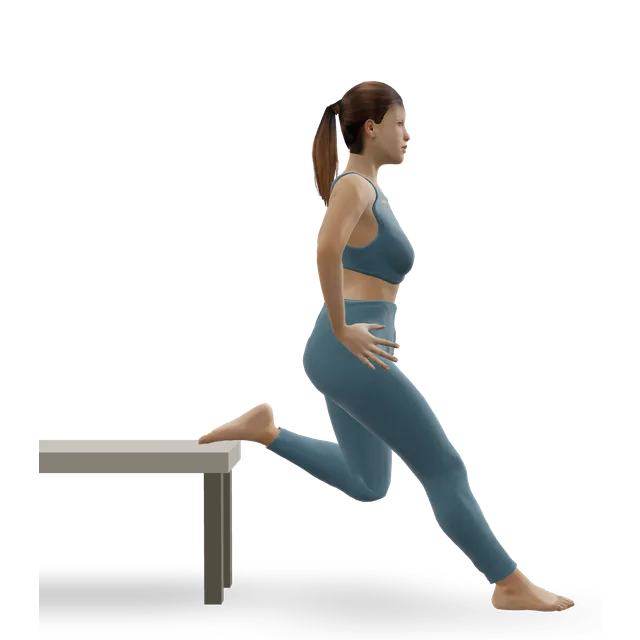
Seated bent-knee calf raise (soleus raise) demonstrated on the 3D figure3D demoSeated bent-knee calf raise (soleus raise)Beginner · A bench or box

2 to 3 sets of 15 · Only if pain-free at the fracture; with a metatarsal fracture, wait until walking is pain-free

Harder: Slow calf raise

Move on when: Pressing on the bone no longer hurts, everyday activities have been pain-free for 5 days in a row, and your clinician has cleared you to walk without the boot or crutches.

Follow along: a timer, a cue and the next move, one step at a time.
Stage 2

Rebuild walking and strength (about 2 to 4 weeks)

Build to 30 minutes of brisk walking without pain, the NHS service's starting point for running, and strengthen 2 to 3 times a week: the calf for a shin fracture, the foot muscles for a metatarsal fracture. Doses are editorial; the 30-minute walk is the NHS service's.

Treadmill walking demonstrated on the 3D figure3D demoTreadmill walkingBeginner · Cardio machine

Build from 10 to 30 min of brisk walking, adding about 5 min every few days · Walking outdoors counts; only add time while the bone stays pain-free

Harder: Treadmill jogging

Single-leg calf raise from a step demonstrated on the 3D figure3D demoSingle-leg calf raise from a stepIntermediate · A step + A wall

Build toward 20 slow reps each leg · On the floor first

Easier: Slow calf raise · Harder: Single-leg pogo hops

Move on when: The return-to-run checks: no tenderness when you press the bone, 30 minutes of brisk walking without pain, 20 slow single-leg calf raises each side without pain, and 30 seconds of easy ankle bounces without pain. For a high-risk site, your specialist also confirms healing, often on a scan.

Follow along: a timer, a cue and the next move, one step at a time.
Stage 3

Hop, then walk-jog (about 6 weeks)

Bring impact back in small steps, every other day, distance before speed. The running doses are the NHS Return to Running Programme's; the hopping doses are editorial. The bone stays pain-free on the day and the next morning.

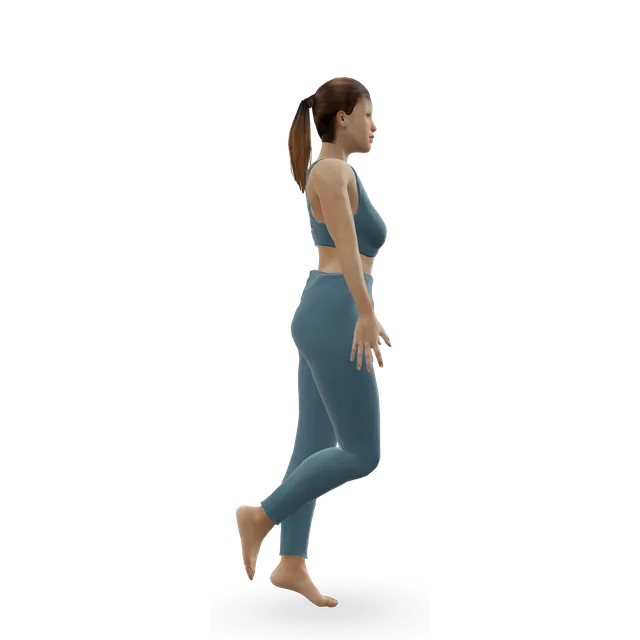
Ankle bounces (mini pogo) demonstrated on the 3D figure3D demoAnkle bounces (mini pogo)Beginner · No equipment

2 to 3 sets of 20, every other day · Only once the bone is pain-free

Harder: Pogo hops

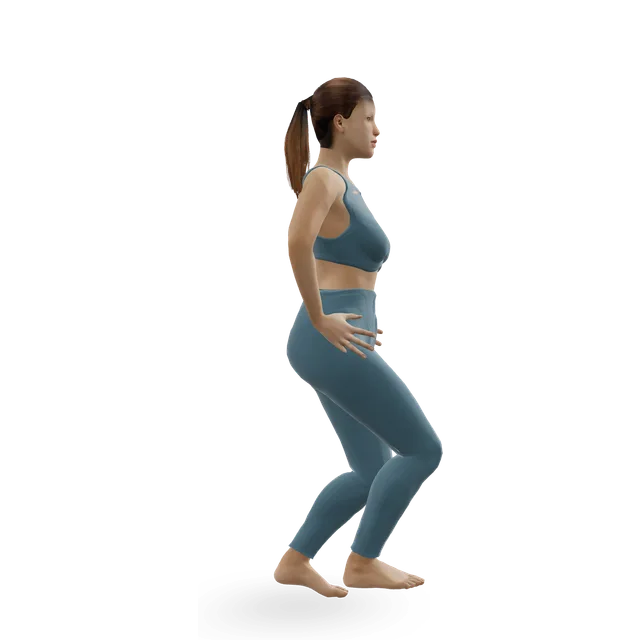
Pogo hops demonstrated on the 3D figure3D demoPogo hopsIntermediate · No equipment

3 sets of 20 · Once ankle bounces are easy

Easier: Ankle bounces (mini pogo) · Harder: Single-leg pogo hops

Single-leg hop and stick demonstrated on the 3D figure3D demoSingle-leg hop and stickIntermediate · No equipment

3 sets of 5 each leg · A control drill, not a test for a fracture

Easier: Standing broad jump with stuck landing · Harder: Alternate-leg bounding

Treadmill jogging demonstrated on the 3D figure3D demoTreadmill joggingIntermediate · Cardio machine

Every other day for 30 min: week 1, jog 1 min and walk 1 min; week 2, jog 2 and walk 1; week 3, jog 4 and walk 1; week 4, jog 9 and walk 1; week 5, jog 15 and walk 1; week 6, jog 30 min · Move up a level after a week without pain, and down a level if you get pain. Flat ground outdoors counts

Easier: Treadmill walking · Harder: Sprint intervals

Move on when: You've done a week of 30-minute jogs, every other day, with no bone pain on the day or the next morning.

Follow along: a timer, a cue and the next move, one step at a time.
Stage 4

Back to training, and keep the bone strong (from about week 7)

Add no more than about 10% a week (30 minutes one week, 33 the next), and don't increase both distance and time in the same week: the NHS service's rules. Bring in speed and hills last. Keep strength work twice a week, and check you're eating enough for your training. Doses are editorial.

Move on when: Keep going. If bone pain comes back and doesn't settle when you cut back, stop running and get it checked.

Follow along: a timer, a cue and the next move, one step at a time.

What to change for now

Return-to-run checklist

Tick these off before your first walk-jog session. The checks follow return-to-run guidance; the calf raise and ankle bounce numbers are this site's targets.

  • Pressing on the bone is no longer tender.
  • Everyday activities have been pain-free for 5 days in a row.
  • 30 minutes of brisk walking is pain-free.
  • 20 slow single-leg calf raises on each leg are pain-free.
  • 30 seconds of easy ankle bounces are pain-free.
  • For a high-risk site, your specialist has confirmed healing.

Sources 7, 20, 21

Keep fit while it heals

Swimming, deep-water running (aqua jogging) and cycling keep your fitness while the bone heals, as long as they're pain-free at the fracture. Strength work for the hips, trunk and the other leg can carry on. Our swimming guide covers getting started in the pool.

Sources 1, 20

Fuelling and bone health

If the fracture came from ordinary activity, you've had more than one, your periods have stopped or become irregular, or you're worried you aren't eating enough, see a GP about bone health and energy intake. Low energy availability is treated by eating more, training less, or both. Our guides to exercise for women and for osteoporosis cover periods, fuelling and bone density.

Sources 5, 16, 19

Positions to swap, and why

Habit or positionWhy it mattersInstead
Running or jumping through bone painWhile you can feel pain, the bone is still fragile, and a stress fracture can become a complete break.Pain-free cross-training: cycling, swimming or deep-water running.
Going straight back to your old mileageStarting too early or building too fast is how stress fractures come back.The NHS walk-jog programme, every other day.
Adding a lot of running at onceAn NHS running service advises adding no more than about 10% a week, and not increasing distance and time in the same week.Small steps: 30 minutes one week, 33 the next.
Testing it at home by hoppingBedside tests miss many stress fractures, and hopping loads the injured bone.Get it checked. Hop only once the bone is pain-free.
Speed sessions and hills earlyReturn-to-run guidance builds distance before speed.Easy, flat running first.
Training hard on too little foodLow energy availability harms bone, in men and in women.Eat enough for your training, and see a GP if your periods stop.
Relying on cushioned insoles to prevent the next oneShock-absorbing insoles didn't prevent stress fractures in trials; foot orthoses did.Ask a podiatrist or physiotherapist whether orthoses suit you.

Routines to follow

More moves for this area

Questions people ask

How do I know if I have a stress fracture?

The pain is in one spot you can point to with a fingertip. It builds over days or weeks, is worse with impact, and later aches at rest or at night and is sharp with each step. Pressing on the exact spot hurts. Stop the activity and see a GP or physiotherapist, as it may need a scan.

Is it a stress fracture or shin splints?

Shin splints hurt along a longer strip of the inner shin, mostly during exercise, and are diagnosed from your story and an examination. A stress fracture is one spot, aches at night, hurts with every step, and often needs an X-ray or other scan. Our shin splints guide covers shin splints.

Can I walk on a stress fracture?

Often, at low-risk sites, as far as it stays pain-free, sometimes in a supportive boot: one NHS fracture clinic advises taking weight as pain allows in a boot for up to 6 weeks for metatarsal stress fractures. Some need less or no weight, with a cast, boot or crutches. High-risk sites, such as the navicular, the base of the fifth metatarsal and the hip, are often kept off weight for weeks.

How long does a stress fracture take to heal?

Usually about 6 to 8 weeks. Getting back to sport takes longer at some sites: in pooled studies of athletes, it took about 44 days for the inner shin, 107 days for the hip and 127 for the navicular. Your clinician will guide you for your fracture.

Will a stress fracture show on an X-ray?

Not always, especially early on. If the pain fits and the X-ray is clear, an MRI scan may be needed. Until then, treat one-spot bone pain as a possible stress fracture.

When can I start running again?

When pressing on the bone no longer hurts, everyday activities have been pain-free for 5 days in a row, and you can walk briskly for 30 minutes without pain. Then follow a walk-jog programme every other day, adding distance before speed. For a high-risk site, wait for your specialist's go-ahead.

Is groin pain from running serious?

It can be. A stress fracture of the hip (femoral neck) causes groin or front-of-hip pain that builds with running and hurts with weight-bearing. Stop running, keep weight off the leg and get checked the same day, because a crack on the upper side of the neck can shift and usually needs surgery.

Why did I get a stress fracture?

Usually from doing more running, walking or jumping than your bones were used to, too quickly, sometimes with worn shoes or hard surfaces. A previous stress fracture and being female raise the risk, as do low bone density, low vitamin D or calcium, a low body weight and eating too little for your training.

Do I need a bone density scan?

Ask your GP if the fracture came from ordinary activity, you've had more than one, or your periods have stopped. Guidelines suggest a DXA scan after 6 or more months without periods, or sooner with signs of fragile bones.

Can insoles or supplements stop another one?

Foot orthoses cut stress fractures by about 40% in trials, but cushioned insoles didn't. Calcium and vitamin D cut them by about a fifth in one large trial in female navy recruits. Ask a GP or pharmacist before starting supplements, and keep the gradual build-up whatever you choose.

Can I keep fit while a stress fracture heals?

Yes, with exercise that doesn't hurt the bone: swimming, deep-water running and, if it's pain-free, cycling. Strength work for the hips, trunk and other leg can carry on. Leave running and jumping out until you meet the return-to-run checks.

Other pain guides

Sources

  1. Health New Zealand Te Whatu Ora · Stress fractures of the foot and shin bone
  2. AAOS OrthoInfo · Stress fractures of the foot and ankle
  3. Hoenig 2022 · Bone stress injuries (review, Nat Rev Dis Primers)
  4. Warden 2014 · Managing and preventing bone stress injuries in long-distance runners (review, JOSPT)
  5. Gloucestershire Hospitals NHS Foundation Trust · Caring for a stress fracture (emergency department leaflet)
  6. Wright 2015 · Risk factors for stress fractures in runners (meta-analysis, BJSM)
  7. George 2024 · Returning to running after a tibial bone stress injury (scoping review, Sports Med)
  8. Robertson 2017 · Femoral neck stress fractures in sport (current concepts review, Sports Med Int Open)
  9. Rosenthal 2022 · Clinical tests for tibial stress fracture (prospective study of 50 people, Orthop J Sports Med)
  10. Schneiders 2012 · How well clinical tests diagnose stress fractures (meta-analysis, JOSPT)
  11. NHS · Shin splints
  12. Winters 2018 · Medial tibial stress syndrome can be diagnosed reliably from history and examination (BJSM)
  13. Hoenig 2023 · Return to sport after low-risk and high-risk bone stress injuries (meta-analysis of 76 studies, BJSM)
  14. Cambridge University Hospitals NHS · Metatarsal fractures and stress fractures (fracture clinic leaflet, 2024)
  15. Yang 2023 · Return to activity after a femoral neck stress fracture, and the effect of bone metabolism problems (systematic review, J Orthop)
  16. Mountjoy 2023 · IOC consensus statement on relative energy deficiency in sport, REDs (BJSM)
  17. Heikura 2024 · The IOC REDs clinical assessment tool in over 200 elite athletes (cohort, BJSM)
  18. Barrack 2014 · Female athlete triad risk factors and bone stress injuries (prospective study of 259 girls and women, AJSM)
  19. Gordon 2017 · Functional hypothalamic amenorrhoea: Endocrine Society clinical practice guideline (J Clin Endocrinol Metab)
  20. Warden 2021 · The right load for low-risk shin and foot bone stress injuries in runners (clinical commentary, JOSPT)
  21. Oxford University Hospitals NHS · Return to Running Programme (OxSport patient leaflet, 2024)
  22. Mallee 2015 · Surgery vs conservative treatment for high-risk stress fractures of the lower leg (systematic review, BJSM)
  23. Torg 2010 · Navicular stress fractures: conservative vs surgical treatment (meta-analysis, AJSM)
  24. Rome 2005 · Preventing and treating stress fractures of the legs in young adults (Cochrane review)
  25. Bonanno 2017 · Foot orthoses and shock-absorbing insoles for preventing injury (meta-analysis, BJSM)
  26. Lappe 2008 · Calcium and vitamin D and stress fractures in female navy recruits (RCT of 5,201, J Bone Miner Res)
  27. NHS · Deep vein thrombosis (DVT)
  28. NHS · Broken ankle

Exercise education, not a diagnosis or treatment plan. It is written from the guidelines and studies listed above; review by a clinician is pending. If your pain follows an injury, is severe, is getting worse, or comes with any warning sign listed on this page, get it assessed. Health disclaimer.