Bear crawl
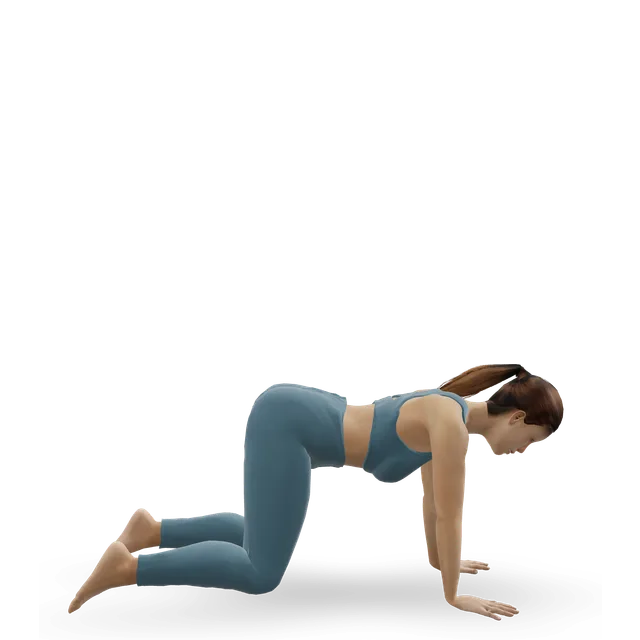
On hands and toes with your knees hovering just off the floor, you crawl by moving the opposite hand and foot together, back flat and hips level. The knees stay bent and low, unlike the spider crawl's wide knee drive. In an EMG study of eight crawling moves from a commercial programme, pooled and not named, so possibly without the bear crawl, the deltoids, lats and biceps worked harder than in a push-up. In a trial, 8 weeks of crawling classes improved movement screen scores and hip and shoulder range, but not balance or push-up endurance.
Movement guide
Bear crawl
Loading the 3D figure…
Make it easier or harder
Choose a version that fits your control and comfort.
Easier option
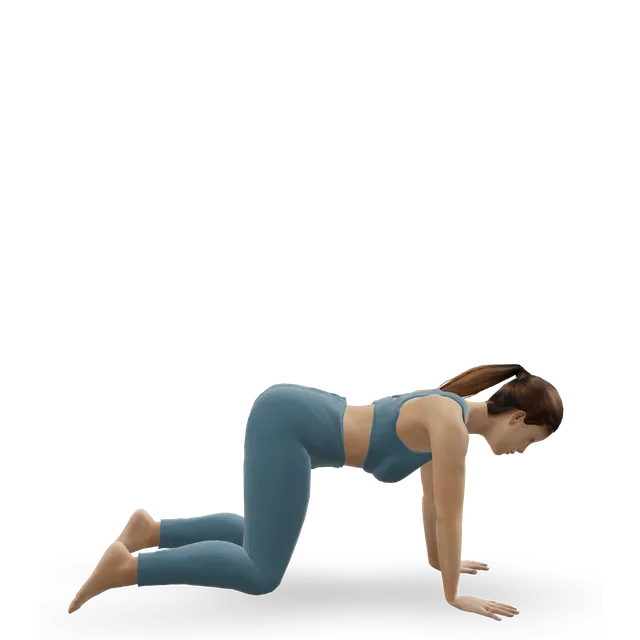 3D demoKnee hover (Pilates tabletop hover)Beginner · No equipment
Suggested next step, beginner grade.
Harder option
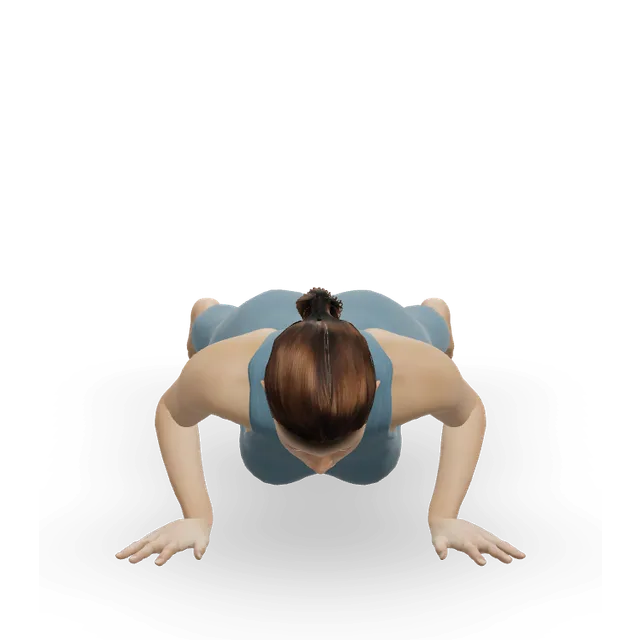 3D demoSpider crawl (low push-up knee drive)Advanced · No equipment
Similar move, advanced grade.
Source-researched guide.
How to move
- Start on all fours with your hands under your shoulders and knees under your hips, then tuck your toes and lift your knees a few centimetres off the floor.
- Keep your back flat and your hips level with your shoulders.
- Step your right hand and left foot forward a short way together, then your left hand and right foot.
- Crawl forwards for the set distance, then backwards, and lower your knees to rest.
Form cues
- Small steps keep the hips quiet.
- Imagine a glass of water balanced on your lower back.
- Avoid: letting your hips rise or sway side to side.
Practice and cautions
4 crawls of 8 to 10 metres, forwards and back, resting as needed (our editorial starting point).
With wrist pain, carpal tunnel or a painful shoulder, try it on fists or with the hands raised, or leave it out. This is movement education, not an assessment or treatment prescription. Stop for sharp or increasing pain, dizziness, numbness or tingling; seek individual guidance for symptoms, injury or restrictions.
Sources and review status
Sources support the educational description; they do not establish that this exercise is suitable for you.
- ACE · Bear crawl (intermediate; the knees bent off the floor, opposite hand and foot together, hips and shoulders level) ↗
- Buxton 2024 · Eight quadrupedal moves from a commercial programme, pooled and not named, so possibly without the bear crawl: the deltoid, lats and biceps worked harder than in a push-up, the six-pack about as hard (EMG of 20 adults, J Bodyw Mov Ther) ↗
- Buxton 2022 · Eight weeks of quadrupedal movement classes improved movement screen scores and hip and shoulder range, but not balance, grip or push-up endurance (RCT of 42 young adults, JSCR) ↗
No variation is labeled clinically validated.
What it works
Muscles
Main: Shoulders, Abs. Also: Quads, Triceps, Chest.
Anatomy: Deltoid, Rotator cuff, Supraspinatus, Infraspinatus, Subscapularis, Teres minor.
Equipment
None: body weight and floor space.
Level
Intermediate. See the easier and harder options above.
Workouts that use it
- HIIT workout at home · 20 min
- Animal moves for kids: a 15-minute active play workout · 15 min
- Sensory movement break: wake up, focus, calm down · 12 min
- Martial arts warm-up with breakfalls: run, fall, move, balance, strengthen · 15 min
- Obstacle race strength workout: pull-ups, hangs, carries, crawls and burpees · 50 min
- Obstacle race conditioning workout: hill repeats, carries, crawls and landings · 50 min
- Wrestling conditioning workout: sprint intervals, sprawls and mat drills · 40 min
- Parkour strength and landing workout: landings, precision jumps, rolls, climb-up strength, legs and calves · 50 min
Show all 12 workoutsShow fewer workouts
Pain guides that use it
Part of a staged plan, with when to get help first.
- After a shoulder dislocation, and shoulders that slip: rehab exercises and the real risk of it happening again
- Wrist pain in push-ups and yoga: what to change now and how to build back
- AC joint injury and pain: a separated shoulder, AC joint arthritis and weightlifter's shoulder
- Winged scapula: why a shoulder blade sticks out, the nerve causes to rule out, and exercises that help
- Gymnast's wrist: growth plate pain in young gymnasts, how long to rest, and the way back to handstands
- Irritable hip (transient synovitis): a young child's sudden limp, and telling it from infection
- Child's broken elbow (supracondylar fracture): emergency signs and getting back to play
- Köhler's disease (Kohler's disease): a young child's limp from the navicular, and how it settles
Show all 27 pain guidesShow fewer pain guides
- In-toeing (pigeon toes) in children: what's normal at each age, and when to see a GP
- Toe walking in children: when it's normal, the signs to get checked, and what helps
- Exercises after shoulder stabilisation surgery: recovery after a Bankart repair or Latarjet
- Hip pain in children: irritable hip, infection, Perthes, a slipped growth plate and when to get help
- Back pain in children and teenagers: muscles, sport, school bags, warning signs and staying active
- Neck pain in children and teens: stiff necks, screens, a baby's tilted head, and when it's urgent
- Shoulder pain in children and teens: falls, sport, a shoulder that slips, and the signs to check
- Wrist pain in children: falls and buckle fractures, sprains, the gymnast's wrist, and when to worry
- Elbow pain in children and teens: a pulled elbow, falls, the throwing elbow, and when it's urgent
- Wrist pain when bending it back: push-ups, yoga, a fall, hidden ganglions and the scaphoid
- Shoulder pain when doing push-ups: the rotator cuff, the AC joint, hand position and what helps
- Elbow pain when doing push-ups: the back, inside and outside of the elbow, the nerve and what helps
- Lower back pain when doing planks: the sag, the hip flexors, holding too long and what helps
- Wrist pain when doing planks: the wrist bent back, forearm planks, fists, handles and swaps
- Shoulder pain when doing planks: the front and top of the shoulder, the shoulder blade, side planks
- Hip pain when doing mountain climbers: the hip flexors, a pinch at the front, pace and the plank
- Back pain when doing push-ups: the lower back sagging, between the shoulder blades, and swaps
- Back pain after rugby: scrums, rucks and tackles, young players' stress fractures and what helps
- Shoulder pain from rugby: tackles, dislocations, the AC joint, the rotator cuff, stingers and help
Guides that use it
- Pilates for kids guide
- Pilates for ADHD guide
- Yoga for kids guide
- Yoga for height guide
- Yoga for autism guide
- Exercise for children and teenagers
- Exercise for ADHD
- Exercise for autistic children and adults
Show all 24 guidesShow fewer guides
- Exercise with cystic fibrosis
- HIIT guide
- Mountain climbers guide
- Bird dogs guide
- Bear crawl guide
- Plank guide
- Renegade rows guide
- Crab walks guide
- Core strength guide
- Strengthen your wrists guide
- Coordination guide
- Cartwheel guide
- Martial arts guide
- Obstacle course racing guide
- Wrestling guide
- Parkour and freerunning guide
Similar moves
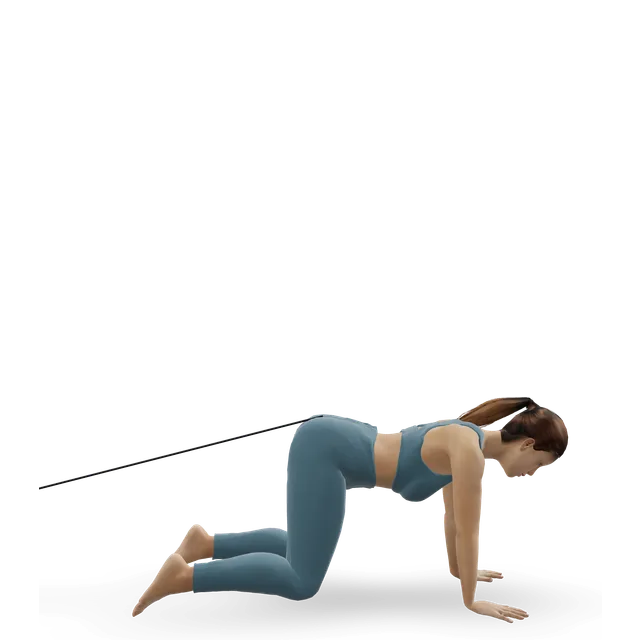
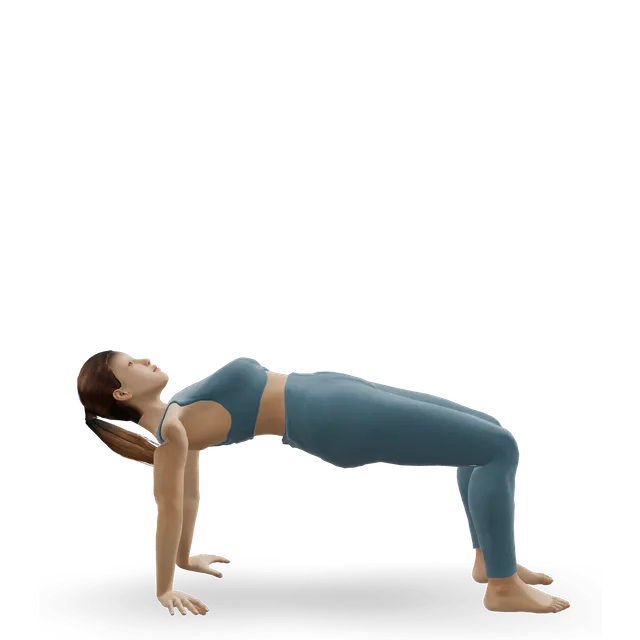
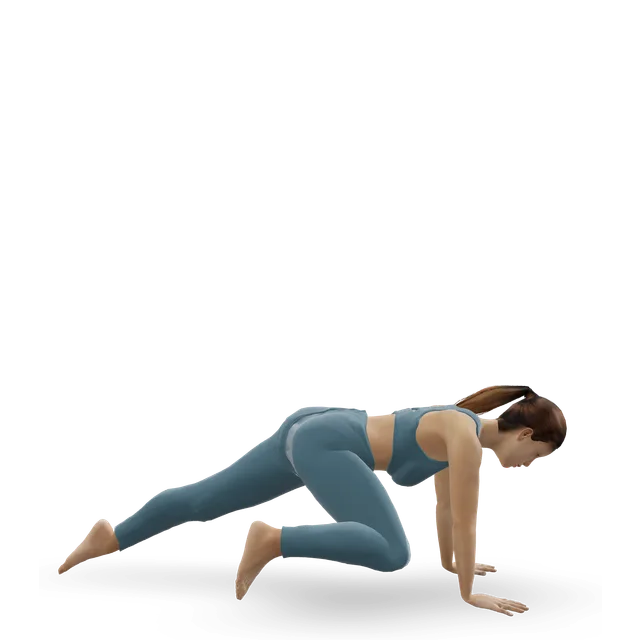
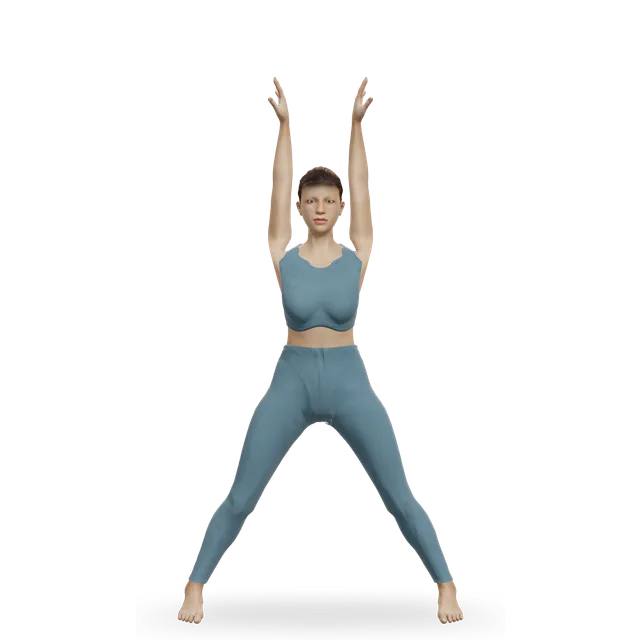
Browse more
Questions people ask
What muscles does the Bear crawl work?
Mainly the shoulders and abs, with help from the quads, triceps and chest.
What equipment do I need for the Bear crawl?
No equipment: your body weight and a little floor space.
Is the Bear crawl good for beginners?
It is graded intermediate. If it is too hard right now, start with the Knee hover (Pilates tabletop hover).
What is an easier alternative to the Bear crawl?
Try the Knee hover (Pilates tabletop hover) or the Bird dog. It is the suggested step down from this move.
How do I make the Bear crawl harder?
Progress to the Spider crawl (low push-up knee drive). Follow that guide’s technique and any stated timing.