The subscapularis is the largest and strongest of the four rotator cuff muscles. It fills the front surface of the shoulder blade, between the blade and your ribs, and its tendon crosses the front of the shoulder joint to the small bump at the front of the upper arm bone.
It is the only cuff muscle that turns the arm inward, and it stops the ball of the joint slipping forward. Tears are less common than in the other cuff tendons and easy to miss. Surgeons detach and repair it during an anatomic shoulder replacement, so it sets the precautions for the first weeks of recovery.
Shaded: the shoulders area. It marks the region, not the exact outline of the subscapularis.
Starts at (origin)
The front surface of the shoulder blade, the side against the ribs.Subscapular fossa of the scapula
Attaches to (insertion)
The small bump on the front of the upper arm bone, with some fibres reaching the outer bump and the groove between them.Lesser tubercle of the humerus (some fibres to the greater tubercle and bicipital groove)
What it does
Turns the arm inward, the only rotator cuff muscle that does: tucking in a shirt at the back.Internal (medial) rotation of the shoulder
Stops the ball of the arm bone sliding forward out of the socket, especially with the arm raised.Anterior stabilisation of the humeral head
In some positions, helps bring the arm in to the side and back.Assists adduction and extension
Nerve supply
Upper and lower subscapular nerves (C5 to C7), from the posterior cord of the brachial plexus. The upper nerve supplies the upper half of the muscle and the lower nerve the lower half.
The upper and lower parts have separate nerve branches and switch on separately. In an EMG (electromyography, a recording of muscle activity) study of seven exercises, the upper part outworked the lower in all but internal rotation with the elbow at the side, and the push-up plus and a diagonal arm pattern worked both parts hardest.
It is not only a rotator. By one estimate it supplies about 30% of the turning force for lifting the arm out to the side, while also keeping the ball centred.
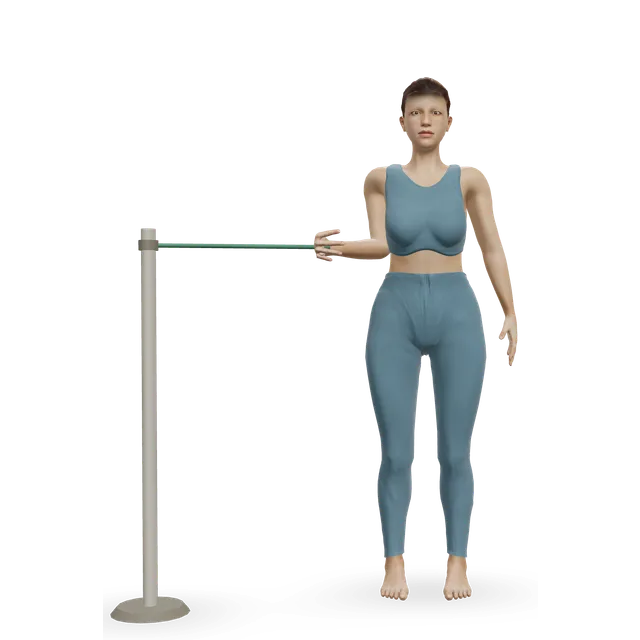
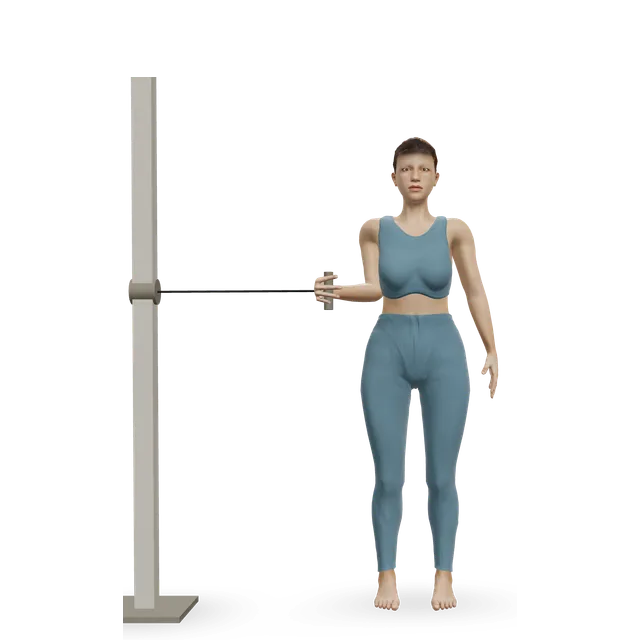
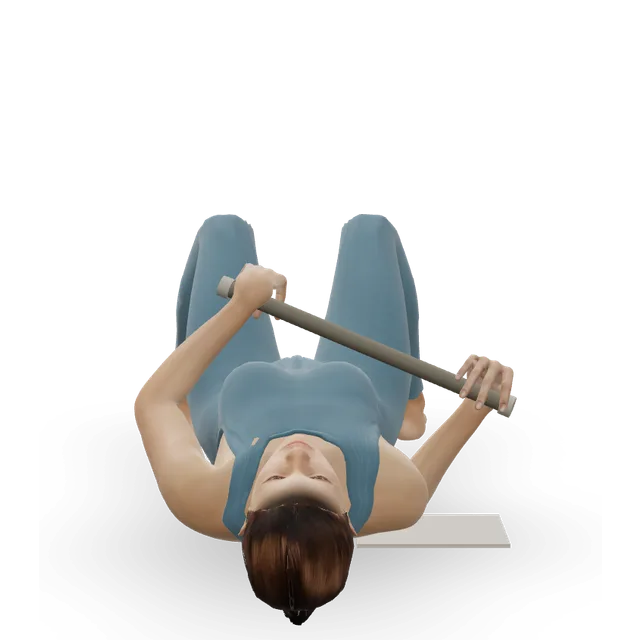
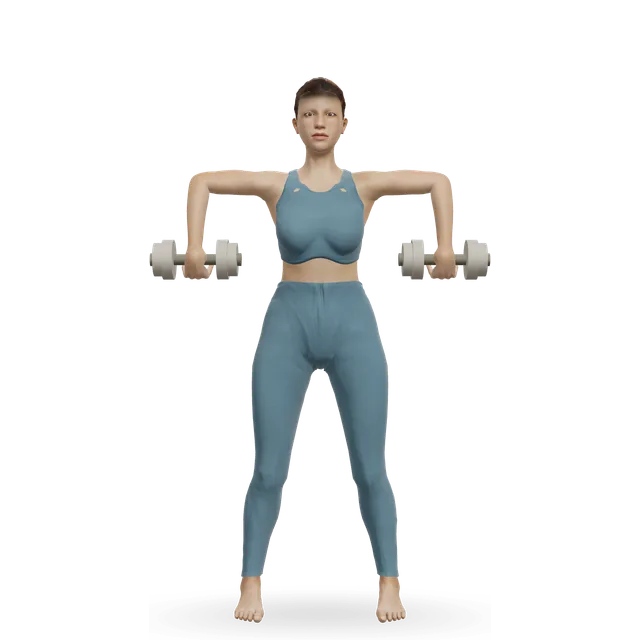
The order rests on one EMG study, which shows activity, not growth. Internal rotation with the elbow at the side is the movement in which the lower part works relatively hardest, and the push-up plus (our scapular push-up is its 'plus' part) and diagonal patterns worked both parts more than plain internal rotation. The full push-up is chosen from its action. After a shoulder replacement or a subscapularis repair, resisted turning-in waits for your team's go-ahead.
Turning the arm outward stretches it, though no study has measured a subscapularis stretch. After an anatomic shoulder replacement, turning outward is limited for the first 6 weeks to protect the repaired tendon.
Tears are less common than in the other cuff tendons and often missed. Sudden tears follow the arm being forced outward or back while held at the side, mostly in men; others come with a dislocation, a fall, earlier surgery at the front of the shoulder, or a wider cuff tear. They cause pain at the front of the shoulder, weak inward turning and more passive outward turning than the other arm, and often come with biceps tendon problems.
In 68 people having keyhole shoulder surgery, 29.4% had a subscapularis tear, and 40% of those tears had been missed by every examination test.
The lift-off, belly-press and bear-hug testsStrong evidence
In the lift-off test you try to lift the back of your hand off your lower back; in the belly-press you press your hand into your stomach with the elbow kept forward; in the bear-hug you hold your palm on the opposite shoulder while the examiner tries to lift it. In EMG, the belly-press loaded the upper part of the muscle more and the lift-off the lower part.
All of them are good at confirming a tear when positive but miss many. The lift-off picked up 17.6% of tears in one series and turned positive only once about three-quarters of the tendon was torn; pooled across 13 studies, no test found more than about 55%; and in 1,122 people having cuff repairs, the bear-hug picked up 46% of subscapularis tears and the belly-press 23%. A hand that drops back onto the lower back when lifted away and let go (a lag sign) caught partial tears the lift-off missed.
Its repair after a shoulder replacementEmerging evidence
In an anatomic shoulder replacement the surgeon detaches the subscapularis to reach the joint and repairs it. One UK National Health Service (NHS) hospital's protocol allows no resisted inward turning for 6 weeks, outward turning no further than straight ahead for 3 weeks and 30 degrees until 6 weeks, and gentle inward pushes against resistance without moving from 6 to 8 weeks.
Across 56 studies the repair failed in 3.7% of people, and in 6.2% where follow-up went beyond 5 years. Healing on scans ranged from about 76% to 93% depending on how the tendon was taken down, with no clear difference in outcomes, and two of the methods gave the same strength in a trial of 100. In a trial of 66 people, adding early subscapularis exercises changed nothing, and both groups had their pre-operation strength back by 3 months.
Surgeons don't always repair it after a reverse replacement. Across 7 lower-quality studies, dislocation rates with and without repair didn't differ significantly (0.7% and 1.5%), with a trend towards better results when it was repaired.
Partial tears are usually treated without surgery, and older people can try 6 to 12 weeks of physiotherapy first. Full-thickness tears, and tears in younger or athletic people, are assessed for repair; in 16 men with injury-related tears, results were worse the longer repair was delayed.
A forward dislocation can tear it. Open operations to stabilise the shoulder split the subscapularis to reach the joint, while keyhole operations avoid cutting it.
A normal lift-off test rules out a tearStrong evidence
It is the least sensitive of the tests, turning positive only once about three-quarters of the tendon is torn, and no single test is reliable on its own.
You need extra subscapularis exercises after a shoulder replacementEmerging evidence
In a randomised trial of 66 people, adding early, focused subscapularis exercises to standard rehabilitation made no difference to strength, movement or function.
It turns your arm inward, the only rotator cuff muscle that does, and stops the ball of the shoulder slipping forward. It is the largest and strongest of the four cuff muscles.
What is the lift-off test?
You put the back of your hand on your lower back and try to lift it away; if you can't, the subscapularis may be torn. A positive result is convincing, but in one series the test picked up fewer than 1 in 5 tears and only turned positive once about three-quarters of the tendon was torn.
What are the belly-press and bear-hug tests?
In the belly-press you press your hand into your stomach while keeping the elbow forward; in the bear-hug you hold your palm on the opposite shoulder while the examiner tries to lift it off. The bear-hug picks up the most tears, but across 13 studies no test caught more than about 55% of them, so a scan or keyhole surgery is often needed to be sure.
What does a subscapularis tear feel like?
Pain at the front of the shoulder and weakness turning the arm inward, and the arm may turn further outward than the other. Sudden tears follow the arm being forced outward or back, and they often come with problems in the biceps tendon.
Does a subscapularis tear need surgery?
Partial tears are usually treated without surgery. Full-thickness tears, and tears in younger or athletic people, are assessed for repair, and in one series of injury-related tears, results were worse the longer repair was delayed.
Why does a shoulder replacement affect the subscapularis?
In an anatomic replacement the surgeon detaches the subscapularis tendon to reach the joint and repairs it at the end, so the first 6 weeks protect it. In one NHS hospital's protocol that means no pushing the arm inward against resistance, and turning it outward no further than straight ahead for 3 weeks and 30 degrees until 6 weeks. The repair fails in about 4% of people.
Do I need extra subscapularis exercises after a shoulder replacement?
Probably not. In a trial of 66 people, adding early, focused subscapularis exercises to standard rehabilitation made no difference, and both groups had their pre-operation inward-turning strength back by 3 months.
What are the best subscapularis exercises?
Internal rotation against a band or cable. In an EMG study, the push-up plus and diagonal arm patterns worked both the upper and lower parts of the muscle harder than plain internal rotation, though that measures activity, not growth.
How do you stretch the subscapularis?
Turning the arm outward with the elbow at your side stretches it, though no study has measured this. After a shoulder replacement or a subscapularis repair, follow your team's limits on turning outward.
Anatomy and movement education, not a diagnosis or treatment plan. If you have pain that follows an injury, is severe or getting worse, or comes with numbness, weakness or swelling, get it assessed. Health disclaimer.