Pilates for ADHD: attention, mood and sleep, movement and focus, what the evidence shows for exercise and Pilates, and a routine
Exercise can help attention deficit hyperactivity disorder (ADHD) a little: in children it eases core symptoms and sharpens thinking skills by small to moderate amounts, at low certainty, and in adults a single session sharpens self-control for a while. Pilates has one trial: women with ADHD who did Pilates 3 times a week for 24 weeks did better on attention tests, and were still better 6 months later. That's promising but small, and exercise works best alongside medicine and support, never instead of them.
Pilates sits beside your GP or ADHD team, never in place of them, and you keep any medicine as prescribed. This guide covers what exercise can and can't do for attention, mood and sleep, which kind and how much, where Pilates fits, coordination and balance, how to make it stick, and where to get help. Our 20-minute class mixes short active bursts with Pilates control, balance and a calm finish.
The NHS says people with ADHD are at higher risk of suicide. If you or your child need help now:
Call 999 or go to A&E if someone's life is at risk, for example they have seriously injured themselves or taken an overdose, or you can't keep yourself or someone else safe.
For urgent help in England, call 111 and select the mental health option, or use 111 online.
Call Samaritans free on 116 123, any time. If you're under 19, you can also call Childline on 0800 1111.
In the US, call or text 988, the 988 Suicide and Crisis Lifeline, any time.
The National Institute for Health and Care Excellence (NICE) asks professionals to "stress the value of a balanced diet, good nutrition and regular exercise" for people with ADHD, but treats exercise as lifestyle advice, not as one of its ADHD treatments. Keep to the plan from your ADHD team.
In children and teenagers, exercise eased core ADHD symptoms by a small amount in randomised trials, and a review of 45 meta-analyses found moderate benefits for symptoms and thinking skills. The evidence is low certainty, and exercise didn't clearly help sleep or school results.
Steady, repetitive exercise such as running, cycling or swimming helped symptoms most, and games with changing tasks helped thinking skills. An early estimate, from a study we read as an abstract, suggests about 20 to 25 minutes a day of moderate exercise may be the minimum that makes a difference for children and teenagers.
In 52 women with ADHD, 24 weeks of Pilates improved scores on attention tests compared with women who kept their usual treatment, and the gain lasted 6 months. It was small and nobody was blinded. No trial has tested Pilates in children with ADHD.
In a trial of 112 children, medicine beat a physical activity programme, and exercise worked better as an add-on than on its own. Don't stop or change medicines without your ADHD team.
Exercise eased anxiety and low mood in children with ADHD in small trials, but it hasn't been shown to fix sleep problems. More than half of children with ADHD have difficulties with movement skills, and programmes that train them help, so Pilates' slow, coordinated control and balance work fits (our reading).
ADHD affects attention, activity and impulsiveness in ways that make daily life harder, and it often continues into adulthood. The NHS notes that people with ADHD may be more likely to have anxiety and depression.
NICE asks for a discussion of "the benefits of a healthy lifestyle, including exercise" before treatment starts. Its treatments are support and changes at home and school, parent programmes for children, psychological support, and medicine where problems persist. The NHS suggests making time for physical activities you enjoy, and says exercise also helps reduce anxiety and depression.
Exercise may act on attention and the brain's self-control systems, perhaps through brain chemicals such as dopamine. That's an idea being tested, not an established explanation, and nothing shows exercise corrects a "chemical imbalance".
In 145,490 people with ADHD in Sweden, 7.5% had a sleep disorder diagnosis and nearly half had been prescribed sleep medicine at some point. NICE asks for sleep to be monitored on ADHD medicine.
More than half of children with ADHD have difficulties with gross or fine movement skills. Children with ADHD also have more accidental injuries, so clear the floor, warm up, and start on the reformer with a teacher.
Pilates asks for attention to breathing, body position and precise, controlled movement, with counted repetitions and a set order. It can be done on a mat or on spring-loaded equipment. It's low in aerobic effort, so on its own it misses the kind of exercise with the most evidence for symptoms: pair it with something that gets you out of breath.
Children and teenagers: a small benefit for core symptomsEmerging evidence
Across 11 randomised trials (448 children and teenagers), regular moderate to vigorous activity eased core ADHD symptoms by a small amount, with low-quality evidence. Most trials didn't keep assessors unaware of who exercised; the few that did found bigger effects. A larger review of 22 trials found small to moderate benefits for core symptoms and thinking skills.
In 15 studies of children with ADHD, exercise improved executive function (the planning and self-control skills) by a moderate amount, more with regular exercise than single sessions. Across 118 trials of non-drug treatments, exercise that makes you think, with games and changing tasks, did best for self-control, with low confidence.
The big picture: moderate, low certaintyEmerging evidence
A 2026 review of 45 meta-analyses found moderate benefits for core symptoms and thinking skills at low certainty, and no clear effect on sleep quality, body weight or school results. Its authors say exercise "should not replace established treatments".
In 39 trials in children and teenagers, steady, repetitive exercise helped core symptoms and games-based exercise helped thinking skills. The authors estimate that roughly 20 to 25 minutes a day of moderate exercise is the minimum for a meaningful benefit, with no clear extra gain beyond a higher amount. That's exploratory, and we read it as an abstract.
Adults: short-term gains, few long trialsEmerging evidence
In adults with ADHD, a single bout of exercise improved self-control on tests for a while. Results for regular exercise are mixed, the trials are small, and few are well designed.
The first adult trial of supervised exerciseMixed evidence
In 63 Swedish adults, 12 weeks of physiotherapist-led exercise, at least twice a week, added to usual care lowered self-rated ADHD symptoms more than usual care alone. But 35% dropped out, and nobody was blinded.
In Iran, 52 women aged 20 to 50 with ADHD were randomised to 24 weeks of Pilates or to a control group. A later review's table describes the dose as 3 sessions a week of 45 minutes and the controls as keeping their previous treatment. Sustained attention improved after the programme and was still better 6 months later, and switching attention improved after the programme. The abstract gives no effect sizes; allocation wasn't concealed and nobody was blinded.
In 7 small trials (268 people; 5 of yoga, 1 of Pilates, 1 of tai chi), attention improved, but hyperactivity, emotions and thinking skills didn't, and results varied a lot. One of the yoga trials wasn't actually randomised. A Cochrane review of meditation couldn't draw any conclusions.
Pilates and attention in teenagers without ADHDMixed evidence
In 40 teenagers, one 30-minute Pilates or jumping session was followed by better attention and maths scores, but groups weren't randomly allocated, and none had ADHD.
In 112 children, carefully adjusted methylphenidate beat both neurofeedback and a physical activity programme on teachers' ratings. In the trials that compared them, exercise trended worse than medicine, and it worked better as an add-on than alone. ADHD medicines' effects in trials are larger than exercise's.
Add exercise to the plan from your ADHD team rather than swapping anything out. Don't stop or change medicines, or take breaks from them, unless your specialist advises it.
We found no study showing exercise changes how much ADHD medicine someone needs.
Eat something first if your medicine dulls your appetite, keep water to hand, and choose a normal-temperature room rather than hot Pilates. Our exercise for ADHD guide lists the NHS's warning signs on ADHD medicines, and our yoga for ADHD guide covers stimulants and heat.
Mood and sleep
MoodEmerging evidence
In 18 trials in children with ADHD, exercise eased anxiety and low mood by moderate amounts and helped with managing emotions, though results varied widely. The NHS says exercise helps reduce anxiety and depression, which can make ADHD symptoms worse.
Reviews haven't shown that exercise improves sleep in ADHD. One trial in 72 teenagers found less parent-reported sleep trouble after 12 weeks. A calm evening session, like our bedtime Pilates, may help you wind down; our Pilates for sleep guide has more.
Movement-skill programmes improved coordination in children with ADHD, at low certainty. Pilates moves that use opposite arms and legs, such as the dead bug, bird dog and swimming, and one-leg balance, train the same things, though Pilates hasn't been tested for this (our reading).
In one trial in young people with ADHD, only 7% kept to an exercise programme; in another, 35% of adults dropped out. Whatever you choose, it has to be something you'll keep doing.
Short blocks with a clear order, variety, music or counting, active bursts, a set time of day, and a group or a teacher (group-based programmes showed a medium-sized benefit in one review). Tell the teacher what helps you, such as standing near the front or having a moving start.
The UK guidelines ask for an average of at least 60 minutes a day of moderate to vigorous activity for children and young people. Pilates can be part of that, with active play and sport; our Pilates for kids and teenagers guides cover safe classes.
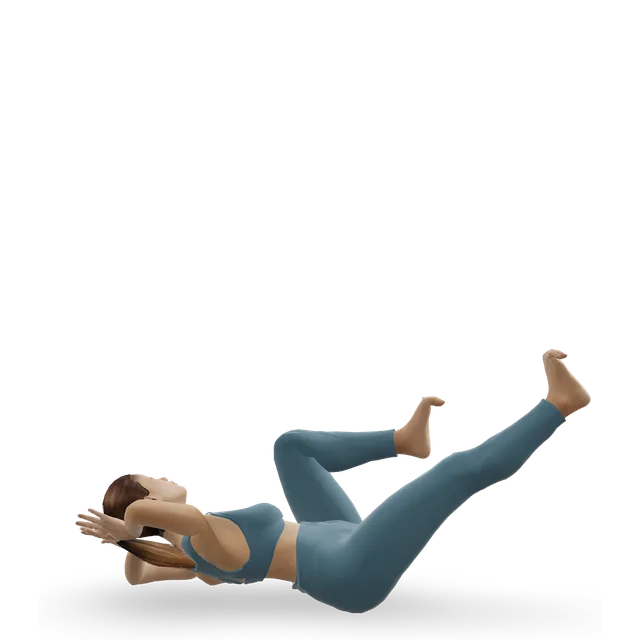
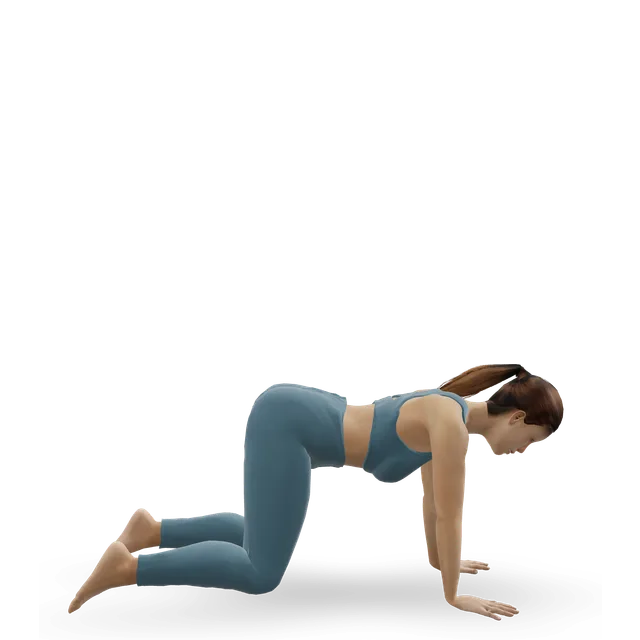
Hundred, 50 beats to start; single-leg stretch, 6 to 10 each side; criss-cross, 6 each side; swimming, 2 to 3 sets of 20 to 30 seconds; side kick, 8 to 10 each side (the moves' pages); dead bug, 6 each side (our footballers' class); bird dog, 6 each side (our posture class); bear crawl, 2 crawls of about 5 metres (our Pilates for kids class).
Single-leg stand, about 20 seconds each side (our yoga for ADHD practice); tree pose, 20 seconds each side (our Pilates for kids class); heel-to-toe walk, 10 steps (our sensory movement break).
Lateral breathing, 5 to 8 breaths, and box breathing, 5 minutes a day starting with a count of 3 or 4 (the moves' pages); slow breathing, 2 minutes, in for about 4 and out for about 6 (our lupus class).
Start with one limb at a time in the bird dog, and keep a hand on a wall for balance work.
Rolling and upside-down moves
Leave rolling like a ball, the roll-over and the jack knife to a class with a teacher and a padded mat; they're not in our class.
Bendy joints
With hypermobility, work in the middle of your range, as the move pages say, and see our Pilates for hypermobility guide.
Classes to follow
Our 20-minute class runs in the same order every time: move, breathe and count, coordinate, move again, back and sides, balance, calm. Do it 3 times a week, with aerobic activity such as walking, cycling or sport on most days. For children, the yoga practice and the Pilates for kids class suit; the bedtime class helps you wind down.
A&E means accident and emergency. In the US, call 911 for 999, and use your doctor's urgent line or urgent care for NHS 111.
Thoughts of suicide or self-harm
If you are thinking about suicide or can't keep yourself safe, call 999 or go to A&E. For urgent help, call Samaritans free on 116 123, any time, or in England call 111 and select the mental health option. In the US, call or text 988.
Call 999 if someone faints or has chest pain during exercise (our advice: NICE lists both among the signs that can point to a heart problem). See a GP before any more hard exercise if you or your child are much more breathless on exertion than others of the same age, have fainted after a fright or a loud noise, or have palpitations that are fast, regular and start and stop suddenly. NICE asks for a heart specialist's opinion on these before ADHD medicine is started.
Call 999 or go to A&E (accident and emergency) straight away for severe difficulty breathing (gasping, choking or not able to get words out), a chest that feels tight or heavy, pain that spreads to your arms, back, neck and jaw, lips or skin turning very pale, blue or grey, or sudden confusion. If you're more short of breath than usual, or your heart is racing, fluttering or skipping beats, contact NHS 111.
For questions about medicines, sleep, mood or side effects, or if you think you or your child may have ADHD. Our exercise for ADHD guide lists the NHS's warning signs on ADHD medicine.
The NHS advises getting advice from a healthcare professional first if you have a health problem, an injury or symptoms, or have recently had a heart attack or an operation.
It may help attention a little: in the one trial, women with ADHD who did Pilates 3 times a week for 24 weeks did better on attention tests and were still better 6 months later. It's one small trial, so treat it as promising, not proven.
Does exercise help ADHD?
A little to moderately, mostly studied in children: exercise eased core symptoms and improved thinking skills in reviews, at low certainty. It works best alongside other treatment.
Can Pilates replace ADHD medicine?
No. Medicine worked better than an exercise programme in a trial in children, and NICE treats exercise as lifestyle advice. Don't stop or change medicines without your ADHD team.
Is yoga or Pilates better for ADHD?
Neither has been shown to be better: mind-body trials, mostly of yoga with one of Pilates, improved attention but not hyperactivity. Pick what you'll enjoy; our yoga for ADHD guide covers yoga.
What's the best exercise for ADHD?
Steady aerobic exercise such as running, cycling or swimming helped symptoms most, and games with changing tasks helped thinking skills. Pilates adds control and balance, and our class mixes in short active bursts.
How much exercise helps ADHD?
An early estimate suggests about 20 to 25 minutes a day of moderate exercise may be the minimum that makes a difference for children and teenagers, but it's exploratory. The Pilates trial used 45 minutes, 3 times a week.
Is reformer Pilates good for ADHD?
No trial has tested it. The moving carriage and springs give instant feedback that some people enjoy; start in a supervised class.
Will Pilates help ADHD sleep problems?
That hasn't been shown: reviews found no clear effect of exercise on sleep in ADHD. A calm evening session may still help you wind down.
Is Pilates good for children with ADHD?
No trial has tested Pilates in children with ADHD. Exercise in general helps children a little, and our Pilates for kids guide covers safe classes.
How do I stick with exercise with ADHD?
Short blocks, variety, a group or teacher, music or counting, and a set time of day. Dropout is high in ADHD exercise trials, so pick something you enjoy.
Is it safe to do Pilates on stimulant medicine?
Generally yes: eat beforehand, keep water to hand and avoid hot rooms. Call 999 if someone faints or has chest pain during exercise.
Exercise education, not a personal prescription, and clinical review of these guides is pending. If you are pregnant, have a health condition or have had recent surgery, check with a doctor, midwife or physiotherapist before starting, and stop for sharp or increasing pain. Health disclaimer.