Pain guide · Leg pain

Shin pain: shin splints, a stress fracture, compartment syndrome and the muscles at the front

Shin pain is common in runners, walkers and anyone who has suddenly done more, and most of it is shin splints: a long, tender strip along the inner edge of the shin bone that hurts during and after exercise. One spot on the bone you can point to is different, because it can be a stress fracture, and tightness in the muscles that builds at the same point in every run can be exertional compartment syndrome. Shin splints usually settle, and they don't mean giving up running.

This guide starts with the signs that need help today, from a 999 call or accident and emergency (A&E) to the National Health Service's 111 line (NHS 111) or a general practitioner (GP): sudden, severe pain with a tight, swollen muscle after an injury, and a swollen, throbbing leg. It then maps the causes by the exact spot, explains what the trials found about running shoes, braces and a graded return to running, and gives a three-stage plan that ends with one trial's graded running programme, and with sport.

When to get help first

Exercise is for pain that has been checked or is clearly mild and settling.

Get urgent medical help if

  • Call 999 or go to A&E: sudden, severe pain in a muscle, which may be worse when you stretch it, with swelling, numbness, weakness or pins and needles, or tightness or difficulty moving the leg. This can be acute compartment syndrome, which needs surgery as soon as possible. It usually follows an injury or a bandage or cast that is too tight, but rarely it can follow very hard exercise. Do not drive yourself to A&E.
  • Call 999 or go to A&E after an injury if the leg is twisted or bent, a bone is sticking out, there's a bad cut or wound, or there are signs of shock: cold, sweaty skin, a fast or weak pulse, fast or shallow breathing, or blue, grey, pale or blotchy skin or lips. While you wait, don't move the leg or put weight on it, and don't eat or drink in case you need surgery.
  • Call 999 or go to A&E: a leg that is suddenly cold, pale, numb, weak or very painful. A sudden loss of blood supply to a leg is a vascular emergency.
  • Call 999: calf or leg pain or swelling with breathlessness or chest pain. It could be a clot that has reached the lungs. Do not drive yourself to A&E.
  • Go to A&E: sudden swelling, redness, heat and pain in the calf; severe pain after an injury, which can mean a broken bone; or you cannot put any weight on the leg.
  • Same day (NHS 111): after an injury, the leg is very painful or the pain is getting worse, there's a lot of swelling or bruising, it hurts to put weight on it, or it's very stiff or hard to move.
  • Get help from NHS 111: you have shin splints and the pain is severe, or you've injured your shin.
  • Same day (urgent GP appointment or NHS 111): throbbing pain in one leg (rarely both), usually the calf or thigh; swelling in one leg (rarely both); red, blue or darkened skin around the painful area, which may be harder to see on brown or black skin; or swollen veins. This can be a deep vein thrombosis (DVT). It is more likely after surgery, a hospital stay, 3 or more days in bed, a journey of over 4 hours, pregnancy or a recent birth, cancer, a previous clot, or oestrogen-containing contraception or HRT.
  • Ask for an urgent GP appointment or get help from NHS 111: the skin on your shin is painful, hot and swollen. It could be cellulitis, a skin infection, which is usually on the lower legs. With a very high temperature, a fast heartbeat or fast breathing, purple patches, dizziness, confusion, or cold, clammy or pale skin, call 999 or go to A&E.
  • Same day (urgent GP appointment or NHS 111): new difficulty lifting the front of your foot or toes (foot drop), or a foot that slaps down or catches as you walk, especially if it is getting worse. Weakness in both legs, or with numbness around the genitals or bottom or bladder or bowel changes, is the 999 emergency above.
  • Same day (urgent GP appointment or NHS 111): a child or teenager with sudden pain in the hip, thigh or knee, or who is limping or can't put any weight on 1 leg. Hip problems in children can sometimes be felt in the thigh or knee.
  • Same day: leg weakness that is getting worse; new leg pain with a history of cancer, HIV, TB or inflammatory arthritis; or leg pain with a fever, feeling unwell, loss of appetite, unexplained weight loss or night sweats.

See a doctor or physiotherapist if

  • Pain in one spot on the shin or a foot bone that you can point to with a fingertip, worse with impact and later present at rest or at night: a possible stress fracture.
  • Pain in the middle of the foot that is hard to pinpoint, on the outer edge of the midfoot, or on the front of the shin bone in a running or jumping athlete. These sites heal less well and need prompt assessment, often with a scan.
  • You keep getting pain, numbness, swelling or difficulty moving part of your leg when you exercise: see a GP, who can check whether it is compartment syndrome or something else.
  • Numbness or weakness that stays after exercise, or a foot that slaps down or catches when you run.
  • Shin pain that is not settling after a few weeks of changing your training, or is getting worse: see a GP. The NHS says to see one if you've tried things to help with shin splints but the pain is getting worse or it's not getting better.
  • Pain that comes on when you walk a set distance and goes after a few minutes' rest, especially if you smoke or have diabetes. Exercise treats it well, but it needs a diagnosis first.
  • See a GP if your child has leg pain in 1 leg; in the morning, or when walking or playing; bad enough to stop them walking or make them limp; in 1 joint; with a rash, swelling or unusual bruising; with a high temperature; or if they seem unusually tired or are not eating or are losing weight.
  • See a GP if you have pain or tenderness in a bone, particularly if it's worse at night, or a lump or swelling.
  • Burning, tingling or numbness on the outer shin and the top of the foot that keeps coming back with exercise or tight boots: see a GP. A nerve can be squeezed there.
  • A stress fracture from ordinary activity, more than one stress fracture, periods that have stopped or become irregular, or worries that you're eating too little for your training: see a GP about bone health and energy intake.

Where does it hurt?

Location narrows the likely causes; it does not diagnose.

A long, tender strip along the inner edge of the shin bone, sore during and after running

Shin splints (medial tibial stress syndrome), sometimes with mild swelling.

Read: Shin splints →
One spot on the bone you can point to with a fingertip, worse with each step, later aching at rest or at night

A possible stress fracture, which an early X-ray can miss: stop running and get it checked.

Read: Stress fracture →
One spot on the sharp front edge of the shin bone in a running or jumping athlete

A stress fracture at a site that heals less well: get it checked promptly.

Read: Stress fracture →
Tightness or cramping in the shin or calf muscles that builds at the same point in every run and fades within minutes of stopping

Possibly exertional compartment syndrome, sometimes with numbness on top of the foot or a foot that slaps down.

Read: Exertional compartment syndrome →
After an injury, a blow or under a tight cast: severe pain far worse than expected, a tight, full muscle, tingling or numbness

Possible acute compartment syndrome: call 999 or go to A&E.

After an injury: a leg that is twisted or bent, very painful, very swollen, or hurts to put weight on

A possible broken leg: see the warning signs.

Read: Broken leg →
The top of the shin after a fall onto the knee or a blow, with swelling and difficulty taking weight

A possible break at the top of the shin bone.

Read: Tibial plateau fracture →
Soreness in the muscle beside the sharp front edge of the shin, with no single sore spot on the bone and no tightness that builds in every run

Uncommonly, the muscles at the front of the shin that lift the foot, or their tendon. Problems here are described mainly in case reports, so little is known about them.

The front of the foot slaps down or the toes catch when you walk

Foot drop, usually a nerve problem: see a GP, the same day if it is getting worse.

Read: Foot drop →
Burning, tingling or numbness on the outer lower leg and the top of the foot, worse with exercise or tight boots

A squeezed skin nerve on the outer shin: see a GP.

Pins and needles, or sharp, hot or burning pain, with or without back pain

A nerve from the lower back, which NHS inform says can be felt in the leg even when the back doesn't hurt.

Read: Sciatica →
Just below the kneecap at the bony bump, in a teenager, worse running, jumping and kneeling

Osgood-Schlatter disease.

Read: Osgood-Schlatter →
The inner shin a few centimetres below the knee joint, tender, worse on stairs

The tendons and fluid sac on the inner knee (pes anserine bursitis).

Read: Pes anserine pain →
A child aged about 3 to 12 with aching in both legs in the evening or at night, gone by morning

Usually growing pains. Pain in one leg, in the day or with a limp needs a GP.

Read: Growing pains →
An ache in the calf or shin after a set distance of walking that goes after a few minutes' rest

Possibly narrowed leg arteries: see a GP.

Read: Calf pain when walking →
Red, hot, swollen, painful skin on the shin

Possible cellulitis, a skin infection: see the warning signs.

One calf and shin throbbing and swollen, with red, blue or darkened skin

A possible blood clot (DVT): get help the same day.

Bone pain that is worse at night, or a lump

Rarely a bone tumour: see a GP.

Understand it

A long strip on the inner edge: shin splints, the commonest cause in runnersStrong evidence

Shin splints, or medial tibial stress syndrome, hurt along the inner border of the shin bone (the tibia), during and after exercise, and the strip is tender to touch, the American Academy of Orthopaedic Surgeons (AAOS) says. Runners have the highest risk, dancers and military recruits are often diagnosed too, and it usually follows a sudden change in how often, how long or how hard you train, such as adding hills. The NHS says it is more likely when you start exercising after a spell of inactivity, run or jump on hard surfaces, or don't have a good running technique.

It affects 5% to 35% of runners. In a review of 10 studies, women, people who had it before, newer runners, people using orthotics, a higher body mass index (BMI) and a bigger drop of the arch went with it. It can be diagnosed reliably from the story and an examination: two clinicians agreed 96% of the time in 46 athletes, and 74% of those athletes had shin splints, often alongside another lower leg injury.

Sources 1, 2, 3, 4

One spot on the bone: a stress fractureStrong evidence

A stress fracture is a small crack in a bone from overuse. Health New Zealand says the pain is often in one spot you can point to with a fingertip, gets worse with activity, and can become a constant dull ache even at night, then sharp when you put weight on it. The AAOS says bone stress injuries often appear 3 to 4 weeks after starting a new routine or season.

Where it is matters. In pooled studies of athletes, a stress fracture of the inner back edge of the shin bone took a mean of 44 days to return to sport, and one of the outer leg bone (the fibula) 56 days; more than 90% returned. The front of the shin bone is different: those fractures took longer, had more complications, and are considered for surgery if still painful after 3 to 6 months, though the studies are small.

Sources 5, 6, 7, 8, 9

Tightness that builds in every run: exertional compartment syndromeStrong evidence

The muscles of the lower leg sit in compartments wrapped in tough tissue. In exertional (chronic) compartment syndrome, pain or cramping comes on during exercise and goes away when you stop, sometimes with numbness, a foot that slaps down or a bulging muscle, the AAOS says, adding that compartment syndrome most often affects the front compartment of the lower leg. The NHS says the chronic form often doesn't need treatment, and asks you to see a GP if you keep getting pain, numbness or swelling when you exercise. Our exertional compartment syndrome guide covers it in full.

Sources 10, 11

After an injury: acute compartment syndrome is an emergencyStrong evidence

Acute compartment syndrome is a build-up of pressure inside a muscle, usually after an injury or under a bandage or cast that is too tight. The NHS lists severe pain in a muscle that may be worse when stretching it, swelling, numbness, weakness or pins and needles, and tightness or difficulty moving, and says it needs surgery as soon as possible. Surgeons' standards name pain far worse than the injury explains, and pain when the muscles are stretched, as the key signs; the AAOS adds that numbness or paralysis are late signs.

After an injury, a leg that is twisted or bent, a bone through the skin or signs of shock need 999 or A&E, and a leg that is very painful, very swollen or hurts to put weight on needs NHS 111, the NHS says.

Sources 10, 12, 11, 13

The muscles at the front, nerves and the backEmerging evidence

The muscles at the front of the shin lift the foot. Problems with them and their tendon are uncommon: a review says tendon problems of the tibialis anterior, the main one, are described only in case reports and small series. A burning, tingling or numb patch on the outer lower leg and top of the foot can be a squeezed skin nerve (the superficial fibular nerve), which a review says can be missed. And NHS inform says lower leg pain can come from the back, even without back pain, described as pins and needles, or sharp, hot or burning pain.

Sources 14, 15, 16

Children, infections, clots and other causesStrong evidence

Growing pains are common in children aged 3 to 12: aching in both legs in the evening or at night, gone by the morning. The NHS asks for a GP if the pain is in one leg, in the morning or when walking, makes them limp, is in one joint, or comes with a rash, swelling, unusual bruising, a high temperature or weight loss.

Cellulitis, a skin infection, makes the skin painful, hot and swollen and, on the legs, is usually on the lower legs. A blood clot causes throbbing pain and swelling in one leg, usually the calf or thigh. An ache on walking that goes after a few minutes' rest can be narrowed leg arteries. Bone pain that is worse at night, or a lump, needs a GP: rarely, it is a bone tumour.

Sources 17, 18, 19, 20, 21

When a scan or test helpsStrong evidence

Shin splints are diagnosed from the story and an examination, and the NHS says the same. If they aren't responding to treatment, a bone scan or a magnetic resonance imaging (MRI) scan will often show a stress fracture, the AAOS says.

For a suspected stress fracture, an early X-ray may look normal because bone swelling doesn't show on it; an MRI shows the swelling, and a bone density scan is considered if there are risk factors for weak bones or the injury came with light activity. Exertional compartment syndrome is confirmed by measuring the pressure in the muscles before and after exercise. A swollen, throbbing leg needs an ultrasound scan, which the NHS says should happen within 24 hours if a doctor thinks it's a clot.

Sources 4, 2, 1, 6, 10, 19

How it usually goesEmerging evidence

The NHS says shin splints usually get better within a few weeks. Athletes referred to sports medicine took longer: in a Dutch trial, a mean of 102 to 118 days to complete a graded return to 18 minutes of hard running, and 60 to 92 days in a shockwave study. People seen in specialist clinics are likely to be the harder cases.

Stress fractures usually take 6 to 8 weeks to heal, Health New Zealand says; the AAOS says at least 3 weeks, and up to 3 months or longer when more severe; and the front of the shin bone takes longer. Growing pains come and go over months, even years. No one can promise a date.

Sources 2, 22, 23, 5, 6, 7, 17

What helps, and how strong the evidence is

Change the load, the surface and the shoesEmerging evidence

The NHS says stop the exercise that caused shin splints, switch to gentle exercise such as yoga or swimming, use soft ground when you're feeling better, make sure your trainers support your feet, and build back up slowly rather than rushing back at your old level. The AAOS suggests several weeks off the activity, with swimming, a stationary bike or an elliptical trainer instead.

Shoes matter less than people think. In 7,203 military recruits, running shoes chosen by foot posture didn't reduce injuries (moderate certainty), and across 12 trials no other type of running shoe clearly did. The AAOS says orthotics may help people with flat feet or shin splints that keep coming back. An NHS sports medicine leaflet suggests renewing trainers every 300 to 500 miles. In 166 at-risk British Army recruits, gait retraining with biofeedback and exercises cut new cases of shin splints (a hazard ratio of 0.25; 14 trained to keep one more recruit free of it at 20 weeks).

Sources 2, 1, 24, 25, 26

Graded running: one trial's programmeEmerging evidence

In a Dutch trial of 74 athletes with shin splints, a graded running programme three times a week, with a day off between runs, did as well on its own as the same programme with calf stretching and strengthening five times a week, or with a compression stocking. The mean time to finish it (18 minutes of continuous running at a pace where talking becomes difficult) was 105, 118 and 102 days.

Runners moved up a phase only if the run stayed below 4 out of 10 for pain; if pain reached 4 or more straight after or the next day, they stayed in the phase and cut 2 minutes. The limits: it is one trial of 74 athletes, 19% dropped out, and no trial has compared graded running with rest, so it shows a way back to running rather than proving it beats resting.

Source 22

No treatment for shin splints has been well testedEmerging evidence

A systematic review of 11 trials found none free enough of bias to recommend a treatment. Braces made no difference when the trials were pooled, and stretching and strengthening, compression stockings and laser haven't been proven to work; shockwave therapy looked the most promising. In 42 athletes, adding shockwave to a graded running programme shortened recovery (60 against 92 days), but that study wasn't randomised. Calf exercises and a compression stocking added nothing to graded running in the Dutch trial.

Sources 27, 22, 23

A stress fracture: protect the bone, then a walk-jog returnEmerging evidence

Stop the activity that caused it and rest so the bone heals, sometimes with a boot or crutches, and never play through the pain, Health New Zealand says. The AAOS says pain guides how the injury is healing, and the return should be slow, alternating days of activity with rest. An NHS sports medicine leaflet starts running only after 30 minutes of fast walking is pain-free, then builds a walk-jog programme over 6 weeks.

Fractures at the front of the shin bone heal less well: in the two small studies that looked, care without surgery had high complication rates and few people returned to sport, and surgery is considered if they're still painful after 3 to 6 months. With any stress fracture, your clinician's plan comes first, and our stress fracture guide covers it.

Sources 5, 6, 25, 7, 8, 9

Exertional compartment syndrome: change the running, then surgery if neededEmerging evidence

The NHS suggests avoiding the activity that brings it on and using anti-inflammatory painkillers, with surgery to open the muscle's casing (a fasciotomy) if that doesn't work. The AAOS says surgery gives excellent results for the front and outer compartments and less predictable results for the back of the calf. Our exertional compartment syndrome guide covers changing how you run, which small studies suggest can help.

Sources 10, 11

How much pain is OK while you exercise?

Strength work: mild discomfort; running: below about 4 out of 10 and no worse the next day; a sore spot on the bone: no pain at allEmerging evidence

Strength work: mild discomfort is fine if it has settled by the next day, as our shin splints guide says. NHS inform's calf and ankle exercises allow up to 5 out of 10 (0 to 3 minimal, 4 to 5 acceptable, 6 to 10 too much), with pain no worse the morning after.

Running with shin splints: in the Dutch trial, runners kept pain below 4 out of 10 during the run, and if it reached 4 or more straight after or the next day, they stayed in the phase and cut 2 minutes. Our shin splints guide is stricter, asking for running that is pain-free or close to it. Either is a reasonable choice; the trial's rule is one trial's rule.

A sore spot on the bone: no pain at all there during, after or the next day. Health New Zealand says stop exercising as soon as you feel pain and never play through it, and on the NHS sports medicine service's walk-jog programme you step down a level if the pain comes back.

Tightness that builds in every run: walk as soon as the familiar tightness starts and never carry on past about 3 out of 10, as our exertional compartment syndrome guide says; stop the session for numbness, tingling or a slapping foot. In trials of long-lasting muscle and joint pain, exercise that allowed some pain did no worse than pain-free exercise.

Sources 22, 28, 5, 25, 29

The exercise plan: 3 stages

Start at the first stage. Each move opens a full guide with a 3D demo.

Stage 1

Settle: offload the shin, keep your fitness

About the first 1 to 3 weeks: stop the running or jumping that hurts, switch to swimming, cycling or an elliptical trainer, and use ice and painkillers for comfort, as the NHS and the AAOS advise. One spot on the bone you can point to goes to our stress fracture guide, and tightness that builds in every run to our exertional compartment syndrome guide.

Stationary cycling demonstrated on the 3D figure3D demoStationary cyclingBeginner · Cardio machine

20 to 30 min · As in our shin splints guide; or swim

Easier: Recumbent exercise bike · Harder: Air bike intervals

Elliptical trainer demonstrated on the 3D figure3D demoElliptical trainerBeginner · Cardio machine

10 to 20 min at a moderate effort, building towards 30, only if it's pain-free · The move page's dose, which it labels an editorial starting point; the AAOS names the elliptical as a substitute

Harder: Stair-stepper machine

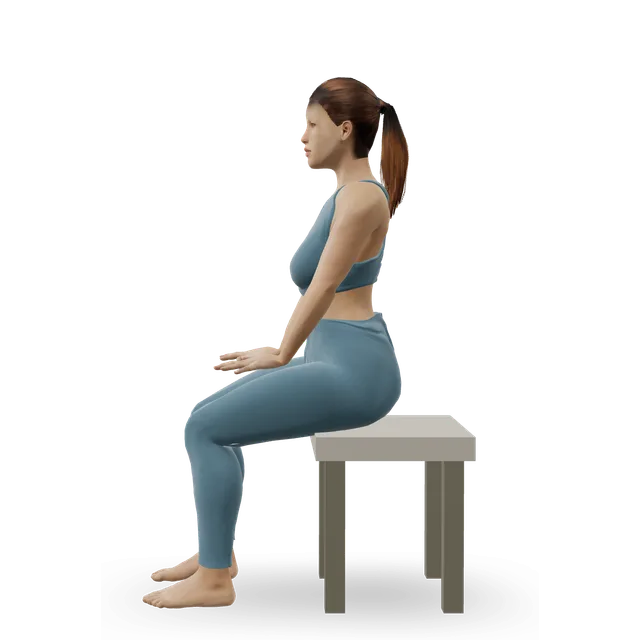
Seated bent-knee calf raise (soleus raise) demonstrated on the 3D figure3D demoSeated bent-knee calf raise (soleus raise)Beginner · A bench or box

3 sets of 15, if pain-free · As in our shin splints guide; NHS inform's seated heel raise

Harder: Slow calf raise

Ankle circles demonstrated on the 3D figure3D demoAnkle circlesBeginner · No equipment

10 slow circles each way with each foot · The move page's dose (an editorial starting point); NHS inform's ankle movements

Harder: Ankle CARs (controlled articular rotations)

Tibialis raise demonstrated on the 3D figure3D demoTibialis raiseBeginner · No equipment

2 sets of 15 · As in our shin splints guide. Leave it out with soreness in the muscle at the front of the shin, or tightness that builds in every run

Harder: Single-leg tibialis raise

Soleus wall stretch demonstrated on the 3D figure3D demoSoleus wall stretchBeginner · A wall

2 to 3 holds of 30 s each side, for comfort · As in our shin splints guide; NHS inform holds stretches for 20 to 30 s. Stretching hasn't been shown to treat shin splints

Easier: Seated calf stretch with a towel · Harder: Toes-tucked kneeling (toe squat)

Move on when: Walking, including brisk walking, is pain-free (in the Dutch trial, athletes whose walking hurt started running once walking had been pain-free for 2 days in a row), and pressing along the shin is less tender (our suggestion).

Follow along: a timer, a cue and the next move, one step at a time.
Stage 2

Build: calf endurance, ankle and hip control

About weeks 2 to 6: build the calf and hip work while walking time goes up. Calf exercises added nothing to graded running in the Dutch trial, so this stage runs alongside the return to running rather than holding it up.

Slow calf raise demonstrated on the 3D figure3D demoSlow calf raiseBeginner · A wall

3 sets of 15 · As in our shin splints guide; NHS inform's standing heel raise with a hold

Easier: Seated bent-knee calf raise (soleus raise) · Harder: Standing dumbbell calf raise

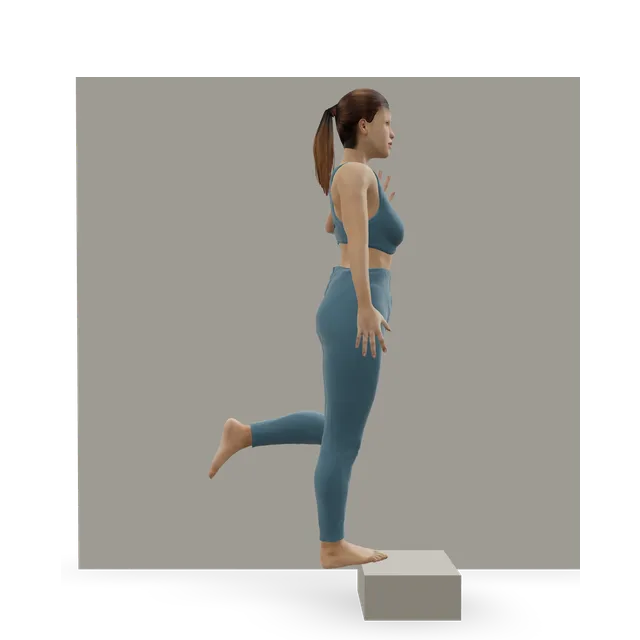
Single-leg calf raise from a step demonstrated on the 3D figure3D demoSingle-leg calf raise from a stepIntermediate · A step + A wall

Build towards 3 sets of 15 to 20 slow reps each leg · As in our shin splints guide; on the floor first, then facing the step with a hand on a rail, as the move page says

Easier: Slow calf raise · Harder: Single-leg pogo hops

Heel walk demonstrated on the 3D figure3D demoHeel walkBeginner · No equipment

3 sets of 20 m · As in our shin splints guide; leave it out while the muscle at the front of the shin is sore

Easier: Tibialis raise · Harder: Single-leg tibialis raise

Single-leg stand demonstrated on the 3D figure3D demoSingle-leg standBeginner · A wall

3 holds of 30 s each leg · As in our shin splints guide

Easier: Tandem stance and heel-to-toe walk · Harder: Single-leg reach matrix

Glute bridge demonstrated on the 3D figure3D demoGlute bridgeBeginner · No equipment

3 sets of 12 · As in our shin splints guide

Easier: Pelvic tilt into bridge · Harder: Single-leg glute bridge

Move on when: The calf work stays within the pain rule and 30 minutes of brisk walking is pain-free, the NHS sports medicine service's starting point for running.

Follow along: a timer, a cue and the next move, one step at a time.
Stage 3

Hop, then run, then sport

From about weeks 4 to 6, as the shin allows: bring impact back in small steps, running three times a week with a day off between runs, as in the Dutch trial. The running phases are in the written steps below. With a stress fracture, the NHS sports medicine service's walk-jog weeks replace them.

Ankle bounces (mini pogo) demonstrated on the 3D figure3D demoAnkle bounces (mini pogo)Beginner · No equipment

3 sets of 20, landing quietly · As in our shin splints guide; only once any sore spot on the bone is pain-free, as the move page says

Harder: Pogo hops

Pogo hops demonstrated on the 3D figure3D demoPogo hopsIntermediate · No equipment

3 sets of 20 · As in our shin splints guide; once ankle bounces are easy

Easier: Ankle bounces (mini pogo) · Harder: Single-leg pogo hops

Single-leg hop and stick demonstrated on the 3D figure3D demoSingle-leg hop and stickIntermediate · No equipment

3 sets of 5 each leg · As in our shin splints guide, as a control check

Easier: Standing broad jump with stuck landing · Harder: Alternate-leg bounding

Treadmill jogging demonstrated on the 3D figure3D demoTreadmill joggingIntermediate · Cardio machine

Shin splints: the trial's six phases (below), three times a week with a day off between. A stress fracture: the walk-jog weeks instead · The Dutch trial's graded running programme, or the NHS sports medicine service's programme for a stress fracture; a road or path counts

Easier: Treadmill walking · Harder: Sprint intervals

Move on when: Our suggestion: your usual runs, jumps or sport stay within the pain rule, with the shin no worse the next day. After the last phase, add no more than 10% a week, and don't add distance and time in the same week (the NHS sports medicine service's advice).

Follow along: a timer, a cue and the next move, one step at a time.

What to change for now

What to change for now (written steps)

Our 3D figure can't show these changes. They come from the NHS, the AAOS, a Cochrane review of running shoes, an NHS sports medicine leaflet and Health New Zealand; where a step is our suggestion, it says so.

  • 1. Stop the exercise that caused it, switch to gentle exercise such as swimming, cycling or yoga, and build back up slowly (the NHS).
  • 2. Training load: one change at a time. Shin splints often follow sudden increases in how often, how long or how hard you train, such as adding hills (the AAOS).
  • 3. Surfaces: soft ground first when you go back (the NHS); hills, cambered roads and track bends later (our suggestion).
  • 4. Shoes: comfortable trainers that support your feet (the NHS). Choosing them by foot type didn't prevent injuries in a large review; orthotics may help flat feet or shin splints that keep coming back (the AAOS). Renew trainers every 300 to 500 miles (the NHS sports medicine leaflet).
  • 5. Recovery: at least 7 hours' sleep and 1 rest day a week (the AAOS).
  • 6. One sore spot on the bone: stop and get it checked, rest so the bone heals, and never play through the pain (Health New Zealand).

Sources 2, 1, 24, 25, 5, 6

Running, jumping and sport come back (written steps)

The running phases are one Dutch trial's programme for shin splints, done three times a week with a day off between runs. Move up a phase only if the run stayed below 4 out of 10 for pain; if pain reaches 4 or more straight after or the next day, stay in the phase and cut 2 minutes. The trial placed people in a starting phase with a treadmill test; starting everyone at phase 1 is our suggestion, as is swapping in your own easy pace if 10 km/h is faster than you usually run.

  • 1. Phase 1: 4 rounds of 2 minutes' running and 2 minutes' walking (16 minutes). The trial used a treadmill at 10 km/h.
  • 2. Phase 2: the same rounds a little faster (the trial used 12 km/h).
  • 3. Phase 3: 4 rounds of 3 minutes' running and 2 minutes' walking (20 minutes) on a road or path, from a light jog to a pace you can talk at.
  • 4. Phase 4: the same rounds, from a pace you can talk at to one where talking gets hard.
  • 5. Phase 5: 16 minutes of continuous running at the easier pace.
  • 6. Phase 6: 18 minutes of continuous running at the harder pace. Then add no more than 10% a week (the NHS sports medicine leaflet).
  • 7. After a stress fracture: your clinician's plan comes first; pain-free fast walking for 30 minutes, then the leaflet's walk-jog weeks, every other day.
  • 8. Jumping sports, marching and dance: after running is comfortable, with jumps added like the hops in stage 3 (our suggestion).
  • 9. If shin splints keep coming back, ask a physiotherapist about your running technique: gait retraining cut new cases in army recruits.

Sources 22, 25, 1, 26

Positions to swap, and why

Habit or positionWhy it mattersInstead
Carrying on with the run, the jumps or the marching that caused itThe NHS says don't continue doing the exercise that caused your shin splints.Swimming, cycling or an elliptical trainer for now.Try: Stationary cycling
Jumping straight back to your old distance or paceThe NHS says don't rush back at the level you were at, and sudden changes in how often, how long or how hard you train bring shin splints on.The graded running phases, three times a week.Try: Treadmill jogging
Hopping or running through one spot on the bone that hurts with every step or at nightIt could be a stress fracture, and Health New Zealand says never play through the pain.Get it checked; cycle only if it's pain-free at the bone.Try: Stationary cycling
Ankle bounces while the bone is still tenderThe move page says bone pain should be gone before you hop.Slow calf raises until the bone is pain-free.Try: Slow calf raise
Running on through tightness that builds at the same point in every runIt can be exertional compartment syndrome; our guide to it says walk as soon as the familiar tightness builds.Walk at the first tightness, and see our exertional compartment syndrome guide.
Heel walks with soreness in the muscle at the front of the shinThey work those muscles directly (our reasoning), and our exertional compartment syndrome guide brings front-of-shin loading in later.Seated calf raises and ankle circles first.Try: Seated bent-knee calf raise (soleus raise)
Hard surfaces, hills and cambered roads early onRunning or jumping on hard surfaces makes shin splints more likely, the NHS says, and hills are a classic sudden change.Soft, flat ground first.
Buying shoes by foot type, or relying on a compression sleeve or a braceShoes chosen by foot type didn't prevent injuries in a large review, a compression stocking added nothing to graded running, and braces made no difference in pooled trials.Comfortable, supportive trainers, renewed every 300 to 500 miles.

Routines to follow

Runner's warm-up

An 8-minute dynamic warm-up for runners: ankle and hip mobility, lunges, skips and pogo hops.

8 minIntermediate8 movesA wall

Run-walk intervals for beginners

A 30-minute beginner run-walk session: a brisk walk, then 1-minute jogs with 1-minute walks, building to 3-minute runs over your first three weeks.

30 minBeginner5 movesCardio machine, A wall

Strength workout for runners at home

A 40-minute strength workout for runners at home: hops, Bulgarian split squats, single-leg deadlifts, step-ups, calf raises and side planks.

40 minIntermediate15 movesA wall, A bench or box

Foot and ankle strengthening routine: toes, arches, calves and balance

A 15-minute barefoot routine for stronger toes, arches, calves and ankles, finishing with balance. You need only a towel, a wall and a resistance band.

15 minBeginner11 movesA wall, Other / check instructions

Calf workout: straight-knee and bent-knee raises with a step

A 25-minute calf workout with a step and a dumbbell: single-leg raises for the big calf muscle, then seated raises for the soleus, with gym swaps for each move.

25 minIntermediate7 movesA wall, A step

Injury prevention exercises for runners

Foot, calf, balance and hop exercises taken from the running trials with positive results, in a 25-minute home routine for 3 or 4 days a week.

25 minBeginner11 movesOther / check instructions, A bench or box

Low-impact cardio workout (no jumping)

A 25-minute standing cardio circuit with no jumping: marching, step jacks, sit-to-stands, punches, step-ups and wall push-ups, with a seated option for most moves.

25 minBeginner9 movesA bench or box, A step

More moves for this area

Questions people ask

What causes shin pain?

In runners and active people it's usually shin splints, a long, tender strip along the inner edge of the shin bone. One spot on the bone you can point to can be a stress fracture, and tightness in the muscles that builds in every run can be exertional compartment syndrome. Less often it's the muscles at the front, a nerve, a skin infection or, in children, growing pains.

Is it shin splints or a stress fracture?

Shin splints hurt along a longer strip and are tender to touch, while a stress fracture is one spot you can point to with a fingertip, worse with every step and later aching at rest or at night. An early X-ray can miss a stress fracture, so an MRI scan may be needed. If you think it's a stress fracture, stop running and get it checked.

Why do my shins hurt when I walk?

A sudden change in how often, how long or how hard you exercise, such as more walking, a faster pace or hills, can bring on shin splints. An ache in the calf or shin after a set distance that goes within minutes of stopping can be narrowed arteries, which needs a GP. One swollen, throbbing leg is different: get it checked the same day.

Can I keep running with shin splints?

Usually yes, gradually. In a trial of 74 athletes, a graded running programme three times a week, keeping pain below 4 out of 10, did as well on its own as with calf exercises or a compression stocking, though it was one trial and some people dropped out. The NHS says stop the exercise that caused it at first, switch to gentle exercise and build back up slowly. With one sore spot on the bone, stop until it's checked.

Why do my shins hurt at night or at rest?

Shin splints mostly hurt during and after exercise, while a stress fracture can become a constant ache even at night, and bone pain that is worse at night needs a GP. In a child aged 3 to 12, aching in both legs in the evening that has gone by morning is usually growing pains, but pain in one leg, in the day or with a limp needs a GP.

Do shin splints hurt when you press on them?

Yes: shin splints are tender along the inner border of the shin bone. Tenderness in one small spot you can cover with a fingertip, especially if hopping hurts, is the pattern of a stress fracture instead.

Why does the front of my shin hurt when I lift my foot?

The muscles that lift the foot run down the front of the shin. Problems with them are uncommon and described mainly in case reports. Tightness there that builds in every run and fades within minutes of stopping, sometimes with numbness on top of the foot, can be exertional compartment syndrome, and a foot that slaps down or catches needs a GP the same day.

What shoes help shin pain?

Comfortable trainers that support your feet, renewed every 300 to 500 miles. Choosing shoes by foot type didn't prevent injuries in more than 7,000 military recruits, though orthotics may help flat feet or shin splints that keep coming back.

How long do shin splints take to heal?

The NHS says shin splints usually get better within a few weeks, but athletes referred to sports medicine took a mean of 102 to 118 days to complete a graded return to hard running in one trial. A stress fracture usually takes 6 to 8 weeks to heal, and longer at the front of the shin bone. No one can promise a date.

When is shin pain serious?

Sudden, severe pain in a muscle after an injury, worse when you stretch it, with tightness, swelling, numbness or pins and needles, can be acute compartment syndrome: call 999 or go to A&E. One swollen, throbbing leg with red, blue or darkened skin can be a clot, and red, hot, swollen skin can be cellulitis; both need help the same day.

Why does my child have pain in one shin?

Growing pains affect both legs, in the evening or at night. Pain in one leg, in the morning or when walking, with a limp, swelling, unusual bruising or a high temperature needs a GP. In a teenager, pain just below the knee at the bony bump is often Osgood-Schlatter disease, which has its own guide.

Can shin pain be cancer?

Rarely. See a GP for bone pain or tenderness that is worse at night, a lump or swelling, or weight loss you can't explain. Most shin pain links clearly to exercise and eases with rest.

Related exercise guides

Other pain guides

Sources

  1. American Academy of Orthopaedic Surgeons (OrthoInfo) · Shin splints
  2. NHS · Shin splints (past its review date: reviewed February 2023, review due February 2026)
  3. Newman 2013 · Risk factors for shin splints in runners: 10 studies (systematic review and meta-analysis, Open Access J Sports Med)
  4. Winters 2018 · Diagnosing shin splints from the story and an examination in 46 athletes (reliability study, Br J Sports Med)
  5. Health New Zealand · Stress fractures of the foot and shin bone
  6. American Academy of Orthopaedic Surgeons (OrthoInfo) · Stress fractures
  7. Hoenig 2023 · Return to sport after bone stress injuries: 76 studies, 2,974 injuries (systematic review and meta-analysis, Br J Sports Med)
  8. Robertson 2015 · Return to sport after stress fractures of the shin bone: 27 studies (systematic review, Br Med Bull)
  9. Mallee 2015 · Surgery or conservative care for high-risk stress fractures of the lower leg (systematic review, Br J Sports Med)
  10. NHS · Compartment syndrome
  11. American Academy of Orthopaedic Surgeons (OrthoInfo) · Compartment syndrome
  12. British Orthopaedic Association · BOASt: diagnosis and management of compartment syndrome of the extremities (standard, updated July 2025)
  13. NHS · Broken leg
  14. Harkin 2017 · Tibialis anterior tendon rupture and tendinopathy (review, Foot Ankle Clin)
  15. Bregman 2016 · Superficial fibular nerve injuries and entrapment (review, Clin Podiatr Med Surg)
  16. NHS inform · Calf problems
  17. NHS · Growing pains
  18. NHS · Cellulitis
  19. NHS · DVT (deep vein thrombosis)
  20. NHS · Peripheral arterial disease (PAD)
  21. NHS · Symptoms of bone cancer
  22. Moen 2012 · Graded running alone or with calf exercises or a compression stocking for shin splints in 74 athletes (RCT, Sports Med Arthrosc Rehabil Ther Technol)
  23. Moen 2012 · Shockwave added to graded running for shin splints in 42 athletes (non-randomised controlled study, Br J Sports Med)
  24. Relph 2022 · Running shoes for preventing running injuries: 12 trials, 11,240 people (Cochrane systematic review)
  25. Oxford University Hospitals NHS Foundation Trust (OxSport) · Return to running programme (patient leaflet, September 2024)
  26. Sharma 2014 · Gait retraining to prevent shin splints in 166 at-risk army recruits (RCT, Med Sci Sports Exerc)
  27. Winters 2013 · Treatments for shin splints: 11 trials (systematic review, Sports Med)
  28. NHS inform · Exercises for calf and ankle problems
  29. Smith 2017 · Should exercise be painful? 7 trials of long-lasting muscle and joint pain (systematic review and meta-analysis, Br J Sports Med)
  30. NHS · Sciatica

Exercise education, not a diagnosis or treatment plan. It is written from the guidelines and studies listed above; review by a clinician is pending. If your pain follows an injury, is severe, is getting worse, or comes with any warning sign listed on this page, get it assessed. Health disclaimer.