Walk-run, 3 times a week
NHS Couch to 5K starts with 1-minute runs and 90-second walks, 3 times a week with a rest day after each run, and builds to 30 minutes of running over 9 weeks or more. Repeating a run or a week is fine.
Training guide
Most people can start running, and almost everyone starts by walking. The usual way in is walk-run: short runs of a minute or so with walking breaks between, 3 times a week, building up over 9 weeks or more until you can run for 30 minutes. That's how NHS Couch to 5K works, and the walking breaks aren't cheating: they're the method.
New runners get injured more often than experienced ones, so the theme of this guide is to start gently, run slowly enough to talk, repeat weeks whenever you need to, and stop early when something hurts.
It covers whether you're ready, your first run, how fast and how often to go, how to build up, choosing shoes, telling ordinary aches from injuries, starting at a higher body weight or later in life, and what to do after your first 5K.
NHS Couch to 5K starts with 1-minute runs and 90-second walks, 3 times a week with a rest day after each run, and builds to 30 minutes of running over 9 weeks or more. Repeating a run or a week is fine.
If you can't yet walk briskly for 20 to 30 minutes, build up your walking first: US guidance advises people who have been inactive to avoid vigorous activity such as running at first.
Source 3
Run slowly enough to talk in full sentences, and walk whenever you need to. A jog barely faster than your walk is fine.
A slower programme built on the 10% rule didn't prevent injuries in a trial of 532 beginners. In a study of 5,205 adult runners, single runs much longer than their longest of the past month went with more injuries, so add a little at a time.
Choosing shoes by foot type made no difference to injuries in trials of more than 7,000 military recruits. Get a pair that fits and feels comfortable; the NHS says cheaper versions suit beginners.
New runners get injured more than twice as often per hour as experienced ones. Stiff legs for a day or two are normal at first, but the NHS says don't run if you're in pain.
Walk-run alternates short runs with walking, so your breathing settles and your body gets used to running a little at a time. NHS Couch to 5K is free, made for absolute beginners, and has an app that talks you through each run.
Source 1
5K is 5 kilometres, about 3.1 miles. Thirty minutes of running is about 5 km at 6 minutes per kilometre, or about 3.75 to 4.3 km at 7 to 8 minutes per kilometre (our arithmetic). Either is a fine first goal.
75 minutes a week of vigorous activity such as running gives similar benefits to 150 minutes of moderate activity such as brisk walking, the NHS says.
Source 11
Across 13 studies, new runners had 17.8 injuries per 1,000 hours of running, against 7.7 in recreational runners, though the studies defined injury differently. In Dutch beginner programmes, about 1 in 10 to 1 in 5 people had a running injury, and in a Danish study injured beginners took a median of 71 days to get back to running.
In 532 beginners training for a 6.7 km event, a 13-week programme built on the 10% rule (adding no more than 10% a week) injured as many people as an 8-week programme: 20.8% against 20.3%. A Cochrane review found no evidence that a more gradual build-up prevents injuries in new runners.
In 5,205 runners followed for 18 months, a run 10 to 30% longer than their longest of the past 30 days went with a 64% higher injury rate, and a run more than twice as long with more than double the rate; changes in weekly distance weren't linked. It's an observational study of runners who reported their own injuries, mostly men with an average age of 46, not beginners. In 874 new runners, raising weekly distance by more than 30% over 2 weeks showed only a trend towards more injuries.
In an old trial of men aged 20 to 35 jogging hard for 20 weeks, 39% were injured running 5 days a week, against 12% at 3 days, and 45-minute sessions injured more people than 30-minute ones. Fitness rose with more running, but the authors advised beginners against 5 days and 45 minutes. It's small, old and in men only.
Source 16
In one exploratory Danish study of 749 new runners, with 56 injuries in all, those with a BMI (body mass index) over 30 who ran more than 3 km in their first week had more injuries over the next 3 weeks than those who ran less. It's one small study, not a rule. Across 29 studies, a higher BMI was one of several moderate-quality risk factors in people running shorter distances, alongside older age, being male, having no running experience and running less.
Across 12 trials of 11,240 people, no type of running shoe was shown to prevent injuries (low or very low certainty evidence), and choosing shoes by foot posture made no difference in 3 military trials of 7,203 recruits (moderate certainty).
Source 8
In 927 new runners in neutral shoes, feet that rolled in moderately weren't injured more often over a year.
Source 19
In 848 recreational runners, harder shoes went with more injuries, but only in lighter runners; in heavier runners there was no clear difference, and body weight itself wasn't linked with injury. It's one trial.
Source 20
In 42 non-elite runners randomly given run/walk or running only for a marathon, finish times were similar (4 hours 14 minutes against 4 hours 8 minutes, not a significant difference), and the run/walk group had less muscle pain and tiredness afterwards.
Source 21
Stretching didn't reduce running injuries in 6 trials of 5,130 people, or sports injuries in general across 25 trials.
Across 9 trials of 1,904 runners, exercise programmes didn't clearly reduce injuries, though supervised ones did better in a follow-up analysis. Most of the trials were of low quality.
Source 23
Six months after a 6-week beginners' course, 29.5% of 774 new runners had stopped, mostly because of injury. In a UK Couch to 5K group of 110 people, 19% were injured and 27% finished, and people who left talked about injury, negative feelings and the programme's design. In 10-week group programmes, people who enjoyed it, felt confident and had support came more often.
Across 14 studies of 232,149 people, runners had a 27% lower risk of dying early than non-runners, with no clear extra benefit from running more, and in 55,137 adults even 5 to 10 minutes a day went with a lower risk. Recreational runners had less hip and knee arthritis (3.5%) than people who didn't run (10.2%). These studies show links, not proof that running caused them.
In 16 adults on a treadmill and a bike, the point where talking first got hard closely matched a breathing threshold measured in the lab, and a review found the test worked across walking, jogging, cycling and other machines. The studies are small.
If you can walk briskly for 20 to 30 minutes, you're ready for walk-run (our Couch to 5K plan's starting point). If not, start with our walking plan: US guidance advises people who have been inactive to avoid vigorous activity such as running at first, and to build up over weeks to months.
Source 3
The NHS says to speak to a GP before Couch to 5K if you're worried about your health. If you're over 45 and not used to hard exercise, the PAR-Q+ (Physical Activity Readiness Questionnaire for Everyone) suggests checking with a qualified exercise professional before very hard efforts such as races.
The NHS advises against starting a new vigorous activity such as running in pregnancy. After the birth, our postpartum plan has the checks to do before you start running.
Source 32
Our asthma and heart disease guides cover running with each condition, including what to check first.
Week 1 of NHS Couch to 5K. Our Couch to 5K plan uses ten 1-minute jogs with 1-minute walks instead; either works.
Loading the 3D figure…
The movement on the figure: Treadmill jogging
Run at a pace where you can still talk in full sentences. At first even a slow jog can feel hard, because effort is relative to your fitness: slow down, or walk until your breathing settles.
Source 33
Couch to 5K is built on them, and in a marathon trial, run/walk finished in about the same time as running only, with less muscle pain afterwards.
Breathing hard is normal at first, and fitness rises within weeks: within 3 weeks in a small cycling trial, and over 10 weeks in beginner running groups. Breathlessness that's severe or comes with chest pain is different: see the warning signs below.
Its cause isn't fully understood. About 70% of runners get a stitch in a year, whatever their sex or body type, and it's more likely after eating or drinking, especially sugary drinks. Avoid large meals and drinks in the 2 hours before you run, and slow down or walk until it passes; other remedies are mostly anecdotal.
Source 35
That's how Couch to 5K works. In an old trial of men jogging hard, 5 days a week brought far more injuries than 3.
The NHS says repeating a run or a week is fine, and its running-injury advice is to do a similar run at least 3 or 4 times before you increase your pace or distance.
No weekly percentage has been shown to prevent injuries, so follow the plan and repeat weeks when you need to. Build your longest run up a little at a time rather than in one big jump (our suggestion, from an observational study).
Walking, cycling or the optional strength sessions are all fine. Strength work counts towards the guidelines' 2 days a week, though it hasn't been shown to prevent running injuries. Our Couch to 5K plan adds two short strength sessions from week 3.
Walk, walk-run, then run; from week 3, calf raises, step-ups and bridges on two non-running days build your legs, as in our Couch to 5K plan, and stretching after a run is optional.
 3D demoTreadmill walkingBeginner · Cardio machine
 3D demoTreadmill joggingIntermediate · Cardio machine
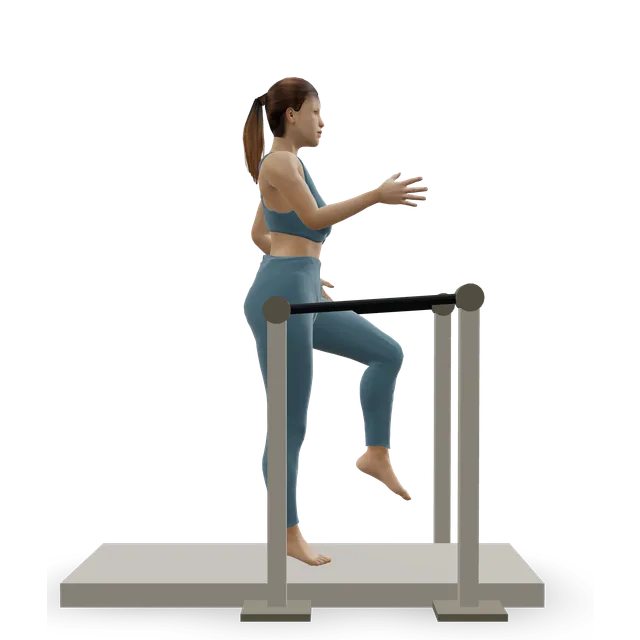 3D demoTreadmill runningIntermediate · Cardio machine
 3D demoSlow calf raiseBeginner · A wall
 3D demoSingle-leg calf raise from a stepIntermediate · A step + A wall
 3D demoStep-upBeginner · A step
 3D demoGlute bridgeBeginner · No equipment
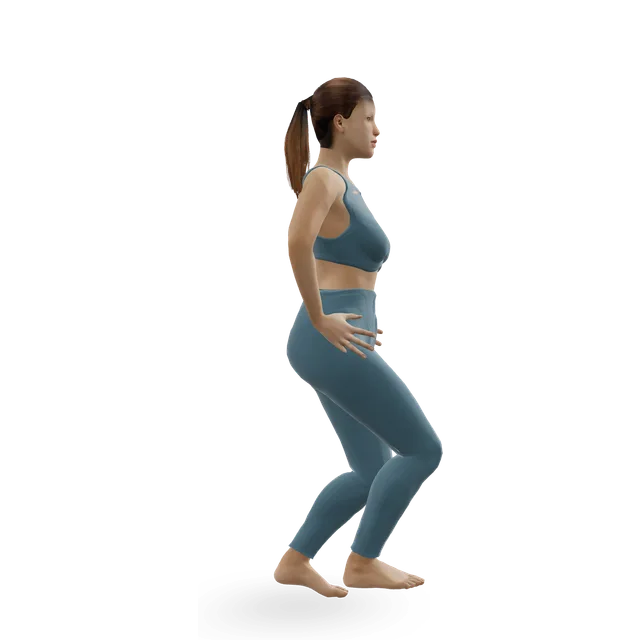 3D demoWalking lungeIntermediate · No equipment
 3D demoSkippingBeginner · No equipment
 3D demoAnkle bounces (mini pogo)Beginner · No equipment
 3D demoWall calf stretch (gastrocnemius)Beginner · A wall
 3D demoStanding quad stretchBeginner · A wall
The run-walk intervals for beginners are weeks 1 to 3 of our Couch to 5K plan. The walking workouts come first if you need them, and the strength sessions go on non-running days.
A 30-minute beginner run-walk session: a brisk walk, then 1-minute jogs with 1-minute walks, building to 3-minute runs over your first three weeks.
30 minBeginner5 movesCardio machine, A wallA 35-minute run-walk session for weeks 4 to 8 of learning to run: 5-minute jogs with 2-minute walks, building to a 20-minute run.
35 minBeginner5 movesCardio machine, A wallA 40-minute easy run at a pace where you can talk in full sentences, with a brisk-walk warm-up and an easy cool-down: the base of every running plan.
40 minBeginner6 movesCardio machine, A wallA 40-minute walk alternating 3 minutes fast and 3 minutes easy, five times over: the interval walking tested in Japanese trials, built up from three rounds.
40 minBeginner3 movesCardio machine, A wallA 25-minute walk with short faster bouts: notice your heart and breathing speed up, then settle. A gentle way to get used to the feelings of effort.
25 minBeginner5 movesCardio machine, A wallAn 8-minute dynamic warm-up for runners: ankle and hip mobility, lunges, skips and pogo hops.
8 minIntermediate8 movesA wallSeven stretches for after a run: calves, soleus, quads, hip flexors, hamstrings and glutes.
10 minBeginner7 movesA wallLearn to squat, hinge and lunge: a 25-minute beginner lower body workout with bridges, clamshells and calf raises.
25 minBeginner11 movesA wall, A bench or boxA 40-minute strength workout for runners at home: hops, Bulgarian split squats, single-leg deadlifts, step-ups, calf raises and side planks.
40 minIntermediate15 movesA wall, A bench or boxA 25-minute standing cardio circuit with no jumping: marching, step jacks, sit-to-stands, punches, step-ups and wall push-ups, with a seated option for most moves.
25 minBeginner9 movesA bench or box, A stepCouch to 5K takes you from walking to 30 minutes of running. The walking plan comes first if you need it, and the 5K and 10K plans come after.
A 9-week beginner plan with the same walk-to-run shape as Couch to 5K: three run-walk sessions a week, from 1-minute jogs to 30 minutes of running.
3 training days35 minBeginner6 days a weekA free 8-week walking plan for beginners: build to 150 minutes of brisk walking a week, with intervals, hills and two short strength sessions.
6 training days40 minBeginner4 days a weekAn 8-week plan to run a faster 5K once you can run one: hills, then intervals and tempo runs, mostly easy running, strength, a time trial and a light race week.
4 training days40 minIntermediate4 days a weekAn 8-week beginner 10K plan: three runs a week plus strength, a long run that grows about 10% at a time, optional hills and tempo runs, and a light race week.
4 training days45 minBeginner2 days a weekA 12-week strength plan for runners: two sessions a week of heavy lifts, single-leg work, calf raises and hops, fitted around your runs.
2 training days45 minBeginnerChoose running shoes that fit and feel comfortable. No type of shoe has been shown to prevent injuries, choosing by foot type made no difference, and one review suggests comfort is a sensible guide.
The NHS suggests a running shop can help you get fitted, and says you don't need to spend a lot: cheaper versions are suitable for beginners.
Source 9
In one trial, softer shoes went with fewer injuries in lighter runners but made no clear difference in heavier runners, so you don't need special shoes for your size.
Source 20
A supportive sports bra if you need one, something reflective if you run in the dark, and a light snack based on carbohydrate 1 to 2 hours before you run, as the NHS suggests. Running with a friend or a group can make it safer too.
Stiff, achy legs for a day or two after your first runs are normal, and they fade as you repeat the runs.
The NHS says don't run if you're in pain. Stop and rest if a pain is sharp, makes you limp or change how you run, or builds as you go, and skip your next run if it's worse the next morning (our plans' rule).
Source 9
See a GP straight away for a knee that's very painful or swollen, a sudden sharp pain at the back of your ankle, or a lot of swelling in your heel or under your foot. See a GP or physiotherapist for knee pain that hasn't gone after a week, Achilles pain after 2 to 3 weeks, or shin pain that's severe, swollen or not improving after a few weeks.
Source 9
Pain you can point to with a fingertip on a bone, which gets worse with each step and later at rest, can be a stress fracture: stop running and get it checked. Our stress fracture guide has more.
Our running pain guides cover the knee, shins, calves, feet, hips, ankles and back, with what to do and when to get help.
You can start the same way, with a gentler first week. One exploratory Danish study found more early injuries in new runners with a BMI over 30 who ran more than 3 km in their first week, so our Couch to 5K plan suggests 5 rounds instead of 10 in week 1. At a slow jog of 8 to 9 minutes per kilometre, the 8 minutes of running in one NHS week-1 run is about 1 km (our arithmetic). US guidance says less fit people should build up more slowly, so repeat weeks whenever you need to, and walk, cycle or use the cross-trainer on other days. You don't need special shoes for your size.
Older adults may need 2 to 4 weeks to adapt to each step, so taking each week twice is sensible (our Couch to 5K plan suggests it from 60). Older age adds a little injury risk, but fitness rose at least as much in older men as in young men in a cycling trial, the average age in one UK Couch to 5K group was 47, and recreational runners had less hip and knee arthritis than people who didn't run.
A previous injury is the strongest known risk for the next one, and in one Couch to 5K group it raised the odds of a new injury about 7.6-fold. Make sure it has settled, use the matching pain guide, and take each week twice (our suggestion).
Six months after a 6-week course, 29.5% of new runners had stopped, mostly because of injury, and in one UK Couch to 5K group 27% finished the 9 weeks. Repeating weeks and stopping early when something hurts are the simplest ways to stay in it.
People who enjoyed their group runs, felt confident and had support came more often. The NHS suggests setting a goal, such as a 5 km event, and running with a partner, a friend or a group.
parkrun is a free weekly 5 km walk, jog or run. Couch to 5K graduates who joined took part about as often as other parkrunners, about 11 times a year.
Keep three easy runs a week and add 2 or 3 minutes to one run a week to reach 5 km, as our Couch to 5K plan does. Then try our 5K plan to run faster or our 10K plan to go further.
Aerobic fitness rose within 3 weeks of regular training in a small trial, and beginners in 10-week running groups covered about 189 m more on a shuttle-run test, with no comparison group.
Each extra 30 minutes a week of aerobic exercise took off about 0.5 kg on average in trials. Running helps, and food does most of the work.
Source 39
Runners had a lower risk of dying early than non-runners, even at small amounts, though these studies show links, not proof.
Stop and call 999 for any of these. Don't drive yourself to A&E.
For a knee that's very painful or swollen, a sudden sharp pain at the back of your ankle (your Achilles tendon may have torn), or a lot of swelling in your heel or under your foot.
Source 9
Call NHS 111 or ask for an urgent GP appointment (in the US, your doctor or urgent care) if you're suddenly more short of breath than usual, or your muscles are very sore and weak with dark, red or cola-coloured pee after an unusually hard run.
On hot days, run early or late, slow down and drink water. Our running plans list the signs of heat exhaustion and heatstroke.
Couch to 5K uses 3 runs a week with rest days between. In an old trial, 5 days a week injured 39% of men against 12% at 3 days, and in pooled cohort studies any amount of running, even once a week, went with a lower risk of early death.
Couch to 5K is built on them, and in 42 non-elite marathon runners, run/walk finished in about the same time as running only, with less muscle pain.
Choosing shoes by foot posture made no difference in more than 7,000 recruits, and no shoe type has been shown to prevent injuries. Feet that roll in weren't injured more in neutral shoes. Go by comfort and fit.
Recreational runners had less hip and knee arthritis than people who didn't run (3.5% against 10.2%); competitive runners had more. These are associations, not proof.
Source 29
A programme built on the 10% rule didn't prevent injuries in 532 beginners, and a Cochrane review found no evidence for slower build-ups. In an observational study, single runs much longer than your recent longest went with more injuries.
Body weight itself wasn't linked with injury in an 848-runner trial, and a gentler first week suits people starting at a higher body weight. Older adults may need more time for each step, and older men's fitness rose at least as much as young men's in a cycling trial.
Exercise programmes didn't clearly reduce injuries in 9 trials of runners. Do strength work for strength and health.
Source 23
Stretching didn't reduce running injuries in 6 trials of 5,130 people. Stretch afterwards if it feels good.
Start with walk-run: run for a minute, walk for a minute or 90 seconds, and repeat, 3 times a week with a rest day between. NHS Couch to 5K builds from there to 30 minutes of running over 9 weeks or longer, and you can repeat any week.
Slowly enough to talk in full sentences. That pace lets you finish the session and come back for the next, and a jog barely faster than your walk is fine.
Go by time rather than distance at first: Couch to 5K starts with 1-minute runs and builds to 30 minutes of running. If you're starting at a higher body weight, keep your first week especially gentle: one small exploratory study found more early injuries when new runners with a BMI over 30 ran more than 3 km in their first week.
Three times a week, with a rest day between runs, is how Couch to 5K and most beginner programmes work. In an old trial of men jogging hard, running 5 days a week brought far more injuries than 3 (39% against 12%). Walking or cycling on the days between is fine.
Running shoes that fit well and feel comfortable. Choosing shoes for your foot type made no difference to injuries in trials of more than 7,000 recruits, and no type of shoe has been shown to prevent injuries. A running shop can help with fit, and you don't need an expensive pair.
Stiff, achy legs for a day or two are normal when you start. Stop and rest if a pain is sharp, makes you limp, builds as you run or is worse the next morning, and get a sore spot on a bone checked. The NHS says not to run in pain.
Slow down until you can talk in full sentences, and walk for a minute whenever you need to. Getting out of breath is normal at first, and fitness rises within a few weeks. Severe breathlessness (gasping, or not able to get your words out), or breathlessness with chest pain, is different: call 999 (911 in the US).
Yes. Start with brisk walking, then walk-run, and keep your first week gentle: in one small exploratory study, new runners with a BMI over 30 who ran more than 3 km in their first week had more injuries. Repeat weeks whenever you need to, and walk, cycle or use the cross-trainer on other days.
No. Older adults may need 2 to 4 weeks to adapt to each step, so taking each week twice is sensible. Recreational runners had less hip and knee arthritis than people who didn't run.
Not for most people: in pooled studies, 3.5% of recreational runners had hip or knee arthritis, against 10.2% of people who didn't run. Competitive runners had more, and these are associations, so build up gradually and stop if a knee hurts.
Keep running 3 times a week, add a few minutes to one run a week to reach 5 km, and try a free parkrun. Then choose our 5K plan to run faster or our 10K plan to go further.
Its cause isn't fully understood, but it's very common: about 70% of runners get one in a year, and it's more likely after eating or drinking, especially sugary drinks. Avoid large meals and drinks in the 2 hours before you run, and slow down or walk until it passes.
Exercise education, not a personal prescription, and clinical review of these guides is pending. Check with a GP before starting hard training if you have a heart condition, chest pain, dizziness or breathlessness when active, and stop for sharp or increasing pain. Health disclaimer.











