Any steady activity counts
Brisk walking, cycling, swimming, rowing, dancing and running all build stamina. In trials, walking programmes alone raised fitness in people who weren't active.
Training guide
Stamina is what lets you climb the stairs, keep up on a walk or finish a run without needing to stop. It has two parts: aerobic fitness, which is how much oxygen your heart, blood and muscles can use, and endurance, which is how long you can keep going at a given pace. Both improve with training, at any age, and usually within weeks.
The research points to three things: train often, build up gently, and add a little harder work once you have a base. Walking counts; you don't have to run.
This guide covers how to build and improve your stamina with walking, running, cycling, rowing and intervals, how many sessions a week to aim for, how fast fitness rises and fades, how to measure your progress, and how to train safely with a health condition.
Brisk walking, cycling, swimming, rowing, dancing and running all build stamina. In trials, walking programmes alone raised fitness in people who weren't active.
At least 150 minutes a week of moderate activity, where you can talk but not sing, or 75 minutes of vigorous activity, or a mix, plus strength work on 2 days.
In one trial, a single 60-minute session a week left most people unchanged after 6 weeks, while 4 or 5 sessions a week improved everyone. Across hundreds of studies, more sessions brought bigger gains.
Interval training raised VO2 max (the most oxygen your body can use) a little more than steady training in 28 studies. Once or twice a week is enough for most people (the starting point in our HIIT guide, on high-intensity interval training).
Source 6
Fitness rose within 3 weeks in a cycling trial, and by 18 to 31% over 12 weeks. How long you can keep going can improve even sooner.
Use the talk test, a timed walk or run over the same route, and your resting heart rate, which tends to fall as you get fitter.
This is how much oxygen your heart, lungs, blood and muscles can take in and use. VO2 max, the most oxygen your body can use in a minute, is the lab measure; our VO2 max guide covers what's typical for your age. Training raises it mainly through more oxygen-carrying blood, and more mitochondria (the parts of muscle cells that use oxygen) and tiny blood vessels in your muscles.
This is how long you can keep going at a given pace before you have to slow down or stop. It can improve before VO2 max does: in one study of 8 people, 6 short sprint interval sessions over 2 weeks doubled how long they could keep cycling at a hard pace.
Source 8
In everyday use they mean much the same thing: being able to keep going. This guide uses them that way.
Moderate effort means you can talk but not sing; vigorous means you can't say more than a few words without pausing for breath. In 16 adults, the point where talking first became hard matched a lab marker of effort (the ventilatory threshold).
The least active have the most to gain. Up to about half of the differences between people in fitness, and in how much it improves, run in families, but almost everyone improves with enough sessions. Women gained more in percentage terms across many studies, and in one small trial older men gained at least as much as young men.
In 28 studies of 723 adults aged 18 to 45, steady endurance training raised VO2 max by about 4.9 mL/kg/min (millilitres of oxygen per kilogram of body weight a minute): roughly 12% from where people started. Walking programmes raised it by about 3 in people who weren't active.
Interval training raised VO2 max by about 5.5, about 1.2 more than steady training. Longer intervals gave the biggest gains in one analysis of 37 studies, and short all-out sprint intervals raised fitness within 2 to 8 weeks across 19 studies.
In 78 adults training for 60 minutes at a time over 6 weeks, 69% of those doing 1 session a week didn't improve, against 40% at 2 sessions, 29% at 3 and none at 4 or 5. When the people who hadn't improved added 2 sessions a week for 6 more weeks, every one of them improved.
Source 4
Across 353 studies of 5,973 people, more sessions a week brought bigger gains in fitness and in the muscles' oxygen machinery. Women and less fit people gained more in percentage terms, and the ability to adapt lasted through life.
Source 5
In 8 young and 8 older men cycling for 45 minutes 3 times a week, VO2 max rose within 3 weeks, and by 18% in the young and 31% in the older men after 12 weeks. It's a small study.
Source 7
In one study of 8 people, 6 sprint interval sessions over 2 weeks doubled how long they could cycle at a hard fixed pace, from 26 to 51 minutes, while their VO2 max didn't change. It's one small study.
Source 8
In the HERITAGE family study, at least half of the differences in fitness before training, and up to 47% of the differences in how much it rose over 20 weeks, ran in families. The average gain was about 0.4 litres of oxygen a minute, ranging from little to over 1 litre, and in another trial more sessions brought every slow responder along.
In 7 trained endurance athletes who stopped training, VO2 max fell 7% in 3 weeks and settled 16% lower by 8 weeks, still above untrained people. Recently gained fitness can be lost completely after a long break, but keeping some hard effort while cutting the time preserves most of it.
In 894 runners, heavy and combined strength training improved time trials and time to exhaustion, though the certainty of the evidence was very low to moderate. In 93 highly trained runners, it made running more economical.
Across 43 studies, doing both didn't reduce strength or muscle gains; explosive strength gained a little less when both were done in the same session.
Source 19
Across 191 studies, endurance training and yoga lowered resting heart rate, more in people who started higher.
Source 10
Aim for at least 150 minutes of moderate activity a week, spread through the week, or 75 minutes of vigorous activity, or a mix. Any activity is better than none, and the health benefits build fastest up to about 150 minutes.
Three to five sessions a week of 20 to 30 minutes at a talk-but-not-sing pace, adding about 5 minutes a week until sessions reach 30 to 60 minutes (our editorial starting point, as in our zone 2 guide).
Source 1
Brisk walking, cycling, swimming, rowing, the cross-trainer, stairs, dancing and running all count. Our walking plan builds to 150 minutes a week in 8 weeks, and Couch to 5K takes beginners to 30 minutes of running.
Aim for at least 3 sessions a week; more sessions brought more gains in trials (our reading of them).
Once you can manage 30 minutes steadily, add 1 interval session a week, such as our Norwegian 4x4 (four 4-minute hard efforts with 3 easy minutes between), and a second later if you like (our editorial starting point, as in our HIIT guide). Harder exercise brings bigger gains but more risk of injury, especially if you're not used to it.
Strength training on 2 days a week is part of the UK guidelines, and it helps running performance too.
Lengthen your sessions first, then add a session, then add harder intervals (our suggestion). For running, Couch to 5K starts with 1-minute runs and 90 seconds of walking, 3 times a week, and builds to 30 minutes of running over 9 weeks or more.
Source 20
Eat enough, with carbohydrate around long sessions (the International Society of Sports Nutrition's advice for endurance athletes), and sleep 7 to 9 hours: sleep loss lowers endurance performance. Tiredness and breathlessness that don't fit your training can be iron deficiency anaemia, so see a GP.
Steps 1 and 5 are our editorial starting point, as in our zone 2 and HIIT guides; steps 3 and 4 follow NHS Couch to 5K; step 2 is our interval walking workout.
Loading the 3D figure…
The movement on the figure: Treadmill jogging
Choose the ones you'll keep doing. Indoor rowing, the cross-trainer, the recumbent bike, the stair-stepper, trail walking and step jacks have starting doses on their move pages; sprint intervals are for once you have a base.
 3D demoTreadmill walkingBeginner · Cardio machine
 3D demoTreadmill joggingIntermediate · Cardio machine
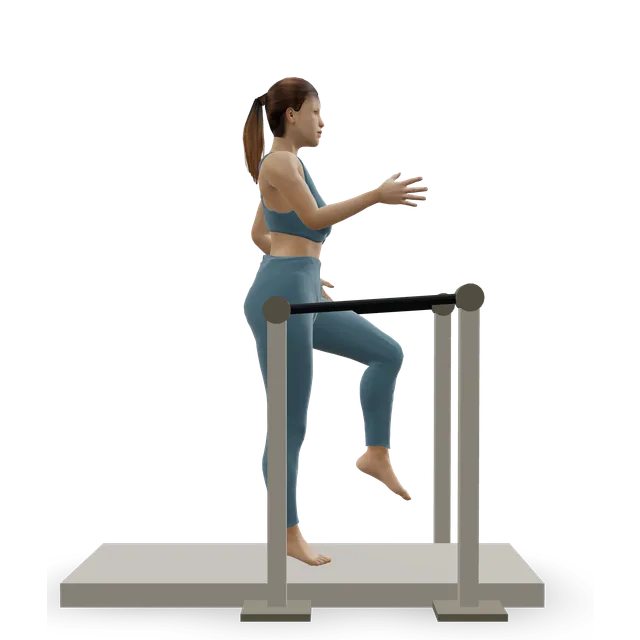 3D demoTreadmill runningIntermediate · Cardio machine
 3D demoStationary cyclingBeginner · Cardio machine
 3D demoIndoor rowing (rowing machine)Beginner · Cardio machine
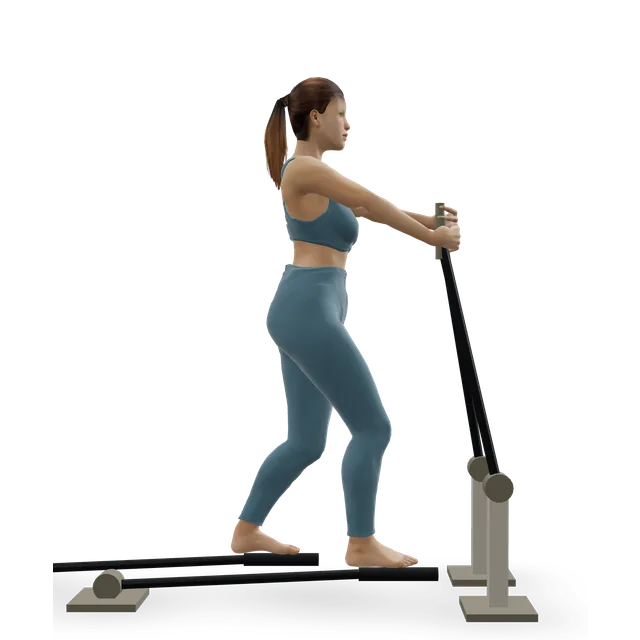 3D demoElliptical trainerBeginner · Cardio machine
 3D demoRecumbent exercise bikeBeginner · Cardio machine
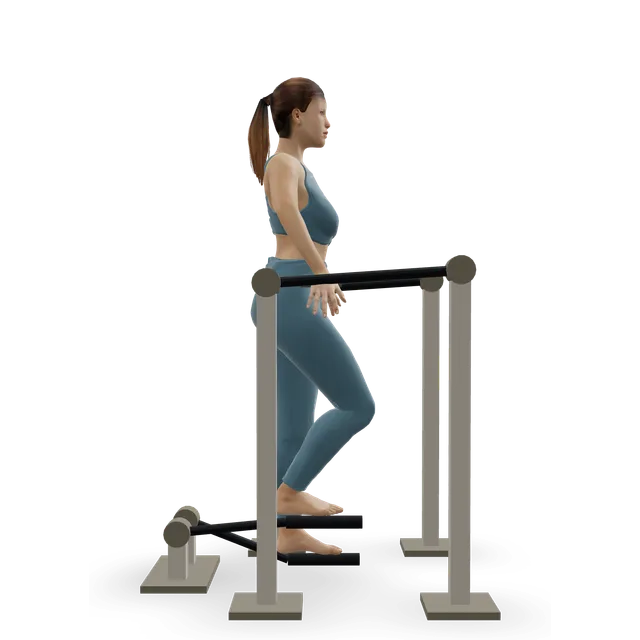 3D demoStair-stepper machineIntermediate · Cardio machine
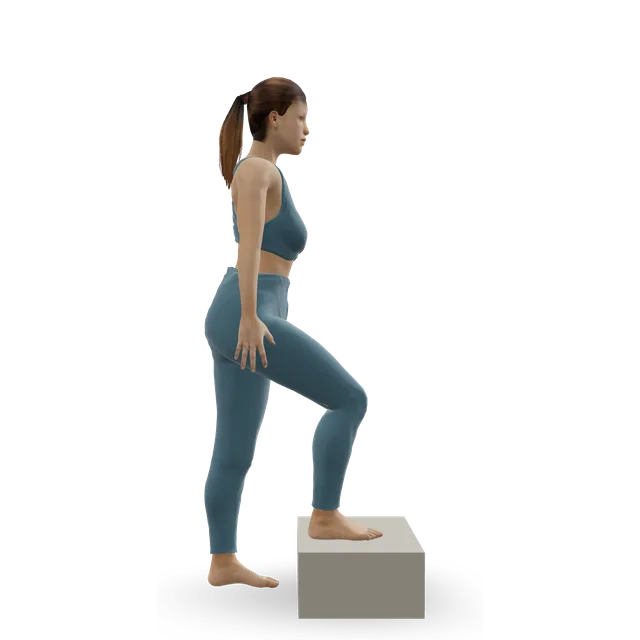 3D demoStair climbingIntermediate · A step
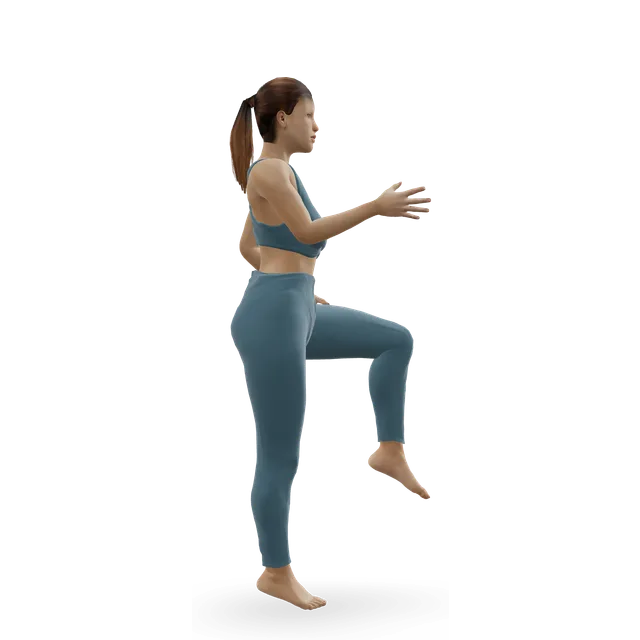 3D demoTrail running and walkingBeginner · No equipment
 3D demoStep jack (low-impact jumping jack)Beginner · No equipment
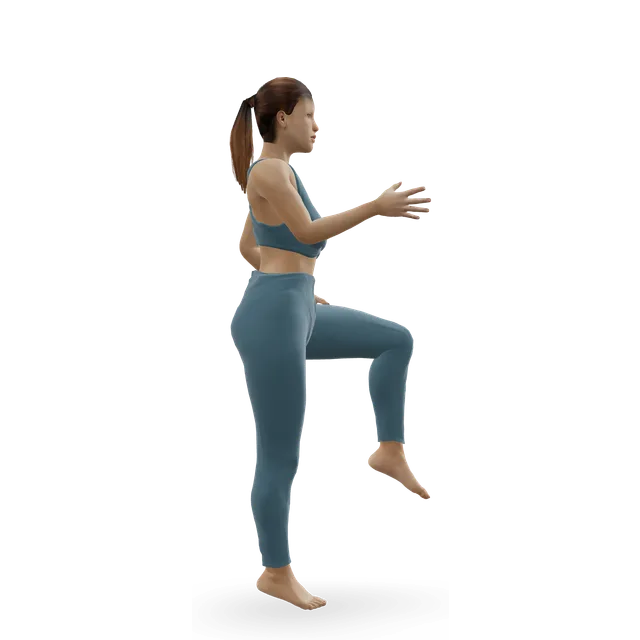 3D demoSprint intervalsAdvanced · No equipment
Start with the steady and run-walk sessions; add the 4x4 or another interval session once a week when 30 minutes feels comfortable.
A steady 30 to 45 minute cardio session at talk-but-not-sing pace: walk, cycle, row or cross-train, counting toward weekly activity guidelines.
40 minBeginner3 movesCardio machine, A wallA 40-minute walk alternating 3 minutes fast and 3 minutes easy, five times over: the interval walking tested in Japanese trials, built up from three rounds.
40 minBeginner3 movesCardio machine, A wallA 30-minute beginner run-walk session: a brisk walk, then 1-minute jogs with 1-minute walks, building to 3-minute runs over your first three weeks.
30 minBeginner5 movesCardio machine, A wallA 40-minute easy run at a pace where you can talk in full sentences, with a brisk-walk warm-up and an easy cool-down: the base of every running plan.
40 minBeginner6 movesCardio machine, A wallThe Norwegian 4x4, a well-studied interval session for raising VO2 max: four 4-minute hard efforts with 3 easy minutes between, on a bike, rower or treadmill.
40 minIntermediate3 movesCardio machine, A wallA 25-minute beginner rowing machine workout: set the damper, learn the stroke one part at a time, row three easy rounds of 4 to 5 minutes, then stretch.
25 minBeginner4 movesCardio machineA 30 to 45-minute beginner pool swim: a shoulder warm-up on the side, easy lengths, a main set of repeats with rests, and an easy swim down, any stroke.
35 minBeginner5 movesOther / check instructionsA 25-minute standing cardio circuit with no jumping: marching, step jacks, sit-to-stands, punches, step-ups and wall push-ups, with a seated option for most moves.
25 minBeginner9 movesA bench or box, A stepA 45-minute gym strength workout for runners: hops, heavy squats, Bulgarian split squats, calf raises and side planks, with sets, reps and rest.
45 minIntermediate13 movesA wall, A bench or boxWalking, running and mixed plans that build up week by week.
A free 8-week walking plan for beginners: build to 150 minutes of brisk walking a week, with intervals, hills and two short strength sessions.
6 training days40 minBeginner3 days a weekA 9-week beginner plan with the same walk-to-run shape as Couch to 5K: three run-walk sessions a week, from 1-minute jogs to 30 minutes of running.
3 training days35 minBeginner4 days a weekAn 8-week beginner 10K plan: three runs a week plus strength, a long run that grows about 10% at a time, optional hills and tempo runs, and a light race week.
4 training days45 minBeginner2 days a weekA 12-week strength plan for runners: two sessions a week of heavy lifts, single-leg work, calf raises and hops, fitted around your runs.
2 training days45 minBeginner7 days a weekA full week that mixes intensities: three strength days, two cardio days, a mobility day and an easy day, never seven hard days.
3 training days45 minBeginnerYou may notice a difference within a few weeks: fitness rose within 3 weeks in a cycling trial, and how long people could keep going rose within 2 weeks in a small study of sprint intervals.
Fitness rose 18 to 31% over 12 weeks in one trial, and Couch to 5K takes 9 weeks or more to reach 30 minutes of running. People vary a lot, so compare yourself with yourself.
Fitness fades over weeks, not days, and shorter sessions that keep some brisk effort hold on to most of it. On a busy week, 2 short sessions with a few brisk efforts beat stopping (our suggestion).
As you get fitter, you can go faster before talking gets hard. Note the pace or speed on the same walk or ride every few weeks (our suggestion).
Time the same route, or see how far you get in 12 minutes, every 4 to 6 weeks (our suggestion). Our VO2 max calculator turns a 12-minute run, a 1-mile walk or a 1.5-mile run into an estimate, and the six-minute walk test and the beep test have their own pages.
Take your pulse for a minute on waking, a few mornings in a row. It tends to fall as you get fitter; our resting heart rate test explains how to take it.
Source 10
The same walk or ride feels easier, and your heart rate is lower at the same pace (our suggestion for tracking it).
The NHS asks adults over 65 to be active every day, with 150 minutes of moderate activity a week, or 75 minutes of vigorous activity if you're already active, plus strength, balance and flexibility work on 2 days. In a cycling trial, older men's fitness rose at least as much as young men's.
Keep up what you already do, but the NHS says it's not recommended to start a new vigorous activity in pregnancy, such as running. Our pregnancy guide has the details.
Source 26
Follow your cardiac or pulmonary rehab team, and check with them before hard intervals; our guides to heart disease, COPD (chronic obstructive pulmonary disease) and asthma cover the details. With asthma, symptoms during exercise are a sign to get your asthma reviewed.
NICE says people with ME/CFS (myalgic encephalomyelitis or chronic fatigue syndrome) shouldn't be offered general exercise programmes or graded exercise therapy, so the advice to keep adding sessions doesn't apply. Our long COVID guide explains how to check for post-exertional malaise (symptoms that get worse after effort) and pace instead.
Source 27
For chest pain that comes on suddenly and doesn't go away, or spreads to your arms, neck, jaw, stomach or back; if someone faints while exercising; or for severe difficulty breathing (gasping, choking or not able to get words out), a chest that feels tight or heavy, lips or skin turning very pale, blue or grey, or sudden confusion. During any session, stop for chest pain or pressure, unusual breathlessness, dizziness or fainting.
If you're more short of breath than usual, have palpitations, or have pain and swelling in one leg.
Source 30
If you've felt tired for weeks without a clear reason, or if tiredness, breathlessness or palpitations seem out of proportion to your effort. The NHS also suggests speaking to a GP before you start if you haven't exercised for some time or have a health condition.
Shin, knee, calf and back pain from running each have their own guide. Ease off rather than running through pain that changes how you run (our suggestion).
Genes account for up to about half of the differences in fitness and in how much people improve, but in one trial every slow responder improved once they trained more often, and across 353 studies people kept the ability to adapt throughout life.
Walking programmes raised fitness in people who weren't active, cycling raised VO2 max by 18 to 31% in 12 weeks, and the guidelines count any activity that makes you breathe faster.
Both raise fitness. Intervals added about 1.2 mL/kg/min more to VO2 max in 28 studies.
Source 6
Harder exercise raises fitness more but brings more risk of injury, and in the non-responder trial, how often people trained mattered more than how hard.
Strength training improved running performance and economy in trials, and doing both doesn't blunt either.
In trained athletes, VO2 max fell 7% over 3 weeks off and stayed above untrained levels even after 12 weeks. Shorter, still-brisk sessions keep most of it.
Older men's VO2 max rose 31% in 12 weeks of cycling, at least as much as young men's, and the ability to adapt lasts through life.
Train often rather than very hard: 3 or more sessions a week of walking, cycling, running or similar, with one or two interval sessions once you have a base. In one trial, everyone improved at 4 or 5 sessions a week, but most people didn't at one.
You'll usually notice a difference within a few weeks: fitness rose within 3 weeks in one trial and by 18 to 31% over 12 weeks. Couch to 5K takes beginners from walking to 30 minutes of running in 9 weeks or more.
In everyday use they mean much the same: being able to keep going. Scientists split it into aerobic fitness (how much oxygen your body can use, measured as VO2 max) and endurance (how long you can hold a pace), and the second can improve faster than the first.
Start with run-walk intervals, as Couch to 5K does, 3 times a week with rest days between, and build to steady easy runs. Add one interval session a week later, and strength training twice a week, which improved running performance in trials.
Brisk walking, cycling, swimming, rowing, the cross-trainer and stairs all count. Walking programmes alone raised fitness in people who weren't active.
March on the spot, do step jacks, use the stairs, and add sit-to-stands and step-ups in a circuit, or do a HIIT session if your joints are happy with jumping. Work at a pace where you can talk but not sing, and build up the rounds.
Yes, for most people starting out: walking programmes raised aerobic fitness in people who weren't active. Walk briskly, add hills or faster spells as it gets easier, and aim for 150 minutes a week.
The same walk or run feels easier, you can talk more at the same pace, a timed route gets quicker, and your resting heart rate tends to fall. Test yourself the same way every 4 to 6 weeks.
Both work. Intervals raised VO2 max a little more in an analysis of 28 studies, but they're harder and carry more risk of injury, so most people do them once or twice a week.
Yes. In a cycling trial, older men's fitness rose 31% in 12 weeks, at least as much as young men's, and the body's ability to adapt lasts through life. Start gently, and check with a GP first if you have a health condition.
Often it's fitness, and that improves with regular training. But breathlessness that's new or worse than usual, with tiredness or palpitations, can be anaemia, a heart or lung problem or another illness, so see a GP, and call 999 for severe breathlessness or chest pain.
Yes. Strength training improved running time trials and running economy in trials of runners, and doing it alongside cardio doesn't blunt either.
Exercise education, not a personal prescription, and clinical review of these guides is pending. Check with a GP before starting hard training if you have a heart condition, chest pain, dizziness or breathlessness when active, and stop for sharp or increasing pain. Health disclaimer.