6-minute walk test: predicted distance calculator and how to do it
Walk as far as you can in 6 minutes, back and forth along a flat, straight 30-metre course, then enter your distance with your sex, age, height and weight. The calculator gives the distance predicted for a healthy adult like you, your walk as a percentage of it, and the lower limit of normal (LLN): only 5 in 100 healthy adults like you walk less. It names the equation it used. You can slow down and rest, but don't run. If you have a heart or lung condition or use oxygen, do this test with your care team rather than on your own.
Read the "Before you test" box, then enter your sex, age, height, weight and distance (in metres, feet, or laps of 60 m plus the last part-lap), and choose your course and whether this was your first walk. Where both equations cover your age, you can choose the US or the European one.
Your distance, as % of predicted
87%of predicted
Your 480 m against 549 m predicted for a healthy man of your age, height and weight. That's above the lower limit of normal (396 m), the distance only the lowest 5% of healthy adults like you walked.
Equation: Enright and Sherrill 1998, built on 117 US men aged 40 to 80. Predicted 549 m; lower limit of normal 396 m.
The European equation predicts 564 m for you (lower limit 442 m). Equations often disagree by about 50 m for the same person, which is why the result names the one it used.
Your second walk is usually about 26 m longer just from practice, so do two, at least 30 minutes apart, to set your starting point.
Prediction equations explain only about 40% of the differences between healthy people. A short distance isn't a diagnosis: many things lower it, from your height to your joints, heart or lungs. About 30 m is the smallest change people with lung disease notice; in heart disease, estimates run from about 25 to 36 m.
You need a measured 30 m stretch of flat, straight floor or path, two cones, a timer, a chair near the start, a phone, and a helper to count your laps and say the set phrases.
Mark a flat, straight 30-metre course in a quiet corridor or on a level path, with a cone at each end. Each lap, there and back, is 60 metres.
Don't exercise hard in the 2 hours before, and don't warm up. Sit and rest near the start for at least 10 minutes first.
Wear comfortable clothes and walking shoes, use your usual walking aid, and take your usual medicines.
Walk back and forth around the cones as far as you can in 6 minutes, turning briskly at each one. You can slow down, stop and rest, leaning on the wall if you like, but don't run or jog; the clock keeps going.
Your helper says only the set phrases, once a minute: "You are doing well. You have 5 minutes to go", then "Keep up the good work. You have 4 minutes to go", "You are doing well. You are halfway done", "Keep up the good work. You have only 2 minutes left" and "You are doing well. You have only 1 minute to go".
At 6 minutes, stop where you are. Count the full laps, multiply by 60 metres, and add the last part-lap.
Stop at once for chest pain, breathlessness you can't tolerate, leg cramps, staggering, heavy sweating, or looking pale or ashen.
If you're tracking change, do two walks at least 30 minutes apart and keep the better one.
The short version
How far you can walk in 6 minutes
On a flat, straight course of 30 m or more, at your own pace, with set phrases of encouragement, following the American Thoracic Society (ATS) method and the 2014 European Respiratory Society (ERS) and ATS standard. It reflects your everyday walking fitness, not your VO2 max (the most oxygen your body can use in all-out exercise).
Enright and Sherrill's equations, from healthy US adults aged 40 to 80, give the distance expected for your sex, age, height and weight; only 5 in 100 healthy adults walk less than the lower limit.
117 men and 173 women aged 40 to 80 from a random sample of adults in Tucson, Arizona, after leaving out current smokers, people with a body mass index over 35, and people with signs of lung, heart or circulation disease. Each walked a 100-foot hallway once, hearing only "You're doing well" or "Keep up the good work". The median distance was 576 m for men and 494 m for women, and the lower limit is the 5th percentile.
The equations explain about 40% of the differences between people. The authors advise caution for people unlike their sample, naming people who aren't white and anyone under 40 or over 80, and expect longer walks from people who've done the test before or had other encouragement. The calculator uses them by default because they come from a random population sample and match a single standard walk (our choice).
Built on 530 healthy adults from a general population sample in Verona, Italy (287 women aged 21 to 76 and 243 men aged 21 to 78), who walked as far as they could in a 30 m hallway by the ATS method. "Active" counts as 1 if you exercise 2 to 3 times a week or more for about an hour a week or more, and 0 otherwise. The calculator uses it from 21 to 39, which the US equation doesn't reach, and as a choice where both apply. It explains less of the differences between people (24% for women, 16% for men):
Across 180 example people aged 40 to 76, the two predictions differed by a median of about 48 m, by 30 m or more for about two-thirds of them, and by up to about 125 m at the extremes of height and weight. Over 40, the US equations averaged 6 m low for women and 13 m high for men in the Verona sample. The ERS/ATS standard says equations give substantially different predictions for one person, asks for the equation to be stated whenever % of predicted is reported, and advises using one built in your own population where possible. We found no UK equation for the general population.
Rounded as the calculator shows them: metres and % of predicted to the whole number. The European examples assume "not active" unless they say otherwise.
A man of 65, 175 cm and 80 kg who walks 480 m: 549 m predicted by the US equation, lower limit 396 m, 87% of predicted, above the lower limit. The European equation predicts 564 m (lower limit 442 m).
A woman of 58, 162 cm and 70 kg who walks 420 m: 513 m predicted by the US equation, lower limit 374 m, 82%, above it. If she's active, the European equation predicts 570 m, lower limit 474 m, 74%, below it: the same walk is normal by one equation and below normal by the other.
A woman of 75, 155 cm and 60 kg who walks 330 m: 423 m predicted, lower limit 284 m, 78%, above it.
A man of 30, 180 cm and 80 kg who walks 650 m: the European equation predicts 645 m, lower limit 523 m, 101%.
Laps: 7 laps of 60 m plus 18 m is 438 m, and 1,890 feet is 576 m.
Under 21 or over 80, the calculator shows your distance only. From 81 to 89, it adds the average for your sex at 80 to 89 from one study of 96 independent community-living people aged 61 to 89, which we read in a reprint and whose course we couldn't check:
A Belgian equation (Troosters 1999) came from 51 healthy volunteers aged 50 to 85 who walked a 50 m corridor, urged every 30 seconds to walk as quickly as possible, keeping the better of two walks. That gives longer distances than a single standard walk, and the ATS advises against "as fast as possible" phrasing, so the calculator doesn't use it.
In lung disease, repeat walks agreed well (reliability 0.82 to 0.99 in 7 studies, where 1 is perfect), but the second walk averaged 26 m longer from practice (13 studies); Enright cites a 15% gain on a second day. The 2002 statement put the typical variation between tests at about 8%. That's why the 2014 standard asks for two walks, at least 30 minutes apart, when you're tracking change, keeping the better one.
It measures everyday walking fitnessStrong evidence
The walk is self-paced and most people don't reach their maximum, so it reflects the effort of daily activities; it "does not determine peak oxygen uptake". In 51 healthy older adults it reached 77% of their age-predicted maximum heart rate. In moderate lung disease, though, it can reach a peak oxygen uptake similar to a maximal exercise test.
The 2002 ATS statement set the 30 m course and the set phrases, and a 2016 erratum says the 2014 ERS/ATS standard is "intended to supersede" it. The 2014 standard, written for chronic lung disease, keeps the course and phrases, adds oxygen monitoring, and asks for two walks when tracking change.
"A low 6MWD is nonspecific and nondiagnostic", says the ATS statement (6MWD is the 6-minute walk distance). Shorter height, older age, higher body weight, female sex, a shorter course, and heart, lung, joint or muscle problems can all lower it, so a low result is a reason to find out why with your GP.
In heart and lung disease, a shorter walk goes with worse outcomesStrong evidence
A shorter distance went with higher death rates in 13 of 14 studies in chronic obstructive pulmonary disease (COPD), and the ATS lists heart failure, COPD and pulmonary hypertension as conditions where it predicts illness and death. These are associations. For healthy people, Enright wrote in 1998 that whether it predicts outcomes "remains to be seen"; we didn't review later studies.
Predictions fit groups better than individualsStrong evidence
The US equations explain about 40% of the differences between healthy people and the European ones 16 to 24%, so treat % of predicted as a rough guide. The ERS/ATS standard notes that its use for tracking change hasn't been studied: compare your own distances instead.
A home walk compares fairly only on a measured, flat, straight 30 m stretch, and with a heart or lung condition the test belongs with your team.
Course length mattersEmerging evidence
In 45 people with COPD, a 10 m course gave 49.5 m less than a 30 m course, and equations built on longer courses overestimated their distance by 30 to 33%. Shorter courses mean more turns, which the ATS statement says reduces the distance.
Home walks read short; a 30 m stretch outdoors matchedEmerging evidence
In a review of home testing in lung disease, supervised walks at home, on tracks averaging 17 m, came out 30.4 m shorter than at the centre, and 58% had to be done outdoors for lack of space. On a flat 30 m pavement, outdoor and indoor walks matched (394 and 398 m) in one study.
Remote and self-done walks agreed poorlyEmerging evidence
In advanced lung disease, remote walks at home on a 10 m corridor averaged 293 m against 349 m in person. People with an inflammatory muscle disease walked further in the clinic than when they tested themselves at home, while their sit-to-stands and timed up and go matched. A phone GPS walk outdoors tracked the standard test closely in pulmonary hypertension, but only 49% of people managed it, and phone apps in another study were right on average but up to about 73 m out for one person.
Treadmills, loops and shorter coursesStrong evidence
On a treadmill, people with severe lung disease walked 14% less on average, and the results "are not interchangeable with corridor tests", so treadmills aren't recommended. A continuous oval track gave about 28 m (92 feet) more in one study, and straight courses from 15 to 50 m didn't differ significantly in that study, but the 2014 standard asks for 30 m or more, to match the courses the equations were built on. So the calculator gives no % of predicted for a treadmill or a course under 15 m, and notes that a course of 15 to 29 m may read low and a loop about 28 m long.
Measure a flat, straight 30 m stretch, such as a quiet path, and use the same course every time. Have someone with you and a phone to hand, and test on a cool day. If you have a heart or lung condition, use oxygen, or get chest pain or breathlessness when you walk, do the test with your team: in clinic they watch your oxygen level, and the 2014 standard stops a walk if it falls below 80%.
Compare walks done the same way: the same course, about the same time of day, and two walks to set your starting point.
Lung disease: about 30 mStrong evidence
The ERS/ATS standard puts the smallest important change at 30 m in chronic lung disease, confidently between 25 and 33 m, from 11 studies. The 2002 statement gave 54 m in severe COPD, and more than 70 m to be 95% sure of a real change in one person.
About 25 m in 81 people with coronary heart disease during cardiac rehab, about 36 m over 6 to 12 months in stable heart failure, 30 m in a pilot of 22 people with heart failure, 14 to 15 m for "a little improvement" in two heart failure trials, and 43 m in 45 older people with heart failure. The methods differ, so treat these as a range.
Walk more, building towards 150 minutes a week of moderate activity, where you can talk but not sing, and add leg strength work. With a heart or lung condition, ask your team about cardiac or pulmonary rehab.
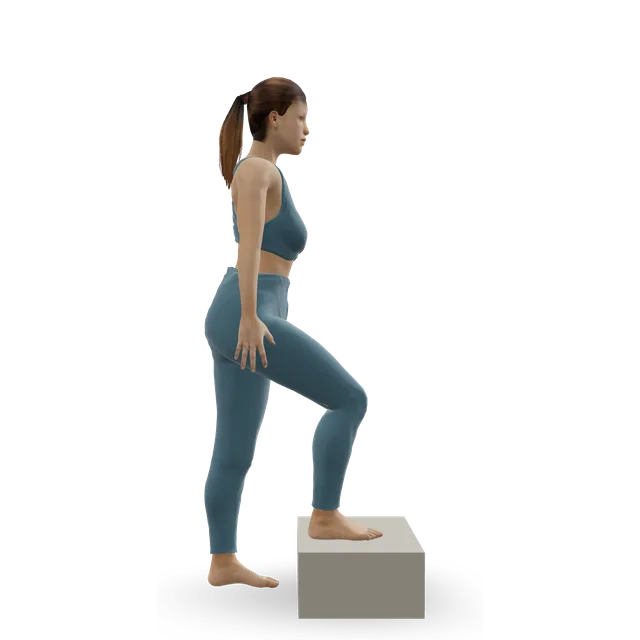
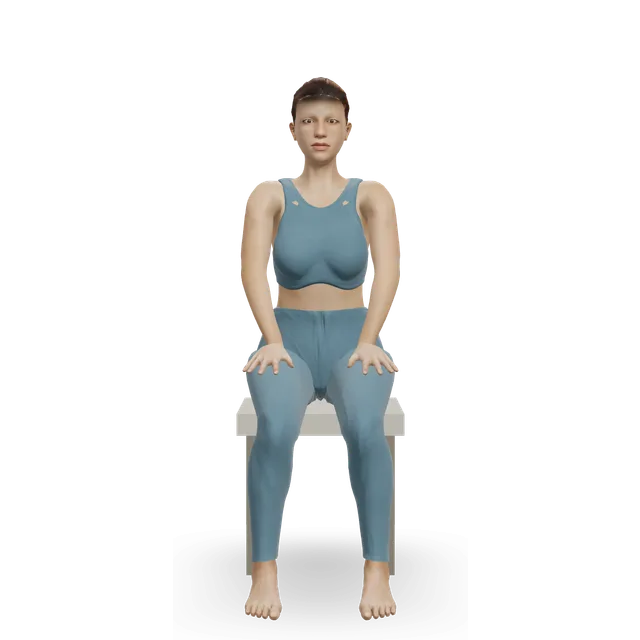
Walking is the test, so walk more, building towards 150 minutes a week at a pace where you can talk but not sing (NHS). Train on a treadmill if you like, but do the test on the ground. Use the rail on stairs. A static bike adds fitness with no balance demand. Sit-to-stands, up to 10 (Otago), and step-ups, up to 5 each leg (NHS) building to 8 to 12 (editorial), for leg strength. Slow breathing helps with breathlessness, as our COPD guide explains.
The easy cardio workout and the build-up interval walk build your walking time, and the after-meals routine adds short walks to your day. The cardiac rehab and COPD workouts are for people with heart or lung disease, once their team agrees, and the claudication workout is the walk-rest-walk programme for leg pain when walking.
It doesn't rule the test out, but take your angina medicine first and have your glyceryl trinitrate (GTN) spray with you, as the ATS statement advises.
Heart failure, lung disease, pulmonary hypertension or home oxygen
The walk can take you close to your limit and your oxygen level can fall, so do it with your rehab or clinic team, who can monitor it. If you use oxygen, use it at your usual rate.
The walk will bring it on. Our peripheral arterial disease guide covers the walking programme for leg pain from narrowed arteries.
A cold or fever
Wait until you're better: the PAR-Q+ (Physical Activity Readiness Questionnaire for Everyone) advises delaying becoming more active with a temporary illness.
The PAR-Q+'s advice to check first applies to vigorous or maximal effort. For most healthy people this walk is at your own pace, below your maximum, so walk at a pace you can keep and stop for the signs below.
Stop for chest pain, breathlessness you can't tolerate, leg cramps, staggering, heavy sweating, or looking pale or ashen (the ATS stop rules), then sit or lie down and rest. In clinic, the 2014 standard also stops a walk if oxygen saturation falls below 80%.
Call 999 (911 in the US) for any of these, and don't drive yourself to A&E:
Chest pain, pressure or tightness that spreads to your arm, neck or jaw, or doesn't go away when you stop, especially with breathlessness, sweating, feeling sick, or grey or pale skin.
Severe difficulty breathing: gasping, choking or not able to get words out, or lips or skin turning pale, blue or grey. On brown or black skin, this may be easier to see on the palms of the hands.
Signs of a stroke: the face drooping on one side, weakness in an arm, or speech problems. Call even if the signs stop.
Fainting while you exercise, or collapse, or feeling very unwell with symptoms that don't go away when you stop.
After a fall: a possible injury to the head, neck, back or hip, or not being able to get up.
You're worried about your balance or getting about, or you've had a fall: ask about a falls assessment. In some areas you can refer yourself to a falls service.
Dizziness won't go away or keeps coming back.
You've fainted at any time other than during exercise (fainting during exercise needs 999).
Breathlessness gets worse during your normal activities or when you lie down, or comes with swollen ankles.
"There's a normal distance for everyone"Strong evidence
It depends on your age, height, weight and sex, the equations explain only about 40% of the differences between healthy people, and different equations disagree.
The instruction is to walk as far as possible without running or jogging. The ATS advises against "as fast as possible" phrasing, because it stresses speed at the start at the cost of earlier tiredness.
Mark a flat, straight 30-metre course with a cone at each end, and walk back and forth around them for 6 minutes, covering as much ground as you can without running. You can slow down, stop and rest, but the clock keeps going, and a helper says only the set phrases once a minute. Count your laps (each is 60 metres) and add the last part-lap.
What is a normal 6-minute walk distance?
It depends on your age, height, weight and sex. In healthy American adults aged 40 to 80, the middle distance was 576 metres for men and 494 for women, and the calculator works out the figure for you.
What is the lower limit of normal?
The distance below which only 5 in 100 healthy adults like you walk: with the US equation, your predicted distance minus 153 metres for men or 139 metres for women. Walking less isn't a diagnosis, but it's worth discussing with your GP.
Why do different calculators give different answers?
They use different equations, built in different countries and in different ways, and for one person two equations often differ by about 50 metres, sometimes by more than 100. The standard asks for the equation to be stated, so ours always says which it used.
Can I do the 6-minute walk test at home?
Only on a measured, flat, straight stretch of about 30 metres, such as a quiet path. Shorter courses read short, by about 50 metres on a 10-metre course, and a treadmill isn't comparable. If you have a heart or lung condition, do the test with your team.
How much improvement is meaningful?
About 30 metres is the smallest change people with lung disease notice, and in heart disease estimates run from about 25 to 36 metres. Your second walk is usually about 26 metres longer just from practice, so do two to set your starting point.
When should I stop the test?
Stop at once for chest pain, breathlessness you can't tolerate, leg cramps, staggering, heavy sweating, or looking pale or ashen. Call 999 for chest pain that feels tight or spreads to your arm, neck or jaw.
Who shouldn't do the 6-minute walk test?
Not within a month of unstable angina or a heart attack, and you need a doctor's go-ahead first if your resting pulse is over 120 or your blood pressure is over 180/100. With heart failure, lung disease or home oxygen, do it with your team, who can watch your oxygen level.
Does the 6-minute walk test measure VO2 max?
No: it measures how far you can walk at your own pace, which reflects your everyday fitness. For a VO2 max estimate from walking, our VO2 max calculator has a 1-mile walk test.
How can I improve my distance?
Walk regularly, building towards 150 minutes a week, and add leg strength work. If you have a lung or heart condition, ask about rehab: pulmonary rehab added about 44 metres on average in trials.
Fitness tests for adults compared with published norms, not a diagnosis, and clinical review of these pages is pending. Check with a GP before a hard test if you have a heart condition, high blood pressure, chest pain, dizziness or breathlessness when active, and have someone with you for the balance, walking and floor tests if you've fallen or feel unsteady. Health disclaimer.