The test
Squeeze a hand dynamometer as hard as you can, sitting with your forearms supported, three times with each hand, alternating. The best of the six readings is your score.
Fitness test
Squeeze a hand grip dynamometer three times with each hand, sitting with your forearms resting on a chair's arms, and enter your best reading, in kilograms or pounds, to see your centile among people your age and sex from 12 British studies. If it's under 27 kg for a man or 16 kg for a woman, the page says what the European sarcopenia group means by low grip strength and what to do next. You need a dynamometer: the norms came from hand-held devices, mostly the hydraulic Jamar, so other methods, such as a dead hang, can't be scored against them. People with a stronger grip live longer on average, but that's a link, not proof that training your grip changes it.
Choose your sex and age, enter your best reading in kg or lb, and say how many squeezes you did and what kind of dynamometer you used. The calculator compares you with the nearest age in the British tables, which run in 5-year steps from 20 to 90.
28kg
Between the 25th and 50th centile for women aged about 45, from 49,964 people in 12 British studies.
| Centile | kg |
|---|---|
| 10th | 22 |
| 25thyou reached this | 26 |
| 50th | 30 |
| 75th | 34 |
| 90th | 38 |
These norms came from hand-held dynamometers, mostly the hydraulic Jamar. Grip can differ by a couple of kilograms from day to day.
People with a stronger grip live longer on average, but that's a link, not proof that training your grip changes it.
You need a hand grip dynamometer and a chair with arms. The steps follow the Southampton protocol, a standard method from the research group behind the British norms, with a few practical additions of ours.
Squeeze a hand dynamometer as hard as you can, sitting with your forearms supported, three times with each hand, alternating. The best of the six readings is your score.
Centiles by age and sex from 12 British studies. The middle value peaked at 51 kg for men aged 29 to 39 and 31 kg for women aged 26 to 42.
Source 3
Under 27 kg for men or 16 kg for women is low grip strength in the European sarcopenia group's consensus: a reason for your GP to check further, not a diagnosis.
Source 4
Each 5 kg lower grip went with a 16 to 20% higher risk of death in large studies in 17 countries and in the UK. That's an association: no trial has shown that training your grip changes it.
Dynamometers can read a few kilograms apart for one person, so test on the same one each time.
We found no study that tested hang time against a dynamometer, and no adult norms for hangs.
Dodds 2014's centiles in kg at 5-year ages. The calculator uses the nearest published age and places your reading between the centiles either side of it.
The 10th, 25th, 50th, 75th and 90th centiles, in kg:
Source 3
The 10th, 25th, 50th, 75th and 90th centiles, in kg:
Source 3
60,803 measurements of 49,964 people (26,687 of them women) aged 4 to 90, from 12 general population studies in Great Britain measured between 1990 and 2012. Each age's centiles come from a model fitted to all the data, and the people behind each row are those within 2.5 years of that age. The score was each person's best reading, usually of six squeezes.
The authors warn that these centiles come from different people at different ages, so they shouldn't be used to track one person's decline.
Source 3
It's large, British and read in full, and it's the source of the European sarcopenia cut-offs and our hand guide's figures (editorial). Across 60 studies, grip norms from other developed regions sat close to these British centiles, while norms from developing regions were lower, so they fit best in countries like the UK.
The calculator uses the nearest published age: 47 uses the row for 45, and 22 the row for 20 (editorial). Near the edge between two rows, a year can move you a band: 40 kg is between the 50th and 75th centiles for a man of 22, but between the 10th and 25th for a man of 23, who uses the row for 25 (our arithmetic). The oldest row is 90, so over 92 there are no centiles.
Source 3
The cut-offs of the European Working Group on Sarcopenia in Older People's 2019 consensus (EWGSOP2), under 27 kg for men and 16 kg for women, are 2.5 standard deviations below the young-adult average in these data: 51.9 kg (SD 9.9) for men and 31.4 kg (SD 6.1) for women, both at age 32. By age 80, 23% of men and 27% of women were at or below them.
As the calculator works them out:
In older adults, repeat tests agreed well, with intraclass correlations (a measure of agreement where 1 is perfect) above 0.80 in all but 3 studies, of people with severe dementia, but the smallest real change ranged from 14.5% to 98.5% of the score. In 21 older adults retested after 12 weeks, the typical error was about 1.6 to 2.2 kg (our arithmetic from newtons), and across studies of healthy people the pooled intraclass correlation was 0.92. Grip can differ by a couple of kilograms from day to day.
Grip "correlates moderately with strength in other body compartments", which is why EWGSOP2 uses it to measure muscle strength, with the chair stand as the alternative for the legs.
Source 4
In 139,691 adults aged 35 to 70 in 17 countries, in the PURE (Prospective Urban Rural Epidemiology) study, each 5 kg lower grip went with a 16% higher risk of death over about 4 years, and grip predicted death better than systolic blood pressure. In 502,293 UK Biobank adults aged 40 to 69, the figures were 20% for women and 16% for men.
The UK Biobank authors note that reverse causation is possible in any observational study and that the links may not mean cause and effect, and the PURE authors call for trials of whether improving strength lowers death rates. We found no such trial.
Across 24 trials in 3,018 older adults, exercise training raised grip strength by a small amount (a standardised mean difference of 0.28), and training the task itself, or mixing types of training, seemed to work. The UK's National Health Service (NHS) asks adults to do strengthening activities on at least 2 days a week.
In EWGSOP2's words, "sarcopenia is probable when low muscle strength is detected". A diagnosis needs low muscle quantity or quality as well, which takes further tests.
Source 4
The PURE study found no link between grip and injuries from falls, or fractures.
Source 5
Across 60 studies, grip norms from developing regions were lower than the British centiles, and the PURE authors advise reading a grip result against "region/ethnic-specific reference ranges".
Seven of the 12 British studies used the hydraulic Jamar, two the Smedley, a spring dynamometer, two the Nottingham electronic and one the Takei; one of the Jamar studies used the Harpenden at its first wave. Centiles differed by under 10% between devices, and between sitting and standing.
Source 3
EWGSOP2 calls the Jamar "validated and widely used", and says accurate grip testing needs "a calibrated handheld dynamometer under well-defined test conditions".
Source 4
A low-cost digital Camry read close to a hydraulic Jamar on average: 0.5 kg lower in men and 0.6 kg lower in women aged over 50, and 1.9 kg apart on average in hospital patients. For one person, though, its readings against a digital Jamar Plus differed by up to about 4 to 6 kg.
In outpatients aged 60 and over, a Jamar Plus and a Takei read higher than a hydraulic Jamar, which changed who counted as weak. Use the same device each time you test.
Source 7
Canada's health survey tested healthy adults standing, with a Smedley and the best of two squeezes per hand. Its medians for ages 30 to 34 were 46.9 kg for men and 28.1 kg for women, 3 to 4 kg below the British medians at 30 (our arithmetic). Device, position and country all change a "percentile", so we don't mix tables; the American Society of Hand Therapists' position, seated with the elbow bent to 90 degrees, differs again.
The norms came only from dynamometers, so the calculator needs a dynamometer reading (editorial). Squeezing other objects, or timing a hang from a bar, can't be scored against them.
Source 3
Train your grip 2 or 3 times a week alongside whole-body strength training (editorial, as in our hand guide). Carries and the bar hang train how long you can hold on, and the curls, rotations, finger extensions and squeezes work the forearm and hand muscles directly.
 3D demoFarmer's carryBeginner · A dumbbell + A kettlebell
 3D demoSuitcase carryIntermediate · A dumbbell + A kettlebell
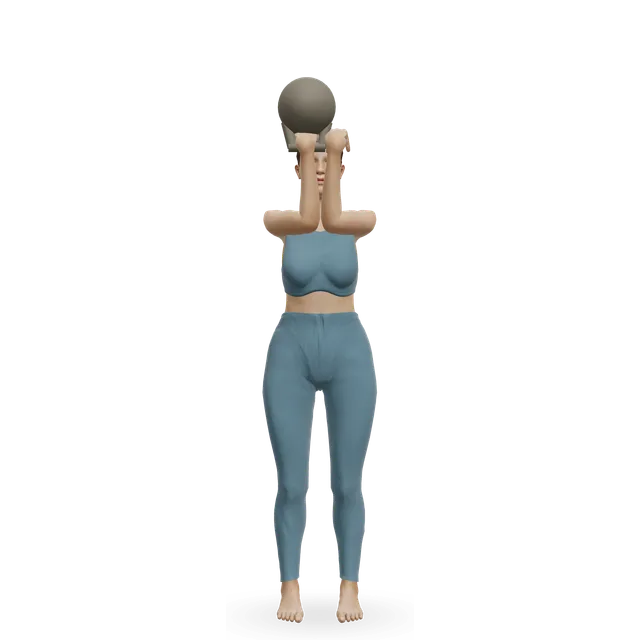
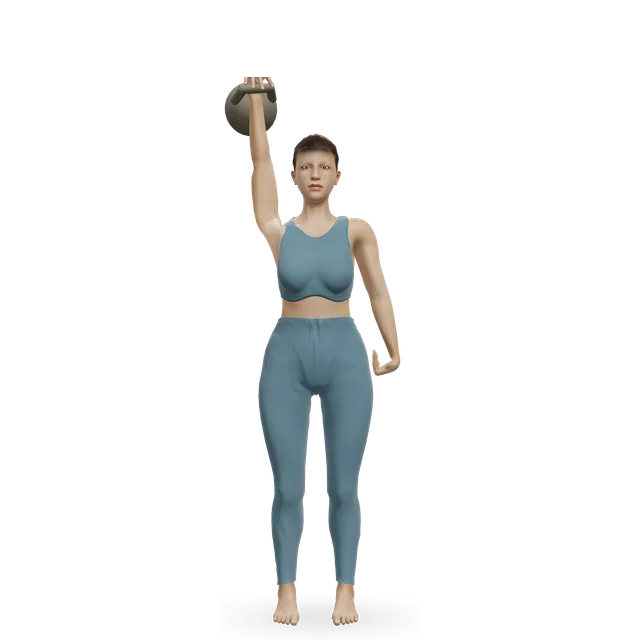 3D demoOverhead carry (waiter's walk)Intermediate · A dumbbell + A kettlebell
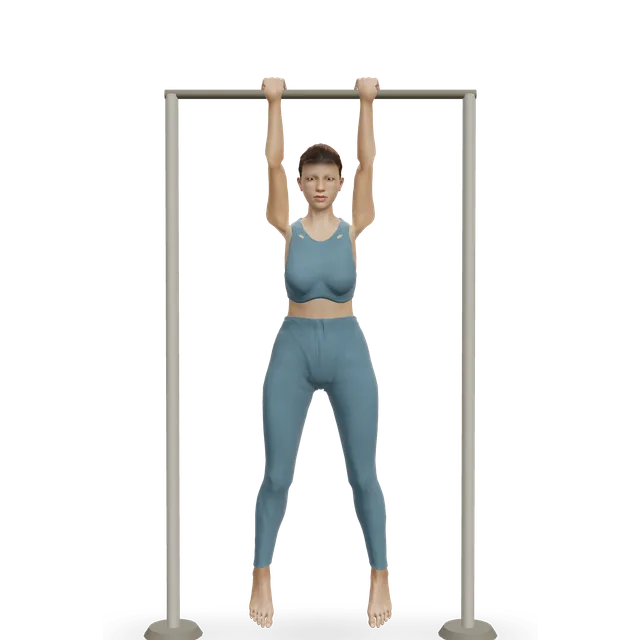
 3D demoBar hangIntermediate · Pull-up bar + A step
 3D demoWrist curlsBeginner · A dumbbell
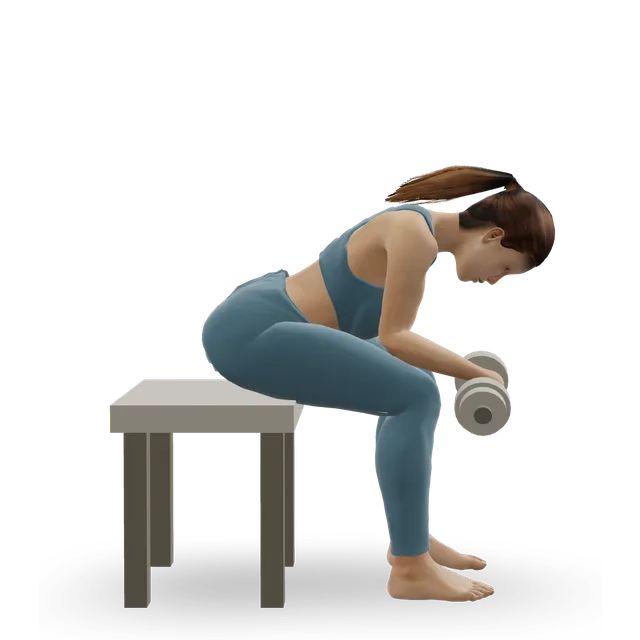 3D demoReverse wrist curlBeginner · A dumbbell + A bench or box
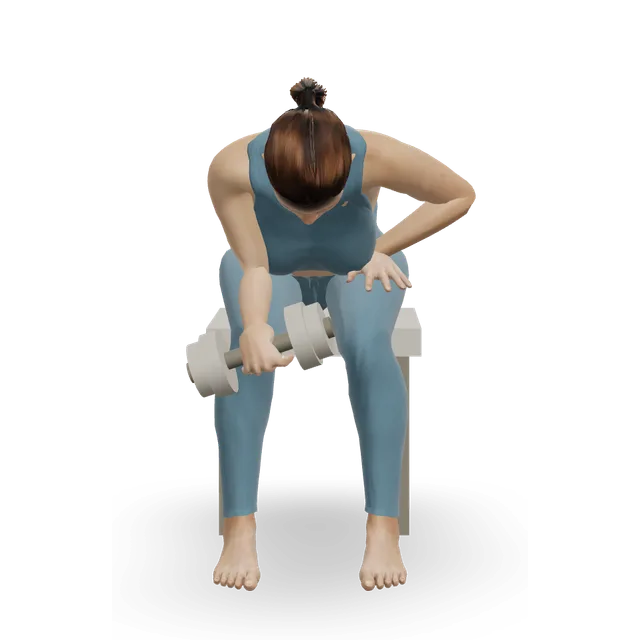 3D demoDumbbell forearm rotationBeginner · A dumbbell + A bench or box
 3D demoBand finger extensionBeginner · A band
 3D demoBall squeezeBeginner · Other / check instructions
The grip strength workout has squeezes, curls, carries and hangs. The pull-up, dumbbell and kettlebell workouts work your grip as part of whole-body training.
A 20-minute grip session: warm up the wrists and fingers, train the hand and forearm muscles, then carry and hang to load your grip the way everyday life does.
20 minBeginner10 movesOther / check instructions, A bandWrist mobility and forearm strength for desk work, climbing, push-ups and handstands.
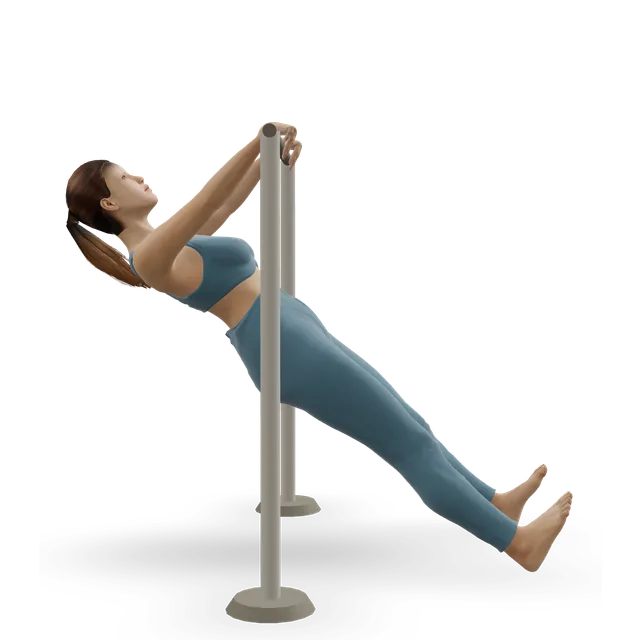
10 minBeginner7 movesA wall, A dumbbellTrain for your first pull-up: hangs, shoulder-blade pulls, rows, band- or machine-assisted pull-ups, slow negatives and grip work in one session.
30 minBeginner8 movesPull-up bar, A stepA 35-minute full-body strength workout with dumbbells: goblet squats, presses, rows, Romanian deadlifts and carries.
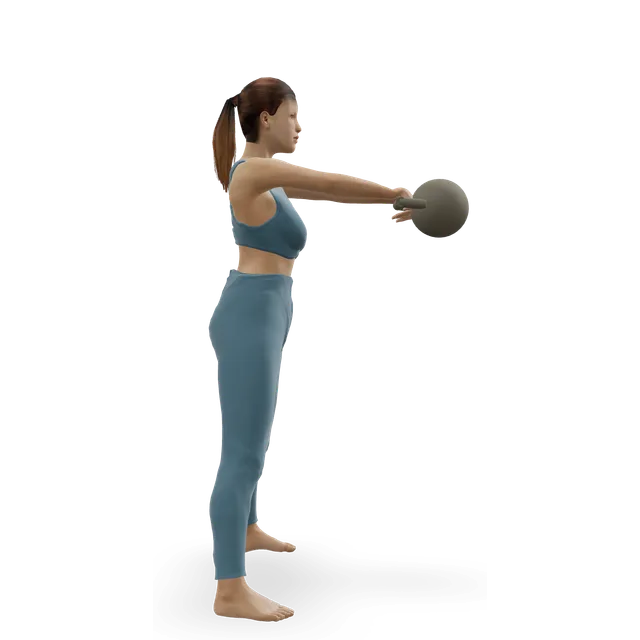
35 minIntermediate9 movesA band, A dumbbellA 30-minute full-body kettlebell workout: deadlifts, swings, cleans, presses, rows, halos and carries.
30 minIntermediate9 movesA kettlebell, A dumbbellWhole-body strength plans. The plans for women over 50, men over 40 and kettlebells include carries, swings or deadlifts that work your grip along the way.
A 12-week exercise plan for over-65s: strength and balance three times a week, short balance sessions and daily walks, based on falls-prevention trials.
3 training days40 minBeginner3 days a weekA weekly plan for women over 50: strength, bone-loading and balance on 3 days plus walking, built on UK osteoporosis consensus advice.
3 training days45 minBeginner3 days a weekA 3-day strength plan for men over 40 with power and bone work, two cardio days and mobility, built on research on ageing muscle.
3 training days45 minBeginner3 days a weekAn 8-week kettlebell plan for beginners: two strength sessions and a swing-interval day each week, with how to choose a bell and swing safely.
3 training days35 minBeginnerA maximal squeeze loads it: one 2026 study left out people with "hand pain during the evaluation or in the previous week". Wait until it settles, and see our wrist pain, hand arthritis and carpal tunnel guides.
Source 23
Rest it, and leave hard squeezing until the finger stops catching, as our ball squeeze move advises. Our trigger finger guide covers a catching finger.
When hand problems such as arthritis or a stroke make grip testing impossible, EWGSOP2 suggests measuring leg strength instead, and its other strength test is the chair stand. Try our 30-second chair stand test.
Source 4
If your readings are 160/100 or higher and not yet treated, save maximal efforts like this one until treatment has brought your blood pressure under control, as our high blood pressure guide advises (our reading of the guidance). When you do test, breathe out as you squeeze.
Source 21
With proliferative or severe non-proliferative diabetic retinopathy, or after recent eye laser treatment or surgery, our type 2 diabetes guide advises avoiding hard isometric holds and holding your breath, so ask your eye team before a maximal squeeze.
This page is for adults, and the British tables stop at 90, so over 92 the calculator shows your reading without a centile.
Source 3
Stop if you feel dizzy or faint, or your hand or wrist hurts, and don't test again that day (our suggestion; the PAR-Q+, the Physical Activity Readiness Questionnaire for Everyone, asks about dizziness).
Source 24
Contact the UK's National Health Service (NHS) on 111 for severe wrist pain, a wrist you can't move or hold things with, or a snap, grinding or popping noise at the time of the injury.
Source 25
If wrist pain stops you doing your normal activities, hasn't improved after 2 weeks, or comes with tingling or loss of feeling.
Source 25
For sudden chest pain that doesn't go away, pain that spreads to your arms, neck, jaw, stomach or back, or chest pain with sweating, feeling sick, light-headedness or shortness of breath.
Source 26
The link between grip and survival is an association, and no trial has tested whether raising your grip lowers your risk. Exercise raises grip a little.
No study we found has checked hang time against a dynamometer, and there are no adult norms for hangs. In a bar hang you hold your whole body weight, and in climbing studies bar hangs behaved as tests of shoulder and arm endurance; a finger hang on a small edge is a different test, covered on our climbing page.
It makes sarcopenia "probable"; a diagnosis needs low muscle quantity or quality as well.
Source 4
For one person, devices can differ by a few kilograms, and the choice of device changed who counted as weak.
The British centiles fit other developed regions, but norms from developing regions are lower.
In 49,964 people in Britain, the median grip was 51 kg for men at 30 and 35, 48 kg at 50 and 39 kg at 70. For women it was 31 kg at 30, 29 kg at 50 and 24 kg at 70. Enter your reading to see your centile.
The European sarcopenia group counts under 27 kg for men or under 16 kg for women as low grip strength. That makes sarcopenia, the loss of muscle strength and mass that can come with age, "probable", and a GP may check your muscle strength and size further. On its own, a low reading doesn't diagnose anything.
Sit in a chair with arms, forearms resting on them, wrist straight and thumb up. Squeeze as hard as you can until the reading stops rising, three times with each hand, alternating, and keep your best reading.
A hand-held grip dynamometer. The British norms came mostly from the hydraulic Jamar, with Smedley, Nottingham electronic and Takei devices in some studies. Cheaper digital ones read close on average but can differ by a few kilograms for one person, so stick with one device.
Not in a way the norms can score. We found no study testing hang time against a dynamometer and no adult norms for hangs; in a bar hang you hold your whole body weight, and climbing studies treat it as a test of shoulder and arm endurance.
On average: each 5 kg lower grip went with about a 16% higher risk of death in 139,691 adults in 17 countries, with similar figures in half a million UK Biobank adults. These are links across large groups, not a forecast for you, and nobody has tested whether training your grip changes them. Exercise raises grip a little, so train it as part of whole-body strength training, for what it lets you do.
Both: the norms take the best of six squeezes, three with each hand. If you used one hand only, or fewer squeezes, the calculator says your result may read lower than the norms expect.
Yes. Choose lb and the calculator converts your reading to kg, at 0.45359237 kg to the pound, and shows it to 0.1 kg: 66 lb is 29.9 kg.
Charts differ in the device, sitting or standing, the best or the average reading, one hand or both added together, and the country, and each can shift the numbers by several kilograms. Compare yourself only with norms measured the way you tested.
By a couple of kilograms, and in older adults a real change can need 15% or more. Use the same device, chair and hand position each time, and retest every 2 to 3 months to see the trend.
Fitness tests for adults compared with published norms, not a diagnosis, and clinical review of these pages is pending. Check with a GP before a hard test if you have a heart condition, high blood pressure, chest pain, dizziness or breathlessness when active, and have someone with you for the balance, walking and floor tests if you've fallen or feel unsteady. Health disclaimer.