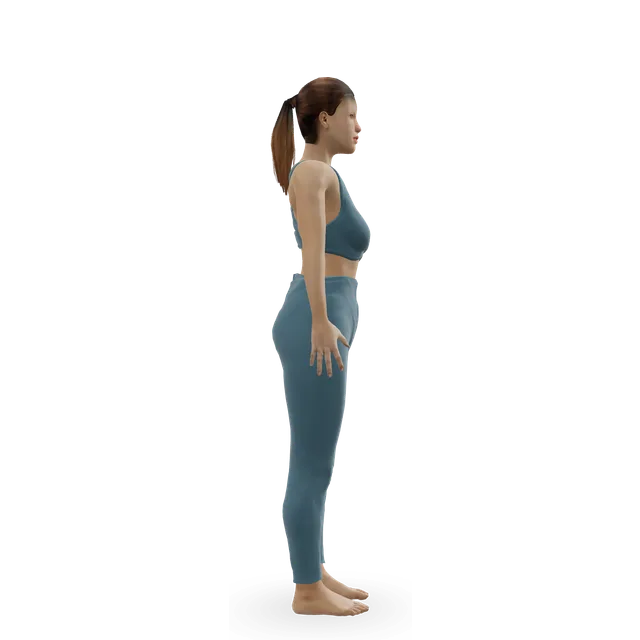
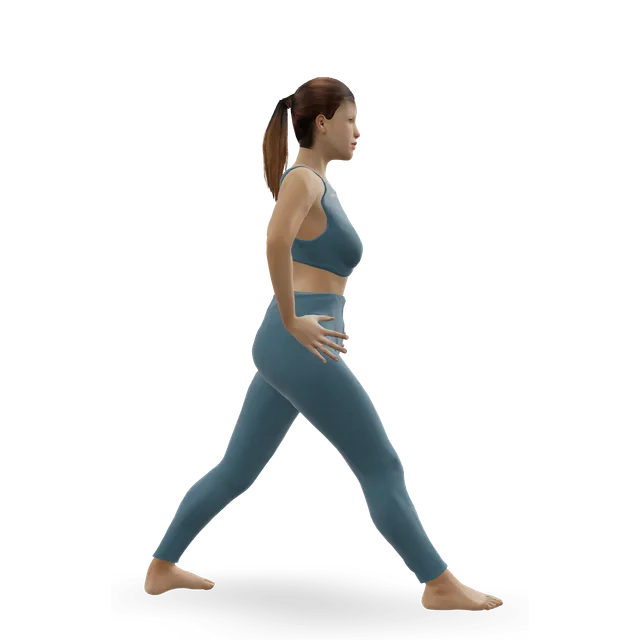
The test
Sit with your legs straight and your soles against a box, reach forward as far as you can with your knees straight, and keep the better of two tries. Touching your toes scores 26 cm on the scale we use.
Source 1
Fitness test
Sit with your legs straight and your soles against a box or the bottom stair, reach forward as far as you can, and enter the better of two tries to see your percentile among Canadians of your age and sex. On the scale we use, reaching your toes scores 26 cm. If your box puts your toes at 23 cm, or your tape starts at your toes, choose that set-up and the calculator converts your reach, in centimetres or inches. The test mostly reflects how flexible your hamstrings are: it says little about your lower back and didn't predict back pain in a large study. Skip it with osteoporosis or while you're recovering from a hip replacement.
Choose your sex, age and how you measured, then enter the better of your two reaches in cm or inches. With a tape that starts at your toes, enter how far past your toes you reached, with a minus sign if you stopped short.
30.0cm
Between the 50th and 60th percentile for women aged 45 to 49 in Canada's 2016-17 national survey: within the usual range.
| Percentile | cm |
|---|---|
| 5th | 12.5 |
| 10th | 15.8 |
| 20th | 20.1 |
| 30th | 23.5 |
| 40th | 26.6 |
| 50thyou reached this | 29.6 |
| 60th | 32.5 |
| 70th | 35.4 |
| 80th | 38.3 |
| 90th | 41.7 |
| 95th | 44.1 |
This test mostly reflects your hamstrings. It says little about your lower back, and in a large study it didn't predict back pain. A change of about 2 cm or less may just be day-to-day difference.
With osteoporosis or a past spinal fracture, skip this test. Stop if you feel pain or tingling down a leg.
You need a sturdy box, a low stool or the bottom stair with a flat, upright front, a metre ruler or tape measure, and a helper. Lay the ruler on top, pointing towards you, so its 26 cm mark sits exactly above the front edge where your soles go: the first 26 cm overhangs your legs, and reaching your toes scores 26, as on Canada's scale (editorial set-up, matched to the survey's scale). The figure shows the forward fold on the floor, without a box.
Loading the 3D figure…
The movement on the figure: Seated forward fold (Paschimottanasana)
Sit with your legs straight and your soles against a box, reach forward as far as you can with your knees straight, and keep the better of two tries. Touching your toes scores 26 cm on the scale we use.
Source 1
Your reach is compared with 4,571 people measured in Canada's 2016 to 2017 national health survey, by sex and age from 18 to 69. Women reached further than men at every age.
Source 1
A box with your toes at 23 cm reads 3 cm lower for the same reach, so the calculator adds 3 cm, and a tape that starts at your toes needs 26 cm added (our arithmetic).
Across 34 studies, the classic test tracked hamstring flexibility moderately well and lower-back flexibility poorly.
Source 3
Scores didn't predict back pain over 6 years in 2,747 adults, and showed no pattern with death in a Canadian survey followed for 13 years.
Across 77 studies, regular stretching clearly increased range, and static or contract-relax stretches did better than bouncing ones.
Source 6
Statistics Canada's percentiles in cm, with a toe touch at 26 cm. The calculator places your score, to 0.1 cm, between the published percentiles either side of it for your age and sex.
The 5th, 10th, 20th, 30th, 40th, 50th, 60th, 70th, 80th, 90th and 95th percentiles, in cm:
Source 1
The 5th, 10th, 20th, 30th, 40th, 50th, 60th, 70th, 80th, 90th and 95th percentiles, in cm:
Source 1
In cycle 5 of the Canadian Health Measures Survey, in 2016 and 2017, 4,571 people aged 6 to 69 in Canada's 10 provinces did the test, half of them women. Specialists certified by the Canadian Society for Exercise Physiology (CSEP) measured them on a flexometer, a sit-and-reach box with the toes at 26 cm, and recorded the best of two tries to the nearest 0.1 cm, after a warm-up stretch of each leg twice for 20 seconds.
The survey is nationally representative, though its combined response rate was 48.5%, and its authors note that screening people before fitness testing "may have biased this study's results by screening out unfit individuals", so the values may be higher than for the whole population.
Source 1
Women reached further than men at every age, with medians 6.5 to 8.6 cm higher (our arithmetic), and scores fell slowly with age. Canada's 2007 to 2009 survey measured the test the same way.
It's recent, official and nationally representative, we could read it in full with its method, and it uses the same 26 cm scale as CSEP's other tests (editorial).
Source 1
The American College of Sports Medicine's (ACSM's) fitness categories reprint a 2003 CSEP table, and we could read them only in a reprint by a US university's wellness office. In that reprint the bottom of "good" equals the top of "fair" in every column, so one score can fall in two bands; we use it only for its note on 23 cm boxes. We couldn't open the YMCA's tables or ACSM's own book.
Source 2
As the calculator works them out:
Over 4 weeks in 243 young adults, scores were highly repeatable (an intraclass correlation of 0.92, where 1 is perfect agreement) but varied by about 9% from test to test (a coefficient of variation of 8.74%). In 46 futsal players, only a change of more than 6.72% showed a real improvement in hamstring flexibility: about 2 cm at a score of 30 cm (our arithmetic). A 2022 review found strong evidence that sit-and-reach tests are reliable.
Across 34 studies, the classic sit-and-reach correlated 0.67 with standard measures of hamstring flexibility (28 studies, 3,481 people), the best of the versions tested. Arm and leg length, head position and ankle position all affect how well it does.
Source 3
Its correlation with lower-back flexibility was 0.26 (13 studies, 1,762 people). A good score doesn't mean a flexible back, and a low one doesn't mean a stiff back.
Source 3
In 2,747 adults followed for about 6 years, sit-and-reach scores were unrelated to later back pain (a correlation of -0.043, close to zero). Across 12 cohort studies of 5,459 people, fingertip-to-floor distance didn't predict new back pain, though restricted hamstring range did, slightly.
In 8,116 Canadian adults followed for 13 years, there was no pattern of higher death rates across sit-and-reach scores. In 13,423 adults aged 65 and over in Taiwan, the best fifth on a chair version had about a fifth lower risk of death than the worst fifth (an adjusted hazard ratio of 0.79), a weaker link than for the balance, agility, chair stand and step tests.
A whole-body flexibility score of 20 movements was linked with survival in 3,139 Brazilians aged 46 to 65, and poor sit-and-reach scores with stiffer arteries in 526 adults and with faster stiffening of the aorta over 5 years. These are associations, and in the 5-year study changes in flexibility didn't track changes in stiffness.
Across 77 studies, stretch training increased range of motion, and static and contract-relax (PNF) stretching did better than dynamic or bouncing (ballistic) stretching. How long, how hard and how often people stretched made no significant difference.
Source 6
On the flexometer used in Canada's survey, a toe touch scores 26 cm, so the scale starts 26 cm in front of your soles. Our home set-up copies it, with the ruler's 26 cm mark above the front edge of the box or step.
Source 1
Many boxes put the toes at 23 cm, which reads 3 cm lower for the same reach. ACSM's note says to subtract 3 cm from tables built at 26 cm when you use one; the calculator does the same thing the other way round, adding 3 cm to your reach (our arithmetic).
Source 2
With 0 at your toes, a reach past them is positive and one short of them negative. Adding 26 cm puts it on the survey's scale: 5.0 cm past your toes is 31.0 cm, and 3.0 cm short of them is 23.0 cm (our arithmetic).
Source 1
The calculator multiplies inches by 2.54 before any conversion and shows your score to 0.1 cm: 4 inches past your toes is 10.16 cm, which plus 26 is 36.2 cm on the survey's scale (our arithmetic).
The V-sit is done on the floor without a box, with your legs apart; in one study's set-up the zero was at 23 cm, with the heels on the zero line and the ankles 30 cm apart. The back-saver tests one leg at a time with the other knee bent, and ACSM's text says "a lack of normative data for adults precludes" its use.
Both tracked the hamstrings a little less well than the classic test (correlations of 0.60 and 0.59, against 0.67), and neither can be scored against Canada's table.
The modified sit-and-reach measures from where your fingertips start, to allow for arm and leg length. Across studies it tracked the hamstrings less well than the classic test (0.56 against 0.67), and it can't be scored against Canada's table either.
Source 3
Hold hamstring stretches for 30 to 60 seconds on most days, or use contract-relax stretches, as our flexibility guides suggest, and add slow Romanian deadlifts, 2 to 3 sets of 8 twice a week (editorial). With osteoporosis, skip the forward folds and practise the hip hinge with a long back instead. Add the nerve slider if lifting your head eases the pull behind your thighs.
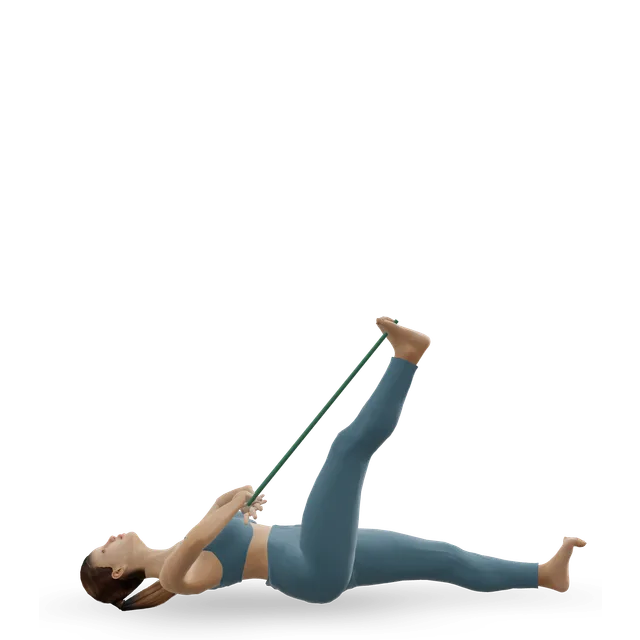
 3D demoSupine hamstring stretch with a strapBeginner · No equipment
 3D demoContract-relax hamstring stretch (PNF)Intermediate · No equipment
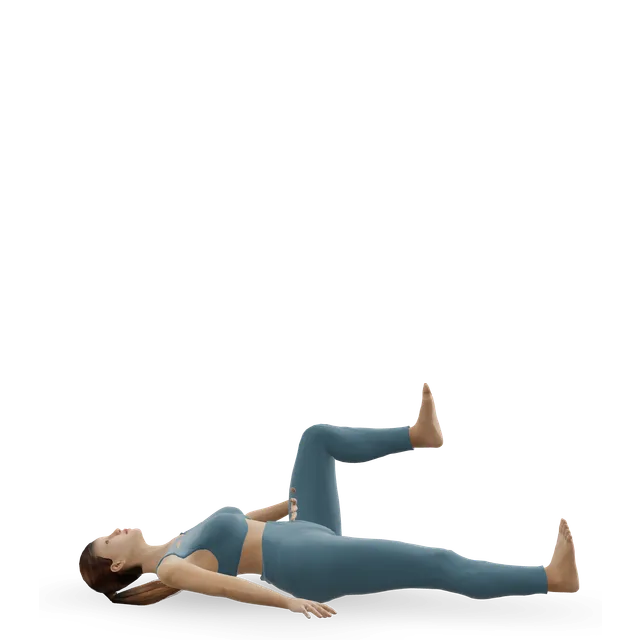 3D demo90/90 hamstring stretch (active knee extension)Beginner · No equipment
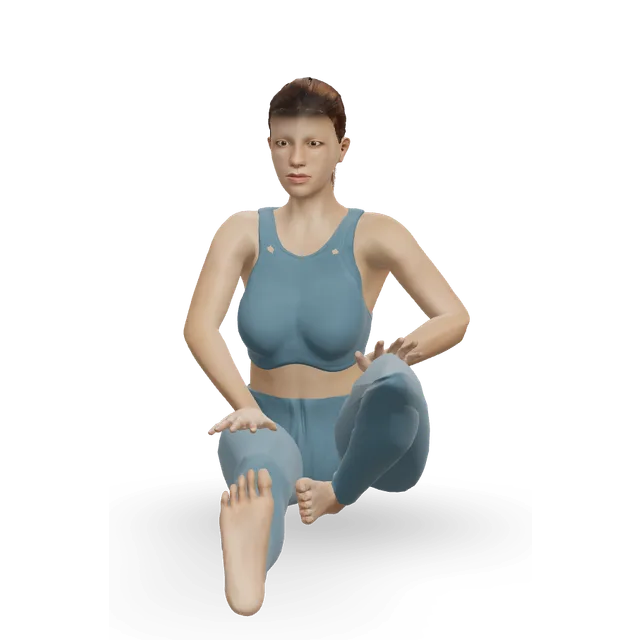 3D demoHead-to-knee pose (Janu Sirsasana)Beginner · No equipment
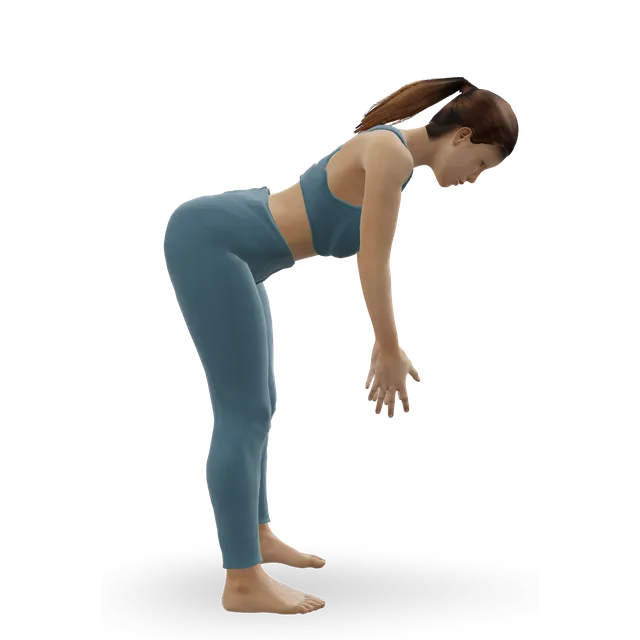 3D demoHip hinge foldBeginner · No equipment
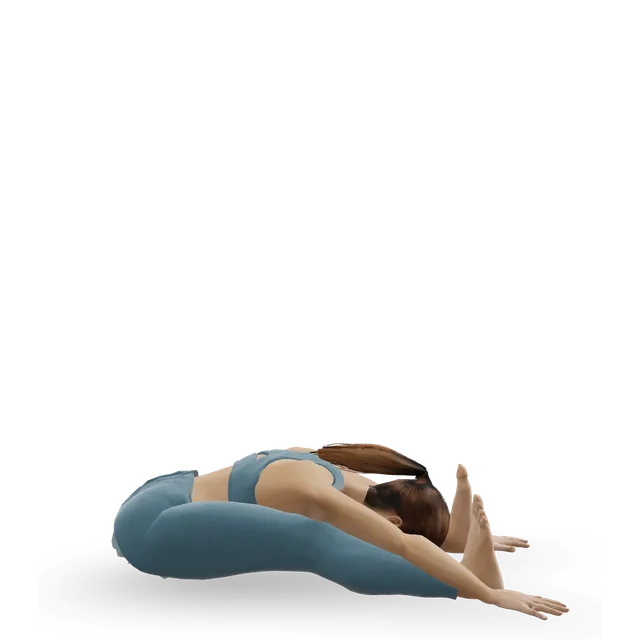 3D demoSeated forward fold (Paschimottanasana)Intermediate · No equipment
 3D demoDumbbell Romanian deadliftIntermediate · A dumbbell
 3D demoHip-hinge practiceBeginner · No equipment
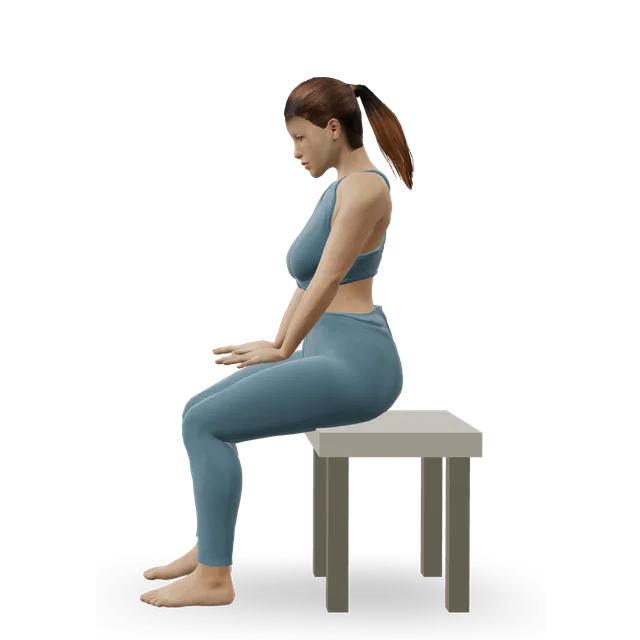 3D demoSeated sciatic nerve slider (nerve glide)Beginner · A bench or box
 3D demoWall calf stretch (gastrocnemius)Beginner · A wall
The touch your toes routine is the 12-minute routine from our toe-touch guide. The hamstring routine works the backs of your legs only, and the yoga and full-body routines stretch everything.
A 12-minute routine to bring your fingertips to your toes: test, nerve glide, hamstring and calf stretches, a slow hinge for strength at length, then retest.
12 minBeginner7 movesA bench or box, A wallA 12-minute routine to loosen tight hamstrings with strap stretches, PNF, folds and hinges.
12 minBeginner7 movesNo equipmentA 25-minute yoga sequence for the hamstrings, hips, inner thighs, spine and shoulders, holding each pose for 30 to 60 seconds, as in the stretching trials.
25 minBeginner12 movesNo equipmentA 15-minute head-to-toe stretch for the neck, shoulders, back, hips, hamstrings and calves.
15 minBeginner11 movesA wallThe UK consensus on osteoporosis says "Movements or exercise that involve sustained, repeated or end-range flexion should be modified or avoided", and this test is a full forward bend. Skip it, and practise the hip hinge with a long back instead; our osteoporosis guide has more.
Source 17
The UK's National Health Service (NHS) advises "do not bend your hip more than 90 degrees" and "do not bend down to touch your feet or ankles" while you recover. Wait until your surgical team says forward bending is fine.
Source 18
Reaching to your limit can stir it up, and pain or tingling down a leg can mean an irritated nerve (editorial). Check the NHS warning signs below, and see our back pain and sciatica guides.
Source 19
Reaching to your limit loads the injured muscle (editorial). Our hamstring strain guide covers when to stretch it again.
The PAR-Q+ (Physical Activity Readiness Questionnaire for Everyone) asks you to talk to a health care practitioner first. Our exercise in pregnancy guide covers staying active.
Source 20
Putting your palms flat on the floor with straight knees scores a point on the Beighton score for hypermobility, and more range isn't the goal then (as our toe-touch guide says). Our hypermobility guide covers strength work instead.
Stop if you feel pain, tingling or numbness down a leg, and don't push through it (editorial).
If you have back pain with:
Source 19
If you have back pain and feel hot, cold, shivery or generally unwell, or the pain is severe, sudden or getting worse quickly.
Source 19
If back pain:
Source 19
Poorly: across 34 studies, the classic test correlated 0.26 with lower-back flexibility, against 0.67 with hamstring flexibility.
Source 3
Scores didn't predict back pain over 6 years in 2,747 adults, and fingertip-to-floor distance didn't predict it across 12 cohort studies.
Your toes sit at 26 cm on some scales and 23 cm on others, and the V-sit, back-saver and modified tests are different tests with their own set-ups.
Sit-and-reach scores showed no pattern with death in Canada's cohort and weaker links than other tests in older adults, while one cohort linked whole-body flexibility with survival. These are associations, not proof that stretching changes your health.
It isn't allowed in the test (editorial), and bouncing (ballistic) stretching built less range than static or contract-relax stretching across 77 studies.
Source 6
It depends on your age and sex. In Canada's national survey, where touching your toes scores 26 cm, the middle score was 24.6 cm for men and 31.1 cm for women aged 20 to 24, and 20.3 cm and 28.9 cm at 65 to 69. Enter yours to see your percentile.
Sit with your legs straight and your bare soles against a box or the bottom stair, with a ruler on top set so its 26 cm mark lines up with your soles. Stretch each leg twice for 20 seconds first, then reach forward twice with your knees straight and keep the better reach.
They're the number on the scale at the line of your soles. Canada's scale puts your toes at 26 cm and many boxes put them at 23 cm, which reads 3 cm lower for the same reach, so the calculator adds 3 cm when you choose a 23 cm box.
Yes. Choose inches and the calculator converts them at 2.54 cm to the inch. With a tape that starts at your toes, enter how far past them you reached, or a minus number if you stopped short, and the calculator adds 26 cm: 4 inches past your toes scores 36.2 cm.
Poorly. Across 34 studies it tracked hamstring flexibility moderately and lower-back flexibility weakly, so it's mostly a hamstring test.
No. In 2,747 adults followed for 6 years, sit-and-reach scores weren't related to later back pain, and across 12 cohort studies fingertip-to-floor distance didn't predict it either.
The V-sit is done on the floor with your legs apart and no box, and the back-saver tests one leg at a time with the other knee bent. They track the hamstrings a little less well than the classic test, their set-ups differ and there are no adult back-saver norms, so our calculator scores the classic box test only.
Stretch your hamstrings for 30 to 60 seconds on most days, or use contract-relax stretches, and add slow Romanian deadlifts. Across 77 studies, regular stretching clearly increased range. Retest once a week while you practise.
More than about 7%, which is roughly 2 cm at a score of 30 cm. Smaller changes may be day-to-day difference, so measure the same way each time.
Skip it with osteoporosis or a past spinal fracture, because deep forward bending is best avoided. After a hip replacement, wait until your surgical team says forward bending is fine: the NHS advises not bending down to touch your feet while you recover.
Fitness tests for adults compared with published norms, not a diagnosis, and clinical review of these pages is pending. Check with a GP before a hard test if you have a heart condition, high blood pressure, chest pain, dizziness or breathlessness when active, and have someone with you for the balance, walking and floor tests if you've fallen or feel unsteady. Health disclaimer.