Stand, walk 3 metres, turn, walk back, sit
The test times you from "Go" until you're sitting again, at your normal pace, in your usual shoes and with your usual walking aid.
Fitness test
The timed up and go (TUG) test times something you do every day: standing up from an armchair, walking 3 metres (10 feet) at your normal pace, turning, walking back and sitting down. Enter your time and age. From 60, the scorer compares it with the US Centers for Disease Control and Prevention's (CDC's) 12-second mark, the point at which it suggests a fuller falls check, and with healthy adults your age; from 20 to 59, it compares it with one clinic study. Use your usual shoes and walking aid, and always have someone walk beside you. On its own the test predicts falls poorly, so if you've fallen or feel unsteady, talk to your GP whatever your time.
Read the "Before you test" box first. Then enter your age and your time from "Go" until you sat back down, to a tenth of a second, and tick the boxes if you used a walking aid or walked as fast as you could.
10.0seconds
Under the CDC's 12-second mark.
Healthy adults aged 70 to 79 averaged about 9.2 seconds across 21 studies: your time is about average.
On its own, the timed up and go predicts falls poorly. A slow time is a reason for a fuller check, and a quick time doesn't mean you won't fall. If you've had a fall or a near-fall, or feel unsteady, ask your GP about a falls assessment whatever your time; in some areas you can refer yourself.
A change of about 2 seconds between tests is more than everyday variation.
You need a standard chair with arms (a summary of the original study gives a seat about 46 cm high), a tape measure, tape or a cone to mark a line, a timer, and someone to walk beside you.
Loading the 3D figure…
The movement on the figure: Sit to stand from a chair
The test times you from "Go" until you're sitting again, at your normal pace, in your usual shoes and with your usual walking aid.
The CDC says an older adult who takes 12 seconds or more "is at risk for falling". The World Falls Guidelines prefer walking speed, and use more than 15 seconds when the TUG is used instead.
In studies where about half the people fell, a slow time raised the chance of a fall only from 51% to 56%. The UK's National Institute for Health and Care Excellence (NICE) says tests like it help to spot gait and balance problems but don't predict a person's risk of falling.
Across 21 studies, healthy adults averaged 8.1 seconds in their 60s, 9.2 in their 70s and 11.3 from 80. In one clinic, adults aged 20 to 59 averaged 8.6 to 9.9 seconds.
The CDC's instruction to testers is "Always stay by the patient for safety".
Source 1
Balance and functional exercise cut the rate of falls by 24% in trials. Do it 3 or more times a week, and make it harder over at least 12 weeks.
Seconds, to one decimal place. From 60, the scorer places your time against the average for your age group; from 20 to 59, against one clinic study.
Average times, with the 95% confidence interval of each average, pooled from 21 studies of healthy older adults. The scorer uses them because they pool the most studies of healthy older adults that we found (our choice):
Source 6
Bohannon wrote that people whose time is above the upper limit of the interval "can be considered to have worse than average performance". So the scorer calls a time above the upper limit slower than average, a time below the lower limit quicker than average, and the rest about average. The interval describes the average, not how widely individual times spread (our reading), and the 21 studies used methods with "clear differences", so treat the comparison as rough. We could read only the paper's summary.
Source 6
200 patients at an inner-city US primary care clinic, 50 in each decade, timed once at a normal walking speed from a sturdy armchair. Average time and standard deviation (SD), with the span of about two-thirds of people (the average plus or minus 1 SD, our arithmetic):
Source 7
They come from one clinic's patients rather than a healthy sample, and its patients in their 50s were slower on average than Bohannon's healthy adults in their 60s. The scorer shows no falls mark under 60, because the CDC's mark is for older adults.
In 96 independent community-living people aged 61 to 89, average times were 8 seconds in their 60s, 9 in their 70s, and 10 (men) and 11 (women) in their 80s, close to Bohannon's averages. We read this table in a reprint.
These are lines for falls or daily function, not norms:
The original study found the time reliable between testers and for the same tester. In 11 older people tested at an outpatient centre, the smallest change beyond measurement error was 1.8 seconds, and by video call it was under 2 seconds in 50 older adults; in hip osteoarthritis, 0.8 to 1.4 seconds quicker was a major improvement. So a change of about 2 seconds between tests is more than everyday variation (our reading).
In the original 60 older day-hospital patients, averaging 79.5, longer times went with poorer balance, slower walking and more help with daily living (correlations of 0.81, 0.61 and 0.78), and the time seemed to predict who could safely go outside alone. The World Falls Guidelines note that it combines rising from sitting, walking and turning.
In a review that rated it among the best-supported functional tests for falls, 12 seconds or more raised a 30% chance of falling to 47%, and a quicker time lowered it to 25%, across studies of 6,410 older adults, more than half of which looked back at past falls.
Across 10 cohorts of 2,314 people, a time over 13.5 seconds picked up only about a third of those who went on to fall. Across 53 studies, people who fell were only 0.63 seconds slower on average in healthy, active groups, and the authors concluded: "No cut-point can be recommended." NICE says tests like the TUG help in observing gait and balance problems, but "they do not predict a person's risk of falling".
Bohannon's averages pool studies that differed in method, and falls studies varied in chair height (40 to 50 cm), whether arms were crossed and whether people were asked to walk quickly, any of which can change a time (our reading). The figures for 20 to 59 come from one clinic.
In a Cochrane review of 108 trials, exercise cut the rate of falls by 23%, and programmes built on balance and functional exercise by 24%, with high certainty. The World Falls Guidelines recommend balance-challenging, functional exercise 3 or more times a week, made harder over at least 12 weeks and then kept up.
In one trial of 100 women aged 55 to 75 with osteoporosis, 18 weeks of thigh strengthening and balance training improved their TUG times and cut their falls, compared with bone medicine alone.
Source 18
Pooled studies of community-living older adults, and what the falls guidelines conclude.
At 13.5 seconds, the test picked up about a third of the people who went on to fall (sensitivity 0.32) and correctly cleared about three-quarters of those who didn't (specificity 0.73). Before testing, 51% of people in these studies fell; after a slow time the chance was 56%, and after a quick one 49%. The authors concluded that the TUG "should not be used in isolation".
Source 4
People who fell took 0.63 seconds longer on average in healthy, high-functioning groups and 3.59 seconds longer in care homes. Most studies found the TUG added little once other factors were counted, cut-offs varied widely, and accuracy was "at best moderate".
Source 16
Starting from a 30% chance of a fall, typical of older adults living at home, 12 seconds or more raised the chance to 47% and a quicker time lowered it to 25%, from studies of 6,410 older adults.
Source 15
Across 11 studies, slower times went with having fallen before, but only one study that looked forward found a link with later falls, so the test's ability to predict falls "remains limited".
Source 17
NICE: "Do not use falls risk prediction tools to predict a person's risk of falling"; instead, it asks about falls and assesses the people who have had them. The World Falls Guidelines recommend walking speed, with the TUG over 15 seconds as an alternative, and call the evidence for sorting people by risk with it "mixed".
A slow time is a reason for a fuller check, and a quick time doesn't mean you won't fall. If you've had a fall or a near-fall, or feel unsteady, ask your GP about a falls assessment whatever your time; in some areas you can refer yourself to a falls service.
The test combines standing up, walking and turning, so train all three, next to a counter. Sit-to-stands, up to 10 (Otago). Marching on the spot, 1 to 2 minutes, holding support (Otago). Side-stepping, 10 steps each way along a counter (NHS). Backward walking, 10 steps 2 or 3 times, and heel-to-toe walking, 5 to 10 steps, with a hand on the counter (our seniors workout). Step-ups, up to 5 each leg (NHS). Walks, building towards 150 minutes a week (NHS). Do the strength and balance work 3 or more times a week, harder over at least 12 weeks.
 3D demoSit to stand from a chairBeginner · A bench or box
 3D demoStanding marchBeginner · No equipment
 3D demoSide-stepping (sideways walking)Beginner · A wall
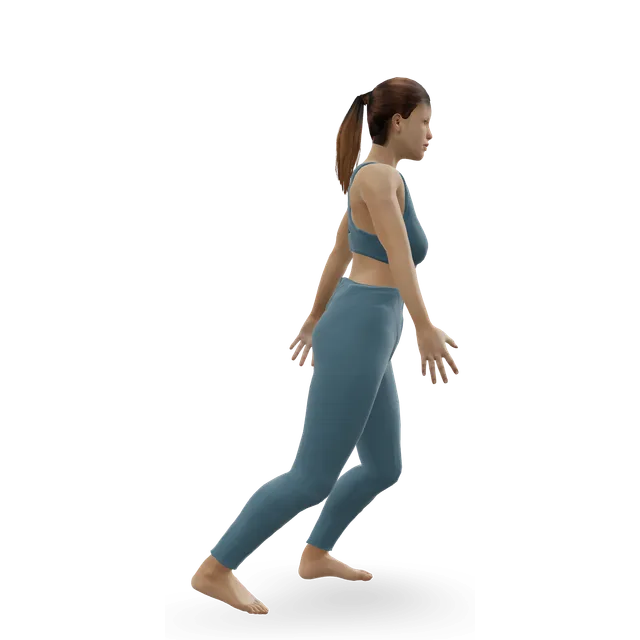 3D demoBackward walkingBeginner · No equipment
 3D demoTandem stance and heel-to-toe walkBeginner · A wall
 3D demoLow step-upBeginner · A step
 3D demoTreadmill walkingBeginner · Cardio machine
The seniors' strength and balance session, three times a week, is the core; add the 10-minute balance routine on most other days. The strength and balance workout is a harder session for when those feel easy, the starter workout is for low-energy days, and the easy cardio workout builds your walking.
A 40-minute strength and balance session for over-65s, built from the Otago home programme and NHS exercises, using a chair, a counter and a step.
40 minBeginner18 movesA bench or box, Something with weightBalance practice in 10 minutes: tandem stance, single-leg stands, marches, heel walks, tree pose and floor transfers.
10 minBeginner7 movesA wall, A bench or boxStrength and balance in one session: squats, Romanian deadlifts, push-ups, rows, step-ups, back extensions, carries and single-leg balance.
45 minBeginner14 movesA wall, A dumbbellA 10-minute session for low-energy days: marching, sit-to-stands, wall push-ups, step-ups and bridges, then a short walk. Doing a little counts.
10 minBeginner7 movesA bench or box, A wallA steady 30 to 45 minute cardio session at talk-but-not-sing pace: walk, cycle, row or cross-train, counting toward weekly activity guidelines.
40 minBeginner3 movesCardio machine, A wallThe seniors plan follows the falls-prevention programmes with the best evidence: strength and balance three times a week, balance practice on other days, and walks that build up.
A 12-week exercise plan for over-65s: strength and balance three times a week, short balance sessions and daily walks, based on falls-prevention trials.
3 training days40 minBeginner2 days a weekYour first four weeks: two, then three short strength sessions a week at home plus walks, building gently to a full routine.
2 training days20 minBeginnerThe CDC's instruction to testers is "Always stay by the patient for safety". Have someone walk beside you, ready to steady you.
Source 1
NICE recommends a full falls assessment for people who have fallen in the past year and were injured, lost consciousness, couldn't get up on their own, have fallen twice or more, or are living with frailty. See your GP or a falls service first; in some areas you can refer yourself. The test can wait.
Testing at home isn't safe for you (our reading). A physiotherapist or falls service can test you instead.
The PAR-Q+ (Physical Activity Readiness Questionnaire for Everyone) asks whether you've lost your balance because of dizziness, or lost consciousness, in the past 12 months. If you have, or you've fainted, see your GP before testing.
Test with your physiotherapist. The World Falls Guidelines recommend falls-prevention exercise in early to mid-stage Parkinson's and mild to moderate dementia, in smaller groups or one to one as needs grow. Our Parkinson's, stroke and dementia guides cover exercise.
Source 3
The scorer has no averages to compare with under 20. Our guide to exercise for children and teenagers covers fitness at that age.
Stop at once for chest pain, dizziness or severe breathlessness, and don't restart the test that day (our suggestion, from the Otago booklet's stop signs). If you stumble or lose your balance, the person beside you steadies you and that try ends.
Call 999 (911 in the US) for any of these, and don't drive yourself to A&E:
Get advice soon for any of these:
Make an appointment if:
Feeling your muscles working, or slight soreness the next day, is normal.
Source 24
In pooled studies, a slow time moved the chance of a fall from 51% to 56%, or from 30% to 47%. It's a reason for a fuller check, not a forecast.
Most people who went on to fall had done the test in 13.5 seconds or less, and in one review a time under 12 seconds still left a 25% chance of a fall.
The CDC's test and its 12-second mark use your normal pace. Some studies asked people to hurry instead, so a fast-pace time doesn't compare with these numbers.
Walking aids are allowed. Use the same one each time you test.
NICE asks for a gait and balance assessment, or a full falls assessment, for anyone who has fallen in the past year, whatever a single test shows.
Source 19
Sit back in an armchair with a line marked 3 metres (10 feet) away. On "Go", stand up, walk to the line at your normal pace, turn, walk back and sit down; the time runs from "Go" until you're sitting. Wear your usual shoes, use your usual walking aid, and have someone walk beside you.
Across 21 studies, healthy adults averaged 8.1 seconds in their 60s, 9.2 in their 70s and 11.3 from 80. In one clinic, adults aged 20 to 59 averaged 8.6 to 9.9 seconds. Enter your time to see how it compares with your age group.
The CDC uses 12 seconds as the point at which an older adult "is at risk for falling" and should have a fuller check. It isn't a diagnosis, and many people who take longer than 12 seconds don't fall.
Not very, on its own. In studies where about half the people fell, a slow time raised the chance only from 51% to 56%, and most people who fell had quicker times. NICE says tests like it help to spot problems but don't predict a person's risk.
No: walk at your normal, comfortable pace. The CDC's 12-second mark is for your normal pace, and the scorer flags a fast-pace time as not comparable.
Yes. Use the one you normally use, and the same one each time you test.
No: the CDC says someone should always stay beside the person being tested. If you've fallen in the past year and were hurt, fallen twice or more, couldn't get up after a fall, or blacked out, see your GP or a falls service first.
A change of about 2 seconds between tests is more than everyday variation. In hip osteoarthritis, 0.8 to 1.4 seconds quicker was a major improvement.
Combine leg strength (sit-to-stands, step-ups), balance (heel-to-toe walking, side-stepping) and walking, 3 or more times a week for at least 12 weeks. In one trial, strength and balance training improved women's TUG times and cut their falls.
It's the original, untimed version from 1986, in which a clinician watches you stand up, walk, turn and sit down. The timed up and go added a stopwatch in 1991, and the World Falls Guidelines say the untimed test gives similar information about how you move.
Fitness tests for adults compared with published norms, not a diagnosis, and clinical review of these pages is pending. Check with a GP before a hard test if you have a heart condition, high blood pressure, chest pain, dizziness or breathlessness when active, and have someone with you for the balance, walking and floor tests if you've fallen or feel unsteady. Health disclaimer.









