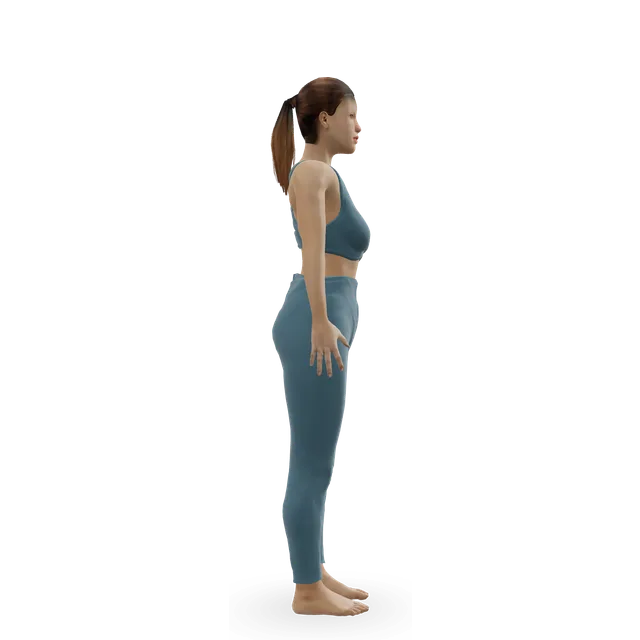
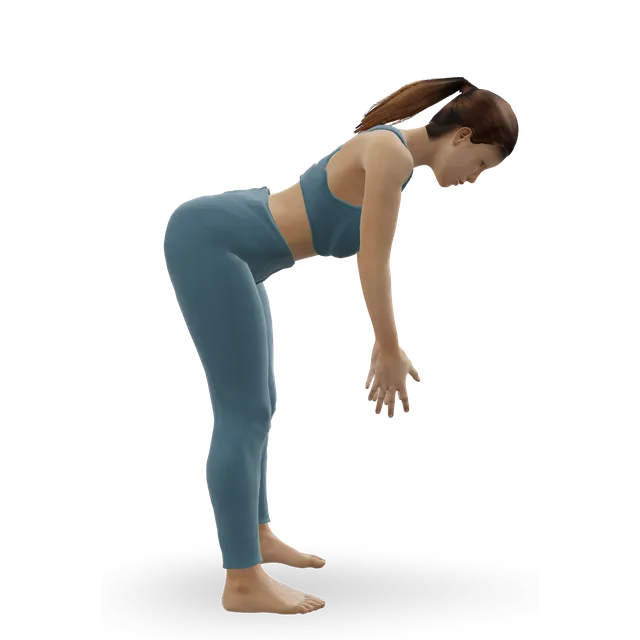
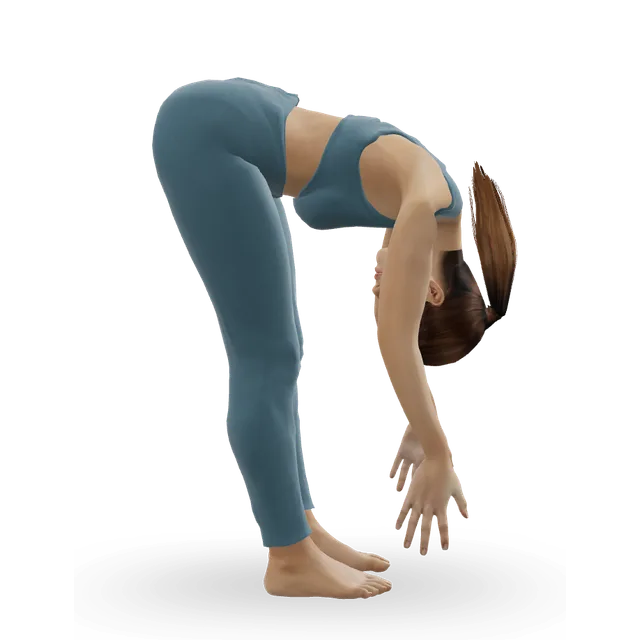
Mostly hips, partly back
Bending forward, adults moved about 69 degrees at the hips and 42 at the lower back. Tight hamstrings are often the limit: men with short hamstrings tipped the pelvis less and rounded the upper back more.
Training guide
If you can't touch your toes, the hamstrings at the back of your thighs are often the limit, but your lower back, the nerves running down your legs and even the length of your arms play a part. In trials, a few weeks of hamstring stretching on most days, or of slow-lowering hamstring exercise, clearly improved hamstring range.
This guide explains what stops the toe touch, quick checks to find your limit, what the sit-and-reach test does and doesn't say about your health, and the stretches and strength moves that help, with a 12-minute routine. It also lists the back pain warning signs that need a doctor rather than a stretch. With osteoporosis, bend from the hips instead.
Bending forward, adults moved about 69 degrees at the hips and 42 at the lower back. Tight hamstrings are often the limit: men with short hamstrings tipped the pelvis less and rounded the upper back more.
The sciatic nerve can add to the pull: with the spine and neck bent forward, hamstring range fell by 8 degrees with no change in muscle activity. Longer arms relative to your legs also help on the classic sit-and-reach test.
The sit-and-reach is a moderate measure of hamstring flexibility and a poor measure of back flexibility, and it didn't predict back pain in 2,747 adults followed for 6 years.
Hamstring stretches held for 30 to 60 seconds on most days; slow-lowering hamstring work such as Romanian deadlifts, which matched stretching in a trial; and a nerve slider if lifting your head eases the pull.
Low-quality evidence suggests bending the lower back while lifting isn't a risk factor for back pain. With osteoporosis, the UK consensus advises modifying or avoiding sustained, repeated or end-range forward bending: bend from the hips instead.
Numbness around your genitals or bottom, bladder or bowel changes, or symptoms in both legs: call 999 (911 in the US) or go to A&E.
In 41 adults, a full forward bend averaged 111 degrees: about 42 degrees from the lower back and 69 from the hips. The lower back did more early in the bend and the hips more late. People with a history of back pain moved the same total amount, in a different pattern.
Source 1
In 30 men, those with short hamstrings tipped the pelvis and bent the lower back less, and rounded the upper back more, to reach towards their toes. Standing, their posture was the same as men with longer hamstrings.
Source 2
The sciatic nerve runs behind the hip and knee. In 8 people, adding nerve tension by bending the spine and neck forward cut hamstring range by 8 degrees and raised resistance by 14 to 15%, with no change in muscle activity. In another small study, lifting the head eased discomfort behind the thigh by 40% without changing hamstring activity.
Physiotherapists use the same idea in the slump test: the neck doesn't move the hamstrings, so if moving your head changes the pull, nerves are part of the limit.
In 258 adolescents, those with long arms relative to their legs scored better on the classic sit-and-reach. A modified version that measures from where the fingertips start removed that bias.
Source 5
Sitting with your feet flat against a box holds your ankles at a right angle, which adds some calf tension compared with letting your feet relax. This is anatomy rather than something the studies measured.
Our suggestions, built on the studies above. They guide your practice; they don't diagnose anything.
If your fingertips now reach, your hamstrings, and the nerves behind them, are the main limit.
Sit slumped on a chair, straighten one knee until you feel the pull, then lift your head. If the pull behind your knee eases, nerves are part of the limit, and a nerve slider may help.
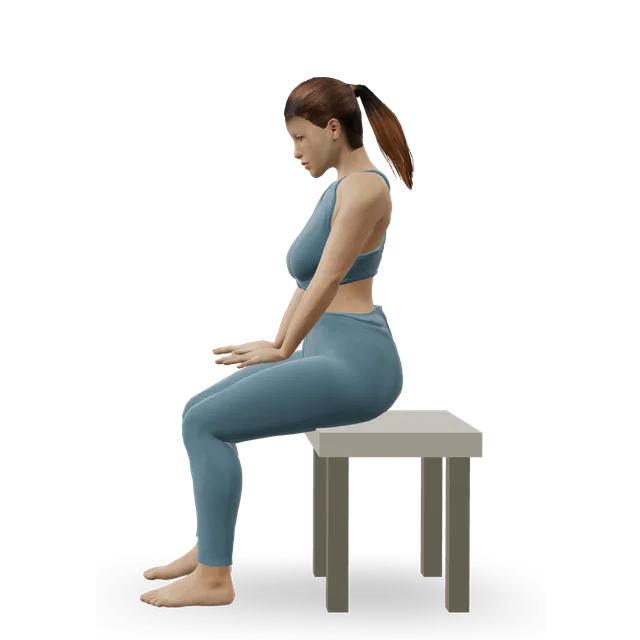
Sitting with straight legs, reach forward with your feet pulled up, then with your toes pointed. If you reach further with your toes pointed, your calves, or the nerves that run down into them, are part of the limit.
Back pain, or pain, tingling or numbness down a leg when you bend, is a reason to stop and read the warning signs below, not to stretch through it.
Across 34 studies, sit-and-reach scores matched hamstring flexibility moderately well and lower-back flexibility poorly, and the classic version tracked the hamstrings best. The modified version removes the advantage of long arms, though it tracked hamstring flexibility less closely. Angle tests, such as a straight-leg raise, measure the hamstrings more directly.
In 2,747 adults followed for an average of 6 years, sit-and-reach scores were essentially unrelated to later back pain. Across 12 cohort studies (5,459 people), fingertip-to-floor distance didn't predict new back pain, though restricted hamstring range had a small link.
Lower overall flexibility has been linked with higher death rates in middle age, and poor trunk flexibility, measured with a sit-and-reach, with stiffer arteries. These are associations, not proof that stretching changes your health.
Placing your palms flat on the floor with straight knees scores one of the 9 points on the Beighton score, the usual check for very flexible joints. Being able to do it isn't a problem in itself; our flexibility guide covers very flexible joints that come with pain or frequent sprains.
Static or contract-relax stretches, 30 to 60 seconds a hold, on most days. Hamstring and sit-and-reach measures both improved well with stretch training. Lying down with a strap keeps your back supported.
How much in a week is less settled. One meta-regression, an analysis of how results change with the dose, found gains peaked at about 10 minutes per muscle a week, about 2 minutes per leg a day on 5 days, but it conflicts with other reviews, so treat it as a rough target.
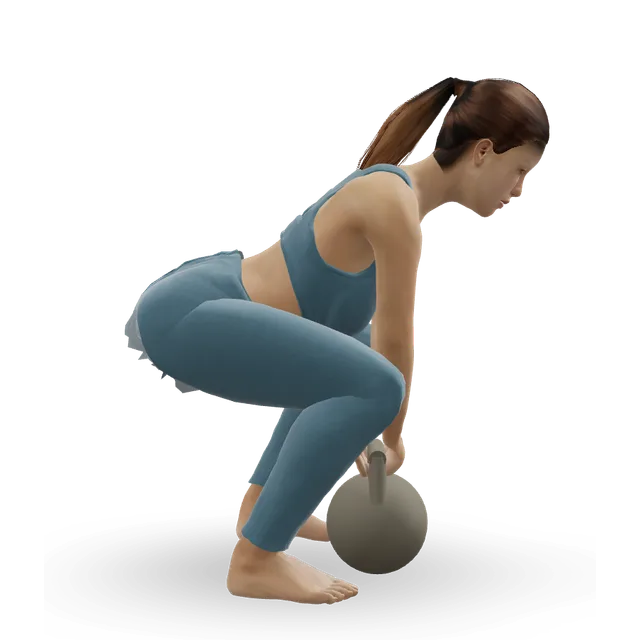
In 69 teenage boys with tight hamstrings, 6 weeks of slow-lowering (eccentric) hamstring exercise gained 12.8 degrees, the same as static stretching (12.1). Slow Romanian deadlifts, lowering for about 3 seconds, are a good place to start (our suggestion).
If lifting your head eases the pull, add a nerve slider: 10 slow repetitions, 2 to 3 times a day (an NHS service dose), and it should never be painful. In trials of people with tight hamstrings, sliders improved range a little more than static stretching, by about 3.5 degrees, though the evidence is of low certainty.
A wall calf stretch, if your heels or calves pull in the sitting test (our suggestion).
After stretching, practise the toe touch or a slow roll-down a few times (our suggestion). The Jefferson curl, a slow roll-down holding a light weight, is an advanced option for experienced lifters with no trials behind it, and not for anyone with osteoporosis.
If your fingertips are within a few centimetres of your toes, a few weeks of practice on most days is often enough; from mid-shin, expect 1 to 3 months or more. This is our estimate from trials that gained roughly 10 to 20 degrees of hamstring range in 4 to 6 weeks; no trial has timed the toe touch itself.
30 to 60 seconds a hold on most days; contract-relax, 3 rounds each leg. Skip the seated forward fold with osteoporosis.
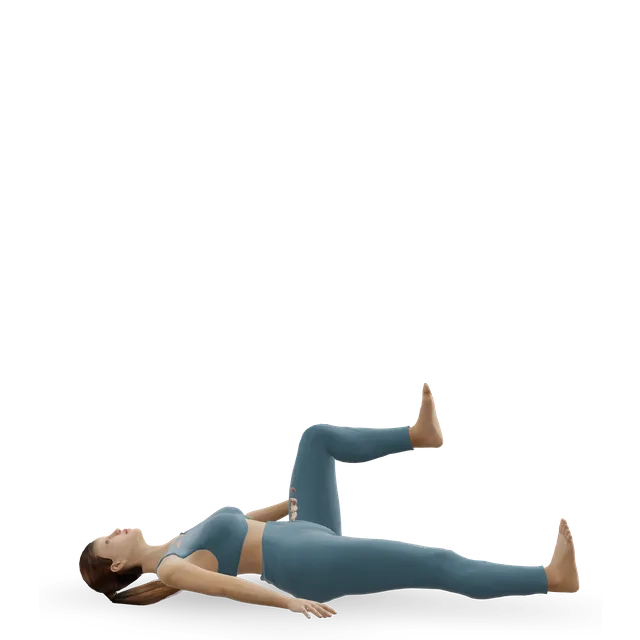
 3D demoSupine hamstring stretch with a strapBeginner · No equipment
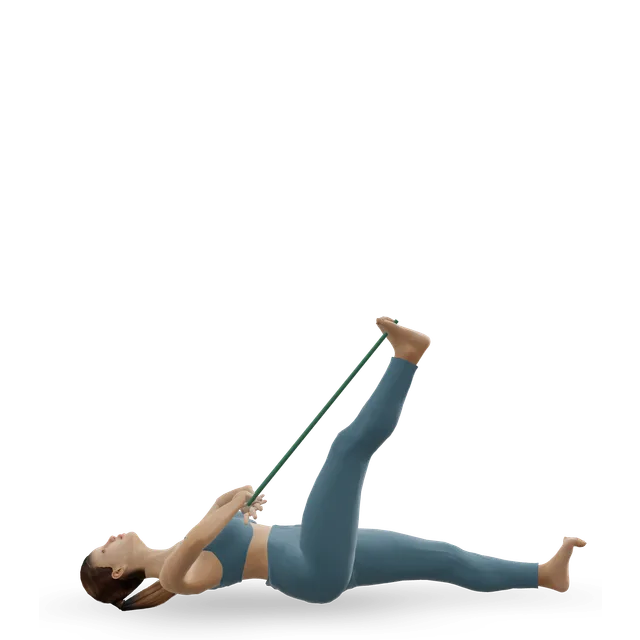 3D demoContract-relax hamstring stretch (PNF)Intermediate · No equipment
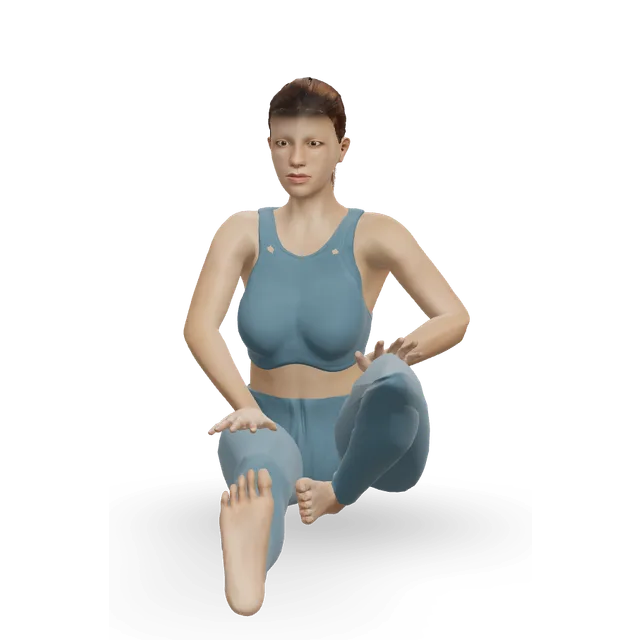 3D demoHead-to-knee pose (Janu Sirsasana)Beginner · No equipment
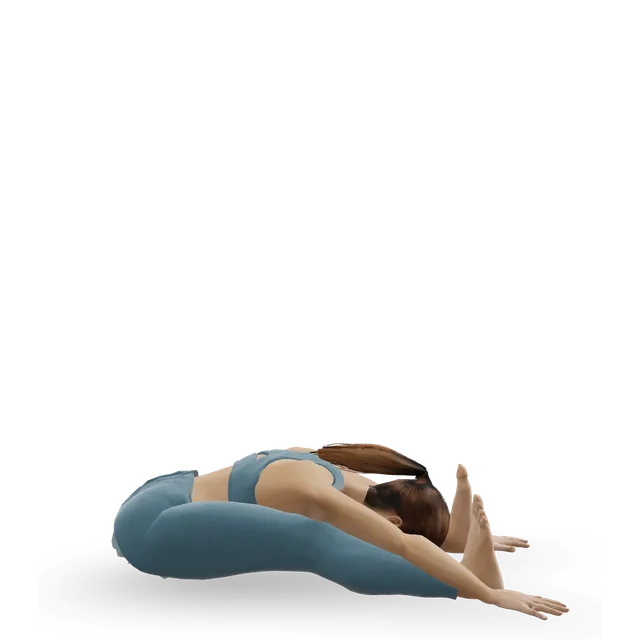 3D demoSeated forward fold (Paschimottanasana)Intermediate · No equipment
 3D demoDownward-facing dog (Adho Mukha Svanasana)Beginner · No equipment
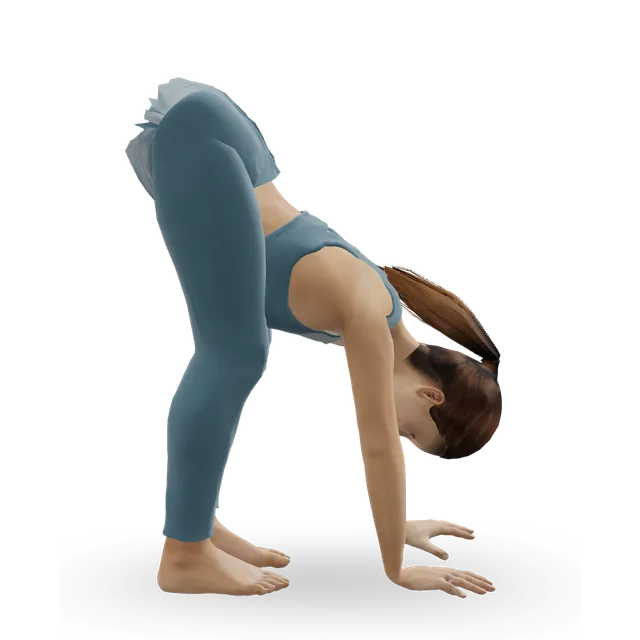 3D demoElephant WalksBeginner · No equipment
10 slow reps, 2 to 3 times a day (an NHS service dose). A gentle pull is fine; pain or tingling is not.
Lower slowly, for about 3 seconds, and stop before your back rounds: in a trial this matched stretching. 2 to 3 sets of 8, twice a week, is our starting point.
Not with osteoporosis: use the hip hinge fold with a long back instead of the toe touch and the roll-down.
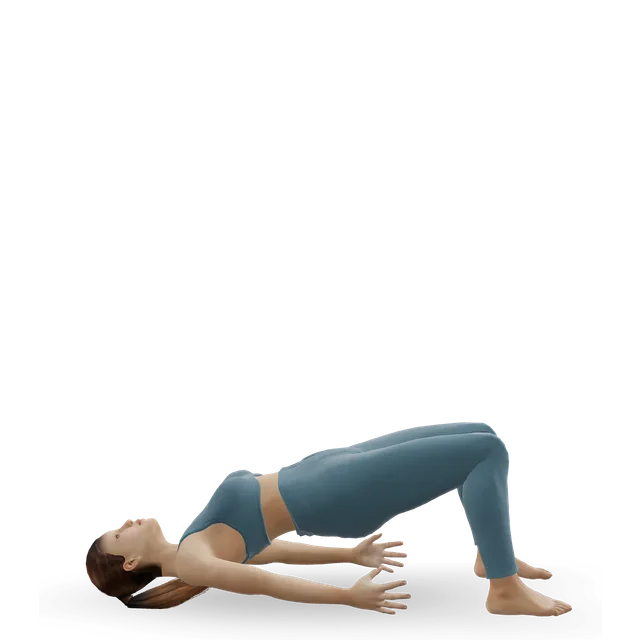
Do the touch your toes routine 5 days a week for a month, retesting once a week. The other routines add gentle hip, back and hamstring work.
A 12-minute routine to bring your fingertips to your toes: test, nerve glide, hamstring and calf stretches, a slow hinge for strength at length, then retest.
12 minBeginner7 movesA bench or box, A wallA 12-minute routine to loosen tight hamstrings with strap stretches, PNF, folds and hinges.
12 minBeginner7 movesNo equipmentSeven gentle stretches and mobility moves for a stiff lower back, done lying and kneeling.
12 minBeginner7 movesA wallA 12-minute, no-equipment routine of slow long-line stretches, side bends and rotations, moving in many directions.
12 minBeginner10 movesNo equipmentLow-quality evidence from 11 studies suggests that bending the lower back more while lifting isn't a risk factor for back pain. Our back pain guide lists "always lift with a straight back" as a myth.
Source 12
The UK consensus on osteoporosis says movements involving sustained, repeated or end-range forward bending should be modified or avoided, because spinal fractures have been reported with them, especially with a load. Skip the standing toe touch, seated forward folds and the Jefferson curl, and practise the hip hinge with a long back instead.
Source 13
It is a slow roll-down holding a light weight. No trials have tested it. If you try it, start very light, build over months, and only once bending without a weight is pain-free (our suggestion, from the move's page).
If you have back pain or sciatica with any of these:
Back pain with feeling hot, cold, shivery or generally unwell, or severe pain that starts suddenly or gets worse quickly.
Source 14
The NHS says exercises and stretches can help back pain, but to stop if your pain gets worse and see a GP for advice. See a GP for back pain:
Low back pain, stiffness or tight hamstrings that keep going in a young athlete, especially in gymnastics or weightlifting, can be spondylolysis, a stress fracture in the spine. See a GP: early stress injuries may not show on an X-ray.
Source 31
Don't practise sustained, repeated, end-range or loaded forward bending; use the hip hinge. Our osteoporosis guide has safer alternatives.
Source 13
Stop stretching into it: it can mean an irritated nerve rather than a tight muscle (our suggestion, in line with our back pain guide). Our sciatica guide covers what helps.
Often, but your lower back, the nerves in the back of your legs and your arm-to-leg proportions count too. Tight hamstrings are often the limit, not the only one.
Sit-and-reach scores didn't predict back pain over 6 years in 2,747 adults, and fingertip-to-floor distance didn't predict it across cohort studies.
Low-quality evidence suggests more lower-back bending when lifting isn't a risk factor for back pain. The exception is osteoporosis, where sustained, repeated, end-range or loaded forward bending should be modified or avoided.
Gains from contract-relax and static stretching are explained by a change in how much stretch you tolerate, not by reflexes switching off, and 30-second holds beat 15-second holds in a trial.
Bouncing (ballistic) stretching built about half the lasting range of static or contract-relax stretching.
Source 9
It is a poor measure of lower-back flexibility and a moderate one of hamstring flexibility.
Source 6
Often tight hamstrings, but your lower back, the nerves that run down the back of your legs and even your arm-to-leg proportions play a part. A quick check: if bending your knees slightly lets you reach, the hamstrings are the main limit.
No study has timed it. Our estimate: if you're within a few centimetres, a few weeks of stretching on most days; from mid-shin, 1 to 3 months or more. Trials of 4 to 6 weeks added roughly 10 to 20 degrees of hamstring range.
Hamstring stretches held for 30 to 60 seconds on most days, such as the strap stretch lying down and the contract-relax stretch. Slow-lowering hamstring exercise, such as Romanian deadlifts, improved flexibility as much as stretching in a trial, and a nerve slider may help if lifting your head eases the pull behind your knees.
Not in itself. Sit-and-reach scores didn't predict back pain over 6 years in 2,747 adults, and the test says little about your back. Lower overall flexibility has been linked with poorer survival in middle age, but that's an association, not proof that stretching changes it.
For the test, keep them straight but not locked, so you can compare from week to week. For practice, a slight bend is fine and lets you fold from the hips.
For most people, no: bending with a rounded back hasn't been shown to cause back pain, though the evidence is low quality. With osteoporosis, avoid it and bend from the hips instead, and stop if bending makes your pain worse or sends pain or tingling down a leg.
Standing, gravity pulls you down into the fold. Sitting on the floor, your pelvis has to tip forward against the pull of the hamstrings without that help, so the same tightness shows up more. This is our explanation from basic mechanics rather than from a study.
Mostly hamstring flexibility, moderately well, and lower-back flexibility poorly. Your arm and leg proportions also change the score, which is why a modified version measures from where your fingertips start.
A pull can come from the sciatic nerve as well as the muscle: with the spine and neck bent forward, hamstring range fell by 8 degrees without any change in muscle activity. A gentle pull is fine; tingling, burning or numbness means back off, and if it keeps happening, see our sciatica guide.
Yes. In 69 teenage boys with tight hamstrings, 6 weeks of slow-lowering (eccentric) hamstring exercise improved flexibility as much as stretching, by about 12 degrees. Romanian deadlifts with a slow lowering are a good place to start.
Flexibility, especially of the trunk, declines gradually with age, and range slips back if you stop practising. New back or leg pain that limits bending is different: see a GP if it doesn't settle within a few weeks, and get urgent help for the warning signs on this page.
Exercise education, not a personal prescription, and clinical review of these guides is pending. Check with a GP before starting hard training if you have a heart condition, chest pain, dizziness or breathlessness when active, and stop for sharp or increasing pain. Health disclaimer.