Posture guide

Anterior pelvic tilt: what's normal, and exercises that help

Anterior pelvic tilt means the top of your pelvis tips forward, which deepens the curve in your lower back. Most people stand like this to some degree: in one study of 120 young adults, 85% of the men and 75% of the women did. Average readings are about 9 to 12 degrees, a little more in women, and part of the number is the shape of your pelvis.

Studies haven't found that a forward-tilted pelvis causes back pain, and the 'tight hip flexors, weak glutes' story doesn't hold up well when muscles are measured. Exercise changes the tilt only slightly, but it does build hip range, glute and trunk strength, and control of your pelvis.

This guide gives the normal range, what the trials found, what the Thomas test really measures, the moves with 3D demos and a 20-minute routine.

The short version

Some forward tilt is normal

Most people stand with the front of the pelvis a little lower than the back: in 120 healthy young adults, 85% of the men and 75% of the women did. With the standard clinic tools, average readings are about 9 to 12 degrees, women about 2 to 3.5 degrees more than men, and readings from 2 to 19 degrees turned up in healthy people.

Sources 1, 2, 3

Part of the reading is the shape of your pelvis

In 30 pelvises held in exactly the same position, the angle between the bony points at the front and back ranged from 0 to 23 degrees. You can't tell posture from bone shape by eye, and judging posture by looking is unreliable.

Sources 4, 5

It isn't a proven cause of back pain

People with and without low back pain stand with the same pelvic tilt and the same lower-back curve. In 600 adults, tilt was not linked to back pain, while the endurance of the back muscles was. Reviews have found no agreement that any posture causes back pain.

Sources 6, 7, 8

Exercise changes the tilt only a little

In trials, exercise and stretching changed standing tilt by about 0.5 to 1.6 degrees, close to the error of the measuring tools, and no trial checked whether the change lasted.

Sources 9, 10, 11

The exercises are still worth doing

They build what they train: how far your hip extends, glute and trunk strength, and control of your pelvis. You can already tilt your pelvis about 9 to 11 degrees either way on purpose, so you are not stuck in one position.

Sources 12, 13, 14

The Thomas test checks your hip, not your tilt

The popular self-test measures how far your hip extends, and it is misleading unless the pelvis is held still. Hip-flexor length doesn't predict how far your pelvis tilts when you stand.

Sources 15, 16

What anterior pelvic tilt is, and what's normal

What it is

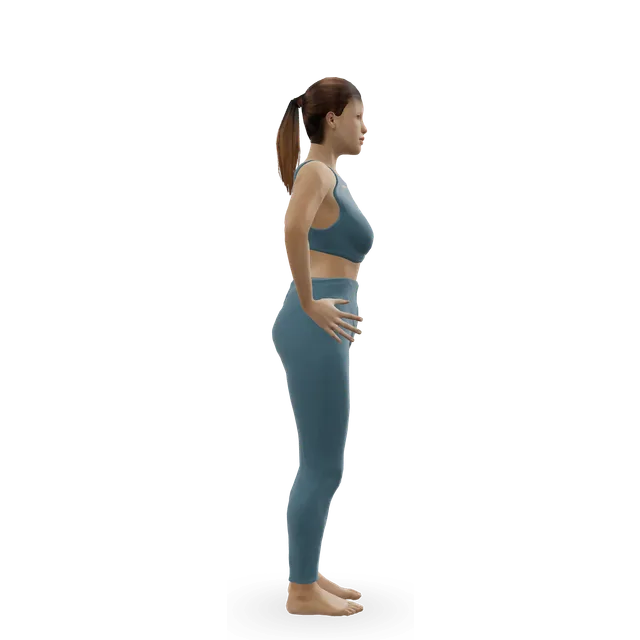
The pelvis can rock forwards and backwards on the hip joints. In an anterior tilt the top of the pelvis tips forward, so the bony point at the front of the hip (the anterior superior iliac spine) sits lower than the one at the back (the posterior superior iliac spine). Clinics measure the angle between a line joining the two and the horizontal.

Tipping the pelvis forward deepens the curve in your lower back while you hold it: in a lab study, tilting as far forward as people could (11.4 degrees) deepened the curve by 10.8 degrees, and tilting back (8.7 degrees) flattened it by 9 degrees. In relaxed standing, though, how far someone's pelvis tilts and how deep their curve is are only loosely related.

Sources 5, 14, 17, 18, 19

How it's measuredEmerging evidence

Looking from the side is the most common method and the least reliable: when clinicians rated the lower-back curve from photographs, they agreed poorly with each other and only moderately with themselves. A caliper with its arms on the bony points at the front and back of the pelvis agreed closely with X-rays in one study and gives similar readings when repeated, and smartphone inclinometer apps were reliable too.

The 'pelvic tilt' on an X-ray report is a different angle, used for planning spinal surgery, so its numbers can't be compared with clinic readings. Because healthy people vary so much, a review advises comparing yourself with yourself over time rather than with a 'normal' number.

Sources 5, 9

Normal valuesStrong evidence

In 120 healthy young adults measured with a palpation meter (a caliper placed on those bony points), 85% of the men and 75% of the women stood with some anterior tilt; 6 to 7% tilted backwards and the rest were level.

In 100 college-age adults measured with a caliper, men averaged about 8.6 degrees and women about 12 degrees. In 118 active adults aged 18 to 32, men averaged 9.6 degrees (range 3 to 18) and women 11.7 degrees (range 2 to 19). A review used about 8 degrees as a reference value and found no agreed cut-off for 'excessive' tilt.

Sources 1, 2, 3, 9

Women tilt a little more on averageEmerging evidence

In both studies, women averaged about 2 to 3.5 degrees more forward tilt than men, with a lot of overlap. It is a normal difference, not a problem to correct.

Sources 2, 3

Bone shape mattersEmerging evidence

In 30 pelvises fixed in the same anatomical position, the angle between the front and back bony points ranged from 0 to 23 degrees (average 13), with up to 11 degrees of difference between the two sides of the same pelvis. Two people standing the same way can get very different readings, so a high number on its own doesn't mean poor posture.

Source 4

Causes

Largely unknown. Researchers name muscle tone, pain, bone shape, movement at neighbouring joints, and sex. Sitting and high heels are often blamed, but no study we found shows that either causes a lasting tilt: the only study touching on heels was a taping study in 16 women, which says nothing about cause.

Sources 5, 2, 9

What the evidence says

Tilt and back painStrong evidence

In a meta-analysis, standing pelvic tilt (3 studies) and the lower-back curve (8 studies) did not differ between people with and without low back pain. An umbrella review of 41 reviews found no agreement that spinal posture causes low back pain. The authors of the first review note that grouping people by which movements hurt might reveal links that averages hide.

Sources 6, 8

What mattered in 600 adultsEmerging evidence

In 600 adults, the size of the lower-back curve, pelvic tilt and the length of the hip flexors, hamstrings and abdominal muscles were not linked to back pain. The endurance of the back muscles was the factor most linked to it. This study looked at one point in time, so it can't show cause.

Source 7

Exercise and tilt: the systematic reviewMixed evidence

A 2020 review found only 2 randomised trials (72 people) and 2 uncontrolled studies (23 people) of non-surgical treatment for excessive anterior tilt, with very low certainty and no overall evidence that it works. In the main trial, 8 weeks of abdominal strengthening with hip and lower-back stretching, 5 days a week, made the abdominal muscles stronger but changed tilt by only 0.5 degrees (8.7 to 8.2), which could have been chance.

Source 9

Hip-flexor stretchingEmerging evidence

One session of hip-flexor stretching in 23 healthy men increased hip extension by 2.6 degrees and reduced standing tilt by 1.2 degrees, with no change in the lower-back curve and no link between the two changes. Over 6 weeks, active or passive home stretching both improved hip extension in 33 people with limited range.

In a crossover trial of 26 adults, tucking the pelvis under during the half-kneeling stretch lowered the hip flexors' resistance to stretch more than the usual hips-forward version, using 2 holds of 30 seconds.

Sources 10, 12, 13

Longer programmesEmerging evidence

An 8-week home programme of education, core, strength and stretching exercises in 42 young adults with excessive tilt and a backward-facing hip socket changed tilt by 1.6 degrees, which could have been chance, and hip pain didn't improve meaningfully, though 85% kept up the programme. In 35 active men, 18 sessions over 6 weeks reduced tilt while walking compared with men who didn't train, but the groups were not randomly allocated.

Sources 11, 20

Core programmes and the lower-back curveMixed evidence

In 75 inactive men with deep curves, core stability exercise twice a week for 6 weeks (drawing in the stomach with the lower back pressed down, bridges, crunches and reverse crunches, cat-cow, leg lowering and planks) reduced the curve by about 2 degrees, or 3.4 degrees in an electrical stimulation suit, with almost no change in men who didn't exercise. In 30 inactive women, 24 hour-long sessions over 8 weeks reduced it by about 6 to 7 degrees more than in women who didn't train.

Neither trial measured pain or followed people up afterwards.

Sources 21, 22

PilatesMixed evidence

Twelve weeks of twice-weekly mat Pilates in 50 active adults improved abdominal endurance and hamstring flexibility but not posture. A 2024 review of 9 small studies (643 people) reported better spinal curves and posture, from studies of low to moderate quality.

Sources 23, 24

Belts, correctors and tapingMixed evidence

The 2020 review found no trial of posture belts or correctors for pelvic tilt, and NICE (the National Institute for Health and Care Excellence) says not to offer belts or corsets for low back pain. Taping the pelvis into a backward tilt reduced tilt by about 5 degrees after a day in one study of 16 women, with no comparison group. Three 15-minute sessions of soft-tissue manipulation (Rolfing) reduced tilt by 1.7 degrees straight after and 1.4 degrees a day later, and nobody checked for longer.

Sources 9, 25

Tight hip flexors and weak glutes? Lower crossed syndrome

The idea

Lower crossed syndrome is a clinical model from the 1980s. It says weak abdominal and glute muscles, combined with stiff, overactive lower-back muscles and hip flexors, tip the pelvis forward, deepen the lower-back curve and cause back pain.

Source 22

What measurements showEmerging evidence

When researchers measured the muscles, the links were weak or missing. Hip extension range and pelvic tilt were not related in 25 adults, and abdominal muscle performance and tilt were barely related in 31 adults. In 103 teenage girls, no measure of muscle length was related to tilt, and in 90 healthy adults and 60 adults with back pain, muscle length and abdominal strength explained little of the tilt or the curve.

The authors of one study concluded that strengthening the abdominals, or stretching the back and hip flexors, to correct standing posture 'should be questioned'.

Sources 16, 17, 26, 19, 18

No agreed way to diagnose itMixed evidence

There are no validated criteria for the syndrome. A 2024 scoping review found too little information on how it affects movement and walking, and trials use it as a label without saying how it was diagnosed.

Sources 27, 22

Why the exercises can still help

Programmes built on the model (hip-flexor stretches, glute and trunk strengthening) are reasonable exercise. They improve hip range, strength and trunk endurance, even though they barely move the pelvis. The iliopsoas guide covers the claim that a tight psoas pulls your back into an arch.

Sources 12, 21, 20

The Thomas test

What it is

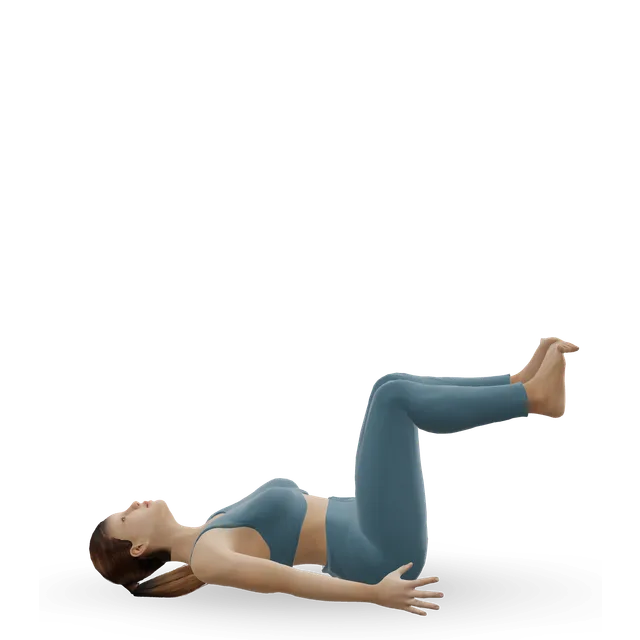
You lie on your back on a firm table, hug one knee to your chest and let the other leg relax. In the modified version your legs hang off the end of the table. A resting thigh that stays raised is taken as a sign of tight hip flexors, and the knee angle is used to judge the front thigh muscle (rectus femoris).

Source 15

It measures hip range, not pelvic tiltEmerging evidence

The test measures how far your hip extends, in other words hip-flexor length. It says nothing direct about how your pelvis sits when you stand, and hip-flexor length doesn't predict standing tilt.

Sources 15, 16

How accurate it isEmerging evidence

Compared with motion capture, the modified test picked up only 32% of people who really had limited hip extension and flagged 43% of people who didn't, because the pelvis tipping during the test caused most of the error. Pass-or-fail scoring of the knee part was unreliable between testers. Measured with an inclinometer and a standard pelvic position, readings were consistent.

Sources 15, 28, 29, 30

If you try it at home

Keep your lower back pressed down so your pelvis can't tip, and treat the result as a rough guide to hip range, not a verdict on your posture. This is our editorial advice, drawn from the study above.

Source 15

What helps, and how much

A starting programme

Two to three sessions a week of the 20-minute routine below: a hip-flexor stretch, pelvic tilts, glute bridges and trunk exercises. That is our editorial starting point, modelled on the trial programmes: core work twice a week for 6 weeks, three sessions a week for 8 weeks, and abdominal strengthening with stretching. The NHS asks adults to do muscle-strengthening activity on at least 2 days a week anyway.

Sources 21, 22, 9, 31

The hip-flexor stretch

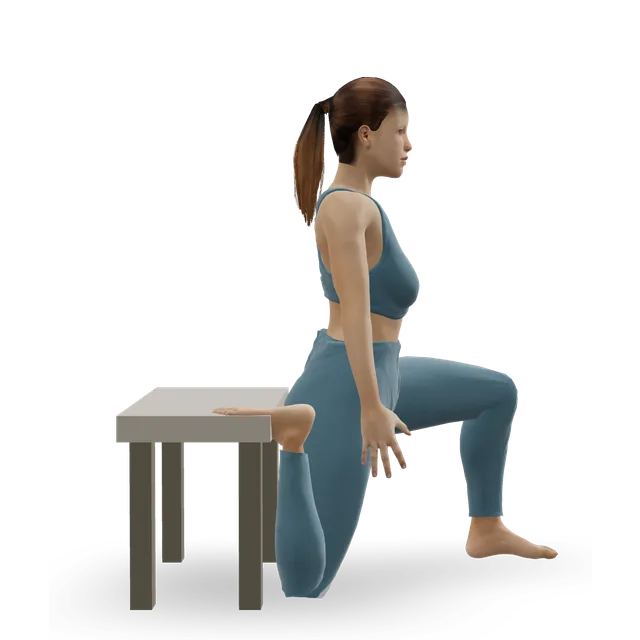
Half-kneeling, tuck your tailbone under and squeeze the glute of the back leg before you lean forward. The crossover trial used 2 holds of 30 seconds with 30 seconds' rest; 2 to 3 holds of 30 to 45 seconds a side on most days is our editorial range. Expect more hip range over about 6 weeks, not a different pelvis.

Sources 13, 12

Give it 6 to 8 weeks, and judge it by what you can do

The trials ran for 6 to 8 weeks. Track stronger bridges, longer planks and easier lunges rather than the mirror: changes in tilt were about 0.5 to 1.6 degrees, too small to see.

Sources 21, 22, 11

Move often

Break up long spells of sitting with some movement, as the NHS advises for everyone. There isn't one correct way to stand: you can tilt your pelvis forward and back at will, so change position often rather than holding a 'perfect' one (our editorial advice). The sitting guide covers desk set-up.

Sources 31, 14

Stretch the front of the hip

Start with the half-kneeling stretch, tailbone tucked: 2 to 3 holds of 30 to 45 seconds each side, most days (editorial, from the trial's 2 holds of 30 seconds). The couch stretch is the harder version; skip it with knee problems. Stretching improves hip range; it changes pelvic tilt only a little.

Learn to move your pelvis

8 to 10 slow pelvic tilts or bridges, and 6 to 10 slow rounds of cat-cow (editorial). Use the standing tilt as a break from sitting. This is a skill to practise, not a way to reset your posture.

Glutes and trunk

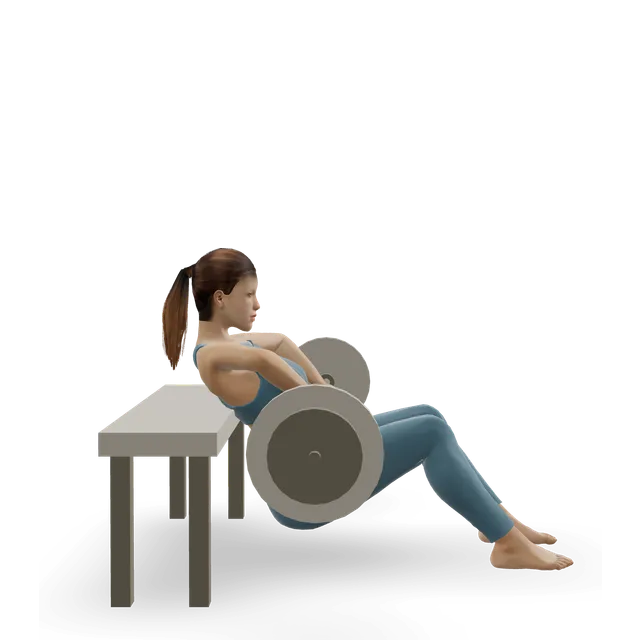
2 to 3 days a week. Our editorial starting points: bridges, 2 to 3 sets of 10 to 12 with a 2-second squeeze; dead bugs and bird dogs, 2 to 3 sets of 6 to 8 each side; planks, 3 holds of 20 to 45 seconds, ending each hold when your hips sag. Bridges, reverse crunches and planks were part of the 6-week core programme that reduced the lower-back curve.

Routines to follow

Do the anterior pelvic tilt routine 2 to 3 times a week for 6 to 8 weeks, and use the others for variety. The glute workout has no hip-flexor stretch, so add the half-kneeling stretch at the end. Pilates didn't change posture in a 12-week trial: treat it as strength and control.

Weekly plans

For a longer structure: a general beginner plan, or four weeks of Pilates, both built on the same kinds of moves.

When to get your back checked

Call 999 or go to A&E

Posture exercises are not where to start if you have back pain with any of these. In the US, call 911.

  • Pain, tingling, weakness or numbness in both legs.
  • Loss of feeling around your genitals or anus.
  • Changes in your bladder or bowels, such as difficulty peeing, or peeing or pooing yourself.
  • Changes in how your penis or vagina feels during sex, or not being able to get or keep an erection.
  • Chest pain.
  • Back pain that started after a serious accident, such as a car crash.

Source 32

Get an urgent GP appointment or call 111

If you have back pain and:

  • You feel hot, cold, shivery or generally unwell.
  • The pain is severe, started suddenly or is getting worse quickly.

Source 32

See a GP

If back pain:

  • Doesn't improve after a few weeks of looking after it at home, stops you doing day-to-day activities, or worries you.
  • Comes with weight loss you can't explain, a lump or swelling in your back, or a change in the shape of your back.
  • Doesn't improve with rest, is worse at night, or is worse when you sneeze, cough or poo.
  • Comes with height loss or a new stoop, especially as you get older: this can be a spinal fracture from osteoporosis.

Sources 32, 33

Hip or groin pain

A pinching pain in the groin when you bend deeply, or ongoing hip pain, is a reason to use the hip impingement guide rather than posture exercises.

Myths

"Anterior pelvic tilt is a posture problem that needs fixing."Strong evidence

Most healthy people have some: 85% of young men and 75% of young women in one study, with averages of about 9 to 12 degrees. Part of the reading is bone shape.

Sources 1, 2, 3, 4

"Anterior pelvic tilt causes lower back pain."Strong evidence

People with and without back pain have the same standing tilt and lower-back curve, tilt wasn't linked to back pain in 600 adults, and reviews found no agreement that posture causes back pain.

Sources 6, 7, 8

"It's caused by tight hip flexors and weak glutes and abs."Emerging evidence

Hip-flexor length, abdominal strength and pelvic tilt are barely related, and there are no agreed tests for lower crossed syndrome.

Sources 16, 17, 26, 27

"A few stretches will fix it in weeks."Mixed evidence

Exercise and stretching trials found changes of about 0.5 to 1.6 degrees, close to measurement error, with no follow-up.

Sources 9, 10, 11

"The Thomas test shows whether you have anterior pelvic tilt."Emerging evidence

It measures hip-flexor length, and without controlling the pelvis it is a poor test of even that.

Sources 15, 16

"A posture corrector or belt will hold your pelvis in place."Mixed evidence

No trial supports it, and NICE advises against belts and corsets for low back pain.

Sources 9, 25

Questions people ask

What is anterior pelvic tilt?

It means the top of your pelvis tips forward, so the bony point at the front of your hip sits lower than the one at the back. Most people stand like this to some degree: 85% of young men and 75% of young women in one study. Tipping further forward deepens the curve in your lower back while you hold it.

How much anterior pelvic tilt is normal?

With the standard clinic tools, healthy young adults average about 9 to 12 degrees, women a little more than men, and readings from about 2 to 19 degrees are common. Part of the number is the shape of your pelvis: in pelvises held in exactly the same position, the angle ranged from 0 to 23 degrees. There is no agreed cut-off for 'too much'.

How do I know if I have anterior pelvic tilt? Is there a test I can do at home?

You can't judge it reliably by eye, and even clinicians agree poorly when they rate posture by looking. Clinics use a caliper or an inclinometer on the bony points of the pelvis, and the useful comparison is with yourself over time. The Thomas test, often suggested online, checks how far your hip extends, not your pelvic tilt.

Does anterior pelvic tilt cause lower back pain?

Studies haven't found that it does. People with and without back pain stand with the same pelvic tilt and lower-back curve, and in 600 adults tilt wasn't linked to back pain while back-muscle endurance was. If your back hurts, exercise helps whatever your posture.

Can anterior pelvic tilt be fixed?

Only a little, as far as trials show: 6 to 8 weeks of exercise changed tilt by about 0.5 to 1.6 degrees, and one stretching session by 1.2 degrees. Exercise does reliably improve hip range, strength and control, and you can tilt your pelvis on purpose whenever you like. Since some tilt is normal, there may be nothing to fix.

What are the best exercises for anterior pelvic tilt?

A half-kneeling hip-flexor stretch with your tailbone tucked, pelvic tilts, glute bridges, dead bugs, bird dogs and planks, 2 to 3 times a week. That mix mirrors the programmes tested in trials, and tucking the pelvis made the hip-flexor stretch work better in one trial. The 20-minute routine on this page puts them together.

How long does it take to fix anterior pelvic tilt?

Trials ran for 6 to 8 weeks, and none checked whether changes lasted after people stopped. Hip range and strength improve over those weeks; expect only small changes in the tilt itself.

Is lower crossed syndrome real?

It's a clinical model, not a proven diagnosis. It says tight hip flexors and back muscles with weak abs and glutes tip the pelvis forward, but measurements show the length and strength of those muscles barely relate to tilt. There are no agreed tests for the syndrome.

Should I wear a posture corrector or a belt for anterior pelvic tilt?

There's no evidence they change pelvic tilt, and NICE advises against belts and corsets for low back pain. Taping changed tilt for a day in one small study without a comparison group.

Is anterior pelvic tilt more common in women?

Yes: on average women measure about 2 to 3.5 degrees more than men, with a lot of overlap. It's a normal difference, not a problem.

How should I sit or sleep with anterior pelvic tilt?

No study has tested sitting or sleeping positions for pelvic tilt, so choose what's comfortable. Breaking up long periods of sitting is good advice for everyone, and the sitting posture guide covers desk set-up.

Can anterior pelvic tilt cause hip or SI joint pain?

People with hip impingement or groin pain move their pelvis differently in lab studies, but an 8-week exercise programme didn't change tilt or hip pain in young adults with a hip socket shape problem. If your hip or sacroiliac (SI) joint hurts, use those guides rather than posture exercises.

Sources

  1. Herrington 2011 · Pelvic tilt in 120 adults without symptoms (measurement study, Manual Therapy)
  2. Nguyen 2007 · Sex differences in clinical measures of lower limb alignment (cross-sectional study, JOSPT)
  3. Medina McKeon 2009 · Sex differences and representative values for 6 lower limb alignment measures (cross-sectional study, J Athl Train)
  4. Preece 2008 · Variation in pelvic shape may prevent the identification of anterior pelvic tilt (cadaver study, J Man Manip Ther)
  5. Suits 2021 · Clinical measures of pelvic tilt in physical therapy (review, Int J Sports Phys Ther)
  6. Laird 2014 · Lumbo-pelvic posture and movement in people with and without back pain (systematic review and meta-analysis, BMC Musculoskeletal Disorders)
  7. Nourbakhsh 2002 · Mechanical factors and low back pain in 600 adults (cross-sectional study, JOSPT)
  8. Swain 2020 · No consensus that spine postures cause low back pain (review of systematic reviews, Journal of Biomechanics)
  9. Falk Brekke 2020 · Non-surgical treatment of excessive anterior pelvic tilt (systematic review, EFORT Open Reviews)
  10. Preece 2021 · Pelvic tilt before and after hip flexor stretching in healthy adults (before-and-after study, J Manipulative Physiol Ther)
  11. Falk Brekke 2022 · Exercise for a retroverted hip socket and excessive anterior pelvic tilt (feasibility and intervention study, Musculoskelet Sci Pract)
  12. Winters 2004 · Passive versus active hip flexor stretching in people with limited hip extension (RCT, Physical Therapy)
  13. González-de-la-Flor 2024 · Two hip flexor stretching strategies for hip extension (crossover trial, BMC Musculoskeletal Disorders)
  14. Levine 1996 · The effects of pelvic movement on lumbar lordosis in standing (lab study, JOSPT)
  15. Vigotsky 2016 · The modified Thomas test is not a valid measure of hip extension unless pelvic tilt is controlled (validity study, PeerJ)
  16. Heino 1990 · Hip extension range of motion and postural alignment (cross-sectional study, JOSPT)
  17. Walker 1987 · Lumbar lordosis, pelvic tilt and abdominal muscle performance (cross-sectional study, Physical Therapy)
  18. Youdas 2000 · Lumbar lordosis and pelvic inclination in adults with chronic low back pain (cross-sectional study, Physical Therapy)
  19. Youdas 1996 · Lumbar lordosis and pelvic inclination in adults without symptoms (cross-sectional study, Physical Therapy)
  20. Mendiguchia 2021 · Training-induced changes in anterior pelvic tilt (controlled trial, J Sports Sci)
  21. Shalamzari 2024 · Core stability exercise and lumbar lordosis in sedentary men with hyperlordosis (RCT, BMC Sports Sci Med Rehabil)
  22. Ghaffari 2026 · Corrective exercise and lumbar lordosis in women with lower crossed syndrome (RCT, PLOS One)
  23. Kloubec 2010 · Pilates for muscle endurance, flexibility, balance and posture (RCT, J Strength Cond Res)
  24. Li 2024 · Pilates for spinal deformities and posture (systematic review, BMC Sports Sci Med Rehabil)
  25. NICE 2016 · Low back pain and sciatica in over 16s: assessment and management (NG59)
  26. Toppenberg 1986 · Spinal curves, pelvic tilt and muscle lengths in adolescent girls (cross-sectional study, Aust J Physiother)
  27. Zahari 2024 · Motor control and walking in lower crossed syndrome (scoping review, Med J Malaysia)
  28. Peeler 2008 · Reliability limits of the modified Thomas test (reliability study, J Athl Train)
  29. Clapis 2008 · Inclinometer and goniometer measures in the modified Thomas test (reliability study, Physiother Theory Pract)
  30. Eimiller 2026 · The modified Thomas test in people with low back pain (reliability study, J Bodyw Mov Ther)
  31. NHS · Physical activity guidelines for adults aged 19 to 64
  32. NHS · Back pain
  33. Royal Osteoporosis Society · Osteoporosis symptoms: spinal fractures

Exercise education, not a diagnosis or treatment plan, and clinical review of these guides is pending. Get a curve or hunch that is new or getting worse checked, above all in a growing child or after a fall, and get urgent help for numbness or weakness in the legs or a change in bladder or bowel control. Health disclaimer.