Superficial back line
Hip hinge fold
Movement guide
Hip hinge fold

Loading the 3D figure…
Existing guide · editorial review pending. Clinical review is pending.
Sources and review status
Sources support the educational description; they do not establish that this exercise is suitable for you.
- Wilke 2016 · back line verified
No variation is labeled clinically validated.
With soft knees, fold from the hips within a comfortable range. This explores hip movement and loading of the back of the legs; it does not establish or release a cause of pain.
Make it easier or harder
Choose a version that fits your control and comfort.
Easier option
Use a smaller comfortable range in this same movement, with the support described in its guide. Ingram 2025 review of stretching and range of motion
Harder option
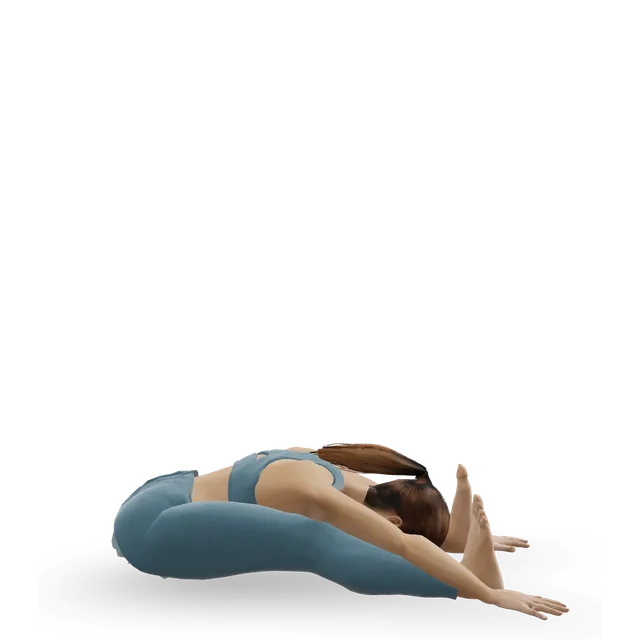 3D demoSeated forward fold (Paschimottanasana)Intermediate · No equipment
Similar move, intermediate grade.
How to do it
- 01Stand with feet hip-width and soften the knees; they stay softly bent throughout.
- 02Push the hips backward as if closing a drawer behind you, chest staying long.
- 03Fold forward from the hips until you feel the whole back of your legs load, arms hanging heavy.
- 04Take three slow breaths at the bottom, then press the floor away and stand by driving the hips forward.
Mistakes that waste your reps
- Rounding the spine to reach further down; depth is not the goal, the back-line stretch is.
- Locking the knees straight, which turns a tissue stretch into a hamstring yank.
- Rushing the return and standing up with the low back instead of the hips.
Where this comes from
Discomfort that eases as you move is normal; pain that sharpens is a stop sign. If this area is injured or persistently painful, a clinician outranks this page.
Written by Kyle Jenkin · updated August 31, 2026 · how we grade evidence
Pairs well with
What it works
Muscles
Works the low back and thighs. Individual muscles are not yet classified.
Equipment
None: body weight and floor space.
Level
Beginner. See the easier and harder options above.
Workouts that use it
- 10-minute morning stretch · 10 min
- Hamstring flexibility routine · 12 min
- Fascia stretching routine · 12 min
- Fascial fitness workout · 15 min
- Gentle yoga for beginners · 25 min
- Sun salutation for beginners (step by step) · 20 min
- Hot yoga sequence without the heat (26-posture style) · 50 min
- Hatha yoga class: a 45-minute beginner session · 45 min
Show all 25 workoutsShow fewer workouts
- Ashtanga yoga for beginners: a 40-minute short form · 40 min
- Yoga for knee pain: a 25-minute knee-friendly sequence · 25 min
- Yoga for menopause: a 35-minute practice for strength, balance and winding down · 35 min
- 15-minute morning yoga: a gentle routine to start the day · 15 min
- 10-minute desk yoga routine: seated and standing · 10 min
- Yoga for osteoporosis: a 30-minute class with the safe swaps built in · 30 min
- Gentle yoga for fibromyalgia: a 30-minute class with a stop point · 30 min
- Yoga for golfers: a 25-minute rotation, hip and balance class for non-golf days · 25 min
- Yoga to cool down anger: a 12-minute slow-down practice · 12 min
- Hip hinge workout: learn to hinge in 15 minutes, no equipment · 15 min
- Lifters' yoga: a 25-minute class for squat, hinge and overhead positions, after lifting or on a rest day · 25 min
- Yoga for fascia release: a 27-minute flow-then-hold class · 27 min
- Steady morning yoga for bipolar disorder: a 25-minute daytime class with slow breathing, no holds and a short rest · 25 min
- Yoga for firefighters: a 25-minute room-temperature class for the upper back and shoulders, hips and legs, trunk endurance and a slow wind-down, for rest days and after shifts · 25 min
- Yoga for prostate cancer: a 30-minute class with the pelvic floor squeeze, gentle strength and no deep folds or twists · 30 min
- Hamstring Pilates: a 25-minute class that works the backs of your legs, then stretches them · 25 min
- Yoga for women over 50: a 35-minute class for strength, bone, balance and the pelvic floor · 35 min
Pain guides that use it
Part of a staged plan, with when to get help first.
- Lower back pain when standing: standing still, work, mats and shoes, stenosis and how to build back
- Lower back pain when bending: bending over and lifting, discs and sciatica, and how to build back
- Hip pain when bending over: the hip joint, the groin, the back, socks and shoes, and what helps
- Lower back pain after yoga: backbends, forward folds and twists, what to change and a plan back
- Back pain after gardening: digging, weeding, lifting and mowing, the first big day, and what helps
- Back pain after shovelling snow: lifting and throwing, the first big fall, the heart, and what helps
- Back pain when vacuuming: bending and twisting, the handle and the machine, stairs, and what helps
- Back pain after moving house: boxes, furniture, stairs and twisting, lifting for now and what helps
- Back pain after a massage: normal soreness, deep pressure, massage guns and the signs to act on
Guides that use it
- Pilates for tight hamstrings guide
- Yoga for beginners guide
- Sun salutation guide
- Yoga for back pain guide
- Hot yoga guide
- Vinyasa yoga guide
- Hatha yoga guide
- Ashtanga yoga guide
Show all 52 guidesShow fewer guides
- Yoga for neck pain guide
- Yoga for knee pain guide
- Yoga for menopause guide
- Morning yoga guide
- Yoga for mobility guide
- Desk yoga guide
- Yoga for tight hamstrings guide
- Yoga for women guide
- Yoga for osteoporosis guide
- Yoga for fibromyalgia guide
- Yoga for golfers guide
- Yoga for anger guide
- Yoga for weightlifters guide
- Yoga for kyphosis guide
- Yoga for a herniated disc guide
- Yoga for a hamstring injury guide
- Yoga for degenerative disc disease guide
- Yoga for a meniscus tear guide
- Yoga for low blood pressure guide
- Yoga for a hernia guide
- Yoga for bipolar disorder guide
- Yoga for pickleball players guide
- Yoga for CrossFit guide
- Yoga for nurses guide
- Yoga for firefighters guide
- Yoga over 50 guide
- Yoga for Crohn's and colitis guide
- Yoga for knee arthritis guide
- Yoga for breast cancer guide
- Yoga for prostate cancer guide
- Yoga for chronic pain guide
- Yoga for patellar tendinopathy guide
- Yoga for older women guide
- Yoga for spine health guide
- Yoga for women over 50 guide
- Fascia exercises guide
- Fascia stretching guide
- Hamstrings guide
- Tight fascia guide
- Touching your toes guide
- Jefferson curls guide
- Inchworms guide
- Hip hinge guide
- Sit-and-reach test guide
Similar moves

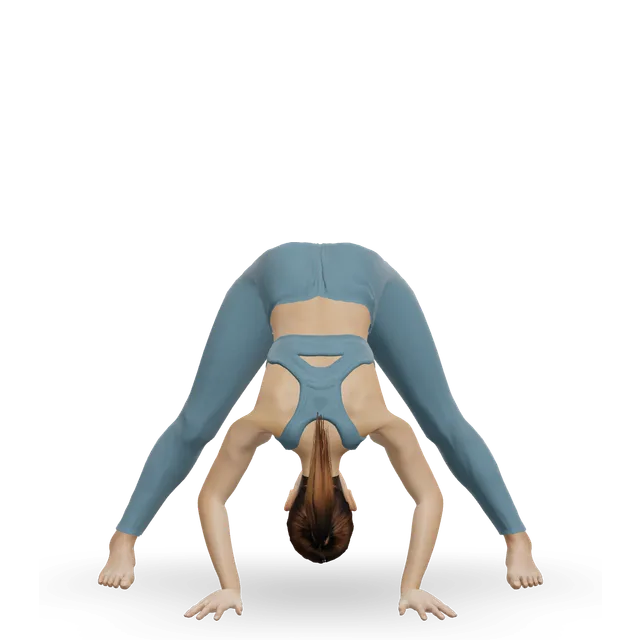
Browse more
Questions people ask
What muscles does the Hip hinge fold work?
It works the low back and thighs.
What equipment do I need for the Hip hinge fold?
No equipment: your body weight and a little floor space.
Is the Hip hinge fold good for beginners?
It is graded beginner, so it suits most people starting out. When it feels easy, try the Seated forward fold (Paschimottanasana).
How do I make the Hip hinge fold harder?
Progress to the Seated forward fold (Paschimottanasana) or the Wide-angle seated forward fold (Upavistha Konasana). Follow that guide’s technique and any stated timing.
One move is a start. A thread is better.
When you want it built for you daily: The Daily Thread membership · $12/mo or $89/yr · not yet open