Yoga guide

Yoga for breast cancer: during and after treatment, tiredness, sleep and mood, your arm and shoulder, and lymphoedema

Yoga can't treat breast cancer, but it can help with some of the ways treatment makes you feel. In trials, gentle yoga improved quality of life, tiredness and sleep a little in the short term, about as much as other exercise, and a large trial found it helped shoulder movement after surgery. It goes alongside your treatment and your breast team's advice, never instead of them.

This guide covers what the trials found during and after treatment, when to start after surgery or a reconstruction, your arm and shoulder, lymphoedema, how to adapt yoga for chemotherapy, radiotherapy and cancer in the bones, and the warning signs that need a call to your team. It ends with a free 25-minute class for the shoulder, chest and breath. Our yoga for cancer guide covers all cancers, and our exercises after breast cancer surgery guide has the week-by-week arm exercises.

Go at your own pace. Some days you'll feel like a class, and some days rest is the right choice.

The short version

Yoga helps with how you feel; it doesn't treat the cancer

Cancer Research UK says there is no scientific evidence that yoga can cure or prevent any type of cancer, but some studies suggest it might help people cope with symptoms and side effects. It goes alongside your treatment, as a complementary therapy, never instead of it. We found no trial showing yoga changes survival or the chance of the cancer coming back.

Sources 1, 2, 3

Small gains in quality of life, tiredness and sleep

A Cochrane review of 24 trials (2,166 women) found yoga improved quality of life, tiredness and sleep a little in the short term, against no class, on moderate-quality evidence. It helped about as much as other exercise, not more, so walking and strength work count just as much.

Sources 4, 5

Tiredness: a little help after treatment, uncertain during it

A 2025 Cochrane review found yoga probably eases tiredness a little after treatment, and the evidence during treatment is very uncertain. US cancer guidelines say clinicians may recommend yoga for tiredness after treatment, especially after breast cancer, and recommend exercise in general during treatment.

Sources 6, 7

Your arm and shoulder: the breast team's exercises first

NICE asks breast teams to give arm and shoulder exercises and to refer anyone whose movement stays reduced to physiotherapy. In 444 women, weekly yoga classes improved shoulder rotation more than a hospital exercise DVD, though not more than breathing and relaxation classes on most measures. Breast Cancer Now says yoga is safe once your wounds have healed and it doesn't cause you pain.

Sources 8, 9, 10

Moving your arm doesn't cause lymphoedema

NICE says there's no indication that physical activity causes or worsens lymphoedema. Small yoga trials found no worsening of arm swelling during classes, but none showed yoga treats lymphoedema. Wear your compression garment to exercise if you have one, build up slowly and avoid long static holds such as the plank.

Sources 8, 11, 12

Start gentle, and adapt to your treatment

In inactive survivors, everyone stayed with restorative yoga, while two people left vigorous yoga because of joint pain. Adapt for a line, low blood counts, sore skin from radiotherapy, a reconstruction or cancer in the bones, as the notes below explain.

Sources 13, 12

Yoga and breast cancer: what it can and can't do

Who this guide is for

People during or after treatment for breast cancer that hasn't spread, people living with secondary breast cancer (with their team's plan), and men with breast cancer, for whom the same arm exercises apply. Most yoga trials enrolled women with breast cancer at stages 0 to III.

Source 6

Complementary, not alternative

Breast Cancer Now explains that complementary therapies are used alongside medical treatment, while "alternative therapies are used instead of medical treatment". Yoga is a complementary therapy. Cancer Research UK says it might help people cope with symptoms and side effects.

Sources 2, 1

What the trials called yoga

Mostly hatha yoga: seated, standing and lying poses with breathing, at low to moderate intensity, often with relaxation or meditation. The classes ran once to three times a week for 4 to 12 weeks: two 75-minute sessions a week for 4 weeks in the sleep trial, 90-minute classes twice a week for 12 weeks after treatment, three a week during radiotherapy, and one 60-minute class a week for 12 weeks in the shoulder trial.

Sources 7, 14, 15, 16, 9

Why it might help, and what isn't known

Yoga adds breathing and relaxation to gentle movement. In the sleep trial, 22% to 37% of the gain in tiredness came through better sleep and daytime functioning. Most trials compared yoga with no class at all, so the attention and support of a group may explain part of the benefit.

Sources 17, 15

What the evidence says

Cochrane: quality of life, tiredness and sleep, in the short termStrong evidence

Across 24 trials (2,166 women), yoga against no class improved quality of life, tiredness and sleep in the short term, on moderate-quality evidence; the effects were small to moderate. There was no clear effect on depression or anxiety against no class, no lasting effect at the medium term, and against other exercise it "might be as effective", on very low-quality evidence. No serious side effects were reported.

Source 4

Tiredness during and after treatmentEmerging evidence

A 2025 Cochrane review (21 trials, 17 in breast cancer) found yoga probably eases tiredness a little after treatment (5 trials, 602 people, moderate certainty), while the effect during treatment is very uncertain. In the trials only in breast cancer after treatment, the effect wasn't clear on its own. The ASCO and Society for Integrative Oncology guideline says clinicians "may recommend yoga" for tiredness after treatment, "especially in women with breast cancer", on low-quality evidence, and found too little evidence for yoga during treatment.

Sources 6, 7

SleepEmerging evidence

In 410 cancer survivors with poor sleep, 75% after breast cancer, 4 weeks of gentle yoga improved sleep quality a little more than usual care, and people in the yoga group cut their sleeping tablets by 21%. People knew their group, and 22% weren't fully followed up. The Society for Integrative Oncology says yoga "can be considered" for sleep problems (grade C).

Sources 14, 18, 19

Anxiety and low moodEmerging evidence

The Society for Integrative Oncology's 2017 guideline recommends yoga for anxiety, low mood and quality of life in breast cancer (grade B), and ASCO endorsed it (from the endorsement's abstract). Its 2023 guideline with ASCO includes yoga among options for anxiety and depression during and after treatment; we read only its abstract, which notes the evidence has limitations. The Cochrane review found no clear effect against no class, and a trial of mindfulness yoga during chemotherapy in 136 women eased anxiety and low mood but not tiredness.

Sources 19, 20, 21, 4, 22

The main trials, and their limitsEmerging evidence

In 200 women after treatment, hatha yoga didn't lower tiredness right after the 12 weeks, but it was lower 3 months later, and depression didn't differ. In 163 women during radiotherapy, yoga improved physical functioning more than stretching, but tiredness fell with both, and mental health and sleep didn't differ. In 31 women with lasting tiredness, Iyengar-based yoga with supported poses eased it more than health education. Two were at one centre, and in all three people knew which group they were in.

Sources 15, 16, 23

Reviews that overstate itMixed evidence

A review of hatha and Iyengar yoga alone found they "did not improve any of the outcomes of interest", walking trials improved sleep more than yoga trials in a review comparing across them, and a review suggesting an ideal weekly amount compared different trials, so it isn't a prescription.

Sources 24, 25, 26

Online yogaEmerging evidence

In 173 women, 6 weeks of online yoga twice a week improved sleep and some quality of life scores against a waiting list, and a review of yoga delivered remotely found moderate gains in quality of life, with results that varied widely.

Sources 27, 28

During treatment

The notes on blood counts, lines, skin and surgery are our yoga for cancer guide's words.

Is it safe?

Macmillan says "It is usually safe to start doing some physical activity before, during or after treatment." On harder days, "it is okay to be less active and to rest more." Ask your team what suits your treatment, and tell the yoga teacher too.

Sources 12, 29

Low blood counts

With a low white cell count, your doctor may advise you to avoid busy public places such as gyms and pools, so practise at home or online. With low platelets, exercise gently and avoid high-impact activities, Macmillan says.

Sources 12, 30

A central line or PICC line (a thin tube into a vein)

Macmillan says to avoid swimming and "vigorous upper body exercises, which could displace your line". In yoga, leave out weight-bearing arm poses and big, fast arm movements until the line is out (our suggestion).

Source 12

Radiotherapy skin

With a skin reaction, wear loose-fitting clothing so nothing rubs the sensitive skin, and avoid swimming until it has gone, Macmillan says. Skip poses that press on the treated area (our suggestion).

Source 12

Tiredness

Macmillan says "There is good evidence that physical activity, such as walking quickly, is one of the best ways to help reduce symptoms of fatigue." and suggests you "Pace yourself, take short naps and rests but try to balance them with some activity or exercise." A short breathing and rest practice counts on a tired day.

Sources 29, 7

After surgery and reconstruction

The breast team's exercises come first

Your surgeon's, nurse's or physiotherapist's limits come first. After breast surgery, start with the arm and shoulder exercises your breast team gives you; our exercise after breast cancer surgery guide has them.

Source 12

The leaflet's timings

Breast Cancer Now's leaflet starts gentle exercises from the day after surgery: "During the first week after surgery, do not raise your arms above shoulder level (90 degrees) when doing these exercises." The stretching exercises follow from the second week, once any removable stitches or drains are out. A stretching or pulling feeling is normal; pain isn't.

Source 31

When to add yoga

Breast Cancer Now: "It's safe to practise yoga once your wounds have healed after surgery and it does not cause you pain." It also says to discuss your diagnosis and treatment with the teacher before the class, who "will be able to offer advice on any positions to avoid".

Source 10

After a reconstruction

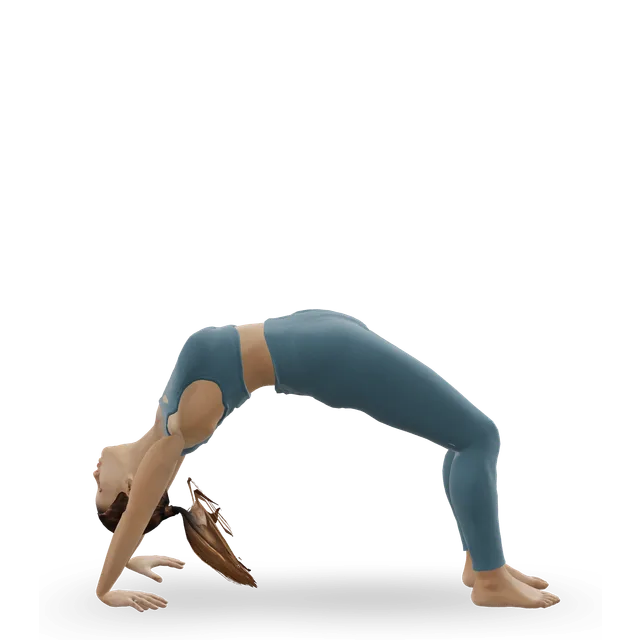
Breast Cancer Now: "If you've had any type of breast reconstruction, ask your surgeon, breast care nurse or a physiotherapist which exercises they recommend." Leave out lying face down, weight on your arms and deep backbends until your team agrees (our suggestion). After a tummy (DIEP or TRAM) flap, skip bridge pose in the first weeks unless your team agrees, as our gentle yoga for cancer class says.

Source 32

Supervised exercise helpsStrong evidence

In the UK PROSPER trial, 392 women at higher risk of shoulder problems who had a physiotherapy-led exercise programme from 7 to 10 days after surgery had better arm function a year later than with usual care, with no increase in complications or lymphoedema. A Cochrane review found early exercise helped shoulder movement in the short term, weighed against a little more wound drainage.

Sources 33, 34

Your arm and shoulder

The yoga trial for the shoulderEmerging evidence

In Hong Kong, 444 women within 9 months of surgery and chemotherapy or radiotherapy were given 12 weekly yoga classes, breathing and relaxation classes, or a hospital exercise DVD. Yoga improved shoulder rotation more than the DVD, but "No significant difference was observed between Yoga and Active control groups" (the breathing and relaxation classes) on most measures. Only 21% went to all 12 classes.

Source 9

What the classes focused on

Flexibility of the shoulder and upper back, back strengthening and breathing, with teachers careful not to overstretch stiff areas. Our 25-minute class follows that focus and the breast team's leaflet, not the trial's exact poses.

Source 9

If your arm isn't moving back to normal

Ask your breast care nurse or GP about physiotherapy: NICE recommends referral for anyone whose arm and shoulder movement stays reduced after surgery or radiotherapy.

Source 8

After radiotherapy

Breast Cancer Now: "Arm stiffness and weakness can happen after radiotherapy. So continue doing the exercises, or some form of stretching, to maintain your range of movement and use of your arm."

Source 31

Lymphoedema

What it is

Swelling from a build-up of lymph fluid, in the arm, hand, breast or chest after treatment to the armpit. Breast Cancer Now says most people who have lymph nodes removed from under the arm don't develop it, but it's important to know the risk and notice any swelling quickly. The NHS says there's no cure, but it's usually possible to control the main symptoms.

Sources 35, 36

Exercise is safeStrong evidence

NICE asks teams to reassure people that there is no evidence that physical activity, including arm exercise, will worsen lymphoedema. In two US trials, slowly built-up weight lifting didn't increase swelling in women with lymphoedema or bring it on in women at risk, and a 2026 review found exercise went with a lower risk, on low-certainty evidence.

Sources 8, 37, 38, 39

Yoga hasn't been shown to treat itMixed evidence

The yoga trials were small. They found no worsening of arm swelling during classes, but in the best-known pilot, the arm swelled more in the yoga group after the classes stopped, and a review couldn't show yoga added to usual care was better than usual care alone. The Society for Integrative Oncology found no therapy with an A or B grade for lymphoedema. Compression and a specialist lymphoedema service are the treatment.

Sources 11, 40, 41, 19

In class

NICE says there's no indication that activity causes or worsens lymphoedema. Macmillan says you usually need to wear your compression garment to exercise if you've been given one, to avoid static holds such as the plank, and to build up activity with the affected arm or leg slowly.

Sources 8, 12

Two more tips

Breast Cancer Now: "Avoid letting your arm hang down for long periods of time, as this can encourage the lymph fluid to collect." Macmillan says not to exercise if you have a skin infection (cellulitis).

Sources 35, 42

Tiredness, sleep and mood

Exercise in general helps tiredness mostStrong evidence

US cancer guidelines say clinicians should recommend exercise (aerobic, strength or both) to ease tiredness after treatment, with yoga as one option. Walking trials improved sleep more than yoga trials in one review. Use yoga alongside walking, not instead of it. Our Pilates for breast cancer guide covers Pilates and gentle arm strength work.

Sources 7, 29, 25

Rest and breathing count

On harder days, a few minutes of slow breathing and a supported rest is enough. Macmillan says it is okay to be less active and rest more on days when you feel less well.

Source 29

If worry or low mood is weighing on you

Feeling low, scared or worn out is common during and after treatment, and it isn't a sign you're doing anything wrong. Yoga may help a little, and support is there too: talk to your breast care nurse or GP. Our exercises after breast cancer surgery guide lists where to get urgent help.

Source 19

Joint pain on hormone tablets

Weak evidence, a little helpMixed evidence

In 167 women on hormone therapy in the sleep trial, 4 weeks of yoga eased general pain and muscle aches, in an analysis done after the trial. A 60-woman trial favoured yoga over massage for knee pain on aromatase inhibitors, but it also measured "meridian energy" and reports a carry-over effect between its two halves, so treat it with caution. A Cochrane review of exercise for these symptoms found no clear evidence of benefit, but says exercise should be part of routine care. Trials of yoga for this pain are under way.

Sources 43, 44, 45, 46

Keep taking your tablets

Don't stop your tablets because of joint pain; talk to your team. US cancer guidelines recommend acupuncture for joint pain from aromatase inhibitors.

Source 47

Which yoga, and how often

Start gentle

Gentle hatha, chair or restorative yoga with breathing and relaxation, at low to moderate intensity, as in the trials. Cancer Research UK says never try difficult postures, such as head and shoulder stands, without first being shown how by a qualified teacher.

Sources 13, 7, 1

Tell the teacher

Breast Cancer Now says to discuss your diagnosis and treatment with the teacher before the class, in person or online, so they can advise on positions to avoid. Some mild discomfort is normal, but stop an exercise if it's painful.

Source 10

Our editorial starting point

Two or three gentle sessions a week, alongside walking, building up slowly. Trials varied too much for a set prescription; they used one to three classes a week for 4 to 12 weeks.

Sources 48, 9, 14

Breathing and rest

Slow breathing: "At least 5 minutes, done regularly as part of your daily routine" (the move page's dose), sitting or lying. Breath reach: "5 breaths, exhale longer than inhale" (the move page's dose), arms only as high as your team allows. Reclining bound angle: "Rest 2 to 5 minutes with a support under each thigh" (the move page's dose), with cushions under your head and arms. Corpse pose: "Lie still for at least 5 minutes, up to 10, usually at the end of a session" (the move page's dose), with a blanket, and the swollen or at-risk arm resting on a pillow.

The breast team's arm exercises

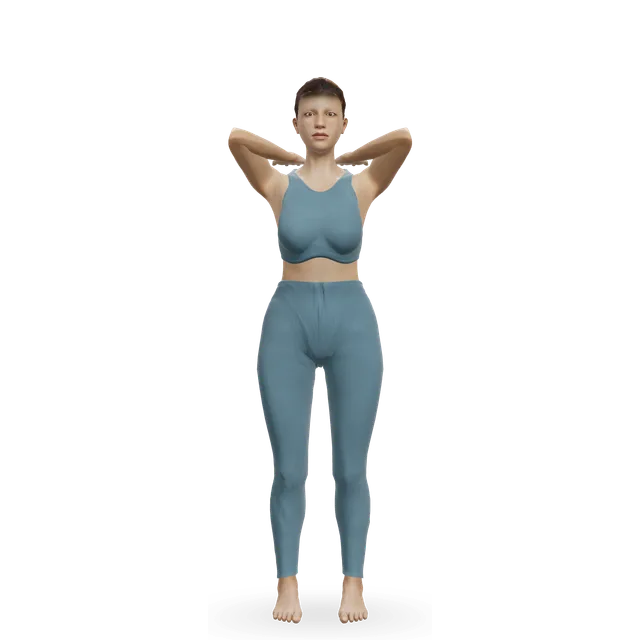
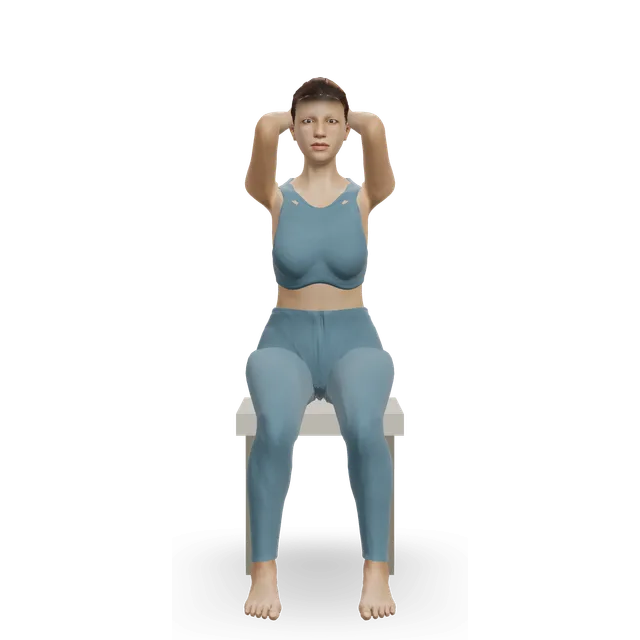
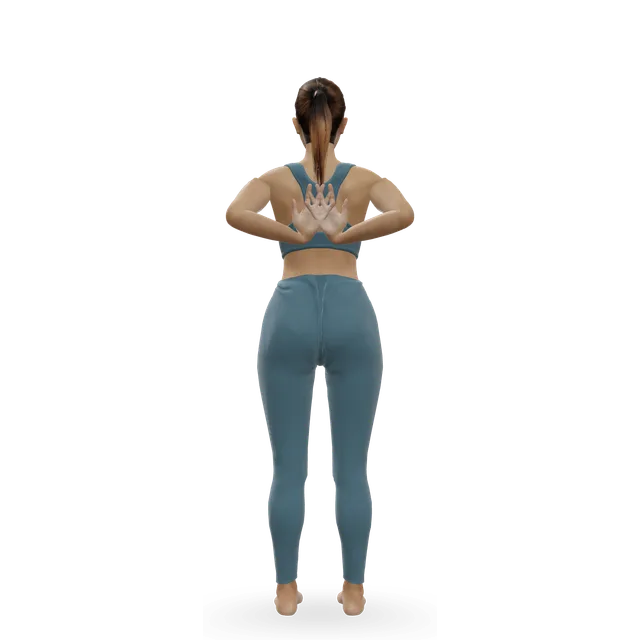
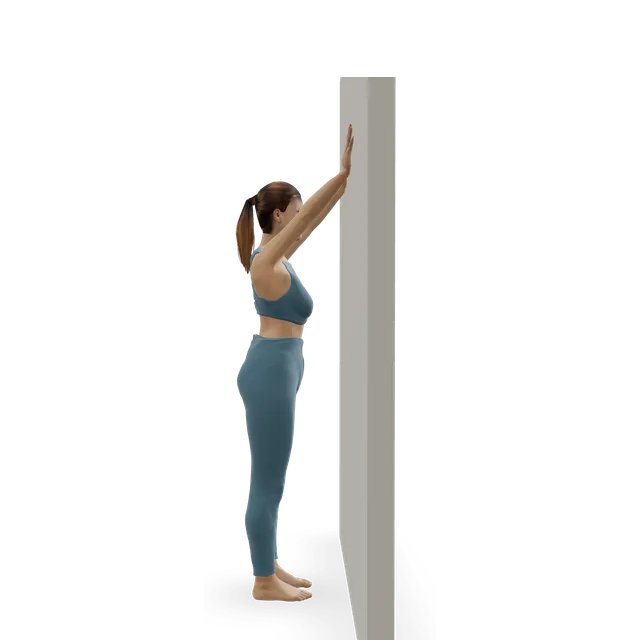
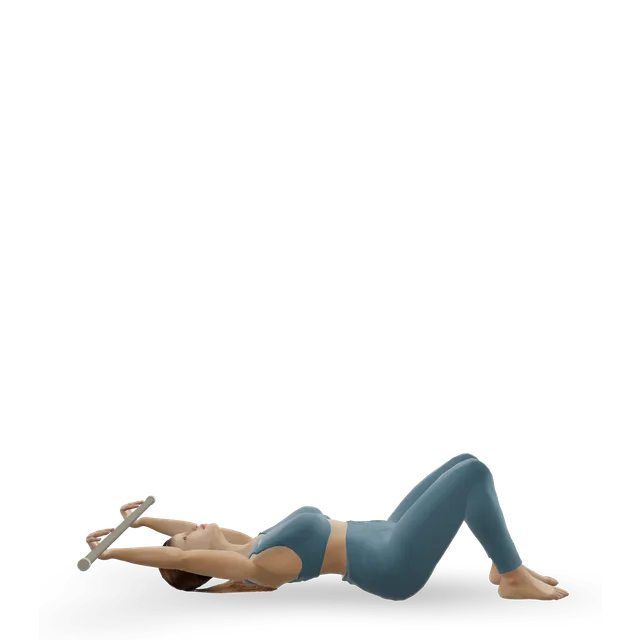
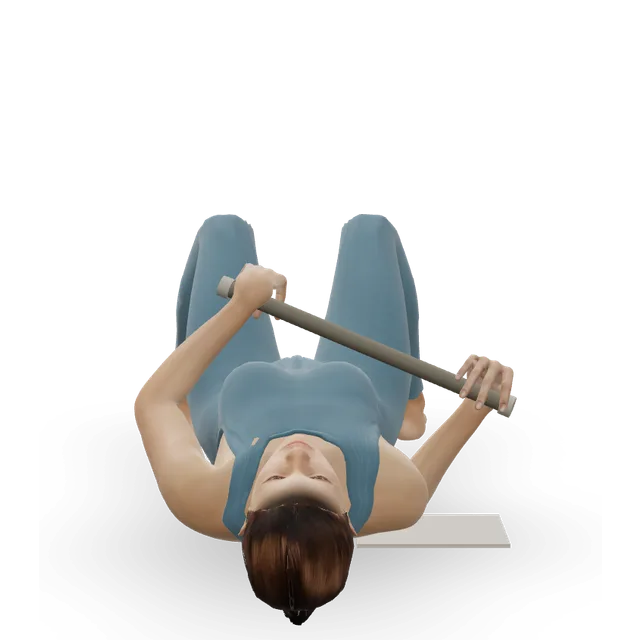
Follow your own leaflet's timings. Week 1: shoulder shrugs and circles, 5 of each, and elbow circles, 5 forwards and 5 sideways, no higher than your shoulders (our arm and shoulder routine after breast surgery); hands behind head: "5 times" (the move page's dose), sitting; back scratch reach: "5 times" (the move page's dose), waiting 2 weeks after implants or a back flap (our arm and shoulder routine after breast surgery). From week 2, once stitches and drains are out: wall finger climb: "5 times, holding the top for a count of 10" (the move page's dose); lying stick lift: "5 times, holding for a count of 10" (the move page's dose). Later, when your team agrees: stick external rotation, 10 slow repetitions, pain-free, and doorway chest opener, 2 holds of 20 to 30 seconds with your elbow below shoulder height (our yoga for frozen shoulder class).

Seated and standing yoga, a chair nearby

Seated upper back lift: "3 to 5 repetitions, each held 3 to 5 seconds" (the move page's dose). Cat-cow: "8 waves, slower than feels natural" (the move page's dose), seated with small movements. Mountain pose: "Stand for 5 to 10 slow breaths" (the move page's dose), a hand on the chair. Chair pose, 2 holds of 3 to 5 breaths, arms down if you have a line or a heavy arm; warrior II, 3 to 5 breaths each side, arms only to shoulder height or hands on hips; tree pose, 2 holds of 20 to 30 seconds each side with a hand on the chair; sit to stand, 5 to 10; bridge, 6 to 8 slow lifts (all our gentle yoga for cancer class).

Poses to change or leave out

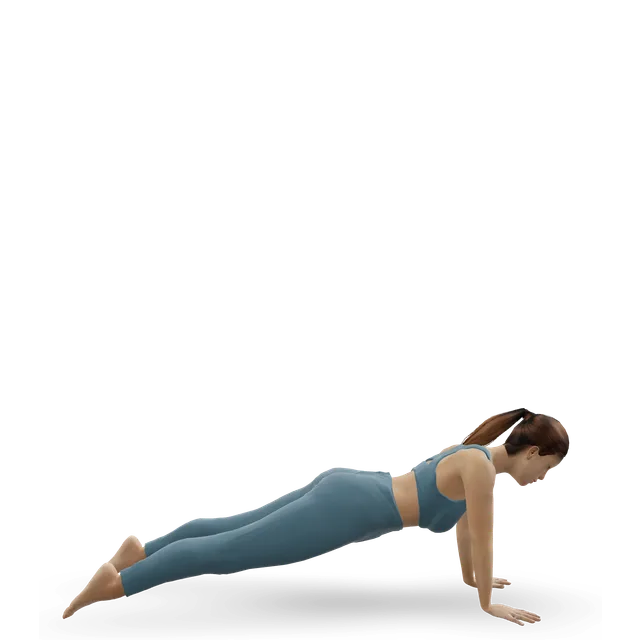
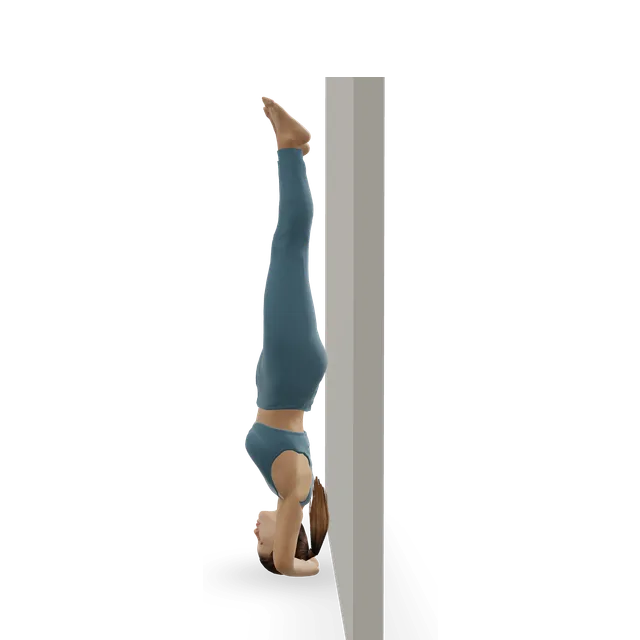
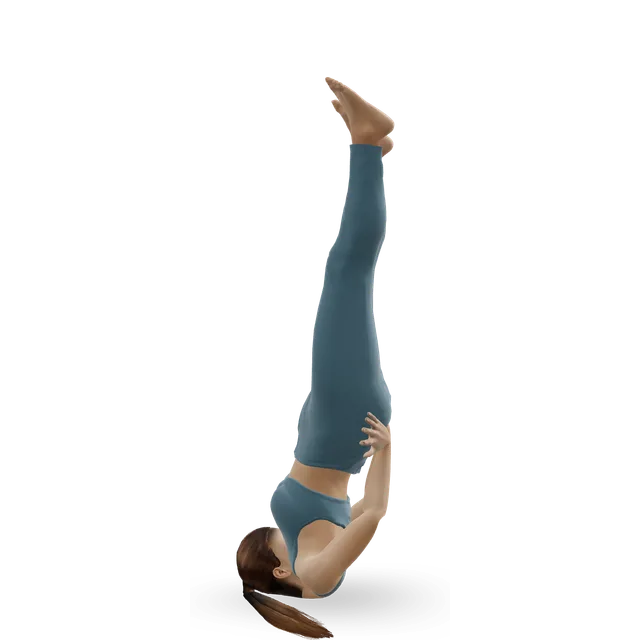
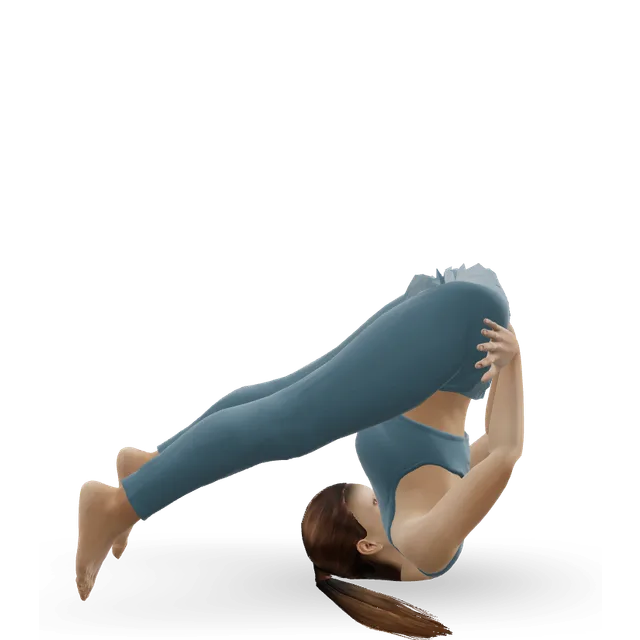
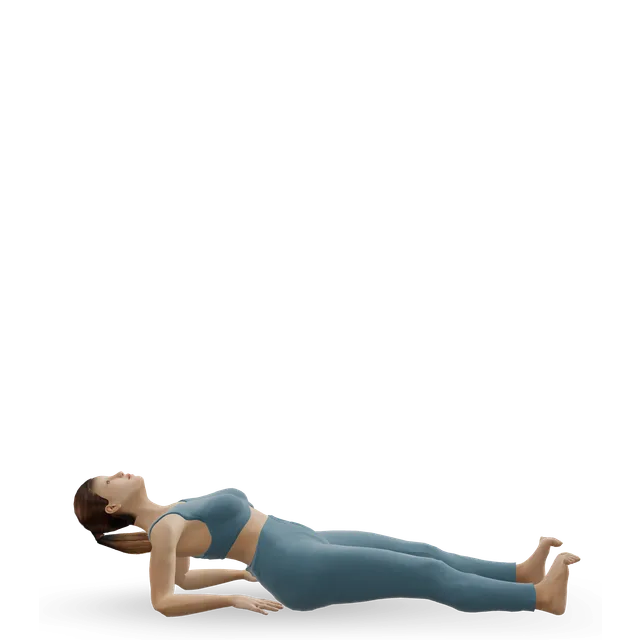
Leave out planks with lymphoedema or a swollen arm (Macmillan says avoid static holds such as the plank), and keep downward dog and sun salutations short, use a wall, or leave them out until your arm is strong (Breast Cancer Now says these poses may need adjusting). Leave out head and shoulder stands and plough (Cancer Research UK). With cancer in the bones, leave out twists and keep forward folds shallow and few (Cancer Research UK and Macmillan). Leave out deep backbends such as wheel and fish, and lying face down, until the breast or reconstruction is comfortable and your team agrees (our suggestion).

A 25-minute class and other workouts

The breast team's arm routine comes first, from the day after surgery. Our 25-minute class is for once your wounds have healed, the leaflet's stretches are comfortable and your team agrees: breathing, the arm stretches done slowly, standing poses at a chair and supported rest, with no planks, no twists and no weight on your arms. Its structure follows the shoulder trial's stated focus and the breast team's leaflet, not the trial's exact poses, and it is our own and untested. The gentle yoga for cancer class suits most people during treatment; the lymphoedema routines suit a swollen arm, and the restorative and breathing sessions suit tired days.

Gentle yoga after breast cancer: a 25-minute class for the shoulder, chest and breath, with no planks, no twists and no weight on your arms

A 25-minute gentle yoga class after breast cancer treatment: breathing, the breast team's arm stretches done slowly, standing poses at a chair and supported rest.

25 minBeginner16 movesBench or box, wall

Arm and shoulder exercises after breast cancer surgery

The UK breast surgery leaflet's exercises in one daily routine: a shoulder warm-up, the basic set for week 1 and the stretching set from week 2.

15 minBeginner6 movesWall, other / check instructions

Gentle yoga for cancer: a 25-minute supported class with no twists

A 25-minute gentle yoga class for during and after cancer treatment: slow breathing, seated loosening, standing poses with a chair and a long rest. No twists.

25 minBeginner14 movesBench or box, firm cushion

Lymphoedema exercises: a daily routine for arm and leg swelling

A 15-minute daily routine for lymphoedema: deep breathing, neck and shoulders, then an arm block and a leg block to keep the muscle pump working.

15 minBeginner14 movesOther / check instructions, bench or box

Pilates for lymphoedema: a 25-minute moving class with arm and leg options

A 25-minute Pilates class for lymphoedema: breathing first, shoulder and leg pumping moves, side-lying work and light strength built up slowly, with no long holds.

25 minBeginner17 movesWall, band

Restorative yoga sequence: 45 minutes of supported rest

A 45-minute restorative yoga sequence: five fully supported poses held for 4 to 10 minutes each, with slow breathing and a long final rest.

45 minBeginner6 movesFirm cushion, wall

Breathing exercises to relax

A 6-minute breathing routine: slow breathing, crocodile breathing, alternate nostril breathing, box breathing and 4-7-8 breathing.

6 minBeginner5 movesNo equipment

A walking plan

Walking has the strongest evidence for tiredness; build up slowly, and keep yoga for 2 or 3 days a week alongside it (our suggestion).

Warning signs and when to get help

These are the warning signs from our yoga for cancer, breast surgery and lymphoedema guides, word for word. Use the numbers your team gave you. This is general information, not a diagnosis. A&E means accident and emergency; in the US, call 911 for 999.

Call 999 (911 in the US)

Call 999 for:

  • Chest pain that feels tight or like squeezing, or spreads to your arms, neck or jaw; severe difficulty breathing; or collapse.
  • Difficulty breathing that comes on suddenly, or pain in your chest or upper back: these can be signs of a blood clot in the lungs (a pulmonary embolism). Don't drive yourself to A&E.

Sources 49, 50

With a swollen arm and signs of a serious infection: call 999

If you have cellulitis with any of these, which can be signs of sepsis:

  • A very high temperature, or feeling hot, cold or shivery.
  • A fast heartbeat or fast breathing.
  • Purple patches on the skin (these may be harder to see on brown or black skin).
  • Feeling dizzy or faint, or confused.
  • Cold, clammy or pale skin, or not responding.
  • Also call 999 for pain and swelling in a limb with breathlessness or chest pain, which can mean a blood clot has reached the lungs.

Sources 51, 52, 53

During treatment: contact your hospital team straight away

Use the number you were given (or NHS 111 if you're not sure how to contact your care team) if, during treatment, you have:

  • A temperature over 37.5°C or below 36°C, or you suddenly feel unwell even with a normal temperature.
  • Signs of an infection, such as feeling shivery, a sore throat, a cough, diarrhoea, or needing to pee a lot or pain when peeing.
  • Throbbing or cramping pain, swelling and warmth in a leg or arm, which can be signs of a blood clot. Sudden breathlessness or chest pain means 999.

Sources 54, 55

After surgery: call NHS 111

Call 111, or get help from 111 online, if you've recently had a mastectomy and have:

  • Sudden pain or swelling.
  • Bleeding from your wounds.
  • Sudden loss of feeling in your arm.
  • Pain and swelling in one leg, which can be a blood clot (deep vein thrombosis, or DVT): call 999 instead if you're also breathless or have chest pain.

Sources 56, 53

After surgery: contact your breast care nurse or team

Use the number your team gave you, or your 24-hour advice line, for:

  • A temperature over 37.5°C or below 36°C, or feeling cold and shivery or generally unwell.
  • A breast or wound that's red, warm, painful, swollen or leaking fluid.
  • Fluid building up under the wound or arm (a seroma).
  • Pain that gets worse during the exercises or carries on afterwards: stop them until your team says it's safe to restart.
  • Cording, or shoulder problems you had before surgery.

Sources 57, 31

Swelling and infection in the arm

See your GP or breast team for swelling in all or part of the arm, hand, breast or chest, a heavy or aching feeling, or rings, watches or sleeves feeling tight; you may be referred to a specialist lymphoedema service. For skin that's painful, hot and swollen (possible cellulitis), ask for an urgent GP appointment or call 111. Call 999 if you also have a very high temperature or feel hot, cold or shivery, a fast heartbeat or fast breathing, purple patches on the skin, dizziness or confusion, or cold, clammy or pale skin.

Sources 36, 8, 51

Urgent GP appointment or NHS 111, the same day

  • The skin of the swollen or at-risk area is painful, hot and swollen, perhaps red (harder to see on brown or black skin), or you feel unwell with flu-like symptoms: this can be cellulitis, and early antibiotics help.
  • Throbbing pain and swelling in one limb with red, blue or darkened skin or swollen veins, which can be a DVT (it can happen in an arm too).

Sources 51, 53, 52

New swelling

New swelling in an arm or leg, especially after cancer treatment: early swelling can come and go, and after breast cancer treatment Breast Cancer Now says to get advice as soon as you notice it. A GP can refer you to a specialist lymphoedema service. New swelling after cancer treatment needs checking for other causes first.

Sources 36, 8, 35

Cancer in the bones: spinal cord compression

Spinal cord compression is when cancer presses on the spinal cord. Contact the hospital team that treats you straight away, even at the weekend, and go to A&E if you can't reach anyone, if you have:

  • Back or neck pain that is new, severe or getting worse, worse when you move or strain, or that disturbs your sleep.
  • Problems controlling your bladder or bowels.
  • Difficulty walking, leg weakness or your legs giving way.
  • Weak arms or hands, or trouble gripping things.
  • Numbness or pins and needles that is new or quickly getting worse.

Source 58

A new lump or change

See a GP if you have a lump or swelling in your breast, chest or armpit, or any change in your breasts or nipples that is not normal for you.

Source 59

Stop and speak to a doctor straight away

Macmillan says stop exercising if you get any sudden symptoms, including:

  • Feeling dizzy, chest pain, a racing heart, breathing problems or feeling sick.
  • Unusual back or bone pain, or unusual muscle pain.
  • A headache that doesn't go away.

Source 12

If your arm changes during yoga

If the swollen or at-risk arm or leg changes during or after yoga, stop and ask your lymphoedema specialist. Our exercises for lymphoedema guide lists the signs of infection that need urgent help.

Source 12

What's normal

Some soreness or stiffness for 2 to 3 days after exercise, and tiredness during it, is common. Go by how you feel on the day, not the class plan.

Source 12

Head-down poses, bones and pregnancy

With glaucoma, or high blood pressure that isn't under control, skip headstands, shoulder stands and long head-down holds. With osteoporosis, swap deep forward folds for a flat-back hinge from the hips, and twist smoothly. In pregnancy, our yoga in pregnancy guide covers the changes. NCCIH advises beginners to avoid headstands, shoulder stands, the lotus position and forceful breathing.

Sources 60, 61

Before you start

The NHS advises getting advice from a healthcare professional first if you have a health problem, an injury or symptoms, or have recently had a heart attack or an operation.

Myths

"Yoga can cure breast cancer, or stop it coming back"Strong evidence

Cancer Research UK: "There is no scientific evidence to prove that yoga can cure or prevent any type of cancer." Our searches found no yoga trial that measured survival or the cancer coming back.

Sources 1, 3

"Lifting your arm or exercising will cause lymphoedema"Strong evidence

NICE says there's no indication that physical activity causes or worsens lymphoedema. Slowly built-up weight lifting didn't bring it on in women at risk, and a Cochrane review found no evidence of a higher risk from exercise at any point.

Sources 8, 38, 34

"Yoga reduces lymphoedema"Mixed evidence

Small trials found no worsening during classes, but none showed yoga treats it, and in one the arm swelled more after the classes stopped. Compression and specialist lymphoedema services are the treatment.

Sources 11, 41, 8

"Rest is best during treatment"Strong evidence

Exercise is recommended during and after treatment for tiredness, and Macmillan says it is usually safe to start some activity before, during or after treatment. On harder days, resting more is fine too.

Sources 7, 12, 29

"Twists detox your body after chemotherapy"Strong evidence

No study of yoga has shown it, and with cancer in the bones, Cancer Research UK lists yoga-style twists among the exercises to avoid.

Source 30

"A positive attitude, or doing enough yoga, decides how you do"Strong evidence

No trial shows that yoga, mood or effort changes the course of breast cancer, and no one should feel they've caused anything by how they feel. Feeling low or scared is common and understandable, and support is there for it.

Sources 3, 1

"Yoga is only for flexible, sporty people"Emerging evidence

Trials enrolled inactive survivors and women with lasting tiredness, and restorative yoga suited inactive people best. Classes can be done mostly seated or lying.

Sources 13, 23

"You can't do yoga with cancer in the bones"Strong evidence

Often you can, with your team's plan. Macmillan says some people with bone problems may be advised to avoid repeated forward bending, and Cancer Research UK says avoid yoga-style twists. Our 25-minute class has no twists and no deep folds.

Sources 12, 30

Questions people ask

Is yoga good for breast cancer patients?

It can help with how you feel: in trials, yoga improved quality of life, tiredness and sleep a little in the short term, about as much as other exercise. It doesn't treat the cancer itself, so it goes alongside your treatment.

Can I do yoga during chemotherapy or radiotherapy?

Often, yes, gently and with your team's agreement, adjusting for low blood counts, a line and sore skin. Its effect on tiredness during treatment is uncertain, so treat it as one gentle way to keep moving. During chemotherapy, a temperature over 37.5°C or below 36°C means calling your hospital's number straight away.

When can I start yoga after breast cancer surgery?

Start with your breast team's arm and shoulder exercises, usually from the day after surgery. Breast Cancer Now says yoga is safe once your wounds have healed and it doesn't hurt. After a reconstruction, ask your surgeon, breast care nurse or physiotherapist first.

Can yoga help my shoulder after a mastectomy or lumpectomy?

It may: in 444 women, 12 weekly yoga classes improved shoulder rotation more than a hospital exercise DVD, though not more than breathing and relaxation classes on most measures. Keep doing your leaflet's exercises, and ask for physiotherapy if your arm isn't moving back to normal.

Which yoga poses should I avoid after breast cancer?

Go carefully with poses that put weight on your arms, such as plank and downward dog, and leave out head and shoulder stands. With cancer in the bones, leave out twists and repeated forward folds. After a reconstruction, ask your team which positions to avoid.

Will yoga give me lymphoedema, or make it worse?

NICE says there's no indication that physical activity causes or worsens lymphoedema. Wear your compression garment to exercise if you have one, build up slowly, and stop and contact your team if your arm, hand, breast or chest swells or feels heavy.

Can yoga help lymphoedema?

It hasn't been shown to treat it. Small trials found no worsening during classes, and one found the arm swelled more after the classes stopped. Compression and a specialist lymphoedema service are the treatment.

Can yoga help with tiredness after breast cancer?

After treatment it probably helps a little, and US guidelines say it may be recommended, especially after breast cancer. Exercise in general, such as walking, has the strongest evidence for tiredness.

Does yoga help sleep and anxiety?

It may help a little: gentle yoga improved sleep in survivors with poor sleep, and US guidelines include yoga among options for anxiety and low mood. If worry or low mood is weighing on you, talk to your breast care nurse or GP as well.

What type of yoga is best after breast cancer?

Gentle hatha, chair or restorative yoga with breathing and relaxation, as in the trials. In inactive survivors, everyone stayed with restorative yoga while some left vigorous yoga because of joint pain. Tell the teacher about your treatment before class.

Can yoga help joint pain from aromatase inhibitors?

Possibly a little, but the evidence is weak, and even exercise in general hasn't clearly helped in a Cochrane review. Keep active, don't stop your tablets because of joint pain, and talk to your team: US guidelines recommend acupuncture for this pain.

Can yoga prevent breast cancer or stop it coming back?

No study shows that. Cancer Research UK says there's no scientific evidence that yoga can cure or prevent any cancer, and no yoga trial has measured the cancer coming back.


Sources

  1. Cancer Research UK · Yoga (past its review date: reviewed April 2022, review due April 2025)

  2. Breast Cancer Now · Complementary therapies (reviewed July 2023; its next review was due to begin in July 2026)
  3. PubMed · Search for yoga trials in breast cancer reporting survival or recurrence: 3 records, none measuring them (2 November 2026; Europe PMC also searched)
  4. Cramer 2017 · Yoga for women with breast cancer: 24 trials, 2,166 women (Cochrane review)
  5. O'Neill 2020 · Yoga for fatigue and quality of life in breast cancer: 24 trials (systematic review and meta-analysis, Integr Cancer Ther)
  6. Messer 2025 · Yoga for fatigue in people with cancer: 21 trials, 2,041 people, most with breast cancer (Cochrane review; read in full)
  7. Bower 2024 · Managing fatigue in adults after cancer (ASCO and Society for Integrative Oncology guideline, J Clin Oncol; read in full)
  8. NICE NG101 · Early and locally advanced breast cancer: diagnosis and management (last updated April 2025; read in full)
  9. Lam 2025 · Yoga and shoulder movement after breast cancer surgery: 444 women (randomised trial, Sports Med Open; read in full)
  10. Breast Cancer Now · Types of complementary therapies: yoga (reviewed July 2023; its next review was due to begin in July 2026)
  11. Loudon 2014 · Yoga for arm lymphoedema after breast cancer: 28 women (pilot randomised trial, BMC Complement Altern Med)
  12. Macmillan Cancer Support · Exercising safely when you have cancer (reviewed November 2023, review due November 2026)
  13. Lapen 2018 · Restorative or vigorous yoga for 35 sedentary breast and ovarian cancer survivors (pilot randomised trial, Int J Yoga Therap; read in full)
  14. Mustian 2013 · Gentle hatha and restorative yoga for sleep in 410 cancer survivors, 75% after breast cancer: the YOCAS trial (randomised trial, J Clin Oncol; read in full)
  15. Kiecolt-Glaser 2014 · Hatha yoga after breast cancer treatment: 200 women (randomised trial, J Clin Oncol; read in full)
  16. Chandwani 2014 · Yoga or stretching during radiotherapy for breast cancer: 163 women (randomised trial, J Clin Oncol; read in full)
  17. Lin 2019 · Yoga, fatigue and sleep in the YOCAS trial (secondary analysis, Integr Cancer Ther)
  18. Zhu 2023 · Yoga and sleep in breast cancer: 12 trials, 782 people (meta-analysis, Front Oncol)
  19. Greenlee 2017 · Integrative therapies during and after breast cancer treatment (Society for Integrative Oncology guideline, CA Cancer J Clin; read in full)
  20. Lyman 2018 · ASCO's endorsement of the Society for Integrative Oncology breast cancer guideline (J Clin Oncol)
  21. Carlson 2023 · Integrative care of anxiety and depression in adults with cancer (Society for Integrative Oncology and ASCO guideline, J Clin Oncol; abstract read, grades not read)
  22. Liu 2022 · Mindfulness yoga during chemotherapy: 136 women with early breast cancer (randomised trial, J Cancer Res Clin Oncol)
  23. Bower 2012 · Iyengar-based yoga for persistent fatigue after breast cancer: 31 women (randomised trial, Cancer; read in full)
  24. García-Muñoz 2023 · Hatha or Iyengar yoga for fatigue, depression and quality of life in cancer: 11 trials (systematic review, Support Care Cancer)
  25. Tang 2019 · Walking or yoga for sleep in cancer: 25 trials, 1,918 people (systematic review and meta-analysis, Sleep Med Rev)
  26. Liu 2026 · Yoga dose for fatigue, quality of life and sleep in breast cancer survivors: 32 trials (dose-response meta-analysis, J Cancer Surviv)
  27. Đorđević 2024 · Online yoga for sleep and quality of life: 173 women with breast cancer (randomised trial, Arch Gynecol Obstet)
  28. Valeriani 2026 · Online or home yoga in breast cancer: 26 publications (systematic review and meta-analysis, Healthcare)
  29. Macmillan Cancer Support · Fatigue (reviewed July 2023)
  30. Cancer Research UK · Exercise and cancer (reviewed May 2025)
  31. Breast Cancer Now 2024 · Exercises after breast cancer surgery (leaflet BCC6; read in full)
  32. Breast Cancer Now · Physical activity, exercise and primary breast cancer (reviewed February 2024)
  33. Bruce 2021 · Exercise after breast cancer surgery in 392 women at higher risk of shoulder problems: UK PROSPER (randomised trial, BMJ; read in full)
  34. McNeely 2010 · Exercise for arm and shoulder problems after breast cancer treatment: 24 trials, 2,132 people (Cochrane review)
  35. Breast Cancer Now · Lymphoedema, and managing lymphoedema (reviewed May 2024)
  36. NHS · Lymphoedema (past its review date: reviewed March 2023, review due March 2026)
  37. Schmitz 2009 · Weight lifting in 141 women with breast cancer-related lymphoedema: the PAL trial (randomised trial, N Engl J Med)
  38. Schmitz 2010 · Weight lifting for 154 women at risk of breast cancer-related lymphoedema (randomised trial, JAMA)
  39. Plinsinga 2026 · Exercise and the risk of cancer-related lymphoedema: 17 studies, 2,739 people (systematic review and meta-analysis, JNCI Cancer Spectr)
  40. Movafegh 2026 · Yoga for arm swelling after breast cancer: 96 women (randomised trial with purposive sampling, Br J Community Nurs)
  41. Wei 2019 · Yoga for lymphoedema after breast cancer (systematic review, Complement Ther Clin Pract)
  42. Macmillan Cancer Support · Managing lymphoedema with physical activity (past its review date: reviewed March 2023, review due March 2026)
  43. Peppone 2015 · YOCAS yoga for joint and muscle symptoms in 167 women on hormone therapy (secondary analysis, Breast Cancer Res Treat)
  44. Tsai 2021 · Yoga or massage for knee pain on aromatase inhibitors: 60 women (randomised crossover trial, Sci Rep; read in full; it also measured "meridian energy")
  45. Roberts 2020 · Exercise for joint and muscle symptoms on aromatase inhibitors: 7 trials, 400 women (Cochrane review)
  46. Veenhuizen 2026 · Yoga for joint and muscle complaints on hormone treatment: the COBRA trial, 140 women (trial protocol, BMJ Open)
  47. Mao 2022 · Integrative medicine for pain in people with cancer (Society for Integrative Oncology and ASCO guideline, J Clin Oncol)
  48. Campbell 2019 · Exercise guidelines for cancer survivors (international roundtable consensus statement, Med Sci Sports Exerc; read in full)
  49. NHS · Heart attack
  50. NHS · Pulmonary embolism
  51. NHS · Cellulitis
  52. British Lymphology Society and Lymphoedema Support Network 2025 · Guidelines on the management of cellulitis in lymphoedema (read in full)
  53. NHS · DVT (deep vein thrombosis)
  54. Macmillan Cancer Support · Infection (past its review date: reviewed March 2022, review due March 2025)
  55. NHS · Chemotherapy
  56. NHS · Mastectomy
  57. Cancer Research UK · Possible problems after breast conserving surgery
  58. Macmillan Cancer Support · Metastatic spinal cord compression
  59. NHS · Symptoms of breast cancer in women
  60. Jasien 2015 · Eye pressure in four common yoga positions: 10 people with glaucoma and 10 without (lab study, PLoS One)
  61. NCCIH 2023 · Yoga: effectiveness and safety (US National Center for Complementary and Integrative Health)

Exercise education, not a personal prescription, and clinical review of these guides is pending. If you are pregnant, have a health condition such as glaucoma, high blood pressure or osteoporosis, or have had recent surgery, check with a doctor, midwife or physiotherapist before starting, and stop for sharp or increasing pain. Health disclaimer.