A curve everyone has
Lordosis is the natural inward curve of your lower back. Everyone has one; hyperlordosis means a bigger curve than usual, and no agreed cut-off defines 'too much'.
Posture guide
Lordosis is the natural inward curve of your lower back (your neck has one too). It varies a lot: on X-rays, most healthy adults fall between about 40 and 80 degrees, and the shape of your pelvis sets much of it. Hyperlordosis means a bigger curve than usual, and there's no agreed cut-off.
A big curve isn't a proven cause of back pain: on X-rays, people with back pain tend to have slightly smaller curves, not bigger ones. Exercise changes the curve by a few degrees at most, but it reliably builds strength and eases back pain.
This guide covers what's normal at each age, pregnancy, the evidence on back pain, the moves with 3D demos, and when to get your back checked.
Lordosis is the natural inward curve of your lower back. Everyone has one; hyperlordosis means a bigger curve than usual, and no agreed cut-off defines 'too much'.
On standing X-rays, the curve averaged about 57 to 60 degrees in healthy adults, and most fall between about 40 and 80. The shape of your pelvis sets much of it.
On skin measures, people with and without back pain have the same curve, and on X-rays people with back pain have slightly smaller curves, not bigger ones.
Tipping your pelvis changes the curve by about 9 to 11 degrees while you hold it, and sitting roughly halves it.
Small trials report a few degrees, mostly measured on the skin and with no follow-up, and a Pilates trial found no change. Exercise is worth doing for strength and for back pain, whatever your curve.
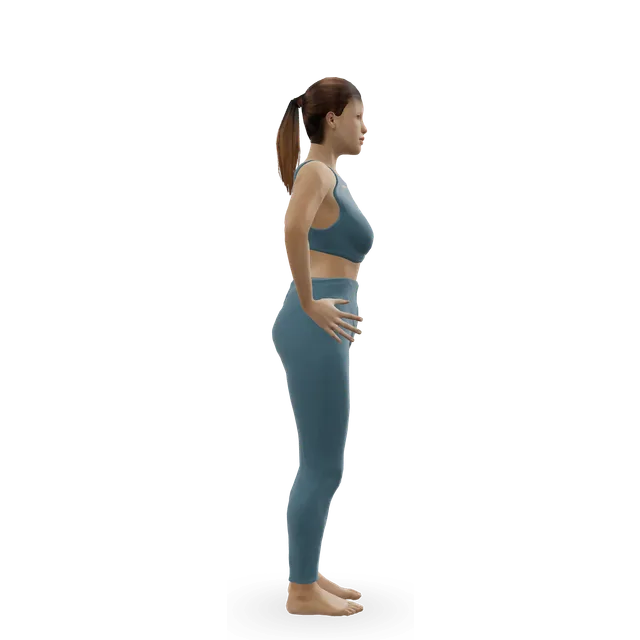
Seen from the side, your lower back curves inward between your ribs and your pelvis; your neck's smaller inward curve is covered in the military neck guide. On a standing X-ray, the curve is measured as the angle from the first lumbar vertebra to the sacrum (L1 to S1). Skin measures use a flexible ruler, an inclinometer or motion sensors, and give different numbers.
Hyperlordosis means a bigger curve than usual, but there's no agreed cut-off. One trial used 'more than 40 degrees' on a flexible ruler to define it, a value at the low end of normal on X-rays, so the label depends on the tool.
Tipping the pelvis forward (anterior pelvic tilt) deepens the curve while you hold it. Physiotherapists describe a lordotic posture, with a deep curve and the pelvis tipped forward, and a different sway-back posture, with the hips pushed forward and the upper body leaning back. Each has its own guide.
Mostly the shape of your pelvis: a fixed angle called pelvic incidence goes with a deeper curve. Sex, age, body weight, ethnicity and sport play a part too, and the normal lower back comes in several shapes.
Abdominal strength and hip extension range were barely related to the standing curve in 31 and 25 adults (correlations of 0.06 and minus 0.09, where 1 would be a perfect match), and muscle lengths only weakly in 103 teenage girls (about 0.2). In 90 adults, muscle length explained less than half of the variation, and the authors questioned using abdominal strengthening or stretches to correct standing posture.
On standing X-rays, the lower-back curve averaged 60 degrees, give or take 10, in 300 adults without back pain, and 57 degrees, give or take 11, in 468 healthy volunteers. Most healthy adults fall between about 40 and 80 degrees.
With flexible rulers, inclinometers and motion sensors, group averages ranged from 19 to 56 degrees depending on the tool, with the same spread in people with and without back pain.
Source 5
Women have more curve than men. With age, a meta-analysis of 35,913 volunteers found the curve smaller in older groups, while a study of 468 healthy volunteers aged 18 to 80, in 5 countries, found no change.
The curve rises and falls with pelvic incidence, a fixed angle of the pelvis (a correlation of 0.53 in 468 volunteers), and the lower backs of 160 healthy adults fell into four normal shapes.
In 50 healthy adults, sitting flattened the curve by 16.6 degrees, about half. In 109 people with back pain, it averaged 49 degrees standing and 34 sitting.
Age, sex, body weight, ethnicity and sport all affect the curve, and a review of more than 120 studies concluded that 'the optimal lordotic range remains unknown'.
Source 1
The lower-back curve is already there before birth: on MRI (magnetic resonance imaging), measured lying down, it averaged about 20 degrees in 63 fetuses and 22 degrees in 100 children. The authors concluded that posture and walking shape the curve at the base of the spine.
Source 21
On standing X-rays, children and teenagers average about 40 to 46 degrees, less than adults, and the curve deepens with growth, mostly at the lowest two levels. How fast children grow affects it differently in girls and boys.
Parents often notice a deep-looking curve and a round tummy in toddlers. We found no study measuring toddlers standing, so judge by change and symptoms rather than looks (our editorial advice).
When researchers grouped 639 boys aged about 12 by how they stood, 42% stood in a neutral way, 31% in sway-back and 27% leaning forward, and back and neck pain were more common in the sway-back group. In 1,196 young teenagers, whole-body posture was linked with back and neck pain but the lower-back and pelvic angles weren't, and in 766 teenagers, those who didn't stand in a neutral way had more back pain in some analyses.
A deeper curve is linked with spondylolysis, a stress fracture at the back of a vertebra, which usually starts after age 8 and which gymnastics and heavy weightlifting can aggravate. Back pain affects 25% to 50% of competitive gymnasts, and more of those who train more.
A 2025 review of 87 studies found no consistent pattern: in one study, 56% of women's curves flattened between the first and second trimesters while 44% deepened by the third, and other studies found average changes in opposite directions. Back pain is common in pregnancy, but an earlier review of 50 papers found it wasn't linked to these changes in the spine.
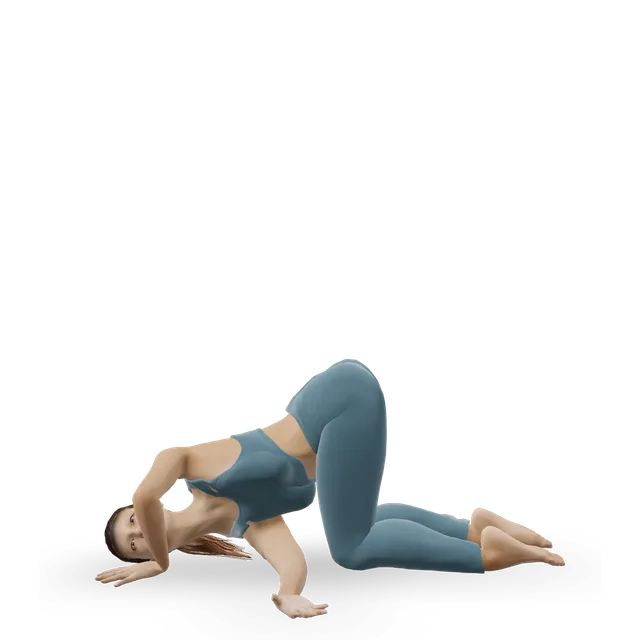
The NHS suggests bending your knees and keeping your back straight when you lift, avoiding heavy lifting, wearing flat shoes, sitting with your back supported, and a back care class. Its exercise: on all fours, pull in your stomach muscles and round your back up towards the ceiling, hold for a few seconds, then return to a flat back without hollowing it, 10 times. Pregnancy yoga and aquanatal classes can help too.
Source 33
Measured on the skin, the curve was the same in people with and without back pain (8 studies). On X-rays, people with back pain had slightly smaller curves (13 studies, 1,723 people), especially those with disc problems, though the studies varied a lot. In cohort studies, a smaller curve weakly predicted new back pain.
A review of 54 studies, mostly of low quality, found no strong evidence linking the spine's front-to-back curves with spinal pain or other health outcomes, and an umbrella review of 41 reviews found no agreement that posture causes low back pain.
In 75 inactive men with deep curves, 6 weeks of core stability exercise twice a week reduced the curve by about 2 degrees on a flexible ruler. In 30 women, 8 weeks of corrective exercise took it from about 50 to 44 degrees, against a slight rise from 50 to 52 in women who didn't train. A 12-week programme moved the lower backs of 12 women with deep or flat curves towards the middle of the range, and a review of 10 studies in teenagers reported smaller curve angles after exercise.
A meta-analysis of 10 trials found a moderate effect, but 6 of the trials were at high risk of bias, and an earlier meta-analysis it cites found almost no effect. None of these trials followed people up after training stopped, and most measured on the skin.
Twelve weeks of mat Pilates in 50 active middle-aged adults didn't change posture against controls. A review of 9 studies with 643 people, of mixed quality, reported better spinal curves and posture.
In 23 studies, stretching didn't change spinal or pelvic posture, and strengthening didn't significantly change the lower back and pelvis either. Hip flexor stretches can feel good after sitting; they aren't a way to flatten the curve.
NICE (the National Institute for Health and Care Excellence) recommends considering group exercise of any type for low back pain. The NHS advises staying active, with exercises and stretches and activities such as walking, swimming, yoga and Pilates. None of this depends on changing your curve.
Nothing is needed. A deep-looking curve is a common, normal shape.
Two or three sessions a week of pelvic control, trunk and hip strength work, which is our editorial starting point, modelled on the trials: core work twice a week for 6 weeks, or three sessions a week for 8 weeks. The anterior pelvic tilt routine below puts it together.
Standing pelvic tilts at the move page's dose: 5 to 10 slow tilts, up to 3 times a day. Cat-cow at the move page's dose, 8 waves, slower than feels natural. Pelvic tilts into a bridge, 8 to 10 slow reps (our editorial starting point).
Dead bugs and bird dogs, 2 to 3 sets of 6 to 8 each side; glute bridges, 2 to 3 sets of 10 to 12 with a 2-second squeeze; knee planks, 3 holds of 20 to 30 seconds, then forearm planks; hip hinges, 2 sets of 8 to 10 slow reps (our editorial starting points).
The half-kneeling hip flexor stretch, 2 to 3 holds of 30 to 45 seconds each side with the tailbone tucked (our editorial starting point), and child's pose at the move page's dose, 1 to 3 minutes. They feel good; they don't change the curve.
We found no trial showing that a brace or posture corrector changes the lower-back curve in adults, and NICE says not to offer belts or corsets for low back pain.
Source 40
Use the NHS all-fours exercise above, and see the pregnancy exercise guide for a full plan. In later pregnancy, keep time flat on your back short, as the pregnancy workouts below do, and take your knees wide in child's pose, as its move page advises.
Source 33
If spondylolysis is suspected, a doctor and physiotherapist guide the return to sport. Most people do well without surgery: easing off the activities that hurt, core strengthening and sometimes a brace, with therapists limiting repeated arching and crunches during recovery.
The move page's dose: 5 to 10 slow tilts, up to 3 times a day. Skip the forward tilt, or keep it very small, if arching your lower back sends pain down a leg.
See the movement on the 3D figure: Standing pelvic tilt
Standing tilts and cat-cow at their move pages' doses; pelvic tilts into a bridge, 8 to 10 slow reps; hip hinges, 2 sets of 8 to 10 (editorial). This is practice in control, not a way to reset your curve.
Dead bugs and bird dogs, 2 to 3 sets of 6 to 8 each side; bridges, 2 to 3 sets of 10 to 12; knee planks, 3 holds of 20 to 30 seconds, then forearm planks (editorial), 2 or 3 days a week.
The hip flexor stretch, 2 to 3 holds of 30 to 45 seconds each side (editorial), and child's pose at its move page's dose. Pad the kneeling knee, and take your knees wide in child's pose in later pregnancy.
For a deeper curve, the anterior pelvic tilt routine 2 or 3 times a week for 6 to 8 weeks; for a flatter one, the posterior pelvic tilt and flat back routine. The pregnancy classes avoid lying on your back.
A 20-minute routine for anterior pelvic tilt: hip-flexor stretches, pelvic tilts, glute bridges, dead bugs, bird dogs and planks, for hip range and strength.
20 minBeginner10 movesA wallA 20-minute routine for a tucked pelvis or a flat lower back: pelvic tilts, hip hinges, back extensions, bridges and bird dogs, for control and strength.
20 minBeginner10 movesNo equipmentA 15-minute beginner core workout on the floor: dead bugs, bird dogs, knee planks, side planks and curl-ups.
15 minBeginner6 movesNo equipmentA gentle 15-minute Pilates-based routine for ongoing low back pain, built from neutral-spine moves with options for backs that dislike bending or arching.
15 minBeginner10 movesNo equipmentTwenty-five minutes of back-strengthening yoga for posture: arm and leg reaches, face-down back lifts and standing poses with the arms raised.
25 minBeginner15 movesNo equipmentA 20-minute Pilates workout for any trimester: seated, standing, all-fours and side-lying moves, with no lying on your back or front and no jumping.
20 minBeginner15 movesA wall, A bench or boxA 20-minute prenatal yoga workout for any trimester: seated breathing, all-fours and kneeling poses, supported standing poses and rest, none flat on your back.
20 minBeginner15 movesA step, A wallFour weeks of beginner Pilates for strength and control, or a plan for each trimester of pregnancy. Pilates didn't change posture in a 12-week trial, so judge it by how you feel and what you can do.
A free 4-week, 3-day Pilates plan for complete beginners. Two mat days and one wall day, with clear rules for when to move each exercise to its harder version.
3 training days25 minBeginner5 days a weekA pregnancy workout plan for each trimester: walks or swims, two strength sessions a week off your back, daily pelvic floor work and when to stop.
5 training days30 minBeginnerA deep-looking curve without pain, a curve that flattens when you sit or bend forward, or one that changes in pregnancy isn't a warning sign.
Posture exercises are not where to start if you have back pain with any of these. In the US, call 911.
Source 41
If you have back pain and:
Source 41
If back pain:
Source 41
Low back pain, stiffness or tight hamstrings that keep going in a young athlete, especially in gymnastics or weightlifting and when arching, can be spondylolysis, a stress fracture. See a GP: early stress injuries may not show on an X-ray.
Source 29
Contact your GP or midwife urgently for back pain in the second or third trimester, which can be a sign of early labour, or with a fever, bleeding from the vagina, pain when you pee, or pain under your ribs on one or both sides. Call 999 if you lose feeling in one or both legs, your bottom or your genitals.
Source 33
The back pain signs above apply at any age. See a GP for a child's back pain that doesn't settle; a spine that curves to the side, one shoulder or hip higher than the other, or a rib hump when they bend forward; or a child who is taking longer than expected to walk, falls easily or finds walking difficult, which the NHS lists among the signs of muscular dystrophy, a rare cause of muscle weakness. Most children with a deep-looking curve are well.
Curves were the same with and without back pain on skin measures, people with back pain had smaller curves on X-rays, and a smaller curve, not a bigger one, weakly predicted new back pain.
In the studies that measured them, abdominal strength, muscle lengths and hip range explained little of the curve, and stretching doesn't change posture.
Healthy curves span about 40 to 80 degrees on X-rays and 19 to 56 degrees on skin measures, and 'the optimal lordotic range remains unknown'.
Trials report a few degrees on skin measures, from small studies mostly at high risk of bias and with no follow-up, and Pilates didn't change posture in a randomised trial. Exercise reliably builds strength and eases back pain.
Sitting does the opposite while you sit: it flattens the lower back by about half.
Studies found increases, decreases and no change, and back pain didn't track the curve.
We found no study linking the lower back's curve with digestion. A review of 54 studies found a few links between the spine's curves and health problems, judged unlikely to be causal.
Source 7
It's the natural inward curve of your lower back, and your neck has a smaller one too. Everyone has a lordosis; hyperlordosis means a larger curve than usual.
On standing X-rays the curve averages about 57 to 60 degrees in healthy adults, and most fall between about 40 and 80. Women tend to have more curve than men, and the shape of your pelvis sets much of it. There's no agreed cut-off for 'too much'.
A larger lower-back curve than usual. People sometimes call it swayback, though physiotherapists use sway-back for a different posture. Studies define it in different ways, for example more than 40 degrees on a flexible ruler, so the label depends on the tool, and it's usually just the way you're built.
A big curve isn't a proven cause of back pain. People with and without back pain have the same curve on skin measures, and on X-rays people with back pain have slightly smaller curves. Reviews find no strong link between the spine's curves and pain.
Mostly the shape of your pelvis, plus sex, age, body weight and sport. We found no study of inheritance, but because pelvic shape sets much of the curve, it's largely how you're built. Pregnancy changes it in different ways in different women.
Small trials report changes of about 2 to 6 degrees after 6 to 8 weeks, a meta-analysis found most such trials at high risk of bias, and a Pilates trial found no change. Healthy curves span about 40 degrees, from about 40 to 80, so that's small. Exercise is worth doing for strength and comfort, whatever your curve.
Pelvic tilts, bridges, dead bugs, bird dogs, planks and hip hinges build control and strength, and hip flexor stretches are optional, for comfort. Nothing is banned. Young athletes with back pain should avoid repeated hard arching until a doctor has checked them.
Lordosis is the lower back's curve. Anterior pelvic tilt is the pelvis tipping forward, which deepens the curve while you hold it. Sway-back is a whole-body posture with the hips pushed forward and the upper body leaning back, and each has its own guide.
Yes. The lower-back curve is already there before birth and deepens as children start walking and grow. See a GP for a child's back pain that doesn't settle, a spine that curves to the side, one shoulder or hip higher than the other, or late walking and frequent falls.
Not in a set way: some women's curves deepen and others flatten, and back pain in pregnancy wasn't linked to the change. The NHS suggests a back care class, gentle exercise and an all-fours back exercise.
Lordosis is an inward curve, in the lower back and neck; kyphosis is an outward curve, in the upper back. Both are normal, and both vary a lot between healthy people. Our kyphosis guide covers the upper back.
We found no study linking the lower back's curve with digestion. A review of 54 studies found only a few links between the spine's curves and health problems, judged unlikely to be causal. See a GP about digestive symptoms themselves.
Exercise education, not a diagnosis or treatment plan, and clinical review of these guides is pending. Get a curve or hunch that is new or getting worse checked, above all in a growing child or after a fall, and get urgent help for numbness or weakness in the legs or a change in bladder or bowel control. Health disclaimer.