Toned means muscle you can see
In everyday use, toned means enough muscle and little enough fat over it for the shape to show. In physiology, muscle tone means a resting muscle's tension, which isn't what people mean.
Source 1
Training guide
Getting toned means building some muscle and, usually, losing some of the fat over it, so the shape of your muscles shows. There are no special toning exercises: light and heavy weights build similar amounts of muscle when the sets are hard, and you won't bulk up by accident.
Strength training at least twice a week, regular activity, enough protein and enough sleep do the job, and the same plan works for women and men, at any age.
This guide explains what toned really means, how to train for it at home or in the gym, light against heavy weights, where cardio, Pilates, barre and yoga fit, how to tone your arms, stomach, legs and bum, how to track your progress, and how long it takes.
In everyday use, toned means enough muscle and little enough fat over it for the shape to show. In physiology, muscle tone means a resting muscle's tension, which isn't what people mean.
Source 1
Light and heavy weights built similar muscle when the sets were hard, across 21 and 28 studies; heavier weights built more strength.
Women and men gain muscle at a similar rate relative to where they start; men gain a little more in absolute terms, mostly in the upper body. Muscle grows slowly, and you control the dose.
Work all your major muscles on 2 or more days a week, as the NHS advises; about 10 or more hard sets per muscle a week builds more.
Aerobic exercise took off more fat than weights alone, and doing both didn't hold back muscle growth.
Strength rises within weeks and muscle growth shows on scans from about weeks 3 to 4, but visible change usually takes months and varies a lot between people.
Toning is two things: building some muscle with strength training, and, if there's fat over it, losing some with activity and eating a little less.
In physiology, muscle tone is the passive tension a resting muscle has, which helps you hold your posture. What people see as tone is muscle size and shape, and the fat over it (our reading).
Source 1
They're different tissues: fat stores energy and muscle contracts. In a 4-week trial in young men, lean mass rose while fat fell, as two separate changes.
Women and men grow at a similar rate relative to their start, and adults over 50 still gained about 1.1 kg of lean mass on average. Beginners grow faster than people who have trained for years, and on the same 12-week programme, arm muscle size changed by anything from a 2% loss to a 59% gain.
Across 21 studies with sets taken close to failure, light and heavy loads built similar muscle; across 28 studies of 747 adults, growth didn't differ between light, moderate and heavy loads, while strength gains favoured moderate and heavy ones.
Across 29 studies, relative muscle growth was similar in women and men, with slightly more absolute growth in men, mostly in the upper body. Another review found untrained women may gain upper-body strength faster than men, relative to their start.
The 2026 American College of Sports Medicine position stand, drawn from 137 reviews, found more growth with 10 or more sets a week per muscle, and more strength with heavier loads, 2 to 3 sets and 2 or more sessions a week. With weekly sets matched, training a muscle once, twice or three times a week grew it similarly (25 studies).
Across 15 studies, taking sets to complete failure didn't build more muscle than stopping a little short.
Source 18
Against no exercise, strength training alone cut body fat by about 1.5 percentage points and 0.55 kg on average across 54 trials, including some deep belly fat.
Source 19
In an 8-month trial of 119 adults, aerobic exercise took off more fat than weights, while weights added more lean mass. In 116 trials, each 30 minutes a week of aerobic exercise took off about 0.5 kg, and in 43 trials in 2,315 women with overweight or obesity, aerobic-based exercise did most for body fat.
Across 43 studies, adding cardio to strength training didn't hold back muscle growth or maximum strength, though explosive strength gained a little less when both were done in the same session.
Source 9
Mat Pilates was no better than control or other exercise for body composition across 10 studies. In people with overweight or obesity it took off weight but didn't change waist size or lean mass (11 trials), and in adult women, body fat percentage, waist and lean mass didn't change significantly (12 studies). It was no better than other exercise for strength in 11 trials, or in 24 trials in older adults.
Across 22 trials in older adults, yoga improved leg strength, balance and flexibility, and 12 weeks of hatha yoga improved push-up and curl-up scores in 173 middle-aged adults.
On their own, vibration plates didn't change body weight or fat across 20 trials of 585 people. In people with overweight or obesity they cut fat mass by about 1 kg, too little to matter, and improved leg strength; in people over 60 they didn't add lean mass.
In a 4-week trial of 40 young men eating 40% less than they needed and training 6 days a week, those on more protein gained 1.2 kg of lean mass while losing 4.8 kg of fat. Across trials, though, a deficit of about 500 calories a day or more stopped muscle gains, so a small calorie cut works better than a big one.
Work all your major muscles on at least 2 days a week, as the NHS advises: a squat, a hinge, a push, a pull and a carry. With the same number of sets, training a muscle once, twice or three times a week grew it similarly, so pick what fits your week.
Start with 2 or 3 sets of 8 to 12 reps of each move, or up to 15 for small moves such as curls and raises, and build towards about 10 hard sets per muscle a week. Our plans use the same starting point.
Source 7
Stop big lifts 2 or 3 reps short of failure, often written as 2 to 3 RIR (reps in reserve: how many more reps you could have done); the last set of a small move can go closer. In your first two weeks, keep 3 or 4 reps to spare. Training to failure isn't needed.
Source 18
When every set reaches the top of its rep range, add a little weight or move to a harder version of the move: double progression, as our plans use. Doing the same session forever stops working.
Rest about 60 to 90 seconds between sets of small moves and 90 seconds to 2 minutes for big ones, after a 3 to 5 minute warm-up and a lighter first set, as our plans' shared notes advise.
The structure and doses of our 20-minute strength workout; the warm-up and training log are from our plans' shared notes.
Loading the 3D figure…
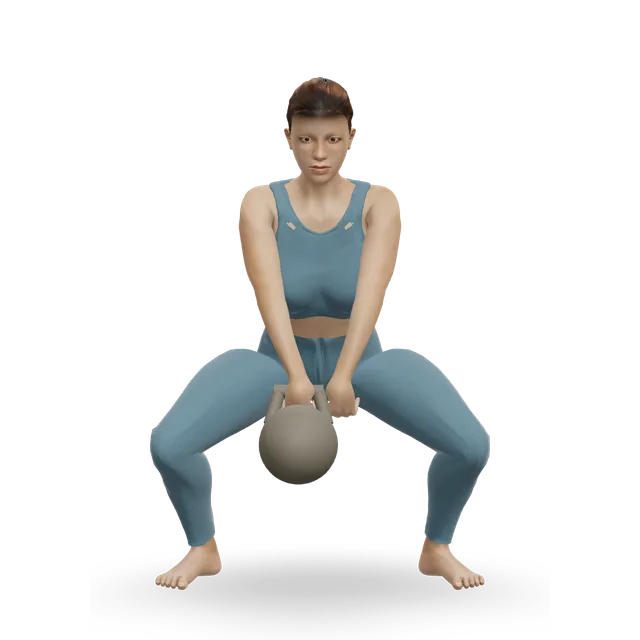
The movement on the figure: Dumbbell goblet squat
What matters is that the last few reps of each set are hard. A light weight lifted 20 times and a heavy one lifted 8 times built similar muscle in the trials.
If getting stronger matters to you, include some heavier sets of 6 to 12 reps once you're used to training (our suggestion).
Muscle grows slowly, women gain less in absolute terms than men, and you choose the dose: once you like the result, hold your sets and weights where they are. Our strength training for women guide goes into this.
Brisk walking, cycling, swimming or rowing take off more fat than weights alone. Aim for 150 minutes a week of moderate activity alongside your strength sessions.
Cardio won't undo your muscle gains. If you do both in one session and care about jumping or sprinting power, separate them where you can.
Source 9
Interval training works and saves time, but it isn't magic; our HIIT guide covers how to do it safely.
Good for control, posture, flexibility and muscle endurance, and enjoyable for many people. In trials it was no better than other exercise for body shape or strength, so add some heavier strength work if you want visible muscle.
Almost no research has looked at barre classes themselves. Our barre guide explains where they fit, and why "long, lean muscles" isn't something exercise can create.
Yoga improved leg strength in older adults and push-up scores in middle-aged adults: a good addition, though not a full substitute for lifting.
On their own they didn't change body fat or weight across 20 trials. Standing on one won't tone you up.
Training one part of the body builds the muscle there, but across 13 studies it didn't take more fat off it. Fat comes off your whole body.
Curls, triceps extensions, presses and rows build the muscle. Our bigger arms guide covers the training and our arm fat guide covers the fat.
Ab exercises build the muscle under the fat; the fat comes off with your body fat. Our abs and belly fat guides cover both.
Squats, lunges, step-ups and hip hinges build the legs. Our bigger legs and thigh fat guides cover both.
Bridges, hip thrusts, squats and lunges build the glutes, as our glutes guide sets out.
Our protein calculator gives 1.6 to 2.2 g per kg of body weight a day with strength training, or 1.2 to 1.6 while you lose weight. In 49 trials, more than about 1.6 g per kg added no extra muscle.
The NHS suggests aiming to lose 0.5 to 1 kg a week. Big deficits held back muscle gains across trials, so keep the cut small, and skip it if you're happy with your weight.
In a small trial on the same diet, short sleep cut the fat lost by more than half and increased the muscle lost.
Goblet squats, rows and Romanian deadlifts at 8 to 12 reps and push-ups at 6 to 15, twice through (our 20-minute strength workout); overhead presses at 3 sets of 8 to 12 (our dumbbell upper body workout); bridges at 2 to 3 sets of 10 to 15 (our beginner lower body workout).
 3D demoDumbbell goblet squatIntermediate · A dumbbell
 3D demoDumbbell Romanian deadliftIntermediate · A dumbbell
 3D demoPush-upIntermediate · No equipment
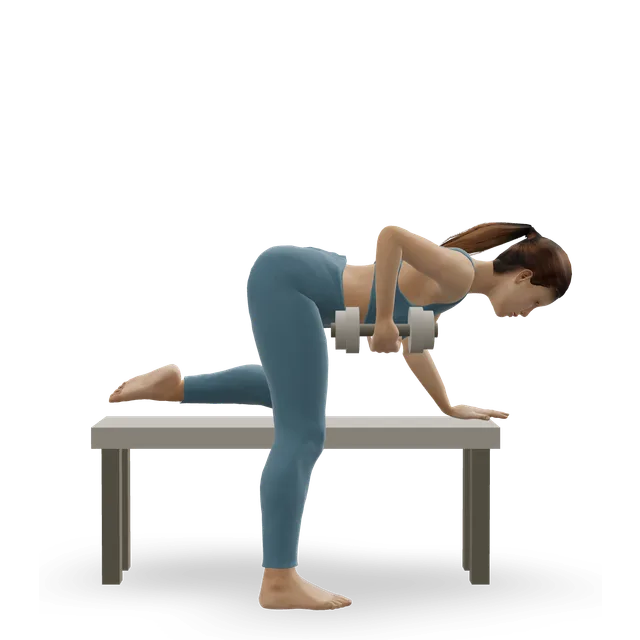 3D demoSupported single-arm dumbbell rowIntermediate · A dumbbell + A bench or box
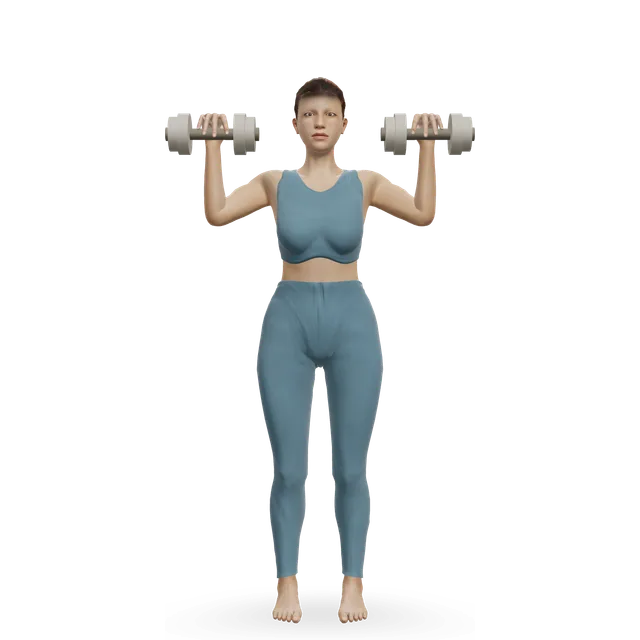 3D demoStanding overhead pressIntermediate · A barbell + A dumbbell
 3D demoLat pulldownBeginner · A cable machine
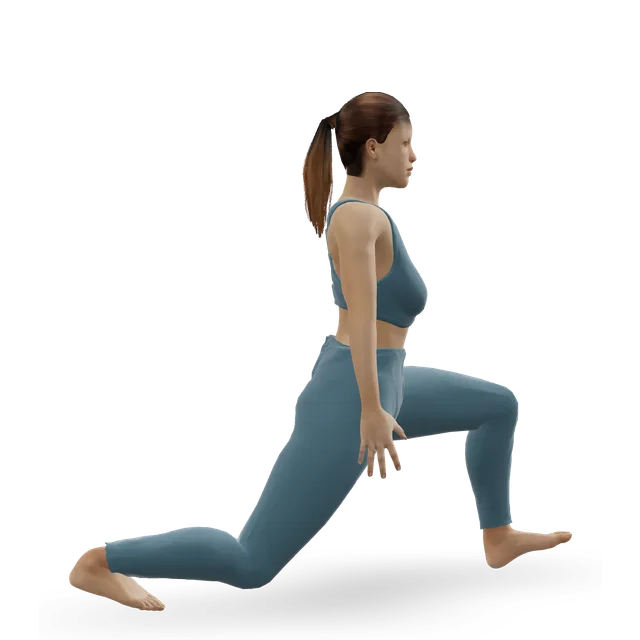 3D demoReverse lungeIntermediate · No equipment
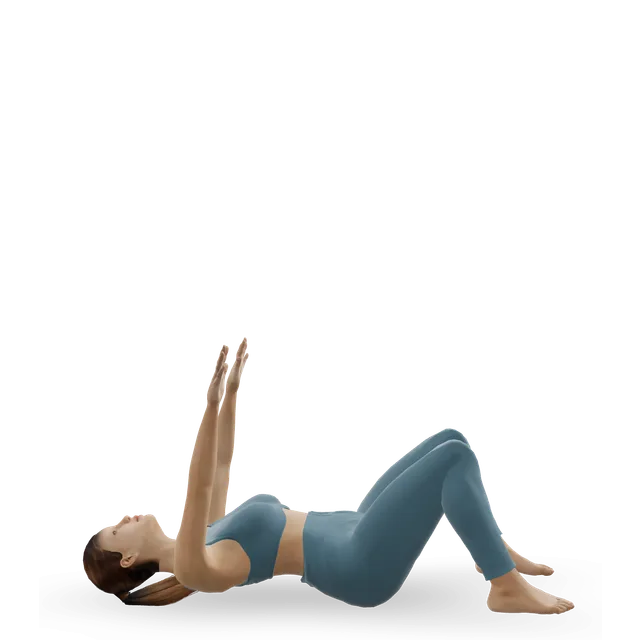
 3D demoGlute bridgeBeginner · No equipment
 3D demoFarmer's carryIntermediate · A dumbbell + A kettlebell
 3D demoForearm plankIntermediate · No equipment
Train the hardest push-up you can do for 8 clean reps and move up when all 3 sets reach 15 (our push-up guide); chair sit-to-stands at 2 to 3 sets of 8 to 12 (our beginner lower body workout); band rows have their own dose on their move page.
 3D demoWall push-upBeginner · A wall
 3D demoIncline push-upBeginner · A bench or box
 3D demoKnee push-upBeginner · No equipment
 3D demoSit to stand from a chairBeginner · A bench or box
 3D demoBodyweight squatBeginner · No equipment
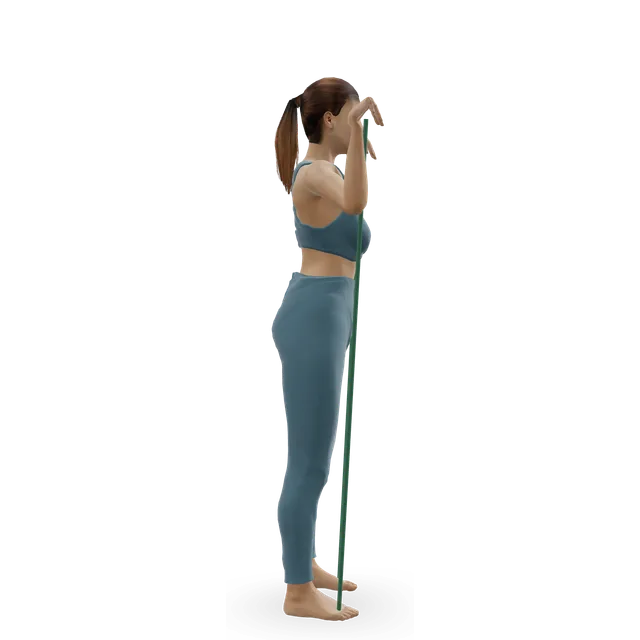
 3D demoBand rowBeginner · A band + An anchor point
 3D demoSingle-leg glute bridgeIntermediate · No equipment
Take photos in the same light and pose every 4 weeks, and measure your waist, arms and thighs at the same spots (our editorial suggestion). Your shape can change while your weight barely moves.
More reps or a little more weight at the same effort means you're getting stronger, usually long before you see it.
They weigh you accurately but estimate body fat poorly: three smart scales were 2.2 to 4.4 kg of fat out against a scan. Some devices track change better than a single reading, so use them for trends at most.
Strength rises within the first few weeks: in small lab studies, thigh muscle growth showed on scans by about weeks 3 to 4, and strength had risen by about 39% after 35 days.
Across 111 studies in healthy men, training programmes added about 1.5 kg of muscle, and across 49 studies in adults over 50, about 1.1 kg of lean mass.
In 21 weeks, untrained men's thigh muscle grew 5.6% while experienced strength athletes' barely changed.
Source 16
On the same programme, some people barely change while others double their strength, so compare yourself with your own photos and log. Visible tone depends on how much fat is over the muscle, and nobody can promise when you'll see it.
Source 12
Start with the 20-minute strength workout twice a week, or the beginner home workout if you have no weights. The circuit adds cardio; barre and Pilates are good extras alongside heavier work.
A 20-minute full-body dumbbell workout: two supersets of squats, rows, Romanian deadlifts and push-ups. Twice a week covers the minimum dose.
20 minBeginner8 movesA dumbbell, A bench or boxA gentle 20-minute beginner home workout with a chair, a wall and a band: sit-to-stands, wall push-ups, band rows, step-ups and dead bugs.
20 minBeginner11 movesA bench or box, A wallA 20-minute full-body workout with no equipment: squats, knee push-ups, bridges, lunges and planks.
20 minBeginner10 movesNo equipmentA 35-minute full-body strength workout with dumbbells: goblet squats, presses, rows, Romanian deadlifts and carries.
35 minIntermediate9 movesA band, A dumbbellA beginner full-body gym workout: goblet squats, dumbbell bench press, lat pulldowns, Romanian deadlifts and dead bugs, with sets, reps and rest.
45 minBeginner12 movesCardio machine, A bandA full-body circuit of 8 stations: dumbbell squats, push-ups, rows, lunges, deadlifts and cardio moves, 40 seconds each, for 2 or 3 rounds.
35 minBeginner14 movesA dumbbell, A bench or boxA full-body resistance band workout: squats, rows, push-ups, presses, pull-aparts, band walks, good mornings and flyes.
30 minBeginner9 movesA band, An anchor pointStrength moves first, then 20 to 30 minutes of steady cardio, with glucose checks built in. In one small type 1 diabetes trial, weights first kept glucose steadier.
45 minBeginner11 movesA dumbbell, A bench or boxA 45-minute strength session for people who do barre: goblet squats, Romanian deadlifts, pulsing lunges and pliés, wall sits, bridges, arms and core work.
45 minIntermediate21 movesA wall, A dumbbellA 30-minute intermediate mat Pilates class that follows the classical order, from the hundred to the push-up, with prep versions of the hardest moves.
30 minIntermediate22 movesNo equipmentThe beginner, 2-day and 3-day plans build full-body strength step by step; the women's, men's and over-50 plans add cardio and bone work.
Your first four weeks: two, then three short strength sessions a week at home plus walks, building gently to a full routine.
2 training days20 minBeginner2 days a weekTwo full-body strength sessions a week: the minimum that meets health guidelines, with every set, rep and rest, and an 8-week progression.
2 training days45 minBeginner3 days a weekA beginner gym plan: three full-body sessions a week, alternating workouts A and B, with sets, reps, rest and an 8-week progression.
3 training days45 minBeginner3 days a weekThree full-body home workouts a week with dumbbells or no equipment at all, plus walks and an 8-week plan to keep progressing.
3 training days35 minBeginner3 days a weekA weekly workout plan for women: three strength days, cardio and pelvic floor training, with the evidence on periods, pregnancy and menopause.
3 training days45 minBeginner4 days a weekA 4-day gym workout routine for men: upper and lower days, each muscle trained twice a week, with sets, reps, progression and the evidence.
4 training days50 minIntermediate3 days a weekA weekly plan for women over 50: strength, bone-loading and balance on 3 days plus walking, built on UK osteoporosis consensus advice.
3 training days45 minBeginner3 days a weekAn 8-week resistance band workout plan: three full-body sessions a week at home or away, with how to choose bands, add tension and anchor them safely.
3 training days35 minBeginner5 days a weekA 12-week workout plan for weight loss: three strength days, two cardio days and daily steps, building to 200 minutes a week, with honest results.
3 training days45 minBeginnerLight and heavy weights built similar muscle when the sets were hard, and heavier weights built more strength. There are no special toning exercises.
Cardio takes off more fat, but weights build the muscle that makes you look toned. Doing both doesn't hold back muscle growth.
Women gain muscle at a similar rate to men relative to their start but less in absolute terms, and growth follows the dose you choose.
They're different tissues: training grows muscle, a calorie deficit shrinks fat, and the two change separately.
Across 15 studies, training to complete failure didn't build more muscle than stopping a little short.
Source 18
Soreness for a day or two after a new exercise is common and fades as you repeat it, as our plans say. It isn't a measure of progress: your training log is.
On their own, they didn't change body fat or weight across 20 trials, with small gains in leg strength.
You can build that part's muscle, but the fat over it comes off with your whole body.
If you get chest pain that feels tight or like squeezing, or spreads to your arms, neck or jaw, severe difficulty breathing, or someone collapses. Our weight-loss guide lists these signs.
If you have a heart, lung or joint condition, are pregnant or have recently been unwell, start gently and read our guide for your condition. Muscle soreness for a day or two after a new exercise is common and fades as you repeat it.
The NHS lists exercising too much and spending a lot of time worrying about your weight and body shape among the signs of an eating disorder, and says to see a GP as soon as you can. Beat adds rigid or punishing exercise, exercising to make up for eating, and feeling guilty or anxious when you can't exercise. Beat's helpline in England is 0808 801 0677.
Build some muscle with strength training at least twice a week, working all your major muscles, and, if you have fat to lose, lose some with regular activity and a small calorie cut. Protein and sleep help with both.
In everyday use it means you can see the shape of your muscles because there's enough muscle and not much fat over it. In physiology, muscle tone means a resting muscle's tension, which isn't what makes you look toned.
You can, but you don't have to: light and heavy weights built similar muscle when the sets were hard, and heavier weights built more strength. There are no special toning exercises.
Not by accident. Women and men gain muscle at a similar rate relative to their starting point, but women gain less in absolute terms, and muscle grows slowly. You decide how much you do.
Strength usually rises within the first few weeks, and muscle growth shows on scans from about weeks 3 to 4 in lab studies. Visible change usually takes months, depends on how much fat you have to lose, and varies a lot between people.
Both, for different jobs: aerobic exercise takes off more fat, while weights build the muscle. Doing both doesn't stop your muscles growing.
Use your bodyweight, bands or dumbbells: push-ups from the wall to the floor, squats, lunges, bridges and band rows, done for 2 or 3 hard sets. Make each move harder as you improve, because light loads build muscle when the sets are hard.
Train the muscles there, and the fat over them comes off with your whole body: no exercise burns fat from one spot. Our arm fat, belly fat, thigh fat and glutes guides cover each area.
Yes. Strength training builds muscle and trims a little fat on its own, about 1.5 percentage points of body fat on average across 54 trials, so your shape can change while the scales barely move.
They're good for control, posture, flexibility and muscle endurance, but in trials Pilates was no better than other exercise for body shape or strength. Add some heavier strength work if you want visible muscle.
Not on their own: across 20 trials, vibration training alone didn't reduce body fat or weight. It gave small improvements in leg strength in people with overweight or obesity.
No. They're different tissues: training builds muscle, eating a little less shrinks fat, and the two change separately. Stopping training doesn't turn muscle into fat either.
Exercise education, not a personal prescription, and clinical review of these guides is pending. Check with a GP before starting hard training if you have a heart condition, chest pain, dizziness or breathlessness when active, and stop for sharp or increasing pain. Health disclaimer.