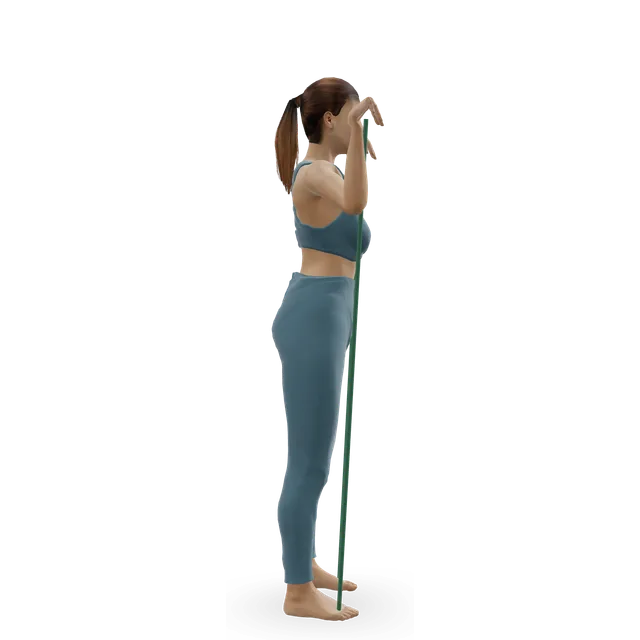
Arm fat is normal
Fat on the upper arms is ordinary fat under the skin. In young adults scanned by MRI (magnetic resonance imaging), women carried about 1.5 times as much of it as men, and where your body stores fat is largely inherited.
Training guide
Fat on your upper arms is ordinary body fat, and where your body keeps it depends mostly on your genes, sex, age and hormones. Women carry more of it than men on average, and that's normal. Arm exercises don't burn the fat on your arms: in trials, training one arm took no more fat off it than off the other.
What shrinks arm fat is losing fat from your whole body, by eating a little less, moving more and sleeping well. Strength training still matters: it builds the triceps, biceps and shoulders under the fat and keeps your muscle while you lose weight.
This guide explains why arm fat sits where it does, what works and how long it takes, the arm moves worth doing, what to do about loose skin after big weight loss, and the signs that mean seeing a GP.
Fat on the upper arms is ordinary fat under the skin. In young adults scanned by MRI (magnetic resonance imaging), women carried about 1.5 times as much of it as men, and where your body stores fat is largely inherited.
In 104 adults who trained one arm for 12 weeks, the fat changed no more in that arm than in the other, and across 13 studies of 1,158 people, training one part of the body didn't take the fat off it.
Eat a little less, move more and sleep 7 to 9 hours. The NHS suggests aiming to lose 0.5 to 1 kg a week, and in 116 trials each extra 30 minutes a week of aerobic exercise took off about half a kilo.
Strength training on at least 2 days a week keeps your muscle while you lose fat and trims a little fat on its own. An overhead triceps extension grew the back of the arm more than the same move with the arm at your side.
Most people have some excess skin after weight-loss surgery, often on the upper arms. Strength training builds the muscle under it, but exercise hasn't been shown to remove skin.
See a GP if your arms or legs hurt, bruise easily and are out of proportion with the rest of you, or if you find a new lump or swelling in your armpit.
Arm fat is subcutaneous fat: the layer between your skin and your muscles that you can pinch. "Bingo wings" and "bat wings" are everyday names for the soft area at the back of the upper arm. Under it, the triceps at the back straighten your elbow and the biceps at the front bend it; our bigger arms guide covers both muscles.
Source 17
In 517 young adults scanned by MRI, the fat under the skin of the upper arm averaged about 258,000 cubic millimetres in women and 173,000 in men. At the same total body fat, women store more of it under the skin, a difference that starts at puberty.
In Danish twins, about 80% of the differences in where people carried their fat were down to genes, and identical twins who were overfed by the same amount gained fat in the same places as each other.
With age, fat tends to move towards the belly, while skin loses some of its strength and stretch, especially where the sun has reached it. So arms can look looser with age even when the fat doesn't change.
The soft area between your armpit and chest is ordinary fat that comes and goes with the rest. A new lump or swelling in your armpit is different: the NHS says to see a GP, whether you're a woman or a man. Swollen glands there usually go down within 1 to 2 weeks.
In 104 adults (45 men, 59 women) who trained one arm for 12 weeks, MRI found no difference in fat change between the trained and untrained arm. Across 13 studies of 1,158 people aged 14 to 71, training one arm or leg didn't take more fat off it than off the other limb, and the results were consistent.
In that trial, a single skinfold pinch over the muscle suggested more fat loss in the men's trained arm, but MRI of the whole upper arm didn't, and the authors concluded that spot reduction didn't happen.
Source 4
In a larger 12-week programme, 517 young adults trained one arm twice a week and were asked to keep eating as usual. On average, training didn't take fat off the trained arm, and results varied very widely from person to person.
Source 1
Children who had played tennis for years carried similar fat on their playing and non-playing arms on MRI, though they had 48% less fat on their tummies than inactive children. The study was tiny: 7 players and 7 inactive children.
Source 22
A circuit with overhead triceps extensions thinned the fat over the belly, but not over the triceps, in 14 adults. In 16 men, 57 minutes of ab machine work a session took a little extra fat off the trunk, which isn't a practical plan. Fat next to a working muscle releases a little more fat during exercise, but no trial has shown that this adds up to a slimmer arm.
Each 30 minutes a week of aerobic exercise took off about 0.5 kg in 116 trials. Strength training alone trimmed body fat by about 1.5 percentage points across 54 trials, and in an 8-month trial of 119 adults, aerobic exercise took off more fat while weights added more muscle.
In 21 adults who trained one arm overhead and the other at their side for 12 weeks, the overhead arm's triceps grew 19.9% against 13.9%, with lighter weights. It's one trial.
Source 11
In 585 adults on the same 12-week arm programme, muscle size changed by anything from a 2% loss to a 59% gain.
Source 27
92.8% of 360 people a year or more after weight-loss surgery reported problems with excess skin, more often with more weight lost and in women. In 64 people, the upper arms were the commonest area (50%), and 96% of 252 people developed surplus skin after gastric bypass.
The NHS suggests eating and drinking fewer calories than you use and aiming to lose 0.5 to 1 kg (1 to 2 lb) a week. Our calories per day calculator gives a target if your BMI (body mass index) is 25 or more.
Source 6
Build towards at least 150 minutes a week of moderate activity, such as brisk walking, cycling or swimming. In the trials, more minutes took off more, with the benefit still rising at 300 minutes a week.
Work all your major muscles, as the NHS advises: a squat, a hinge, a push and a pull, as in our 20-minute strength workout. For the arms themselves, our bigger arms guide's editorial starting point is 2 or 3 hard sets of a curl and of a triceps extension, twice a week.
It works the long head of the triceps at a stretch, and it grew the triceps most in a trial. If it hurts your shoulder, use kickbacks or pushdowns instead.
Source 11
Our protein calculator suggests 1.2 to 1.6 g per kg of body weight a day while you lose weight. In 49 trials, more than about 1.6 g per kg added no extra muscle.
Across trials, a deficit of about 500 calories a day or more stopped muscle gains, and athletes who lost weight twice as fast kept less muscle. The NHS's 0.5 to 1 kg a week fits.
That's what adults need. In a small trial on the same diet, 5.5 hours in bed instead of 8.5 cut the fat lost by more than half.
These build muscle; they don't burn the fat over it. Overhead extensions at 2 sets of 10 to 12 (our tricep extensions guide), curls at 2 or 3 sets of 10 to 15 (our bicep curl guide) and lateral raises at 2 or 3 sets of 12 to 20 (our lateral raise guide); band rows have their own dose on their move page.
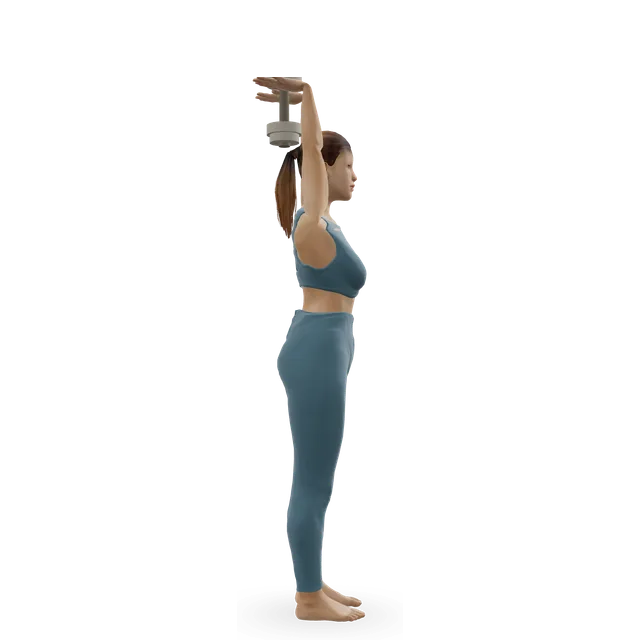 3D demoStanding overhead dumbbell triceps extensionIntermediate · A dumbbell
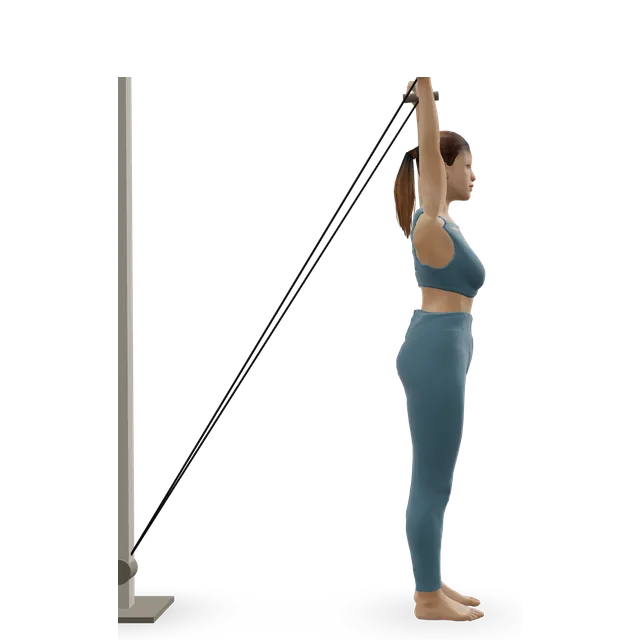 3D demoOverhead cable triceps extensionIntermediate · A cable machine
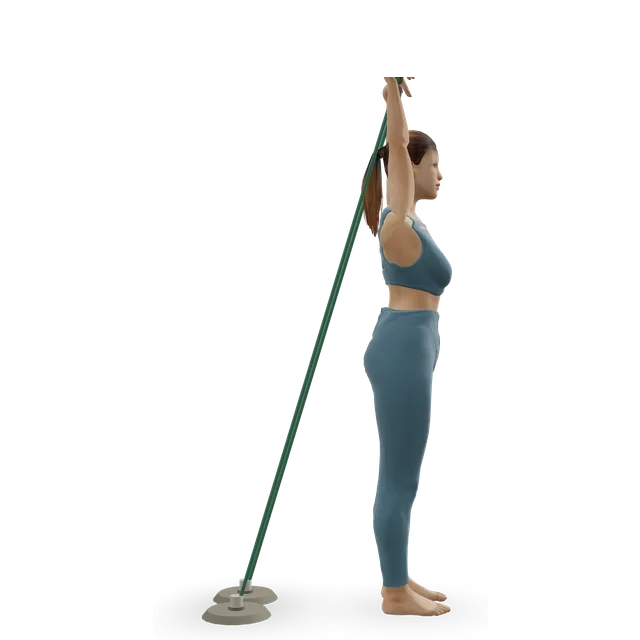 3D demoBand overhead triceps extensionIntermediate · A band
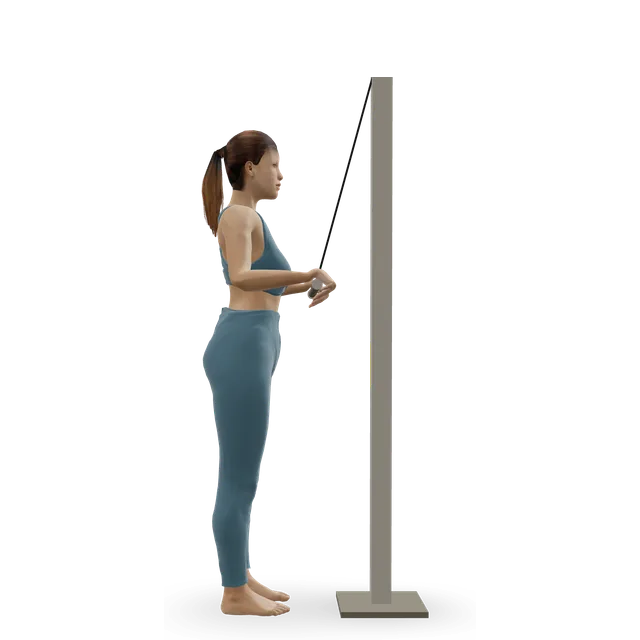 3D demoTriceps pushdownBeginner · A cable machine
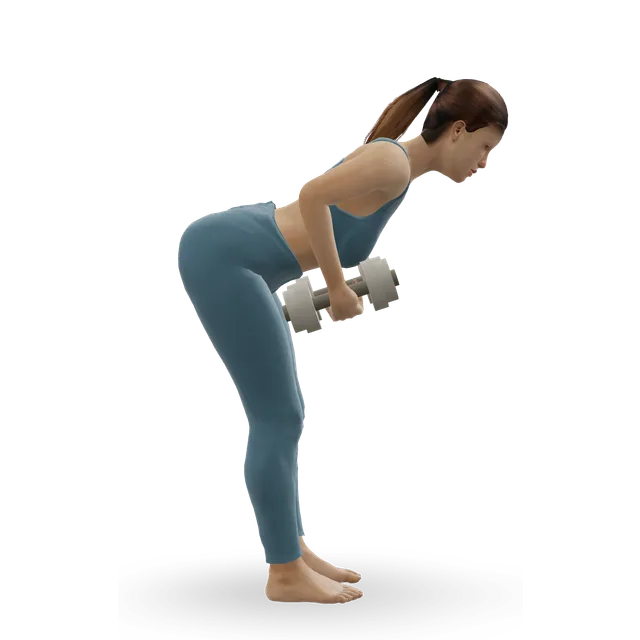 3D demoDumbbell triceps kickbackBeginner · A dumbbell
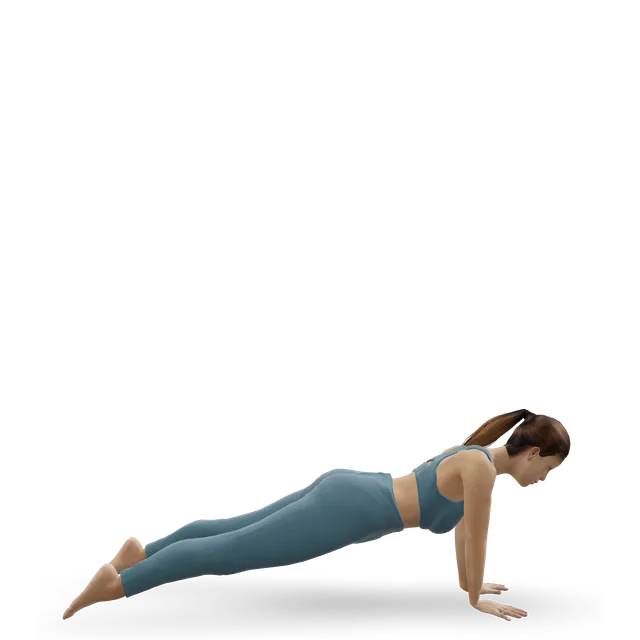 3D demoClose-grip push-up (close triceps position)Intermediate · No equipment
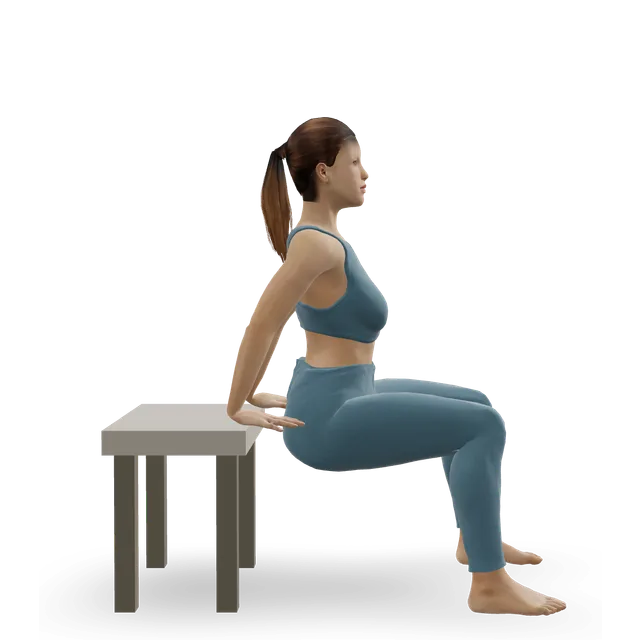 3D demoBent-knee bench dipBeginner · A bench or box
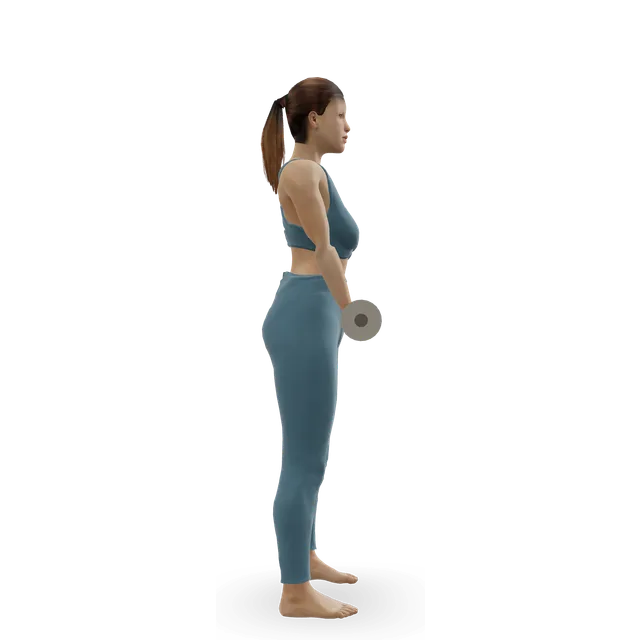 3D demoDumbbell biceps curlBeginner · A dumbbell
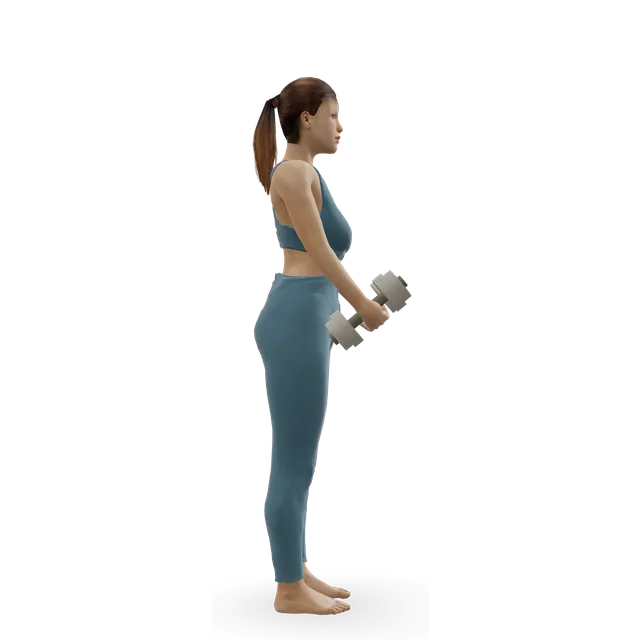 3D demoHammer curlBeginner · A dumbbell
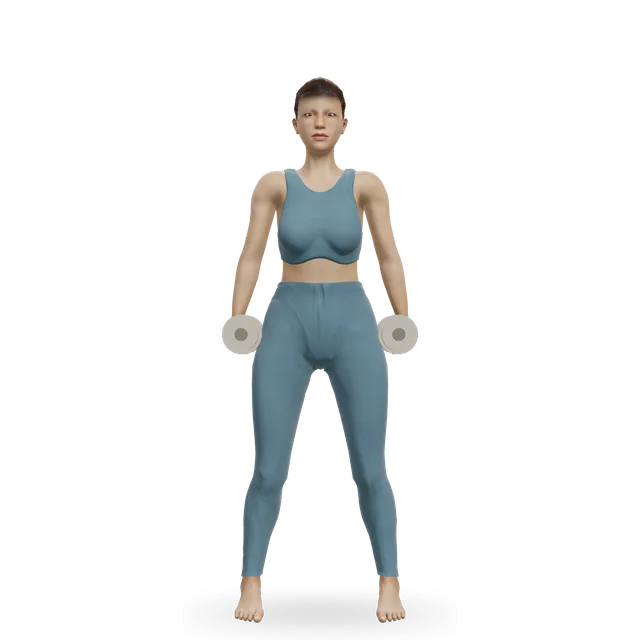 3D demoDumbbell lateral raiseBeginner · A dumbbell
 3D demoBand rowBeginner · A band + An anchor point
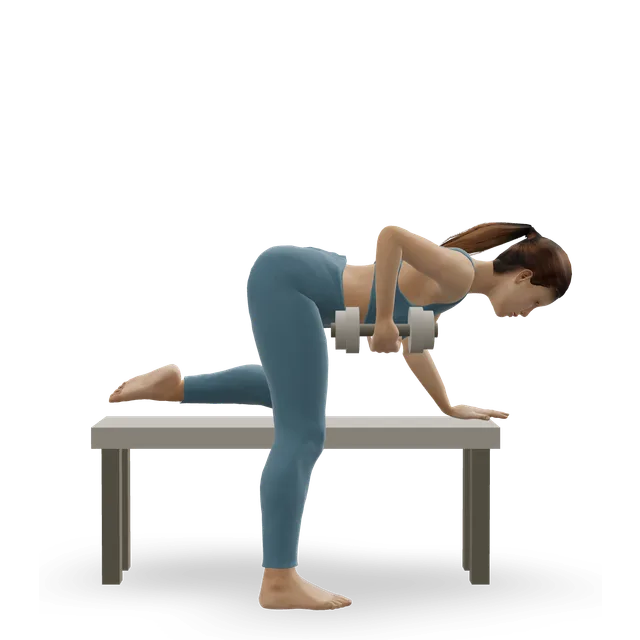 3D demoSupported single-arm dumbbell rowIntermediate · A dumbbell + A bench or box
Train the hardest push-up you can do for 8 clean reps and move up a step when all 3 sets reach 15 (our push-up guide). Do bent-knee bench dips at 8 to 12, lowering no further than a right angle at the elbow, before bench dips (our dips guide). Seated curls (5 to 10 each arm) and seated lateral raises (8 to 10) are the gentle start in our chair workout.
 3D demoWall push-upBeginner · A wall
 3D demoIncline push-upBeginner · A bench or box
 3D demoKnee push-upBeginner · No equipment
 3D demoPush-upIntermediate · No equipment
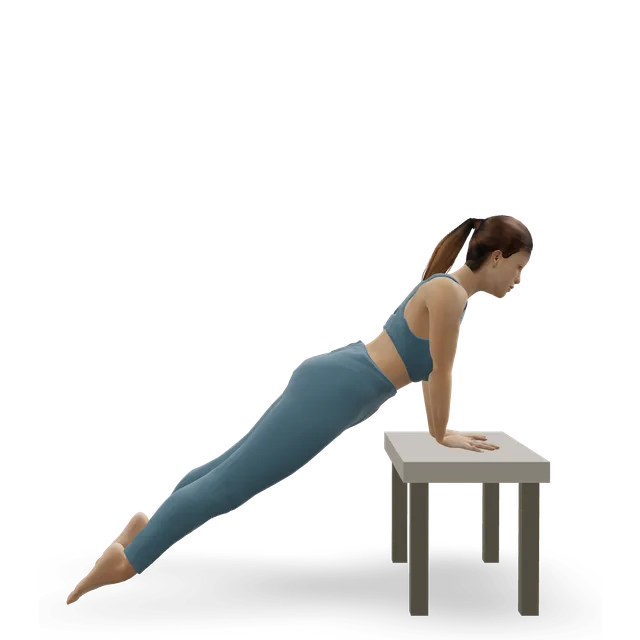 3D demoClose-grip incline push-upBeginner · Other / check instructions
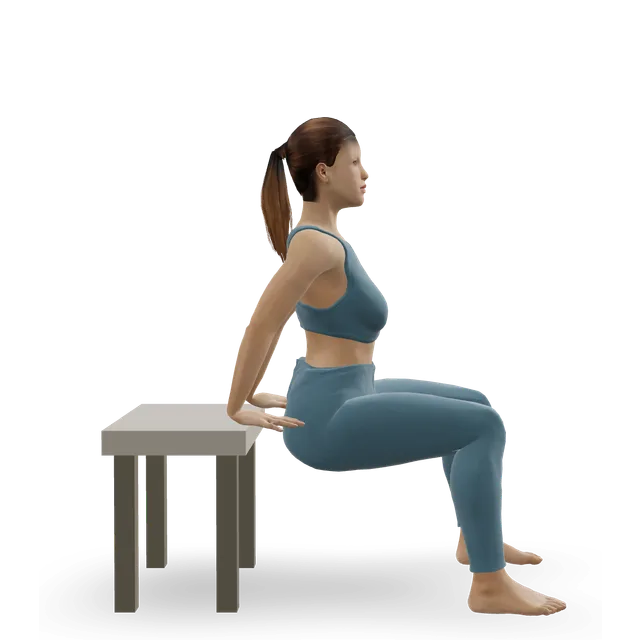 3D demoBench dipBeginner · A bench or box
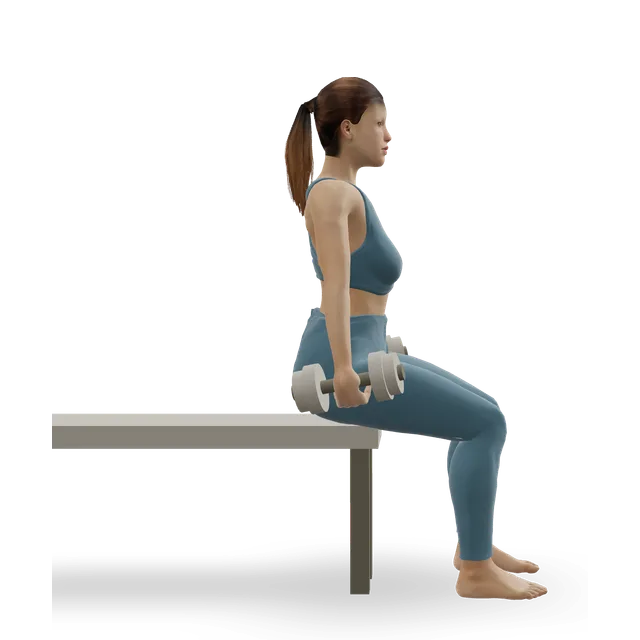 3D demoSeated dumbbell curlBeginner · A dumbbell + A bench or box
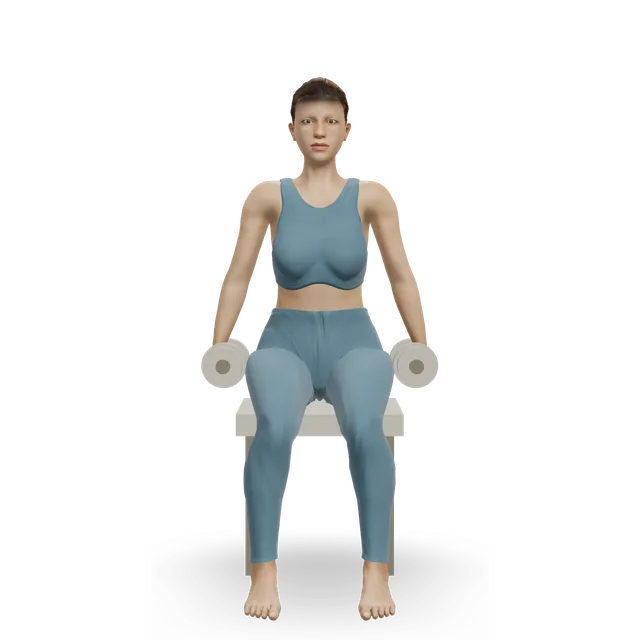 3D demoSeated dumbbell lateral raiseBeginner · A dumbbell + A bench or box
Whole-body moves, as in our 20-minute strength workout (goblet squats, rows and Romanian deadlifts at 8 to 12 reps, twice through), plus your weekly walking, cycling or rowing. Indoor rowing and the cross-trainer have starting doses on their move pages.
 3D demoTreadmill walkingBeginner · Cardio machine
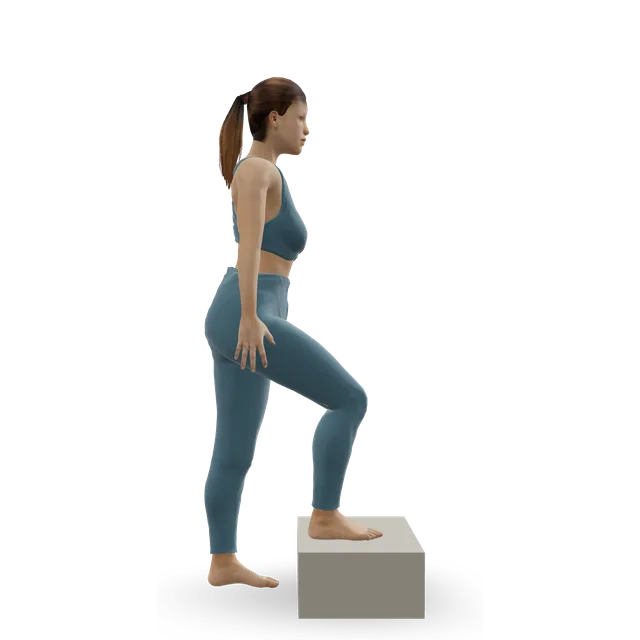 3D demoStair climbingIntermediate · A step
 3D demoStationary cyclingBeginner · Cardio machine
 3D demoIndoor rowing (rowing machine)Beginner · Cardio machine
 3D demoElliptical trainerBeginner · Cardio machine
 3D demoDumbbell goblet squatIntermediate · A dumbbell
 3D demoDumbbell Romanian deadliftIntermediate · A dumbbell3D demoSupported single-arm dumbbell rowIntermediate · A dumbbell + A bench or box
 3D demoFarmer's carryIntermediate · A dumbbell + A kettlebell
Steps as in our bigger arms guide, from the US national health survey's measuring method; measuring every 4 weeks and the photos are our editorial suggestions.
Strength rises in the first few weeks, and in small lab studies muscle growth showed on scans by about weeks 3 to 4.
At 0.5 to 1 kg a week, arm fat goes with the rest of you, and the order in which places slim down differs from person to person, partly because of your genes.
On the same programme, some people barely change while others double their strength. Your own photos, tape measurements and training log are the fair comparison.
Source 27
Nobody can tell you how your arms will look, or when. What you can control is the habit: activity most days, strength work twice a week, enough sleep and a small calorie cut.
In 360 people a year or more after weight-loss surgery, 92.8% reported problems with excess skin, and for about half it got in the way of daily activity. The upper arms were among the commonest areas. Of 252 people after gastric bypass, 74% wanted surgery to remove skin and 21% had had it.
Strength training builds the muscle underneath, which can change your arm's shape, but we found no study showing that exercise removes excess skin. Surgery to remove it (an arm lift) is usually counted as cosmetic, so it isn't always available on the NHS: ask your GP.
BOMSS (the British Obesity and Metabolic Surgery Society) says physical problems from excess skin, including repeated infections and ulcers, are common, and serious ones should lead to a referral. See your GP or surgical team if folds get sore, red or broken. Supportive clothing and keeping folds clean and dry may help (our suggestion).
Source 38
Skin loses strength and stretch with age and sun exposure, which is part of why arms can look looser later in life.
Source 20
Strength training still builds muscle: about 1.1 kg of lean mass on average across 49 studies in adults over 50. The NHS adds balance and flexibility for older adults, and the seated curls and raises in our chair workout are a gentle start.
Pregnancy isn't the time to diet, but staying active is good for you: the NHS advises 150 minutes of moderate activity a week, including muscle strengthening. Ask your midwife before starting anything new.
Swelling of an arm can follow treatment to the lymph nodes. Follow your treatment team's advice; our lymphoedema exercises and our arm and shoulder exercises after breast cancer surgery are written for this.
Source 43
Our strength after weight-loss surgery routine starts from about 4 to 6 weeks after the operation, and our weight-loss surgery guide covers the rest.
There's no workout that burns arm fat. These build the muscles under it; the whole-body sessions and your weekly walking do the fat-loss work.
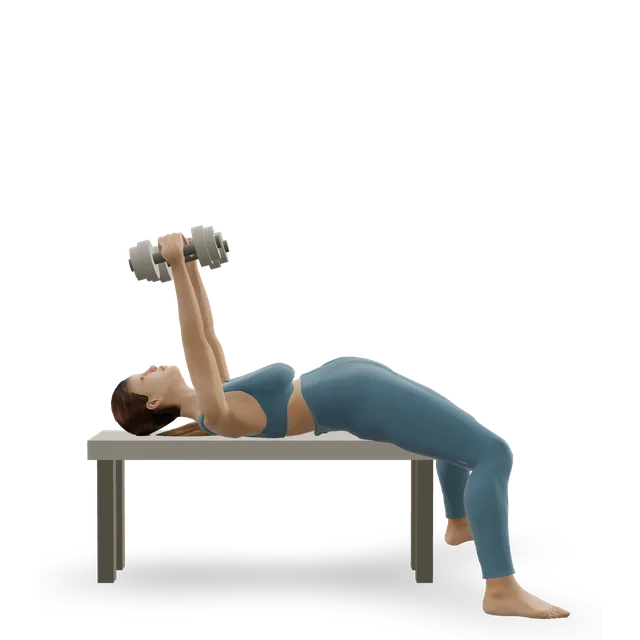
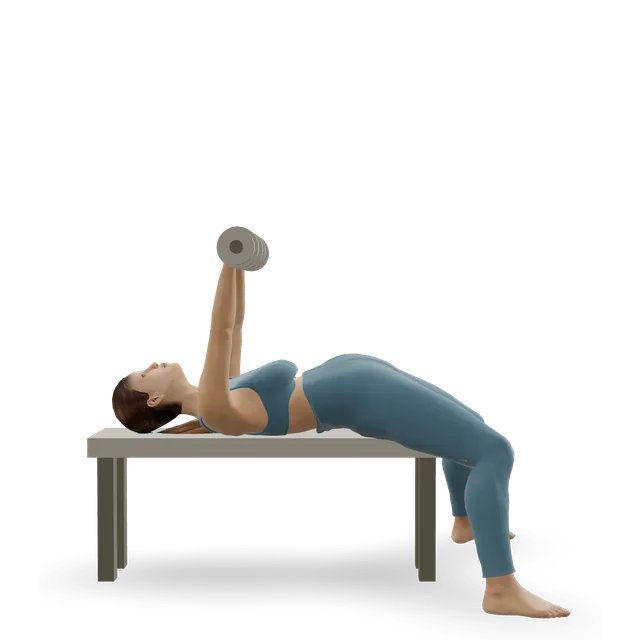
A 30-minute arm workout at home with dumbbells: curls, hammer curls and concentration curls paired with overhead extensions, close-grip push-ups and kickbacks.
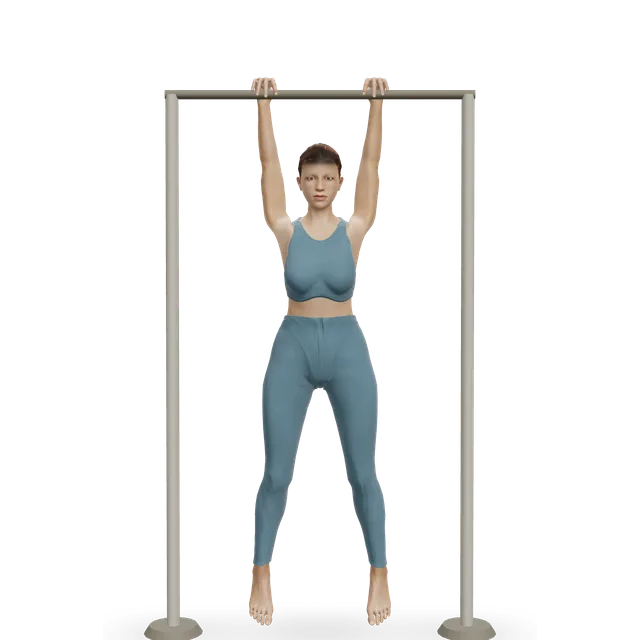
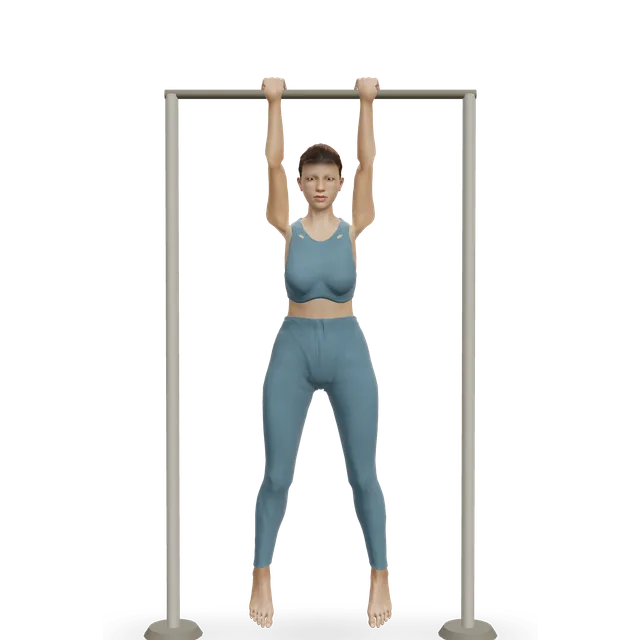
30 minBeginner8 movesA dumbbellA 30-minute bodyweight arm workout: chin-ups and rows for the biceps, close-grip push-ups and dips for the triceps, and a bar hang for your grip.
30 minIntermediate8 movesPull-up bar, A bench or boxBiceps, triceps and forearms: curls, hammer curls, skull crushers, pushdowns, concentration curls and dips.
35 minBeginner7 movesA dumbbell, A bench or boxAn upper body workout at home with no gym: push-ups, band rows, pike push-ups, face pulls, close-grip push-ups and Y-T-W raises, with dumbbell options.
30 minIntermediate13 movesA band, An anchor pointChest, back, shoulders and arms with dumbbells: presses, rows, raises, reverse flyes, curls and extensions.
40 minIntermediate9 movesA dumbbell, A bench or boxA full-body resistance band workout: squats, rows, push-ups, presses, pull-aparts, band walks, good mornings and flyes.
30 minBeginner9 movesA band, An anchor pointWork up to full push-ups: wall, incline and knee push-ups, then the floor push-up and harder variations.
15 minBeginner8 movesA wall, A bench or boxA 20-minute full-body dumbbell workout: two supersets of squats, rows, Romanian deadlifts and push-ups. Twice a week covers the minimum dose.
20 minBeginner8 movesA dumbbell, A bench or boxStrength moves first, then 20 to 30 minutes of steady cardio, with glucose checks built in. In one small type 1 diabetes trial, weights first kept glucose steadier.
45 minBeginner11 movesA dumbbell, A bench or boxA 20-minute seated workout for older adults who cannot stand for long: marching, leg and arm strength, posture, and sit-to-stands that lead back to standing.
20 minBeginner11 movesA bench or box, Something with weightThe weight-loss plan does the fat-loss side; the others build strength all over, at home or in the gym.
A 12-week workout plan for weight loss: three strength days, two cardio days and daily steps, building to 200 minutes a week, with honest results.
3 training days45 minBeginner3 days a weekA weekly workout plan for women: three strength days, cardio and pelvic floor training, with the evidence on periods, pregnancy and menopause.
3 training days45 minBeginner3 days a weekA weekly plan for women over 50: strength, bone-loading and balance on 3 days plus walking, built on UK osteoporosis consensus advice.
3 training days45 minBeginner3 days a weekThree full-body home workouts a week with dumbbells or no equipment at all, plus walks and an 8-week plan to keep progressing.
3 training days35 minBeginner3 days a weekAn 8-week resistance band workout plan: three full-body sessions a week at home or away, with how to choose bands, add tension and anchor them safely.
3 training days35 minBeginner3 days a weekA 12-week exercise plan for over-65s: strength and balance three times a week, short balance sessions and daily walks, based on falls-prevention trials.
3 training days40 minBeginnerIf you have pain and swelling in an arm or leg and you're short of breath or have chest pain: a blood clot can travel to the lungs. Don't drive yourself to A&E.
Source 44
If you think you have a blood clot: the NHS says the symptoms, usually in a leg but sometimes in an arm, include throbbing pain, swelling, red, blue or darkened skin around the painful area (harder to see on brown or black skin) and swollen veins. Also if swollen glands make it very hard to swallow or breathe. In the US, contact your doctor or urgent care.
See a GP if:
See your GP or surgical team if skin folds are sore, red or broken, or keep getting infected.
The NHS lists spending a lot of time worrying about your weight and body shape, eating very little food, exercising too much, and having very strict habits or routines around food among the signs of an eating disorder, and says to see a GP as soon as you can. Beat adds rigid or punishing exercise, exercising to make up for eating, and exercising when ill or injured.
Worrying a lot about one part of your body can be body dysmorphic disorder (BDD), which a GP can help with. Beat's helpline in England is 0808 801 0677, and our eating disorders guide has the other numbers.
Training one arm for 12 weeks didn't change its fat more than the other arm's on MRI, and across 13 studies training a body part didn't reduce the fat over it. Even a circuit built around overhead triceps extensions didn't thin the fat at the triceps. The exercises build the muscle underneath.
No study has tested them for arm fat. Like any arm exercise, they work the muscles lightly and don't burn the fat over them.
Source 5
Fat comes off your whole body, and the NHS suggests aiming for 0.5 to 1 kg a week. Arm fat leaves along with the rest, over months rather than days.
Source 6
Muscle uses about 13 calories per kg a day at rest, against 4.5 for fat. Adding 1.5 kg of muscle, a typical gain from a training programme, burns roughly 20 more calories a day (our sum): it helps a little, not a lot.
Light and heavy weights built similar muscle when the sets were hard, and women gain less muscle than men in absolute terms. Our tone-up guide explains more.
We found no study showing exercise removes excess skin after big weight loss. It builds the muscle underneath; surgery is what removes skin.
Lose fat from your whole body: eat a little less, move more and sleep 7 to 9 hours, and strength train to build the muscle underneath. Arm exercises on their own don't burn the fat on your arms. The NHS suggests aiming to lose 0.5 to 1 kg a week.
No. In 104 adults who trained one arm for 12 weeks, scans found the fat changed no more in that arm than in the other, and across 13 studies, training one part of the body didn't take more fat off it.
The soft area at the back of the upper arm is fat, and sometimes loose skin, and it shrinks as your overall body fat does. Triceps exercises build the muscle underneath, which can make the arm look firmer, but they don't burn the fat over it. If the skin is loose after a lot of weight loss, exercise won't remove it.
No exercise burns arm fat, so the best plan pairs whole-body activity, such as brisk walking, cycling or rowing, with strength training at least twice a week. In your strength sessions, include an overhead triceps extension, a curl, push-ups and a row.
It depends on how much fat you have to lose overall and where your body tends to lose it first, which differs from person to person. Fat comes off at about 0.5 to 1 kg a week at most on the NHS's advice, while strength starts to change within a few weeks. Expect months, and compare your own photos rather than chasing a date.
At the same total body fat, women store more of it under the skin, a pattern that starts at puberty. In young adults scanned by MRI, women carried about 1.5 times as much fat on the upper arm as men. It's normal, not a sign you're doing something wrong.
Yes: fat loss comes from eating a little less and moving more, and you can keep your arm training light. Some muscle under the fat helps the arm look firmer, and muscle grows slowly, so you won't build big arms by accident.
After a lot of weight loss, skin may not shrink back, and no study shows exercise removes it, though strength training builds the muscle underneath. An operation called an arm lift removes skin, but the NHS usually counts it as cosmetic, so ask your GP what's available. See a GP if skin folds become sore, red or broken.
The fat around your armpit is ordinary body fat, so it changes with your overall body fat like the rest of your arm. A new lump or swelling in your armpit is different: the NHS says to see a GP, whether you're a woman or a man.
The same way as at any age: whole-body activity, strength training at least twice a week, and eating a little less if you have weight to lose. Strength training still builds muscle after 50, and the seated curls and raises in our chair workout are a gentle start. Skin loses some stretch with age, so arms can look looser even as the fat falls.
Pregnancy isn't the time to diet, but staying active is good for you: the NHS advises 150 minutes of moderate activity a week, including muscle strengthening. Most women gain 10 to 12.5 kg in pregnancy, partly as fat stored for breastfeeding. Check with your midwife before starting anything new.
Where your body keeps fat is largely inherited, and some people hold on to it longer on their arms. If your arms or legs are also painful, bruise easily and are out of proportion with the rest of you, see a GP to check for lipoedema.
Exercise education, not a personal prescription, and clinical review of these guides is pending. Check with a GP before starting hard training if you have a heart condition, chest pain, dizziness or breathlessness when active, and stop for sharp or increasing pain. Health disclaimer.