Whole body, mostly aerobic
A 2,000 m race on the machine was about 83% aerobic in trained junior rowers. Each stroke goes legs, then body, then arms on the drive, and back in reverse.
Sport
Rowing, on the water or on a machine, works your whole body, mostly aerobically, with every stroke driven by the legs, then the body swing, then the arms. It's low impact and one of the safest Olympic sports for sudden injuries, but its repeated, seated loading of the spine makes the low back the commonest injury at every level, and rib stress injuries cost elite rowers weeks of training.
This guide covers technique and machine settings, what rowing asks of your body, back pain and rib stress injuries and what's known about preventing them, British Rowing's advice for young rowers and indoor rowing, water safety, and the strength training that helps rowers go faster. There are two workouts with 3D demos: a strength workout for rowers and a beginner rowing machine session. We're not connected with British Rowing, World Rowing or any machine maker.
A 2,000 m race on the machine was about 83% aerobic in trained junior rowers. Each stroke goes legs, then body, then arms on the drive, and back in reverse.
The low back is the commonest injury site in elite, club, junior and masters rowers. Over a year, 53% of New Zealand's international rowers had at least one episode of low back pain.
8 to 16% of elite rowers have a rib stress fracture over a career, and in Australia's national team a fracture cost a median of 69 days before full training on the water. No way of preventing them has been tested.
The damper changes how each stroke feels, not how hard the workout is, and a low drag puts less force through your spine, especially if you're new or young.
In trials against other training, strength training made rowers a little stronger and faster, at every level from recreational to elite.
Source 11
British Rowing had three reports in five months of indoor rowers whose hearts went into a dangerous rhythm, and one died, so don't let anyone push you into overexertion. On the water, everyone should be able to float unaided for 5 minutes.
British Rowing calls rowing "a power endurance activity", "whole-body ... non-weight bearing and low impact", in which "the spine is loaded in a sitting position ... repeated multiple times a minute and for the full duration of the session". Tiredness increases how much the lower back bends at the catch, the start of each stroke, more on the machine than on the water.
In 18 trained junior men, a 2,000 m ergometer race drew 17% of its energy from anaerobic sources, so about 83% was aerobic, and a 1,500 m race 22%. Leg press or squat strength and pulling strength went closely with faster ergometer times across studies.
The Compendium of Physical Activities rates the rowing machine at 5.0 METs (multiples of your resting energy use) under 100 watts, which is moderate, 7.5 at 100 to 149 watts, 11.0 at 150 to 199 watts and 14.0 at 200 watts or more. On the water, rowing for pleasure is rated at 3.5 METs, rowing at 4.0 to 5.9 mph (6.4 to 9.5 km/h) at 5.8, and crew or sculling competition at 12.0.
In Australia's national team over 8 seasons, 68% of injuries happened in on-water training, and 83% were overuse injuries rather than sudden ones.
Source 4
The lower back, the ribs and chest wall, and the knees take most of it; the forearms and wrists matter in juniors, and the shoulders and elbows in masters rowers.
Studies count injuries per 1,000 days, hours, sessions or athlete-exposures, or as the share of rowers injured, so read each line on its own. Rowing has some of the lowest injury rates of Olympic sports in competition, but overuse injuries, mainly to the back and ribs, cost a lot of training time (our summary).
The low back is the commonest injury site at every level, and in the studies that followed rowers for a year, 32 to 51% had low back pain. In New Zealand's international rowers there were 1.67 episodes per 1,000 hours, and among 365 school rowers, 94% of boys and 78% of girls had had low back pain at some point. Our back pain and herniated disc guides cover it, and our spondylolisthesis guide covers a teenager's back pain that's worse arching backwards.
Rib stress fractures affect 8 to 16% of elite rowers over a career, against 2% of university and 1% of junior elite rowers, mostly ribs 4 to 8 at the side of the chest. Chest wall injuries were the biggest injury burden in Australia's national team. In its 2012 to 2016 cycle, 4 to 15% of rowers had a rib stress injury in a given period, a fracture cost a median of 69 days before full on-water training and a stress reaction 57 days, and there were more in the year before the Olympics.
A review of 17 studies found rowers usually lost 4 to 6 weeks, so elite rowers can take longer than that. Our rib injury guide covers them.
The knee is the second commonest site in several groups, and junior rowers who ran more than once a week had more overuse knee injuries. The forearm and wrist came third in juniors, the hip and groin took 16% of injuries in college women, and the neck 11% in Irish international rowers. Our knee pain, runner's knee, wrist pain, de Quervain's tenosynovitis, hip pain and neck pain guides cover them.
A previous episode was the one consistent risk factor across 10 studies, with 2.65 times the odds of another, and it still went with back pain years later in former elite athletes. More training went with more back pain: over 550 hours a year went with 2.5 times the odds years later, and so did more machine training. Each year of age added a little risk in international rowers. Women in Australia's team had 1.4 times the men's risk of chest wall injuries and half their risk of lumbar ones, and girls had more injuries than boys at school. Sex, body size, level, boat type and years rowing weren't consistently linked with back pain. All of these are associations.
An international consensus for elite and sub-elite adult rowers says that prevention and management of low back pain in rowers "should include education on risk factors, rowing biomechanics and training load. If treatment is needed, non-invasive management, including early unloading from aggravating activities, effective pain control and exercise therapy should be considered. Fitness should be maintained with load management and progression to full training and competition."
Source 30
In Western Australia, 90 schoolgirl rowers at one school had an individual exercise programme based on a screening in week 1, a back pain education session with a physiotherapist in week 2, and a conditioning programme off the water with a PE teacher through the season, compared with 131 rowers at three other schools. They had less new low back pain at mid-season and at the end of the season, better pain and disability scores, and better fitness and sitting posture.
It wasn't randomised, and the abstract doesn't give the exercises, doses, effect sizes or how many sessions the girls did.
Source 31
New low back pain tracked monthly training hours closely in international rowers, machine training load tracked injuries, and more training went with more injuries in club rowers. In former college rowers, back pain went with machine sessions over 30 minutes, rowing before 16, weights training and big "hatchet" blades. These are associations, but they point the same way: add volume, and especially machine time, gradually.
Junior sweep rowers who changed side during the season had more sudden-onset back injuries. Dr Anders Vinther, a research physiotherapist who studies rowers' rib injuries, told World Rowing that "the largest risk factor for rib stress injury remains big changes in training", including switching between sweep and sculling, changing side, and raising volume or intensity, and that combining changes raises the risk. That's an expert view, not a tested rule.
Across 22 studies, tiredness increased bending of the lower back at the catch, more on the machine. Rowers without back pain kept a neutral or forward-tilted pelvis at the catch and a flatter lower back at the finish. Our reading: stop a piece when your posture goes.
Source 14
When Australia's national team moved its machine tests onto ergometers on slides, low back injuries fell. But a systematic review found "insufficient evidence to recommend one ergometer type (fixed vs dynamic) over the other".
A review of 17 studies found "insufficient or conflicting evidence" for every suspected risk factor and no prevention studies. Suggestions include strengthening the serratus anterior (a muscle on the side of the ribs) and the leg muscles, training on ergometers on slides, calcium and vitamin D, avoiding big training changes, and eating enough: low energy intake, called relative energy deficiency in sport (REDs), harms bone in women and men. None has been tested.
Seeing someone early matters most: "When you start to feel a small amount of pain, just a little pain, that is when you need to see a physio or a doctor". Magnetic resonance imaging (MRI) is the usual scan, and the Great Britain Rowing Team has a guideline for diagnosis and management. Follow your medical team on returning.
Adolescent girls more often than boys said lifting the boat made their back pain worse. Our suggestion: lift as a crew, bend from the hips and knees, and swap shoulders (editorial).
Source 27
Juniors who stretched for more than 10 minutes after training reported fewer sudden injuries, but that's an association, and across sports stretching made no difference to injuries in trials. We found no trial of a strength or core programme to prevent back pain in rowers; the consensus relies on education and load.
In 36 adolescent male rowers with back pain, 8 weeks of an individual approach to their beliefs, movement, conditioning and lifestyle cut pain during a 15-minute machine test by 2.4 points out of 10 more than the coaches' usual care, and lasted to 12 weeks. In 60 elite adolescent male rowers, 12 weeks of hamstring exercises, 4 times a week, reduced pain more than kinesiology tape. Our back pain guide covers the rest.
In trials that compared strength training with other training, it improved leg strength moderately and rowing performance a little, in recreational, sub-elite and elite rowers, whatever the type of strength training. In well-trained to elite rowers, 8 weeks of heavy strength training 3 times a week slightly raised the blood's oxygen-carrying capacity and their peak oxygen uptake.
Leg press or squat strength and pulling strength went closely with ergometer performance across studies. These are associations.
Source 15
A review suggests 2 to 6 sets of 4 to 12 repetitions, three sessions a week, out of the racing season, and found strength was kept in season with infrequent but heavy sessions, once or twice a week at about three-quarters of maximum.
Source 40
In 8 highly trained club rowers, a heavy strength session cut jump height and maximal power strokes by 3 to 10% for up to 48 hours, but didn't slow a 2,000 m machine test a day or two later. Across 43 studies, combining strength and endurance training blunted explosive gains most when both were in the same session.
In 14 national elite rowers doing most of their training at low intensity, polarised and pyramidal spreads of intensity brought the same 2,000 m gains over 11 weeks. Our zone 2 guide reaches the same "no clear winner" verdict.
Source 43
In post-menopausal women aged about 66, 10 weeks of rowing 3 times a week for 30 minutes at 60 to 80% of peak heart rate raised fitness. In 38 older adults with mild knee osteoarthritis, 12 weeks of computer-guided rowing twice a week improved symptoms and hip and knee strength more than usual resistance exercise. Both trials were small.
Our suggestion: most rowing at an easy, conversational effort, with one or two harder sessions a week; strength twice a week in season and three times out of it, legs and pulling first; heavy legs on a different day from key tests, or after the rowing session; and young rowers within British Rowing's session limits, with core and conditioning before heavy lifting (editorial).
Concept2 describes four parts. At the catch, "Arms are straight; head is neutral ... Upper body is leaning forward from the hips ... Shins are vertical". The drive starts by "pressing with your legs, and then swing the back through the vertical position before finally adding the arm pull". At the finish you're "leaning back slightly" with the "handle ... held lightly below your ribs" and "Wrists should be flat". The recovery reverses it: "Extend your arms ... before leaning from the hips ... Once your hands have cleared your knees, allow your knees to bend".
Source 2
On an air-resistance machine, the damper "affects how it feels but does not directly affect the resistance": "the harder you pull, the more resistance you will feel". Concept2 recommends starting out on a damper setting of 3 to 5, and warns that a high setting "can exhaust your muscles before you reap the full cardiovascular benefit". British Rowing: "The drag factor/resistance should be kept low for all rowers, but especially beginners and younger participants", because a low drag "significantly decreases the force across the spine".
In 1,632 former US college rowers, ergometer sessions longer than 30 minutes were among the things linked with back pain, and tiredness rounds the lower back more at the catch. Our indoor rowing guide advises keeping single sessions under about 30 minutes while the stroke is new.
British Rowing's "How Much How Often" guidance sets sessions by level, and says "The stage at which rowers become tired, where technique and posture fluctuate, is where the rower is most prone to injury". Juniors aged 15 and under, and older rowers new to strength training, do core and conditioning only, and on the water, juniors aged 14 and under should scull only.
Source 46
British Rowing doesn't recommend "a significant level of training and racing before age 11", asks for progression that is "gradual", with "caution/care ... when changing the quality, quantity, or frequency of the sessions", and wants a full warm-up and cool-down in every machine session, with the drag kept low.
Source 10
RowSafe, British Rowing's safety guide: "Indoor rowing is usually a low risk activity but it is not risk free. There are serious risks from overexertion and using poor technique". It asks everyone to "Stop if it hurts", "Avoid encouraging others to overexert", "aim for small incremental improvements", warm up, set the drag appropriately, and tell the club, school or gym about any illness or injury and seek medical advice before continuing.
British Rowing's 2020 safety alert reported three indoor rowers in five months whose hearts went into dangerous rhythms; all needed cardiopulmonary resuscitation (CPR) and a defibrillator, and one died. It says "If you do not feel well then do not exercise", and asks coaches to think carefully before shouting at people on rowing machines.
RowSafe: everyone taking part should be able to "Float unaided for at least five minutes", and ideally swim 50 m in rowing kit, tread water for 2 minutes and swim 5 m under water. In cold water, floating is better than swimming: "sudden unexpected immersion in cold water can cause an initial cold shock that affects muscular co-ordination and impairs the ability to float or swim", and hypothermia can follow. Anyone who can only float with a buoyancy aid should wear one.
The UK's National Health Service (NHS) says to go to A&E (accident and emergency) or call 999 if you think someone has hypothermia: move them somewhere sheltered, remove wet clothing and wrap them up.
Blades, boats and boathouse falls can cause concussion. If in doubt, sit them out, and follow the UK grassroots guidelines and our concussion guide: no competition before day 21. RowSafe gives a shorter break from sport, so follow the UK guidelines.
Built on the site's warm-up guide, RowSafe's expectation that indoor rowers warm up and set the drag appropriately, British Rowing's youth guidance, and Concept2's stroke order (editorial). No study has tested a rowing warm-up.
Loading the 3D figure…
The movement on the figure: Indoor rowing (rowing machine)
Each has a 3D demo. The prone bench pull isn't on the figure yet, so the workouts use the chest-supported row.
 3D demoIndoor rowing (rowing machine)Beginner · Cardio machine
 3D demoBarbell back squatAdvanced · A barbell
 3D demoLeg pressBeginner · Strength machine
 3D demoDumbbell goblet squatIntermediate · A dumbbell
 3D demoDumbbell Romanian deadliftIntermediate · A dumbbell
 3D demoHip-hinge practiceBeginner · No equipment
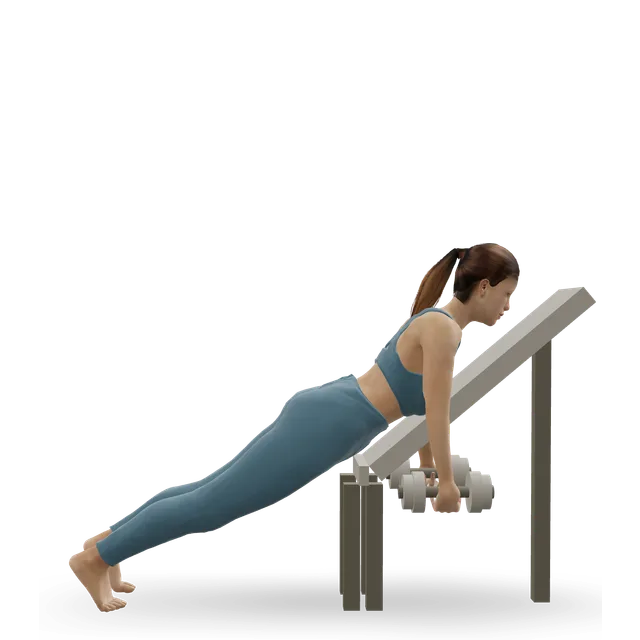 3D demoChest-supported dumbbell rowBeginner · A dumbbell + A bench or box
 3D demoScapular push-up (push-up plus)Beginner · No equipment
 3D demoSide plankIntermediate · No equipment
 3D demoBird dogBeginner · No equipment
 3D demoHalf-kneeling Pallof pressBeginner · A band + An anchor point
 3D demoSide-lying open bookBeginner · No equipment
 3D demoBand pull-apartIntermediate · A band
 3D demoHalf-kneeling hip flexor stretchBeginner · No equipment
The first two are new: a strength workout for rowers and a beginner rowing machine session. The Norwegian 4x4 works well on a rowing machine once the stroke is learned.
A 50-minute strength session for rowers: back squats, Romanian deadlifts, chest-supported rows, push-ups, side planks, bird dogs and Pallof presses.
50 minIntermediate15 movesCardio machine, A bandA 25-minute beginner rowing machine workout: set the damper, learn the stroke one part at a time, row three easy rounds of 4 to 5 minutes, then stretch.
25 minBeginner4 movesCardio machineThe Norwegian 4x4, a well-studied interval session for raising VO2 max: four 4-minute hard efforts with 3 easy minutes between, on a bike, rower or treadmill.
40 minIntermediate3 movesCardio machine, A wallA steady 30 to 45 minute cardio session at talk-but-not-sing pace: walk, cycle, row or cross-train, counting toward weekly activity guidelines.
40 minBeginner3 movesCardio machine, A wallA 25-minute interval session on a bike or rower: one-minute hard efforts with two minutes easy, building from 4 to 8 rounds.
25 minIntermediate1 movesCardio machineA 25-minute standing cardio circuit with no jumping: marching, step jacks, sit-to-stands, punches, step-ups and wall push-ups, with a seated option for most moves.
25 minBeginner9 movesA bench or box, A stepA 50-minute gym session for cyclists: heavy squats, one-leg presses, hip flexion and calf raises as in the cycling trials, plus jumps for bone.
50 minIntermediate13 movesCardio machine, A barbellA 15-minute routine that moves your neck, upper back and lower back through bending, arching, side bending and twisting, then holds the spine steady.
15 minBeginner12 movesNo equipmentThe McGill big three for the core: curl-ups, side planks and bird dogs, each held for 10 seconds at a time in falling sets of 5, 3 and 1 reps.
12 minBeginner3 movesNo equipmentA 12-minute routine to loosen tight hamstrings with strap stretches, PNF, folds and hinges.
12 minBeginner7 movesNo equipmentA 15-minute hip opener: 90/90 switches, windshield wipers, CARs, Cossack squats, frog and pigeon.
15 minIntermediate8 movesA wallA 12-minute routine to move every joint through its range under control: slow neck, shoulder, hip and ankle circles, spine and hip rotation, and deep squats.
12 minBeginner10 movesA wallTwo or three strength sessions a week fit around rowing out of season; drop to one or two in season.
A 12-week beginner barbell program: squat every session, alternate bench and row with press and deadlift, and add weight each time until it stalls.
3 training days50 minBeginner2 days a weekTwo full-body strength sessions a week: the minimum that meets health guidelines, with every set, rep and rest, and an 8-week progression.
2 training days45 minBeginner3 days a weekA 12-week exercise plan for over-65s: strength and balance three times a week, short balance sessions and daily walks, based on falls-prevention trials.
3 training days40 minBeginner3 days a weekA weekly plan for women over 50: strength, bone-loading and balance on 3 days plus walking, built on UK osteoporosis consensus advice.
3 training days45 minBeginner3 days a weekA 3-day strength plan for men over 40 with power and bone work, two cardio days and mobility, built on research on ageing muscle.
3 training days45 minBeginnerThe NHS advises speaking to your GP first if you haven't exercised for some time, or if you have medical conditions or concerns. The Physical Activity Readiness Questionnaire for Everyone (PAR-Q+) asks about a heart condition or high blood pressure, chest pain, dizziness or fainting, other long-term conditions and their medicines, and bone or joint problems, and asks you to see a qualified exercise professional before vigorous exercise if you're over 45 and not used to it. Start with easy rowing.
Indoor rowers have had dangerous heart rhythms from overexertion, and RowSafe asks you to tell the club and seek medical advice. See your GP or heart team first, and do no all-out tests until you're cleared.
It's the strongest predictor of the next episode. Keep sessions short and the drag low, build up gradually, and see a physiotherapist if it comes back.
Source 28
Avoid deep rounding of the back under load, as our osteoporosis guide explains. Keep a long spine, hinge from the hips, and ask a physiotherapist.
Cancer Research UK advises avoiding spinal twisting, including on the rowing machine, unless your team says otherwise, as our cancer guide explains. Ask your cancer team first.
Low energy intake harms bone in women and men, and it's a suspected driver of rib injuries. See your GP, and eat enough for your training.
British Rowing doesn't recommend significant training or racing before 11, and limits sessions by level. Choose a club that follows its youth guidance.
Tell the club, wear a buoyancy aid, and do capsize training before you go out.
Source 13
Don't start a new vigorous activity in pregnancy, as our pregnancy guide says. Talk to your midwife about keeping up the rowing you already do.
Seated exercise such as the rowing machine is a recommended way to start, as our PoTS guide explains.
Pain at the side of the chest that builds with rowing, or hurts when you breathe deeply, cough or sneeze, needs a physiotherapist or doctor early, before it becomes a fracture. Our rib injury guide has more.
Call 999 for sudden chest pain that doesn't go away, pain that spreads to your arms, neck, jaw, stomach or back, or chest pain with sweating, feeling sick, light-headedness or breathlessness. Stop at once if you feel faint, very breathless, or your heart is racing irregularly.
Loss of feeling around your genitals or bottom, new trouble controlling your bladder or bowels, or numbness or weakness in both legs needs 999 or A&E. Our back pain guide explains why.
Float first to get through the cold shock. Shivering, confusion, slurred speech or drowsiness afterwards may be hypothermia: go to A&E or call 999.
If in doubt, sit them out. Call 999 for red flags such as loss of consciousness, getting drowsier, repeated vomiting, a seizure or a worsening headache, and follow our concussion guide: no competition before day 21.
Source 48
It's low impact, but the low back is the commonest injury site at every level, and the spine is loaded many times a minute.
The damper changes how the stroke feels, not how hard the workout is. Start at 3 to 5; a low drag puts less force through your spine.
It can be a stress injury that costs about 10 weeks if it becomes a fracture. See someone early.
The drive is legs, then body, then arms, and leg strength goes with faster machine times.
Strength training improved rowing performance in trials, and slightly raised peak oxygen uptake in elite rowers.
Machine sessions over 30 minutes went with back pain in former college rowers, and tiredness rounds the lower back at the catch.
There's only an association in juniors, and trials across sports found no benefit.
Start at 3 to 5. The damper changes how each stroke feels, like gears on a bike, not how hard the workout is, and a low drag puts less force through your spine.
Yes: it works the legs, back and arms, is low impact, and at a steady pace counts as moderate exercise, rising to vigorous as you pull harder. In older women, 30 minutes three times a week raised fitness in 10 weeks.
Not for most people, but the low back is rowers' commonest injury, especially with a lot of machine time, long sessions or a previous episode. Keep sessions short while you learn, keep the drag low and let your legs drive.
Legs, then body, then arms on the drive; arms, then body, then legs on the way back. At the catch your arms are straight and your shins vertical; at the finish you lean back slightly with the handle just below your ribs and your wrists flat.
About 15 to 20 minutes of easy rowing in short rounds at first, building to 30 minutes over a few weeks. Keep single sessions under about 30 minutes while the stroke is new, because longer sessions went with back pain in college rowers.
Often a rib stress injury from repeated rowing, which experts link to big changes in training, side or boat changes, and not eating enough. See a physiotherapist or doctor at the first sign, before it becomes a fracture.
Mostly the thighs and buttocks in the drive, the back and hips in the swing, and the back of the shoulders and the arms at the finish, with the trunk holding it together. Leg and pulling strength go with faster times.
Neither is better for everyone. Rowing is low impact and works more muscles; running is weight-bearing, which matters for bone. Rowing suits people whose joints don't like running.
Heavy squats or leg presses, Romanian deadlifts and rows, two or three times a week out of season and once or twice in season. Strength training improved rowing performance at every level.
British Rowing doesn't recommend significant training or racing before 11, keeps under-14s to sculling, and wants low drag on machines. New rowers aged 11 and over start with two short skill sessions a week.
Exercise education for people who play sport, not a personal prescription or a diagnosis, and clinical review of these pages is pending. Check with a GP or physiotherapist before hard training if you have a heart condition, chest pain, dizziness or an injury that isn't settling, and stop for sharp or increasing pain. Health disclaimer.