Pilates chosen by a physiotherapist
A physiotherapist picks, adapts and supervises Pilates-based exercises for you as part of treatment, usually after assessing you. The exercises themselves are often the same as in a studio class.
Pilates guide
Clinical Pilates is Pilates-based exercise chosen and supervised by a physiotherapist as part of treatment, usually after an assessment. The name was coined in Australia to set physiotherapists apart from studio instructors, and in the UK only someone registered with the Health and Care Professions Council (HCPC) can call themselves a physiotherapist. The exercises often look like any beginners' class: the difference is the assessment and the tailoring.
Does the tailoring make it work better? For back pain, Pilates eases pain and disability compared with doing little, but the two trials comparing physio-led clinical Pilates with other exercise disagree, and reviews find no clear winner. This guide covers what clinical Pilates is, who can teach it, what an NHS course involves and how to get one, what the trials found for back pain, neck pain and other conditions, how often to go, and the warning signs to get checked first.
A physiotherapist picks, adapts and supervises Pilates-based exercises for you as part of treatment, usually after assessing you. The exercises themselves are often the same as in a studio class.
In the UK, "physiotherapist" is a protected title: anyone using it must be registered with the HCPC. The NHS suggests choosing a private physiotherapist who is chartered (MCSP after their name) and HCPC registered.
Two examples: 4 weekly classes of 45 minutes, and 6 weekly classes of about an hour for up to 12 people. In many areas you can refer yourself to NHS physiotherapy without seeing a GP.
A Cochrane review found Pilates eased back pain and disability compared with doing little, but it did no better than other exercise for disability. The NHS lists Pilates among activities that may help ease back pain.
A 2026 trial found an advantage, which other researchers have disputed in print; an earlier trial found none. Reviews find no strong evidence that one type of exercise beats another for back pain.
Pilates helps neck pain compared with no treatment, but other exercise was slightly better for pain straight after treatment (low certainty), and several kinds of exercise work about equally well.
Clinical Pilates means Pilates-based exercise chosen, adapted and supervised by a physiotherapist as part of treatment, usually after an individual assessment. It isn't a separate exercise system with its own body of trials: the label covers several schools' approaches, and any physiotherapist using Pilates exercise as treatment.
Craig Phillips, an Australian physiotherapist who introduced Pilates to physiotherapists there and runs a clinical Pilates training company, wrote that "the clinical Pilates name was coined to create that point of difference for physiotherapists working specifically in the patient treatment space".
He also wrote: "Despite the marketing and testimonials, Pilates is just a general exercise approach and no better than any other standard, generic exercise." For him, the point of difference is tailoring the exercises to treat the patient. In an interview he called Pilates "merely a brand" within exercise-based physiotherapy.
His school, DMA Clinical Pilates (the method tested in the 2026 trial below), chooses exercises with what it calls the BEAT process: a body chart (pain on one side is treated on one side), easing factors (the movement direction that eases pain becomes the treatment), aggravating factors (left out) and trauma (the direction of the injury).
Source 1
In 33 people with past leg injuries, two assessors using the school's direction assessment agreed substantially (a kappa score of 0.75, a measure of agreement). Whether sorting people this way predicts who improves hasn't been shown: the one analysis of Pilates subgroups for back pain found no group that benefited more.
The same research team describes clinical Pilates as a hybrid of general Pilates and the McKenzie method, another exercise approach for back pain, and calls its decision rules hypothetical. It's a theory, not a tested claim.
Source 18
An NHS trust leaflet quotes a definition from the Australian Physiotherapy and Pilates Institute (APPI): "a mind-body centring technique, beginning movement from a central core of stability". The leaflet explains this as moving your arms and legs while keeping a neutral spine, "not too stiff and not weak". APPI's own website couldn't be opened when we checked.
Source 3
Thirty Australian physiotherapists experienced in Pilates agreed that Pilates for long-lasting back pain "requires body awareness, breathing, movement control, posture, and education", and that people would benefit from an individual assessment, supervision, exercises carried into daily life, and specialised equipment. That's an expert view, not a trial result.
Source 14
In the UK, "physiotherapist" and "physical therapist" are protected by law: "To use one of these titles, an individual must be registered with the HCPC." You can check the HCPC register online. The NHS adds that a private physiotherapist should be chartered, with MCSP (Member of the Chartered Society of Physiotherapy) after their name.
The Chartered Society of Physiotherapy (CSP) says physiotherapists who teach Pilates as physiotherapy must keep to its standards: appropriate assessment, clinical reasoning and professional judgement, and records. Their clients "must clearly understand that they will be engaging with a physiotherapist".
It isn't only for injuries: physiotherapists can also run antenatal and postnatal classes and classes for people who are well and want to get more active.
Source 2
The CSP is clear that "If you are working solely as a Pilates or yoga instructor, and you clearly present yourself as such, then you are not practising as a physiotherapist." An instructor without a health registration can teach Pilates, but it isn't physiotherapy.
Source 2
The NHS says: "In many areas, you may be able to get physiotherapy from NHS community musculoskeletal (MSK) services without needing a referral from a GP." You can also ask your GP surgery, and some surgeries have first contact physiotherapists who specialise in bone and joint problems. NHS physiotherapy is free, "but there may be a long waiting list", and some services run group sessions, "particularly for common problems like long-term pain".
Source 5
In one hospital trust (Wirral), a physiotherapist leads 4 classes of 45 minutes on 4 weeks in a row. The beginners' class introduces Pilates for different parts of the body, with the main focus on the spine. Mats and pillows are provided, and a plinth (a treatment couch) if you can't get onto the floor. The leaflet warns that "You may feel slightly achy or uncomfortable after the class", and asks you to tell the physiotherapist if you struggle with a lot of pain afterwards. That trust doesn't take women in the first three months of pregnancy (its local policy).
At the end you get a home sheet, five key principles to remember, and a recommendation to carry on at a physiotherapy-led class where possible, though you don't have to.
In another trust (Calderdale and Huddersfield), classes run weekly for six weeks, about an hour each, for "up to twelve people". They're "taught by a Pilates trained physiotherapist", with "a second physiotherapist/rehabilitation assistant who will observe the class and correct your technique as required". You fill in questionnaires before and after, practise at home, and afterwards "You may be reviewed by your physiotherapist or discharged".
The class rule: "Continue with the level you can control don't let the movement control you".
Source 6
Taught as physiotherapy, it starts with an assessment, which the CSP's standards require, and can be one-to-one or in a group. One Australian physiotherapist described one-to-one treatment first, then "program-based management where four patients are treated at the same time with individualised programs", and then a maintenance stage.
NHS physiotherapy is free. We found no health service or professional body guidance on whether UK private medical insurers pay for clinical Pilates, so check your policy before you book. The CSP's insurance scheme covers Pilates delivered as physiotherapy, but that's the physiotherapist's own professional insurance, not yours.
In one economic study in Brazil, supervised mat Pilates for long-lasting back pain was good value for the health service and saved money overall, compared with home exercise.
From the NHS physiotherapy page and the HCPC; the questions to ask are our suggestions.
A Cochrane review of 10 trials (510 people) found that, compared with minimal treatment, Pilates eased pain by 14 points out of 100 in the short term (low-quality evidence) and 10.5 points in the medium term (moderate quality), and eased disability too. Compared with other exercise, it made no clear difference to disability (moderate quality). Our Pilates for back pain guide has the details.
A 2026 trial found an advantage, which other researchers have disputed in print; an earlier trial found none.
In the 2012 trial, 87 adults with back pain for 3 months or more had physiotherapist-led sessions twice a week for 6 weeks. A programme tailored after an examination did no better than general exercise at 6, 12 or 24 weeks. In the 2026 trial, 52 adults were split between one school's clinical Pilates, general Pilates and general exercise for 6 weeks; the clinical Pilates group did better at 6 and 12 weeks, with pain scores more than 2 points lower. It was small, run by the method's own research team, and we read it as an abstract only.
A review of 11 trials found low-certainty evidence that Pilates eased pain a little more than general exercise, but "no strong evidence for using one type of exercise intervention over another". A review of 36 studies found Pilates reduced pain compared with no exercise, with a similar trend against other exercise.
In a review of 8 trials of mind-body exercise delivered by physiotherapists (7 of them Pilates), pain and disability improved in the short term compared with control groups, with smaller effects against other active treatments and no clear effect in the long term. The certainty was very low to low.
Source 22
Our Pilates for back pain guide found no trial comparing physiotherapist-led Pilates with classes led by Pilates instructors. A physiotherapist is the right first step for some people, not for everyone.
An umbrella review rated 15 of 27 Pilates reviews low quality and 10 critically low. A 2026 review in women reported a very large effect on pain, and one trial in 101 women after the menopause reported even larger effects for clinical Pilates added to physiotherapy. Numbers that big are hard to believe without high-quality trials behind them, so we don't treat them as typical.
The National Institute for Health and Care Excellence (NICE) recommends considering a group exercise programme (biomechanical, aerobic, mind-body or a mix) within the NHS for a specific episode or flare-up of low back pain, with or without sciatica. Physio-led Pilates classes are one kind of group exercise NHS services run.
Source 26
In 40 adults, one to four exercises chosen after a clinical Pilates assessment improved single-leg squat and flexibility measures straight away. There was no comparison group, and it shows an immediate change, not a treatment effect.
Source 27
In 222 people with back pain, two ways of sorting people didn't pick out anyone who did better with Pilates than with an advice booklet.
Source 17
In 255 people, less catastrophising (expecting the worst about pain) and less fear of movement explained 21% to 55% of Pilates' effect on pain and function.
Source 28
In 67 people, Pilates with mind-body cues reduced fear of movement a little more than the same Pilates without them, a borderline result in one trial.
Source 29
The authors of the largest trial of how often to do Pilates wrote that "non-specific elements such as greater attention or expectation might be part of this effect".
Source 30
In 296 adults in Brazil, adding Pilates once, twice or three times a week to advice eased pain and disability more than an advice booklet at 6 weeks. Twice a week beat once, and three times wasn't clearly better than twice, though it was the most likely to be good value.
Source 30
Australian physiotherapists suggested supervised sessions of 30 to 60 minutes, twice a week, for 3 to 6 months, and one NHS leaflet repeats the figure. That's an expert view, not a trial result.
The trials here ran for 6 to 12 weeks, with 1 to 3 sessions a week. NHS courses are shorter, 4 to 6 weekly classes, and end with exercises to carry on at home.
Across all kinds of exercise for long-lasting back pain, a network meta-analysis (a review comparing many trials at once) ranked sessions of 15 to 30 minutes, three times a week, for 16 weeks or more highest.
Source 33
Twice a week, as in the dose trial, and keep going after a course ends with the home sheet or a class (our suggestion).
In 86 adults with long-lasting back pain, equipment Pilates beat mat Pilates for disability at 6 months by 3 points, with no difference in pain. In another trial of 98, both improved, faster on equipment.
In 145 adults, mat Pilates with small accessories, supervised by physiotherapists twice a week for 6 weeks, beat a home exercise programme for pain and disability, but by amounts the authors didn't consider clinically relevant. At 6 months only quality of life still differed. In Brazil it was good value for the health service.
The NHS courses described here use mats and pillows, not reformers.
A 2025 review of 8 studies (439 people) found that, compared with control treatments, Pilates eased pain and disability, with moderate certainty for pain at follow-up. Compared with other exercise, other exercise was slightly better for pain straight after treatment (low certainty), with no difference in disability.
Source 12
A network meta-analysis of 40 trials found motor control exercise, strengthening, and yoga, Pilates, tai chi and qigong all worked better than no treatment: "There is not one superior type" (very low quality). A smaller review found Pilates no better than other treatments at 3 months (low certainty).
Pilates twice a week beat usual medicines alone in 64 adults over 12 weeks, and clinical Pilates beat posture education in 50 over 6 weeks. Neck stabilisation exercise beat Pilates for pain in 45. Pilates, yoga and isometric exercise helped equally in 56, supervised Pilates and yoga groups both reduced neck disability with no adverse effects in another 56, and kinesiotape added little to Pilates in 30 office workers.
Our neck pain guide covers other treatments and when to get help.
Trials of "clinical Pilates" have been run in fibromyalgia (42 women; one-to-one and group classes both helped), ankylosing spondylitis (42 people; better than home exercise for disease activity, mobility and core endurance), Parkinson's (40 people, where it matched standard physiotherapy with better balance on the move, and 32 more), shoulder pain (33), headache from the neck (37, where mobilisation helped pain more than Pilates), lymphoedema after breast cancer (60) and back pain in pregnancy (40). Most were positive, but each is a single small trial.
A review of 11 studies (444 people) of Pilates for arm and leg muscle and joint problems found less pain and disability than in control groups, but most studies were at moderate to high risk of bias.
Source 50
We cover Pilates for sciatica, scoliosis, multiple sclerosis and hypermobility, and exercise for fibromyalgia, ankylosing spondylitis and Parkinson's, in guides of their own (see Read next).
A physiotherapist chooses and adapts these for you; on your own, keep only the moves that feel comfortable, and stop and contact your GP or physiotherapist if pain keeps increasing.
 3D demoLateral breathing (Pilates breathing)Beginner · No equipment
 3D demoPelvic tilt into bridgeBeginner · No equipment
 3D demoKnee foldBeginner · No equipment
 3D demoBent-knee fall-outBeginner · No equipment
 3D demoSupine heel slideBeginner · No equipment
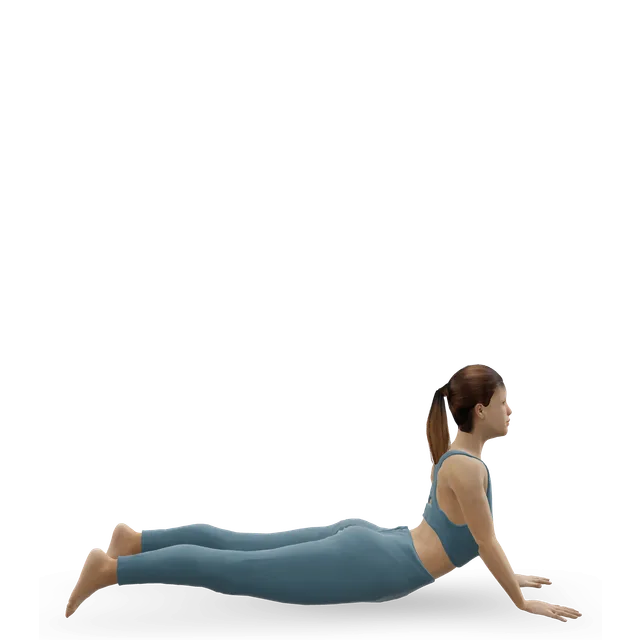 3D demoSwan (Pilates swan dive)Intermediate · No equipment
 3D demoClamshellBeginner · No equipment
 3D demoSide kick (Pilates side kick series)Beginner · No equipment
 3D demoSide-lying open bookBeginner · No equipment
 3D demoBreath reachBeginner · No equipment
The clinical Pilates exercises routine follows one NHS leaflet's home sheet; it isn't a substitute for an assessment. The back pain class is the next step.
A 15-minute routine of the exercises NHS physiotherapy Pilates classes send home: bridge, knee folds, leg slides, clam, side kick and side openings.
15 minBeginner10 movesNo equipmentA gentle 15-minute Pilates-based routine for ongoing low back pain, built from neutral-spine moves with options for backs that dislike bending or arching.
15 minBeginner10 movesNo equipmentA 20-minute mat Pilates workout for complete beginners. It covers breathing, spine position and the foundation moves, each with an easier option.
20 minBeginner13 movesNo equipmentA 20-minute beginner mat Pilates session for over-50s with no deep or repeated rounding of the spine, plus back strengthening and standing balance.
20 minBeginner13 movesA wallA 20-minute Pilates routine for posture: breathing, head and shoulder-blade control, back strength and upper-back mobility, with no loaded rounding.
20 minBeginner13 movesA wall, A bandA 20-minute chair Pilates workout for beginners and older adults: breathing, sitting tall, gentle spine and leg moves, and a standing finish at the chair.
20 minBeginner14 movesA bench or box, Something with weightWhen a course ends, a plan helps you keep going twice a week.
The NHS says to call 999 or go to A&E if you have back pain and:
Source 8
If you feel hot, cold, shivery or generally unwell with back pain, or it's severe pain that starts suddenly or is getting worse quickly.
Source 8
The NHS lists:
Source 8
Neck pain or stiffness doesn't go away after a few weeks, painkillers haven't worked, you're worried, or you have other symptoms such as pins and needles or a cold arm, which could be something more serious.
Source 51
NHS inform (Scotland) lists these, and says to phone 111 if your GP practice is closed:
Source 52
Tell the physiotherapist leading the class if you feel unwell or particularly painful before it starts. Some discomfort is normal, but "If you have persistent increased pain, please stop all exercises and contact your GP or physiotherapist".
Our suggestions, agreeing with our Pilates for back pain guide:
Source 53
One trial found no advantage over general exercise, and one small trial by the method's own team found an advantage that other researchers have disputed. Reviews find no strong evidence for one type of exercise over another, and a physiotherapist who helped launch clinical Pilates calls Pilates "just a general exercise approach".
Part of Pilates' effect on back pain runs through less worry and fear of movement, and one NHS leaflet notes that "Theories of thought have moved away from a 'weak back' or a 'poor core' causing low back pain".
Equipment was a little better in one trial and faster in another, but supervised mat Pilates helps too, and the NHS courses described here use mats.
NHS leaflets say "You may feel slightly achy or uncomfortable after the class", and to stop and get advice if pain keeps increasing.
Pilates-based exercise chosen, adapted and supervised by a physiotherapist as part of treatment, usually after an assessment. The name was coined in Australia to set physiotherapists apart from studio classes.
The exercises are often similar; the difference is who teaches it and why. A physiotherapist assesses you, picks and adapts exercises for your problem and reviews your progress, while a studio class is general exercise led by an instructor.
Not consistently. A 2026 trial of 52 adults with back pain found one school's clinical Pilates better than general Pilates and general exercise, a result other researchers have disputed in print, while an earlier trial of 87 adults found no advantage over general exercise. Reviews find no strong evidence that one type of exercise beats another for back pain.
Most trials are in long-lasting back pain, where Pilates eases pain and disability compared with doing little. There are smaller trials in neck pain, and single small trials in conditions such as fibromyalgia, ankylosing spondylitis and Parkinson's. It's a sensible way to start Pilates when a condition needs the exercises adapted.
A physiotherapist, which is a protected title: anyone using it must be registered with the Health and Care Professions Council (HCPC). The NHS suggests checking that a private physiotherapist is chartered (MCSP) and HCPC registered. A Pilates instructor without that registration teaches Pilates, not physiotherapy.
Some NHS physiotherapy services run physio-led Pilates classes, for example 4 to 6 weekly group classes. NHS physiotherapy is free but may have a waiting list, and in many areas you can refer yourself to musculoskeletal (MSK) services without seeing a GP.
A physiotherapist assesses you, then teaches exercises one-to-one or in a small group. NHS classes typically run once a week for 4 to 6 weeks, check your progress with questionnaires, and finish with exercises to carry on at home.
In a trial of 296 adults with back pain, twice a week worked better than once, and three times wasn't clearly better than twice. Australian physiotherapists suggest 30 to 60 minutes twice a week for 3 to 6 months, an expert view rather than a trial result.
It helps compared with no treatment, but in a review of 8 trials other exercise was slightly better for pain straight after treatment, with no difference in disability. Several kinds of exercise work about equally well for neck pain.
It depends on your policy, so check with your insurer before booking; we found no UK guidance on this. Pilates delivered by a UK physiotherapist as physiotherapy is covered by the physiotherapist's own professional insurance, which isn't the same as your cover.
It can: in back pain trials, equipment Pilates was a little better than mat Pilates in one and faster in another. The NHS courses we found use mats, and supervised mat Pilates helps too.
It's a good idea if you have leg or arm symptoms, recent surgery, a diagnosed instability, or pain that isn't improving after several weeks, as our back pain guide says. Pain, tingling, weakness or numbness in both legs, or loss of feeling around your genitals or bottom, needs 999 or A&E.
Exercise education, not a personal prescription, and clinical review of these guides is pending. If you are pregnant, have a health condition or have had recent surgery, check with a doctor, midwife or physiotherapist before starting, and stop for sharp or increasing pain. Health disclaimer.









