Sport

Strongman: training for beginners, the events, injuries and staying safe

Strongman is lifting, carrying, pulling and loading heavy, awkward things: stones, logs, axles, yokes, farmer's handles, tyres, sleds and sandbags, often against the clock. You can start in an ordinary gym with a trap bar, dumbbells and a sled, and novice competitions are open to anyone entering for the first time. It's a strength sport with real injury risks, mostly to the lower back, shoulders and biceps, so how you learn the implements matters more than how much you lift.

This guide covers the events and the competition rules, what the research says about injuries and what goes with them, how strongman training compares with ordinary lifting, carries and conditioning, tapering for a competition, and who should check with a GP first. There are two workouts with 3D demos: a beginner's session for the gym and a conditioning circuit. Technique for the barbell lifts is in our lift guides. We're not connected with any strongman federation.

The short version

Heavy, awkward things, often against the clock

Strongman events lift, carry, press, pull and load stones, yokes, logs, axles, farmer's handles, tyres, sleds, sandbags and kegs. In the US federation Strongman Corporation's rules for 2026, competitors must be at least 12, with a parent or guardian registering anyone under 18, weight classes are in kilograms, and first-timers can enter a novice class.

Sources 1, 2

Injuries are common, and implements carry more risk per hour

In a survey of 213 strongman athletes, 82% had been injured in the past year, most often in the lower back, shoulders, biceps and knees. Allowing for the time spent on each, training with implements was about twice as likely to cause an injury as ordinary gym training.

Sources 3, 4

Biceps, backs and shoulders

Tyre flips and stones caused the most biceps injuries, and logs and circus dumbbells the most shoulder injuries. The yoke loaded the spine more than any other event in a laboratory comparison, and the stone's shape made a neutral back impossible.

Sources 4, 5

No prevention trial, so learn each event light

Injuries went with the heavy loads strongman training uses, and in competitions they clustered late in the day, when athletes were tired. Learn each implement light with a coach, stop a set when technique slips, and keep the space around you clear (our reading).

Source 4

Good strength training

In the one trial, 7 weeks of strongman training made rugby players as strong and fast as traditional lifting did, and a strongman session was as hard on the body as a session of squats, deadlifts and presses.

Sources 6, 7

Check first

With high blood pressure, heart disease, a hernia or in pregnancy, check with your GP before heavy lifting, as our powerlifting page explains, and know the signs of rhabdomyolysis after hard sessions.

Sources 8, 9

What strongman asks of your body

The events

Lifting for weight or reps (logs, axles, circus dumbbells, and deadlifts with bars, cars or frames), carrying for time or distance (yokes, farmer's handles, frames, sandbags, kegs and stones), loading (stones, kegs and sandbags onto a platform or over a bar), pulling (sleds and vehicles) and flipping (tyres). Each competition announces its events, weights and distances in advance, and our move pages show each implement.

Sources 4, 10

Strength firstEmerging evidence

In 23 semi-professional rugby players new to strongman, body weight plus squat one-rep maximum correlated closely with overall performance (r = 0.87), and squat strength with every event. Of 167 competitors surveyed, 97% did maximal strength training, 90% power training and 88% Olympic lifts, mostly the clean, and 80% planned their training in phases. These are associations and descriptions.

Sources 11, 12

Short, hard effortsEmerging evidence

Events last from a few seconds to about a minute. Two sets of 6 flips of a 232 kg tyre took heart rate to 179 beats a minute and blood lactate to 10.4 mmol/L. A session of sled drags, farmer's walks, one-arm dumbbell clean and presses and tyre flips, each set about 30 seconds of near-maximal effort, was an equivalent physiological stimulus to a traditional strength session, and heavy sled pulls looked like the acceleration phase of sprinting.

Sources 13, 7, 14

What takes the loadEmerging evidence

The lower back (24% of injuries), shoulders (21%), biceps (11%) and knees (11%). In a laboratory study of seven events, the super yoke produced the highest spine loads, from its weight and from the trunk muscles bracing hard to make up for the hips; carrying events challenged the body differently from lifting events. In tyre flips and stone lifts, the biceps help pass force from the trunk and shoulders to the implement.

Sources 3, 5, 4

Energy cost

The Compendium of Physical Activities has no strongman value. Vigorous weightlifting is 6.0 metabolic equivalents (METs), and squats and deadlifts 5.0 METs, both from measurements.

Source 15

What to train (our reading)

A heavy hinge and squat, pressing from the shoulders, loaded carries, grip, a trunk that braces, and short, hard conditioning, built up before the implements themselves.

Common injuries

Only one strongman injury survey exists. It asked athletes to recall their injuries over a year, so its numbers are a guide rather than exact rates.

How often strongman athletes get hurtEmerging evidence

The numbers, by group:

  • 213 strongman athletes, mean age 32, recalling a year: 82% injured; 1.6 training and 0.4 competition injuries per athlete a year; 5.5 training injuries per 1,000 hours.
  • The same athletes' 268 injuries, by exercise: 54% in traditional lifts (deadlift 18%, squat 16%, overhead press 9%, bench press 6%) and 46% in strongman events (stones 9%, yoke 8%, tyre flip 6%, farmer's walk 5%, axle 4%, log 4%, circus dumbbell 2%).
  • Allowing for the time spent on each: implement training 1.9 times as likely to cause an injury as traditional training.
  • A 2017 review of the weight-training sports: strongman 4.5 to 6.1 injuries per 1,000 hours and Highland Games 7.5, the highest of these sports, though low next to common team sports; bodybuilding 0.24 to 1.

Sources 3, 4, 16

The lower backEmerging evidence

The commonest site, at 24% of injuries. Of injuries at 90% of the one-rep maximum, the lower back was the commonest site and the deadlift the commonest exercise. Our back pain, herniated disc and sciatica guides cover these.

Sources 3, 4, 5

Biceps tearsEmerging evidence

The biceps were 11% of injuries. Tyre flips and stones caused 18 biceps injuries between them, and biceps injuries were 35% of the injuries that happened late in competitions. Case reports describe a distal biceps rupture during a tyre flip and a torn rotator cuff and distal biceps together on an axle press. A sudden pop at the front of the elbow needs checking the same day: our distal biceps guide explains why.

Sources 3, 4, 17, 18

ShouldersEmerging evidence

21% of injuries. Logs and circus dumbbells caused 13 shoulder injuries. Our shoulder pain, rotator cuff tear and SLAP tear guides cover these.

Sources 3, 4

KneesEmerging evidence

11% of injuries, with the squat behind 42% of them. Our knee pain and patellar tendon rupture guides cover these.

Source 4

Chest, hernias and blood pressure

Heavy pressing can tear the chest muscle, and heavy lifts with a held breath push on hernias and raise blood pressure very high, as our powerlifting page explains. Our pec strain, hernia and blood pressure guides cover these.

When injuries happenedEmerging evidence

Associations in the survey:

  • 91% of injuries happened at 70% to 90% of the one-rep maximum, which is where strongman training is done.
  • 44% of competition injuries happened late in the competition, when stones and car or axle deadlifts caused 55% of them.
  • In training, injuries were commonest early in a session, and so were most repeat injuries.
  • Athletes blamed poor technique (about a quarter), overtraining, not warming up or staying warm, old injuries, fatigue and loads that were too heavy.

Source 4

Dropped and slipping implements

We found no study counting accidents with strongman implements. Stones and kegs can roll, handles can slip and a yoke can tip, so the implements section below gives practical rules (our suggestion).

What prevents injuries

No injury prevention measure has been tested in strongman. Each note says what its evidence is: an association in the survey, a laboratory study, practitioners' guidance or our reading.

No trial yetMixed evidence

We found no trial of any injury prevention measure in strongman, and reviews say the research is mostly surveys and calls for studies that follow athletes forward.

Sources 16, 10

Manage load and fatigueEmerging evidence

Injuries went with heavy loads and with fatigue late in competitions, and implements were riskier per hour than barbells. Warm up fully, ramp the load, stop a set when technique slips, keep the riskiest events away from the end of hard sessions, and build your strength with barbells and dumbbells before adding implements one at a time (our reading).

Sources 4, 3

Warm up as competitors doEmerging evidence

94% of 132 competitors warmed up before events, for about 16 minutes, and practised the same warm-up in training. No study has tested whether it prevents injuries.

Source 19

Learn carries in orderMixed evidence

Strength coaches writing for the National Strength and Conditioning Association (NSCA) suggest starting with the farmer's walk, with equal weight in each hand, then one-sided suitcase carries, then advanced carries such as the yoke, keeping an upright trunk and walking slowly and under control. They note there is little research on loaded carries.

Source 20

Biceps: tyres and the axleEmerging evidence

The tyre flip caused the most biceps injuries, and the survey's author suggests that weak or tired biceps may limit how force passes from the trunk. Flip a tyre you can move with straight arms and leg drive, and stop when you start curling it (our reading). Our axle deadlift page warns about the biceps of the palm-forward arm.

Sources 4, 21

Heavy lifts and blood pressure

A held breath is unavoidable near maximal effort, and blood pressure rises with effort. With high blood pressure, heart disease, a hernia or glaucoma, or in pregnancy, follow our guides and keep well short of maximal lifts until your GP or team says otherwise, as on our powerlifting page.

What isn't shownMixed evidence

Without good evidence in strongman:

  • A warm-up, belt, wrist wrap, elbow sleeve or tacky product that prevents injuries: no study.
  • That strongman is more dangerous than other sports overall: its rates per hour are higher than other weight-training sports, but they come from self-reports, and team sports run higher still. A 2023 review called it the least safe resistance training method from a single strongman study.
  • Special benefits of sandbag training: the thesis notes no scientific evidence for the outcomes coaches name.

Sources 16, 22, 4

Training for performance

Build the barbell baseEmerging evidence

Squat strength tracked performance in every event in novice strongmen, and competitors train like strength athletes: maximal strength, power and Olympic lifts, in planned phases. Our squat, deadlift, front squat and overhead press guides teach the lifts.

Sources 11, 12

Implements work as strength trainingEmerging evidence

In 30 trained rugby players randomised to 7 weeks of strongman or traditional training, twice a week and matched for the movements, both improved strength, power and speed by similar amounts. Strongman training gave small advantages in muscle mass and acceleration and a large one in the bent-over row; traditional training gave small to moderate advantages in the squat, deadlift, jumps, turning and sled push.

Source 6

Conditioning with implements, and on a bikeEmerging evidence

A strongman session of about 30-second near-maximal sets was as demanding as a traditional strength session, and 88% of 220 strength coaches surveyed used implements, mostly for conditioning, power and muscle endurance. In 16 powerlifters and strongman competitors, 8 weeks of added interval training raised aerobic fitness more on a bike than with weights, and both kept or improved strength.

Sources 7, 4, 23

TyresEmerging evidence

In 29 young men new to the lift, 8 weeks of tyre flipping with a light or heavy tyre (4 sets of 6 flips with 5 minutes' rest, twice a week) improved bench press, repeated-sprint fitness, jumps and agility. Their efficiency improved over the first 6 sessions, then levelled off.

Source 21

CarriesMixed evidence

The NSCA article gives a practitioners' starting point of 2 to 4 rounds of 10 to 20 seconds with a challenging weight, because trials are lacking. Faster farmer's walkers took longer, quicker strides with shorter ground contacts, and in the yoke walk strides lengthened and quickened as speed built over 20 m.

Sources 20, 10, 24

PressingEmerging evidence

A thicker log changed the forces of the push press, and the log, circus dumbbell and axle press caused shoulder injuries in the survey. Our overhead press guide and push press move page cover the barbell versions.

Sources 25, 4

Tapering before a competitionEmerging evidence

87% of 454 strongman athletes tapered, typically for about 8.6 days, mostly in a single step down; they cut training volume by about 45%, dropped the intensity in the final week, and stopped training about 4 days before competing. The deadlift, yoke and stones took longest to recover from. A 2026 review of the lifting sports found tapers of 5 to 9 days, with volume down by about 40% to 45%.

Sources 26, 27

Competition dayEmerging evidence

Competitors warmed up for about 16 minutes and thought about 8.5 minutes' rest before an event was best. Many used electrolyte drinks, caffeine and pre-workout supplements; that's what they reported doing, not advice.

Source 19

Fitting it in (our suggestion)

First months, in an ordinary gym: 2 or 3 sessions a week, each with a heavy hinge, a squat, a press and carries or sled work (our beginner workout), and one conditioning session a week. Then add implements one at a time, with a coach where you can: carries first, then the axle or log, stones on a trainer, and the yoke.

Before a competition: practise the events you'll meet at the announced weights and distances 3 to 6 weeks out, then taper as above.

Sources 12, 6

Learning the implements, and dropped or slipping weights

Farmer's walks and other carriesMixed evidence

Start with farmer's walks and suitcase carries, which the move pages show. Carrying challenged the trunk differently from lifting in the laboratory, and its authors thought carries would add to lifting-based programmes. Put the weights down before your grip fails, with a flat back.

Sources 20, 5

The yokeEmerging evidence

The yoke loaded the spine more than any other event studied, so it comes after strong farmer's and suitcase carries, starting far lighter than any squat load, as our yoke walk page explains. In 19 experienced athletes carrying 85% of their best 20 m load, the hips bent and the knees stayed nearly straight at heel strike, with short, quick strides.

Sources 5, 24

StonesEmerging evidence

The stone lift has five phases, from gripping and pulling the stone into the lap to standing up and loading it, and its shape makes a rounded back unavoidable. A review calls it one of the most mechanically demanding and potentially injurious strongman exercises. Learn on light stones or a stone trainer with a coach; our stone pages give a starting dose of 1 to 3 lifts a set.

Sources 5, 28, 10

Logs and the axleEmerging evidence

A log or axle is thicker than a bar and harder to hold, and the log is cleaned to the chest before pressing. Our clean and press move page is the nearest demo, and the axle deadlift page shows the grip. Shoulder and biceps injuries came from overhead implements in the survey and a case report.

Sources 25, 4, 18

TyresEmerging evidence

Tyre flips caused the most biceps injuries. Pick a tyre you can flip with leg drive and straight arms; the trial in young men used 4 sets of 6 flips with 5 minutes' rest.

Sources 4, 21, 17

Dropped and slipping implements (our suggestion)

No study counts these accidents. Practical rules:

  • Train on flat, dry, non-slip ground with space around you.
  • Keep your feet and hands out of the drop zone, and let a falling stone, keg or log go rather than trying to save it.
  • Check handles, collars and the yoke's crossbar before each set.
  • Walk, don't run, until a carry is steady; our keg page says to clear the course, learn it light and at a walk.
  • Never load a platform someone is standing next to.

Competing: the rules

Strongman Corporation (US), 2026Strong evidence

The athlete rules, updated 31 December 2025 and effective from 1 January 2026:

  • Age: at least 12, and anyone under 18 needs a parent or guardian to register them and sign any waivers. Teen divisions run from 12 to 19, and masters from 40 and 50.
  • Weight classes in kilograms: women 57 (amateurs only), 64, 73, 82 and over 82 kg; men 80, 90, 105, 120 (amateurs only) and over 120 kg, with masters classes too.
  • Weigh-ins can be up to 24 hours before the start, with no rounding and no allowance for clothing.
  • A novice class is open to every first-time competitor, though nobody has to enter it.

Sources 1, 2

Kit limits in the Strongman Champions LeagueStrong evidence

The international series' rules (page modified 15 July 2024) allow 1 belt, an elbow warmer on 1 arm, normal straps and normal shoes, and have banned deadlift suits since 1 October 2016. In 2016 the series banned gimmicks and anything that puts athletes at unnecessary risk.

Sources 29, 30

In the UK

We found no UK strongman federation rulebook and no published drug-testing policy. UK competitions are run by several organisers, each setting its own rules, weight classes and kit limits, so read them before you enter.

Young competitors

No study has looked at injuries in teenage strongman competitors. If a teenager competes, a qualified coach, implements light enough to move well every time, and no maximal stone or yoke attempts until technique is consistent make sense (our suggestion); our children's guide covers strength training for young people.

Source 1

A warm-up for strongman

Built on the site's warm-up guide (editorial): no warm-up has been tested on strongman injuries. Competitors warm up for about 16 minutes and practise the same warm-up in training. The doses come from the site's CrossFit, martial arts and boxing workouts; the ramp to the first event follows the warm-up guide's lighter sets.

  1. Raise: 3 to 5 minutes of easy rowing.
  2. Hips: 3 slow circles each leg, holding a rack.
  3. Upper back and shoulders: 15 band pull-aparts, then 5 slow turns each side.
  4. Hinge: 8 hip hinges, then 10 glute bridges.
  5. Squat pattern: 10 bodyweight squats.
  6. Wrists and grip: 10 slow wrist circles each way.
  7. Ramp the first event: the empty implement or lightest stone, sandbag or bar for 2 or 3 reps or a short walk, then 2 or 3 heavier sets up to your working weight, with fewer reps as the weight rises.

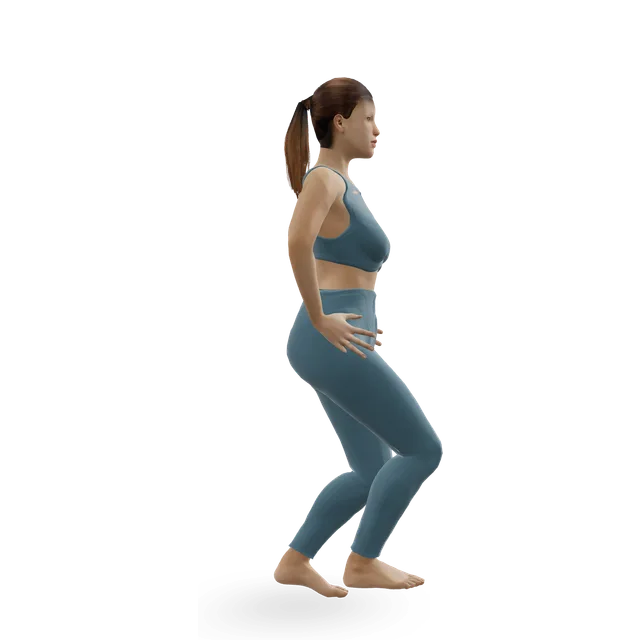
Loading the 3D figure…

Gets into position, then repeats the movement. Technical checks passed; qualified exercise review is pending.

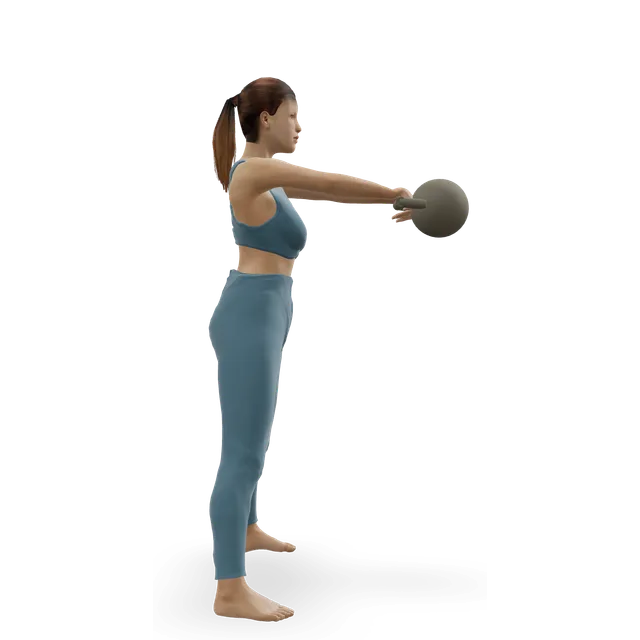
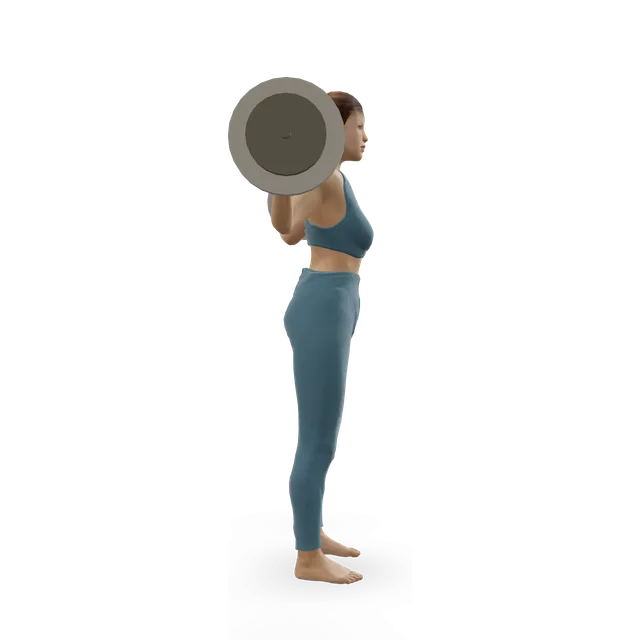
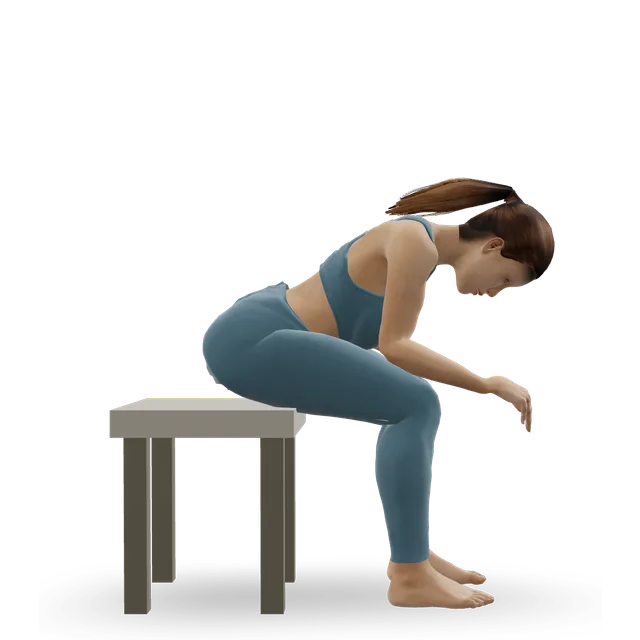
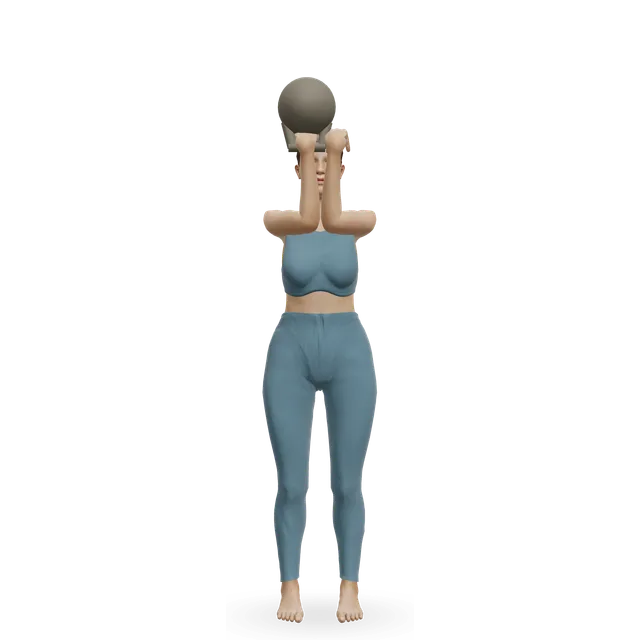
The movement on the figure: Hip-hinge practice

Moves for strongman

The hinge, squat, press, carries, sleds and strongman implements with 3D demos. The stone, log and tyre flip pages have no 3D demo yet.

Workouts

The first two are new: a beginner's strength session for an ordinary gym and a conditioning circuit. The others add deadlift technique, barbell strength, grip, kettlebells, sleds, the trunk, wrists and a cool-down.

Strongman workout for beginners: deadlifts, carries, sled pushes and presses

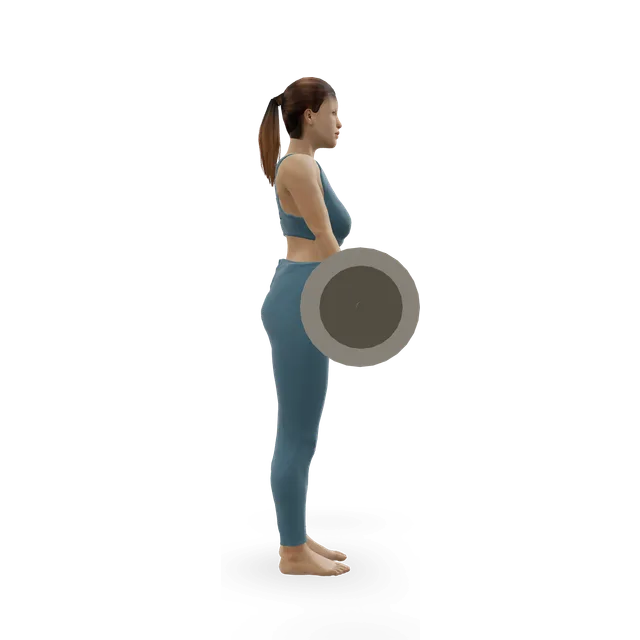
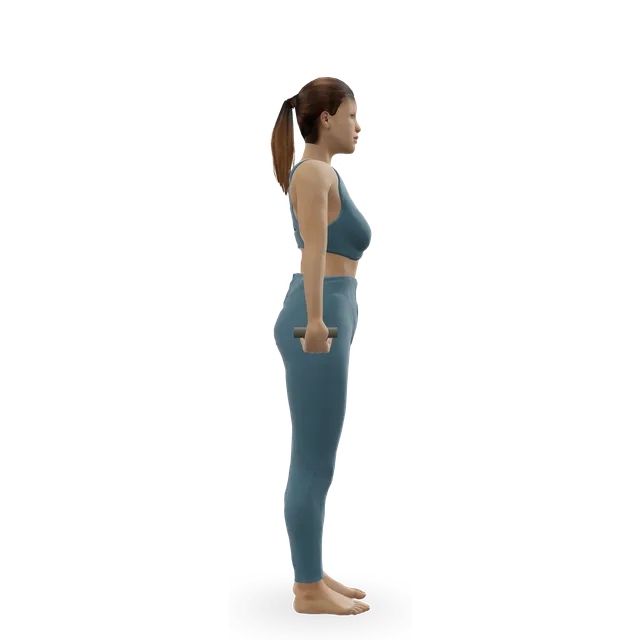
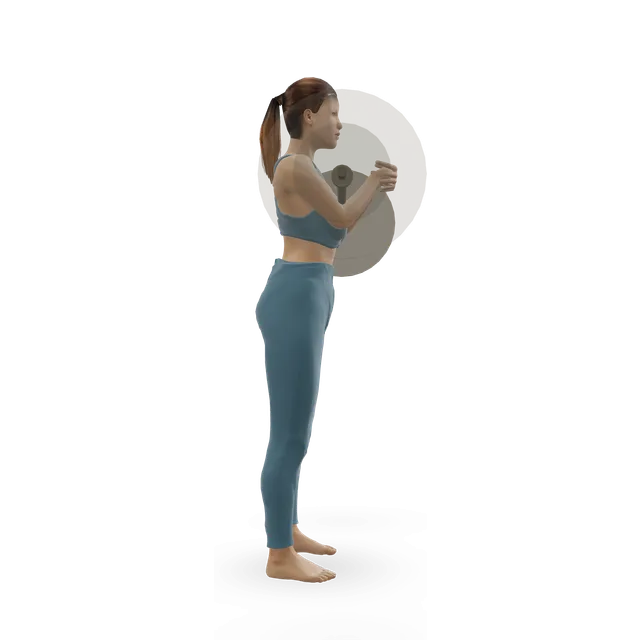
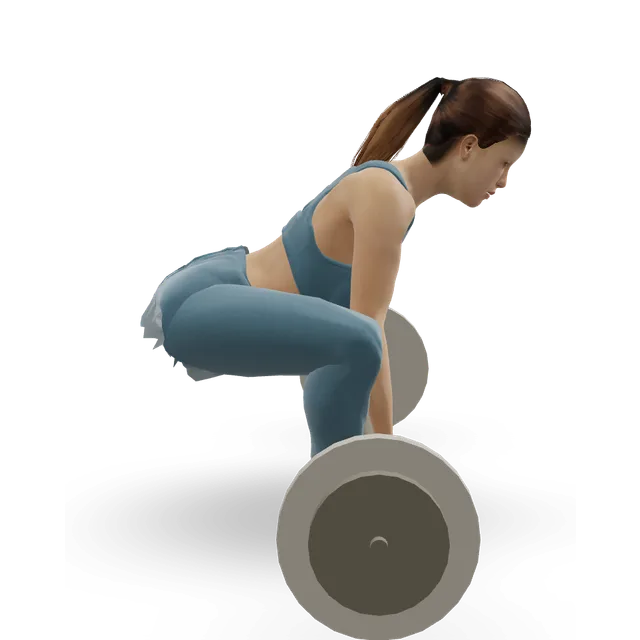
A 60-minute strongman starter session for an ordinary gym: trap bar deadlifts, goblet squats, clean and presses, farmer's and suitcase carries and sled pushes.

60 minBeginner13 movesCardio machine, A wall

Strongman conditioning workout: sled drags, carries, clean and jerks and swings

A 40-minute strongman conditioning circuit: 3 rounds of sled drags, farmer's carries, kettlebell clean and jerks and swings, each about 30 seconds of hard work.

40 minIntermediate9 movesCardio machine, A wall

Learn to deadlift: hinge to bar workout

A 30-minute session from the hip hinge to your first deadlift: hinge practice, kettlebell deadlifts, slow Romanian deadlifts, a light bar and a carry.

30 minBeginner9 movesA kettlebell, A dumbbell

Barbell strength workout A

Barbell strength workout A: back squats and bench presses in sets of five, plus rows. Workout B (squat, overhead press, deadlift) is a separate session.

40 minBeginner6 movesA band, A barbell

Barbell strength workout B: squat, press, deadlift

Workout B of the beginner strength program: back squats, overhead presses and deadlifts in sets of five, plus chin-ups, with the safety pins set.

55 minBeginner10 movesA band, A barbell

Grip strength workout: squeezes, curls, carries and hangs

A 20-minute grip session: warm up the wrists and fingers, train the hand and forearm muscles, then carry and hang to load your grip the way everyday life does.

20 minBeginner10 movesOther / check instructions, A band

Kettlebell swing workout: 12-minute intervals

A 20-minute kettlebell swing workout: 30 seconds of swings, 30 seconds of rest, building to the 12 rounds a training trial used, then carries.

20 minIntermediate7 movesA kettlebell, A dumbbell

Kettlebell workout

A 30-minute full-body kettlebell workout: deadlifts, swings, cleans, presses, rows, halos and carries.

30 minIntermediate9 movesA kettlebell, A dumbbell

Hyrox strength workout: legs, pulling, carries and sleds

A 50-minute strength session for Hyrox and fitness races: squats, lunges, Romanian deadlifts, sleds or step-ups, thrusters, carries, calf raises and planks.

50 minIntermediate14 movesCardio machine, A wall

McGill big 3 core routine

The McGill big three for the core: curl-ups, side planks and bird dogs, each held for 10 seconds at a time in falling sets of 5, 3 and 1 reps.

12 minBeginner3 movesNo equipment

Wrist and forearm routine

Wrist mobility and forearm strength for desk work, climbing, push-ups and handstands.

10 minBeginner7 movesA wall, A dumbbell

Cool-down routine: 10 minutes after any workout

A 10-minute cool-down for after a run, a class or a gym session: a few minutes of easy movement, stretches for the muscles you used, then slow breathing.

10 minBeginner9 movesCardio machine, A wall

Plans

A strength plan builds the base strongman needs; add the conditioning workout once a week.

Who should check first

Everyone: seven questions

The PAR-Q+ (Physical Activity Readiness Questionnaire for Everyone) asks about a heart condition or high blood pressure, chest pain, dizziness or losing consciousness, other long-term conditions and their medicines, a bone or joint problem that activity could make worse, and being told to exercise only under supervision. If you answer yes to any, check with your doctor or a qualified exercise professional first. If you're over 45 and not used to hard exercise, ask a qualified exercise professional before the hardest sessions. The NHS lists lifting heavy weights among very vigorous activities and says to speak to your GP first if you haven't exercised for some time or have a medical condition.

Sources 9, 8

High blood pressure, heart disease or a widened aorta

Follow our blood pressure guide: 180/100 or higher, speak to your GP first; 200/110 or higher, start nothing new; untreated 160/100 or higher, no heavy or maximal efforts until treatment controls it. With heart disease, Marfan syndrome or a widened aorta, get your cardiologist's advice before maximal lifts, as our powerlifting page and heart guides explain.

A hernia

Maximal lifts and a held breath push hardest on a hernia, so leave them out until it's repaired, as our hernia guide explains. The NHS says to get help from NHS 111 if a hernia becomes painful or you feel or are sick.

Source 31

Pregnant, or after having a baby

Our pregnancy guide: carry on lifting if you already do, perhaps lighter, and breathe out on the effort. Leave out maximal lifts and strongman events, and talk to your midwife or GP; our pelvic floor guide covers leaking with lifting.

Under 18

Strongman Corporation allows competitors from 12 with a parent's or guardian's registration. Train with a qualified coach, technique before load, and no maximal attempts until technique is consistent (our suggestion).

Source 1

After a biceps, back, shoulder or knee injury

Repeat injuries were common in the survey. Rehabilitate first with our pain guides, and add implements last.

Source 4

Sickle cell trait, or a past episode of rhabdomyolysis

Both raise the risk of muscle breakdown with hard, unaccustomed exercise. Build up over weeks, avoid all-out medleys in the heat, and see our rhabdomyolysis and sickle cell guides.

When to stop and get help

A pop at the front of the elbow

A sudden pop with pain, bruising or a change in the shape of the biceps needs help from NHS 111 the same day: a torn distal biceps tendon is best repaired within 2 to 3 weeks, as our distal biceps guide explains.

A crack, a deformity or numbness

Call 999 or go to A&E if you heard a crack, the injured part has changed shape or points at an odd angle, it's numb or tingling, or the skin around it has changed colour or is cold.

Source 32

Back pain with leg, bladder or bowel symptoms

Call 999 or go to A&E for back pain with pain, tingling, weakness or numbness in both legs, loss of feeling around your genitals or anus, or changes in your bladder or bowels.

Source 33

A shoulder out of place

Go to A&E if you can't move your arm, or your shoulder looks out of place or has changed shape. Don't drive yourself.

Source 34

Chest pain: call 999

Call 999 for sudden chest pain or pressure that doesn't go away, pain spreading to the arms, neck, jaw, stomach or back, or chest pain with sweating, feeling sick, light-headedness or breathlessness.

Sources 35, 36

Dark pee or muscle pain far worse than the session explains

These can be signs of rhabdomyolysis. Get medical help the same day: call NHS 111, or go to A&E if you feel very unwell. Call 999 for sudden, severe pain in a muscle that's very swollen and tight. Our rhabdomyolysis guide explains more.

A painful hernia

Get help from NHS 111 if you have a hernia and pain in or around it, a bloated tummy, you're being sick, or you can't poo.

Source 31

Myths

"Strongman will wreck you"Emerging evidence

Injuries are common, 82% of surveyed athletes in a year, and implements carry more risk per hour than barbells, but strongman's rate is low next to common team sports, and most injuries are strains that heal. How you build up matters most.

Sources 3, 16

"Implement training is more functional, so it beats the barbell"Emerging evidence

In the only trial, strongman and traditional training gave similar gains over 7 weeks, each with small advantages of its own. Use both.

Source 6

"You have to be huge to compete"Strong evidence

Strongman Corporation runs women's classes from 57 kg and men's from 80 kg, plus novice, teen and masters classes. You can enter at the weight you are.

Source 1

"Always keep a neutral back"Emerging evidence

In the stone lift a neutral back is impossible because of the stone's shape. What protects you is the load and the practice: learn on light stones and a stone trainer, and build up (our reading).

Source 5

"Sandbags build a special kind of strength"Mixed evidence

We found no evidence for the special benefits coaches claim for sandbag training. Sandbags are a useful, cheap implement, not a magic one.

Source 4

"Belts, sleeves and tacky prevent injuries"Mixed evidence

No study shows it. They're competition kit, and some series limit them.

Source 29

"Train hard right up to the competition"Emerging evidence

Most strongman athletes taper for about a week, cutting training volume by about 45% and stopping 3 to 4 days before competing.

Sources 26, 27

Questions people ask

How do I start strongman training?

Build a base in an ordinary gym first: a heavy hinge like the trap bar deadlift, a squat, a press from the shoulders, and farmer's and suitcase carries, two or three times a week. Then add one implement at a time, ideally with a coach, starting with carries and moving on to the log or axle, stones on a trainer and the yoke. Our beginner workout does the first part.

Can I do strongman training in a normal gym or at home?

Yes, for most of it. A trap bar, dumbbells or kettlebells, a sled and a barbell cover deadlifts, carries, pushes, drags and clean and presses; stones, logs and yokes need a strongman gym. Strength coaches use sleds, kettlebells, tyres, sandbags and farmer's handles more than any other implements.

What are the strongman events?

Lifts for weight or reps (logs, axles, circus dumbbells and deadlifts), carries for time or distance (yokes, farmer's walks, frames and sandbags), loading races with stones, kegs and sandbags, pulls with sleds and vehicles, and tyre flips. Each competition announces its events, weights and distances in advance.

Is strongman dangerous?

Injuries are common: 82% of strongman athletes in one survey had at least one in a year, mostly to the lower back, shoulders, biceps and knees. Per hour, implement training was about twice as risky as ordinary lifting, though strongman's injury rate is still low next to team sports like rugby. Learning each event light, with good technique, matters most.

How do I avoid a biceps tear in strongman?

Tyre flips and stones caused the most biceps injuries in a survey of competitors. Flip a tyre you can move with straight arms and leg drive, stop when you start curling it, and take care with a palm-forward grip on the axle. A sudden pop at the front of the elbow needs a same-day check.

Is strongman better than powerlifting for getting strong?

They overlap: competitors train the squat and deadlift heavily, and squat strength tracked strongman performance closely. In the only trial, 7 weeks of strongman training gave similar gains to traditional lifting, each with small advantages of its own.

What are the strongman weight classes?

They depend on the organiser. In Strongman Corporation's 2026 rules, women compete at 57 kg (amateurs only), 64, 73, 82 and over 82 kg, and men at 80, 90, 105, 120 (amateurs only) and over 120 kg, with masters, teen and novice classes. UK organisers set their own classes.

How do you taper for a strongman competition?

Most strongman athletes taper for about a week, cutting training volume by about 45%, and stop training 3 to 4 days before competing. The deadlift, yoke and stones take longest to recover from.

Can women and teenagers do strongman?

Yes. Strongman Corporation runs women's classes from 57 kg and teen divisions from 12 to 19, and a parent or guardian must register anyone under 18. Young lifters should be coached, with technique ahead of load.

How far and how heavy should farmer's walks be?

There's little research to say. A practical starting point from strength coaches is 2 to 4 rounds of 10 to 20 seconds with a weight that challenges you, building up from there; our beginner workout also uses suitcase carries of 20 to 30 metres.

Sources

  1. Strongman Corporation 2025 · Athlete info overview: rules effective 1 January 2026 (updated 31 December 2025)
  2. Strongman Corporation · FAQ
  3. Winwood 2014 · Retrospective injury epidemiology of strongman athletes (J Strength Cond Res)
  4. Winwood 2015 · Strongman implement training: applications for strength and conditioning practice (PhD thesis, Auckland University of Technology)
  5. McGill 2009 · Comparison of different strongman events: trunk muscle activation and lumbar spine motion, load, and stiffness (J Strength Cond Res)
  6. Winwood 2015 · Strongman vs. traditional resistance training effects on muscular function and performance (J Strength Cond Res)

  7. Harris 2016 · Acute physiological responses to strongman training compared to traditional strength training (J Strength Cond Res)
  8. NHS · Physical activity guidelines for adults aged 19 to 64
  9. PAR-Q+ Collaboration 2025 · The Physical Activity Readiness Questionnaire for Everyone (PAR-Q+)
  10. Hindle 2019 · The biomechanics and applications of strongman exercises: a systematic review (Sports Med Open)
  11. Winwood 2012 · Interrelationships between strength, anthropometrics, and strongman performance in novice strongman athletes (J Strength Cond Res)
  12. Winwood 2011 · The strength and conditioning practices of strongman competitors (J Strength Cond Res)
  13. Keogh 2010 · A brief description of the biomechanics and physiology of a strongman event: the tire flip (J Strength Cond Res)
  14. Keogh 2010 · A kinematic analysis of a strongman-type event: the heavy sprint-style sled pull (J Strength Cond Res)
  15. Compendium of Physical Activities 2024 · Conditioning exercise: MET values (adult compendium)
  16. Keogh 2017 · The epidemiology of injuries across the weight-training sports (Sports Med)
  17. Lorenz 2022 · Progressive loading in a strongman following distal biceps repair: re-thinking load progression. A case report (Int J Sports Phys Ther)
  18. George 2010 · Simultaneous acute rotator cuff tear and distal biceps rupture in a strongman competitor (Orthopedics)
  19. Winwood 2019 · The competition-day preparation strategies of strongman athletes (J Strength Cond Res)
  20. Taylor and Reed 2020 · Increase hip and trunk stability with loaded carries for injury prevention, rehabilitation, and performance (NSCA Coach 7.3)
  21. Wong 2020 · Physical fitness improvements of 8-week light vs. heavy tyre flip training in young adults (Biol Sport)
  22. Serafim 2023 · Which resistance training is safest to practice? A systematic review (J Orthop Surg Res)
  23. Androulakis-Korakakis 2018 · Effects of exercise modality during additional "high-intensity interval training" on aerobic fitness and strength in powerlifting and strongman athletes (J Strength Cond Res)
  24. Hindle 2021 · The biomechanical characteristics of the strongman yoke walk (Front Sports Act Living)
  25. Renals 2018 · Strongman log push press: the effect log diameter has on force-time characteristics (J Strength Cond Res)
  26. Winwood 2018 · Tapering practices of strongman athletes (J Strength Cond Res)
  27. Winwood 2026 · Tapering and peaking in the weight lifting sports: a systematic review of athletes' self-reported strategies (Sports Med)
  28. Hindle 2021 · The biomechanical characteristics of the strongman atlas stone lift (PeerJ)
  29. Strongman Champions League 2024 · Rules (page modified 15 July 2024)
  30. Strongman Champions League 2016 · Raw rules (8 July 2016)
  31. NHS · Hernia
  32. NHS · Sprains and strains
  33. NHS · Back pain
  34. NHS · Dislocated shoulder
  35. NHS · Chest pain
  36. NHS · Heart attack

Exercise education for people who play sport, not a personal prescription or a diagnosis, and clinical review of these pages is pending. Check with a GP or physiotherapist before hard training if you have a heart condition, chest pain, dizziness or an injury that isn't settling, and stop for sharp or increasing pain. Health disclaimer.