Pilates guide

Pilates for hypermobility and hypermobile EDS: control, not stretch

If your joints bend further than most, Pilates can be a good way to build the strength and control that protect them. The NHS lists it among lower-risk activities for Ehlers-Danlos syndromes (EDS), and the Hypermobility Syndromes Association (HMSA) suggests Pilates focused on strength and control rather than flexibility. The catch is that many Pilates moves are built around reaching and stretching, which isn't what bendy joints need more of.

The research is still thin. One large online trial of a Pilates programme designed for hypermobility found modest improvements, but it wasn't randomised and many people dropped out; a randomised trial is now recruiting. This guide covers what hypermobility spectrum disorder (HSD) and hypermobile EDS (hEDS) mean, what the evidence shows, how a class should be adapted, which moves to change or leave out, Pilates with postural tachycardia syndrome (PoTS) and fatigue, reformer and hot classes, and when to get help. It ends with a free 20-minute supported class.

The short version

UK health bodies name Pilates

The NHS lists Pilates among lower-risk activities with EDS. The HMSA says yoga, Pilates and tai chi focused on strength and control rather than flexibility are worth trying, and PoTS UK notes Pilates can be done lying down.

Sources 1, 2, 3

Strength and control, not flexibility

The NHS says the main treatment is improving muscle strength and fitness, and not to overextend your joints just because you can. The Ehlers-Danlos Society warns that overstretching "may lead to instability".

Sources 4, 5

The evidence for Pilates itself is thin

In the one sizeable trial, an online programme designed for hypermobility gave modest improvements, slightly below the change people usually notice. It wasn't randomised, many people dropped out and the programme's owner was a co-author. A randomised pilot trial is recruiting.

Sources 6, 7

Adapt the class

Start in supported positions, change position less often and slowly, work in the middle of your range, keep elbows and knees soft, use fists or forearms for your wrists, and keep breathing. Start with about 20 minutes and notice how you feel over the next 48 hours. This is expert advice, not tested rules.

Sources 8, 6, 9

With PoTS

Do the lying moves first, sit for a minute before standing, drink two glasses of water beforehand, keep cool and cool down gradually. Avoid heated classes: getting too hot can trigger symptoms.

Sources 3, 10

Know the warning signs

Fainting while exercising means call 999. A joint that has come out and stayed out needs A&E. Sore muscles for a few days are normal; sharp joint pain or a joint slipping are not.

Sources 11, 12, 13

Hypermobility, HSD and hEDS in brief

Our hypermobility exercise guide covers these in more depth.

Bendy isn't a problem on its ownStrong evidence

Joint hypermobility means joints that move further than usual. You can be born with it or develop it through training, illness or injury, and the Ehlers-Danlos Society says being flexible, bendy or double-jointed "is not usually a problem". How common it is depends on the definition: around 1 in 30 people (NHS), around 1 in 10 (HMSA) or up to about 20% (Ehlers-Danlos Society). In one UK survey, 18.3% of 12,853 adults were hypermobile. A diagnosis is much rarer: in Wales, about 194 in every 100,000 people had a recorded diagnosis of EDS or joint hypermobility syndrome, 70% of them women.

Sources 14, 1, 15, 16, 17, 18

HSD and hEDSStrong evidence

HSD is hypermobility that causes symptoms, such as pain, sprains or joints that slip out, when no other condition explains it. hEDS is the most common of the 13 types of EDS. It is diagnosed from your history and an examination against criteria set in 2017, and there's no genetic test for it. The NHS says HSD "is treated in the same way as hEDS". The 2017 framework replaced the older name joint hypermobility syndrome, which one NHS page still uses.

Sources 1, 14, 19, 20

The Beighton scoreStrong evidence

A 9-point check of the little fingers, thumbs, elbows, knees and spine. A score of 5 or more suggests generalised hypermobility in adults (6 or more before puberty, 4 or more over 50). A 5-question self-check, positive with 2 or more yes answers, picked up 85% of people with generalised hypermobility and correctly ruled out 90% of those without. Both are screening checks, not a diagnosis.

Source 21

Why it causes trouble

Looser connective tissue means muscles have to work harder to hold joints steady. People with hypermobility also tend to have a poorer sense of where their legs are, and some have pain sensitivity, fatigue, low blood pressure, a fast heart rate, gut or bladder problems, or anxiety. The HMSA says symptoms often start "after something changes that tips the hypermobile body from 'can cope' to 'can't cope'", such as an injury, illness, stress or pregnancy.

Sources 8, 22, 23, 24, 15

What the NHS and charities say about Pilates

The NHSStrong evidence

For joint hypermobility syndrome, the NHS says "The main treatment is improving muscle strength and fitness so your joints are better protected", and "do not overextend your joints just because you can". With EDS, "lower-risk activities, such as swimming or pilates, may be recommended", and it's "important not to be overprotective". For PoTS it suggests "gentle exercise, such as walking, pilates and swimming".

Sources 4, 1, 10

The Hypermobility Syndromes AssociationStrong evidence

The HMSA lists Pilates among ways to exercise and notes that "Any movement that is completed with control can be a form of exercise". Its physiotherapist-written advice says yoga "(focused on strengthening and control rather than increasing flexibility)", Pilates exercises and tai chi "are worth trying", and recommends static (isometric) strengthening, balance work and keeping joints in their neutral range.

Sources 25, 2

The Ehlers-Danlos SocietyStrong evidence

It recommends exercises "that focus on movement control and strengthening the stabilizing muscles", with "a low load on the joint", and to "start low" and "go slow". Its plain-language summary of the 2017 international physiotherapy guideline calls exercise the cornerstone of treatment, graded to avoid flare-ups.

Sources 5, 22, 26

PoTS UKStrong evidence

PoTS UK says Pilates "Can provide full body strengthening", and "Exercises can be done laying down as these types of exercises are often ground based or done on a reformer Pilates machine".

Source 3

What people with hypermobility say helpsEmerging evidence

In a UK survey of 946 members of two hypermobility charities, swimming (28%), walking (24%) and Pilates (22%) were the kinds of exercise most often rated helpful. In the full paper from the same survey, people who'd had exercise advice from a physiotherapist were more likely to exercise a lot, and pain, fatigue and fear got in the way.

Sources 27, 28

What the evidence says

The one sizeable Pilates trialEmerging evidence

In an online trial, 420 adults with symptomatic hypermobility were analysed: 200 did a Pilates programme designed for hypermobility (five videos of about 25 minutes, at least 3 times a week for 8 weeks) and 220 waited. On a questionnaire measuring the impact of hypermobility on daily life, scores improved by 25.4 points with Pilates against 1.3 points on the waiting list, slightly below the 30 points proposed as a change people would notice. Body awareness improved. Fear of movement didn't clearly differ between the groups, and activity levels didn't change. Gains held at 6 months, by which time there was no comparison group.

Its limits, plainly: it wasn't randomised (the first people to sign up started straight away and later ones waited) and nobody was blinded. Drop-out was high: about a third of those who signed up never set up an account, and nearly a fifth more didn't finish a single video. The programme's creator and owner was a co-author, though not involved in collecting or analysing the data. And the summary says fear of movement improved compared with the waiting list, while the paper's own table shows no clear difference.

Source 6

Flares in that trialEmerging evidence

Of 251 people who filled in the 8-week survey, 17.1% reported some increase in pain or a flare they put down to the Pilates, such as shoulder, wrist, neck or hip discomfort in particular moves. About half said it passed, or settled when they changed or skipped exercises. None was known to be serious.

Source 6

Other Pilates studiesMixed evidence

People in the same online programme said that exercises designed for hypermobility, feeling safe, a knowledgeable instructor and convenience helped them take part, while fear of injury, pain, fatigue and other illness got in the way. A study of 3 children aged 8 to 12 found less fatigue in two, with no change in pain. A randomised pilot trial began recruiting in July 2026: about 100 adults with hEDS or HSD, weekly in-person Pilates for 6 weeks against weekly education sessions, due to finish around December 2027.

Sources 29, 30, 7

Exercise in generalEmerging evidence

Reviews agree that people improve over time with exercise, but controlled trials are few and small (one review found 6 randomised trials, of 20 to 57 people each), and one review called the evidence that treatment beats a comparison "weak". Across 10 studies of 330 people with EDS or HSD, all showed some improvement, with one minor side effect reported. In 38 women, 8 weeks of trunk stabilisation exercise 3 times a week eased pain and improved trunk endurance and balance more than no exercise. In 100 adults with hypermobile shoulders, heavier, full-range strengthening did a little better than light exercise at 16 weeks, with more short-lived soreness, no serious harms and no clear difference at a year.

Sources 31, 32, 33, 34, 35, 36, 37

Joint sense can be trainedEmerging evidence

Across 5 studies (254 people), people with hypermobility had a poorer sense of joint position in the legs. In 18 people, 8 weeks of exercise with the feet on the ground (closed-chain exercise) improved knee joint sense and pain, and in another small study joint-sense training eased pain compared with no exercise.

Sources 23, 38, 39

Pilates and pregnancy laxityEmerging evidence

In 42 healthy pregnant women, 8 weeks of Pilates kept knee ligament looseness and Beighton scores steady while they rose in women who didn't exercise, and the difference lasted to 6 weeks after birth in those who kept going. That's the normal loosening of pregnancy, not a hypermobility disorder.

Sources 40, 41

How a Pilates class should be adapted

What a Pilates teachers' body recommends

The Pilates Association Australia (PAA) published these recommendations for teachers working with EDS or HSD, written by a physiotherapist who teaches Pilates. They're expert advice, not tested rules.

  • Closed-chain exercises (hands or feet on the floor or a support) for poorly controlled joints
  • Supported positions, with breathing and relaxation, at the start of a session
  • Low load, building resistance gradually
  • Mid and inner range, well controlled, before outer range and open-chain moves
  • Quality over quantity, because hypermobile people can tire more easily
  • Gravity-eliminated and supported positions before upright, unsupported ones
  • Balance training, posture awareness and joint sense work
  • Shorter sessions of about 20 minutes to begin with
  • Asking how you felt over the 48 hours after a session

Source 8

What the online trial changed

The programme in the trial cut down the number of position changes, avoided breathing patterns that tense the core too much, slowed the movements down, started exercises in positions with more support, and added cues for common mistakes and more sensory cues.

Source 6

Breathing and feedback

An editorial by Pilates teachers who work with hypermobility notes that "Breath-holding is a significant factor in hypermobility" and that "Feedback is key": hands-on cues, your own hands on the area, and small props such as a soft ball or cushion help you feel what you're doing. In their case report, the client sat for a minute or so between lying on their back and kneeling, to avoid dizziness.

Source 9

Where you focus your attentionEmerging evidence

In 32 people with generalised hypermobility, focusing on a target outside the body rather than on the body part improved balance in one crossover study. In class, a cue such as "push the ball away" rather than "tighten your thigh" is that idea (our example).

Source 42

How far to move: expert advice and what the trials foundMixed evidence

The HMSA, Pilates teachers and the Ehlers-Danlos Society all advise working in the middle of your range and not resting joints at the end of it. The two trials that tested range found no harm from going further: in 26 children with knee pain, exercising into the hypermobile range eased pain as much as stopping at neutral, with no adverse events, and in 100 adults, heavier full-range shoulder training was safe and a little better in the short term.

So treat mid-range control as a sensible starting point and the experts' consensus, not a proven rule. Range and load can grow with your physiotherapist's guidance.

Sources 2, 8, 5, 43, 36

How much: our starting point

The online trial asked for about 25 minutes at least 3 times a week, and people managed 2.3 sessions a week on average. Our editorial starting point: about 20 minutes, 2 or 3 times a week, alongside the strength routine from our hypermobility exercise guide. Start low and go slow, as the Ehlers-Danlos Society puts it, and adjust the next session to how you felt over the following 48 hours.

Sources 6, 8, 5

Pacing

The NHS says not to do repetitive exercises or activities, and to take regular breaks (pacing); people with EDS can be taught ways to conserve energy and pace their activities. The HMSA suggests staying at one task or in one position for no more than half an hour.

Sources 4, 2, 1

Moves to change or leave out

No trial has tested individual Pilates moves in hypermobility. These changes are our reading of expert advice from the sources below, and the two trials that tested range found no harm from going further, so treat them as a sensible start, not rules for life.

End-of-range stretches, reaches and rounding

The saw, spine stretch forward, mermaid, single and double straight leg stretches, and the full roll-up: keep each reach short of the end of your range and hold the bendy part still. Expert advice: "Overstretching beyond the normal range of motion can be harmful" (Ehlers-Danlos Society), "do not overextend your joints just because you can" (NHS), and don't sit "with any joints resting at the end of their range" (HMSA).

Sources 5, 4, 2

Weight on the neckMixed evidence

The roll-over, jack knife, control balance and boomerang put weight on your neck and upper back. Our suggestion is to leave them out unless a physiotherapist who knows your neck has cleared them, and to keep rolling moves such as rolling like a ball and the seal small, if you do them at all.

No trial has tested these moves. The Ehlers-Danlos Society says forceful neck and spine manipulation is unsafe with EDS and HSD because of risks including damage to arteries, stroke and spinal fluid leaks, and one case report describes a spinal fluid leak after a "pop" in the neck during a reformer class, in a woman without a connective tissue disease. Such leaks are associated with connective tissue disorders.

Sources 5, 44

Weight on the hands

The knee hover, leg pull front, push-up, side bend, leg pull back and crab: use fists or forearms, keep your elbows soft rather than locked, and push the floor away rather than sinking into your shoulders. Start with the knee or forearm versions. Wrist and shoulder discomfort were among the problems people reported in the online trial.

Sources 6, 4

Big circles and kicks

The single leg circle, side leg circles and side kick: keep circles and swings small and your pelvis still, working the mid and inner range before the outer range, as the PAA advises.

Source 8

Deep back bends

The full swan dive, double leg kick and rocking: keep the back bend small and controlled.

Sources 8, 5

Locked knees and elbows

In standing work, planks and push-ups, keep your knees and elbows soft, never pushed back as far as they go.

Source 4

Holding your breath or bracing hard

Breathe out on the effort and let your tummy work without gripping.

Sources 9, 6

Jumping

Reformer jumpboard work is high impact. The Ehlers-Danlos Society advises people with unstable joints to avoid "high-impact activities (such as running and jumping)".

Source 5

Pilates with PoTS and fatigue

What PoTS isStrong evidence

In PoTS, your heart rate goes up after you get up from sitting or lying down, often making you feel dizzy or light-headed. The NHS says it's more likely with joint hypermobility syndrome. Triggers include getting too hot, standing or sitting upright for long periods, eating, not drinking enough, alcohol, resting too much, exercise and periods.

Source 10

How common it is with hypermobilityEmerging evidence

In the UK charity survey of 946 people, 41% reported problems with the nervous system's control of heart rate and blood pressure. At a UK fainting clinic, 82% of 218 hypermobile patients had an abnormal tilt-table test.

Sources 27, 45

What PoTS UK advisesStrong evidence

PoTS UK's exercise advice, which agrees with our PoTS exercise guide:

  • Start very small if you need to, even "a baseline of 60 seconds of exercise"
  • Build up to 3 to 4 sessions a week, and 5 to 6 after at least 3 months, with 1 to 2 of them strength sessions
  • Ground-based, seated and reclined exercise is easier to tolerate
  • Drink two glasses of water beforehand, and wait an hour after a meal
  • Keep the room cool
  • Avoid sudden stops or standing still for long, and cool down gently
  • Afterwards, lie or sit with your legs raised higher than your hips; compression garments help some people
  • With hypermobility, adapt exercises to avoid joint pain and dislocations, and exercise with supervision where you can

Source 3

Where Pilates fits

Most mat Pilates is done lying, side-lying or kneeling, which suits the lying-first order PoTS UK suggests, as long as you change position slowly. Do all the lying moves, then all the side-lying ones, then kneeling, then sitting and standing, and sit for a minute before you stand (our suggestion, from the sources here).

Sources 3, 9, 10

Exercise training for PoTSEmerging evidence

In 19 people with PoTS, 3 months of exercise training improved quality of life where a beta blocker didn't. Experts advise starting with exercise lying or sitting down, such as rowing, swimming or a recumbent bike, and most of 7 studies in one review found aerobic training improved symptoms. Another review found only one study that reported on people with EDS, so evidence in hypermobile people specifically is scarce.

Sources 46, 47, 48, 49

Fatigue and ME/CFS

If you also have myalgic encephalomyelitis or chronic fatigue syndrome (ME/CFS), PoTS UK notes that the National Institute for Health and Care Excellence (NICE) recommends any physical activity be overseen by an exercise specialist in an ME/CFS specialist team, and doesn't recommend graded exercise therapy. The NHS says people with EDS can be taught ways to conserve energy and pace activities. Our ME/CFS guide has more.

Sources 3, 1

How to get up slowly if you get dizzy

From the NHS PoTS and fainting pages, PoTS UK and a Pilates teacher's case report; rolling onto your side to sit up is our suggestion.

  1. Finish all your lying moves before you sit up, so you change position as few times as you can.
  2. Roll onto your side, then push yourself up to sitting with your arms.
  3. Sit for a minute or so before you kneel or stand.
  4. Stand up slowly, with a chair or counter within reach.
  5. Pause before you walk off. If you feel light-headed, cross your legs or clench your buttocks and tummy muscles.
  6. If you still feel faint, lie down with your legs raised.

See the movement on the 3D figure: Sit to stand from a chair

Reformer, equipment and hot classes

Reformer or mat?

No trial has compared them in hypermobility. PoTS UK mentions the reformer only as a way to exercise lying down. On a reformer, lighter springs make the carriage less stable: in 18 women, a low-resistance spring made core muscles work harder than a fixed platform. A steadier set-up is likely easier to control when you're starting (our suggestion).

Sources 3, 50

One case reportMixed evidence

A 42-year-old woman with no connective tissue disease felt a "pop" in her neck during a reformer move and developed a spinal fluid leak, with a headache that eased when she lay flat. One case doesn't make the reformer dangerous, but it supports keeping weight off the neck.

Source 44

Hot PilatesStrong evidence

Getting too hot is a recognised PoTS trigger, so with PoTS choose an unheated class (our advice, from the NHS and PoTS UK). Without PoTS, extra heat to stretch further is the wrong goal for hypermobile joints anyway.

Sources 10, 3, 5

Vascular EDS, fragile skin, the neck and children

Vascular EDSStrong evidence

The Ehlers-Danlos Society says people with vascular EDS should exercise at low intensity only and avoid activities that cause blood pressure spikes and straining. In Pilates that means no heavy springs or resistance, no straining holds and no breath-holding (our reading). Discuss exercise with your specialist team first.

Source 5

Fragile skinStrong evidence

With very fragile skin, as in classical EDS, the Society advises avoiding activities that cause friction. Pad straps and equipment, and skip moves that rub the skin (our suggestion).

Source 5

Hands-on neck adjustmentsStrong evidence

Forceful neck and spine manipulation isn't safe with EDS or HSD, the Society says. If a teacher or therapist offers to adjust your neck, say no.

Source 5

Children and teenagersMixed evidence

Hypermobility is common in children: a 2026 review estimated 17.2%, mostly from studies of children and teenagers. Trials are small. Exercise eased knee pain whatever the range in 26 children, targeted and general physiotherapy helped equally in 57, and 3 children did a Pilates programme. A Cochrane review of treatment is only at the planning stage. The HMSA notes that some children grow out of their problems. Our hypermobility exercise guide and children's exercise guide cover this.

Sources 51, 43, 52, 30, 53, 54

Lying: supported and low load

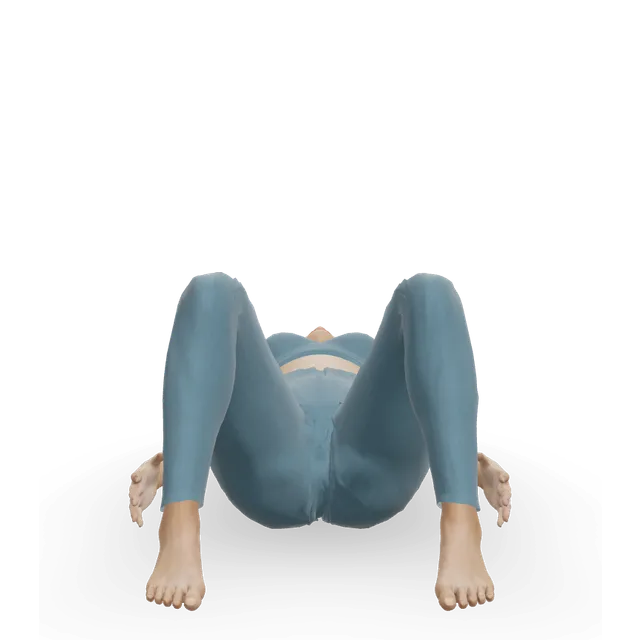
Head on a pillow and knees bent; slide, lift and squeeze only as far as your pelvis stays still, and keep breathing.

Side-lying

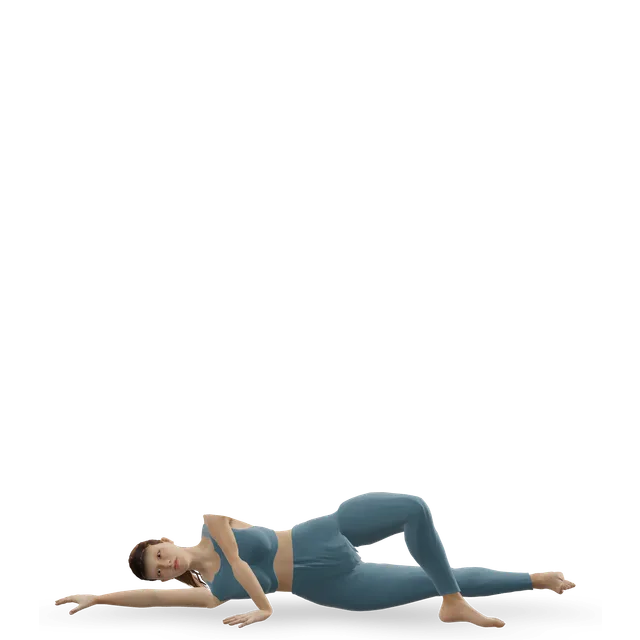
Do all of these on one side, then all on the other, opening and lifting only as far as your pelvis stays still.

Face down and kneeling

Fists or forearms on the mat and elbows soft; hold planks for 15 to 20 seconds at first, as our hypermobility exercise guide suggests.

Sitting and standing

Sit for a minute before you stand, keep your knees soft, and keep a counter within reach for the balance work.

Workouts to follow

Start with the supported Pilates class and do the strength routine on other days. On dizzy days, use the lying PoTS routine or the chair class.

Follow a plan

Choose the control versions of each move and skip end-of-range stretches, as our hypermobility exercise guide says.

Choosing a teacher or physiotherapist

What to tell them

That you're hypermobile and any diagnosis such as HSD, hEDS or PoTS, which joints slip or hurt, and whether you get dizzy when you stand up (our suggestion).

Source 8

What a good class looks like

Supported positions, low loads and mid-range work, quality over quantity, and a teacher who asks how you felt afterwards. The PAA tells teachers: "If you are working with a hypermobile client that you are finding challenging to progress or that is experiencing pain after their session, refer them for an assessment and treatment with an EDS and HSD aware Therapist."

Source 8

Physiotherapy

The Ehlers-Danlos Society's summary says physiotherapy should be individual and focus on learning to control movement, with exercise graded to avoid flare-ups. People who'd had exercise advice from a physiotherapist were more likely to exercise a lot. Knowledge is patchy, though: in a Scottish survey, 80% of rheumatology physiotherapists and occupational therapists lacked access to outside training on HSD and hEDS, a 2026 editorial argues many physical therapists feel unprepared, and a physiotherapy article notes that many patients report pain and injuries from unsuitable treatment.

In the UK, check a physiotherapist on the Health and Care Professions Council (HCPC) register. Our clinical Pilates guide explains physio-led Pilates and how to find a class.

Sources 22, 28, 55, 56, 57, 58

Warning signs: when to get help

Call 999 (911 in the US)

The NHS says to call 999 if someone:

  • Fainted while exercising, or while lying down
  • Isn't breathing, can't be woken within 1 minute, or hasn't fully recovered or has trouble speaking or moving
  • Has chest pain or a pounding, fluttering or irregular heartbeat
  • Is shaking or jerking (a seizure), or was seriously hurt before or after fainting

Source 11

If you feel faint

Lie down with your legs raised. If you can't, sit with your head lowered between your knees. Crossing your legs while standing, rocking up and down on your toes, clenching your fists, or, with PoTS, clenching your buttocks and tummy muscles can help.

Sources 11, 10

Go to A&E

After an injury, if:

  • Your shoulder looks out of place or has changed shape, you can't move your arm, or it's painful, bruised or swollen. Don't try to put it back yourself.
  • Your knee has changed shape, swells very quickly, you felt a pop or snap, bone is showing, or it's bleeding heavily.

Sources 12, 13

Get help from NHS 111

After a knee injury, if it's very painful, swollen or bruised, you can't stand up or move your knee, or you think your kneecap came out and went back into place.

Source 13

Joints that partly slip out

The Ehlers-Danlos Society says partial dislocations (subluxations) "often resolve on their own or can be manipulated back into place at home", while "Dislocations often require attention from a doctor or PT". Follow the plan your physiotherapist gives you; the A&E list applies to a joint that stays out.

Source 5

After a neck strain or a pop in class

NHS inform says to contact your GP practice urgently, or 111 if it's closed, if neck pain comes with a severe headache, with numbness, pins and needles, weakness or clumsiness in one or both arms that is getting worse, or with new problems with balance or walking. A headache that eased when lying flat was the main symptom in the reported spinal fluid leak.

Sources 59, 44

See a GP

  • You think you have joint hypermobility syndrome: joints that keep dislocating, ongoing pain and stiffness, frequent sprains, tiredness even after rest, poor balance or co-ordination, thin stretchy skin, or bladder or bowel problems
  • Several symptoms of EDS are troubling you
  • You get dizzy, have palpitations or feel faint when you stand up, or you have fainted

Sources 4, 1, 10, 11

Talk to your physiotherapist

Sore muscles after starting are "a normal response and can last for a few days". Talk to your physiotherapist about high levels of pain, pain in new areas, other symptoms getting worse, or changes in what you can do.

Source 5

Myths

"Hypermobile people should do Pilates to stretch and stay supple"Strong evidence

It's the other way round. Overstretching beyond the normal range "may lead to instability", and the HMSA recommends Pilates and yoga focused on strength and control rather than flexibility. This rests on consistent expert advice rather than trials.

Sources 5, 2

"Pilates will tighten loose joints"Emerging evidence

The trial measured how much hypermobility affected people's lives and their body awareness, not joint looseness, and the one study showing steady looseness was in pregnant women. What exercise changes is muscle strength, control and joint sense.

Sources 6, 40, 38

"Pilates is proven to treat hEDS"Emerging evidence

Not yet: one non-randomised online trial found modest effects with high drop-out, and the first randomised pilot is only now recruiting.

Sources 6, 7

"Pilates is bad for hypermobile people"Emerging evidence

The NHS lists Pilates among lower-risk activities with EDS, about half of the flares reported in the trial passed or settled with changes, and none was known to be serious. The problem moves can be adapted or left out.

Sources 1, 6

"The reformer is always safer than the mat"Mixed evidence

No trial has compared them in hypermobility. Jumpboard work is high impact, and one case report links a neck injury to a reformer class. Choose the teacher before the equipment.

Sources 5, 44

"Hot Pilates is fine for hypermobility because warm muscles stretch further"Strong evidence

Getting too hot is a PoTS trigger, and stretching further is the wrong goal for hypermobile joints.

Sources 10, 3, 5

Questions people ask

Is Pilates good for hypermobility?

It can be. The NHS lists Pilates among lower-risk activities with EDS, and the HMSA says it's worth trying when it's focused on strength and control rather than flexibility. In the one sizeable trial, a Pilates programme designed for hypermobility gave modest improvements, though the trial wasn't randomised and many people dropped out.

Is Pilates bad for hypermobile joints?

Not when it's adapted. In the online trial, 17% reported some extra pain or a flare; about half of those passed or settled by changing exercises, and none was known to be serious. The risks come from end-of-range stretching, locking joints and weight on the neck, which you can avoid.

Is Pilates good for hypermobile EDS (hEDS)?

The advice is the same as for hypermobility spectrum disorder, which the NHS says is treated in the same way as hEDS, and the online trial included people with either diagnosis. With vascular or classical EDS, check with your specialist team first.

Is yoga or Pilates better for hypermobility?

Either can work if it's about strength and control rather than flexibility, as the HMSA puts it. Pilates has one sizeable trial in hypermobility, our yoga guide found no yoga trials, and no study has compared them. The Ehlers-Danlos Society advises against flexibility-focused sports if your joints are unstable.

Which Pilates exercises should I avoid with hypermobility?

Expert advice is to leave out moves that put weight on your neck, such as the roll-over and jack knife, and to keep stretches, twists and leg circles short of the end of your range. In planks and push-ups, use fists or forearms, keep your elbows soft and don't lock your knees. No trial has tested individual moves, and the two trials that tested range found no harm from going further.

Is reformer Pilates good for hypermobility?

It may be, with a teacher who knows hypermobility: springs can support or challenge you, and PoTS UK notes reformer work can be done lying down. No trial has compared reformer and mat Pilates in hypermobility, and jumpboard work is high impact, which the Ehlers-Danlos Society advises avoiding with unstable joints.

Is Pilates good if I have PoTS and EDS?

Often, because much of it is done lying down, which PoTS UK says is easier to tolerate. Do the lying moves first, sit for a minute before standing, drink two glasses of water beforehand, keep cool and cool down gradually. Avoid heated classes, because getting too hot can trigger PoTS symptoms.

Will Pilates make my joints more stable?

It can strengthen the muscles around them and improve your control and sense of joint position, which is what protects hypermobile joints, but it won't tighten your ligaments. Body awareness improved in the online trial, and exercise with the feet on the ground improved joint sense in small studies.

How often should I do Pilates with hypermobility?

The online trial asked for about 25 minutes at least 3 times a week, and people managed about 2.3 sessions a week. A Pilates teachers' body suggests starting with about 20 minutes and noticing how you feel over the next 48 hours.

Should I stretch in Pilates if I'm hypermobile?

Only what's genuinely tight, gently, while holding the bendy part still. Overstretching beyond the normal range may make joints less stable, so spend most of your time on strength and control.

What should I tell my Pilates teacher?

That you're hypermobile and any diagnosis such as HSD, hEDS or PoTS, which joints slip or hurt, and whether you get dizzy when you stand up. A Pilates teachers' body advises its members to use supported positions, low loads and mid-range work, and to refer you on if sessions cause pain.

Is Pilates safe for children with hypermobility?

The evidence is tiny: 3 children did a Pilates programme, and two had less fatigue. In a children's trial, exercise eased knee pain whatever the range; our hypermobility exercise guide covers children.


Sources

  1. NHS · Ehlers-Danlos syndromes
  2. Hypermobility Syndromes Association · Pain management (physiotherapist-written, reviewed June 2021)
  3. PoTS UK · PoTS and exercise
  4. NHS · Joint hypermobility syndrome
  5. The Ehlers-Danlos Society · Physical therapy
  6. Russek 2026 · An online Pilates programme for hypermobility in 420 people (non-randomised trial, J Multidiscip Healthc)
  7. ClinicalTrials.gov · STABLE: Pilates for hypermobility, a pilot randomised trial (NCT07464093, recruiting)
  8. Anthony 2024 · EDS and HSD awareness: recommendations for Pilates teachers (Pilates Association Australia)
  9. McNeill 2018 · The Pilates client on the hypermobility spectrum (editorial, J Bodyw Mov Ther)
  10. NHS · Postural tachycardia syndrome (PoTS)
  11. NHS · Fainting
  12. NHS · Dislocated shoulder
  13. NHS · Dislocated kneecap
  14. The Ehlers-Danlos Society · What is HSD?
  15. Hypermobility Syndromes Association · What are hypermobility syndromes?
  16. Mulvey 2013 · Joint hypermobility and pain in 12,853 UK adults (population survey, Arthritis Care Res)
  17. Simmonds 2022 · Hypermobility and hypermobility-related disorders (masterclass, Musculoskelet Sci Pract)
  18. Demmler 2019 · Diagnosed EDS and hypermobility in Wales (national cohort study, BMJ Open)
  19. Malfait 2017 · The 2017 international classification of the Ehlers-Danlos syndromes (consensus, Am J Med Genet C)
  20. Castori 2017 · A framework for classifying joint hypermobility and related conditions (consensus, Am J Med Genet C)
  21. The Ehlers-Danlos Society · Assessing joint hypermobility
  22. Russek and Simmonds · The evidence-based rationale for physical therapy in JHS and hEDS, for non-experts (The Ehlers-Danlos Society)
  23. Smith 2013 · Joint position sense in joint hypermobility syndrome: 5 studies (meta-analysis, Rheumatol Int)
  24. Nicholson 2022 · International perspectives on joint hypermobility (review, J Clin Rheumatol)
  25. Hypermobility Syndromes Association · Exercise (updated November 2021)
  26. Engelbert 2017 · The evidence-based rationale for physical therapy in JHS and hEDS (guideline, Am J Med Genet C)
  27. Simmonds 2016 · Exercise beliefs and behaviours in 946 people with hypermobility syndromes (survey, conference abstract)
  28. Simmonds 2019 · Exercise beliefs and behaviours in JHS and hEDS (survey, Disabil Rehabil)
  29. Russek 2025 · How people felt about an online Pilates programme for hypermobility (qualitative study, J Bodyw Mov Ther)
  30. Hornsby 2024 · Pilates for 3 children with hypermobility and pain (single-case study, J Bodyw Mov Ther)
  31. Palmer 2014 · Exercise for joint hypermobility syndrome: 4 studies (systematic review, Physiotherapy)
  32. Palmer 2021 · Non-surgical treatment for syndromic hypermobility: 11 studies (systematic review, Clin Rheumatol)
  33. Reychler 2021 · Physiotherapy for hEDS: 6 trials (systematic review, Am J Med Genet A)
  34. Buryk-Iggers 2022 · Exercise and rehabilitation in EDS: 10 studies, 330 people (systematic review, Arch Rehabil Res Clin Transl)
  35. Toprak Celenay 2017 · Spinal stabilisation exercise in 38 women with joint hypermobility syndrome (RCT, Rheumatol Int)
  36. Liaghat 2022 · Heavy or light shoulder strengthening in 100 adults with hypermobile shoulders (RCT, Br J Sports Med)
  37. Liaghat 2024 · Heavy or light shoulder strengthening at 1 year (secondary analysis, Br J Sports Med)
  38. Ferrell 2004 · Closed-chain exercise and joint sense in 18 people with joint hypermobility syndrome (study, Arthritis Rheum)
  39. Sahin 2008 · Knee joint sense and proprioception exercise in joint hypermobility syndrome (controlled study, Rheumatol Int)
  40. Bulguroglu 2025 · Prenatal Pilates and joint laxity in 42 pregnant women (RCT, BMC Pregnancy Childbirth)
  41. Bulguroglu 2026 · Prenatal Pilates until birth and laxity after birth (follow-up of an RCT, BMC Pregnancy Childbirth)
  42. Zorlular 2025 · Where you focus your attention, and balance, in 32 people with hypermobility (crossover study, Res Q Exerc Sport)
  43. Pacey 2013 · Exercise into the hypermobile range or to neutral in 26 children with knee pain (RCT, Pediatr Rheumatol)
  44. Davis 2014 · A spinal fluid leak after a reformer Pilates class (case report, J Med Case Rep)
  45. Abu Orabi 2025 · Dizziness and fainting in 218 hypermobile patients at a UK syncope clinic (cohort study, J Clin Med)
  46. Fu 2011 · Exercise training or propranolol in 19 people with PoTS (trial, Hypertension)
  47. Fu 2018 · Exercise and non-drug treatment of PoTS (review, Auton Neurosci)
  48. Gonçalves Leite Rocco 2024 · Exercise for PoTS: 7 studies (scoping review, J Multidiscip Healthc)
  49. Peebles 2024 · Exercise for PoTS in young adults with hypermobility: 10 studies (scoping review, Auton Neurosci)
  50. Kim 2024 · Reformer spring settings and core muscle activity in 18 women (EMG study, Healthcare)
  51. Jari 2026 · How common joint hypermobility syndrome is, and its treatment (systematic review, J Bodyw Mov Ther)
  52. Kemp 2010 · Targeted or general physiotherapy in 57 hypermobile children (RCT, Rheumatology)
  53. Quinlan 2026 · Treatment for symptomatic hypermobility in childhood (Cochrane protocol)
  54. Hypermobility Syndromes Association · FAQs
  55. Dockrell 2021 · Therapists' experiences of managing hypermobility in Scotland (survey, Rheumatol Adv Pract)
  56. Mintken 2026 · Managing patients with hypermobility disorders (editorial, J Orthop Sports Phys Ther)
  57. Russek 2019 · Recognising and managing hypermobility-related conditions (perspective, Phys Ther)
  58. Health and Care Professions Council · Professions and protected titles
  59. NHS inform · Neck problems

Exercise education, not a personal prescription, and clinical review of these guides is pending. If you are pregnant, have a health condition or have had recent surgery, check with a doctor, midwife or physiotherapist before starting, and stop for sharp or increasing pain. Health disclaimer.