Pain guide · Ankle pain

Outer ankle pain: a new or old sprain, the peroneal tendons, impingement and how to build back

Most pain on the outside of the ankle starts with a sprain, the commonest ankle injury. Most sprains feel better within a couple of weeks, but some pain a year later is common. It usually comes from something alongside the ligament, such as the peroneal tendons or scar tissue at the front of the ankle, rather than a ligament that never healed.

After a twist, check the warning signs first: call 999 or go to accident and emergency (A&E) for an ankle that is out of shape, and if you can't take four steps or a bony point hurts to press, get it checked the same day through an urgent general practitioner (GP) appointment or the National Health Service's 111 line (NHS 111). This guide helps you work out the likely cause from where it hurts, explains the X-ray rules, and gives a staged plan of strength, balance and hopping work with 3D demos: the training that cuts repeat sprains.

When to get help first

Exercise is for pain that has been checked or is clearly mild and settling.

Get urgent medical help if

  • Call 999 or go to A&E: after an injury, you heard a crack, the foot or ankle has changed shape or points at an odd angle, a bone is sticking out, there is a bad cut over it, you're in severe pain, or the toes look blue or white, feel numb or are cold to touch. These can mean a broken bone. Don't drive yourself.
  • Same day (urgent GP appointment or NHS 111): after an injury, you can't put weight on it or walk more than a few steps, the pain is very bad or getting worse, there is a lot of swelling or bruising or it is getting worse, or it feels very stiff. If you think it's broken, don't treat it yourself.
  • Same day: after a twist or a fall, if you can't take four steps, or pressing on the back edge or the tip of the bony bump on either side of the ankle hurts, get it checked. Clinicians use these points, the Ottawa ankle rules, to decide who needs an X-ray, and you can have a break and still walk.
  • Same day: after a twist or a fall, if you can't walk four steps, if pressing on the bony bump on the inner side of the midfoot (the navicular) or the bump halfway along the outer edge of the foot (the base of the fifth metatarsal) hurts, if the foot looks out of shape, or if you're unsure, get it checked. Clinicians use these points, the Ottawa rules, to decide who needs an X-ray.
  • Same day: after an injury, a pop or snap behind the outer ankle bone with swelling, or a tendon you can see or feel slipping over the bone. The tendons may have come out of their groove (dislocated), which is often mistaken for a sprain; experts advise a specialist review.
  • Same day: a sudden snap or pop at the back of the heel or calf, or a feeling of being kicked there, then walking flat-footed and being unable to push off, stand on tiptoe or climb stairs. It could be an Achilles tendon rupture or a broken heel bone. Go to A&E or a minor injuries unit, or contact NHS 111.
  • Same day: a sudden, very painful, hot, swollen, red joint, often the big toe but sometimes the middle of the foot (the midfoot) or the ankle, especially with a high temperature, feeling shivery or being unable to eat. It may be gout, but it could be a joint infection (septic arthritis), which is urgent.
  • Same day: you have diabetes and a new foot problem, such as an ulcer or wound, signs of infection, or a hot, swollen foot with a change in colour, even if it doesn't hurt. Contact your diabetes foot team or GP: NICE asks for these to reach a specialist foot service within 1 working day, and a suspected Charcot foot is kept off weight until it has been checked.
  • Same day (urgent GP appointment or NHS 111): throbbing pain in one leg (rarely both), usually the calf or thigh; swelling in one leg (rarely both); red, blue or darkened skin around the painful area, which may be harder to see on brown or black skin; or swollen veins. It could be a blood clot (DVT). Watch for it after an ankle injury or time in a cast or boot.
  • Call 999: calf or leg pain or swelling with breathlessness or chest pain. It could be a clot that has reached the lungs.
  • Ask for an urgent GP appointment or get help from NHS 111 if you have swelling in 1 ankle, foot or leg and you don't know what's causing it; a lot of swelling after an injury, or swelling that is getting worse; swelling that is severe, painful or starts very suddenly; a swollen area that is red or feels hot; a very high temperature, or you feel hot, cold or shivery; or diabetes and swollen feet or ankles. Call 999 if you also feel short of breath, your chest feels tight, heavy or painful, or you're coughing up blood.
  • Same day: in a cast or boot, pain that is getting worse, toes that are numb or burning, a cast that feels too tight, toes that are swollen, blue or white, or a bad smell from under the cast.

See a doctor or physiotherapist if

  • Pain that isn't better after 2 weeks of looking after it yourself, is getting worse, keeps coming back, or stops you doing normal things.
  • An ankle that keeps giving way months after a sprain.
  • Pain, clicking, locking or swelling that carries on despite a good rehab programme. Cartilage, tendon and other problems are common alongside an unstable ankle and need assessing.
  • Clicking or snapping behind the outer ankle bone that keeps happening or hurts.
  • Pain on the outer side of the foot or ankle that hasn't settled 6 weeks after a sprain, or a sprain that keeps hurting in one spot: ask for a review. A small fracture or a tendon injury can be missed at first (our suggestion).
  • One spot on the outer leg bone a few centimetres above the ankle that hurts with every step, built up with running: a possible stress fracture. Stop running and get it checked.
  • Tingling or loss of feeling in the foot, or a foot that feels weak.
  • Any foot pain if you have diabetes: foot problems can be more serious.
  • See a GP if you have symptoms of gout for the first time (sudden, severe pain in a joint with hot, swollen, red skin), or you have gout and your usual treatments aren't helping.

Where does it hurt?

Location narrows the likely causes; it does not diagnose.

In front of and below the outer ankle bone, after the ankle rolled inwards, with swelling and bruising

An outer ligament sprain, the commonest ankle injury. Check the X-ray points in the warning signs first.

Read: Sprained ankle →
The same place months later, with the ankle going over on uneven ground

An unstable ankle (chronic ankle instability).

Read: Chronic ankle instability →
Behind and just below the outer ankle bone, worse with activity, sometimes clicking or snapping

The peroneal tendons. After an injury, a tendon you can see or feel slipping needs a same-day check.

Read: Peroneal tendinopathy →
The front outer corner of the ankle, pinching when you squat, lunge, climb or walk uphill, months after sprains

Possibly scar tissue pinching in the joint (impingement).

Read: Anterior ankle impingement →
The soft hollow just in front of and below the outer ankle bone, aching on uneven ground

Sinus tarsi pain, a label that usually needs a more precise cause.

Read: Sinus tarsi syndrome →
One spot on the outer leg bone a few centimetres above the ankle, built up with running

A possible stress fracture of the fibula: stop running and get it checked.

Read: Stress fracture →
A deep ache in the joint that catches or swells after activity, months after a sprain or a break

Possibly a damaged patch of cartilage and bone (an osteochondral lesion).

Read: Talus cartilage lesion →
Below the outer ankle bone after a snowboarding fall, like a bad sprain that won't settle

Possibly a fracture of the outer edge of the talus, which is often missed: ask for a review.

Read: Broken ankle →
The bump halfway along the outer edge of the foot

That's the foot, not the ankle: often the base of the fifth metatarsal.

Read: Outer foot pain →
Above the ankle, between the shin bones, after a twist with the foot turned out

A high ankle sprain.

Read: High ankle sprain →
Pain on the outer side with an arch that is slowly dropping on the inner side

In later tibialis posterior tendon problems, the heel bone can press on the outer ankle bone.

Read: Posterior tibial tendon dysfunction →
A sudden, very painful, hot, red, swollen ankle with no injury

Possibly gout. With a high temperature or feeling unwell it could be an infection: get help the same day.

Outer ankle pain that is worst at night

Our ankle pain at night guide sorts the causes.

Read: Ankle pain at night →
The inner side of the ankle instead

Our inner ankle pain guide maps it.

Read: Inner ankle pain →

Understand it

What usually causes itStrong evidence

The outer (lateral) sprain is the commonest ankle injury. Across 181 prospective studies, mostly in sport, sprains were more common in females (13.6 against 6.94 per 1,000 exposures) and in children, and most common in indoor and court sports. The American Academy of Orthopaedic Surgeons (AAOS) says around 90% of sprains are this kind, where the foot rolls inwards, though it cites no study for the figure.

Most sprains settle, but in a review of 31 studies, 5% to 33% of people still had some pain a year later. A consensus statement links repeated sprains and long-standing instability with doing less activity and with arthritis earlier in life.

Sources 1, 2, 3, 4

Pain months after a sprain: usually something alongside the ligamentEmerging evidence

In 61 ankles operated on for long-standing instability, the ligament was never the only problem: 77% had inflamed peroneal tendons, 67% a scar lesion at the front outer corner of the joint, 25% a split in the peroneus brevis tendon and 23% a cartilage lesion on the talus. In another series of 148 unstable ankles, 40% had an inner ligament injury too. These were people who needed surgery, so the figures show what can be found, not how often it happens after a typical sprain.

Pinching at the front outer corner (anterolateral impingement) causes pain when you squat, lunge or climb, months after sprains; in 22 people, examination found it better than magnetic resonance imaging (MRI). "Sinus tarsi syndrome", pain in the soft hollow in front of the outer ankle bone, is a catch-all label that a review recommends replacing with a precise cause. Most ankle arthritis follows an injury: 78% of 406 painful, worn ankles at one specialist centre.

Sources 5, 6, 7, 8, 9, 10

The peroneal tendonsEmerging evidence

The two peroneal tendons run behind the outer ankle bone and turn the foot outwards. A review calls their problems (inflammation, splits and tendons slipping out of their groove) an under-recognised cause of outer ankle pain that is hard to tell from a ligament injury, and links them with instability and a high arch. After an injury, a clear pop, or a tendon you can see or feel slipping, needs a specialist review, an international consensus of 16 specialists says; otherwise treatment starts without surgery.

Sources 11, 12

Bone: stress fractures and breaks mistaken for sprainsEmerging evidence

A stress fracture of the fibula, the outer leg bone, causes one sore spot a few centimetres above the ankle that builds with running. It's a lower-risk site, and athletes returned to sport after about 8 weeks (56 days) on average across a review of 76 studies; Health New Zealand says the ache can become constant, even at night.

Some breaks are mistaken for sprains: a fracture of the outer edge of the talus (snowboarder's ankle) looks like a severe sprain, and 28 of 36 people in one trauma centre series needed surgery. The bump halfway along the outer edge of the foot is the base of the fifth metatarsal, a foot bone the Ottawa foot rules check after a twist.

Sources 13, 14, 15, 16, 17, 18, 19

Causes that aren't the muscles, tendons and jointsStrong evidence

A sudden, very painful, hot, red, swollen ankle with no injury can be gout, which often starts overnight and can affect the ankle, or a joint infection, which is urgent. In later tibialis posterior tendon problems on the inner side, the heel tips out and can press on the outer ankle bone, so pain moves to the outside. A swollen, throbbing calf after an ankle injury or time in a cast can be a blood clot, and burning or tingling can come from a nerve: see the warning signs.

Sources 20, 21, 22, 23, 24

The Ottawa rules and other testsStrong evidence

After a twist, clinicians check whether you can take four steps and press on the back edge and tip of both ankle bones and, for the foot, the navicular and the base of the fifth metatarsal. The National Institute for Health and Care Excellence (NICE) asks for these Ottawa rules from age 5. If all are fine, a break is very unlikely: in the study that refined them they picked up every fracture, and across 27 studies of 15,581 people they cut X-rays by 30% to 40%. You can still walk on a broken ankle.

An examination 4 to 5 days after a sprain, once the swelling has gone down, judges how bad it is best, a guideline says. The AAOS suggests an MRI if symptoms carry on beyond 6 to 8 weeks or a high ankle sprain is suspected; ultrasound or MRI shows the peroneal tendons. For pinching at the front of the ankle, examination found it in 94% of cases and MRI in 39%.

Sources 19, 25, 26, 27, 2, 11, 7

How it usually goesEmerging evidence

Pain falls fastest in the first 2 weeks after a sprain; in the review of 31 studies, 36% to 85% of people reported a full recovery within 3 years, and 3% to 34% sprained it again. The NHS says most sprains feel better within about 2 weeks, advises avoiding strenuous exercise such as running for up to 8 weeks, and says a severe sprain can take months. In 82 people with a first sprain, being unable to do a single-leg landing at 2 weeks predicted long-term instability. No one can promise a timescale.

Sources 3, 29, 28, 14

What helps, and how strong the evidence is

Early, protected movement beats restStrong evidence

An evidence-based guideline prefers supervised exercise to rest and passive treatments, and advises care with anti-inflammatory painkillers in the early days, as they may slow healing; surgery is for people who don't improve with thorough exercise. In a trial of 101 people with mild to moderate sprains, exercise started in the first week improved function at 1 and 2 weeks, with the same re-injury rate (4%). The NHS's advice is rest, ice, compression and raising it for 2 to 3 days, then moving it as the pain allows; NHS inform suggests gentle movement every hour from the first day.

Sources 27, 30, 29, 31

A brace or tape, and a short cast for a severe sprainEmerging evidence

The guideline makes a brace or tape with exercise the first choice after a sprain, and says a brace for sport helps prevent another one. For severe sprains, a trial of 584 people in 8 UK emergency departments found a 10-day below-knee cast gave a faster recovery at 3 months than a tubular bandage, with no difference by 9 months; one rigid brace helped a little and a bulky boot didn't.

Sources 27, 32

Balance and strength training cut repeat sprainsStrong evidence

In a trial of 522 athletes aged 12 to 70, an 8-week home balance programme after a sprain cut repeat sprains from 33% to 22%: 9 people needed to train to prevent 1 sprain. In 39 people with long-standing instability, 6 weeks of band strengthening or balance training, 20 minutes 3 times a week, both improved strength, balance and hopping, while cycling didn't.

Sources 33, 34, 27

Peroneal tendons: load them, don't immobilise themEmerging evidence

An international consensus starts all peroneal tendon problems without surgery: avoid immobilising them, start tendon-loading exercise once walking is painless, and consider shockwave therapy if pain lasts more than 3 months; it found no support for platelet-rich plasma injections. A tendon that slips out of place after an injury is usually fixed with surgery in athletes; treated without surgery, about half slipped again in people who weren't athletes. The evidence is case series and expert opinion.

Sources 12, 11

Pinching at the front of the ankle: physiotherapy firstEmerging evidence

A review starts impingement with rest from the painful activity, ice, painkillers, a heel lift and physiotherapy for strength and balance, with an ultrasound-guided steroid injection as an option. Across 19 studies of 905 people who had keyhole surgery when that didn't work, 74% to 100% were satisfied and 5.1% had a complication.

Sources 8, 7

How much pain is OK while you exercise?

The foot and ankle rule: up to about 5 out of 10, settled by the next morning; pain-free in the first 2 weeks after a sprainEmerging evidence

Some discomfort during exercise is fine. Aim for pain you would call mild to moderate, no more than about 5 out of 10, that settles within an hour, with no more swelling or stiffness the next morning. If it's worse the next day, do a little less (a smaller range, fewer reps, a lighter band), not nothing. This is the site's foot and ankle rule; NHS inform's calf and ankle exercises use the same ceiling, and the 5 out of 10 figure is an editorial starting point.

In the first 2 weeks after a sprain, keep the band and stretching work pain-free, as the band exercise's page says; gentle exercise from the first week was safe in a trial, with 4% re-injury with or without it. With arthritis, NICE says joint pain may rise when you start, and regular exercise will still help.

The exceptions: pain in one spot on a bone should be pain-free, because it could be a stress fracture, and Health New Zealand says don't push through it; burning, tingling or numbness means stop that movement; and if your feet are numb, check your skin after exercise, as Diabetes UK advises.

Sources 36, 30, 15, 37, 38

The exercise plan: 3 stages

Start at the first stage. Each move opens a full guide with a 3D demo.

Stage 1

Settle: protected movement

The first days to about 2 weeks after a sprain, or while it's sore at rest. Check the X-ray points in the warning signs first, use the first-days steps below, and keep these moves within a comfortable range.

Ankle CARs (controlled articular rotations) demonstrated on the 3D figure3D demoAnkle CARs (controlled articular rotations)Beginner · No equipment

10 circles each way, 3 to 4 times a day, in a comfortable range · Our ankle pain guide's dose, from a King's College Hospital leaflet (the move page's own dose is 5 circles each way)

Easier: Ankle circles · Harder: Toes-tucked kneeling (toe squat)

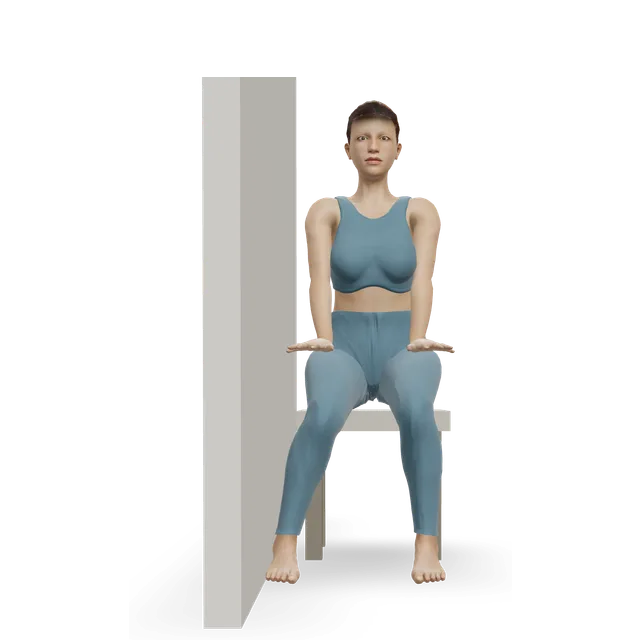
Isometric ankle eversion against a wall demonstrated on the 3D figure3D demoIsometric ankle eversion against a wallBeginner · A wall + A bench or box

8 to 10 holds of about 6 s, 2 to 3 times a day, pressing gently · Our peroneal tendinopathy guide's dose, from an NHS Borders leaflet's exercise, with the move page's 6 s hold

Harder: Band ankle eversion

Seated bent-knee calf raise (soleus raise) demonstrated on the 3D figure3D demoSeated bent-knee calf raise (soleus raise)Beginner · A bench or box

2 sets of 10 to 15 · As in our ankle pain guide (editorial)

Harder: Slow calf raise

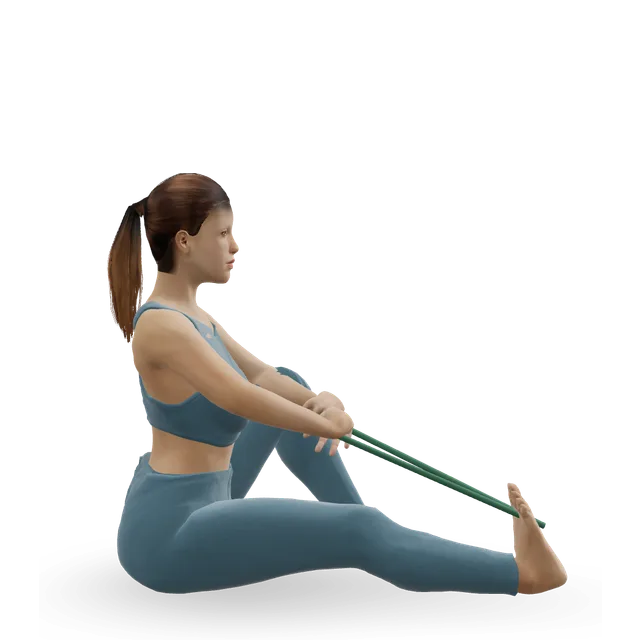
Seated calf stretch with a towel demonstrated on the 3D figure3D demoSeated calf stretch with a towelBeginner · Other / check instructions

3 holds of up to 30 s · Our ankle pain guide's dose, from a King's College Hospital leaflet

Harder: Wall calf stretch (gastrocnemius)

Single-leg stand demonstrated on the 3D figure3D demoSingle-leg standBeginner · A wall

Up to 30 s, a few times a day, holding a support · Our ankle pain guide's first level, from the same leaflet

Easier: Tandem stance and heel-to-toe walk · Harder: Single-leg reach matrix

Move on when: You walk without a limp and can stand on the injured leg (our suggestion); NHS inform asks you to use the ankle more after the first 48 hours.

Follow along: a timer, a cue and the next move, one step at a time.
Stage 2

Build: strength in every direction, and balance

About weeks 2 to 6: the strength and balance training that prevents repeat sprains. 3 or 4 days a week.

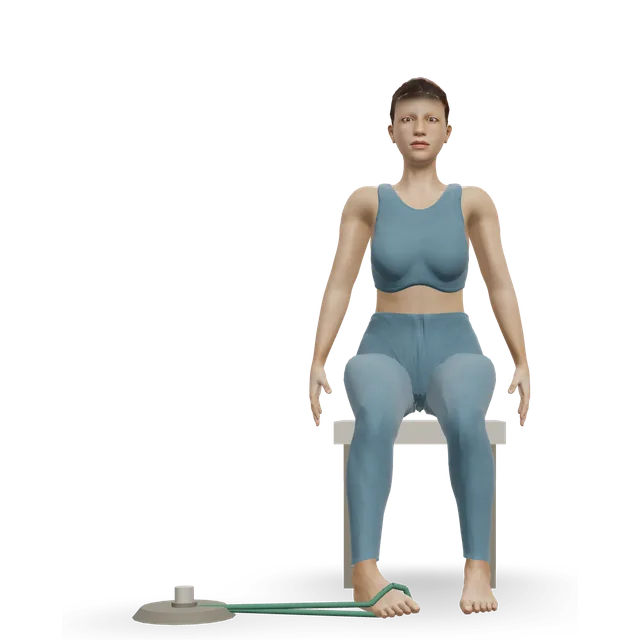
Band ankle eversion demonstrated on the 3D figure3D demoBand ankle eversionBeginner · A band + A bench or box

2 to 3 sets of 5 to 8, building to 3 sets of 10 at 3 to 5 s a rep · Our ankle pain guide's dose (a United Lincolnshire Hospitals leaflet), then our chronic ankle instability guide's format from the Hall trial

Easier: Isometric ankle eversion against a wall · Harder: Single-leg stand

Band ankle inversion demonstrated on the 3D figure3D demoBand ankle inversionBeginner · A band + A bench or box

2 to 3 sets of 5 to 8, pain-free in the first 2 weeks · The move page's dose after a sprain, an NHS hospital leaflet's

Harder: Single-leg calf raise from a step

Slow calf raise demonstrated on the 3D figure3D demoSlow calf raiseBeginner · A wall

12 reps, 3 times a day · Our ankle pain guide's dose, from a King's College Hospital leaflet

Easier: Seated bent-knee calf raise (soleus raise) · Harder: Standing dumbbell calf raise

Knee-to-wall ankle rock demonstrated on the 3D figure3D demoKnee-to-wall ankle rockBeginner · A wall

10 slow rocks per side, daily · The move page's dose

Single-leg stand demonstrated on the 3D figure3D demoSingle-leg standBeginner · A wall

Up to 30 s without support, then with your eyes closed · Our ankle pain guide's next levels; a home balance programme cut repeat sprains in a trial

Easier: Tandem stance and heel-to-toe walk · Harder: Single-leg reach matrix

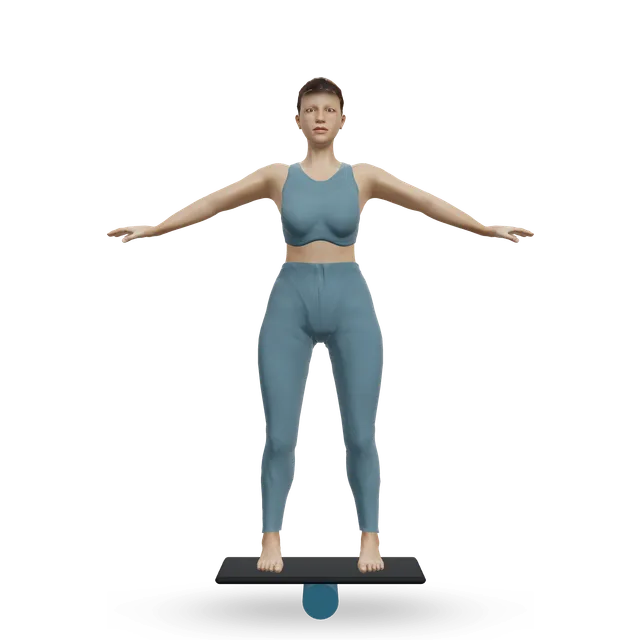
Balance board stand demonstrated on the 3D figure3D demoBalance board standBeginner · Other / check instructions

Several holds of 20 to 30 s on most days, a rail within reach · The move page's dose, an editorial starting point

Easier: Single-leg stand

Move on when: 30 s on one leg with your eyes closed, and single-leg calf raises start to feel possible (our suggestion).

Follow along: a timer, a cue and the next move, one step at a time.
Stage 3

Strengthen and return: one leg, hops and sport

Single-leg strength, landing and hopping control, then running and sport by the written steps below. Hop and land every other day.

Single-leg calf raise from a step demonstrated on the 3D figure3D demoSingle-leg calf raise from a stepIntermediate · A step + A wall

12 reps, 3 times a day, or 2 sets of 10 building to 4 sets of 15 over 6 weeks · Our ankle pain guide's doses, from a King's College Hospital leaflet and a chronic instability trial

Easier: Slow calf raise · Harder: Single-leg pogo hops

Single-leg reach matrix demonstrated on the 3D figure3D demoSingle-leg reach matrixIntermediate · No equipment

3 rounds of 5 reaches in each direction, each leg · The move page's dose, an editorial starting point

Easier: Standing crossed-leg side reach · Harder: Single-leg Romanian deadlift

Ankle bounces (mini pogo) demonstrated on the 3D figure3D demoAnkle bounces (mini pogo)Beginner · No equipment

3 sets of 8 to 12, every other day · Our ankle pain guide's dose, from the King's College Hospital leaflet's last stage; only once any bone pain has gone, as the move page says

Harder: Pogo hops

Pogo hops demonstrated on the 3D figure3D demoPogo hopsIntermediate · No equipment

3 sets of 8 to 12, every other day, once ankle bounces are easy · Our ankle pain guide's dose (editorial)

Easier: Ankle bounces (mini pogo) · Harder: Single-leg pogo hops

Single-leg hop and stick demonstrated on the 3D figure3D demoSingle-leg hop and stickIntermediate · No equipment

3 sets of 5 in each direction, each leg · Editorial, as in our chronic ankle instability guide; hop-and-hold drills were part of the Hall trial's balance programme

Easier: Standing broad jump with stuck landing · Harder: Alternate-leg bounding

Step-up demonstrated on the 3D figure3D demoStep-upBeginner · A step

3 sets of 8 to 10 each side · As in our ankle pain guide (editorial)

Easier: Low step-up · Harder: Dumbbell step-up

Move on when: Our suggestion: hopping on the injured leg is pain-free and steady, running and sport stay within the pain rule, and there's no extra swelling the next morning. Keep 2 balance sessions a week going for at least 8 weeks, the length of the home programme that cut repeat sprains.

Follow along: a timer, a cue and the next move, one step at a time.

What to change for now

The first days after a sprain (written steps)

Our 3D figure can't show these changes. They come from the NHS, NHS inform and an evidence-based guideline.

  • 1. For the first 2 to 3 days: rest it, use an ice pack wrapped in a towel for up to 20 minutes every 2 to 3 hours, wear a bandage for support, and raise it when you can. Avoid heat, alcohol and massage for now (the NHS).
  • 2. Start moving as soon as the pain allows: in the first 48 hours, NHS inform suggests moving the ankle gently for 10 to 20 seconds every hour you're awake, then using it more.
  • 3. On stairs, go up with the good leg first and down with the injured leg first, using the handrail (NHS inform).
  • 4. Paracetamol or ibuprofen gel can help (the NHS); the guideline advises care with anti-inflammatory tablets in the first days, as they may slow healing.
  • 5. If you can't take four steps or a bony point hurts to press, get it checked before you start the plan (the warning signs).

Sources 29, 31, 35, 27

Braces, tape and shoes (written steps)

These come from the guideline, a UK trial and the NHS.

  • 1. A lace-up brace or tape with exercise is the guideline's first choice after a sprain. For a severe sprain, a short spell in a below-knee cast sped up recovery at 3 months in a trial, with no difference by 9 months: your clinician will advise.
  • 2. Wear a brace or tape for sport in the months after a sprain: the guideline says it helps prevent another one. It doesn't train your balance, so keep the balance work going.
  • 3. Wear wide, comfortable shoes with a low heel and a soft sole (the NHS). No trial has tested special shoes or insoles for outer ankle pain.

Sources 27, 32, 35

Running and sport come back (written steps)

No trial has tested exactly when to run again after an outer sprain, so these steps are our suggestion, except where a source is named.

  • 1. Walk on flat ground first, then slopes, stairs and uneven ground.
  • 2. The NHS advises avoiding strenuous exercise such as running for up to 8 weeks after a sprain, and a severe sprain can take months.
  • 3. Run once hopping on the injured leg is pain-free and steady, starting with short runs on flat ground; in a study, poor single-leg landings at 2 weeks went with long-term instability.
  • 4. Keep the balance work going for at least 8 weeks, the length of the home programme that cut repeat sprains in a trial, and wear your brace or tape for sport.

Sources 29, 33, 28

Positions to swap, and why

Habit or positionWhy it mattersInstead
Complete rest after a mild sprain beyond the first few daysEarly movement and exercise do better, a guideline and a trial found.Walk as pain allows, and the stage 1 moves.Try: Ankle CARs (controlled articular rotations)
Heat, alcohol or massage in the first 2 to 3 daysThe NHS advises against all three while a sprain is fresh.Ice for up to 20 minutes, a bandage, and raising it.
Running in the first weeks after a sprainThe NHS advises avoiding strenuous exercise such as running for up to 8 weeks.Cycling, then walk-run once hopping is pain-free.Try: Recumbent exercise bike
Stretching the outer ankle in the first weeks after a sprainTurning the sole inwards is the movement that sprains the outer ankle, the stretch's page says.Ankle circles within comfort.Try: Ankle CARs (controlled articular rotations)
Trails, uneven ground and court sports before the balance workRepeat sprains are common, and balance training prevents them.Flat ground first, then the balance board and hops in stage 3.Try: Balance board stand
Sport without support in the months after a sprainA guideline says a brace helps prevent another sprain.A lace-up brace or tape for sport.
A boot or long rest for peroneal tendon painAn international consensus advises against immobilising the tendons.Gentle outward presses, then band work, once walking is painless.Try: Isometric ankle eversion against a wall
Hopping with a sore spot on the outer leg boneIt can be a stress fracture; the hopping moves' pages say bone pain should be gone before you hop.Stop, get it checked, and cycle meanwhile.Try: Recumbent exercise bike

Routines to follow

More moves for this area

Questions people ask

Why does the outside of my ankle hurt?

Most often a sprain of the outer ligaments, or an ankle that keeps giving way after one. Pain behind the bony bump is often the peroneal tendons, a pinch at the front can be scar tissue from old sprains, and one sore spot on the outer leg bone above the ankle can be a stress fracture.

Why does the outside of my ankle still hurt months after a sprain?

Some pain a year later is common, in 5% to 33% of people. It usually comes from something alongside the ligament, such as the peroneal tendons, scar tissue at the front of the ankle or cartilage, or from an ankle that keeps giving way. If it hasn't settled after 6 to 8 weeks, ask for a review.

Is my ankle sprained or broken?

Clinicians use the Ottawa rules: an X-ray if you can't take four steps or the back edge or tip of either ankle bone is tender. You can have a break and still walk. A crack, an odd shape, or toes that are blue, white, numb or cold need 999 or A&E.

Why does the outside of my ankle hurt with no injury?

The peroneal tendons are a common cause, especially with a high arch. A stress fracture of the outer leg bone, arthritis, gout and, in later tibialis posterior tendon problems, the heel bone pressing on the outer ankle bone are others.

Why does the outside of my ankle hurt on stairs, squats or hills?

A pinch at the front outer corner of the ankle when it bends up can be scar tissue left by sprains (anterolateral impingement). Examination finds it better than an MRI scan, and physiotherapy comes first.

Should I rest a sprained ankle?

Rest, ice, compression and raising it for 2 to 3 days, then move it as the pain allows. Exercise from the first week improved function without more re-injury in a trial, and a guideline prefers exercise with a brace or tape to rest.

Should I wear an ankle brace?

A brace or tape with exercise is the guideline's first choice after a sprain, and a brace for sport helps prevent it happening again. It doesn't train your balance, so do balance work too.

How do I stop my ankle rolling?

Balance training: an 8-week home programme cut repeat sprains from 33% to 22% in athletes. Band and balance training both improved strength and balance in people with unstable ankles, and a brace helps during sport.

When can I run again?

The NHS advises avoiding strenuous exercise such as running for up to 8 weeks after a sprain, and a severe sprain can take months. A sensible test is being able to hop on the injured leg without pain, then starting with short runs on flat ground (our suggestion).

Do I need an MRI?

Not usually. An X-ray follows the Ottawa rules, and an MRI is considered when symptoms carry on beyond 6 to 8 weeks or a high ankle sprain is suspected.

Could it be a stress fracture?

One sore spot on the outer leg bone a few centimetres above the ankle that builds with running can be. The ache can become constant, even at night: stop running and get it checked.

What is the snapping on the outside of my ankle?

Clicking or snapping behind the outer ankle bone is often the peroneal tendons slipping. After an injury, a tendon you can see or feel slipping needs a specialist review the same day, because it's often mistaken for a sprain.

Related exercise guides

Other pain guides

Sources

  1. Doherty 2014 · How common ankle sprains are: 181 prospective studies (systematic review and meta-analysis, Sports Med)
  2. AAOS OrthoInfo · Sprained ankle
  3. van Rijn 2008 · What happens after an ankle sprain: 31 studies (systematic review, Am J Med)
  4. Gribble 2016 · The impact and long-term consequences of outer ankle sprains (consensus statement, Br J Sports Med)
  5. DiGiovanni 2000 · Injuries found alongside long-standing ankle instability in 61 operated ankles (case series, Foot Ankle Int)
  6. Hintermann 2002 · Keyhole findings in 148 ankles with long-standing instability (case series, Am J Sports Med)
  7. Liu 1997 · Examination against MRI for pinching at the front outer ankle in 22 people (diagnostic study, Am J Sports Med)
  8. Lavery 2016 · Ankle impingement (review, J Orthop Surg Res)
  9. Willegger 2023 · Sinus tarsi syndrome (critical review, J Clin Med)
  10. Valderrabano 2009 · What causes ankle arthritis: 406 painful end-stage ankles (case series, Clin Orthop Relat Res)
  11. Davda 2017 · Peroneal tendon disorders (review, EFORT Open Rev)
  12. van Dijk 2018 · Peroneal tendon problems: the ESSKA-AFAS international consensus (consensus statement, Knee Surg Sports Traumatol Arthrosc)
  13. AAOS OrthoInfo · Stress fractures of the foot and ankle
  14. Hoenig 2023 · Return to sport after bone stress injuries: 76 studies, 2,974 injuries (systematic review and meta-analysis, Br J Sports Med)
  15. Health New Zealand Te Whatu Ora · Stress fractures of the foot and shin bone
  16. Wijers 2020 · Fractures of the outer edge of the talus in 36 people (case series and review, J Foot Ankle Surg)
  17. McCrory 1996 · Snowboarder's ankle: fractures of the outer edge of the talus (clinical review, Clin J Sport Med)
  18. AAOS OrthoInfo · Toe and forefoot fractures
  19. NICE · Fractures (non-complex): assessment and management (NG38, guideline)
  20. NHS · Gout (past its review date: reviewed August 2023, review due August 2026)
  21. NICE · Gout: diagnosis and management (NG219, guideline)
  22. NHS · Septic arthritis
  23. Kohls-Gatzoulis 2004 · Tibialis posterior dysfunction: a common and treatable cause of adult acquired flatfoot (clinical review, BMJ)
  24. AAOS OrthoInfo · Progressive collapsing foot deformity (posterior tibial tendon dysfunction)
  25. Stiell 1993 · The Ottawa ankle rules: refinement and validation (prospective study, JAMA)
  26. Bachmann 2003 · How accurate the Ottawa ankle rules are: 27 studies, 15,581 people (systematic review, BMJ)
  27. Vuurberg 2018 · Diagnosis, treatment and prevention of ankle sprains (evidence-based guideline update, Br J Sports Med)
  28. Doherty 2016 · What predicts long-term instability after a first outer ankle sprain: 82 people (prospective cohort, Am J Sports Med)
  29. NHS · Sprains and strains
  30. Bleakley 2010 · Exercise in the first week after an ankle sprain in 101 people (RCT, BMJ)
  31. NHS inform · Ankle problems
  32. Lamb 2009 · Casts, braces and bandages for severe ankle sprains in 584 people (RCT, Lancet)
  33. Hupperets 2009 · An 8-week home balance programme after an ankle sprain in 522 athletes (RCT, BMJ)
  34. Hall 2018 · Balance or strength training for long-standing ankle instability in 39 people (RCT, J Athl Train)
  35. NHS · Ankle pain
  36. NHS inform · Exercises for calf and ankle problems (including how to tell if you're exercising at the right level)
  37. NICE · Osteoarthritis in over 16s: diagnosis and management (NG226, guideline)
  38. Diabetes UK · Taking care of your feet
  39. NHS · Broken ankle
  40. Cambridge University Hospitals NHS · Achilles tendon rupture: management and rehabilitation (patient information, 2026)
  41. NHS · Heel pain
  42. NICE · Diabetic foot problems: prevention and management (NG19, guideline)
  43. Diabetes UK · Signs of serious foot problems
  44. NHS · Deep vein thrombosis (DVT)
  45. NHS · Pulmonary embolism
  46. NHS · Swollen ankles, feet and legs (oedema)
  47. AAOS OrthoInfo · Ankle fractures (broken ankle)

Exercise education, not a diagnosis or treatment plan. It is written from the guidelines and studies listed above; review by a clinician is pending. If your pain follows an injury, is severe, is getting worse, or comes with any warning sign listed on this page, get it assessed. Health disclaimer.