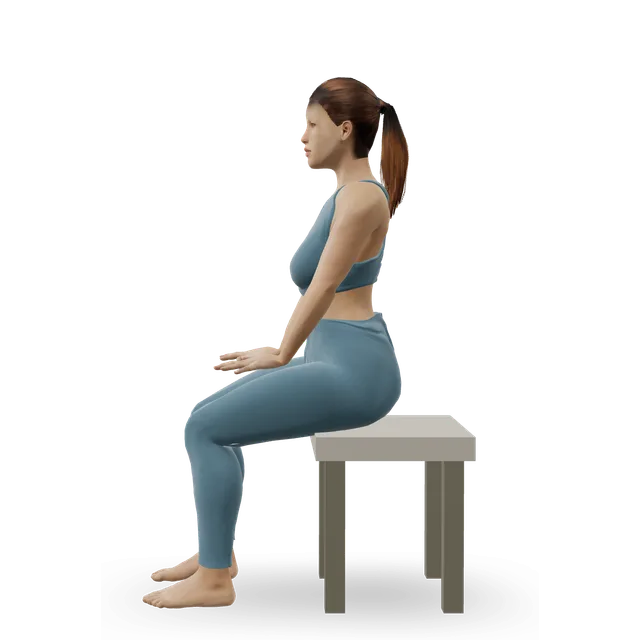
Pain guide · Ankle pain

Ankle pain when walking: an old sprain, the tendons, arthritis, shoes, supports and what helps

Ankle pain when you walk is common, and it is usually mechanical: an old sprain that left the ankle sore or wobbly, a tendon behind either ankle bone or at the back, a pinch at the front on stairs and hills, or a stiff, arthritic ankle, most often years after an injury. Where it hurts is the best clue, and the usual first steps are the right shoes, a gradual build-up and exercise.

After a twist or fall, a crack, an ankle that has changed shape, or being unable to walk needs a 999 call, accident and emergency (A&E) or National Health Service (NHS) 111, and a hot, swollen ankle with a high temperature needs help the same day. This guide covers those warning signs, when an X-ray is needed, how to match your pain to its cause, what the trials of braces and balance training show, what to look for in shoes and supports, when to see a general practitioner (GP), and a three-stage plan with a 3D demo of every move that ends with your usual walks on the surfaces you need.

When to get help first

Exercise is for pain that has been checked or is clearly mild and settling.

Get urgent medical help if

  • Call 999 or go to A&E: after an injury, you heard a crack, the foot or ankle has changed shape or points at an odd angle, a bone is sticking out, there is a bad cut over it, you're in severe pain, or the toes look blue or white, feel numb or are cold to touch. These can mean a broken bone. Don't drive yourself.
  • Same day (urgent GP appointment or NHS 111): after an injury, you can't put weight on it or walk more than a few steps, the pain is very bad or getting worse, there is a lot of swelling or bruising or it is getting worse, or it feels very stiff. If you think it's broken, don't treat it yourself.
  • Contact NHS 111: after an injury, severe ankle pain, feeling faint, dizzy or sick from the pain, a snap, grinding or popping noise at the time of the injury, the ankle or foot at an odd angle, or not being able to walk. These might be signs of a broken ankle or an infection.
  • Same day: after a twist or fall, you couldn't take four steps straight afterwards, or pressing on the back edge or tip of either ankle bone hurts. Get it checked for a broken bone: you can have a fracture and still walk.
  • Same day: a sudden snap or pop at the back of the heel, then being unable to walk on tiptoe or climb stairs. It could be an Achilles tendon rupture or a broken heel bone.
  • Call 999 or go to A&E: a foot or leg that is suddenly cold, pale, numb, weak or very painful without an injury. A sudden loss of blood supply is a vascular emergency.
  • Same day: a sudden, very painful, hot, swollen, red joint, often the big toe, especially with a high temperature, feeling shivery or being unable to eat. It may be gout, but it could be a joint infection (septic arthritis), which is urgent.
  • Call 999: calf or leg pain or swelling with breathlessness or chest pain. It could be a clot that has reached the lungs.
  • Same day (GP or NHS 111): throbbing pain and swelling in one calf, with red, blue or darkened skin. It could be a blood clot (DVT). Watch for it after an ankle injury or time in a cast or boot.

See a doctor or physiotherapist if

  • Pain in one spot on the inner ankle bone, or a deep ankle pain that is hard to pinpoint, that builds with walking and later hurts with every step or at night, sometimes with swelling over the bone: cut back your walking and get it checked promptly. Stress fractures of the inner ankle bone and of the talus (the bone at the top of the ankle joint) heal less well, and the first X-ray can look normal.
  • One spot on a foot bone that hurts with every step and later at night: a possible stress fracture.
  • An ankle that keeps giving way months after a sprain.
  • Pain or swelling still there 6 to 12 weeks after a sprain, or deep pain inside the joint with catching or locking: see your GP. A damaged patch of cartilage and bone on the talus (an osteochondral lesion) is one cause, X-rays often miss it, and it has its own guide.
  • Pain, clicking, locking or swelling that carries on despite a good rehab programme. Cartilage, tendon and other problems are common alongside an unstable ankle and need assessing.
  • Pain along the inside of the ankle and arch, with the arch dropping on one side, or you can't rise onto tiptoe on that foot: see a GP or physiotherapist (possible posterior tibial tendon problems).
  • Leg pain, usually in the calf but sometimes the thigh or buttock, that keeps coming on when you walk and goes after a few minutes' rest: see a GP. It can be peripheral arterial disease (narrowed leg arteries).
  • Pain that isn't better after 2 weeks of looking after it yourself, is getting worse, keeps coming back, or stops you doing normal things.
  • Tingling or loss of feeling in the foot, or a foot that feels weak.
  • Any foot pain if you have diabetes: foot problems can be more serious.
  • Ankle pain at night that stops you sleeping, a fever, night sweats or weight loss, a change in your walking or balance, a hot, swollen joint for no clear reason, or stiffness that lasts more than 30 minutes in the morning: see a GP.
  • Ankle pain that keeps coming back or has lasted more than 3 months, or ankle pain when you have an inflammatory condition or take medicines that weaken your immune system: see a GP or a foot specialist.

Where does it hurt?

Location narrows the likely causes; it does not diagnose.

The outside of the ankle, in the days and weeks after it rolled inwards

A recent sprain.

Read: Sprained ankle →
The outside, months or years after a sprain, and it gives way or feels wobbly, especially on uneven ground

Chronic ankle instability.

Read: Chronic ankle instability →
Behind or just below the bony bump on the outside, worse with walking and on uneven ground

Possibly the peroneal tendons.

Read: Peroneal tendinopathy →
The soft hollow in front of and below the outer ankle bone, after old sprains

Possibly sinus tarsi syndrome.

Read: Sinus tarsi syndrome →
The inside of the ankle and the arch, with the arch dropping, and hard to rise onto tiptoe

Possibly the tibialis posterior tendon. It often aches on long walks.

Read: Posterior tibial tendon dysfunction →
The inside of the ankle, with burning or tingling into the sole

Possibly a trapped nerve at the ankle (tarsal tunnel syndrome).

Read: Tarsal tunnel syndrome →
The back of the ankle above the heel, stiff on your first steps and sore the day after a longer walk

The Achilles tendon.

Read: Achilles tendinopathy →
The front of the ankle, a pinch going up or down stairs, uphill or when you squat

Possibly anterior ankle impingement, often after old sprains.

Read: Anterior ankle impingement →
A deep ache in the joint with stiffness and swelling, often years after a fracture or repeated sprains

Possibly ankle arthritis, usually from mid-life.

Read: Ankle arthritis and stiff ankles →
Deep in the joint, still swollen, catching or locking 6 to 12 weeks after a sprain

Possibly a damaged patch of cartilage and bone on the talus: see your GP.

Read: Talus cartilage lesion →
One spot on a bone that you can point to, sore with every step and later at rest or at night

Often after much more walking than usual: a possible stress fracture. Stop the walking that hurts and get it checked.

Read: Stress fracture →
Above the ankle, between the shin bones, after a twist

Possibly a high ankle sprain.

Read: High ankle sprain →
The heel, arch, top or ball of the foot rather than the ankle

Our foot pain when walking guide.

Read: Foot pain when walking →
An ache in the calf, thigh or buttock that comes on after walking a set distance and eases within minutes of rest

Possibly narrowed leg arteries (peripheral arterial disease): see a GP.

Read: Calf pain when walking →
Ankle pain when you run

Our running guide covers shoes, braces, surfaces and a walk-jog plan.

Read: Ankle pain when running →
A hot, red, swollen ankle without an injury, especially with a high temperature

Possibly gout or an infection: get help the same day, as the warning signs say.

Understand it

Ankle pain when walking is common, and usually mechanicalEmerging evidence

In a survey of 5,109 adults over 50 in North Staffordshire, 11.7% had had ankle pain in the past month, and 3.4% had painful ankle arthritis on an X-ray; both were commoner in women, people aged 50 to 64 and people in manual jobs. In a phone survey of 751 adults aged 18 to 65 in Australia, 23.7% had a long-lasting ankle problem, mostly after an injury, and most had had to limit or change what they did.

The NHS says ankle pain is often caused by exercising too much or wearing shoes that are too tight, and that you shouldn't try to diagnose the cause yourself.

Sources 1, 2, 3

An old sprain is the commonest storyStrong evidence

After a sprain, pain eases quickly in the first 2 weeks, but across 31 studies, 5 to 33% of people still had pain a year later, 36 to 85% had fully recovered within 3 years, and 3 to 34% sprained the same ankle again. Repeat sprains lead many people to chronic ankle instability, which goes with less activity, a lower quality of life and arthritis later. The American Academy of Orthopaedic Surgeons (AAOS) says repeated sprains "can lead to long-term problems, including chronic ankle pain, arthritis, and instability", and that "Incomplete rehabilitation is the most common cause of chronic ankle instability after a sprain".

Pain with an unstable ankle is common but usually mild: across 14 studies, the highest average score was 4.9 out of 10. In 82 people followed after a first sprain, poorer jumping and landing at 2 weeks, and poorer balance and daily function at 6 months, predicted instability a year on, and balance is what the training in this guide works on.

Sources 4, 5, 6, 7, 8

The tendons and the front of the ankleEmerging evidence

The peroneal tendons, behind the bony bump on the outside of the ankle, are an under-recognised cause of pain on the outer side of the ankle and are hard to tell from a ligament injury; they often go with an unstable ankle, and their treatment rests mainly on case series and expert opinion. Achilles tendon pain is felt along the back of the ankle, with pain and stiffness in the morning, more pain with activity and severe pain the day after exercise, the AAOS says; a change of shoes can set it off.

Pain at the front of the ankle that is worse when the shin moves over the foot, on stairs, hills and squatting, is typical of anterior ankle impingement, often after old sprains; X-rays help confirm it. Pain along the inside of the ankle and arch is the tibialis posterior tendon, which has its own guide.

Sources 9, 10, 11

Ankle arthritis usually follows an injuryEmerging evidence

At one specialist centre, 78% of 406 ankles with end-stage arthritis had followed an injury, and a review puts it at about 80%, mostly after fractures and untreated instability. Arthritis UK says joint injuries make osteoarthritis more likely, "particularly the case with ankle injuries", that the ankle can feel stiff, especially when you haven't moved for a while, and that your symptoms "probably won't get worse, and they may even improve".

Sources 12, 13, 14

One sore spot on a boneStrong evidence

A stress fracture of the foot or ankle hurts more with weight-bearing and eases with rest, with tenderness over the bone and sometimes swelling on the top of the foot or the outside of the ankle, the AAOS says. Walking much more than usual, or on uneven surfaces, on holiday, a new style of shoe and worn-out shoes are among the triggers. The first X-ray is often normal, and a magnetic resonance imaging (MRI) or bone scan may be needed.

Source 15

Do I need an X-ray? The Ottawa ankle rulesStrong evidence

After a twisted ankle, clinicians use the Ottawa ankle rules to decide who needs an X-ray: an ankle X-ray is needed if the back edge or tip of either ankle bone is tender, or you couldn't take four steps straight after the injury or when you're examined. In the study that refined them, they picked up all 69 ankle and midfoot fractures and could cut X-rays by about a third; a review of 27 studies (15,581 people) found they missed almost no fractures, in children too, and could cut X-rays by 30 to 40%.

They are a guide for clinicians, not a self-test. The NHS says a crack, an odd shape, numbness or a cold, discoloured foot after an injury means you may have broken a bone and need an X-ray.

Sources 16, 17, 18

How it usually goesStrong evidence

After a sprain, most people feel better within 2 weeks, the NHS says, though strenuous exercise such as running is best avoided for up to 8 weeks and a bad sprain can take months. NHS inform expects new ankle problems to begin to settle within 6 weeks, and the Chartered Society of Physiotherapy (CSP) says most muscle and joint problems get better within 6 to 8 weeks.

Achilles tendon pain can take a few months to improve and may last longer than 3 months, the AAOS says; in 34 people treated with exercise alone, 80% had fully recovered at 5 years. No one can promise a date.

Sources 18, 19, 20, 10, 21

What helps, and how strong the evidence is

Balance training lowers the chance of another sprainStrong evidence

In 522 athletes aged 12 to 70 who had sprained an ankle, an 8-week home balance programme cut repeat sprains over a year from 33% to 22% (about 1 sprain prevented for every 9 people who did it). An overview of 46 reviews rates the evidence for neuromuscular (balance and control) training as moderate, and a Dutch guideline prefers supervised exercise to passive treatments, with surgery only if thorough exercise-based treatment fails.

These trials are mostly of athletes and about preventing another sprain, not about pain on walking, but they show an unstable ankle can be trained.

Sources 22, 23, 24

Braces and supports: strong for repeat sprains in sport, untested for walkingEmerging evidence

In 384 athletes, a semi-rigid brace worn for sport for a year cut repeat sprains to 15%, against 27% with 8 weeks of neuromuscular training, and the overview of reviews rates bracing as strong evidence for preventing repeats. After a severe sprain, in 584 people at 8 UK emergency departments, a 10-day below-knee cast gave a quicker recovery than a tubular bandage, an air-cushioned brace gave somewhat better ankle function at 3 months, a walking boot didn't help, and by 9 months there was no difference.

For everyday aches, the NHS suggests wrapping a bandage around your ankle for support, and Arthritis UK says a brace or support can help an arthritic ankle; the NHS's tendonitis page says take a support off before bed. No trial has tested a brace for ankle pain when walking. Using one on uneven ground while you rebuild your balance is our suggestion, extrapolated from the sport trials.

Sources 25, 23, 26, 3, 14, 27

Shoes and insoles: advice, not trialsEmerging evidence

The NHS's advice for ankle pain is "wide comfortable shoes with a low heel and soft sole", soft insoles or heel pads, and no high heels or tight, pointy shoes. For ankle arthritis, Arthritis UK suggests a low heel, a wide front with about a 1 cm gap at the toe, thick cushioned soles, soft uppers and laces or straps, buying in the afternoon, and no ballet pumps or flip-flops; "A light but stiff walking boot can help ankle pain", and you may be able to have a rocker added to your own shoes ("Changes such as this often make walking easier"). Magnetic insoles were no better than ordinary cushioned ones.

For Achilles pain at the back of the heel, the AAOS suggests softer shoes or ones open at the back, and heel lifts. No trial has tested shoes, lacing or insoles for ankle pain when walking.

Sources 3, 14, 28, 10

Keep walking, with the load adjustedStrong evidence

After a sprain, the NHS says keep moving once the pain allows, and NHS inform says reduce your activity for the first 24 to 48 hours, then try to use the leg more; early movement after a sprain has strong evidence, the overview of reviews found. While it's sore, the NHS says don't walk or stand for long periods.

In 38 people with Achilles tendon pain, carrying on with activity under a pain-monitoring rule did as well as 6 weeks of rest. So the plan changes how much you walk rather than whether you walk, except for one sore spot on a bone.

Sources 18, 19, 23, 3, 29

Exercise for each causeEmerging evidence

NHS inform's calf and ankle exercises (moving the ankle up and down and side to side, seated then standing heel raises, and a calf stretch) start with 2 to 3 repetitions little and often and build to 2 sets of 15. For Achilles pain, exercise alone helped most people in the long run. For ankle arthritis, Arthritis UK suggests strengthening on 2 or more days a week and 2.5 hours a week of moderate activity such as brisk walking, and a review says non-surgical treatment should be tried at any stage.

For impingement at the front, treatment starts with physiotherapy, strengthening, changes to activity and sometimes a brace. For the peroneal tendons, the evidence is case series and expert opinion, so the plan's strength-in-every-direction approach is our suggestion.

Sources 30, 21, 14, 13, 11, 9

Medicines, injections and surgeryEmerging evidence

After a fresh sprain, anti-inflammatory painkillers have strong evidence, though the Dutch guideline urges care with them. For ankle arthritis, anti-inflammatories and injections give temporary relief; a fusion operation changes how you walk, and ankle replacements last about 10 years, Arthritis UK says. For Achilles pain, the AAOS considers surgery only after about 6 months of non-surgical treatment.

Sources 23, 24, 13, 14, 10

How much pain is OK while you exercise?

The foot and ankle pain rule, and judge a walk by the next morningEmerging evidence

This guide uses the ankle hub's rule. Some discomfort during exercise is fine. Aim for pain you would call mild to moderate, no more than about 5 out of 10, that settles within an hour, with no more swelling or stiffness the next morning. If it's worse the next day, do a little less (a smaller range, fewer reps, a lighter band), not nothing.

The exceptions: pain in one spot on a bone should be pain-free, because it could be a stress fracture; burning, tingling or numbness means stop that movement; and if your feet are numb, pain won't warn you, so check your skin after exercise.

If pain climbs day after day, or you notice a warning sign, stop and get it checked. The 5 out of 10 figure is an editorial starting point that matches this site's other pain guides, not a tested rule. NHS inform's calf and ankle exercise advice uses the same limit (0 to 3 minimal, 4 to 5 acceptable, 6 or more too much), and in trials, exercise that allowed some pain did no worse than pain-free exercise; with Achilles pain, carrying on under a pain-monitoring rule did as well as rest.

Walking (our suggestion): a walk can ache up to about 5 out of 10 if it settles within an hour and the ankle is no more swollen or stiff the next morning. If it is worse, make the next walk shorter or flatter, not none. Change one thing at a time (distance, then slopes and stairs, then uneven ground). An ankle that gives way on a surface means leave that surface for now and keep up the balance work.

Sources 31, 30, 29, 15

The exercise plan: 3 stages

Start at the first stage. Each move opens a full guide with a 3D demo.

Stage 1

Settle: shorter walks on the flat, and ankle work off your feet

About the first 2 weeks: change your shoes today (the written steps below), keep walking little and often on even ground within the pain rule, and start NHS inform's calf and ankle exercises. After a fresh sprain, our ankle sprain guide comes first; with one sore spot on a bone, stop and get it checked; with Achilles pain, our Achilles guide has the loading plan; with ankle arthritis, our ankle arthritis guide's plan matches this one.

Ankle CARs (controlled articular rotations) demonstrated on the 3D figure3D demoAnkle CARs (controlled articular rotations)Beginner · No equipment

5 slow circles each way, morning and evening · The move page's dose, an editorial starting point. NHS inform's ankle up and down and side tilts move the ankle the same ways; make the circle smaller if the front of the ankle pinches, as the move page says

Easier: Ankle circles · Harder: Toes-tucked kneeling (toe squat)

Seated bent-knee calf raise (soleus raise) demonstrated on the 3D figure3D demoSeated bent-knee calf raise (soleus raise)Beginner · A bench or box

2 to 3 at a time, little and often, building to sets of 8, 2 to 3 times a day, up to 2 sets of 15 · NHS inform's seated heel raise, with its pacing

Harder: Slow calf raise

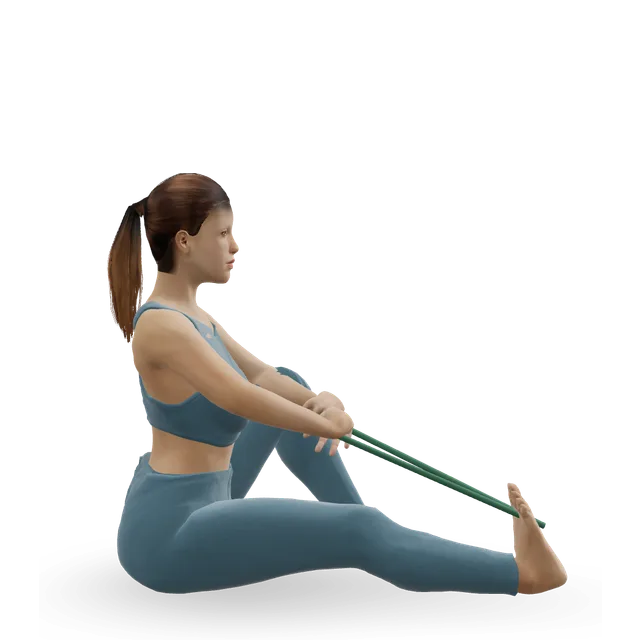
Seated calf stretch with a towel demonstrated on the 3D figure3D demoSeated calf stretch with a towelBeginner · Other / check instructions

Build to holds of 20 to 30 s, 2 to 3 sets, 2 to 3 times a day · NHS inform's calf stretch dose

Harder: Wall calf stretch (gastrocnemius)

Single-leg stand demonstrated on the 3D figure3D demoSingle-leg standBeginner · A wall

Up to 30 s, a few times a day, holding a support · As in our ankle pain guide (a hospital leaflet's first level)

Easier: Tandem stance and heel-to-toe walk · Harder: Single-leg reach matrix

Treadmill walking demonstrated on the 3D figure3D demoTreadmill walkingBeginner · Cardio machine

5 to 10 min, 2 to 3 times a day, on the flat · As in our foot pain when walking guide. Walking outdoors on even paths counts the same

Harder: Treadmill jogging

Move on when: 10 to 15 minutes of walking on the flat stays within the pain rule, with no more swelling or stiffness the next morning (our suggestion).

Follow along: a timer, a cue and the next move, one step at a time.
Stage 2

Build: strength in every direction, and balance

About weeks 2 to 6: the ankle hub's second stage, with walks a few minutes longer each week, one change at a time (our suggestion).

Slow calf raise demonstrated on the 3D figure3D demoSlow calf raiseBeginner · A wall

Holding a support: 2 to 3 at a time, building to sets of 8 and up to 2 sets of 15 · NHS inform's standing heel raise, with its pacing

Easier: Seated bent-knee calf raise (soleus raise) · Harder: Standing dumbbell calf raise

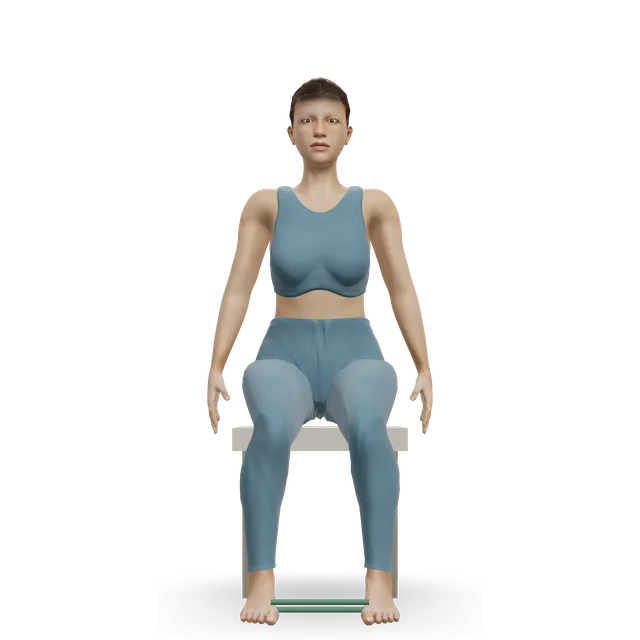
Band ankle eversion demonstrated on the 3D figure3D demoBand ankle eversionBeginner · A band + A bench or box

2 to 3 sets of 5 to 8 · As in our ankle pain guide (an NHS hospital leaflet)

Easier: Isometric ankle eversion against a wall · Harder: Single-leg stand

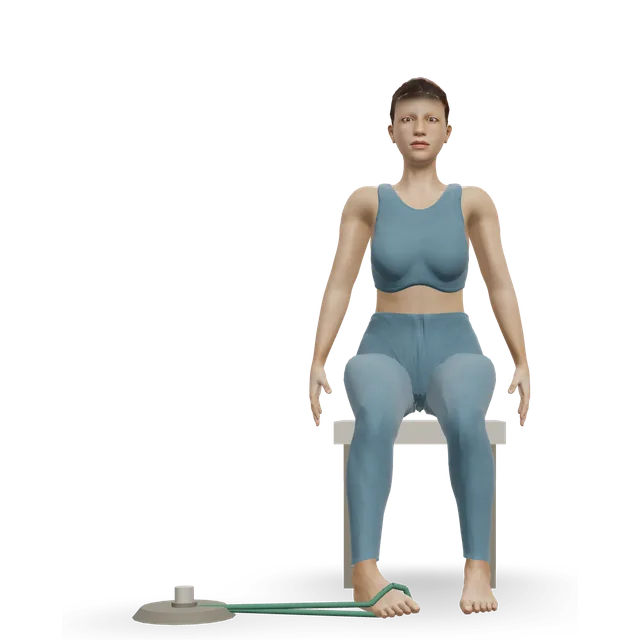
Band ankle inversion demonstrated on the 3D figure3D demoBand ankle inversionBeginner · A band + A bench or box

2 to 3 sets of 5 to 8 · The move page's dose, an NHS hospital leaflet's after a sprain. Keep to a pain-free range in the first 2 weeks after a sprain, as the move page says

Harder: Single-leg calf raise from a step

Tibialis raise demonstrated on the 3D figure3D demoTibialis raiseBeginner · No equipment

2 to 3 sets of 10 · As in our ankle pain guide, where using this move for a leaflet's band exercise is editorial

Harder: Single-leg tibialis raise

Knee-to-wall ankle rock demonstrated on the 3D figure3D demoKnee-to-wall ankle rockBeginner · A wall

10 slow rocks per side, daily · The move page's dose. A smaller range if it pinches at the front, as our ankle arthritis guide says

Single-leg stand demonstrated on the 3D figure3D demoSingle-leg standBeginner · A wall

Up to 30 s without support, then with your eyes closed · As in our ankle pain guide. A home balance programme cut repeat sprains in a trial

Easier: Tandem stance and heel-to-toe walk · Harder: Single-leg reach matrix

Move on when: 20 to 30 minutes of walking on the flat is comfortable, and you can stand on the sore leg for 30 s without support (our suggestion).

Follow along: a timer, a cue and the next move, one step at a time.
Stage 3

Your usual walks come back

From about week 6, strength 2 days a week and walking most days: single-leg strength and balance for longer walks, stairs, slopes and uneven ground, while distance and surfaces come back by the written steps below.

Single-leg calf raise from a step demonstrated on the 3D figure3D demoSingle-leg calf raise from a stepIntermediate · A step + A wall

3 sets of 10 to 12 each leg · As in our foot pain when walking guide. Keep a hand on a rail, as the move page says

Easier: Slow calf raise · Harder: Single-leg pogo hops

Step-up demonstrated on the 3D figure3D demoStep-upBeginner · A step

3 sets of 8 to 10 each side · As in our ankle pain guide. It practises stairs

Easier: Low step-up · Harder: Dumbbell step-up

Single-leg reach matrix demonstrated on the 3D figure3D demoSingle-leg reach matrixIntermediate · No equipment

3 rounds of 5 reaches in each direction, each leg · The move page's dose, an editorial starting point

Easier: Standing crossed-leg side reach · Harder: Single-leg Romanian deadlift

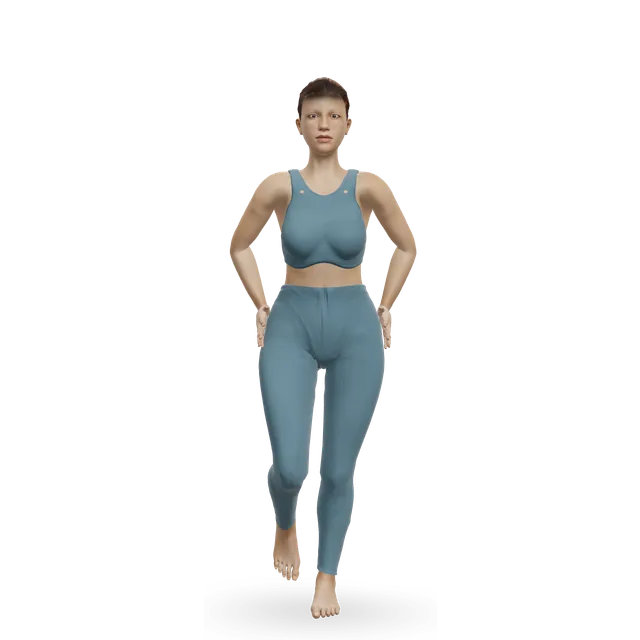
Tandem stance and heel-to-toe walk demonstrated on the 3D figure3D demoTandem stance and heel-to-toe walkBeginner · A wall

3 to 5 lengths · As in our foot pain when walking guide (an NHS ankle leaflet's dose)

Easier: Semi-tandem stance · Harder: Single-leg stand

Side-stepping (sideways walking) demonstrated on the 3D figure3D demoSide-stepping (sideways walking)Beginner · A wall

10 steps each way, next to a counter · The move page's dose, from the NHS balance exercises

Harder: Lateral band walk

Treadmill walking demonstrated on the 3D figure3D demoTreadmill walkingBeginner · Cardio machine

Build towards 150 minutes a week · Arthritis UK's 2.5 hours a week of moderate activity such as brisk walking, as in our ankle arthritis guide. Walking outdoors counts

Harder: Treadmill jogging

Move on when: Our suggestion: your usual walks, on the surfaces and slopes you need, leave your ankle no more swollen or stiff the next morning. Keep two strength days a week and the balance work going; if a big day brings it back, drop back a stage for a few days rather than stopping.

Follow along: a timer, a cue and the next move, one step at a time.

What to change for now

Shoes and supports (written steps)

Our 3D figure can't show these changes. They come from the NHS, Arthritis UK and the AAOS; no trial has tested shoes, lacing, insoles or a brace for ankle pain when walking, and where a step is our suggestion, it says so.

  • 1. Wide, comfortable shoes with a low heel and a soft sole, and soft insoles or heel pads; no high heels or tight, pointy shoes (the NHS). A pharmacist can advise on insoles.
  • 2. With an arthritic ankle: thick, cushioned soles, a wide front with about a 1 cm gap at the toe, laces or straps, and no ballet pumps or flip-flops; a light but stiff walking boot can help, and you may be able to have a rocker added to your own shoes. Buy shoes in the afternoon (Arthritis UK).
  • 3. With Achilles pain at the back of the heel: softer shoes or ones open at the back, and heel lifts (the AAOS). A sudden change of shoes can set it off.
  • 4. Replace worn-out shoes, and bring in a new style of shoe gradually: worn-out shoes and a new style of shoe are both stress fracture triggers (the AAOS; the gradual change is our suggestion).
  • 5. Laces or straps snug enough that your heel doesn't lift, and a higher-cut boot on rough ground (our suggestion; no source describes a lacing method).
  • 6. A bandage or support if it helps (the NHS), taken off before bed (the NHS's tendonitis page). If the ankle gives way on uneven ground, a lace-up or semi-rigid brace for those walks while the balance work catches up (our suggestion, from sport trials of preventing repeat sprains).
  • 7. Magnetic insoles are no better than ordinary cushioned ones (Arthritis UK).

Sources 3, 14, 28, 10, 15, 27, 25

Distance, stairs and surfaces (written steps)

These come from the NHS, NHS inform and the AAOS; the amounts are our suggestion.

  • 1. While it's sore, avoid walking or standing for long periods (the NHS). Split a long walk into shorter ones.
  • 2. After the first 48 hours of a new injury, try to use the leg more (NHS inform).
  • 3. Stairs: lead with the good leg going up and the sore leg coming down, using the handrail (NHS inform).
  • 4. With a bad limp, NHS inform says a walking stick on the opposite side to your sore ankle may help.
  • 5. Flat, even routes first; slopes, stairs and uneven ground last. Uneven ground makes a chronic sprain worse (the AAOS), and hills and stairs pinch the front of the ankle in impingement.
  • 6. Build up before a big walking day or a holiday: walking much more than usual, or on uneven surfaces, on holiday is a stress fracture trigger (the AAOS).
  • 7. Ice or heat for no longer than 20 minutes, with a few hours between (NHS inform).

Sources 3, 19, 6, 11, 15

Your usual walks come back (written steps)

No trial has tested how to bring walking back after ankle pain. These steps are our suggestion, built on the balance trial and the NHS's advice.

  • 1. Stages 1 and 2: shorter, more frequent walks on even ground, adding a few minutes every 2 or 3 walks.
  • 2. Change one thing at a time: distance first, then slopes and stairs, then uneven ground.
  • 3. Slopes: short, gentle ones first; if the front of the ankle pinches going uphill, take shorter steps.
  • 4. Uneven ground last: grass and firm gravel before rough paths. If the ankle gives way, use a brace for the first outings and keep up the balance work.
  • 5. Keep the balance work going two or three times a week once you're back to your usual walks; the home programme that cut repeat sprains ran for 8 weeks.
  • 6. If it isn't improving after 2 weeks of looking after it, or it's getting worse, see a GP (the NHS). Pain lasting more than 4 to 6 weeks after a sprain may be a chronic sprain (the AAOS).

Sources 22, 6, 3

Positions to swap, and why

Habit or positionWhy it mattersInstead
Long walks, or long spells standing, while it's soreThe NHS says don't walk or stand for long periods while your ankle is sore.Shorter, more frequent walks on the flat.Try: Treadmill walking
High heels, tight pointy shoes, flip-flops or ballet pumpsThe NHS advises against high heels and tight, pointy shoes for ankle pain, and Arthritis UK against unsupportive shoes such as ballet pumps and flip-flops.Wide, low-heeled, cushioned shoes with laces or straps.
Not walking at all until it stops hurtingNHS inform says use the leg more after the first 48 hours, and early movement after a sprain has strong evidence.Walk little and often within the pain rule, with ankle circles through the day.Try: Ankle CARs (controlled articular rotations)
Rough trails, uneven ground and steep hills early onThe AAOS lists uneven surfaces among what makes a chronic sprain worse, and hills and stairs pinch the front of the ankle in impingement.Flat, even paths first; uneven ground last, with balance work and a brace if the ankle gives way.Try: Single-leg stand
A sudden big walking day, such as a holiday, a charity walk or a new step targetWalking much more than usual, or on uneven surfaces, on holiday is a stress fracture trigger, the AAOS says.Build up over weeks beforehand.
Leading with the sore leg going upstairsNHS inform says lead with the good leg going up and the sore leg coming down.Good leg up first, sore leg down first, with the handrail, and step-ups in the plan.Try: Step-up
Walking through pain in one spot on a boneIt could be a stress fracture, and the first X-ray can be normal.Stop the walking that hurts and get it checked.
Relying on a brace instead of the exercisesBalance training cut repeat sprains on its own, and the AAOS says incomplete rehabilitation is the commonest cause of an unstable ankle.The balance and strength work, with a brace on rough ground for now.Try: Single-leg reach matrix
Pushing the soleus stretch into a pinch at the front of the ankleThe move page says a sharp pinch at the front means you are jamming the joint, so ease the depth.The knee-to-wall rock, short of the pinch.Try: Knee-to-wall ankle rock
A walking boot for weeks for Achilles painThe AAOS says use a boot for a short time only, because long use weakens the calf.Heel lifts or softer-backed shoes, and still calf holds within the pain rule.Try: Isometric calf raise hold

Routines to follow

More moves for this area

Questions people ask

Why does my ankle hurt when I walk?

Most often an old sprain, a tendon (behind the bony bump on the outside, along the inside, or the Achilles at the back), the front of the ankle pinching on stairs and hills, or arthritis. Where it hurts is the best clue, and the map on this page routes each one. One sore spot on a bone that hurts with every step can be a stress fracture, so stop the walking that hurts and get it checked.

Why does my ankle hurt when I walk if I haven't injured it?

Without an injury, it is usually a tendon, an old sprain you've half forgotten, arthritis, or doing more than usual, such as a sudden jump in walking or new shoes. A hot, red, swollen ankle without an injury can be gout or an infection and needs checking the same day, especially with a high temperature.

Why does my ankle still hurt years after a sprain?

A sprain can leave the ankle sore or unstable: 5 to 33% of people still have pain a year later, and repeat sprains can lead to long-term pain, instability and arthritis. Balance and strength training cut repeat sprains in trials. An ankle that keeps giving way, or catches or locks, needs a GP or physiotherapist.

What does pain on the outside of my ankle when walking mean?

Usually an old sprain or the peroneal tendons, which run behind the bony bump on the outside of the ankle. An ankle that also gives way on uneven ground points to chronic instability. Pain in the soft hollow just in front of and below that bump can be sinus tarsi syndrome, which has its own guide.

Why does the front of my ankle hurt on stairs or hills?

A pinch at the front of the ankle as your shin moves over your foot, on stairs, hills or when squatting, is typical of anterior ankle impingement, often after old sprains. Treatment starts with physiotherapy, strengthening, changes to activity and sometimes a brace. Until it settles, go upstairs good leg first and downstairs sore leg first, using the handrail.

Should I wear an ankle brace for walking?

No brace has been tested for ankle pain when walking. In sport, braces are good at preventing repeat sprains, and in one trial a brace cut them to 15% against 27% with balance training; Arthritis UK says a brace or support can help an arthritic ankle. A lace-up or semi-rigid brace on uneven ground while you rebuild your balance is reasonable, alongside the exercises rather than instead of them.

What are the best shoes for ankle pain?

Wide, comfortable shoes with a low heel and a soft, cushioned sole, with laces or straps, are the NHS's and Arthritis UK's advice. For an arthritic ankle, a light but stiff walking boot or a rocker sole can make walking easier. Avoid high heels, tight pointed shoes and flip-flops.

Do I need an X-ray for ankle pain?

After a twist or fall, yes if you couldn't take four steps afterwards or pressing on the back edge or tip of either ankle bone hurts; these rules miss almost no fractures. Pain that builds with walking in one spot on a bone can be a stress fracture, which may not show on the first X-ray. Most other ankle pain when walking is diagnosed by examination.

Is walking good for ankle arthritis?

Yes. Arthritis UK recommends walking and other moderate activity, aiming for 2.5 hours a week, in good shoes, and says symptoms probably won't get worse and may even improve. Build up gradually within the pain rule.

Should I stop walking if my ankle hurts?

Usually not. Keep walking little and often on flat ground within the pain rule, and avoid long spells on your feet while it's sore. Stop and get it checked if one spot on a bone hurts with every step, you can't put weight on it, or it is hot and swollen.

Why does my ankle hurt when I start walking after sitting?

Pain and stiffness on your first steps in the morning or after sitting, easing as you get going, is typical of Achilles tendon pain at the back of the ankle, and arthritic ankles stiffen too, especially when you haven't moved for a while. Ankle circles and seated calf raises before you stand up can help (our suggestion).

Related exercise guides

Other pain guides

Sources

  1. Murray 2018 · Ankle pain and ankle arthritis in 5,109 adults over 50 in North Staffordshire (population study, PLoS One)
  2. Hiller 2012 · Chronic ankle problems in 751 adults in the community (population survey, Arch Phys Med Rehabil)
  3. NHS · Ankle pain
  4. van Rijn 2008 · The clinical course of acute ankle sprains (systematic review of 31 studies, Am J Med)
  5. Gribble 2016 · Evidence review for the International Ankle Consortium consensus on ankle sprains (Br J Sports Med)
  6. AAOS OrthoInfo · Sprained ankle
  7. Al Adal 2019 · How common pain is in chronic ankle instability (systematic review of 14 studies, J Athl Train)
  8. Doherty 2016 · Recovery from a first ankle sprain and predictors of chronic ankle instability (cohort of 82, Am J Sports Med)
  9. Davda 2017 · Peroneal tendon disorders (review, EFORT Open Rev)
  10. AAOS OrthoInfo · Achilles tendinitis
  11. Talusan 2014 · Anterior ankle impingement: diagnosis and treatment (review, J Am Acad Orthop Surg)
  12. Valderrabano 2009 · Causes of end-stage ankle osteoarthritis in 406 ankles (case series, Clin Orthop Relat Res)
  13. Herrera-Pérez 2022 · Ankle osteoarthritis: a review and treatment algorithm (review, EFORT Open Rev)
  14. Arthritis UK · Osteoarthritis of the foot and ankle
  15. AAOS OrthoInfo · Stress fractures of the foot and ankle
  16. Stiell 1993 · Refining and testing the Ottawa ankle rules for X-rays after an ankle injury (prospective validation, JAMA)
  17. Bachmann 2003 · Accuracy of the Ottawa ankle rules to exclude fractures of the ankle and midfoot (systematic review, BMJ)
  18. NHS · Sprains and strains
  19. NHS inform · Ankle problems
  20. Chartered Society of Physiotherapy · Managing your ankle pain
  21. Silbernagel 2011 · Achilles tendinopathy treated with exercise alone: 5-year follow-up of 34 people (Am J Sports Med)
  22. Hupperets 2009 · Unsupervised home balance training and repeat ankle sprains: the 2BFit trial (RCT of 522, BMJ)
  23. Doherty 2017 · Treatment and prevention of acute and recurrent ankle sprain: an overview of systematic reviews (Br J Sports Med)
  24. Vuurberg 2018 · Diagnosis, treatment and prevention of ankle sprains: an evidence-based clinical guideline update (Br J Sports Med)
  25. Janssen 2014 · Bracing vs neuromuscular training to prevent repeat ankle sprains (RCT of 384, Br J Sports Med)
  26. Lamb 2009 · Mechanical supports for acute, severe ankle sprain: the CAST trial (RCT of 584, Lancet)
  27. NHS · Tendonitis (past its review date: reviewed June 2023, review due June 2026)
  28. Arthritis UK · Foot and ankle pain
  29. Silbernagel 2007 · Continuing activity with a pain-monitoring model in Achilles tendinopathy (RCT of 38, Am J Sports Med)
  30. NHS inform · Exercises for calf and ankle problems
  31. Smith 2017 · Should exercises be painful in chronic musculoskeletal pain? (systematic review and meta-analysis, Br J Sports Med)

Exercise education, not a diagnosis or treatment plan. It is written from the guidelines and studies listed above; review by a clinician is pending. If your pain follows an injury, is severe, is getting worse, or comes with any warning sign listed on this page, get it assessed. Health disclaimer.