Pain guide · Ankle pain

Sinus tarsi syndrome: pain in the hollow on the outer ankle, the causes to rule out and what helps

The sinus tarsi is a small tunnel between the ankle bone and the heel bone. It opens as a soft dip on the outside of your foot, just in front of and below the outer ankle bone. Sinus tarsi syndrome means pain in that dip, often months after a sprain, worse on uneven ground and sometimes with a feeling that the ankle might give way.

The name describes where it hurts rather than one disease, so clinicians look for a cause: torn ligaments or a loose joint, scarring, arthritis, a flattening foot, a cyst, or two foot bones joined together. An injection of local anaesthetic into the dip can confirm where the pain comes from. This guide explains those causes, what scans can and can't show, and what rehab, insoles, injections and keyhole surgery do, and gives a staged plan with 3D demos borrowed from ankle instability research.

When to get help first

Exercise is for pain that has been checked or is clearly mild and settling.

Get urgent medical help if

  • Call 999 or go to A&E: after an injury, you heard a crack, the foot or ankle has changed shape or points at an odd angle, a bone is sticking out, there is a bad cut over it, you're in severe pain, or the toes look blue or white, feel numb or are cold to touch. These can mean a broken bone. Don't drive yourself.
  • Contact NHS 111: after an injury, severe ankle pain, feeling faint, dizzy or sick from the pain, a snap, grinding or popping noise at the time of the injury, the ankle or foot at an odd angle, or not being able to walk. These might be signs of a broken ankle or an infection.
  • Same day: a sudden, very painful, hot, swollen, red joint, often the big toe, especially with a high temperature, feeling shivery or being unable to eat. It may be gout, but it could be a joint infection (septic arthritis), which is urgent.
  • Same day: you have diabetes and a new foot problem, such as an ulcer or wound, signs of infection, or a hot, swollen foot with a change in colour, even if it doesn't hurt. Contact your diabetes foot team or GP: NICE asks for these to reach a specialist foot service within 1 working day, and a suspected Charcot foot is kept off weight until it has been checked.
  • After surgery: redness, swelling, oozing or a smell from the wound, or a fever. Contact your surgical team the same day, or NHS 111 out of hours.
  • Same day (GP or NHS 111): throbbing pain and swelling in one calf, with red or darker skin. It could be a blood clot (DVT). Watch for it after an ankle injury or time in a cast or boot.
  • Call 999: calf or leg pain or swelling with breathlessness or chest pain. It could be a clot that has reached the lungs.

See a doctor or physiotherapist if

  • Pain that isn't better after 2 weeks of looking after it yourself, is getting worse, keeps coming back, or stops you doing normal things.
  • An ankle that keeps giving way months after a sprain.
  • Flat feet that are painful, stiff, weak or numb, that you didn't have before, or that affect only one foot.
  • In a teenager or young adult, a stiff, painful flat foot with repeated sprains: see a GP. It can be a tarsal coalition, where two foot bones are joined by a bar of bone or tissue.
  • Swelling in the dip that keeps growing, a lump, or pain at night or at rest: get it checked. Cysts and, rarely, tumours occur here.
  • Several swollen joints, stiffness that lasts more than an hour in the mornings, or psoriasis or another inflammatory condition: see a GP, as inflammatory arthritis can cause it.
  • Tingling or loss of feeling in the foot, or a foot that feels weak.
  • Not settling after about 3 to 6 months of good rehab: ask for a referral. A clinician may use an injection test, a scan and sometimes keyhole surgery to find the cause.

Understand it

Where it is, and what the name means

The sinus tarsi is a funnel-shaped space between the ankle bone (talus) and the heel bone, opening on the outer side of the foot just in front of and below the outer ankle bone. It holds fat, blood vessels, nerve endings that sense the foot's position, and ligaments that steady the subtalar joint, the joint below the ankle that lets the foot tilt in and out.

Sinus tarsi syndrome was first described in 1958 as pain in this area after an injury. It is defined by where it hurts: pain when the dip is pressed, worse with standing and on uneven ground, often with a feeling of instability. A 2021 scoping review of 31 studies found the name used for a range of different problems, and a 2023 review calls it a 'catch-all phrase' and recommends naming the actual cause when it's found.

Sources 1, 2, 3, 4

What causes it

After an injury: partial tears of the ligaments inside the sinus, inflamed joint lining (synovitis), scar tissue, and looseness of the ankle, the joint below it, or both. Foot shape: as the arch of a flattening foot drops, the bones on the outer side of the joint below the ankle can pinch together, the American Orthopaedic Foot & Ankle Society (AOFAS) explains, including when the tibialis posterior tendon is failing.

Joint disease: arthritis of the joint below the ankle, rheumatoid arthritis, gout and calcium crystal disease. Other causes: a tarsal coalition (a bar of bone or tissue joining two foot bones), cysts, small extra bones, an irritated nerve and, rarely, tumours. In one series, all 14 feet diagnosed with sinus tarsi syndrome before keyhole surgery had their diagnosis changed once the joint was seen: 10 had ligament tears, 2 scarring and 2 worn joints.

Sources 2, 1, 5, 6

Who gets it

Mostly active people after ankle sprains: in 29 people having keyhole surgery for it, 86% had injured the ankle before, 63% with an inward roll (an inversion sprain). It's described in dancers, basketball and volleyball players, and people with obesity or flat feet. In a study of 123 ankle MRI (magnetic resonance imaging) scans, changes in the sinus were seen in 27% and were strongly linked with tears of the outer ankle ligaments.

A loose ankle and a loose joint below it often go together and are hard to tell apart. In 57 people with sinus tarsi pain and an unstable ankle, a 2023 review reports that keyhole surgery found scarring in 88% and inflamed lining in 81%. A steeper-shaped sinus on X-ray went with the syndrome in a comparison of 61 patients and 61 people without it.

A tarsal coalition is a common cause of a stiff, painful flat foot in teenagers and young adults, often with repeated sprains. Estimates of how many people have a coalition range from 0.03% to 13%; it was found on 6% of 839 CT (computed tomography) scans in one hospital.

Sources 7, 2, 8, 9, 10, 11, 12, 13

How it's recognised

Tenderness in the dip, and pain when the hindfoot is turned outwards while the dip is pressed. A clinician also checks the stability of the ankle and the joint below it, your foot shape and how you walk. No single test confirms it.

Relief of the pain after local anaesthetic is injected into the dip is the traditional confirmation. It shows where the pain comes from, but not which structure inside is causing it.

Sources 2, 4

What scans do and don't meanEmerging evidence

MRI picks up changes in the sinus readily, but a scan finding doesn't prove the cause. When MRI was compared with keyhole findings in 30 feet, it agreed fully in 10%, partly in 50% and not at all in 40%. It spotted tears of one ligament (the cervical ligament) and changes in the fat reasonably well, but found only 44% of tears in the other main ligament inside the sinus.

Stress X-rays for a loose joint below the ankle are unreliable, a systematic review of 25 studies found. A CT scan shows bone, coalitions and arthritis. We found no study of how often the sinus looks abnormal on MRI in people with no pain, so read a report of 'sinus tarsi oedema' alongside the examination.

Sources 2, 14, 9, 3

How it usually goesMixed evidence

In old case series (one from 1981), most people improved without surgery: about two-thirds in that series. A 2021 paper cites figures of up to 60%. But a 2021 review found that non-surgical care has never been properly studied, and definitions of the syndrome varied.

Surgical series take people whose pain has lasted despite at least 6 months, and often a year, of good non-surgical care.

Sources 15, 16, 3, 2
What helps, and how strong the evidence is

Finding the cause comes firstEmerging evidence

The treatment depends on what's found: a loose ankle is treated with rehab and, if that fails, ligament surgery; a flattening foot with arch support and, if needed, surgery to correct its shape; and a coalition, arthritis or a cyst on its own terms. Most authors start with non-surgical care: injections, a change of activity and physiotherapy.

Sources 2, 3, 6, 5, 17

Rehab: recommended, but no trial has tested itEmerging evidence

No trial has tested rehabilitation for sinus tarsi syndrome. A clinical commentary and a review recommend balance and position-sense training, muscle strengthening, bracing, taping that limits movement of the joint below the ankle, and foot orthoses, then a staged return through hops and cutting. The commentary advises care with calf and peroneal stretching, because big forces across the joint below the ankle may make it worse.

Because it so often goes with an unstable ankle, the plan borrows from that research: a trial of 6 weeks of band strength work or hop and balance training for chronic ankle instability, and the 2BFit trial, in which an 8-week home balance programme cut repeat sprains from 33% to 22% in 522 athletes. Both are borrowed.

Sources 4, 2, 18, 19

Arch supports, braces and shoesEmerging evidence

Where a flattening foot pinches the outer hindfoot, an arch support can relieve the pinching and a brace can rest the joint, the AOFAS says. One 1993 case report describes recovery with custom orthoses, and a clinical commentary suggests supportive shoes with a firm heel counter and a stiff midsole, replaced before they wear out. None of this has been tested in a trial.

Sources 5, 2, 20, 4

Injections: all three types helped in one small trial with no placeboMixed evidence

Local anaesthetic and steroid injected into the sinus is used both as a test and as a treatment. In the only trial, 60 people were given a steroid with local anaesthetic, platelet-rich plasma (PRP) or ozone. All three groups improved at 1, 3 and 6 months, and function improved less with PRP at months 1 and 3, but pain and function didn't differ between the groups at 6 months.

There was no placebo or no-injection group, so the trial can't show how much of the improvement came from the injections.

Sources 2, 4, 21

Keyhole surgery for pain that persists: case series onlyEmerging evidence

Subtalar arthroscopy (keyhole surgery on the joint below the ankle) clears inflamed tissue and scar and removes loose pieces or cysts. In 33 cases, average pain fell from 7.3 to 2.7 out of 10 and 87% had good or excellent results. In 29 cases, people were back to full activity at an average of 4 months, with no complications, and in 8 people all were back to sport after 6 months.

In 22 athletes followed for about 5 years, 95% returned to some sport at a median of 12 weeks, but only 55% got back to their usual sport (at 23 weeks) and 18% to their previous level. With an unstable ankle, clearing the sinus and repairing the outer ankle ligaments improved a 100-point function score from 62.5 to 93 in 57 people, 40 of whom were followed up.

In 273 patients at one centre, 89 had the sinus cleared after non-surgical care failed: 52 were still well 2 years later, and 37 needed further operations for instability, nerve problems, a coalition or a joint fusion. These are all case series without comparison groups.

Sources 22, 7, 23, 16, 10, 17

How much pain is OK while you exercise?

The foot and ankle rule, in traffic-light form (borrowed)Emerging evidence

Strength, balance and fitness work: discomfort up to about 5 out of 10 that settles within an hour, with no more swelling or stiffness the next morning, is fine. If it's worse the next day, do a little less, not nothing. The 5 out of 10 figure is an editorial starting point that matches our other foot and ankle guides, not a tested rule.

An NHS physiotherapy service puts the same idea as traffic lights in its peroneal tendon programme, which we borrow: work in the green zone, and sometimes amber, during the exercises and for the next 2 days; the red zone means you're pushing too hard.

Change any move that brings on a sharp pinch in the dip as the foot turns outwards: turning the hindfoot out while the dip is pressed is how clinicians provoke the pain (our suggestion). A feeling of the ankle giving way is never part of the rule: drop back a stage and use a brace or tape for that activity.

No pain rule has been tested in sinus tarsi syndrome.

Sources 24, 2

The exercise plan: 3 stages

Start at the first stage. Each move opens a full guide with a 3D demo.

Stage 1

Settle and protect (about weeks 0 to 2)

Cut back running on uneven ground, and cutting and jumping. Wear supportive trainers, use an arch support if your foot flattens, and wear a brace or tape for activity if the ankle feels unstable. Ice or simple painkillers can ease flare-ups, as the NHS advises for ankle pain.

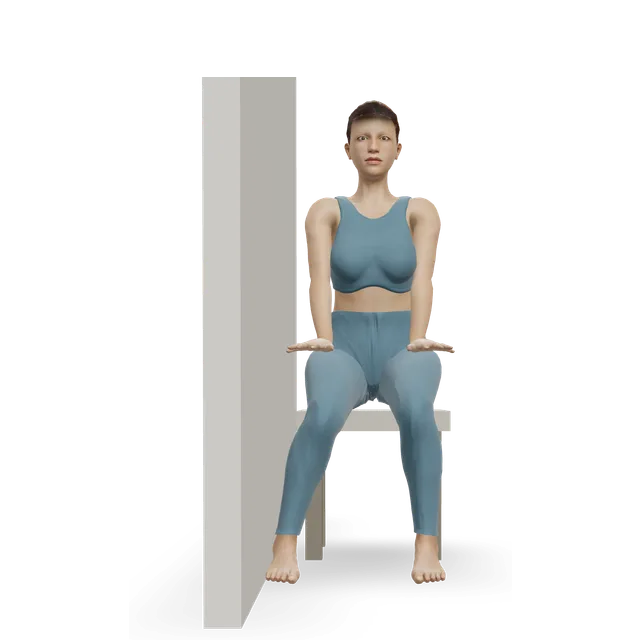
Isometric ankle eversion against a wall demonstrated on the 3D figure3D demoIsometric ankle eversion against a wallBeginner · A wall + A bench or box

8 to 10 holds of about 6 s, 2 to 3 times a day · Press gently. Our peroneal tendinopathy guide's dose

Harder: Band ankle eversion

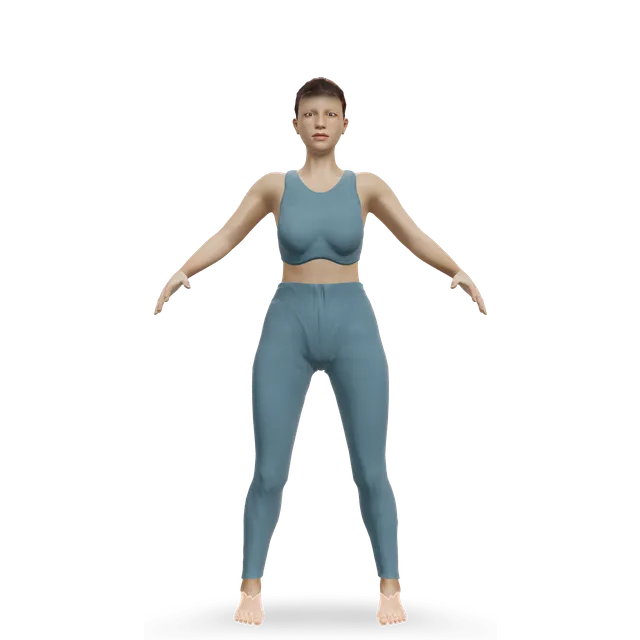
Ankle circles demonstrated on the 3D figure3D demoAnkle circlesBeginner · No equipment

10 slow circles each way · Smaller on the side that pinches. The move page's editorial dose

Harder: Ankle CARs (controlled articular rotations)

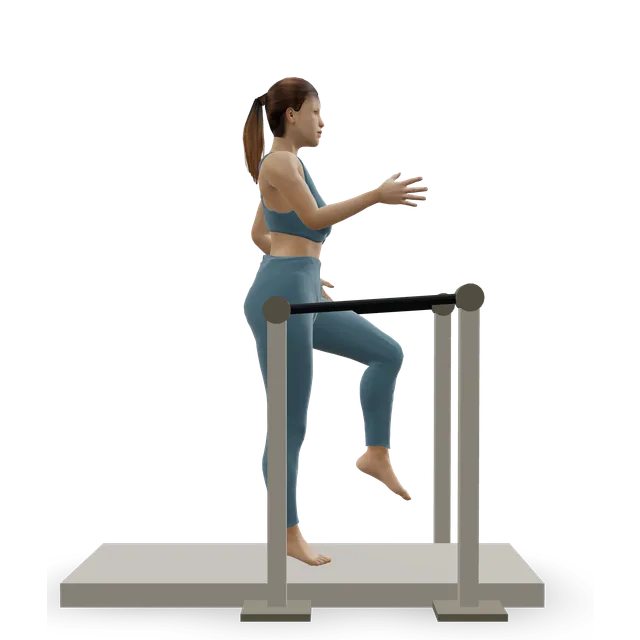
Single-leg stand demonstrated on the 3D figure3D demoSingle-leg standBeginner · A wall

3 holds of up to 30 s, near a support, eyes open · Our chronic ankle instability guide's first level

Easier: Tandem stance and heel-to-toe walk · Harder: Single-leg reach matrix

Stationary cycling demonstrated on the 3D figure3D demoStationary cyclingBeginner · Cardio machine

15 to 30 min · Our peroneal tendinopathy guide's dose

Harder: Air bike intervals

Move on when: Walking on flat ground is comfortable, the dip is less tender, and a 30-second single-leg stand is steady.

Follow along: a timer, a cue and the next move, one step at a time.
Stage 2

Build: strength and balance (about weeks 2 to 6)

Three sessions a week of about 20 minutes, borrowed from an ankle instability trial.

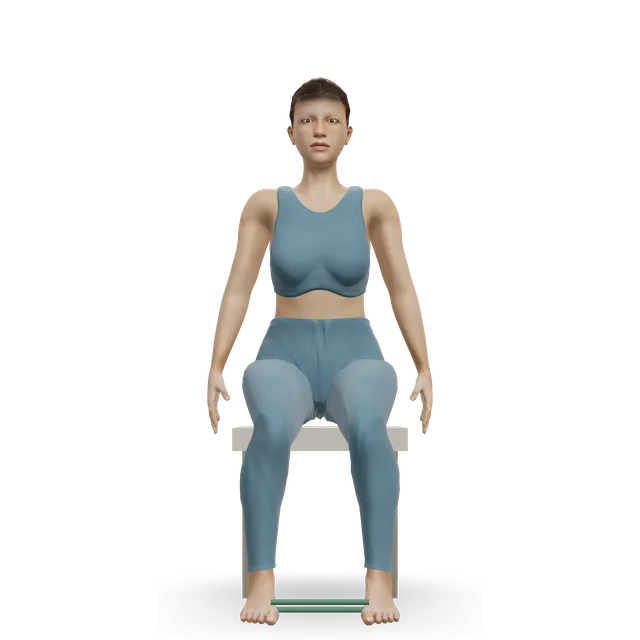
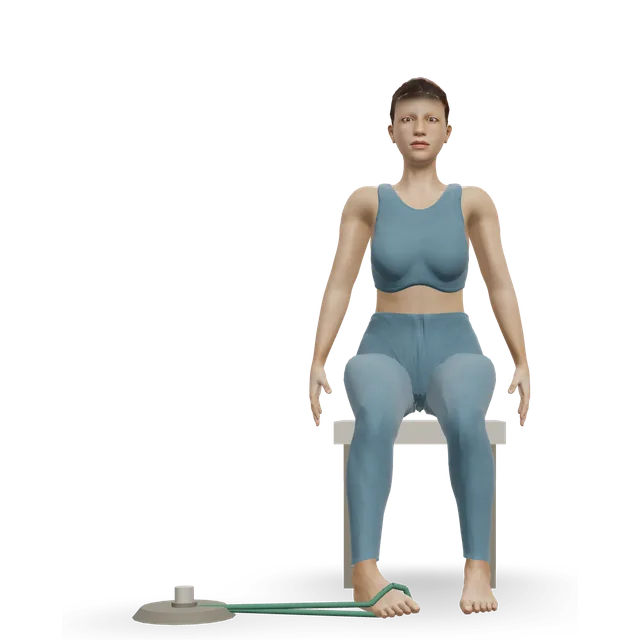
Band ankle eversion demonstrated on the 3D figure3D demoBand ankle eversionBeginner · A band + A bench or box

3 sets of 10 at 3 to 5 s a rep, then 4 sets and 3 sets of 10 in alternate weeks · A heavier band every 2 weeks, as in the trial. Stop short of the end of turning out if it pinches in the dip (editorial)

Easier: Isometric ankle eversion against a wall · Harder: Pogo hops

Band ankle inversion demonstrated on the 3D figure3D demoBand ankle inversionBeginner · A band + A bench or box

3 sets of 10 at 3 to 5 s a rep, then 4 sets and 3 sets of 10 in alternate weeks · The trial's progression

Harder: Single-leg calf raise from a step

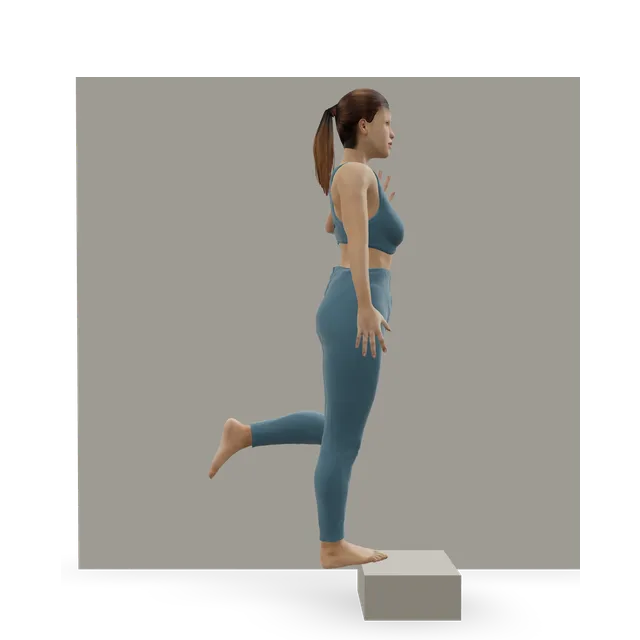
Single-leg calf raise from a step demonstrated on the 3D figure3D demoSingle-leg calf raise from a stepIntermediate · A step + A wall

2 sets of 10, building to 4 sets of 15 by week 6 · Start on flat ground. The trial's calf-raise progression

Easier: Slow calf raise · Harder: Single-leg pogo hops

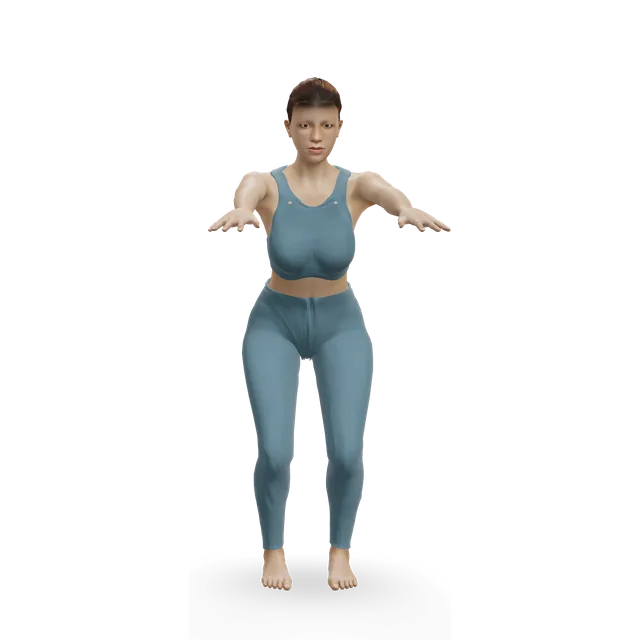
Single-leg stand demonstrated on the 3D figure3D demoSingle-leg standBeginner · A wall

3 holds of 30 s, eyes closed, then on a cushion · The trial's eyes-closed level, then our instability guide's next step

Easier: Tandem stance and heel-to-toe walk · Harder: Single-leg reach matrix

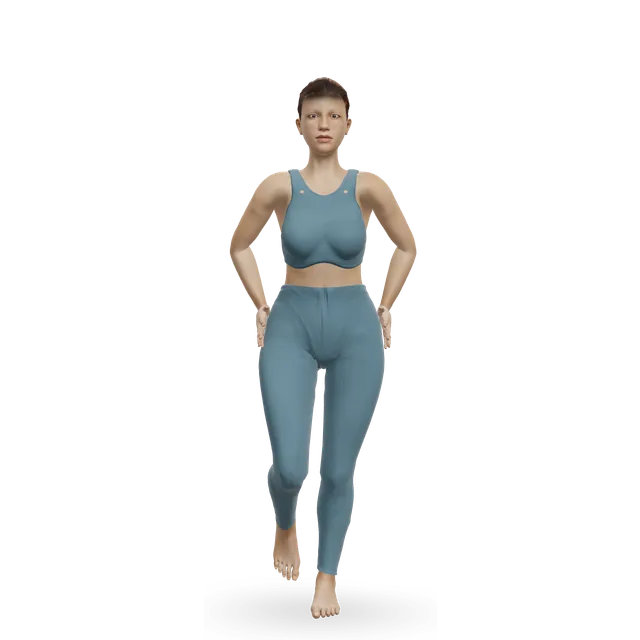
Tandem stance and heel-to-toe walk demonstrated on the 3D figure3D demoTandem stance and heel-to-toe walkBeginner · A wall

Hold 20 s with each foot forward, then 3 walks of 15 steps · The move page's dose

Easier: Semi-tandem stance · Harder: Single-leg stand

Clamshell demonstrated on the 3D figure3D demoClamshellBeginner · No equipment

2 to 3 sets of 12 each side · Hip strength, as in our chronic ankle instability guide

Harder: Lateral band walk

Move on when: You can hop and land on the sore leg in each direction without pain or wobble.

Follow along: a timer, a cue and the next move, one step at a time.
Stage 3

Hops, uneven ground and sport (about weeks 6 to 12, and on)

Hop-and-hold drills as in the trial, then running on the flat, then uneven ground and cutting. Return to sport when you can move in all directions at speed without pain, as a clinical commentary advises, with no symptoms the next day. Once you're back, keep a balance warm-up going 3 times a week for at least 8 weeks, as in the 2BFit trial (borrowed).

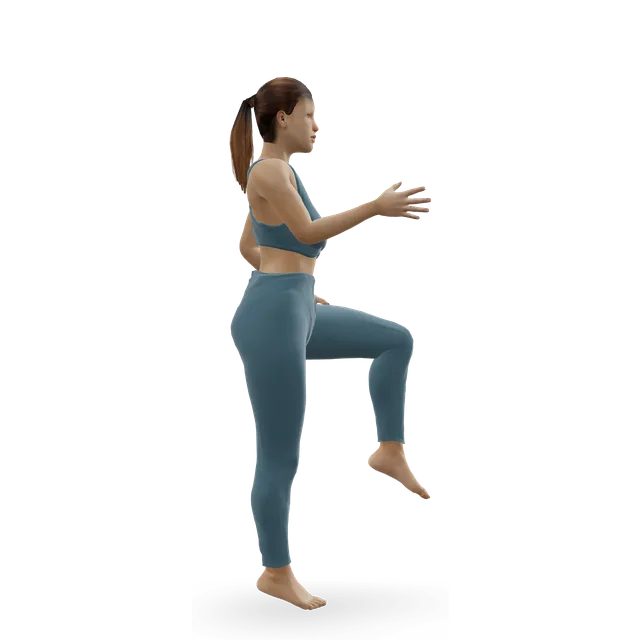
Single-leg hop and stick demonstrated on the 3D figure3D demoSingle-leg hop and stickIntermediate · No equipment

3 sets of 5 each direction, each leg · Hop to a steady hold, as in the trial. The move page's dose

Easier: Standing broad jump with stuck landing · Harder: Alternate-leg bounding

Single-leg reach matrix demonstrated on the 3D figure3D demoSingle-leg reach matrixIntermediate · No equipment

3 rounds of 5 reaches each direction · The move page's dose; the trial added a reach to its hops

Easier: Standing crossed-leg side reach · Harder: Single-leg Romanian deadlift

Lateral cone hops demonstrated on the 3D figure3D demoLateral cone hopsIntermediate · Other / check instructions

3 sets of 10 side to side · Our chronic ankle instability guide's dose

Easier: Lateral bound (skater jump) · Harder: Single-leg cone hops

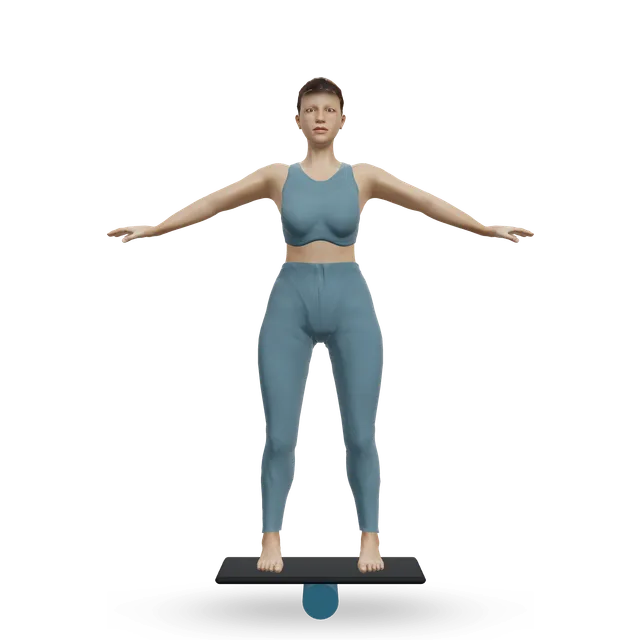
Balance board stand demonstrated on the 3D figure3D demoBalance board standBeginner · Other / check instructions

Several holds of 20 to 30 s · A wall or rail within reach. The 2BFit trial gave athletes a balance board; the dose is the move page's

Easier: Single-leg stand

Shuttle runs demonstrated on the 3D figure3D demoShuttle runsAdvanced · No equipment

4 to 6 rounds, wide turns first · The move page's dose

Easier: Treadmill jogging

Treadmill jogging demonstrated on the 3D figure3D demoTreadmill joggingIntermediate · Cardio machine

Walk-jog intervals · On the flat, then outdoors on even ground, then trails. Editorial

Easier: Treadmill walking · Harder: Sprint intervals

Move on when: Cutting, hopping and uneven ground are comfortable the next day. If the dip is still sore after about 3 months of doing this well, ask for a referral: an injection test, a scan and sometimes keyhole surgery help find and treat the cause.

Follow along: a timer, a cue and the next move, one step at a time.

What to change for now

Running, cutting and jumping

Uneven ground brings on pain and giving way when the joint below the ankle is loose, a review notes. Run on flat surfaces or a treadmill first and bring trails back last; leave cambered roads and tight bends until later too, and bring back cutting and jumping once hopping is steady (our suggestions).

Source 2

Supports

Use an arch support if your foot flattens. Choose supportive trainers with a firm heel counter, and replace them before they wear out: a clinical commentary notes that shoes break down inside before it shows. Wear a brace or tape that limits rolling for sport while the ankle feels unstable.

Sources 5, 4

Go easy on stretching

A clinical commentary advises care with calf and peroneal stretches in sinus tarsi syndrome, because big forces across the joint below the ankle may be harmful. So the plan leaves them out; a gentle calf stretch that doesn't hurt the dip is fine (our suggestion).

Source 4

After keyhole surgery (as your team allows)

Your surgical team's plan comes first. In one published series, people put full weight on the foot straight away, used crutches for comfort for the first few days, and wore a compression bandage for 2 days. Stitches came out at 2 weeks, followed by active movement of the ankle and the joint below it and strength work, then a review at 6 weeks and a gradual, step-by-step return to sport: a median of 12 weeks to any sport and 23 weeks to the usual one.

If a ligament is reconstructed too, a clinical commentary describes about 6 weeks of immobilisation and 4 to 6 months before sport. Once your team agrees, the plan above picks up at the build stage.

Sources 16, 4

Positions to swap, and why

Habit or positionWhy it mattersInstead
Running on cambered roads, rough trails or tight bendsUneven ground brings on pain and giving way when the hindfoot is unstable.Flat surfaces or a treadmill first; trails last.Try: Treadmill jogging
Hard band work into the end of turning the foot outTurning the hindfoot out squeezes the sinus, which is how clinicians provoke the pain.Holds against a wall first, then band work stopping short of the pinch.Try: Isometric ankle eversion against a wall
The peroneal stretch with a strapIt turns the sole inwards, the sprain movement, and a clinical commentary advises care with peroneal stretching here.Leave it out for now: strength and balance work matter more.
Worn-out or floppy shoes, and flip-flopsShoes break down inside first, a clinical commentary notes, and arch support relieves pinching in a flattening foot.Supportive trainers with a firm heel counter, and an arch support if your foot flattens.
Cutting sports without support while the ankle gives wayA loose ankle is a common cause.A brace or tape for sport, and the balance work.Try: Single-leg stand
Waiting for an MRI to explain itMRI agreed fully with keyhole findings in only 1 in 10 feet.Start the plan, and ask for a referral if it stalls.

Routines to follow

More moves for this area

Questions people ask

What is the sinus tarsi?

A small tunnel between the ankle bone and the heel bone that opens as a soft dip on the outside of your foot, just in front of and below the outer ankle bone. It holds fat, nerve endings and ligaments that steady the joint below the ankle.

Is sinus tarsi syndrome a real diagnosis?

It names where it hurts rather than one disease. Reviews recommend finding and naming the cause, such as torn ligaments, scar, a loose joint or arthritis, and in one series every diagnosis made before keyhole surgery changed once the joint was looked at.

What causes it?

Most often an ankle sprain or repeated sprains: 86% of 29 people having keyhole surgery had injured the ankle before. Other causes include a flattening foot, arthritis, gout, a cyst and a tarsal coalition.

How is it diagnosed?

By tenderness in the dip and pain when the hindfoot is turned outwards, after other causes have been checked. Relief after a local anaesthetic injection into the dip supports the diagnosis.

Will an MRI show it?

MRI picks up changes but can't say which ones matter: it agreed fully with keyhole findings in only 3 of 30 feet. It's most useful for finding other causes.

Why does my ankle feel unstable?

The ligaments inside the sinus steady the joint below the ankle, and a loose ankle and a loose joint below it often go together. Balance and strength training is the first treatment.

What exercises help?

Balance, ankle and calf strength, then hops and cutting, as in this plan. No trial has tested rehab for sinus tarsi pain, so the doses are borrowed from ankle instability trials.

Do insoles or a brace help?

An arch support can relieve pinching if your foot flattens, and a brace can rest the joint. Neither has been tested in a trial.

Do injections work?

In a trial of 60 people, steroid, platelet-rich plasma and ozone injections were all followed by improvement over 6 months, with no difference between them at 6 months. There was no placebo group, so how much the injections themselves helped is unknown.

When is surgery considered?

After months of good non-surgical care, usually at least 6 months. Keyhole surgery improved pain and function in case series, but only 55% of 22 athletes got back to their usual sport, at a median of 23 weeks.

How long does it take?

It depends on the cause. In old case series, most people improved without surgery. If it isn't improving after about 3 months of good rehab, ask for a referral; surgeons usually wait at least 6 months before operating.

Related exercise guides

Other pain guides

Sources

  1. Khan 2023 · Sinus tarsi and sinus tarsi syndrome (imaging review, Eur J Radiol)
  2. Willegger 2023 · What is the underlying pathology in sinus tarsi syndrome? (critical review, J Clin Med)
  3. Arshad 2021 · Current concepts in sinus tarsi syndrome: 31 studies (scoping review, Foot Ankle Surg)
  4. Helgeson 2009 · Examination and rehab for sinus tarsi syndrome (clinical commentary, N Am J Sports Phys Ther)
  5. AOFAS FootCareMD · Sinus tarsi syndrome
  6. Frey 1999 · Keyhole examination of the subtalar joint: does sinus tarsi syndrome exist? (case series, Foot Ankle Int)
  7. Oloff 2001 · Subtalar keyhole surgery for sinus tarsi syndrome in 29 cases (case series, J Foot Ankle Surg)
  8. Klein 1993 · MRI of the sinus tarsi in 123 ankle scans (imaging study, Radiology)
  9. Michels 2020 · Does subtalar instability really exist? (systematic review, Foot Ankle Surg)
  10. Li 2018 · Keyhole surgery with ligament repair for sinus tarsi syndrome in unstable ankles (case series, KSSTA)
  11. Küçükşen 2026 · Foot shape on X-ray and sinus tarsi syndrome in 61 patients and 61 controls (comparative study, J Foot Ankle Surg)
  12. Mascio 2026 · Talocalcaneal coalition (review, Life)
  13. Park 2022 · Tarsal coalition on 839 CT scans (imaging study, Sci Rep)
  14. Lee 2008 · MRI against keyhole findings in 30 feet with sinus tarsi syndrome (diagnostic study, Foot Ankle Int)
  15. Taillard 1981 · The sinus tarsi syndrome (case series, Int Orthop)
  16. Lauf 2021 · Return to sport after subtalar keyhole surgery in 22 athletes (case series, KSSTA)
  17. Yang 2021 · Staged surgery for sinus tarsi syndrome in 273 patients (case series, Ann Palliat Med)
  18. Hall 2018 · Balance and strength training protocols for chronic ankle instability, part I: clinical outcomes (RCT, Journal of Athletic Training)
  19. Hupperets 2009 · Unsupervised home balance training and repeat ankle sprains: the 2BFit trial (RCT, BMJ)
  20. Shear 1993 · Orthoses for sinus tarsi syndrome (case report, Arch Phys Med Rehabil)
  21. Toy 2023 · Steroid, platelet-rich plasma or ozone injections for sinus tarsi syndrome in 60 people (RCT, J Am Podiatr Med Assoc)
  22. Lee 2008 · Subtalar keyhole surgery for sinus tarsi syndrome in 33 cases (case series, Arthroscopy)
  23. Mansur 2019 · Subtalar keyhole surgery for sinus tarsi syndrome in 8 patients (case series, Rev Assoc Med Bras)
  24. NHS Lanarkshire · Peroneal tendinopathy (physiotherapy self-management page)
  25. NHS · Ankle pain
  26. NHS · Flat feet
  27. NHS · Septic arthritis
  28. NHS · Gout
  29. NICE NG19 · Diabetic foot problems: prevention and management
  30. NHS · Deep vein thrombosis (DVT)

Exercise education, not a diagnosis or treatment plan. It is written from the guidelines and studies listed above; review by a clinician is pending. If your pain follows an injury, is severe, is getting worse, or comes with any warning sign listed on this page, get it assessed. Health disclaimer.