Pain guide · Back pain

Sternum (breastbone) pain: the chest wall, a blow, reflux, the heart and lungs, and what helps

Pain in or behind the breastbone (sternum) most often comes from the chest wall: the joints where the ribs meet the breastbone (costochondritis) or a strained muscle. Reflux, anxiety, the lungs and the heart can be felt there too, and pain you can press on doesn't rule out the heart, so chest pain always needs checking first.

Call 999 for chest pain that is sudden, tight, heavy or like pressure, spreads to your arm, neck, jaw or back, or comes with breathlessness, sweating or feeling sick, and call 999 or go to accident and emergency (A&E) after a serious accident such as a car crash; for chest pain that comes and goes, see a general practitioner (GP) or call the National Health Service's 111 line (NHS 111). Once a clinician has checked your chest, this guide explains what helps (ibuprofen if it suits you, heat, easing off what brings it on, and gentle movement), how to sleep, and gives a three-stage plan back to pressing, lifting and sport, with 3D demos.

When to get help first

Exercise is for pain that has been checked or is clearly mild and settling.

Get urgent medical help if

  • Call 999: chest pain that feels tight or like squeezing on your chest; chest pain that's spreading to your arms, neck or jaw; severe difficulty breathing (you're gasping, choking or not able to get words out); lips or skin that are pale, blue or grey (on brown or black skin this may be easier to see on the palms of the hands); or someone who has passed out and is not responding normally. It could be a heart attack. Don't drive yourself to A&E.
  • Call 999: sudden pain or discomfort in your chest that does not go away (it can feel like squeezing or pressure inside your chest, burning or indigestion); pain that spreads to your left or right arm, or your neck, jaw, stomach or back; or chest pain and you feel sweaty, sick, light-headed or short of breath. You could be having a heart attack.
  • Call 999 for any of these signs even if your chest is sore to press: pain you can press on can still come from the heart or a clot (our suggestion, from the studies in this guide).
  • Call 999: chest pain with difficulty breathing, your heart beating fast, or coughing up blood. This could be a blood clot in the lungs (pulmonary embolism).
  • Call 999 or go to A&E: you have difficulty breathing which comes on suddenly, you feel pain in your chest or upper back, your heart is beating very fast, or someone has passed out. These could be signs of a pulmonary embolism (a blood clot in the lungs) or another serious condition. Don't drive yourself.
  • Call 999 or go to A&E immediately if you're coughing up more than just a few spots or streaks of blood, or you're coughing up blood and finding it hard to breathe, have a very fast heartbeat or have pain in your chest or upper back. It could be a blood clot in the lungs.
  • Call 999: sudden chest or back pain that can feel like something being torn inside, with shortness of breath and problems walking, seeing or speaking.
  • Call 999 or go to A&E: a chest injury caused by a serious accident, such as a car accident; or, after a blow to the chest, shortness of breath or chest pain that is getting worse, pain in your tummy or shoulder, or coughing up blood. Don't drive yourself: ask someone to drive you or call 999. This is the NHS's advice for rib injuries, which we apply to the breastbone.
  • Go to A&E, or call 999 if you can't get there: after a hard blow to the shoulder or chest, pain where the collarbone meets the breastbone with difficulty breathing or swallowing, a choking feeling, or an arm that goes cold, pale or numb. The end of the collarbone can be pushed backwards there and press on the windpipe, the gullet and the main blood vessels.
  • Call 999 or go to A&E if, within a few days of a COVID-19 vaccine, you have chest pain or a feeling of tightness in the chest, severe difficulty breathing, or a fast-beating, fluttering or pounding heart.
  • Get help from NHS 111: you're suddenly more short of breath than usual; you have chest pain and you feel sick or are being sick; or you have chest pain and you feel like your heart is racing, going too slowly, skipping a beat or fluttering.
  • Get help from NHS 111: pain or tightness in your chest, neck, shoulders, jaw or arms that comes and goes, often brought on by exercise, stress, emotion or cold and easing after a few minutes' rest. It can be angina, a sign of a heart problem.
  • Get help from NHS 111 if you think you have costochondritis. Chest pain needs checking to rule out other, more serious conditions, and costochondritis is diagnosed only once the heart and lungs have been considered.
  • Same day (urgent GP appointment or NHS 111): sharp or stabbing chest pain that gets worse when you take a deep breath in, swallow, cough or lie down, or sharp chest pain that only happens when you breathe or cough, or hasn't got better after a few days. These can be pericarditis or pleurisy.
  • Ask for an urgent GP appointment or get help from NHS 111 if you've coughed up a few small spots, flecks or streaks of blood, or noticed blood in your phlegm, without chest pain or breathlessness.
  • Ask for an urgent GP appointment or get help from NHS 111: you have difficulty swallowing, you cough or choke when eating or drinking, or it feels like something is stuck in your throat after eating.
  • Get urgent medical help: you're pregnant or have given birth in the last few weeks and have symptoms of pre-eclampsia, such as pain below the ribs, a severe headache that does not go away with simple painkillers, vision problems such as blurred vision or seeing flashing lights, or sudden swelling of the face, hands or feet. If you're pregnant, call your maternity unit if you have the number; if you've recently given birth or cannot call your maternity unit, call 111.
  • After heart surgery, call your care team if pain or redness around your wound is getting worse or not getting better, there is bleeding or pus from the wound, you have a high temperature or feel hot, cold or shivery, or you have palpitations. If you can't reach them, ask for an urgent GP appointment or call 111.

See a doctor or physiotherapist if

  • See a GP if you have chest pain that comes and goes, or that goes away quickly but still worries you.
  • Very bad pain that isn't getting better over time: see a GP. A steroid injection or a local anaesthetic may be offered.
  • A swelling over a rib joint beside the breastbone: see a GP. It is usually Tietze syndrome, but rarely an infection or a growth, especially with a fever, after chest surgery or if you inject drugs.
  • Pain, swelling or grinding where the collarbone meets the breastbone, with no injury: see a GP. Arthritis and, rarely, infection can affect that joint; redness with a fever, chills or night sweats needs checking the same day.
  • Heartburn most days, or heartburn that lifestyle changes and pharmacy medicines aren't helping: see a GP.
  • See a GP if you have problems swallowing, have lost a noticeable amount of weight, or have had heartburn most days for 3 weeks or more. Ask for an urgent GP appointment or get help from NHS 111 if you're being sick for more than 2 days or your poo is black or dark red.
  • Panic attacks that keep happening, or worry about having more: see a GP. In England you can also refer yourself to an NHS talking therapies service.
  • A lump on the breastbone that gets bigger, is painful, red or hot, is hard and doesn't move, or lasts more than 2 weeks: see a GP.
  • Breastbone pain that is constant or worse at night, especially with weight loss, a fever, night sweats or tiredness, or a past history of cancer: see a GP. From 60, persistent bone pain is a reason for a GP to check blood tests for myeloma.
  • A burning, tingling or painful patch of skin on one side of your back or chest, with or without a rash: get advice from a pharmacist or NHS 111 as soon as possible. Shingles can cause pain a few days before the rash appears, and rarely without one. Try to see a pharmacist within 3 days of the rash appearing.
  • Chest pain where the ribs join the breastbone with back pain and stiffness that are worse in the morning and at night and ease with exercise: see a GP. These can be signs of ankylosing spondylitis, which usually starts between 18 and 40.
  • Chest pain or tightness that has carried on for weeks after COVID-19: see a GP if you think you might have long COVID.

Where does it hurt?

Location narrows the likely causes; it does not diagnose.

Any chest pain you haven't had checked

Get it checked first: the warning signs above say how fast. The rest of this map is for pain a clinician has already looked at.

Beside the breastbone, at several rib joints, sharp or aching, worse moving your upper body, lying down, breathing deeply or pressing

Often costochondritis, once a clinician has thought about the heart and lungs.

Read: Costochondritis →
A visible, tender swelling over one upper rib joint beside the breastbone

Usually Tietze syndrome: see a GP.

Read: Costochondritis →
On the breastbone itself, sore to press, worse pressing, lifting or twisting

Usually the chest wall, which this guide covers.

The lower tip of the breastbone, tender to press, sometimes after a big meal or bending

Possibly painful xiphoid syndrome, which usually settles with time and painkillers.

A firm bump on the breastbone that you've only just noticed

See a GP if it grows, is hard and doesn't move, is painful, red or hot, or lasts more than 2 weeks, as the NHS advises for any lump.

Where the collarbone meets the breastbone: pain, swelling, a bump or grinding

The sternoclavicular joint. Red and hot with a fever, chills or night sweats needs checking the same day.

Read: Collarbone pain →
After a car crash, a fall or a blow to the chest

A bruised or broken breastbone, often with other injuries: 999 or A&E after a serious accident. Our rib injury guide covers bruised and broken ribs.

Read: Rib injury →
The chest muscles towards the armpit, sore when you push or reach

A chest muscle strain.

Read: Chest muscle pain →
A pop at the front of the armpit or chest during a press or a dip

A possible torn pec: get it checked the same day.

Read: Pec strain or tear →
Burning behind the breastbone after eating, lying down or bending, with a sour taste

Heartburn and acid reflux. If food sticks or you're losing weight, see a GP.

Tight, heavy or squeezing, or like indigestion, spreading to an arm, the neck, jaw or back, or with breathlessness, sweating or feeling sick

Possibly the heart: call 999.

Tightness that comes on with effort, stress or cold and eases within a few minutes of rest

Possibly angina: get help from NHS 111.

Sharp, worse breathing in, swallowing or lying down, better leaning forward, often after a cold

Possibly pericarditis: an urgent GP appointment or NHS 111.

Sharp, worse breathing in, with a cough, a high temperature or coloured phlegm

A chest infection or pleurisy: an urgent GP appointment or NHS 111.

Read: Rib pain →
A burning or tingling band on one side, then a rash

Shingles: see a pharmacist, ideally within 3 days of the rash.

Sudden, with a racing heart, sweating and breathlessness, set off by worry, lasting 5 to 20 minutes

Possibly a panic attack, once other causes have been considered.

Months or years after heart surgery through the breastbone

Lasting pain is common, but a wound that is getting more painful or red, or leaking, needs the care team.

The middle of the back as well as the front

Our middle back pain guide maps the back.

Read: Middle back pain →

Understand it

The breastbone in brief

The breastbone (sternum) has an upper part, a long body and a small lower tip (the xiphoid process). The first rib is joined firmly to the upper part, the next ribs meet the breastbone through flexible cartilage at small joints down each side, and the collarbones meet its top at the sternoclavicular joints. Because the ribs move with every breath and every arm movement, pain from these joints changes with breathing, twisting, reaching and pressing.

Sources 1, 2, 3

What usually causes it, and who gets itStrong evidence

In general practice, the chest wall is the commonest single cause of chest pain: 24.5% to 49.8% across 6 good-quality studies of about 3,900 people, against 13.8% to 16.1% for heart and circulation problems (1.5% to 3.6% for a heart attack or a closely related emergency), 10.3% to 18.2% for the lungs, 9.5% to 18.2% for anxiety and other psychological causes, and 5.6% to 9.7% for the gut. In Swiss general practice, chest wall pain affected people of all ages, men and women equally. In German general practice, it was felt behind the breastbone in 52.0% of people who had it and on the left in 69.2%, often both.

Costochondritis was found in 30% of 122 people with chest pain in one emergency department, 69% of them women. The NHS links it with a chest injury, repetitive upper-body movements like lifting, coughing a lot and infection. Broken breastbones are uncommon and mostly follow car crashes and falls.

Sources 4, 5, 6, 7, 3, 8

Pressing doesn't settle the questionStrong evidence

In an emergency department, 6% of people diagnosed with costochondritis were having a heart attack, against 28% of those without it. A review of the chest pain history found that pain which is stabbing, worse breathing in, changes with position or can be brought on by pressing makes a heart attack less likely, and pain spreading to the shoulders or arms, or brought on by effort, more likely, but no part of the history can rule it out without tests. In Swiss general practice, chest wall pain sat alongside heart disease in 19 of 300 people. That is why the NHS sends suspected costochondritis to NHS 111, and why this guide's map comes after the warning signs, never instead of them.

Sources 7, 9, 5, 3

The breastbone itself: thin evidenceEmerging evidence

Most studies count the breastbone in with the rest of the chest wall. In one Swiss cohort, 20% of 195 chest wall syndromes at a single spot were on the midline: 14.4% on the breastbone itself, 2.6% on its upper part and 3.1% at its lower tip. Those figures come from that one cohort.

An American review lists arthritis of the joint between the upper part and the body of the breastbone, and painful xiphoid syndrome (tenderness at the lower tip), among chest wall conditions; in a Dutch series of 5 people with long-lasting pain at the lower tip, an injection helped 1, and removing the tip relieved the 4 who had it. At the top, the sternoclavicular joint can be sprained, usually in high-energy accidents or contact sport, or get arthritis, and infection there is rare: about 1% of joint infections, in a review of 180 cases.

Sources 5, 10, 11, 2, 12

Why it can hurt more lying down or at nightEmerging evidence

The NHS says costochondritis pain may be worse lying down; heartburn is worse after eating, lying down and bending over; pericarditis is worse lying down, especially on the left side, and better leaning forward; and after a bruising blow, the NHS advises sleeping more upright for the first few nights. Turning over in bed also moves the rib joints beside the breastbone (our reading of how they work).

Sources 3, 13, 14, 15

After a blow or a car crashEmerging evidence

Broken breastbones made up 0.84% of 568,399 adult trauma admissions in the Netherlands, mostly from car crashes (48%) and falls (28%), often with broken ribs (51%), spinal fractures (36%) or bruised lungs (18%), and with an injury to the heart in 9.5%. In a Greek hospital series of 45 broken breastbones with no other injuries, all from car crashes and 91% in people wearing seat belts, the average hospital stay was under 2 days, with no heart complications or deaths.

No NHS page covers a bruised breastbone, so this guide borrows the NHS's advice for bruised or broken ribs, which usually get better by themselves within 2 to 6 weeks.

Sources 8, 16, 15

After heart surgeryEmerging evidence

The NHS says it usually takes 2 to 3 months to recover fully from heart bypass surgery, with no heavy lifting for 3 months, and the surgical team's limits come first. Lasting pain is common, in two separate groups of patients. In a survey across 11 rehabilitation centres by an Italian team, 35.3% had pain at 3 months, 26.8% at a year and 19.8% at 3 years, in three different groups of about 315 people. At one centre, 39.7% of 174 people had pain at or around the incision at 6 months, and 9.6% of 146 at 7 years.

A wound that is getting more painful or red, bleeding or leaking pus, a high temperature or palpitations need the care team.

Sources 17, 18, 19, 20

Tests and scansEmerging evidence

Clinicians check the heart first: an American review suggests an electrocardiogram (ECG) for anyone over 35, anyone at risk of heart disease and anyone with heart or lung symptoms, and a chest X-ray when there is a fever, a cough, swelling or other lung findings; computed tomography (CT) can show problems in the rib cartilage. No test confirms chest wall pain: it is diagnosed once other causes have been considered, and the National Institute for Health and Care Excellence (NICE) asks clinicians to explain when chest pain isn't coming from the heart.

After a car crash, a broken breastbone shows on X-ray or CT; in the Greek series, people whose ECG, heart blood tests and chest X-ray were normal needed no further tests. NICE asks for a suspected cancer referral for difficulty swallowing, and from 55 for weight loss with pain at the top of the tummy, reflux or indigestion. A swollen sternoclavicular joint with a fever needs a scan to look for infection.

Sources 1, 21, 16, 22, 12

How it usually goesEmerging evidence

The NHS says costochondritis usually gets better on its own, over a few weeks to several months. In Swiss general practice, the outlook at a year was good, but chest wall pain came back in half; in Germany, 55.4% still had some chest pain at 6 months; and of 21 people followed after costochondritis in an emergency department, 11 still had chest pain at a year, only a third of them with definite costochondritis. Bruised or broken ribs usually heal within 2 to 6 weeks; no source we read gives a time for the breastbone. No one can promise a timescale.

Sources 3, 5, 6, 7, 15

What helps, and how strong the evidence is

First, the checkStrong evidence

The NHS asks you to get help from NHS 111 if you think you have costochondritis, so that chest pain can be checked for more serious causes. NICE asks clinicians to explain when chest pain isn't from the heart and to consider the gut, the gullet and the chest wall once angina is unlikely, and an NHS emergency department leaflet tells people that most chest pain isn't heart-related, naming reflux, chest wall strains, anxiety and the lungs. The Swiss authors argue that a clear chest wall diagnosis reassures people more than just being told a serious disease has been ruled out.

Sources 3, 21, 23, 5

Usual care for chest wall pain: consistent, but untestedEmerging evidence

No treatment for costochondritis has been tested in a trial. The NHS suggests anti-inflammatory painkillers such as ibuprofen, and a steroid injection or local anaesthetic for very bad pain that doesn't get better over time. American family medicine reviews add simple painkillers, heat, cutting back the activities that bring it on, treating a cough that keeps it going, and reassurance.

Sources 3, 1, 10

Hands-on treatment: short-term gains in one trialEmerging evidence

In 115 people with sudden chest wall pain first seen at a hospital heart unit, 4 weeks of chiropractic care, including spinal manipulation, did better than a self-management session on some measures at 4 and 12 weeks, with no difference at a year. People knew which treatment they had, which can colour results like these.

Sources 24, 25

Exercise for chest wall pain hasn't been testedMixed evidence

No exercise programme has been tested in a trial for breastbone or chest wall pain. One small look back at people with long-standing costochondritis reported less pain with a stretching programme than in similar people who didn't stretch, but it was small and its figures were inconsistent. The plan here borrows breathing, walking and gentle movement from our costochondritis and chest muscle pain guides, and it is our suggestion, not a tested treatment.

Sources 26, 1

Tietze syndrome and the lower tipEmerging evidence

In a trial of 40 people with Tietze syndrome, adding a 3-week course of steroid tablets to anti-inflammatories brought pain scores down further than anti-inflammatories alone (by 65.4% against 46.7% at 3 weeks); that is a doctor's decision. Painful xiphoid syndrome usually settles with painkillers and occasionally an injection, an American review says, and surgery is rarely needed.

Sources 27, 10, 11

Reflux: what helps at nightStrong evidence

The NHS suggests smaller, more frequent meals, nothing to eat within 3 or 4 hours of bed, losing weight if you need to, avoiding the food and drink that trigger it and clothes that are tight around the waist, and raising the head of the bed by 10 to 20 cm with blocks or books rather than extra pillows, which can increase pressure on your belly. A pharmacist can advise on medicines, and a GP can prescribe stronger ones. NICE agrees that raising the head of the bed and having the main meal well before bed may help some people. In pregnancy, the NHS adds propping your head and shoulders up and sleeping on your left side.

Sources 13, 28, 29

BreathingEmerging evidence

The NHS's breathing exercise for stress, breathing gently in through the nose and out through the mouth, counting up to 5 each way if it helps, for at least 5 minutes, is a comfortable way to keep the chest moving and settle worry. After a bruising blow, the NHS says breathe normally, take slow, deep breaths regularly and cough when you need to, holding a pillow against your chest, to help keep the lungs clear. Neither has been tested for breastbone pain.

Sources 30, 15

How much pain is OK while you exercise?

Mild and in the spot you can press: about 3 out of 10Emerging evidence

Start only once a clinician has checked your chest pain. During breathing, stretching and strength work, a mild ache up to about 3 out of 10 is fine if it is in the same spot you can press on, settles within an hour and leaves you no worse the next morning. If it is worse, do less next time, not nothing. These limits are editorial, borrowed from our costochondritis and chest muscle pain guides, and deliberately lower than the 5 out of 10 used for other joints, so that a different kind of chest pain stands out. In trials of long-lasting muscle and joint pain, exercise that allowed some pain did no worse than pain-free exercise.

Stop any exercise that brings on sharp pain at the breastbone, and leave out the movements that do for now; an American review advises cutting back the activities that provoke costochondritis. After a blow to the chest, breathe normally and cough when you need to, holding a pillow against your chest (the NHS). After heart surgery through the breastbone, the surgical and cardiac rehabilitation team's limits come first; the NHS says no heavy lifting for 3 months.

Never a pain-rule question: chest discomfort that comes on with effort, such as brisk walking or stairs, and eases within a few minutes of rest, or that feels tight, squeezing or heavy, or comes with breathlessness, sweating or feeling sick. That is how angina and heart attacks behave: stop, and follow the warning signs.

Sources 3, 1, 15, 17, 31, 32, 33

The exercise plan: 3 stages

Start at the first stage. Each move opens a full guide with a 3D demo.

Stage 1

Settle: breathe, walk and keep moving

About weeks 0 to 2, or during a flare, and only once your chest pain has been checked. Ibuprofen if it suits you, and heat, are the usual first steps; ease off whatever brings it on, such as heavy lifting, pressing or a lot of reaching, but keep walking and moving. After a blow, the NHS's breathing and coughing advice comes first (the written steps below); after heart surgery, follow your cardiac team's plan instead.

Slow breathing (6 breaths a minute) demonstrated on the 3D figure3D demoSlow breathing (6 breaths a minute)Beginner · No equipment

At least 5 minutes, once or twice a day; small, quiet breaths if a deep breath catches the sore spot · The move page's dose, from the NHS breathing exercise; once or twice a day is the page's editorial suggestion

Easier: Breath reach · Harder: Crocodile breathing (prone diaphragmatic breathing)

Treadmill walking demonstrated on the 3D figure3D demoTreadmill walkingBeginner · Cardio machine

10 to 30 minutes most days, at a pace you can talk at · As in our costochondritis guide (editorial); walking outdoors counts the same. Stop for any chest discomfort that comes on with the effort

Harder: Treadmill jogging

Shoulder rolls demonstrated on the 3D figure3D demoShoulder rollsBeginner · No equipment

10 to 15 slow circles each way, once or twice through · The move page's dose, an editorial starting point

Harder: Shoulder CARs (controlled articular rotations)

Thoracic rotation demonstrated on the 3D figure3D demoThoracic rotationBeginner · No equipment

6 rotations each side, moving with the breath, within comfort · The move page's dose

Easier: Side-lying open book · Harder: World's greatest stretch

Cat-cow demonstrated on the 3D figure3D demoCat-cowBeginner · No equipment

8 waves, slower than feels natural · The move page's dose

Harder: Half lord of the fishes (Ardha Matsyendrasana)

Move on when: Pressing on the sore spot hurts less, a deep breath and turning are easier, and walking brings on no chest discomfort.

Follow along: a timer, a cue and the next move, one step at a time.
Stage 2

Restore: the chest and upper back

About weeks 2 to 6: the mobility moves daily, the strength moves 3 days a week. Lie on the less sore side for the open book, and keep everything within the pain rule.

Side-lying open book demonstrated on the 3D figure3D demoSide-lying open bookBeginner · No equipment

8 to 10 slow openings each side, pausing 2 s at the end · The move page's dose, an editorial starting point; lie on the less sore side first

Harder: Thoracic rotation

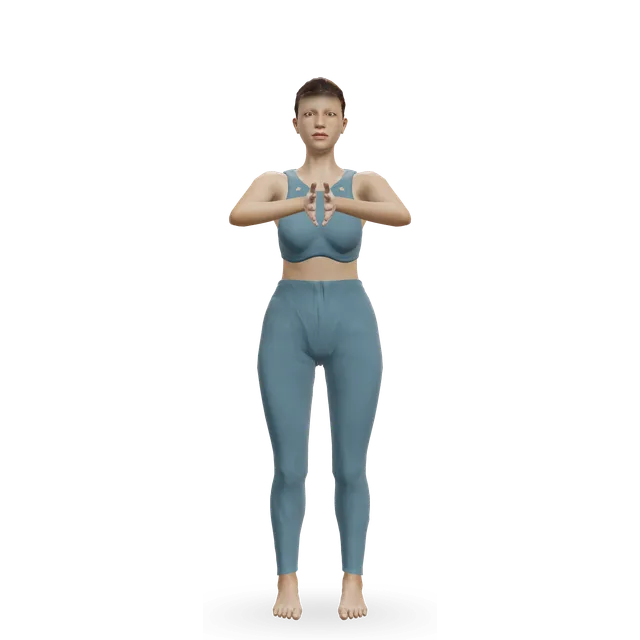
Isometric chest squeeze (palm press) demonstrated on the 3D figure3D demoIsometric chest squeeze (palm press)Beginner · No equipment

6 to 10 holds of 5 to 10 s, from gentle to firm over the stage, elbows close to your body · The move page's dose, an editorial starting point, as our chest muscle pain guide uses it

Harder: Machine chest fly (pec deck)

Wall push-up demonstrated on the 3D figure3D demoWall push-upBeginner · A wall

2 to 3 sets of 10 to 15, a short range at first · As in our costochondritis and chest muscle pain guides (editorial)

Harder: Push-up

Band row demonstrated on the 3D figure3D demoBand rowBeginner · A band + An anchor point

3 sets of 10 to 15, stopping 2 to 3 reps short of failure · The move page's dose, an editorial starting point

Harder: Supported single-arm dumbbell row

Doorway chest opener demonstrated on the 3D figure3D demoDoorway chest openerBeginner · A wall

Late in the stage: 2 to 3 gentle holds of 20 to 30 s, elbows low · As in our costochondritis and chest muscle pain guides (editorial). Not in the first weeks after a blow

Easier: Elbows back · Harder: Fish pose (Matsyasana)

Foam roller thoracic extension demonstrated on the 3D figure3D demoFoam roller thoracic extensionBeginner · A foam roller

5 to 8 slow breaths at each of 3 or 4 spots along the upper back · The move page's dose, an editorial starting point. Check with your clinician first if you have osteoporosis, as the move page says, and leave it out after a recent chest injury

Harder: Fish pose (Matsyasana)

Move on when: These feel comfortable, reaching and carrying the shopping don't flare it, and the wall push-ups stay within the pain rule.

Follow along: a timer, a cue and the next move, one step at a time.
Stage 3

Rebuild pressing, then lifting and sport

From about week 6, or once it has settled, 2 or 3 days a week, one change at a time, adding range before load (the written steps below). Go back a step if pressing flares the breastbone. After heart surgery, the cardiac team's timetable replaces this stage.

Incline push-up demonstrated on the 3D figure3D demoIncline push-upBeginner · A bench or box

3 sets of 8 to 12, lowering the surface over the weeks · As in our costochondritis and pec strain guides (editorial)

Easier: Wall push-up · Harder: Push-up

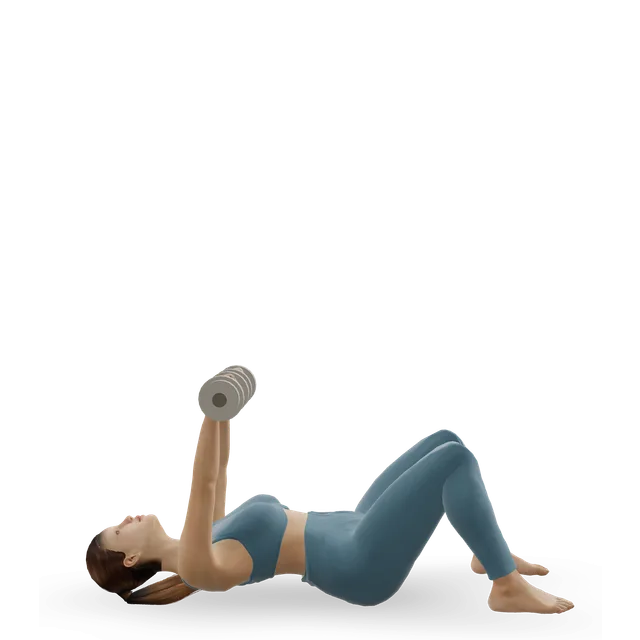
Dumbbell floor press demonstrated on the 3D figure3D demoDumbbell floor pressIntermediate · A dumbbell

2 to 3 sets of 8 to 12, stopping with 2 or 3 reps in reserve · The move page's dose, an editorial starting point. The floor stops your elbows at about shoulder level

Easier: Chest press machine · Harder: Bench press with chains

Band pull-apart demonstrated on the 3D figure3D demoBand pull-apartIntermediate · A band

2 to 3 sets of 15 · As in our costochondritis guide (editorial)

Easier: Prone Y-T-W raises · Harder: Tuck back lever

Dead bug demonstrated on the 3D figure3D demoDead bugBeginner · No equipment

8 slow reps each side · As in our costochondritis guide (editorial)

Easier: Dead bug heel taps · Harder: Forearm plank

Push-up demonstrated on the 3D figure3D demoPush-upIntermediate · No equipment

3 sets, building back to your usual numbers · As in our pec strain and chest muscle pain guides (editorial)

Easier: Wall push-up · Harder: Close-grip push-up (close triceps position)

Move on when: Our suggestion: your usual pressing, lifting and sport stay within the pain rule and your chest is no worse the next morning. If it flares, drop back a stage for a few days rather than stopping. Any new chest discomfort with effort is a warning sign, not a flare.

Follow along: a timer, a cue and the next move, one step at a time.

What to change for now

How to sleep tonight (written steps)

Our 3D figure can't show these changes. No trial has tested a sleeping position for breastbone pain, so each step names its source or is our suggestion.

  • 1. Chest wall pain: the NHS says costochondritis can be worse lying down. Try your back or the less sore side, propped up on pillows if lying flat hurts, and not face down (our suggestion, as our costochondritis guide says).
  • 2. After a blow to the chest: try to sleep more upright for the first few nights (the NHS's rib injury advice, which we apply to the breastbone).
  • 3. Burning behind the breastbone: raise the head of the bed by 10 to 20 cm with blocks or books, not extra pillows, and finish eating 3 or 4 hours before bed (the NHS). In pregnancy, prop your head and shoulders up and try sleeping on your left side (the NHS).
  • 4. Sharp pain that is worse lying back and better leaning forward, especially after a cold: this is how pericarditis behaves, so get an urgent GP appointment or NHS 111 the same day (the NHS).
  • 5. If it wakes you: sit up, take a few slow breaths and change position (our suggestion). Chest pain that is tight, heavy or spreading is a 999 call, at any hour.

Sources 3, 15, 13, 29, 14

Breathing, posture and moving through the day (written steps)

The breathing steps come from the NHS; the posture steps are our suggestion, because no study we read tested posture as a cause of breastbone pain.

  • 1. The NHS breathing exercise: sit, stand or lie comfortably, let your breath flow as deep into your belly as is comfortable without forcing it, breathe in through your nose and out through your mouth, counting from 1 to 5 each way if it helps, for at least 5 minutes. Small, quiet breaths are fine if a deep breath catches the sore spot (our suggestion).
  • 2. After a blow: breathe normally, cough when you need to with a pillow held against your chest, take slow, deep breaths regularly, and walk around and move your shoulders now and then; don't lie down or stay still for a long time (the NHS).
  • 3. Posture: no single correct posture is needed. Change position often, get up from a desk every 30 to 60 minutes, and keep a screen at eye level for comfort.
  • 4. Lifting and carrying: carry loads close to your body with both hands, and breathe out as you lift rather than holding your breath.

Sources 30, 15

After a blow to the chest (written steps)

No NHS page covers a bruised breastbone, so these steps borrow the NHS's advice for bruised or broken ribs. A broken breastbone usually follows a high-energy injury such as a car crash and often comes with other injuries, so after a serious accident, 999 or A&E comes first.

  • 1. Painkillers such as paracetamol or ibuprofen gel (or ibuprofen tablets if needed), and an ice pack wrapped in a tea towel on the sore area regularly in the first few days.
  • 2. Breathe normally, take slow, deep breaths regularly, and cough when you need to, holding a pillow against your chest.
  • 3. Don't strap your chest: the NHS says ribs can't easily be splinted and are left to heal naturally.
  • 4. Don't strain or lift heavy things, and avoid sport or exercise that makes the pain worse until it settles; then build back with the stage plan.
  • 5. Ask for an urgent GP appointment or call NHS 111 if the pain hasn't improved within a few weeks, you're coughing up yellow or green mucus, or you have a very high temperature or feel hot, cold or shivery.

Sources 15, 8

Reflux at night (written steps)

These come from the NHS, with NICE's agreement on the bed and meal timing.

  • 1. Eat smaller, more frequent meals, and nothing within 3 or 4 hours of bed.
  • 2. Raise the head of the bed by 10 to 20 cm with blocks or books under the legs, so your chest and head are above your waist; don't use extra pillows instead.
  • 3. Avoid the food and drink that trigger it, clothes that are tight around your waist, and smoking; lose weight if you need to.
  • 4. Ask a pharmacist about antacids and alginates, and see a GP if heartburn comes most days or the medicines don't help.
  • 5. In pregnancy: small meals, nothing within 3 hours of bed, your head and shoulders propped up, and try sleeping on your left side.

Sources 13, 28, 29

Pressing, lifting and sport come back (written steps)

No trial has tested this. These steps are our suggestion, as our chest muscle pain and pec strain guides set them out.

  • 1. Wall, then incline, then knee and full push-ups, adding range before load.
  • 2. Bench pressing at about half your old working weight, adding about 5% to 10% a week within the pain rule.
  • 3. Flys, deep dips and heavy wide-grip pressing come back last.
  • 4. Contact and throwing sports once pressing is comfortable and your chest is no worse the next morning.
  • 5. After heart surgery, your cardiac team's timetable replaces this list: the NHS says no heavy lifting for 3 months.

Source 17

After heart surgery

Your surgical and cardiac rehabilitation team's plan comes first. The NHS says recovery usually takes 2 to 3 months, most people are back to most of their normal activities after about 6 weeks, and there should be no heavy lifting for 3 months. Lasting pain around the breastbone is common and becomes less common over the years, in two separate studies, but a wound that is getting more painful or red, bleeding or leaking pus, a high temperature or palpitations need the care team. Our exercise page for heart surgery covers the precautions.

Sources 17, 18, 19, 20

Positions to swap, and why

Habit or positionWhy it mattersInstead
Pushing on through chest discomfort that comes on with effortChest discomfort brought on by exercise and eased by rest is how angina behaves.Stop, and get it checked: see the warning signs.
Heavy pressing, push-ups, chest flys and dips while the breastbone is soreThey load the joints beside the breastbone, and cutting back the activities that provoke it is the usual advice.Wall push-ups, then incline push-ups, built up gradually.Try: Wall push-up
Pressing on the sore spot to see if it's still thereRepeated pressing keeps it irritated (our suggestion).Judge progress by breathing, turning and daily tasks.
Rolling a ball or foam roller across the front of the chestIt presses on irritated joints, with no evidence of benefit, as our costochondritis guide says.Roll the upper back only, and check with your clinician first if you have osteoporosis.Try: Foam roller thoracic extension
Lying face down or on the sore sideThe NHS says costochondritis can be worse lying down; the face-down advice is our suggestion.Your back or the other side, propped up if needed.
A big meal late in the evening, then lying flat, with burning behind the breastboneHeartburn is worse after eating and lying down, and the NHS says don't eat within 3 or 4 hours of bed.Smaller, earlier meals, and raise the head of the bed.
Extra pillows to prop yourself up for refluxThe NHS says extra pillows can increase pressure on your belly and make reflux worse.Blocks or books under the head end of the bed, raising it 10 to 20 cm.
Clothes that are tight around your waistThe NHS advises against them with heartburn.Looser clothes.
Coughing hard without supportCoughing a lot is linked with costochondritis, and after a blow the NHS advises holding a pillow against your chest to cough.Hug a pillow to your chest when you cough, and get the cough treated.
Staying still and breathing shallowly after a blowThe NHS says don't lie down or stay still for a long time, and take slow, deep breaths regularly, to help prevent a chest infection.Slow breathing and short walks.Try: Slow breathing (6 breaths a minute)
Strapping your chestThe NHS says ribs can't easily be splinted and are left to heal naturally; no source covers strapping the breastbone.No strapping; keep breathing and moving.
Starting a new, strenuous upper-body programme as soon as it settlesRecent strenuous exercise and upper-body activity often come before costochondritis, a review says.The stage plan: wall, then incline, then full push-ups.Try: Incline push-up

Routines to follow

More moves for this area

Questions people ask

What causes pain in the sternum?

In general practice, the chest wall causes between a quarter and a half of chest pain, the heart and circulation about 1 in 7, and the lungs, anxiety and the gut most of the rest. Chest wall causes include costochondritis and strained chest muscles, but you can't tell them from the heart yourself, so chest pain always needs checking.

When should I worry about pain in my breastbone?

Call 999 for chest pain that is sudden, tight, heavy or squeezing, spreads to your arm, neck, jaw or back, or comes with breathlessness, sweating or feeling sick. Call 999 too for chest pain with sudden breathlessness or coughing up blood. For chest pain that comes and goes, see a GP or call NHS 111.

Why does my sternum hurt when I press on it?

Pain you can press on, beside the breastbone, is typical of costochondritis. But it doesn't rule out the heart: in one emergency department, 6% of people diagnosed with costochondritis were having a heart attack, so get new chest pain checked first.

Why does my breastbone hurt after eating or when I swallow?

A burning pain after eating, lying down or bending over is usually heartburn, eased by smaller meals, nothing to eat 3 or 4 hours before bed and raising the head of the bed. Difficulty swallowing, food sticking, weight loss or heartburn most days need a GP. Burning chest pain that is sudden and doesn't go away can be the heart: call 999.

Why does my sternum hurt when I breathe in or cough?

Costochondritis and bruised ribs hurt on a deep breath or a cough. Sharp pain on breathing in can also be pleurisy or pericarditis, which needs an urgent GP appointment or NHS 111. Sudden breathlessness, coughing up blood or a very fast heartbeat need 999.

Can anxiety cause sternum pain?

Yes: panic attacks can cause chest pain, a racing heart, sweating and breathlessness, usually for 5 to 20 minutes, and anxiety and other psychological causes account for about 1 in 10 to 1 in 5 cases of chest pain in general practice. The same symptoms can come from the heart and lungs, so new chest pain needs checking before it's put down to anxiety.

Why does my sternum hurt after a workout or bench pressing?

Recent strenuous upper-body exercise often comes before costochondritis, and chest muscles can be strained. Ease off pressing and build back gradually, from wall push-ups up. Chest discomfort that comes on during effort and eases with rest is different: it can be angina and needs checking.

I hit my chest. Is my sternum bruised or broken?

You can't tell yourself. In a Dutch trauma registry, about half of broken breastbones came from car crashes, and many came with other injuries, so go to A&E after a serious accident. Bruised or broken ribs usually heal within 2 to 6 weeks; no source we read gives a time for a bruised breastbone.

Why does my sternum still hurt years after open heart surgery?

Lasting pain is common: about 1 in 5 people still had some pain 3 years after heart surgery in one survey, and about 1 in 10 had pain around the incision at 7 years in another. Contact your care team for a wound that is red, more painful or leaking, a high temperature or palpitations, and see your GP about pain that limits you.

Can COVID-19 or the vaccine cause sternum pain?

Long COVID can cause chest pain or tightness, and pericarditis can follow a viral infection. Call 999 or go to A&E for chest pain or tightness, severe breathlessness or a pounding heart within a few days of a COVID-19 vaccine, because of a rare risk of heart inflammation.

Is sternum pain different in women, or in pregnancy?

Costochondritis was commoner in women in one emergency department (69%), but heart disease causes chest pain in women too, and the NHS says angina becomes more likely from 55 in women. In pregnancy, heartburn is common: small meals, propping your head and shoulders up and sleeping on your left side help. Pain below the ribs, or heartburn that doesn't ease with medicines, in pregnancy or the weeks after a birth needs urgent help: it can be pre-eclampsia.

Why does my sternum hurt at night or after sleeping?

Costochondritis can be worse lying down, heartburn is worse lying down, and pericarditis is worse lying down and better leaning forward. Breastbone pain that is constant or worse at night, with weight loss, a fever or night sweats, needs a GP.

Related exercise guides

Other pain guides

Sources

  1. Proulx 2009 · Costochondritis: diagnosis and treatment (review, Am Fam Physician)
  2. AAOS OrthoInfo · Sternoclavicular (SC) joint disorders
  3. NHS · Costochondritis
  4. Haasenritter 2015 · Causes of chest pain in primary care: 11 studies (systematic review and meta-analysis, Croat Med J)
  5. Verdon 2007 · Chest wall pain in 672 people with chest pain in Swiss general practice (cohort study, BMC Fam Pract)
  6. Bösner 2010 · Chest wall pain in 1,212 people with chest pain in German general practice (cohort study, Fam Pract)
  7. Disla 1994 · Costochondritis in 122 emergency department patients with chest pain (prospective study, Arch Intern Med)
  8. Klei 2026 · Broken breastbones among 568,399 Dutch adult trauma admissions (nationwide cohort, Eur J Trauma Emerg Surg)
  9. Swap 2005 · What the chest pain history can and can't tell about a heart attack (systematic review, JAMA)
  10. Mott 2021 · Costochondritis: rapid evidence review (review, Am Fam Physician)
  11. van Boekel 2023 · Pain at the lower tip of the breastbone: 5 patients (case series, Surg J)
  12. Ross 2004 · Infection of the sternoclavicular joint: 180 cases (review, Medicine)
  13. NHS · Heartburn and acid reflux
  14. NHS · Pericarditis (past its review date: reviewed July 2023, review due July 2026)
  15. NHS · Broken or bruised ribs
  16. Karangelis 2014 · 45 isolated breastbone fractures in a Greek hospital (case series, J Emerg Trauma Shock)
  17. NHS · Coronary artery bypass graft: recovery
  18. NHS · Coronary artery bypass graft: complications
  19. Marcassa 2015 · Pain 3 months, 1 year and 3 years after heart surgery in three groups of about 315 people (multicentre survey, J Cardiovasc Med)
  20. Harrogate 2021 · Pain at the incision 6 months and 7 years after heart surgery at one centre (prospective cohort, Eur J Pain)
  21. NICE · Recent-onset chest pain of suspected cardiac origin: assessment and diagnosis (CG95, guideline)
  22. National Institute for Health and Care Excellence (NICE) · Suspected cancer: recognition and referral (NG12, guideline)
  23. Worcestershire Acute Hospitals NHS Trust · Chest pain (emergency department information sheet, WAHT-PI-2373)
  24. Stochkendahl 2012 · Chiropractic care or self-management for acute chest wall pain in 115 people (RCT, J Manipulative Physiol Ther)
  25. Stochkendahl 2012 · The same chest wall pain trial after 1 year (RCT follow-up, J Manipulative Physiol Ther)
  26. Rovetta 2009 · Stretching for long-standing costochondritis (small retrospective study, G Ital Med Lav Ergon)
  27. Elsayed 2022 · Steroid tablets for Tietze syndrome in 40 people (pragmatic RCT, J Clin Pharm Ther)
  28. NICE · Gastro-oesophageal reflux disease and dyspepsia in adults: investigation and management (CG184, guideline)
  29. NHS · Indigestion and heartburn in pregnancy
  30. NHS · Breathing exercises for stress
  31. NHS · Angina
  32. NHS · Heart attack
  33. Smith 2017 · Should exercise be painful? 7 trials of long-lasting muscle and joint pain (systematic review and meta-analysis, Br J Sports Med)
  34. NHS · Chest pain (past its review date: reviewed August 2023, review due August 2026)
  35. NHS · Pulmonary embolism
  36. NHS · Coughing up blood (blood in phlegm)
  37. NHS · Pleurisy
  38. NHS · COVID-19 vaccine
  39. NHS · Swallowing problems (dysphagia) (past its review date: reviewed May 2023, review due May 2026)
  40. NHS · Pre-eclampsia
  41. NHS · Oesophageal cancer: symptoms (past its review date: reviewed June 2023, review due June 2026)
  42. NHS · Panic disorder (past its review date: reviewed August 2023, review due August 2026)
  43. NHS · Lumps
  44. NHS · Symptoms of bone cancer
  45. NHS · Shingles
  46. NHS · Ankylosing spondylitis: symptoms (past its review date: reviewed January 2023, review due January 2026)
  47. NHS · Long-term effects of COVID-19 (long COVID)

Exercise education, not a diagnosis or treatment plan. It is written from the guidelines and studies listed above; review by a clinician is pending. If your pain follows an injury, is severe, is getting worse, or comes with any warning sign listed on this page, get it assessed. Health disclaimer.