3D demo
Isometric chest squeeze (palm press)
Conditioning · Chest, Shoulders, Triceps
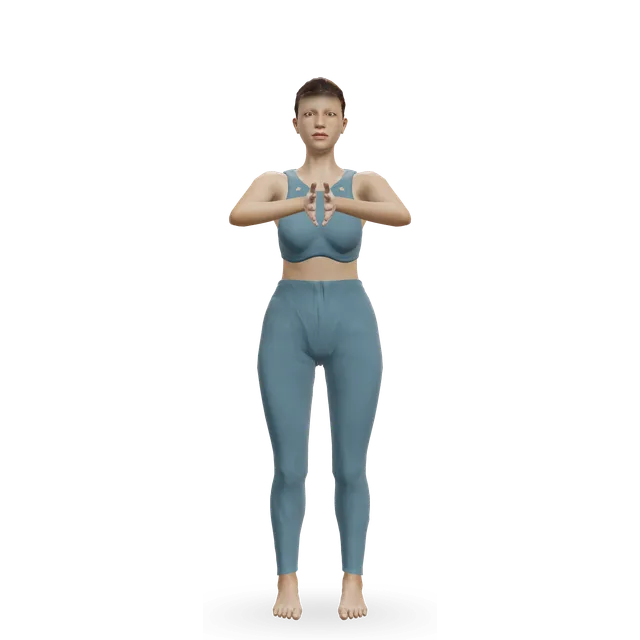
Loading the 3D figure…
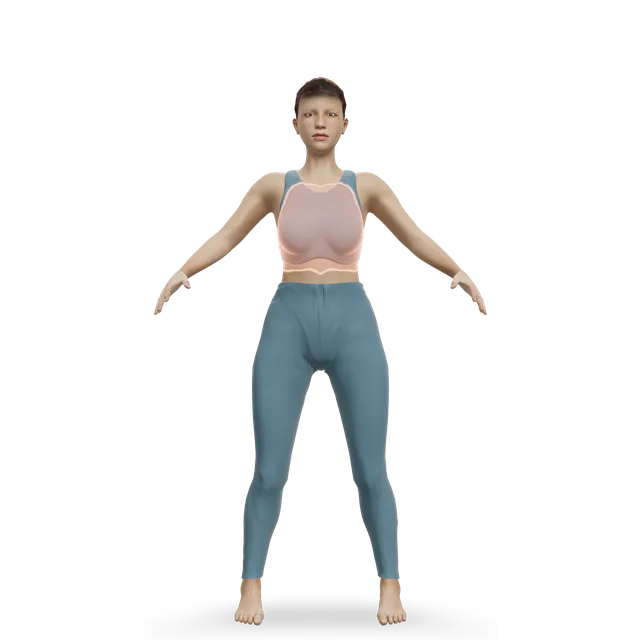
The figure repeats the movement from its starting position. Drag to turn it; the arrows open the demos either side.
With your palms pressed together in front of your chest and the elbows out to the sides, you squeeze the hands into each other and hold: chest work with no equipment and no movement, standing or sitting. Isometric training builds strength mostly at the angle you train (Lum 2019), so this strengthens the chest in the hands-together position you hold.
Movement guide
Isometric chest squeeze (palm press)
Make it easier or harder
Choose a version that fits your control and comfort.
Easier option
Practise this same drill at a comfortable pace for less time, keeping its technique. NHS strength exercises
Harder option
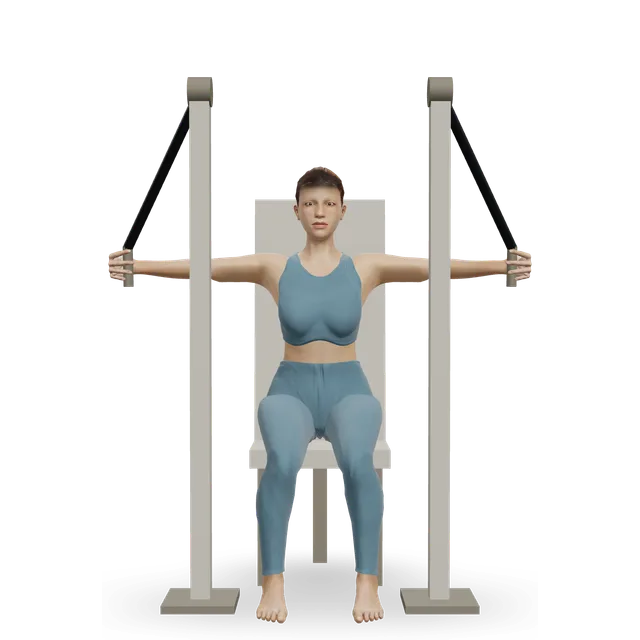 3D demoMachine chest fly (pec deck)Beginner · Strength machine
Suggested next step, beginner grade.
Source-researched guide.
Form cues
- Breathe out as the pressure builds; never hold your breath.
- Keep the shoulders down, away from the ears.
- Avoid: letting the elbows drop to your sides.
Practice and cautions
Hold each squeeze 5 to 10 seconds, rest about as long, and repeat 6 to 10 times (our editorial starting point). Isometric programmes aimed at strength total about 30 to 90 seconds of hard holds a session (Lum 2019).
Build the pressure gradually and keep breathing throughout; ease off if your wrists or shoulders ache. This is movement education, not an assessment or treatment prescription. Stop for sharp or increasing pain, dizziness, numbness or tingling; seek individual guidance for symptoms, injury or restrictions.
Sources and review status
Sources support the educational description; they do not establish that this exercise is suitable for you.
- Lum & Barbosa 2019 · Isometric strength training: gains are greatest at the angle trained; for strength, holds of 1 to 5 s near maximum, 30 to 90 s a session (review, Int J Sports Med) ↗
- Oranchuk 2019 · Isometric training built muscle size and maximal force across a range of intensities (systematic review, Scand J Med Sci Sports) ↗
- Free Exercise DB · community text ↗
Unlicense · Free Exercise DB contributors; derived from wrkout/exercises.json. Text import; no photographs or media. · Revision f00c92c7dcf1216a928a52c3706c7ce8e2f71ed5
No variation is labeled clinically validated.
What it works
Muscles
Main: Chest. Also: Shoulders, Triceps.
Anatomy: Pectoralis major, Pectoralis minor, Serratus anterior.
Equipment
None: body weight and floor space.
Level
Beginner. See the easier and harder options above.
Workouts that use it
- Muscular dystrophy exercises at home: low-impact cardio, holds instead of squats, and daily stretches · 35 min
- Pilates ring workout: a 20-minute magic circle class (a cushion works too) · 20 min
- Pilates arm workout: a 20-minute class with light weights or none · 20 min
- Seated chair Pilates: 15 minutes, no standing · 15 min
- Same-order chair Pilates for dementia: a 25-minute class to do together · 25 min
- Supported Pilates for muscular dystrophy: a 20-minute class sitting, then lying, with holds instead of lowering · 20 min
- Wheelchair Pilates: a 20-minute seated class for breathing, the trunk and the shoulders, with pressure relief between blocks · 20 min
- Push-and-pull Pilates for the upper body: a 30-minute class with a band · 30 min
Pain guides that use it
Part of a staged plan, with when to get help first.
- Recovery after carpal tunnel surgery: exercises, the scar and pillar pain, and getting back to work
- Pulled chest muscle or torn pec: how to tell, when it needs surgery, and the way back to pressing
- Chest muscle pain: a strained muscle, the chest wall, the heart and lungs, and how to build back
- Sternum (breastbone) pain: the chest wall, a blow, reflux, the heart and lungs, and what helps
- Shoulder pain on the chest fly: the front of the shoulder, the pec tendon, depth and the pec deck
Guides that use it
- Pilates ring exercises guide
- Pilates for arms guide
- Pilates for strength guide
- Chair Pilates guide
- Pilates at home guide
- Pilates for dementia guide
- Pilates for muscular dystrophy guide
- Pilates for spinal cord injury guide
Show all 13 guidesShow fewer guides
Similar moves
Browse more
Questions people ask
What muscles does the Isometric chest squeeze (palm press) work?
Mainly the chest, with help from the shoulders and triceps.
What equipment do I need for the Isometric chest squeeze (palm press)?
No equipment: your body weight and a little floor space.
Is the Isometric chest squeeze (palm press) good for beginners?
It is graded beginner, so it suits most people starting out. When it feels easy, try the Machine chest fly (pec deck).
How do I make the Isometric chest squeeze (palm press) harder?
Progress to the Machine chest fly (pec deck). Follow that guide’s technique and any stated timing.