Bodyweight upper body exercises
Bodyweight upper body exercises, from the easiest version to the hardest. Everything here uses your own body as the load, with at most a floor, a wall or a sturdy step.
Beginner bodyweight upper body exercises 44
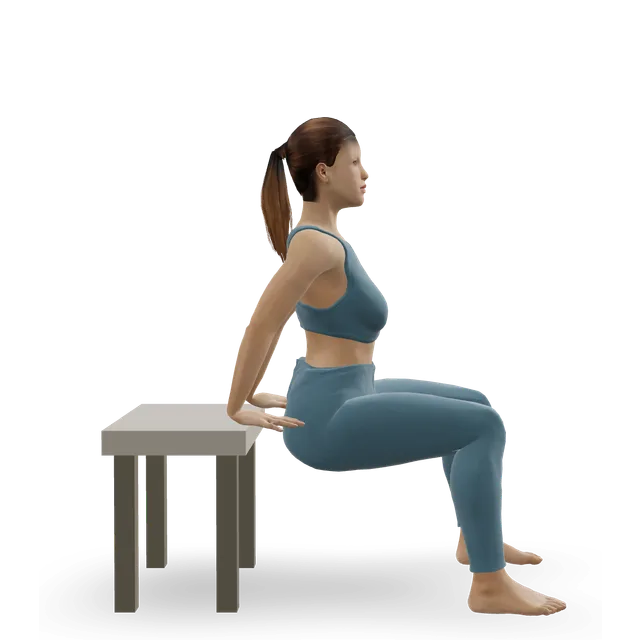 3D demoBench dipBeginner · A bench or boxHands on a bench behind you, the feet flat on the floor in front and the knees slightly bent, so the legs take part of the load.
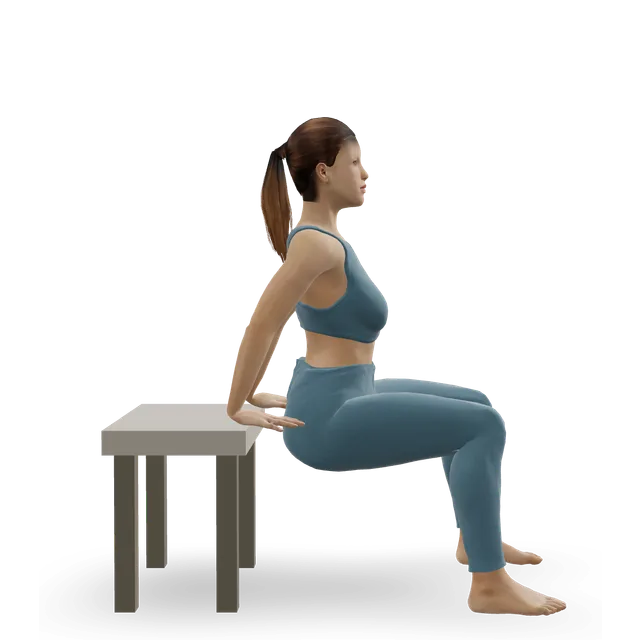 3D demoBent-knee bench dipBeginner · A bench or boxThe bench dip with the knees bent and the feet flat on the floor close in, so the legs take more of the body's weight: NASM's first way to make the bench dip easier.
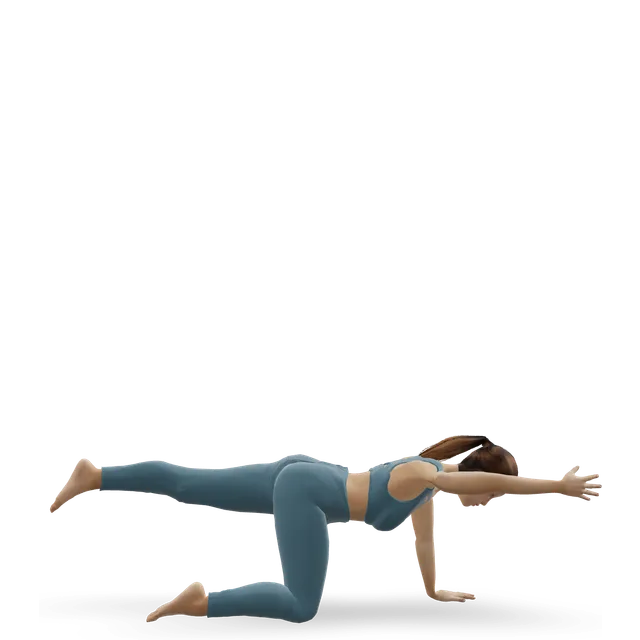 3D demoBird dogBeginner · No equipmentFrom all fours, the opposite arm and leg reach long together and hold while the back stays still: the back-extensor exercise of McGill's three for spine health.
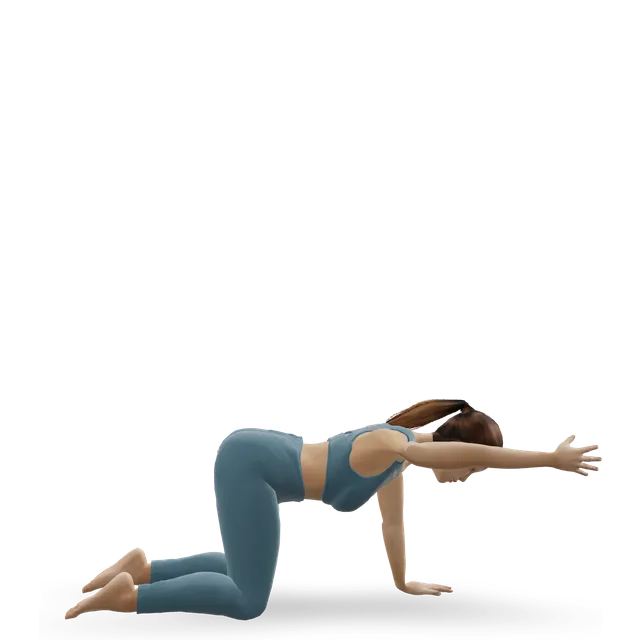 3D demoBird dog, one limb at a timeBeginner · No equipmentThe bird dog's first step: on hands and knees, one arm or one leg reaches out at a time while the other three stay planted, so the back learns to stay still before the opposite arm and leg lift together.
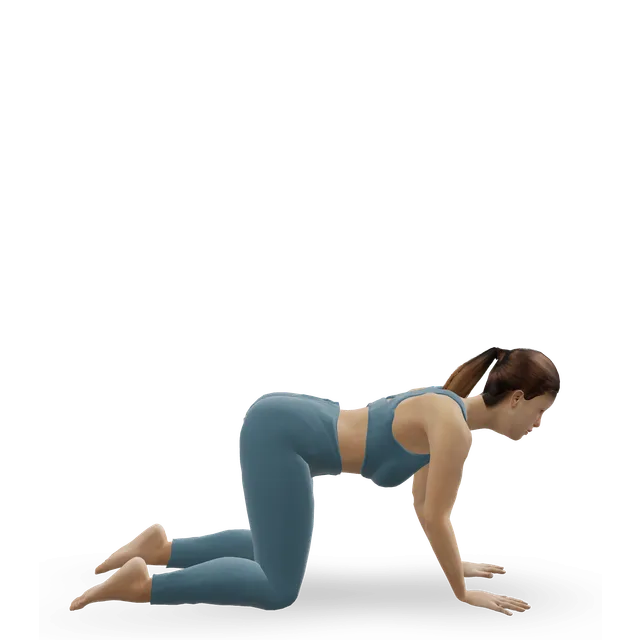 3D demoCat-cowBeginner · No equipmentOn all fours, arch and round the spine one segment at a time.
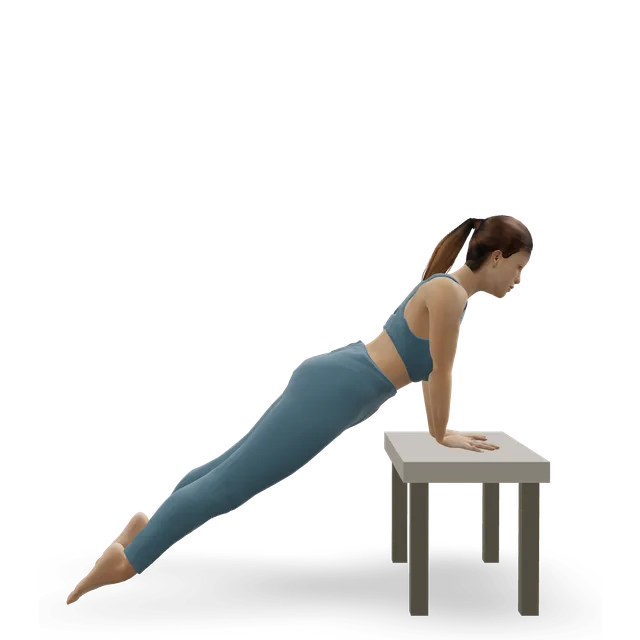 3D demoClose-grip incline push-upBeginner · Other / check instructionsThe incline push-up with the hands close together on a bench or other sturdy support.
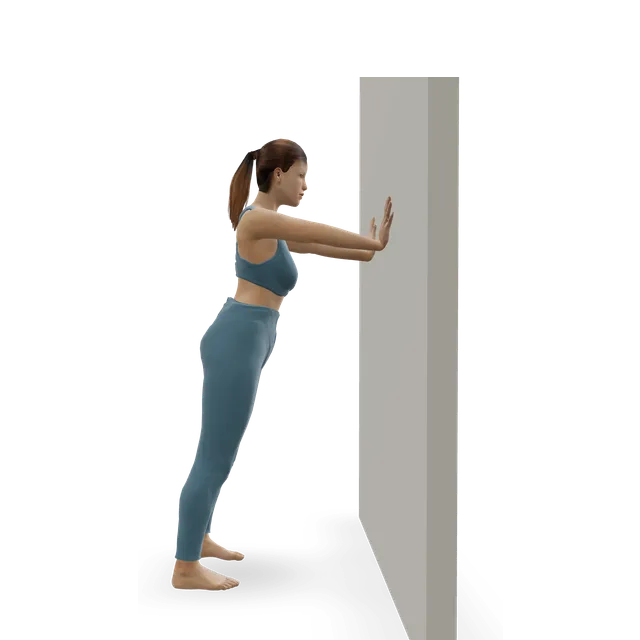 3D demoElastic wall bounceBeginner · A wallA gentle, springy wall push-up: tip forward onto a wall with the body in one long line, catch it softly and rebound straight back to standing.
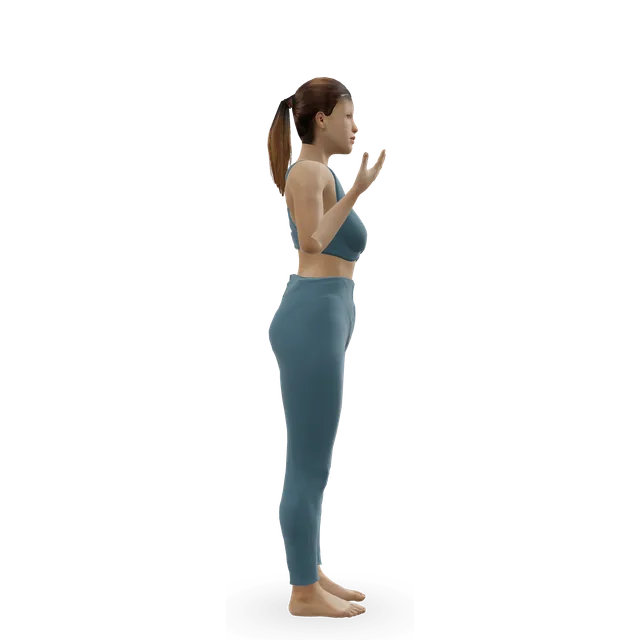 3D demoElbow bend and straighten (elbow range of motion)Beginner · No equipmentSitting or standing, you slowly bend the elbow as far as it goes, as if to touch your shoulder, then straighten it as far as it goes, with the other hand helping gently at each end if needed.
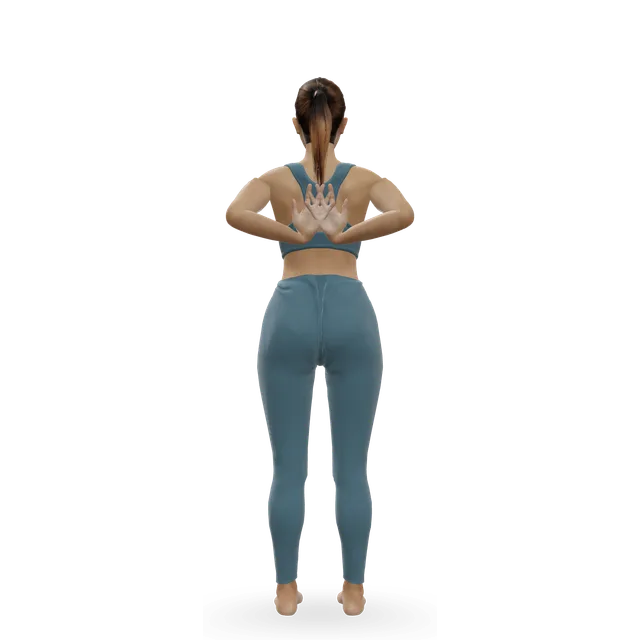 3D demoHand up the back (back scratch reach)Beginner · No equipmentSitting or standing, you slide your hands behind your back and up towards your shoulder blades, then lower them.
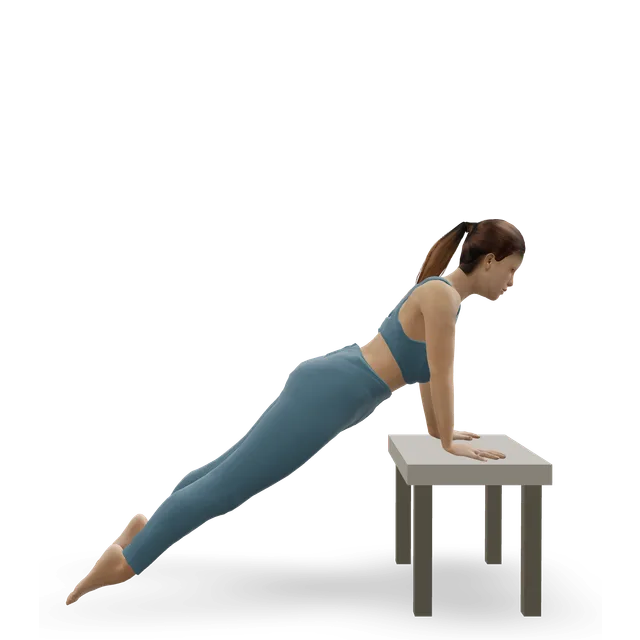 3D demoIncline push-upBeginner · A bench or boxHands on a stable raised surface reduce the load compared with a floor push-up.
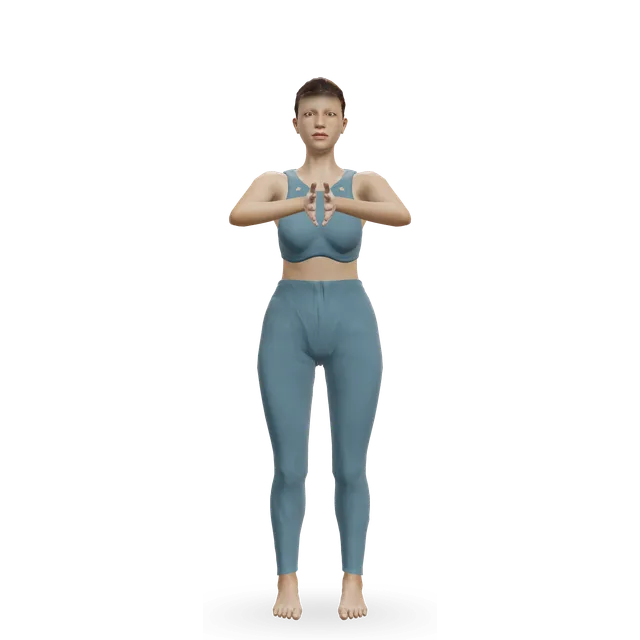 3D demoIsometric chest squeeze (palm press)Beginner · No equipmentWith your palms pressed together in front of your chest and the elbows out to the sides, you squeeze the hands into each other and hold.
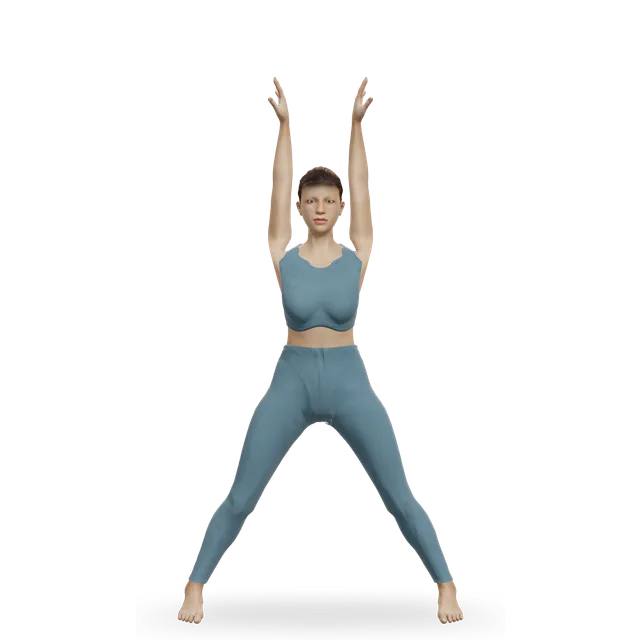 3D demoJumping jackBeginner · No equipmentJumping the feet apart as the arms sweep overhead and back together: the least demanding of the bodyweight intervals measured.
- Knee hover (Pilates tabletop hover) · Beginner
- Knee push-up · Beginner
- Kneeling sprint arm drill · Beginner
- Median nerve glide (six hand positions, for carpal tunnel) · Beginner
- Median nerve slider (neck-to-arm nerve glide) · Beginner
- Mermaid (Pilates seated side bend) · Beginner
- Pendulum exercise (Codman's pendulum) · Beginner
- Prone back raise, arms out to the sides · Beginner
- Prone press-up (McKenzie press-up) · Beginner
- Prone Y-T-W raises · Beginner
- Quadruped wrist rocks · Beginner
- Reverse-grip incline push-up · Beginner
- Scapular push-up (push-up plus) · Beginner
- Seated upper-back lift (sit tall, shoulders back) · Beginner
- Shoulder CARs (controlled articular rotations) · Beginner
- Side-lying open book · Beginner
- Spine stretch forward (Pilates spine stretch) · Beginner
- Spine twist (Pilates) · Beginner
- Standing punches (shadow boxing) · Beginner
- Standing spiral reach · Beginner
- Step jack (low-impact jumping jack) · Beginner
- Table slide (seated forward reach) · Beginner
- Tendon glides (hand tendon gliding exercises) · Beginner
- Wall angel · Beginner
- Wall climb (finger walk up the wall) · Beginner
- Wall push-up · Beginner
- Wall roll-down (wall Pilates) · Beginner
- Wide incline push-up · Beginner
- Wrist & forearm flow · Beginner
- Finger joint blocking (single-joint finger bends) · Beginner
- Finger walking (SARAH hand stretch) · Beginner
- Thumb lifts and O-sign (thumb base exercises) · Beginner
Intermediate bodyweight upper body exercises 28
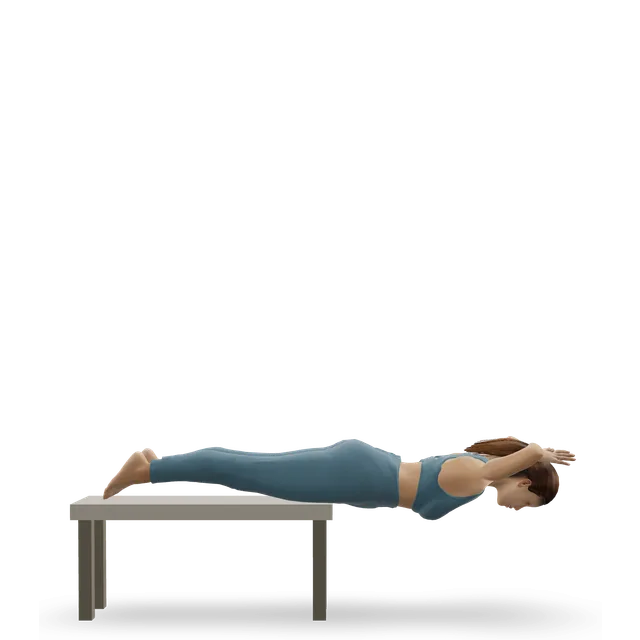 3D demoBack extension off a flat benchIntermediate · A bench or boxFace down along a flat bench with the hips off its end and a partner holding the legs, the trunk bends down off the end and rises back to straight.
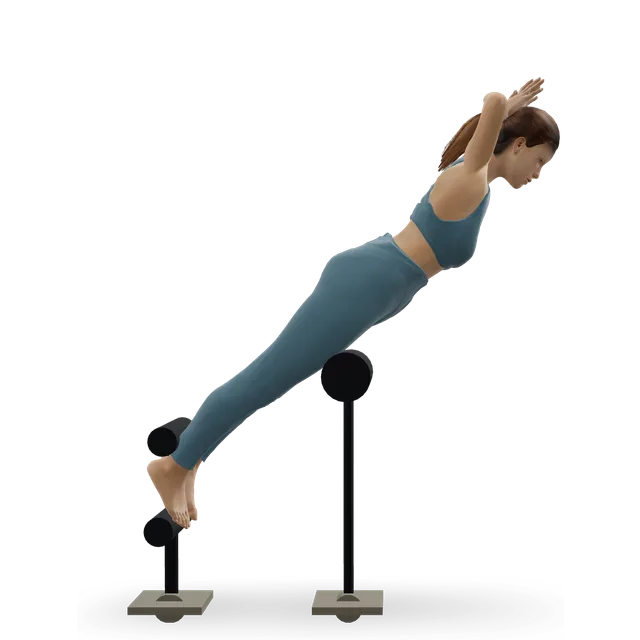 3D demoBack extension on a 45-degree benchIntermediate · A bench or boxHinging over the pad of a 45-degree Roman chair and rising until the body is straight.
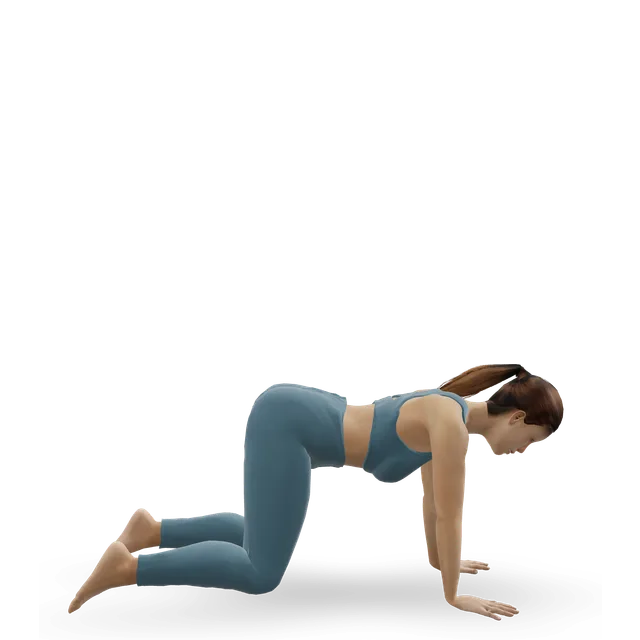 3D demoBear crawlIntermediate · No equipmentOn hands and toes with your knees hovering just off the floor, you crawl by moving the opposite hand and foot together, back flat and hips level.
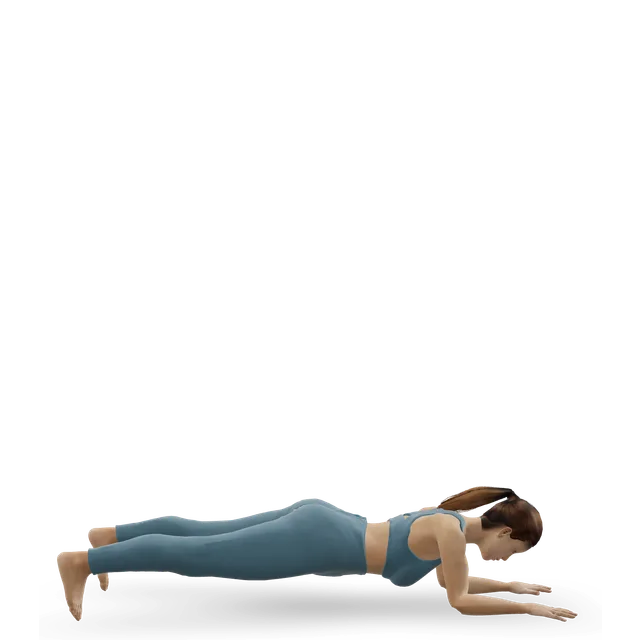 3D demoBody-up (plank triceps extension)Intermediate · No equipmentFrom a forearm plank with your palms flat on the floor, you press through your hands until your elbows are straight, lifting into a high plank, then lower your forearms back down.
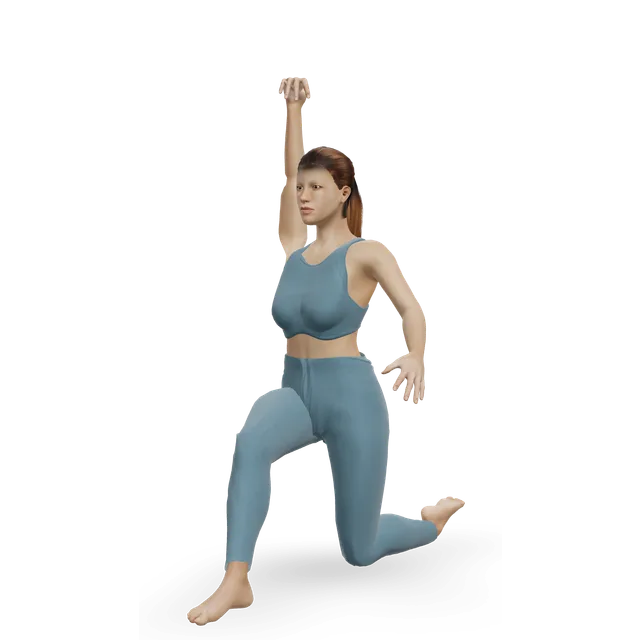 3D demoBodyweight get-upIntermediate · No equipmentThe get-up's whole sequence with the top arm pressed to the ceiling and no weight: onto the elbow, the hand, a bridge, the leg swept back to kneel, a half-kneel and standing, then back down.
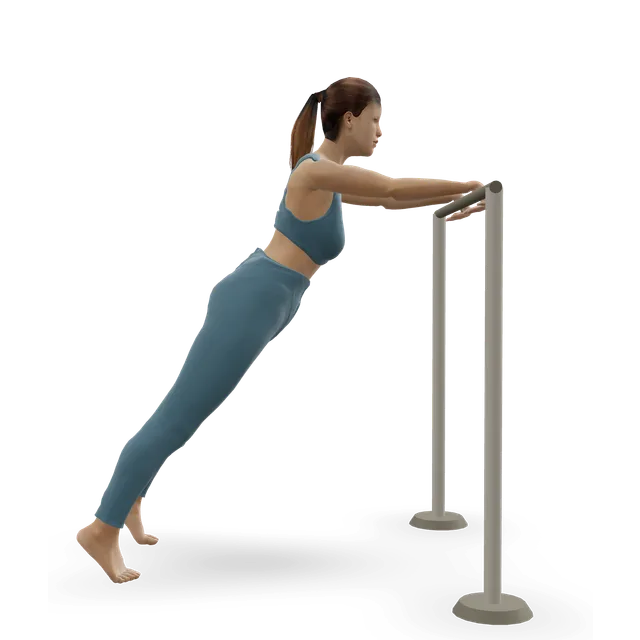 3D demoBodyweight triceps extensionIntermediate · A barbellLeaning on a bar fixed at about chest height, your body in one straight line, you bend your elbows to bring your forehead toward the bar and press back to straight arms.
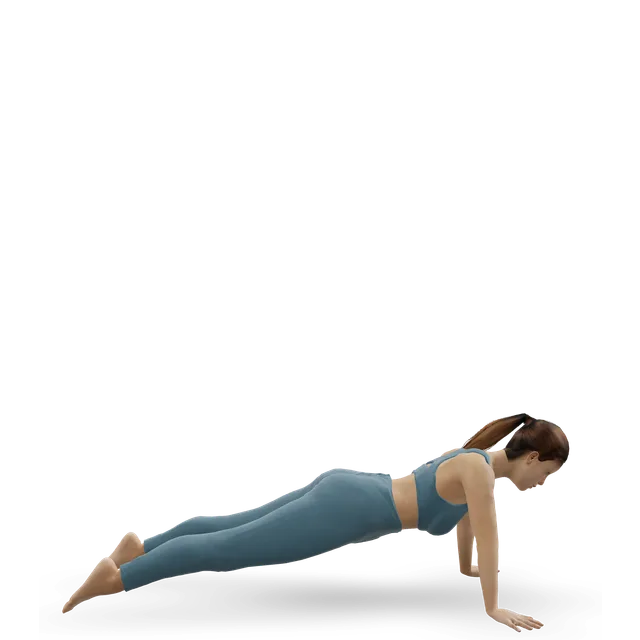 3D demoClose and wide push-upsIntermediate · No equipmentPush-ups done with the hands wider or closer than shoulder width, usually a set of each: wide hands take the elbows further out, close hands keep them by the ribs.
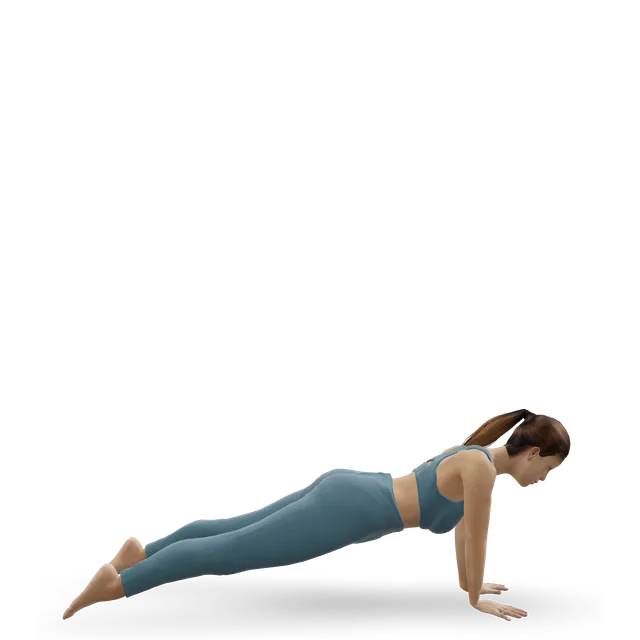 3D demoClose-grip push-up (close triceps position)Intermediate · No equipmentThe push-up with the hands under the shoulders or closer and the elbows brushing the sides.
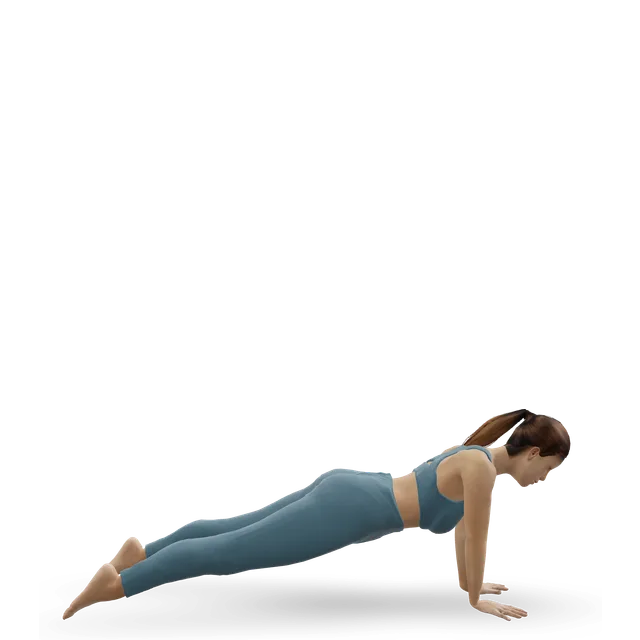 3D demoClose-grip push-up on a dumbbellIntermediate · A dumbbellA push-up with both hands close together on top of an upright dumbbell, your head in line with your spine and your elbows angled about 45 degrees from your body.
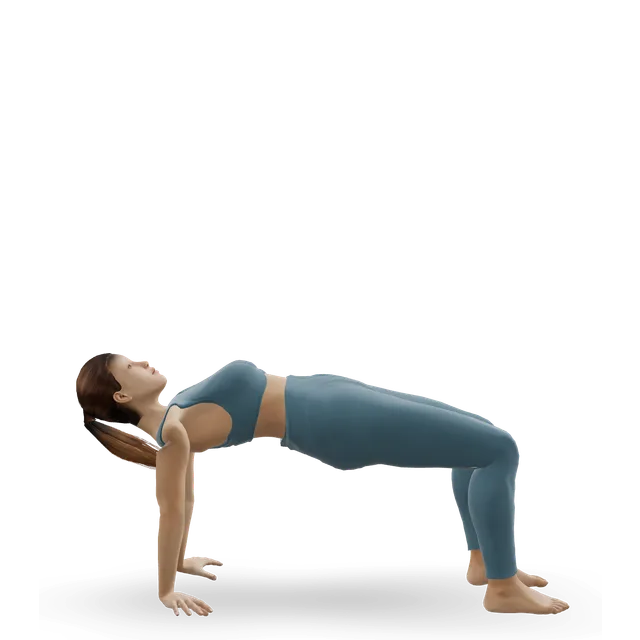 3D demoCrab reachIntermediate · No equipmentFrom sitting with your hands behind you, you lift your hips into a tabletop, then drive them higher as one arm reaches up and over your head, the chest turning open.
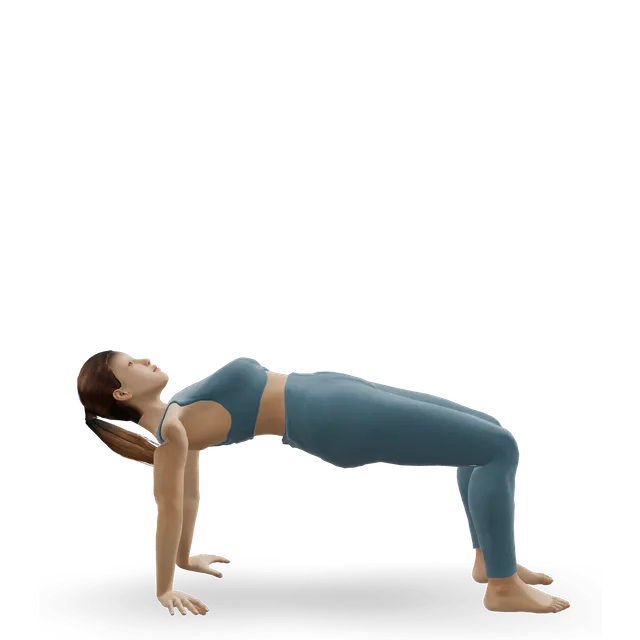 3D demoCrab walkIntermediate · No equipmentSitting with your hands flat behind you and your feet flat in front, you lift your hips into a table and walk on hands and feet, opposite hand and foot together.
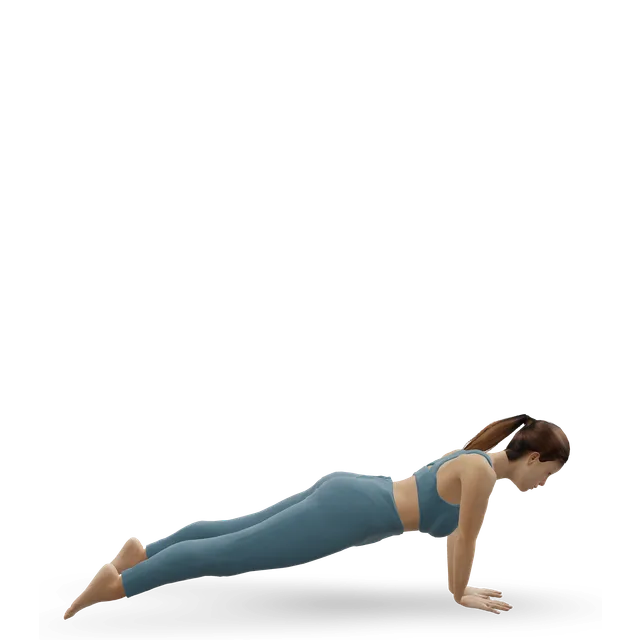 3D demoDiamond push-upIntermediate · No equipmentThe hands together under the chest, the thumbs and index fingers making a triangle: a narrow push-up that loads the triceps most.
- Double-leg kick (Pilates double kick) · Intermediate
- Flying sword (elastic forward swing) · Intermediate
- Inchworm walkout · Intermediate
- Pike push-up · Intermediate
- Push-up · Intermediate
- Push-up (Pilates) · Intermediate
- Saw (Pilates) · Intermediate
- Segmental roll-down · Intermediate
- Side-to-side push-up wipers · Intermediate
- Straight-arm plank (high plank) · Intermediate
- Superman · Intermediate
- Swan (Pilates swan dive) · Intermediate
- Swimming (Pilates) · Intermediate
- Wide push-up · Intermediate
- Drop push-up from boxes · Intermediate
- Lateral monkey travel · Intermediate
Advanced bodyweight upper body exercises 23
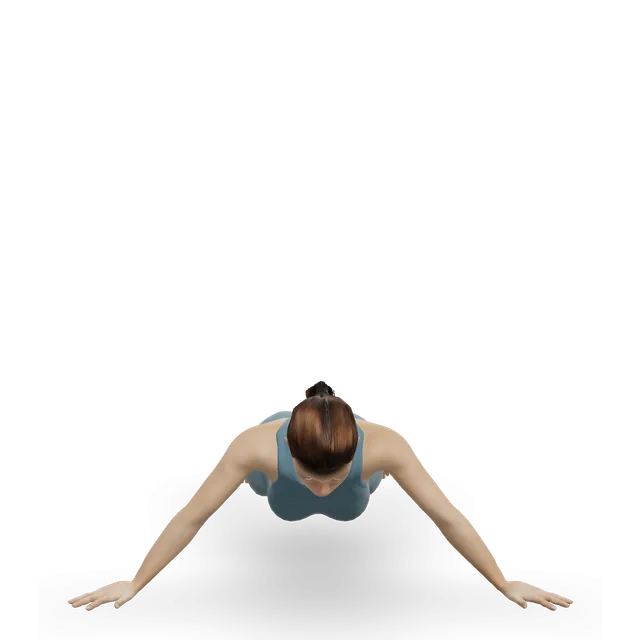 3D demoArcher push-upAdvanced · No equipmentHands set very wide, the chest shifts over one bending arm while the other stays nearly straight: most of the load on one arm, the other helping.
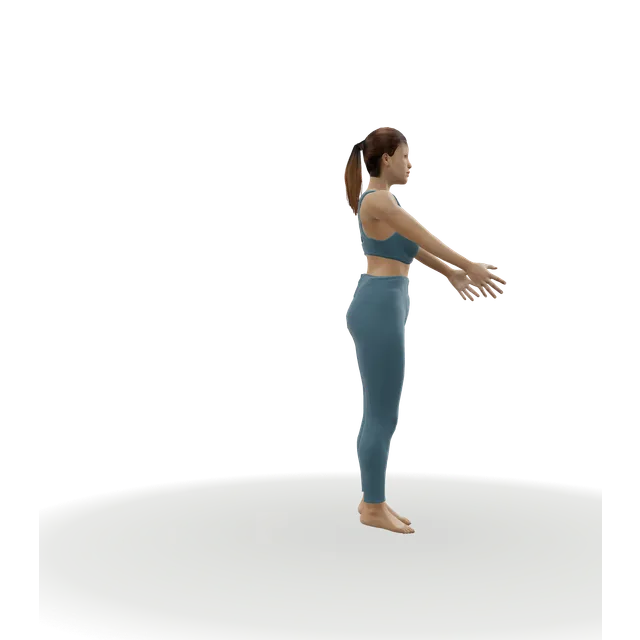 3D demoBurpeeAdvanced · No equipmentFrom standing, the hands drop to the floor, the feet jump back to a plank and in again, and the body springs up into a jump: the most demanding of the three intervals.
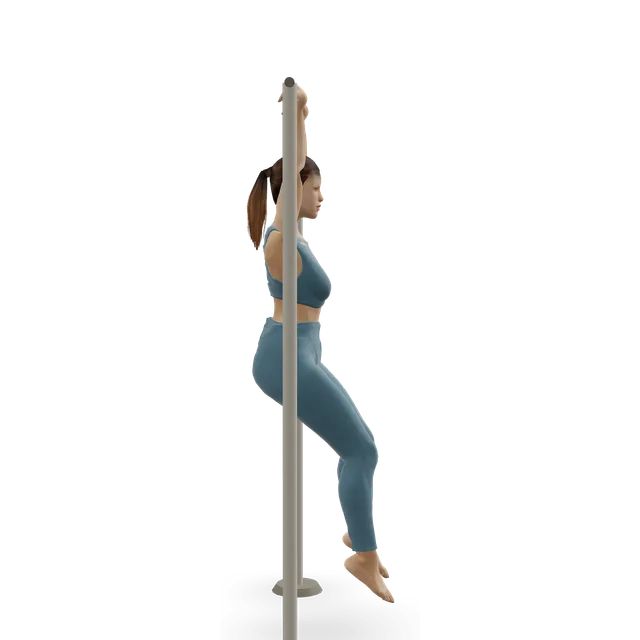 3D demoChin-up with a knee raise (gorilla chin)Advanced · Pull-up barHanging from a bar in an underhand grip with your knees bent, you pull up into a chin-up while drawing your knees up to your chest, then lower both under control.
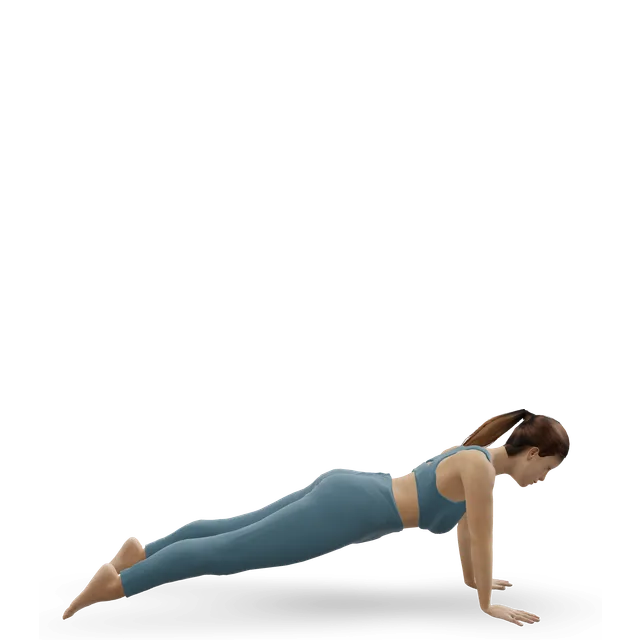 3D demoClap push-upAdvanced · No equipmentA push-up driven hard enough that the hands leave the floor for a quick clap: the plyometric version, which in a force-plate study loaded faster than push-ups dropped from low boxes.
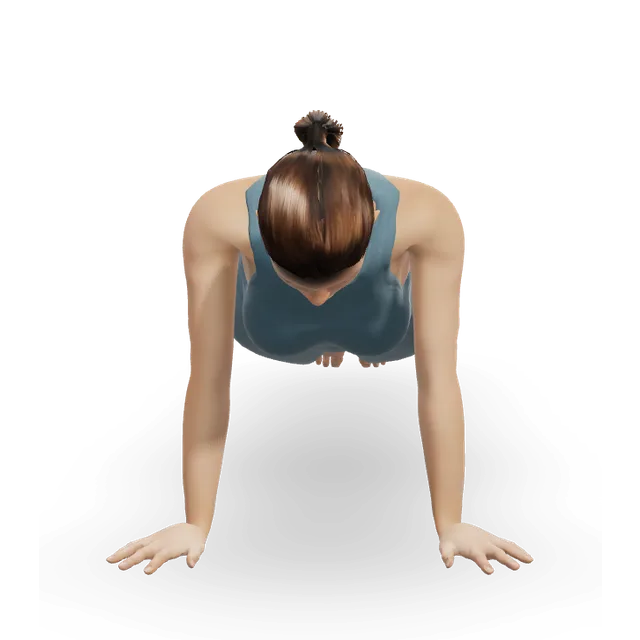 3D demoClock push-upAdvanced · No equipmentA plyometric push-up that hops the hands about a foot to the side on each rep, the body pivoting on the feet like the hand of a clock, until it has worked all the way round.
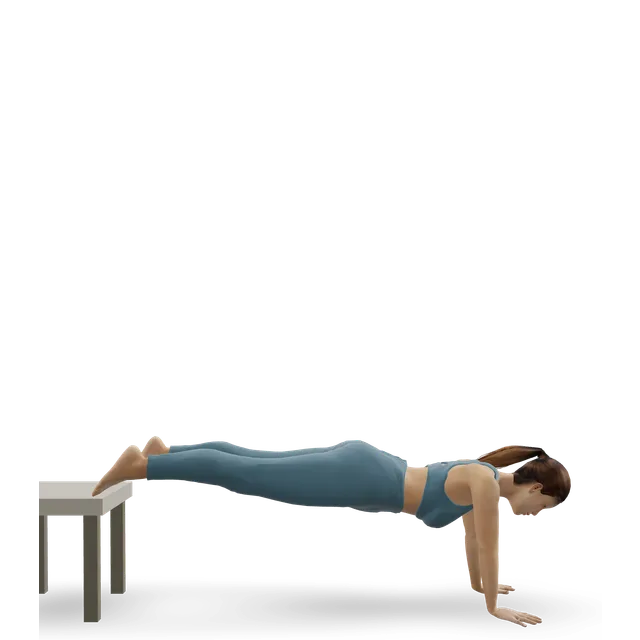 3D demoFeet-elevated push-upAdvanced · A bench or boxFeet on a bench increase upper-body demand compared with the standard push-up.
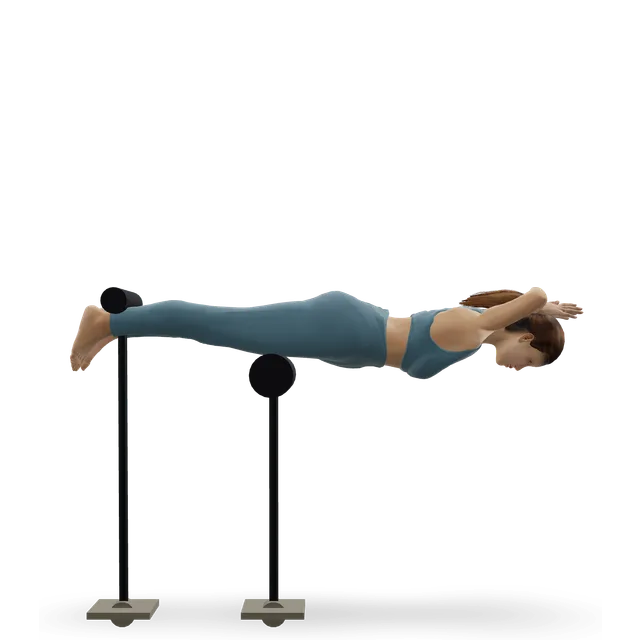 3D demoHorizontal back extension (hyperextension, Roman chair)Advanced · A bench or boxThe same hinge over a level Roman chair: the trunk hangs straight down and rises to level against its full weight, and the back extensors worked hardest of the chair's angles in an EMG comparison.
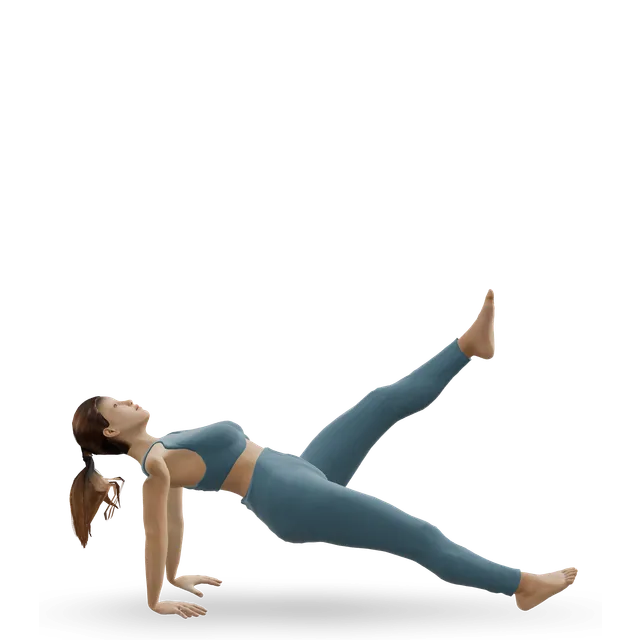 3D demoLeg pull back (Pilates leg pull up)Advanced · No equipmentIn a reverse plank, hands behind you and hips up, you kick one leg toward the ceiling and lower it, alternating legs.
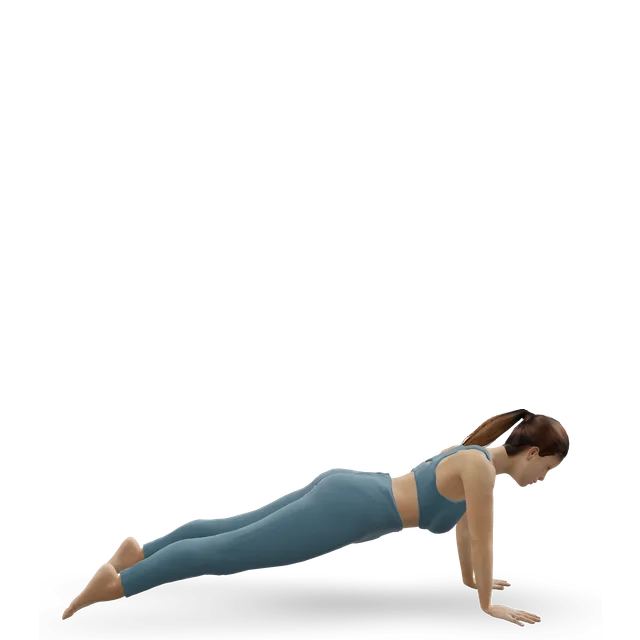 3D demoLeg pull front (Pilates leg pull down)Advanced · No equipmentIn a straight-arm plank you lift one leg, rock back over the standing heel and forward again, then switch legs: an upgrade of the plank.
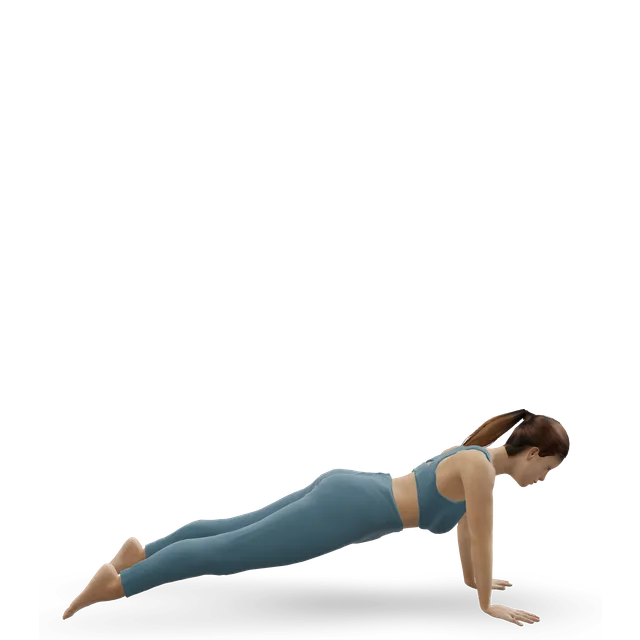 3D demoPlyometric push-upAdvanced · No equipmentThe push-up driven up fast enough that the hands leave the floor, landing on soft elbows into the next one.
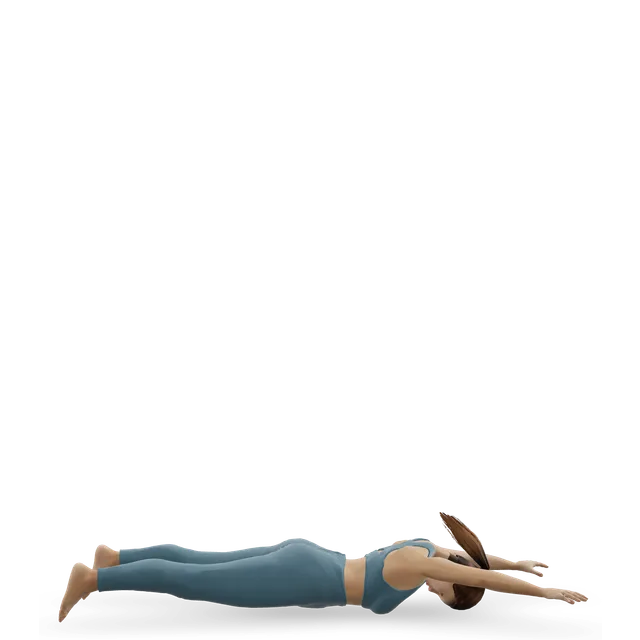 3D demoProne swimmersAdvanced · No equipmentLying face down with your arms overhead and hovering, you sweep them out through a T and down past your hips until the backs of your hands rest on your lower back, then reverse the circle without touching down.
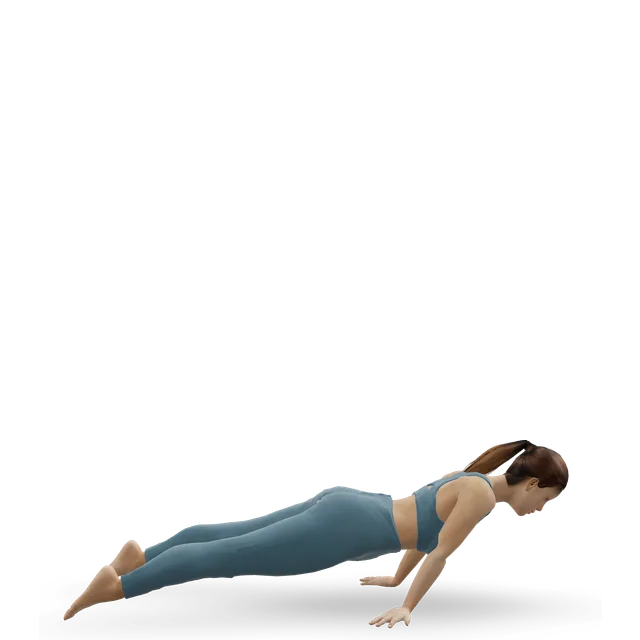 3D demoPseudo planche push-upAdvanced · No equipmentIn a straight-arm plank with your fingers turned out about 45 degrees, you lean forward until your hands sit roughly beside your hips, then lower and press up while keeping that lean.
- Push-up to side plank (T push-up) · Advanced
- Rocking (Pilates) · Advanced
- Side bend (Pilates) · Advanced
- Single-leg push-up · Advanced
- Triceps dip (upright) · Advanced
- Wall walk · Advanced
- Feet-raised plyometric push-up onto steps · Advanced
- Freestanding handstand · Expert
- One-arm push-up · Expert
- Tuck planche · Expert
- Wall handstand push-up · Expert
More bodyweight exercises (no equipment)
- All bodyweight exercises (no equipment)317
- Bodyweight chest exercises29
- Bodyweight back exercises27
- Bodyweight shoulder exercises29
- Bodyweight triceps exercises30
- Bodyweight ab exercises90
- Bodyweight glute exercises89
- Bodyweight quad exercises67
- Bodyweight hamstring exercises21
- Bodyweight calf exercises33
- Bodyweight arm exercises38
- Bodyweight leg exercises136
- Bodyweight core exercises96
- Bodyweight full body exercises67
More upper body exercises
Questions people ask
What are good bodyweight upper body exercises for beginners?
Start with moves graded easy, such as Bench dip, Bent-knee bench dip, Bird dog. There are 44 of them on this page. Each guide links to a harder option for when it starts to feel easy.
Can I do bodyweight upper body exercises at home without equipment?
Yes. 76 of the 95 moves here need nothing but your body, a floor, a wall or a step, for example Bird dog, Bird dog, one limb at a time, Cat-cow.
What are the hardest bodyweight upper body exercises?
Moves graded advanced or expert include Freestanding handstand, One-arm push-up, Tuck planche. Most have stepping stones; open a guide to see its easier options.
How do I choose the right level?
Pick a move you can do for the planned reps or time with control and a couple of reps in reserve. If it is easy, step up; if your form slips, step down. Every guide shows an easier and a harder option when one exists.
Movement education, not medical advice. Difficulty grades for imported entries are source-assigned and await editorial review. Stop for sharp or increasing pain, numbness or tingling. Health disclaimer.