Median nerve glide (six hand positions, for carpal tunnel)
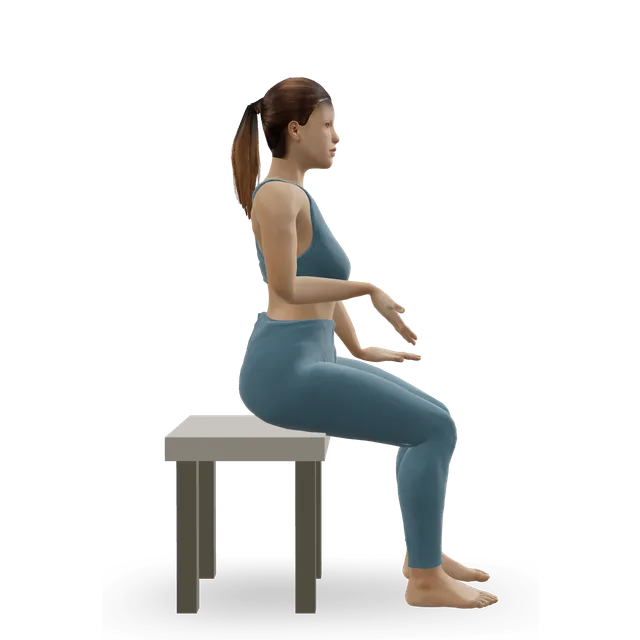
Starting from a loose fist with the wrist straight, you open the hand in six steps (fingers straight, wrist back, thumb out, palm up, then a gentle thumb stretch with the other hand), pausing in each, so the median nerve slides through the carpal tunnel. Only the hand, wrist and forearm move: the median nerve slider is the different, neck-to-arm glide for nerve symptoms that start in the neck.
Movement guide
Median nerve glide (six hand positions, for carpal tunnel)
Loading the 3D figure…
Source-researched guide. Clinical review is pending.
How to move
- Sit tall. Bend your elbow at your side so your forearm points forward, palm facing you, and make a loose fist with the thumb outside the fingers, wrist straight.
- Straighten the fingers, keeping the thumb beside the index finger.
- Keeping the fingers straight, bend the wrist back.
- Keeping the wrist and fingers there, take the thumb out to the side.
- Turn the forearm so the palm faces up.
- Use the other hand to ease the thumb gently a little further out, then go back to the loose fist.
- Pause in each position, and stop at the first sense of a pull or tingle; it should never hurt.
Form cues
- One step at a time: stop at the step where you first feel a pull.
- Keep the shoulder relaxed and keep breathing.
- Avoid: jumping straight to the last position, pushing into tingling, or straightening the elbow and tilting your head away at the same time, which pulls the nerve tight along its whole length.
Practice and cautions
Hold each position for about 7 seconds, 5 times through, 3 times a day: the protocol in a carpal tunnel trial (both groups in that trial did the glides, so it shows the dose, not the effect). In reviews, nerve glides improved carpal tunnel pain and function a little in the short term, on very low-certainty evidence, and they don't improve long-term outcomes.
A little extra tingling is expected but should fade within an hour; if it doesn't, do fewer or stop. Stop and see a GP if numbness becomes constant or spreads, or the thumb gets weaker. Skip the last step if the base of the thumb is arthritic or the thumb side of the wrist is sore (de Quervain's). It doesn't replace a night splint, or getting help when symptoms persist. This is movement education, not an assessment or treatment prescription. Stop for sharp or increasing pain, dizziness, or numbness or tingling that spreads, lasts more than an hour or comes with weakness; seek individual guidance for symptoms, injury or restrictions.
Sources and review status
Sources support the educational description; they do not establish that this exercise is suitable for you.
- Bartkowiak 2019 · Nerve and tendon gliding exercises in carpal tunnel syndrome (trial; cited for its glide positions and dose, Indian J Orthop) ↗
- St George's University Hospitals NHS · Median nerve gliding (hand therapy leaflet, 2024) ↗
- Núñez de Arenas-Arroyo 2021 · Nerve gliding (neurodynamic) techniques for carpal tunnel syndrome (meta-analysis, JOSPT) ↗
- Page 2012 · Exercise and mobilisation for carpal tunnel syndrome (Cochrane review) ↗
- Akalin 2002 · Nerve and tendon gliding exercises with a splint for carpal tunnel syndrome (RCT, Am J Phys Med Rehabil) ↗
- AAOS 2024 · Management of carpal tunnel syndrome: evidence-based clinical practice guideline ↗
No variation is labeled clinically validated.
What it works
Muscles
Main: Forearms.
Anatomy: Brachioradialis, Wrist and finger flexors, Wrist and finger extensors.
Equipment
None: body weight and floor space.
Level
Beginner.
Pain guides that use it
Part of a staged plan, with when to get help first.
Similar moves
Browse more
Questions people ask
What muscles does the Median nerve glide (six hand positions, for carpal tunnel) work?
Mainly the forearms.
What equipment do I need for the Median nerve glide (six hand positions, for carpal tunnel)?
No equipment: your body weight and a little floor space.
Is the Median nerve glide (six hand positions, for carpal tunnel) good for beginners?
It is graded beginner, so it suits most people starting out.