Drop push-up from boxes
In a push-up position with your hands on two low boxes, you lift the hands, drop to the floor between them and catch yourself on bending elbows. Davies 2015 rates drop push-ups intermediate; in a force-plate study, drops from boxes 4, 8 or 11 centimetres high landed with the same peak force, while clap push-ups loaded faster (Koch 2012).
Movement guide
Drop push-up from boxes
Make it easier or harder
Choose a version that fits your control and comfort.
Easier option
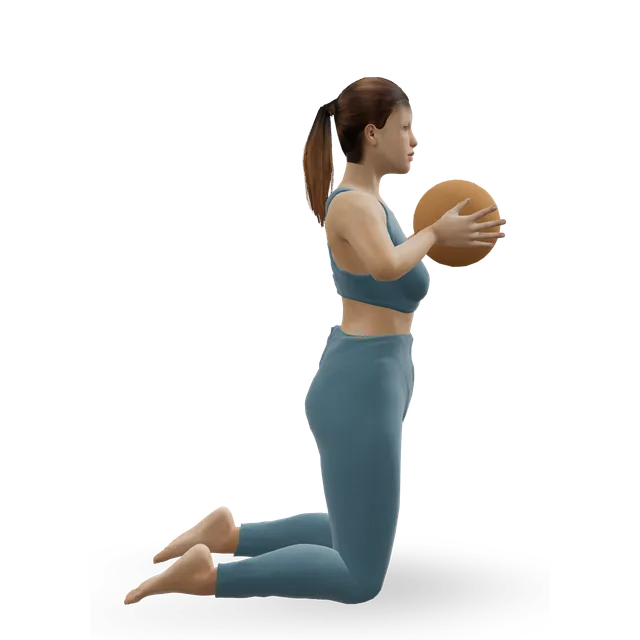 3D demoMedicine-ball chest pushBeginner · Medicine ball
Similar move, beginner grade.
Harder option
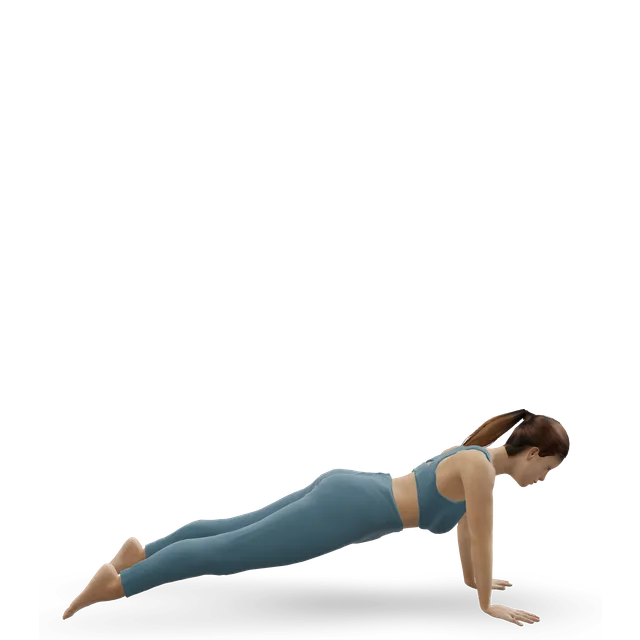 3D demoPlyometric push-upAdvanced · No equipment
Similar move, advanced grade.
Source-researched guide.
How to move
- Set two low, sturdy boxes or steps 60 to 90 centimetres apart and take a push-up position between them, a hand on each box, arms straight and body in one line from head to heels.
- Push up off the boxes just enough to lift your hands, and bring them in to shoulder width.
- Land with your hands on the floor and let the elbows bend to cushion the drop, the chest lowering towards the floor.
- Press back up and put the hands back on the boxes to reset before the next drop.
Form cues
- Keep the body rigid from head to heels as you drop.
- Land on soft elbows with the hands under the shoulders.
- Avoid: catching yourself on locked arms.
Practice and cautions
1 set of 5 to 10, or 3 sets once you train for a sport, with a minute's rest between sets, twice a week and 48 hours apart (Davies 2015's guide to upper-body plyometrics).
The landing loads the wrists, elbows and shoulders quickly: start from low boxes, and leave it out with wrist, elbow or shoulder pain. This is movement education, not an assessment or treatment prescription. Stop for sharp or increasing pain, dizziness, numbness or tingling; seek individual guidance for symptoms, injury or restrictions.
Sources and review status
Sources support the educational description; they do not establish that this exercise is suitable for you.
- Davies 2015 · Current concepts of plyometric exercise: drills graded beginner, intermediate and advanced, about 80 to 100 foot contacts a session for beginners, and 48 to 72 hours between sessions (clinical commentary, IJSPT) ↗
- Koch 2012 · Push-ups dropped from 4, 8 and 11 cm boxes landed with the same peak force; clap push-ups loaded fastest (force plate, JSCR) ↗
- García-Massó 2011 · Three plyometric push-ups compared: the fall push-up, dropped from kneeling, had the highest impact forces and muscle activity (EMG and force plate, JSCR) ↗
- Free Exercise DB · community text ↗
Unlicense · Free Exercise DB contributors; derived from wrkout/exercises.json. Text import; no photographs or media. · Revision f00c92c7dcf1216a928a52c3706c7ce8e2f71ed5
No variation is labeled clinically validated.
What it works
Muscles
Main: Chest, Triceps. Also: Shoulders, Abs.
Anatomy: Pectoralis major, Pectoralis minor, Serratus anterior, Triceps brachii.
Equipment
A step
Level
Intermediate. See the easier and harder options above.
Guides that use it
Similar moves
Browse more
Questions people ask
What muscles does the Drop push-up from boxes work?
Mainly the chest and triceps, with help from the shoulders and abs.
What equipment do I need for the Drop push-up from boxes?
A step.
Is the Drop push-up from boxes good for beginners?
It is graded intermediate. If it is too hard right now, start with the Medicine-ball chest push.
What is an easier alternative to the Drop push-up from boxes?
Try the Medicine-ball chest push or the Heavy-bag thrust. It works similar muscles at a lower grade.
How do I make the Drop push-up from boxes harder?
Progress to the Plyometric push-up or the Feet-raised plyometric push-up onto steps. Follow that guide’s technique and any stated timing.