How to do an incline bench press: the bench angle, barbell or dumbbells, and your shoulders
The incline bench press is a bench press with the backrest raised, so the bar comes down to your upper chest instead of the middle. Set the bench to about 30 to 45 degrees, grip the bar a little wider than your shoulders, lower it under control to just below your collarbones and press it back up over your shoulders. You'll lift less than on a flat bench: about a fifth less at 30 degrees in one study.
Raising the bench takes work away from the middle and lower chest and gives it to the front of your shoulders, so the upper chest does a bigger share. The studies disagree on the best angle, and the one growth trial, in untrained men, found a 44-degree incline grew the upper chest more than flat pressing at one of three points. That makes it a good second press, not a replacement for the flat bench.
This guide covers the incline bench press step by step on the 3D figure, the angle, the barbell, dumbbell, Smith machine and machine versions, how heavy and how many, and your shoulders.
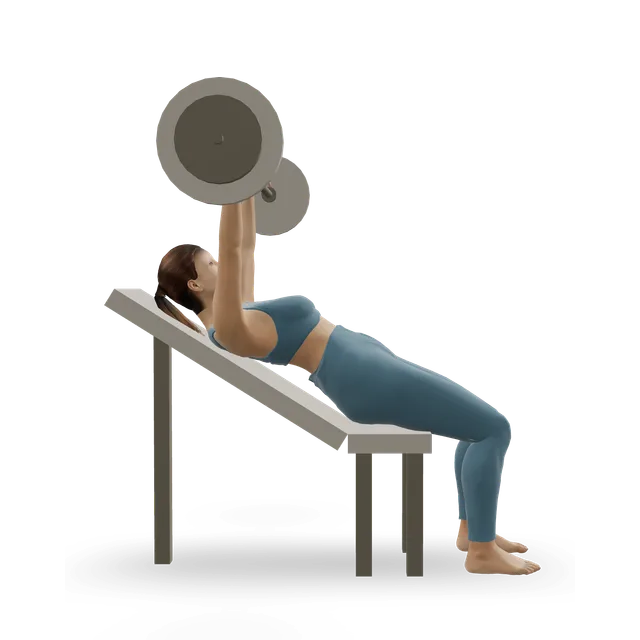
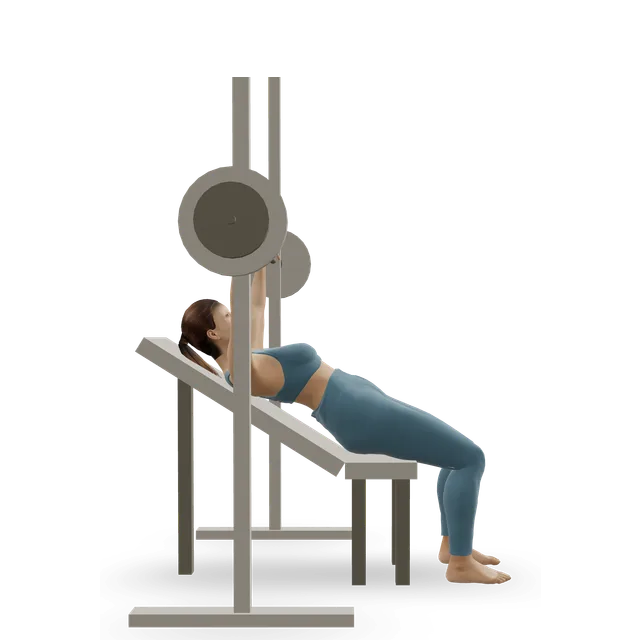
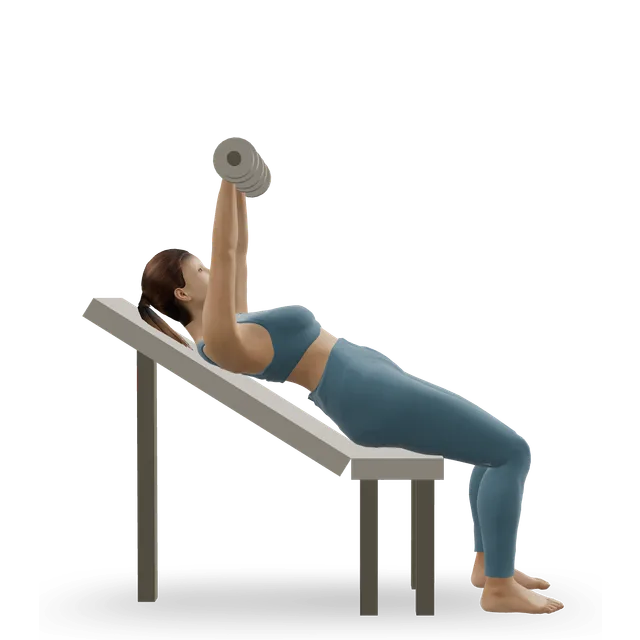
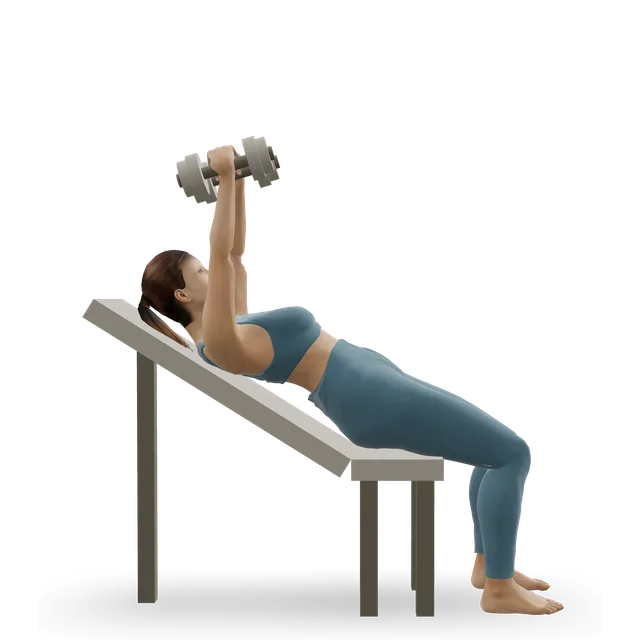
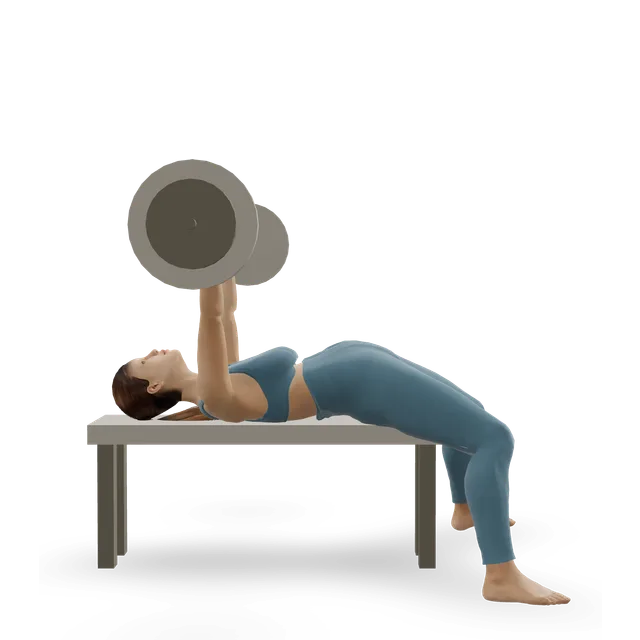
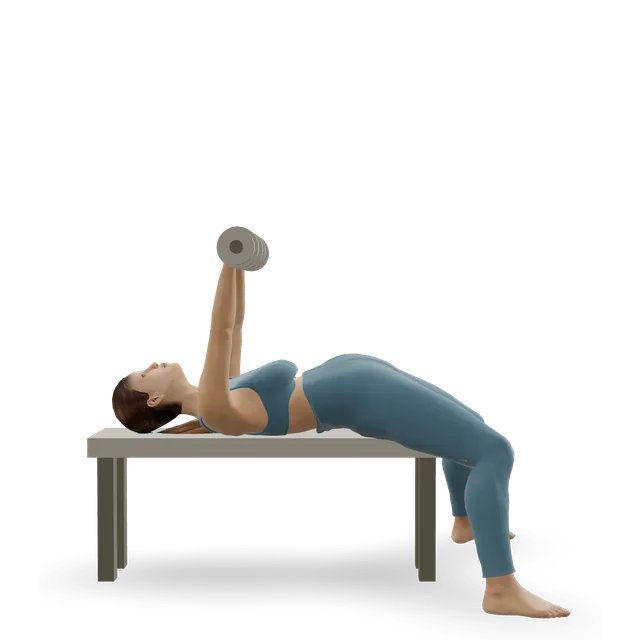
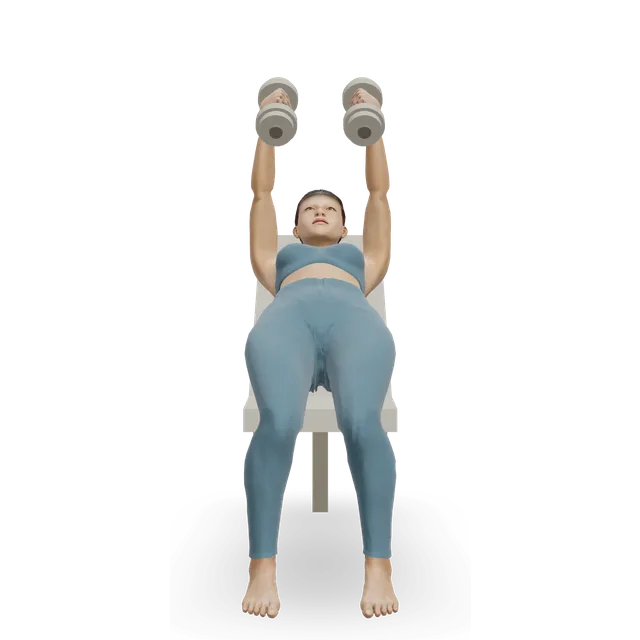
A bench press on a bench raised to an incline. The bar comes down to your upper chest, just below your collarbones, touching higher than in a flat press, and goes back up over your shoulders. It works your chest, the front of your shoulders and your triceps, and the steeper the bench, the harder the front of the shoulder works.
In the largest study, 30 trained adults' upper chest worked about as hard at 15, 30 and 45 degrees as on a flat bench, while the middle and lower chest did less and the front of the shoulder more, so the upper chest took a bigger share; at 60 degrees it worked less. One Smith machine study, which we read as an abstract, found the upper chest more active at 44 and 56 degrees than flat. About 30 to 45 degrees is our editorial starting range.
In untrained men pressing once a week for 8 weeks, a 44-degree incline grew the upper chest more than a flat bench at one of three measuring points. The groups started with different chest thickness, only 30 men were measured, and the flat bench grew the upper chest too, so keep a flat press or push-ups as well.
In 30 trained adults, the one-rep maximum (the most you can lift once) was about 12% lower at 15 degrees than flat, 22% lower at 30, 29% at 45 and 36% at 60. Elite bench pressers lifted 21.5% less at 25 degrees. Start lighter than your flat bench.
Most incline benches have hooks but no safety arms, and a shoulder clinic's handout warns that losing the bar behind your head can dislocate a shoulder: always have a spotter to lift it off and put it back. Training alone, a Smith machine with the stops set just above your chest, or a machine, is the safer set-up (our suggestion).
As a second chest press, 3 sets of 8 to 12, stopping 1 to 3 reps short of failure, with 90 seconds to 2 minutes' rest, as in our push day and upper body workouts. As your main press, 3 to 4 sets of 6 to 10 (our editorial starting point). Count them towards about 10 or more hard chest sets a week.
What the incline bench press is, and what it works
The bench
Most adjustable benches have notched positions without the angles marked. The studies set their angles with an inclinometer, and a phone level app will tell you yours if you want a number (our suggestion). Use the same notch every time so your weights compare.
The pectoralis major is one fan-shaped muscle. Its clavicular head starts on the inner half of the collarbone, and its larger sternocostal head on the breastbone and the upper rib cartilages, in 2 to 7 segments; both join one tendon on the front of the upper arm. It brings the arm forward and across the body and turns it in. A cleft separates the two heads in about 1 in 4 people, but the "upper chest" is part of one muscle, not a separate one.
The front of the shoulder (the anterior deltoid) worked harder as the bench rose. The triceps worked about the same at every angle in one study, and less on the incline in competitive bench pressers, who used their biceps a little more.
Bench angle studies use EMG (electromyography: electrodes measuring how hard a muscle works over a few reps). EMG isn't a validated predictor of what a muscle builds over months, so angle studies show where the work goes, not what grows.
The studies are small, from 10 to 47 people, mostly young and most of them men, several in trained or competitive lifters. The one study in women used very light dumbbells, and the one growth trial was in untrained men.
The bench angle: the studies disagreeMixed evidence
In 30 trained adults pressing 8 reps at 60% of their maximum at 0, 15, 30, 45 and 60 degrees, upper-chest activity was about 27% of its maximum flat, 28% at 15 degrees and 30% at 30 degrees, and none of 15, 30 or 45 degrees was significantly higher than flat; at 60 degrees it was lower. In one Smith machine study of 15 men, read as an abstract, the upper chest was more active at 44 and 56 degrees than flat, and at 44 than at 28 degrees, which didn't differ from flat. In 14 trained men it was higher at 30 and 45 degrees only through part of the press, and in 12 competitive bench pressers a 25-degree incline made no difference.
The middle and lower chest worked less at every step up from flat, and the front of the shoulder worked harder from 30 degrees. In 24 women pressing light dumbbells, the front of the shoulder worked harder on a 45-degree incline than flat and harder again in a shoulder press, and the upper chest worked harder on the incline only while lowering.
Upper chest growth: one trial, with limitsEmerging evidence
72 untrained men were enrolled and 47 finished. They pressed flat (15 men), on a 44-degree incline (15) or both (17), once a week for 8 weeks: 4 sets of 8 to 12 to failure, rising to 6 sets. Only 30 had their muscles measured. Upper chest thickness started at 11.9 mm, 15.1 mm and 14.3 mm in the three groups; allowing for that, the incline group's upper chest grew 0.62 cm more than the flat group's at one of three measuring points, and the other two didn't differ. Strength rose about equally, by 10 to 11 kg.
In 13 men, one session at a 45-degree incline swelled the upper part of the chest more, and flat pressing the lower part. That's a pump straight after a session, not growth over weeks.
In 15 untrained men doing pec deck flys for 12 weeks, the upper chest grew 17 to 18% and the lower chest 21%, with no difference between the parts, and 1 set a session grew as much as 3.
One-rep maximums in the 30 trained adults were 81.4 kg flat, 72.0 kg at 15 degrees, 63.3 kg at 30, 57.9 kg at 45 and 52.2 kg at 60. Elite bench pressers' 6-rep maximum was 109.2 kg at 25 degrees against 132.7 kg flat. In 30 men, the bar also moved more slowly on the incline than flat at the same share of their maximum.
Dumbbells, a barbell or a Smith machineEmerging evidence
On a flat bench, 12 trained men's two-dumbbell maximum was 17% below their barbell maximum and 14% below their Smith machine maximum, with the same chest and front-shoulder activity. Nobody has tested this on an incline.
Enough hard sets; failure isn't neededStrong evidence
The American College of Sports Medicine's (ACSM's) overview of 137 reviews found muscle growth enhanced with 10 or more sets a week. Across 15 studies, training to failure added a trivial amount at most, and across 28 studies of 747 adults, light, moderate and heavy loads built similar muscle when sets were hard.
Steps from our move page and bench press guide; the spotter is a shoulder clinic's advice, and the hook height and racking are coaching practice.
Set the backrest to about 30 to 45 degrees and the seat so your hips stay down without sliding. Set the hooks so you can lift the bar off with your arms nearly straight.
Lie back with your eyes about under the bar and your feet flat on the floor, and pull your shoulder blades back and down.
Grip the bar 1 to 1.5 times the width across the bony points of your shoulders, with your wrists straight over your elbows.
Lift the bar off, with a spotter's help if you have one, and bring it over your shoulders.
Breathe in and brace, then lower the bar under control to your upper chest, just below your collarbones, with your elbows about 45 to 75 degrees from your sides.
Breathe out and press up and slightly back to straight arms over your shoulders.
After the last rep, press to straight arms, move the bar back against the uprights, then lower it into the hooks.
Loading the 3D figure…
Drag to turn
Gets into position, then repeats the movement. Technical checks passed; qualified exercise review is pending.
The studies disagree on the best angle, so this is our editorial starting point. The largest study saw the upper chest's share rise by 30 degrees, a Smith machine study read as an abstract found the most upper-chest activity at about 44 degrees, and the one growth trial used 44 degrees.
At 60 degrees the upper chest worked less than flat while the front of the shoulder kept working harder. Much past 45 degrees the press turns into a shoulder press, as our incline dumbbell press move page says.
At 15 degrees the front of the shoulder worked no harder than flat in the largest study. If the front of your shoulder complains on a steeper bench, try 15 to 30 degrees (our suggestion).
In 12 competitive bench pressers, flat, 25-degree incline and 25-degree decline presses worked both parts of the chest about the same. The flat bench already works the lower chest.
Use the flat bench as your main press and the incline as your second, or alternate them. The flat bench grew the upper chest too in the growth trial, and the incline shifts work towards the upper chest and the front of the shoulder rather than training a new muscle.
You lift less, the bar moves more slowly at the same share of your maximum, and the front of the shoulder takes more of the load. Judge it by the reps you have left, not by your flat bench numbers.
Two dumbbells total less than a barbell (17% less on a flat bench), and each arm finds its own path. The shoulder clinic's handout warns that dumbbells are easier to lose control of, so learn the bail-out first, as our move page describes: kick the dumbbells up from your knees as you lie back, and if a rep fails, lower them to your chest and tip them out to the sides rather than fighting them over your face.
Pressing with your palms facing each other keeps your elbows closer to your sides; our move page suggests it for elbow comfort.
Smith machine
The bar runs on rails, so you don't have to balance it, and the safety stops catch it: set them just above your chest, as our move page says. Our Smith machine guide covers the machine.
Cable and lever machines
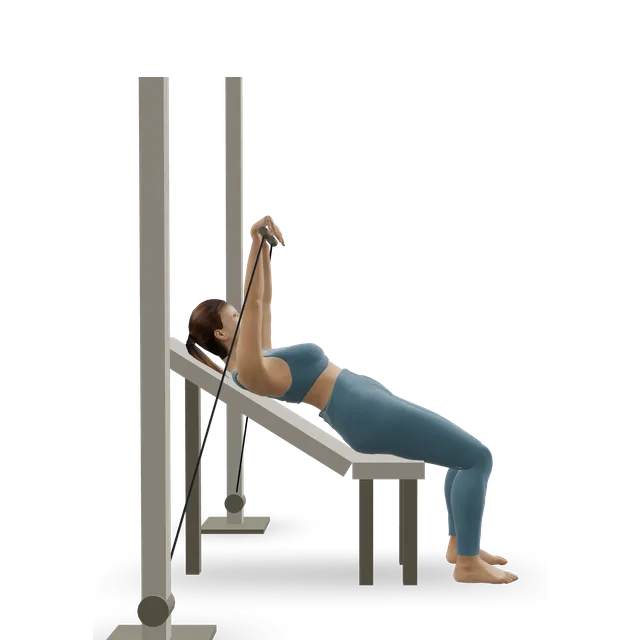
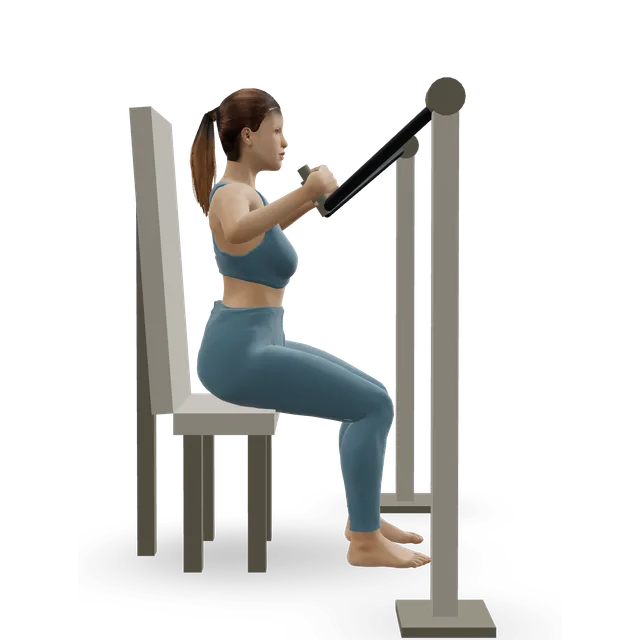
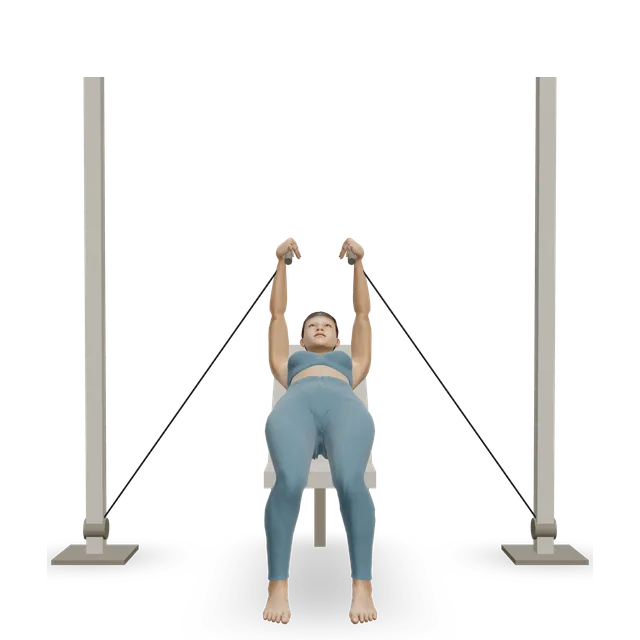
A cable or plate-loaded incline press needs no balance and no spotter, which makes it the easiest start: 2 to 3 sets of 8 to 12, as the lever press's move page gives.
Sets, reps, weight and how often
As your second press
3 sets of 8 to 12, stopping 1 to 3 reps short of failure, with 90 seconds to 2 minutes' rest, as in our push day and upper body workouts. Our chest workout uses 3 sets of 8 to 10 after the flat bench.
As your main press
3 to 4 sets of 6 to 10, stopping 2 or 3 reps short, with 2 to 3 minutes' rest (our editorial starting point, within our bench press guide's ranges).
Your first two weeks
2 sets, leaving 3 or 4 reps to spare, as our plans advise.
Starting weight
As a rough guide from one study, about three-quarters of your flat bench weight at 30 degrees and about 70% at 45 degrees, then adjust by the reps you had left. People underestimate how many reps they have left by about 1, and judge it better near the end of a set.
Add reps first, then weight. The American Heart Association's "2 for 2" rule adds 2 to 10% once you beat your target by 2 reps in two sessions in a row. Dumbbells jump by 1 to 2 kg a hand, a big step at light weights, so reach the top of the rep range on every set before you move up (our suggestion).
Resting more than about 60 seconds helped growth a little in a review, with nothing clear past 90 seconds; heavier sets of 6 to 8 get 2 to 3 minutes, as our plans advise.
It flattens the angle you set. Keep your hips down and set the seat so you don't slide (coaching practice).
The bar to your neck or the middle of your chest
Aim just below your collarbones, as our move page says.
Elbows flared out to 90 degrees
It loads the shoulder and elbow more. Keep your elbows about 45 degrees out, as our palms-in incline press move page advises.
A very wide grip
Stay within 1.5 times the width across the bony points of your shoulders: narrower grips lowered shoulder loads in a computer model, and the shoulder clinic advises no wider than your shoulders if yours hurt.
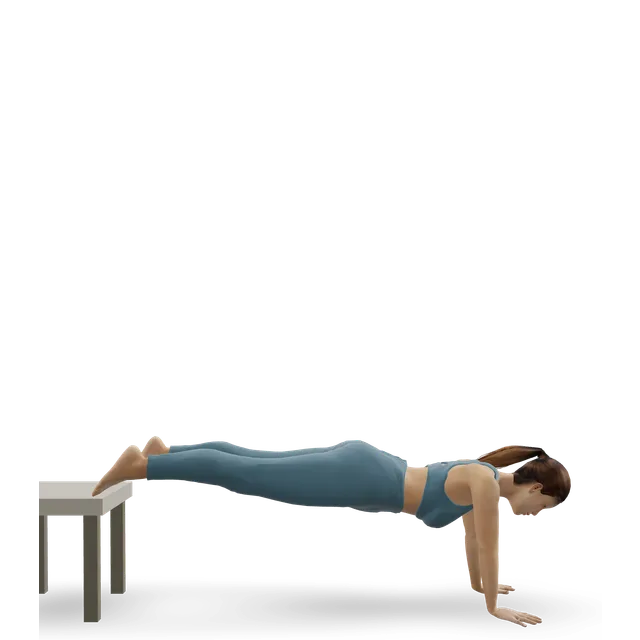
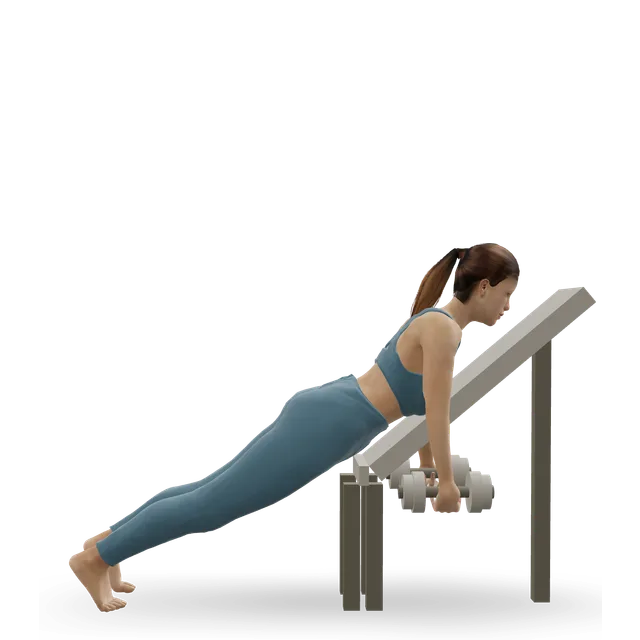
Train the hardest push-up you can do for 8 reps and move on when you reach 15, as our push-up guide says; the feet-elevated push-up is the push-up closest to an incline press (our view). The cable, lever, Smith machine and palms-in presses: 2 to 3 sets of 8 to 12, stopping 2 or 3 reps short (the lever and palms-in move pages give this dose; our editorial starting point for the others). The dumbbell and barbell inclines: as in the sets and reps section.
Keep a flat press at our bench press guide's sets, and add an incline fly for 2 to 3 sets of 10 to 15, the last set 0 to 2 reps short (our editorial starting point; these move pages give no dose).
The front of the shoulder works harder as the bench rises. Lower the bench towards 15 to 30 degrees, narrow your grip, try dumbbells with your palms facing, and stop short of the painful range. Pain up to about 5 out of 10 that has settled by your next session is acceptable, as our shoulder guides say; see our shoulder pain when bench pressing guide.
The shoulder clinic's handout warns of "a danger of shoulder dislocation if the lifter loses control of the weight behind the head", and says always to have a spotter for lifting the bar off and putting it back.
The bench press is the commonest cause of pec tendon tears, mostly in men aged 20 to 40, and tears start in the chest muscle's lowest fibres, which are most stretched at the bottom of the press. Of 365 reported tears, 48% happened during weight training. An NHS physiotherapy leaflet describes a popping sensation, pain, bruising and weakness. No study has compared tear rates on incline and flat benches.
Only with your team's go-ahead. The leaflet says: "When performing bench press or pectoral flys, do not let the elbow drop below the level of the shoulder", and to avoid high weights with low reps and warm up slowly.
Start with push-ups or a machine and our bench press guide. The incline barbell press assumes a steady flat bench press, as our move page says.
Loose or dislocated shoulders
Build back through our shoulder dislocation guide's presses in front of you, within a comfortable range. Use a spotter or a Smith machine with the stops set, because losing the bar behind your head is how the incline can dislocate a shoulder.
After the first trimester, Tommy's says to replace a flat bench press with an incline bench press or a standing chest press, and that pregnancy isn't the time for your heaviest weights; the NHS says to avoid lying flat on your back for more than a few minutes later in pregnancy. In one supervised session, 48 pregnant athletes did heavy 30-degree incline presses and their babies' average heart rate stayed in the normal range, though it rose above 160 beats a minute in 3; the study was stopped after one baby's heart rate dropped following flat presses. Keep it moderate, have a spotter, and stop if you feel faint or dizzy.
High blood pressure, heart disease, glaucoma or a hernia
Get advice before heavy lifting, breathe out on every press and keep the weights moderate, as our breathing guide says. High blood pressure means readings of 140/90 or higher; with controlled high blood pressure, the American Heart Association considers low- to moderate-intensity strength training with proper breathing safe. People with a pacemaker or defibrillator should ask before upper-body training.
Our chest workout follows the flat bench with 3 sets of 8 to 10 incline dumbbell presses; the push day, upper body, chest and back and bodybuilding sessions use 3 sets of 8 to 12, and the home dumbbell session sets the bench at about 30 degrees. Swap in the barbell or Smith machine incline press at the same sets and reps if you prefer.
If you get chest pain or pressure, feel faint or dizzy, are unusually breathless, or your heart races or beats irregularly during exercise, as our plans advise. The American Heart Association says these need immediate medical evaluation.
For chest pain that feels tight or like squeezing, or spreads to your arms, neck or jaw; a headache that starts suddenly and is extremely painful, especially while lifting or straining; someone who faints while exercising; palpitations that don't go away, or come with chest pain, breathlessness or feeling faint; or severe difficulty breathing. Don't drive yourself to A&E.
The same day: NHS 111 or an urgent treatment centre
For a pop or tearing at the front of the armpit or chest during a lift, followed by bruising into the chest or upper arm, a change in the shape of the chest or armpit (a thinner or lost armpit fold, or a chest or nipple that looks uneven), or weakness pushing. Don't wait for it to settle: it can be a torn pec tendon, as our pec strain guide explains. In the US, go to urgent care.
Ask for an urgent GP appointment or get help from NHS 111
For sudden or very bad shoulder pain, an arm you can't move, a shoulder that has changed shape or is badly swollen, pins and needles that don't go away, or pain after an injury. The NHS says these can be signs of a broken or dislocated bone, or a torn ligament or tendon. Don't try to put a shoulder back in yourself, as our shoulder guides say.
For shoulder pain that's getting worse or hasn't improved after 2 weeks of looking after it yourself, after any faint, or for dizziness that keeps coming back.
If you haven't exercised for some time or have a medical condition, speak to your GP first, as the NHS advises. Get advice before heavy lifting with uncontrolled blood pressure, heart disease, a pacemaker or defibrillator, diabetic eye disease, glaucoma, a hernia, recent eye or tummy surgery, or in pregnancy, as our breathing guide lists; readings of 180/100 or higher mean speaking to your doctor or nurse before you start.
"The incline bench builds a separate upper chest muscle"Strong evidence
The pectoralis major is one fan-shaped muscle whose two heads join one tendon. The incline shifts the share of work towards its upper part; it doesn't train a different muscle.
"The steeper the incline, the more upper chest"Emerging evidence
At 60 degrees the upper chest worked less than flat in 30 trained adults, while the front of the shoulder kept working harder. One Smith machine study, read as an abstract, still found more upper-chest activity at 56 degrees. Steep benches mostly add shoulder.
"30 degrees is the proven best angle"Mixed evidence
The study usually quoted found the highest average upper-chest activity at 30 degrees, but not significantly above flat. Others favoured 44 degrees, found a difference only through part of the press, or found none at 25 degrees. About 30 to 45 degrees is a sensible range.
"Flat pressing only builds the lower chest"Emerging evidence
Flat pressing grew the upper chest too in the growth trial, though less than the incline at one of three points, and pec deck flys grew both parts of the chest alike.
"Dumbbells are always safer than a barbell"Emerging evidence
A shoulder clinic's handout says dumbbells are more likely to get away from you on an incline, while a barbell needs a spotter to lift off and rack. Neither is safe by default: learn the dumbbell bail-out, and use a spotter or the stops with a bar.
About 30 to 45 degrees, as a starting point. Studies disagree on the single best angle: in the largest, the upper chest's share of the work rose by 30 degrees, and a Smith machine study found it most active at about 44 degrees. At 60 degrees the upper chest worked less and the shoulders more, so pick one setting in that range and use it every time.
Is incline bench better than flat bench for the chest?
Neither is better; they share the work differently. In the one growth trial, a 44-degree incline grew the upper chest more at one of three points, but the groups started out different and flat pressing grew the upper chest too. Keep a flat press and add the incline.
What muscles does the incline bench press work?
Your chest (the pectoralis major), the front of your shoulders and your triceps. As the bench rises, the middle and lower chest do less and the front of the shoulder more, so the upper chest takes a bigger share. The "upper chest" is part of one muscle, not a separate one.
How much less can you incline bench than flat bench?
In 30 trained adults, maximums were about 12% lower at 15 degrees, 22% at 30 degrees, 29% at 45 degrees and 36% at 60 degrees than flat; elite bench pressers lifted 21.5% less at 25 degrees. Start at roughly three-quarters of your flat bench weight at 30 degrees and adjust by how many reps you have left.
Should I use a barbell or dumbbells for the incline press?
Both work. On a flat bench, two dumbbells total about 17% less than a barbell. A barbell needs a spotter to lift off and rack on an incline, and a shoulder clinic warns that dumbbells are easier to lose control of, so learn to tip them out to the sides if a rep fails.
How wide should my grip be on the incline bench?
The same as on the flat bench: 1 to 1.5 times the width across the bony points of your shoulders. Narrower grips and shoulder blades pulled back lowered shoulder loads in a computer model, and a shoulder clinic advises no wider than your shoulders if your shoulders hurt.
Should my elbows be tucked or flared on the incline bench?
In between: about 45 to 75 degrees from your sides, as on the flat bench. Flaring them out to 90 degrees loads the shoulder and elbow more.
How many sets and reps of incline bench should I do?
As your second press, 3 sets of 8 to 12 with 1 to 3 reps in reserve and 90 seconds to 2 minutes' rest. As your main press, 3 to 4 sets of 6 to 10 with 2 to 3 minutes' rest. Count the sets towards about 10 hard chest sets a week.
Why does incline bench hurt my shoulder?
The front of the shoulder works harder as the bench rises. Lower the bench, narrow your grip, try dumbbells with your palms facing, and keep the pain within our shoulder guides' rule; shoulder pain that hasn't improved after 2 weeks needs a GP.
Can I do the incline bench press when I'm pregnant?
Yes: after the first trimester, it's the swap Tommy's recommends for the flat bench, as long as you keep the weights moderate. In one study of pregnant athletes, a single heavy session of 30-degree incline presses kept the babies' average heart rate in the normal range. Have a spotter and stop if you feel faint or dizzy.
How can I do an incline press at home without a bench?
Feet-elevated push-ups put your body at the angle closest to an incline press (our view; no study has compared them). Train the hardest push-up you can do for 8 reps and move on when you reach 15, as our push-up guide says.
Exercise education, not a personal prescription, and clinical review of these guides is pending. Check with a GP before starting hard training if you have a heart condition, chest pain, dizziness or breathlessness when active, and stop for sharp or increasing pain. Health disclaimer.