How to use a Smith machine: the bar, the hooks and safety stops, and the best exercises
A Smith machine is a barbell that runs on two rails. Hooks on the bar drop into slots on the uprights when you turn your wrists, so you can rack it at any height, and adjustable safety stops below catch it if a rep fails. Set the stops first, find out what the bar weighs (many are counterweighted), and for squats start with your feet a little in front of the bar.
It isn't a lesser barbell: in an 8-week trial, Smith machine and free-weight squats and bench presses built muscle about equally, though strength rose most on the version people trained. This guide covers how the machine works, setting it up, the squat, bench press, row, Romanian deadlift, hip thrust, split squat and calf raise, how it compares with free weights, and a full-body Smith machine workout, with a 3D demo of every step.
The bar can only travel along its two rails, straight up and down or at a slight angle, so you don't have to balance it. Turn your wrists to lift the hooks out of the slots on the uprights, and turn them back to rack the bar at any height.
Many bars are counterweighted: one maker's bar is balanced to 6.6 lb (3 kg), another's weighs 20 lb (9 kg), and bars used in studies weighed 15, 17 and 20 kg. Check the label or ask the staff, and log it with your numbers rather than assuming 20 kg.
In 37 sport students over 8 weeks, Smith machine and free-weight squats and bench presses grew the thigh and chest muscles about equally, and each group got strongest on the version it trained. Trials of machines against free weights in general agree.
The bar can't drift forwards or backwards, so where you put your feet decides how the work splits between your knees and hips: further forward shifts it towards your hips. Start a little in front of the bar and adjust until your heels stay down and the squat feels like your own (coaching practice).
Set the safety stops just below the lowest point of your rep before you load the bar, and rehook the bar fully at the end of every set (coaching practice). You can't tip or dump a Smith bar if you get stuck, so the stops matter. It hasn't been shown to be safer or more dangerous than free weights.
A barbell is fixed between two steel rails. On most machines they're vertical; some run at a slight angle (one maker's is set at 7 degrees), and some newer designs also let the bar move forwards and backwards.
Behind each upright is a row of slots. Hooks on the bar drop into them when you turn your wrists, so you can rack the bar at any point in a lift, not just at the top.
Adjustable stops (also called catches) sit on the frame below the bar. Set at the right height, they catch it if a rep fails, so the bar comes down on them, not on you.
A counterweight lightens the bar so you can start with very little. It also changes the load as the bar speeds up: in 24 men doing fast bench press throws, the counterweight added load while they pushed, so the authors advise against counterweighted machines for power testing.
Jack LaLanne rigged up a sliding bar in his gym in the 1950s. Rudy Smith had Paul Martin refine it and installed it in Vic Tanny's gyms in Los Angeles, and the machine took his name.
The same main muscles as the free-weight version of each lift: in the squat, your quadriceps, glutes and inner thighs; in the bench press, your chest, front shoulders and triceps. The steadying muscles work less: calf, hamstring and trunk muscles in the squat, and the biceps and the side of the shoulder in the bench press.
Machines and free weights build muscle and strength equallyStrong evidence
A meta-analysis of 13 studies (1,016 people) found no difference in strength, jumping or muscle growth when machine and free-weight training were compared directly, with strength gains largest on the equipment trained. Two 8-week trials in 38 and 34 trained men agreed, and joint discomfort fell in both groups. A 2026 review for the American College of Sports Medicine (ACSM) found equipment type didn't consistently change results.
Smith machine against free weightsEmerging evidence
37 sport-science students (14 women) trained the squat and bench press on a Smith machine or with free weights: 4 sets at 70% of their maximum, twice a week for 8 weeks. Thigh and chest growth were similar; strength rose most when tested on the equipment trained, and the authors conclude that people without sport-specific goals can choose by preference. In 46 young adults (26 women), 8 weeks of machine or free-weight training raised Smith machine squat, free squat and bench strength 11 to 19% in both groups.
Does Smith machine strength carry over?Mixed evidence
In 36 trained men, chest press training on a Smith machine improved other press versions about as much as the trained one. In 59 men returning to leg training, Smith squat training improved the Smith squat more than free squats, and in the student trial each group gained most on its own version. In 20 women, a free-path chest press machine trained the steadying muscles more than a fixed-path one. Expect some carry-over, and most on what you train.
Less work for the steadying musclesEmerging evidence
In 6 people, calf, hamstring and inner-thigh activity was 34%, 26% and 49% higher in free squats, and 43% higher averaged across 7 muscles. In 16 athletes squatting their body weight, thigh activity was higher with a free bar and glute activity the same, and trunk and calf muscles were least active on the Smith machine in 14 men. In the bench press, chest and front-shoulder activity didn't differ. These are single sessions, and activity in one session doesn't predict growth.
In 16 men and 16 women, squat maximums were higher on the Smith machine (clearly so in the women) and bench maximums higher with a free bar. In 12 trained men, the barbell bench was about 3% above the Smith machine. In 16 experienced athletes, converting Smith squat loads to leg press loads worked better by how hard the sets felt than by muscle activity, because people differed so much.
In 35 young adults, Smith squats produced much more backward-directed force than free squats, more so with heavier weights and later in a set. But 8 weeks of either kind of squat didn't change how 20 students applied force, so the authors suggest choosing by preference, kit or sport.
In 50 men, bar speed at each share of maximum was faster in free-weight versions of four lifts than in machine versions, and split squat load-speed profiles didn't transfer between free and Smith versions in 75 men. If you train by bar speed, use a profile for each version. A squat power test gave closely matched results on both in 23 athletes.
Practice alone brings big early gainsEmerging evidence
In 59 men returning to leg training, 3 weeks of practice on the Smith machine, free weights and a wobble board raised their 10-rep maximum by 22 to 27% before the main training began. Early gains are mostly skill, so start light.
Set-up from our move page and coaching practice; foot position from the fixed-path squat models in What the evidence says. Setting the stops and checking the hooks is coaching practice, not tested.
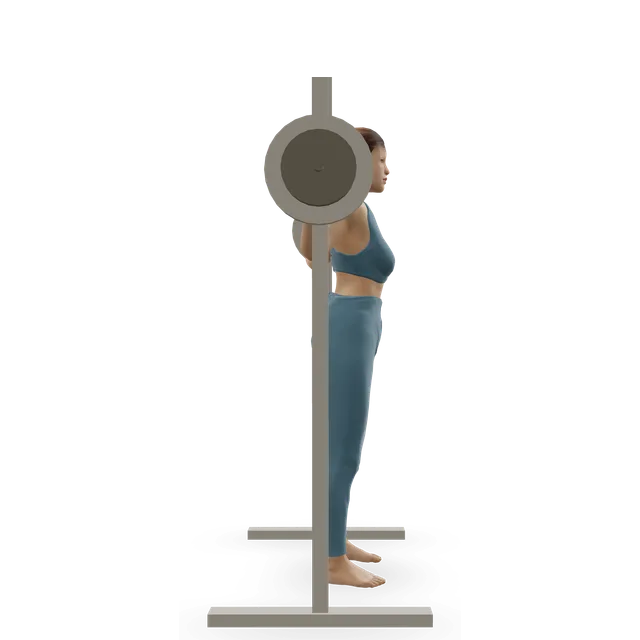
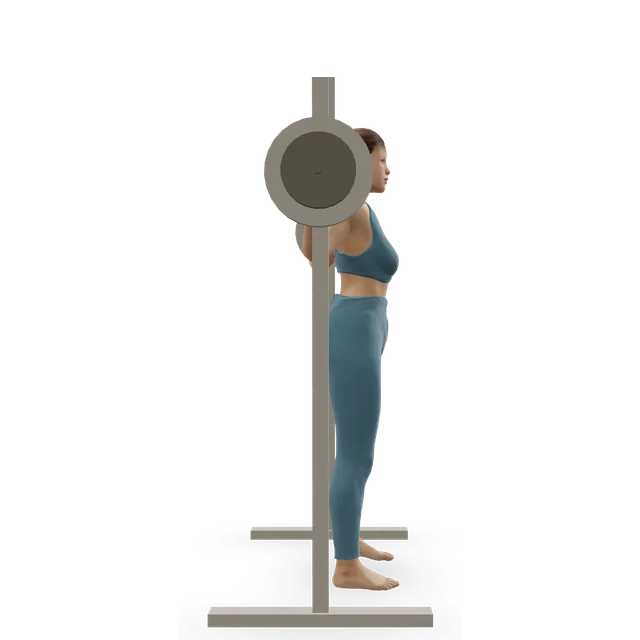
Find out what the bar weighs and whether the rails are angled. Set the safety stops just below the lowest point of your squat, and test the depth with the empty bar.
Set the bar on the hooks at about shoulder height and load the plates evenly.
Step under and rest the bar across your upper back, not your neck, with your hands just outside your shoulders.
Put your feet about shoulder-width apart and a little in front of the bar, toes turned slightly out.
Stand up to take the weight, then turn your wrists to lift the hooks out of the slots.
Breathe in, brace, and sit down between your feet as deep as you can control with your heels down. Your knees can travel forward over your toes.
Drive back up, breathing out.
At the end of the set, turn the bar back into the nearest slot and check it has caught before you step out.
Loading the 3D figure…
Drag to turn
Gets into position, then repeats the movement. Technical checks passed; qualified exercise review is pending.
It ranges from a few kilograms on a counterweighted bar to about 20 kg: 6.6 lb (3 kg) and 20 lb (9 kg) on two makers' machines, and 15, 17 and 20 kg in research gyms. The label, the staff or the maker's specification will tell you; write it down with your weights.
Practise unhooking and rehooking with the empty bar until you can do it without looking. At the end of every set, turn the bar fully into a slot and check it has caught before you let go.
Set them just below the lowest point of your rep: low enough not to cut a full rep short, high enough to catch the bar if you can't finish. For the bench press, that's just above your chest when you're lying on the bench. Reset them for each lift and each person (coaching practice).
Vertical or angled rails
Some machines run at a slight angle rather than straight up and down. On an angled machine, try facing both ways with the empty bar and use the way the path feels natural to you (our suggestion).
Feet forward shifts work to your hipsEmerging evidence
A model of a fixed-path squat found that moving the feet forward lowered the turning force at the knee and raised it at the hip. A second model adds that leaning your trunk forward and taking your weight towards the front of your feet shift work from the knee to the hip and lower the squeeze on the knee joint. Both are computer models, not trials.
In free squats in 7 trained men, stopping the knees from passing the toes cut knee load but multiplied hip load about tenfold, with more forward lean. Don't force your shins upright; put your feet where your heels stay down and your back stays comfortable.
Smith machine squats and your knee ligamentsMixed evidence
The evidence is computer models only, and they disagree. One 2024 model of a reconstructed knee found high stress on the ACL (anterior cruciate ligament) graft in Smith machine squats; earlier models found ligament loads depend on foot position, trunk lean and the angle of the rails. No study has measured it in people. After ACL surgery, follow your rehab team on when and how to squat.
Start with your feet about shoulder-width apart and a little in front of the bar, then adjust between sets until your heels stay down, your knees track over your toes and the squat feels smooth. People with long thighs usually need their feet further forward (coaching practice).
The best Smith machine exercises
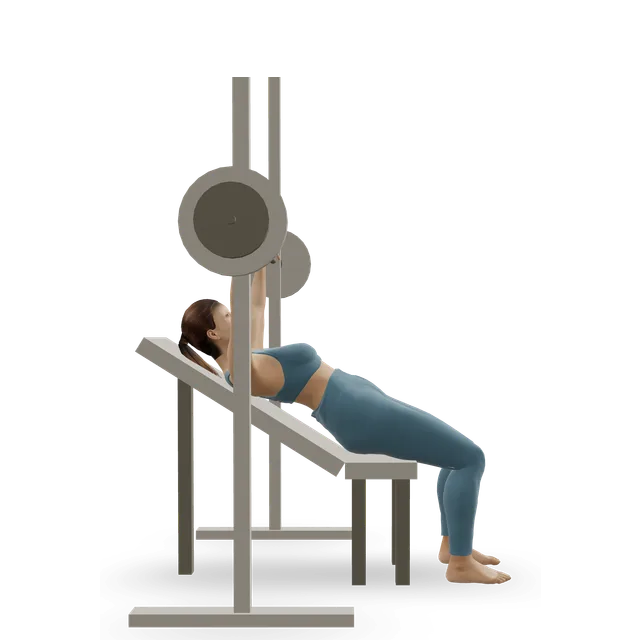
Our editorial starting points, within our plans' rules: squats and bench presses 3 sets of 8 to 10; incline presses, rows and shoulder presses 2 to 3 sets of 8 to 12; split squats 2 sets of 8 each leg; calf raises 2 to 3 sets of 12 to 15; all stopping 2 or 3 reps short. The stiff-legged deadlift takes its move page's 2 to 3 sets of 8 to 12; rows lying under the bar 3 sets of 6 to 12.
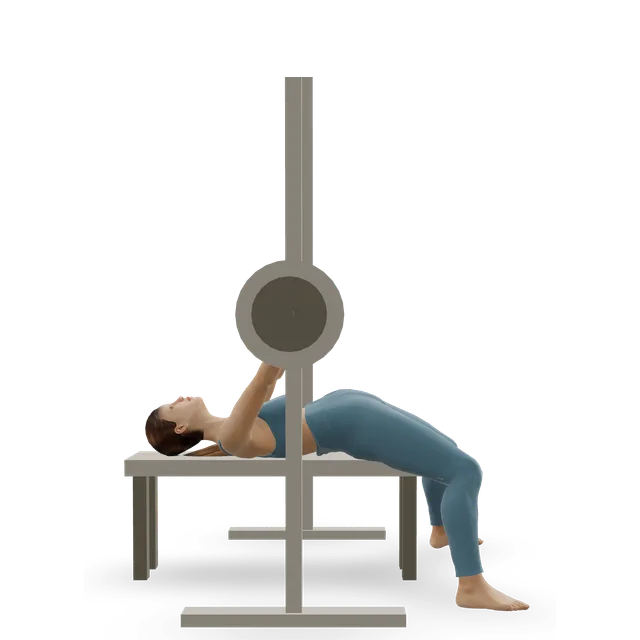
Set a flat bench so the bar meets the middle of your chest, and the stops so the bar stops just above your chest. Grip a little wider than your shoulders, lower to the chest and press back up. Chest work was similar to a free bench in two studies.
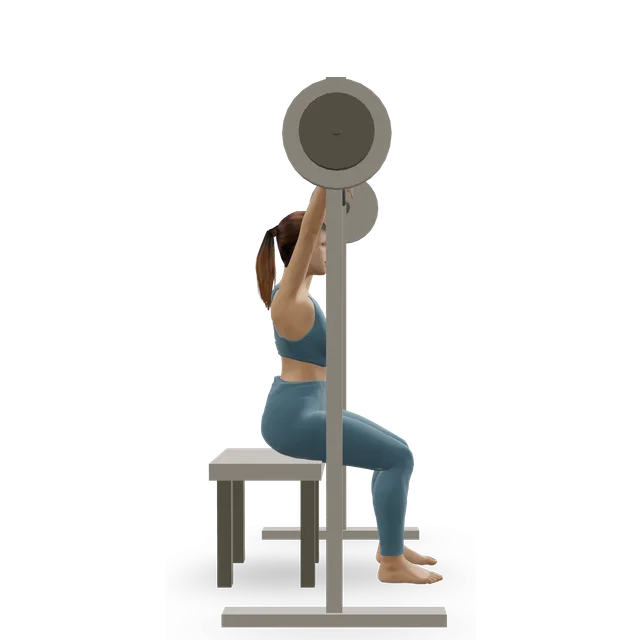
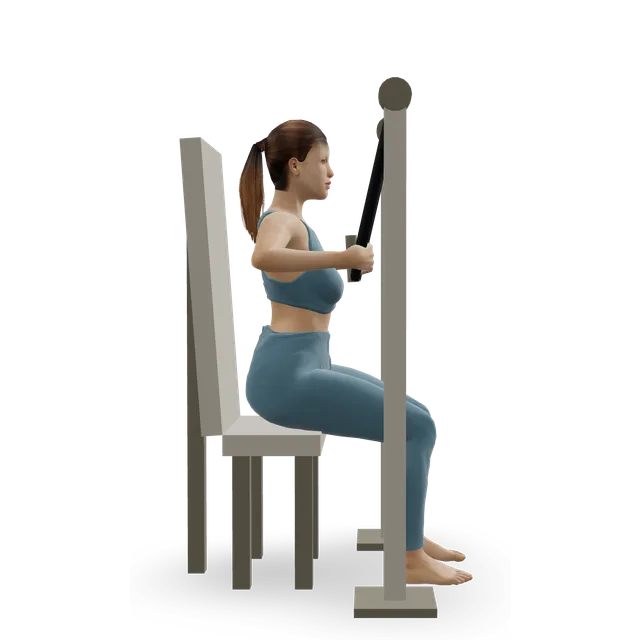
Sit on a bench set upright under the bar so it passes just in front of your face, and press from your collarbones. In 24 trained men, 10 weeks of seated Smith machine presses (3 sets at 65 to 90% of maximum, twice a week) raised their maximum by about 17.5%; there was no comparison group.
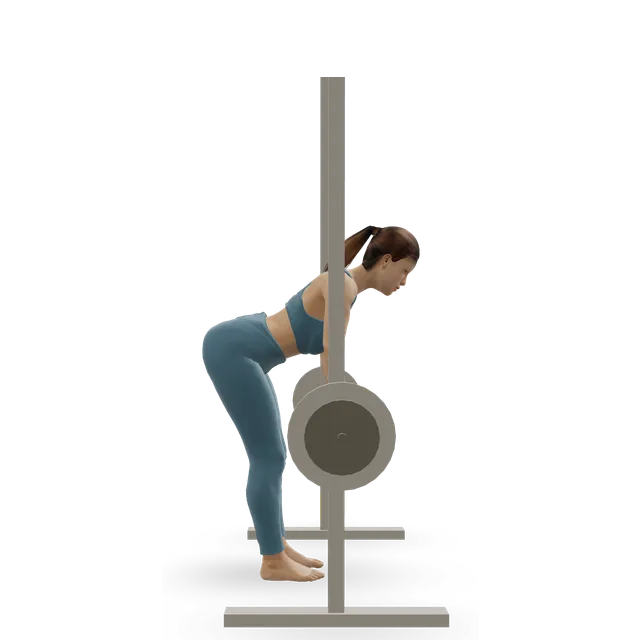
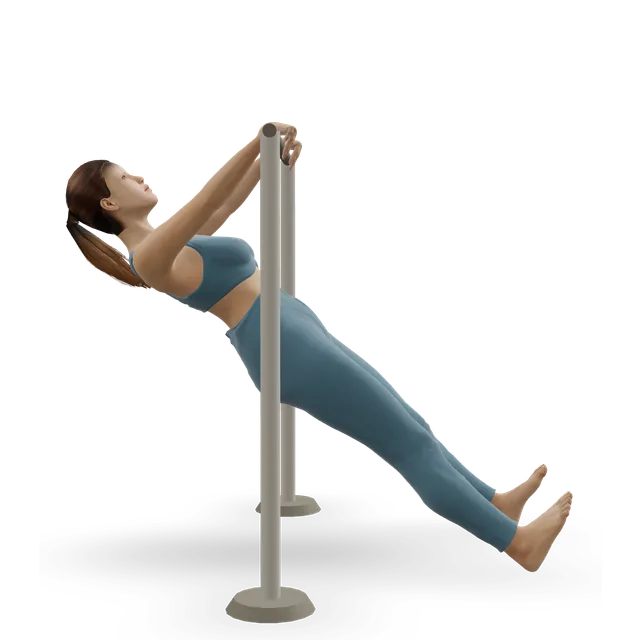
Set the bar just below knee height, hinge forwards with a flat back and row it to your lower ribs. If your lower back tires, set the bar at hip height and row lying underneath it instead (an inverted row). Coaching practice; no study has tested Smith machine rows.
Romanian (stiff-legged) deadlift
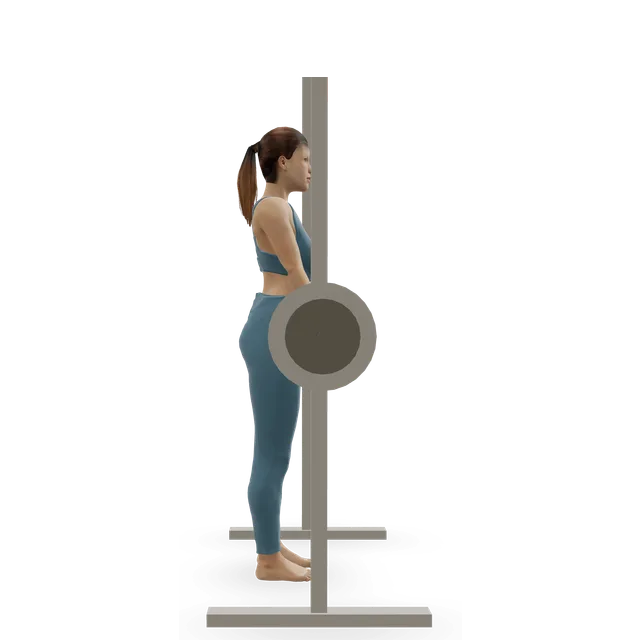
Start from the hooks at mid-thigh, stops just below the lowest point you reach. Push your hips back and lower the bar down the rails only as far as your back stays flat, then stand tall. Coaching practice; no study has tested it on a Smith machine.
Hip thrust (no 3D demo)
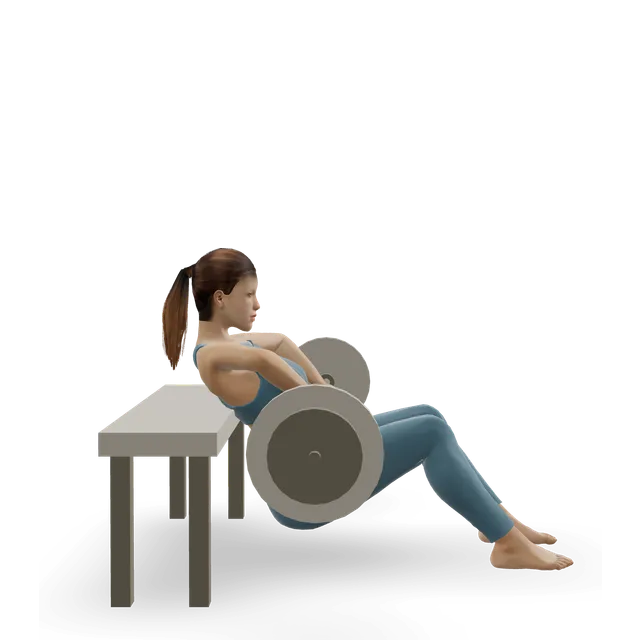
We have no 3D demo of a Smith machine hip thrust; the barbell hip thrust below shows the movement. Sit on the floor with your upper back against a bench placed behind you, the bar over your hip crease with a thick pad, and the stops at the height where the bar rests when you're on the floor. Unhook, drive your hips up until your body is straight from shoulders to knees, pause, and lower. Coaching practice, with no study on the Smith version; the Smith machine hip raise is a different exercise, a loaded reverse crunch for your abs.
Split squat
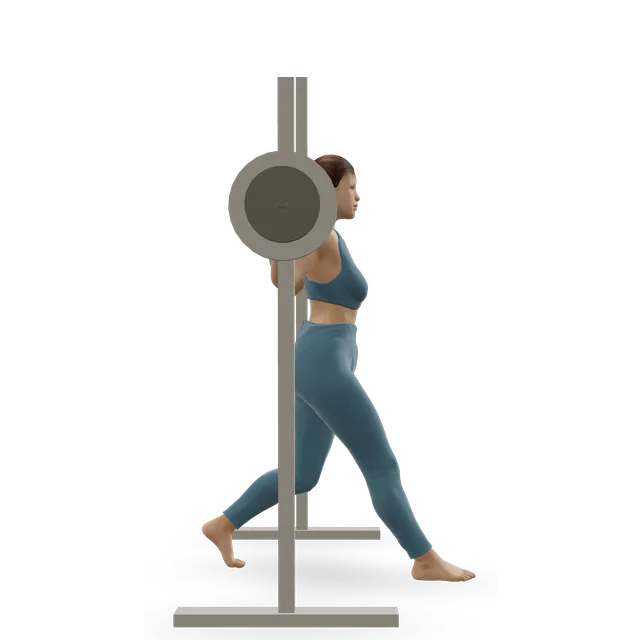
Take the bar on your upper back, step into a long split stance with your back heel up, unhook, and lower straight down until your back knee nearly touches the floor. A study of 75 men used the Smith version of the Bulgarian split squat.
Stand under the bar with the balls of your feet on a block or plate, unhook, lower your heels below the block, then rise as high as you can and lower slowly.
Hip thrusts
There's no 3D demo of a Smith machine hip thrust: this barbell demo shows the movement. Our hip thrust guide uses 3 sets of 6 to 10 with 2 to 3 minutes' rest; the same suits the Smith version.
Training alone, learning to squat and press with a bar, working around balance limits, adding sets after free-weight work, and single-leg work where balance would limit the weight (our suggestions). The American Heart Association says machines are likely safer than free weights for people with joint problems, advanced arthritis, severe osteoporosis, nerve damage or a previous stroke.
If you want a heavier free squat or bench, train those: strength is specific. In one trial, free weights improved balance and change of direction where machines didn't, and the authors of the force study suggest free squats may suit jumping better.
Of an estimated 970,801 weight-training injuries in US emergency departments from 1990 to 2007, 90% involved free weights, and two-thirds were weights dropping on people; people aged 55 and over were more often hurt on machines. Nobody counted how many people used each, so this doesn't give injury rates, and no trial has compared them.
A Smith bar can't fall forwards, backwards or sideways, but you can't tip it off or dump it either, the hooks only lock when you turn them, and the stops only help if you set them. The fixed path can also push your body into a position that doesn't suit it, which is why your foot position matters.
Squats, presses, rows, Romanian deadlifts and hip thrusts are compound lifts: 3 sets of 6 to 12, stopping 2 or 3 reps short of failure (our editorial starting point, within our plans' rules). Calf raises: 2 to 3 sets of 12 to 15, the last set 0 to 2 short.
2 to 3 minutes after heavy sets of 5 to 8, about 90 seconds to 2 minutes after sets of 8 to 12, and 60 to 90 seconds for calf raises, as our plans use.
Choosing the weight
Warm up, then pick a weight you could lift about 10 to 12 times at most, do 8 and check how many more you had: 2 or 3 is right. Don't copy your free-weight numbers.
4 sets at 70% of maximum twice a week, and 3 to 4 sets of 4 to 10 with each muscle trained 2 to 3 times a week. These are study doses, not starting points.
Keep loads moderate and breathe out; see a GP if you think you have a hernia. After a groin hernia repair, the NHS says no heavy lifting for at least 4 to 6 weeks.
Weight machines suit pregnancy if you already train. After the first trimester, swap the flat bench press for an incline or seated press, don't hold your breath, and this isn't the time for your heaviest weights.
For chest pain that feels tight or like squeezing, or spreads to your arms, neck or jaw; a headache that starts suddenly and is extremely painful, especially while straining; someone who faints while exercising or can't be woken within a minute; palpitations that don't go away or come with chest pain, breathlessness or feeling faint; or back pain with numbness or weakness in both legs, loss of feeling around your genitals or bottom, or bladder or bowel changes. Don't drive yourself to A&E.
Ask for an urgent GP appointment or get help from NHS 111
For a headache triggered or made worse by exercise; a knee that's very painful, badly swollen or locks or gives way; back pain with feeling hot, cold, shivery or unwell, or severe pain that starts suddenly; sudden or very bad shoulder pain or an arm you can't move; or pain in or around a hernia. In the US, contact your doctor or urgent care.
Aching muscles for a day or two after a new session are normal. Sharp pain, pain that builds through a set, pain down a leg or a new bulge in your groin or tummy isn't: stop, and see our pain guides.
Myths
"The Smith machine is useless"Emerging evidence
It built muscle as well as free weights over 8 weeks, and machine and free-weight training give similar strength and growth across trials. Its strength carries over to free weights at least partly.
Not proven. The bar can't fall sideways, but you can't dump it, the hooks only lock when you turn them, and the stops only help if you set them. Injury records can't compare the two fairly, and models of knee loads disagree.
In trained men, 8 weeks of machine training improved jumping and short all-out leg efforts as much as free weights, and a meta-analysis found no difference in jumping. Free weights did better on balance and change of direction in one trial.
It depends on the machine. Many bars are counterweighted: one maker's is balanced to about 3 kg, another weighs 9 kg, and bars in studies weighed 15 to 20 kg. Check the label or ask the staff, and log it with your numbers.
Is the Smith machine good or bad?
Good for building muscle and strength: over 8 weeks it grew the thighs and chest as well as free weights. Your strength rises most on the version you train, so if you want a bigger free-weight squat or bench, train those too.
Is the Smith machine safer than free weights?
Neither has been proven safer. The rails stop the bar falling forwards, backwards or sideways and the stops can catch it, but you can't dump it if you get stuck, so set the stops every time and rehook the bar fully.
Why is the Smith machine squat easier than a barbell squat?
The rails do the balancing, so the steadying muscles work less, and people squat more on a Smith machine than with a free bar. That also means your Smith numbers won't carry straight over.
Where should my feet go for a Smith machine squat?
Start about shoulder-width apart and a little in front of the bar, then adjust until your heels stay down and the squat feels smooth. Feet further forward shift work from your knees to your hips.
Which way should I face on a Smith machine?
On a vertical machine it doesn't matter. Some machines run at a slight angle: try facing both ways with the empty bar and use the way the path feels natural to you.
Is the Smith machine good for beginners?
It's a reasonable way to start squatting and pressing with a bar, because you can rack it at any point and the stops can catch it. Early gains come fast from practice alone, so start light and learn the hooks and stops first.
How do I set the safety stops on a Smith machine?
Just below the lowest point the bar reaches in your rep, so they catch it if a rep fails without cutting a full rep short. Test the height with the empty bar before you load plates, and reset them for each lift.
How do you do hip thrusts on a Smith machine?
Put a bench behind you and a thick pad on the bar, set the stops where the bar rests when you're sitting on the floor, unhook, and drive your hips up until your body is straight from shoulders to knees. No study has compared it with the barbell version, so use the hip thrust guide's sets and reps.
Why is it called a Smith machine?
After Rudy Smith, who had an early sliding-bar rig, credited to Jack LaLanne, refined by Paul Martin. He installed it in Vic Tanny's gyms in Los Angeles in the 1950s, and the name stuck.
Smith machine or squat rack?
For learning, training alone or adding volume, the Smith machine works well; for the most carry-over to free-weight lifts and to balance, a rack and free bar. Many people use both.
Exercise education, not a personal prescription, and clinical review of these guides is pending. Check with a GP before starting hard training if you have a heart condition, chest pain, dizziness or breathlessness when active, and stop for sharp or increasing pain. Health disclaimer.