Pain guide · Shoulder pain

Shoulder pain when bench pressing: what's likely, what to change and how to build back

The bench press, dips and push-ups load the shoulder through a big range, and the shoulder is one of the commonest places lifters get hurt. Where it hurts is the best clue: the outside of the shoulder points to the rotator cuff, the top at the end of the collarbone to the AC joint (acromioclavicular joint), and the front of the armpit to the chest muscle. It usually settles with a changed press, not by stopping.

Two things come first, though. Chest pain that feels tight or spreads to your arm, neck or jaw is a 999 call, even mid-set, and a pop at the front of the armpit followed by bruising or a changed chest shape needs checking the same day. This guide covers those signs, grip, range and bar path changes, and a staged plan back to the bench, with 3D demos.

When to get help first

Exercise is for pain that has been checked or is clearly mild and settling.

Get urgent medical help if

  • Call 999 (911 in the US) if you have chest pain that feels tight or like squeezing on your chest.
  • Call 999 (911 in the US) if you have chest pain that spreads to your arms, neck or jaw.
  • Same day (NHS 111 or an urgent treatment centre): a pop or tearing at the front of the armpit or chest during a lift, a dip or a tackle, followed by bruising into the chest or upper arm, a change in the shape of the chest or armpit (a thinner or lost armpit fold, or a chest or nipple that looks uneven), or weakness pushing. Don't wait for it to settle: it can be a torn pec tendon, and repairs done within about 6 weeks did better than later ones.
  • Call 999 or go to A&E: after a fall or injury, or after the bar came down on you or the shoulder slipped during a press, your shoulder looks out of place or has changed shape, or you cannot move your arm. Do not drive yourself, and do not try to put it back in yourself.
  • Same day (GP or NHS 111): sudden weakness lifting the arm after an injury or fall. A rotator cuff tear caused by an injury needs urgent referral to a shoulder specialist. After a dislocation in anyone over 40, the rotator cuff should be checked: about 40% have a tear.
  • Same day (GP or NHS 111): sudden or very bad shoulder pain; you cannot move your arm; the arm or shoulder is badly swollen or has changed shape; pins and needles that do not go away; no feeling in the arm; the arm is hot or cold to the touch; pain that started after an injury such as a fall; or severe pain in both shoulders.
  • Same day (GP or NHS 111): the shoulder or arm is hot, swollen or red, or you have a high temperature or feel unwell. A joint infection needs same-day care.

See a doctor or physiotherapist if

  • Pain that is getting worse or has not improved after 2 weeks of looking after it yourself, or it is very hard to move your arm. In many areas you can refer yourself to physiotherapy.
  • Your shoulder has partly or fully come out of joint, or you worry it might, including a clunk or a feeling it will slip with the arm low and back at the bottom of a press.
  • Pins and needles or a cold arm alongside neck pain, or a new loss of strength or feeling in the arm that you cannot explain (a possible nerve problem).
  • Pain on top of the shoulder at the end of the collarbone that isn't settling after a few weeks of changed pressing: ask about weightlifter's shoulder (distal clavicle osteolysis), which often needs an MRI (magnetic resonance imaging) scan to confirm.
  • A dip or change in the chest's shape that you only notice once the bruising fades, or weakness pushing that isn't getting better: get it checked promptly through your GP or NHS 111, and ask about a shoulder specialist. A tendon tear found late can often still be repaired, though the results are better early.

Where does it hurt?

Location narrows the likely causes; it does not diagnose.

Chest pain that feels tight or squeezing, or spreads to an arm, neck or jaw

Call 999, even mid-set: it could be your heart. Don't wait to see if it passes.

Front of the armpit or chest, after a pop or tearing

At the bottom of a heavy press or dip, then bruising, a thinner or lost armpit fold or weakness pushing: possibly a torn pec. Get it checked the same day.

Read: Pec strain or tear →
Outside of the shoulder and upper arm

At the bottom of the press and the push off the chest, in overhead pressing and lying on it at night, with a painful arc as you lift the arm out to the side: rotator cuff related pain, often called impingement.

Read: Shoulder impingement (rotator cuff pain) →
Sudden weakness lifting the arm after a jerk or a fall

Possibly a rotator cuff tear, which needs a same-day check.

Read: Rotator cuff tear →
The top of the shoulder, one finger on the end of the collarbone

Worse with deep bench, a wide grip, dips and reaching across your body: the AC joint, including weightlifter's shoulder.

Read: AC joint injury and pain →
Front of the shoulder, in the groove at the top of the arm

Worse with deep bench, incline curls and chin-ups, often alongside rotator cuff pain: the biceps tendon.

Read: Biceps tendinitis (front of shoulder) →
Deep in the shoulder, with a clunk or a dead arm

At the bottom of the press with the arm out to the side and turned back, especially after a past dislocation or with very flexible joints: possible instability.

Read: Shoulder dislocation and instability →
A tender spot just inside the front of the shoulder, below the collarbone

In bench pressers, rarely the pectoralis minor tendon where it joins a bony point at the front of the shoulder ("bench-presser's shoulder"), described in a case series of 7.

Neck, the top of the shoulder blade and down the arm

Changes with neck movement, with pins and needles or numbness: a nerve in the neck.

Read: Pinched nerve in the neck →

Understand it

Who gets itEmerging evidence

The shoulder is one of the commonest injury sites in lifting sports, and up to 36% of resistance-training injuries are at the shoulder. In 110 elite lifters, shoulder injuries were commonest in the powerlifters, and no single exercise was linked with them. In a survey of 393 gym members, 7.4% reported a shoulder injury in 6 months, more than any other site, and in competitive powerlifters, those over 40 had more arm and shoulder injuries.

Reviews suggest wide grips, a high training load and fatigue as likely causes of bench press shoulder injuries, but there is no injury data to prove it.

Sources 1, 2, 3, 4, 5, 6, 7, 8

Weightlifter's shoulder and the torn pecEmerging evidence

Weightlifter's shoulder (distal clavicle osteolysis) is a stress reaction at the end of the collarbone, seen mostly in people who lift: 45 of 46 athletes in the first series lifted weights, and 28% of 25 Danish weightlifters had the X-ray signs. Across 8 studies (483 people), bench pressing was behind 49.1% of cases and other weight training 24.4%, and pressing more than 1.5 times body weight and weight training 3 or more times a week were linked with it.

A torn pec (pectoralis major) tendon happens almost only in men, mostly during weight training (48% of 365 published cases, and 61.9% and 63.2% in two pooled analyses), most often in the bench press as the loaded arm lowers. It needs checking the same day: see the warning signs.

Sources 9, 10, 11, 12, 13, 14, 15

Is it posture or a muscle imbalance?Mixed evidence

Rounded upper backs were no more common in people with shoulder pain across 10 studies, though sitting tall gives more arm range in the moment. Weight trainers with signs of impingement had less shoulder rotation and weaker external rotators and lower trapezius than those without, but a snapshot can't show which came first.

In recreational weight trainers, impingement signs went with lateral raises and upright rows above shoulder height, and a feeling the shoulder might slip (apprehension) went with behind-the-neck pulldowns and presses. Both were less common in people who trained their external rotators.

Sources 16, 17, 18, 19

Less common causesEmerging evidence

In 20 weightlifters with hidden instability at the front of the shoulder, pain came with the arm out to the side and turned back, as at the bottom of a wide-grip bench (our reading); 13 of 23 shoulders settled with rehab and changed technique, and 10 needed surgery. In a case series of 7 sportsmen, 5 of them bench pressers, a tender spot just inside the front of the shoulder turned out to be the pectoralis minor tendon.

Sources 20, 21

When a scan helps, and what it can't tell youEmerging evidence

Not at first for rotator cuff or AC joint pain. In 96 shoulders without symptoms, 34% had a rotator cuff tear on an MRI (magnetic resonance imaging) scan, with no full-thickness tears under 40 but more with age, and AC joint changes are common in shoulders that don't hurt.

A pop with bruising or a changed chest shape needs prompt assessment, often with a dedicated chest MRI or an ultrasound scan, because a routine shoulder MRI may miss a pec tear. Weightlifter's shoulder that isn't settling is often confirmed on MRI.

Sources 22, 23, 15, 11

How it usually goesEmerging evidence

In the largest trial (708 adults with rotator cuff problems), shoulder pain and function improved substantially over a year in every group, though not completely. An NHS booklet says about half of rotator cuff related shoulder pain settles in about 6 months and rehab takes about 3 to 6 months, and the NHS says shoulder pain can take 6 months or longer. Most people with weightlifter's shoulder recovered without surgery. After a pec repair, it takes at least 6 months to get back to full activity. No one can promise a date.

Sources 24, 25, 26, 11, 15
What helps, and how strong the evidence is

Exercise is the first treatment for rotator cuff painStrong evidence

In the largest trial (GRASP, 708 adults), up to six physiotherapy sessions of progressive exercise did no better over a year than one advice session with a physiotherapist and a home exercise programme; every group improved substantially. In 102 people waiting for surgery, a specific programme of rotator cuff and shoulder-blade exercises beat generic exercise (a shoulder score up 24 points against 9), and fewer chose surgery afterwards (20% against 63%).

Many clinicians now call this rotator cuff related shoulder pain, because no single structure can be shown to be the source.

Sources 24, 27, 28

Grip width: one computer model and expert opinionEmerging evidence

The common advice to keep your grip within 1.5 times shoulder width traces back to a 2007 narrative review, and the width it means is across the bony points at the tops of your shoulders, which is narrower than many people picture. The review says wider grips may increase the risk of instability, collarbone osteolysis and pec tears, and that a narrower grip appears to reduce it, for about a 5% difference in your best lift.

The only test is a computer model of 10 experienced lifters pressing a light 16 kg bar. Grips wider than 1.5 times raised the load on the AC joint and the shoulder joint, and pulling the shoulder blades back lowered it. The elbow angle mattered less, but elbows tucked to 45° with a grip of 1 times raised an upward shearing force in the shoulder joint, so the authors suggest avoiding both with rotator cuff related pain. No injuries were measured.

Wider grips lift the most, which is why competitive lifters use them, and a sports-medicine handout on shoulder strength training is stricter, advising a grip no wider than the shoulders. Our reading of all this is in the written steps below; treat it as a starting point, not a proven rule.

Sources 29, 30, 7, 31

Surgery to make room for the tendon, and steroid injectionsStrong evidence

Surgery to shave bone and make room for the tendon did no better than a placebo operation in the CSAW trial (313 people). In the GRASP trial, a steroid injection made no difference over 12 months, apart from a small improvement at 8 weeks.

Sources 32, 24

A torn pec: repair, and sooner rather than laterEmerging evidence

Across 664 pec tendon injuries, all in men, repair beat non-surgical care for function, strength and the chest's shape, with a 14.2% complication rate, including 3.1% that tore again. Across 384 injuries, early repair did better than late repair. These are pooled studies without randomised comparisons.

Sources 13, 14

Weightlifter's shoulder settles with changed training in mostEmerging evidence

In a 2026 review of 8 studies (483 people), 415 improved with conservative care: rest, changed training, medicines and sometimes injections. About 16% had the end of the collarbone removed after conservative care failed, usually after about 3 months of it, with largely good results. In the first series, those who didn't have surgery improved only after stopping or changing their sport and avoiding weight training.

Sources 11, 9

How much pain is OK while you exercise?

Up to about 5 out of 10, settled by the next sessionEmerging evidence

During shoulder strengthening, pain up to about 5 out of 10 is acceptable, and a little is expected. By your next session it should be back to where it was before. If it isn't, use a lighter band or weight or a smaller range next time, not nothing. This is how the Holmgren trial set each person's load.

An NHS physiotherapy booklet uses a slightly lower ceiling for the same idea: don't let pain go above 4 out of 10; it should calm down within a few hours and shouldn't disturb your sleep, and if you're sorer the next day, do less. For heavy pressing, use whichever limit is lower (our suggestion).

A sports-medicine handout says not to work through pain in the shoulder joint. Our reading: some discomfort in the muscles is fine, but sharp pain in the joint, a catch or a feeling of slipping means stop. A pulled chest muscle follows the pec strain guide's rule: about 3 to 4 out of 10, settled within the day, with the stretched position coming back last.

Sources 27, 25, 31

The exercise plan: 3 stages

Start at the first stage. Each move opens a full guide with a 3D demo.

Stage 1

Keep pressing, change the press

About weeks 0 to 2: rotator cuff work 3 to 5 days a week, pressing twice. Press without flaring the shoulder (written steps below), and start the rotator cuff and shoulder-blade work. Doses are editorial unless a source is named.

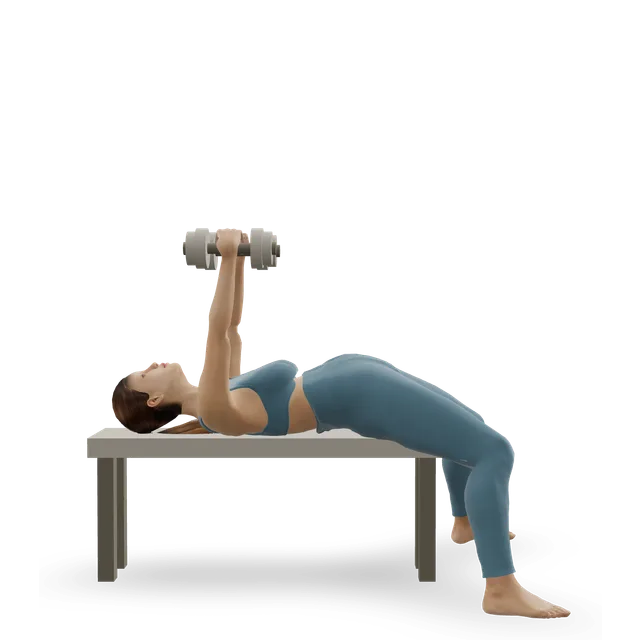
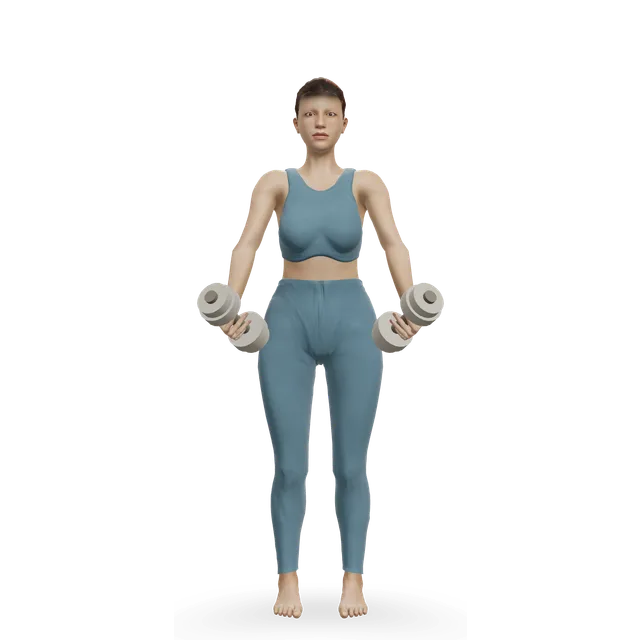
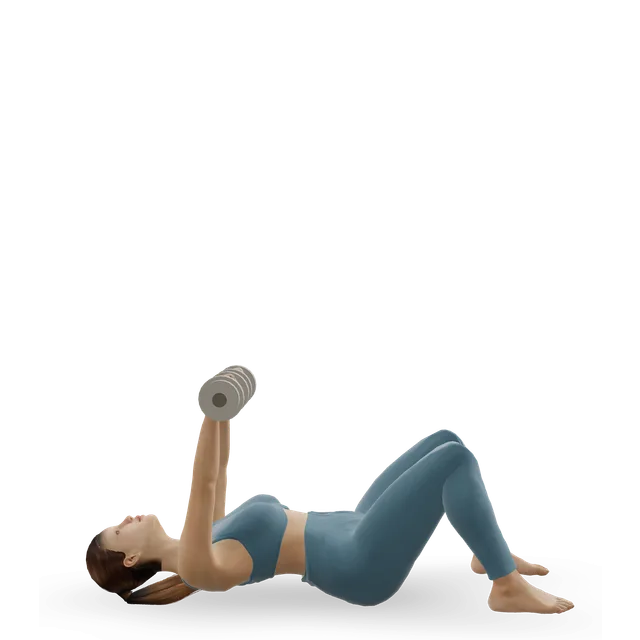
Dumbbell floor press demonstrated on the 3D figure3D demoDumbbell floor pressIntermediate · A dumbbell

2 to 3 sets of 8 to 12, stopping with 2 or 3 reps in reserve · The move page's dose. Palms facing each other, light

Easier: Chest press machine · Harder: Bench press with chains

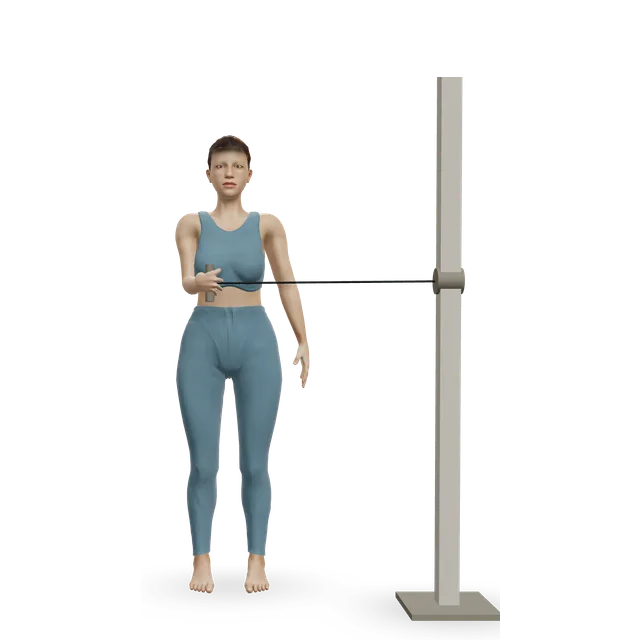
Standing band external rotation demonstrated on the 3D figure3D demoStanding band external rotationBeginner · A band + An anchor point

3 sets of 15, light band, slow return · Elbow at your side. The Holmgren trial used 3 sets of 15, twice a day for 8 weeks

Easier: Stick-assisted external rotation (lying) · Harder: Side-lying external rotation

Band row demonstrated on the 3D figure3D demoBand rowBeginner · A band + An anchor point

3 sets of 10 to 15, stopping 2 to 3 reps short of failure · The move page's dose

Harder: Supported single-arm dumbbell row

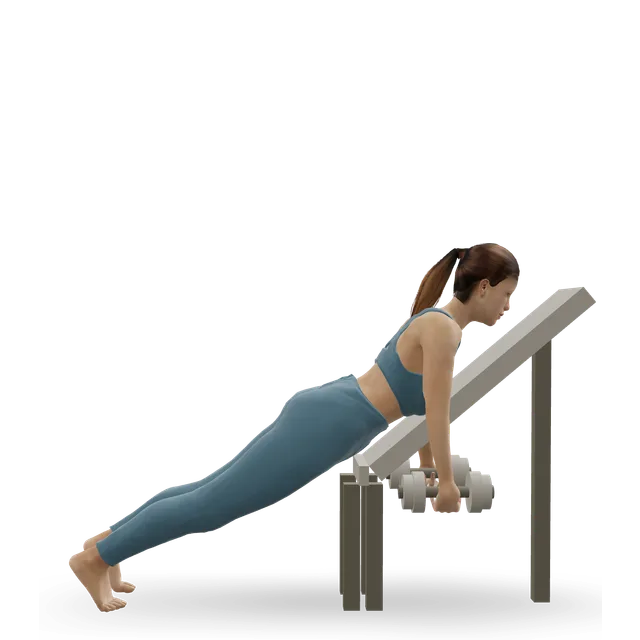
Incline push-up demonstrated on the 3D figure3D demoIncline push-upBeginner · A bench or box

2 to 3 sets of 8 to 12 · Short range at first

Easier: Wall push-up · Harder: Push-up

Move on when: The floor press and incline push-ups pass the pain rule, and the shoulder is back to its usual level by the next session.

Follow along: a timer, a cue and the next move, one step at a time.
Stage 2

Build the cuff and the range

About weeks 2 to 6. Stronger external rotators and shoulder blades, and the bar coming closer to the chest a notch at a time.

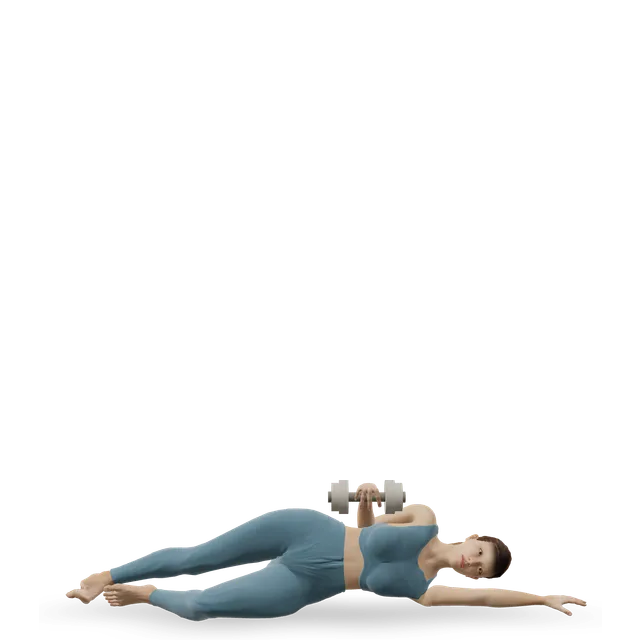
Side-lying external rotation demonstrated on the 3D figure3D demoSide-lying external rotationBeginner · A dumbbell

3 sets of 15, once a day · Lowering over about 3 s. The Holmgren trial's sets and reps; the trial dropped to once a day from week 8

Easier: Standing band external rotation · Harder: Cuban rotation

Pin press demonstrated on the 3D figure3D demoPin pressIntermediate · A barbell + A bench or box

3 sets of 6 to 10, light · Pins a few centimetres off the chest, lowered a notch each week. Deliberately lighter than the move page's heavy dose (our suggestion)

Easier: Chest press machine · Harder: Bench press with chains

Scaption raise demonstrated on the 3D figure3D demoScaption raiseBeginner · A dumbbell

3 sets of 10 to 15, lowering over 3 s · Thumbs up, to shoulder height

Easier: Band lateral raise · Harder: Smith machine upright row

Move on when: Pin presses from just off the chest pass the pain rule, and side-lying external rotation is comfortable at 3 sets of 15 with a heavier weight.

Follow along: a timer, a cue and the next move, one step at a time.
Stage 3

Back to the bench

From about week 6. Your usual bench at a grip and range that suit your shoulder, with the cuff work kept up. Start at about half your old working weight and add 5 to 10% every 10 to 14 days while the shoulder passes the pain rule, as a sports-medicine handout advises; no trial has tested these steps.

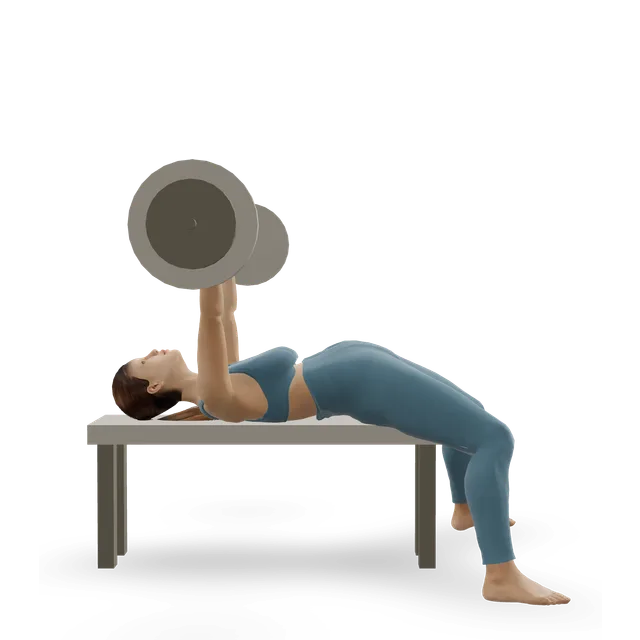
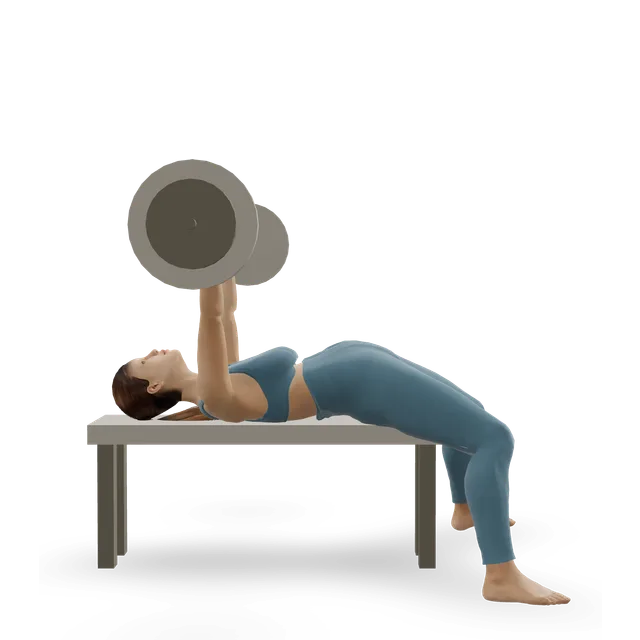
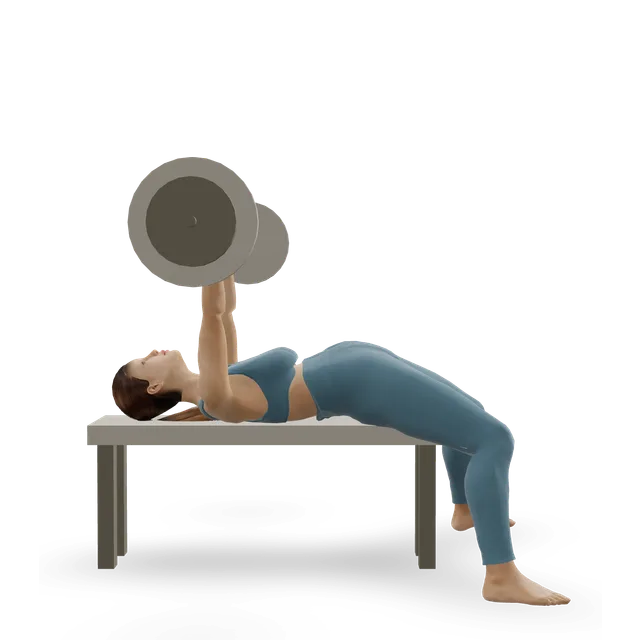
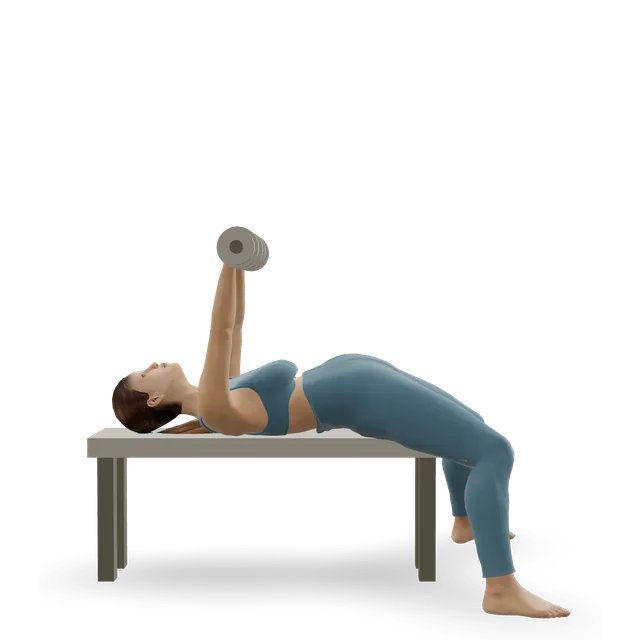
Barbell bench press demonstrated on the 3D figure3D demoBarbell bench pressIntermediate · A barbell + A bench or box

3 sets of 8 to 12, starting at about half your old working weight · Grip no wider than about 1.5 times the width across the bony points of your shoulders, shoulder blades back (written steps below)

Easier: Chest press machine · Harder: Dumbbell bench press

Close-grip barbell bench press demonstrated on the 3D figure3D demoClose-grip barbell bench pressIntermediate · A barbell + A bench or box

3 sets of 6 to 10 · For pain on top of the shoulder: a narrower grip lowered the load on the AC joint in a computer model

Easier: Chest press machine · Harder: Dumbbell bench press

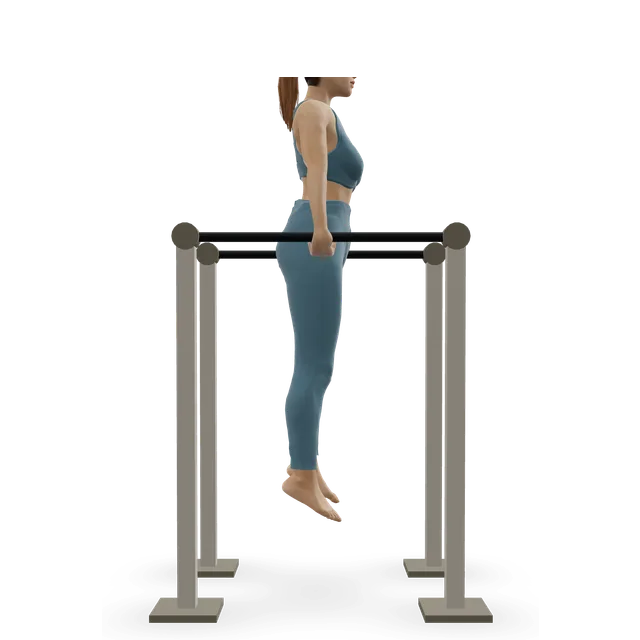
Parallel bar dip demonstrated on the 3D figure3D demoParallel bar dipAdvanced · Pull-up bar

2 to 3 sets of 5 to 8 · Last and optional, no deeper than a 90° elbow bend, as the handout advises

Easier: Bench dip · Harder: Ring dip

Move on when: Your usual bench sessions pass the pain rule for 2 weeks. Keep rotator cuff work and rows twice a week. A torn or pulled pec follows the pec strain guide's stages instead.

Follow along: a timer, a cue and the next move, one step at a time.

What to change for now

What to change in the press (written steps)

Our 3D figure can't show these changes. No trial has tested bench press changes for shoulder pain: they come from one computer model, case series, a clinical perspective on staged returns after shoulder injury, and expert advice.

  • 1. Load: lighter, for 10 to 15 reps with 2 or 3 to spare, and no sets to failure or maximum singles for now. A sports-medicine handout advises against training to failure, and reviews favour stopping with reps in reserve.
  • 2. Range: press from the floor, where the elbows stop on the floor, or from pins set a few centimetres off the chest, and lower the pins over the weeks (our suggestion).
  • 3. Grip: no wider than about 1.5 times the width across the bony points at the tops of your shoulders; ask someone to measure it. With pain on top of the shoulder, go narrower (about 1 to 1.5 times). With pain on the outside, a medium grip (about 1.5 times), with your elbows about 70° from your sides. This split is our reading of one computer model.
  • 4. Shoulder blades: pull them back and down before you unrack the bar, and keep them there.
  • 5. Bar path and tempo: touch the lower chest without bouncing, or pause, lowering over 2 to 3 seconds (the tempo is our suggestion). Losing control of the bar is a mechanism in injury reports.
  • 6. Equipment: neutral-grip dumbbells (palms facing) or a machine with a range stop (our suggestion).
  • 7. Frequency: fewer heavy pressing days for a while. Pressing more than 1.5 times body weight and weight training 3 or more times a week were linked with weightlifter's shoulder.
  • 8. Leave out behind-the-neck presses and pulldowns and upright rows above shoulder height, and press and pull in front of your head instead.

Sources 30, 29, 31, 8, 11, 7, 33, 19, 18

Dips, flys, stretches and routines

Leave dips out while it's sore. When they come back, stop at a 90° elbow bend, as a sports-medicine handout advises; the same handout lists chest flys among the exercises to avoid. With a pec strain, the stretched, arm-out position is where tears happen, so it comes back last. With pain on top of the shoulder, skip the cross-body stretch, which squeezes the AC joint (the AC joint guide's advice).

The routines below carry two of these moves: skip the cross-body stretch in the shoulder mobility routine if the top of your shoulder hurts, and the doorway chest opener in the upper back routine if you have a pec strain.

Sources 31, 15

Positions to swap, and why

Habit or positionWhy it mattersInstead
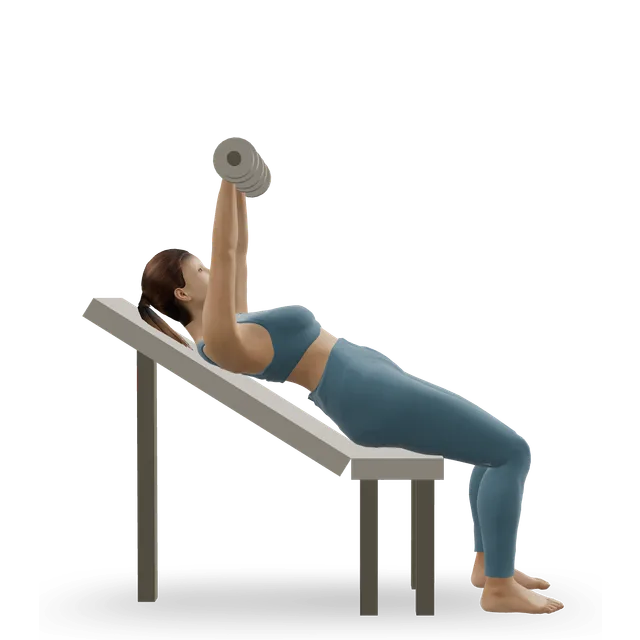
Wide-grip barbell bench pressGrips wider than 1.5 times the width across the bony points of the shoulders raised the load on the AC joint and the shoulder joint in a computer model, and a sports-medicine handout advises against wide-grip benching.A grip of about 1 to 1.5 times that width, or neutral-grip dumbbells.Try: Neutral-grip dumbbell bench press
Full-range heavy bench press while it's soreThe bottom position loads the pec, the AC joint and the front of the shoulder (editorial).Floor press, then pins, then full range.Try: Dumbbell floor press
Deep dips and weighted dipsThey take the shoulder to the end of its range under load; a handout stops dips at a 90° elbow bend, and the pec strain and AC joint guides leave them out early.Push-ups within a comfortable range.Try: Incline push-up
Bench dipsAs above, with the arms behind the body (editorial).Push-ups.Try: Push-up
Bouncing the bar off the chestLosing control of the bar is a mechanism in injury case reports.Lower over 2 to 3 seconds and touch without bouncing, or pause on pins.Try: Pin press
Sets to failure and frequent heavy singlesReviews favour stopping with reps in reserve over training to failure, and heavy, frequent pressing was linked with weightlifter's shoulder.Stop 2 or 3 reps short, and have fewer heavy days.Try: Chest press machine
Behind-the-neck presses and pulldownsIn recreational weight trainers, a feeling the shoulder might slip went with these lifts, and a handout says to avoid them.Press and pull in front of your head.Try: Landmine jammer
Upright rows above shoulder heightSigns of impingement went with upright rows and lateral raises above shoulder height in weight trainers.Rows and face pulls.Try: Face pull
Heavy or deep dumbbell flys with a pec strainThe stretched, arm-out position is where pec tears happen (the pec strain guide).A chest press machine with a limited range.Try: Chest press machine
The cross-body stretch with pain on top of the shoulderIt squeezes the AC joint (the AC joint guide).Turning the arm out with a stick.Try: Stick-assisted external rotation (lying)

Routines to follow

More moves for this area

Questions people ask

Why does my shoulder hurt when I bench press?

Often because the shoulder is taking more load than it's ready for: heavy, frequent pressing with a wide grip is the usual suspect, though that hasn't been proven. Where it hurts is the clue: the outside of the shoulder points to the rotator cuff, the top to the AC joint at the end of the collarbone, and the front of the armpit to the pec.

Is the bench press bad for your shoulders?

No. The shoulder is a common place for lifters to get hurt, but injury rates per hour of lifting are low next to team sports, and no single exercise was linked with shoulder injury in elite lifters. In our view, a changed press and rotator cuff work usually keep you benching.

Is it my rotator cuff?

If it hurts on the outside of the shoulder and upper arm, at the bottom of the press and when you lift your arm out to the side, it's often rotator cuff related pain. It usually improves with exercise: in the largest trial, every group improved over a year. Sudden weakness lifting the arm after an injury needs a same-day check.

What about pain on top of the shoulder?

Pain you can point to with one finger at the end of the collarbone, worse with deep bench, dips and reaching across your body, is usually the AC joint. In lifters it can be weightlifter's shoulder, a stress reaction in the end of the collarbone. Most people recovered without surgery, with rest and changes to training.

I felt a pop in my chest while benching. What now?

If a pop or tearing at the front of the armpit or chest is followed by bruising, a changed chest or armpit shape, or weakness pushing, get it checked the same day: it can be a torn pec, and early repairs did better. Chest pain that feels tight or spreads to your arm, neck or jaw is a 999 call.

How wide should I grip the bar with a sore shoulder?

No wider than about 1.5 times the width across the bony points of your shoulders, and narrower if the top of the shoulder hurts. In one computer model, a narrower grip and pulled-back shoulder blades lowered the load on the shoulder, but very tucked elbows with a very narrow grip raised one shearing force. That comes from a model and expert opinion, not injury trials.

Should I tuck my elbows?

A little, not hard. In the one computer model, the elbow angle mattered less than the grip and the shoulder blades, and elbows tucked to 45° raised an upward shearing force, so with rotator cuff pain about 70° from your sides is the model's suggestion. The site's bench press guide's range of 45° to 75° is fine once it settles.

Can I keep benching with shoulder pain?

Usually yes, changed: lighter, a shorter range with a floor press or pins, neutral-grip dumbbells, and pain at 5 out of 10 or less that's back to normal by the next session. Add rotator cuff and shoulder-blade work, as the trials did.

Are dips bad for my shoulder?

They take the shoulder to the end of its range under your body weight. Leave them out while it's sore, and when they come back, stop at a 90° elbow bend, as a sports-medicine handout advises.

Do I need a scan?

Not at first for rotator cuff or AC joint pain: scans show cuff tears and AC joint changes in many shoulders that don't hurt. A pop with bruising usually needs a scan to confirm a pec tear, and sudden weakness after an injury, or a shoulder that slipped, needs prompt assessment.

Will I need surgery?

Usually not. Surgery to make room for the tendon did no better than a placebo operation, and about 16% of people with weightlifter's shoulder had the end of the collarbone removed after other care failed. A complete pec tendon tear is the exception: repair did better than no surgery in pooled studies.

How long until I can bench heavy again?

Weeks to months, and no one can promise a date. An NHS booklet says rotator cuff rehab takes about 3 to 6 months. Bring the range back first, then the load, adding 5 to 10% every 10 to 14 days while the shoulder passes the pain rule.

Related exercise guides

Other pain guides

Sources

  1. Aasa 2017 · Injuries among weightlifters and powerlifters (systematic review of 9 studies, BJSM)
  2. Keogh 2017 · The epidemiology of injuries across the weight-training sports (systematic review, Sports Medicine)
  3. Kolber 2010 · Shoulder injuries attributed to resistance training (review, JSCR)
  4. Raske 2002 · Injuries among 110 elite weightlifters and powerlifters (survey with 5-year follow-up, AJSM)
  5. Bukhary 2023 · Injuries in 393 gym weightlifters (cross-sectional survey, Cureus)
  6. Siewe 2011 · Injuries and overuse syndromes in 245 competitive powerlifters (survey, International Journal of Sports Medicine)
  7. Bengtsson 2018 · Injuries in powerlifting and their links with the squat, bench press and deadlift (narrative review, BMJ Open Sport & Exercise Medicine)
  8. Motlagh 2024 · Muscular fatigue, shoulder mechanics and injury in the bench press (narrative review, JSCR)
  9. Cahill 1982 · Osteolysis of the end of the collarbone in 46 male athletes (case series, JBJS)
  10. Scavenius 1992 · Collarbone osteolysis in 25 Danish weightlifters and 25 controls (cross-sectional study, AJSM)
  11. Wilkinson 2026 · Risk factors and management of atraumatic distal clavicle osteolysis (scoping review of 8 studies, Shoulder & Elbow)
  12. ElMaraghy 2012 · Pectoralis major tears: 365 published cases (systematic review, Journal of Shoulder and Elbow Surgery)
  13. Bodendorfer 2020 · Surgery vs no surgery for pectoralis major tendon tears (meta-analysis of 664 injuries, OJSM)
  14. Bodendorfer 2020 · Early vs late repair of pectoralis major tendon tears (meta-analysis of 384 injuries, AJSM)
  15. AAOS OrthoInfo · Pectoralis tendon tear
  16. Barrett 2016 · Upper-back posture and shoulder pain (systematic review of 10 studies, Manual Therapy)
  17. Kolber 2017 · Shoulder range and strength in weight-training men with and without impingement (cross-sectional study, JSCR)
  18. Kolber 2014 · Shoulder impingement signs in recreational weight trainers (cross-sectional study, JSCR)
  19. Kolber 2013 · Shoulder instability and looseness in recreational weight trainers (cross-sectional study, JSCR)
  20. Gross 1993 · Hidden anterior shoulder instability in 20 weightlifters (case series, AJSM)
  21. Bhatia 2007 · Bench-presser's shoulder: pectoralis minor tendon pain in 7 sportsmen (case series, BJSM)
  22. Sher 1995 · MRI findings in 96 shoulders without symptoms (JBJS)
  23. Ibounig 2025 · AC joint and subacromial findings on imaging of shoulders without symptoms (systematic review, Journal of Orthopaedic Surgery and Research)
  24. Hopewell 2021 · Progressive exercise vs best-practice advice, with or without a steroid injection, for rotator cuff disorders: GRASP (RCT of 708, Lancet)
  25. Royal United Hospitals Bath NHS · Rotator cuff related shoulder pain (physiotherapy booklet, 2021)
  26. NHS · Shoulder pain
  27. Holmgren 2012 · Specific exercise and the need for surgery in subacromial impingement (RCT of 102, BMJ)
  28. Lewis 2025 · The case for the term rotator cuff-related shoulder pain (editorial, JOSPT)
  29. Green 2007 · Grip width, bench press performance and the risk of injury (narrative review, Strength and Conditioning Journal)
  30. Noteboom 2024 · Bench press technique and shoulder loads in 10 experienced lifters (musculoskeletal model study, Frontiers in Physiology)
  31. Mass General Sports Medicine · Strength training for the shoulder (patient handout)
  32. Beard 2018 · Decompression surgery vs placebo surgery for subacromial shoulder pain: CSAW (RCT of 313, Lancet)
  33. Fees 1998 · Upper-extremity weight-training modifications for the injured athlete (clinical perspective, AJSM)
  34. NHS · Heart attack

Exercise education, not a diagnosis or treatment plan. It is written from the guidelines and studies listed above; review by a clinician is pending. If your pain follows an injury, is severe, is getting worse, or comes with any warning sign listed on this page, get it assessed. Health disclaimer.