Pain guide · Shoulder pain

AC joint injury and pain: a separated shoulder, AC joint arthritis and weightlifter's shoulder

The acromioclavicular (AC) joint is where your collarbone meets the top of your shoulder blade. A fall onto the point of the shoulder can sprain it, or tear its ligaments so the end of the collarbone sits up as a bump: a separated shoulder. Without an injury, the same spot can ache from arthritis or, in people who bench press heavily, from bone stress at the end of the collarbone, often called weightlifter's shoulder.

Most AC joint injuries heal without an operation, even complete separations: in trials, surgery gave no better function a year or two later and a slower start. This guide sets out the usual stages from sling to strength, the gym lifts to change for now, and the signs that need a same-day check, with a 3D demo of every exercise.

When to get help first

Exercise is for pain that has been checked or is clearly mild and settling.

Get urgent medical help if

  • Call 999 or go to A&E: after a fall or injury, your shoulder looks out of place or has changed shape, or you cannot move your arm. Do not drive yourself, and do not try to put it back in yourself.
  • Go to A&E, or call 999 if you can't get there: after an injury, your shoulder has swollen very quickly, a bone is sticking out of the skin, it's bleeding heavily, or you have difficulty breathing, chest pain or are coughing up blood. A broken collarbone can look like an AC joint injury.
  • Call 999: shoulder or arm pain with chest pain that feels tight or squeezing, or chest pain that spreads to your arms, neck or jaw, especially with shortness of breath, sweating or feeling sick. It could be a heart attack.
  • After an operation, arm pain or swelling with breathlessness or chest pain: call 999 or go to A&E, and do not drive yourself. It can be a blood clot that has reached the lungs.
  • Same day (GP or NHS 111): sudden or very bad shoulder pain; you cannot move your arm; the arm or shoulder is badly swollen or has changed shape; pins and needles that do not go away; no feeling in the arm; the arm is hot or cold to the touch; pain that started after an injury such as a fall; or severe pain in both shoulders.
  • Same day (GP or NHS 111): sudden weakness lifting the arm after an injury or fall. A rotator cuff tear caused by an injury needs urgent referral to a shoulder specialist. Rotator cuff tears can come with AC joint injuries.
  • Same day (GP or NHS 111): the shoulder or arm is hot, swollen or red, or you have a high temperature or feel unwell. A joint infection needs same-day care.
  • After an AC joint operation: pain that keeps increasing and isn't controlled by painkillers, increasing redness, swelling or oozing around the wound, or a temperature above 37.5°C. Contact your surgical team or GP the same day.

See a doctor or physiotherapist if

  • Still very painful and swollen 3 weeks after the injury, still painful at 8 weeks despite painkillers, or struggling to move the shoulder as before at 6 weeks: contact the clinic or team that treated you, as NHS trust leaflets advise.
  • Pain that is getting worse or has not improved after 2 weeks of looking after it yourself, or it is very hard to move your arm. In many areas you can refer yourself to physiotherapy.
  • Pain on top of the shoulder with no injury that hasn't eased after 6 to 12 weeks of changing your training: ask a GP or physiotherapist for an assessment.
  • Pins and needles or a cold arm alongside neck pain, or a new loss of strength or feeling in the arm that you cannot explain (a possible nerve problem).

Understand it

Where it is, and what a separated shoulder means

The AC joint sits at the top of the shoulder, between the outer end of the collarbone and the acromion, a bony shelf on the shoulder blade. Small ligaments around the joint steady it front to back, and stronger ones running from the collarbone down to the shoulder blade (the coracoclavicular ligaments) hold it up, helped by the deltoid and trapezius muscles.

A separated shoulder is an injury to this joint, not a dislocation of the ball-and-socket joint. The pain sits on the very top of the shoulder: you can point to it with one finger, it's tender right over the joint, and reaching across your body hurts.

Sources 1, 2, 3

The gradesStrong evidence

Doctors grade AC joint injuries from type I to type VI (the Rockwood grades), using the examination and an X-ray. Incomplete injuries (types I and II) are about twice as common as complete ones, and NHS leaflets often call them minor, or grade 1 to 2, injuries.

  • Type I: a sprain of the ligaments around the joint. The joint is in line and the X-ray looks normal.
  • Type II: those ligaments are torn and the joint is partly out of line, with a small bump. The ligaments that hold the collarbone up are intact or only sprained.
  • Type III: both sets of ligaments are torn and the joint is fully out of line, with a bigger bump. This is a complete separation.
  • Types IV to VI: rarer and more displaced. The end of the collarbone is pushed backwards (type IV), sits far higher than normal (type V), or is pushed down below the shoulder blade (type VI).

Sources 2, 1, 4

Who gets itEmerging evidence

It's one of the commonest shoulder injuries in active people, usually from a fall or blow onto the point of the shoulder. In a year of counting every case in Copenhagen, about 19 in every 100,000 people had an AC joint dislocation, men outnumbered women by more than 8 to 1, the peaks were at 20 to 24 and 55 to 59, and 3 in 4 were injured in sport, most often cycling.

In US college sport, half of AC joint sprains happened in American football, mostly from contact with another player, and nearly half cost less than a day of play. NHS trusts also name rugby, football, mountain biking, horse riding, snowboarding and motocross.

Sources 2, 5, 6, 7, 8

How it's recognised, and when it could be a broken collarboneEmerging evidence

Pain at the joint that doesn't usually spread, with the arm held by your side, swelling, bruising and sometimes a graze. In higher grades the end of the collarbone sits up as a step. An X-ray shows the grade; holding a weight in the hand can make a separation show more clearly.

A sprain that isn't settling deserves a review. In 29 people with type I to III injuries scanned within 3 weeks, magnetic resonance imaging (MRI) changed the grade in 16 and found other injuries, including 5 rotator cuff tears and 5 tears of the labrum, the rim of the shoulder socket. A broken collarbone can also look similar after a fall onto the shoulder, which is why the NHS wants a very painful, swollen shoulder after an injury checked the same day.

Sources 2, 9, 1, 10, 11

AC joint pain without an injury: arthritisStrong evidence

AC joint arthritis brings the same pain on top of the shoulder, tender over the joint and worse reaching across your body or lifting overhead, usually in middle age: the average age in treatment studies was about 49 to 51.

Scans are a poor guide to it. Arthritis showed on 70% of 210 MRI scans of shoulders without symptoms and in about half of 953 skeleton specimens, rising with age, and a 2025 review found it in 13% to 95% of pain-free shoulders across studies, often as commonly as in painful ones. A scan report alone doesn't explain the pain. An injection of local anaesthetic into the joint can show whether it's the source.

Sources 12, 13, 14, 15, 16

Weightlifter's shoulder (distal clavicle osteolysis)Emerging evidence

A stress reaction in the bone at the end of the collarbone, nearly always in people who lift weights: in one early series, 45 of 46 male athletes with it lifted. In a 2026 review of 8 studies (483 people), bench pressing was behind about half of cases. One study linked it with pressing more than 1.5 times your body weight (56% of lifters with it against 6% without), and another with weight training three or more times a week.

It's a recognised cause of pain on top of the shoulder in lifters, not a common one. A scan typically shows swelling inside the bone, and its signs overlap with other shoulder problems.

Sources 17, 16

How long it takesEmerging evidence

NHS leaflets expect a mild (grade 1 to 2) injury to heal in 3 to 6 weeks, with symptoms for 3 to 6 months and often a small, painless lump that doesn't affect how the shoulder works. They expect a severe sprain to take about 6 weeks, with soft tissue symptoms for up to 3 months, and most people to be comfortable by 6 to 12 weeks.

A mild injury isn't always trivial, though. In two small long-term studies of grade I and II injuries, 9 of 33 people later had an operation, and about half had at least some symptoms 6 to 10 years on.

Sources 4, 18, 19, 9, 20, 21
What helps, and how strong the evidence is

Complete separations: surgery gave no better function and a slower startStrong evidence

Types I and II are treated without surgery. For complete separations (types III to V), a Cochrane review of 6 trials (357 people, mostly young men) found no difference in function at 1 year between an operation to fix the joint and a sling with exercises, and function at 6 weeks was better without surgery. It rated the evidence low certainty. Return to former activities (about 85% to 89%) and treatment failure (about 1 in 12) were similar in both groups, but complications were far more common after surgery (45 of 168 people against 16 of 174), mostly from the metalwork and mostly with older devices.

Later trials agree. In a Canadian trial of 83 people, function was better without surgery at 6 weeks and 3 months, and the same at 6 months, 1 year and 2 years. In the Edinburgh ACORN trial of 60 people aged 16 to 35, function at 1 year was the same, surgery made the first 6 weeks harder and cost about four times as much, and the joint stayed further out of line without it. Two 2026 meta-analyses of the randomised trials found no clear benefit from surgery, more minor complications with it, and too little evidence to judge types IV and V.

Sources 2, 22, 23, 24, 25

What surgery does change: how the joint looksEmerging evidence

Surgery leaves a neater joint. In a 2026 trial of 70 people with type III injuries, function was the same at 2 years, but 44% were unhappy with how the shoulder looked after non-surgical care, against 15% after surgery. In a Finnish trial followed for 18 to 20 years, function was the same with or without surgery, though the joint was more often prominent or unstable without it.

Some people who start without surgery choose an operation later: 5 did in ACORN, and nothing predicted who. Surgeons may still suggest surgery for the most displaced injuries, for heavy overhead or contact demands, or if you're still troubled months later.

Sources 26, 27, 23, 1

The usual non-surgical careStrong evidence

The Cochrane review describes usual care as a broad-arm sling for about 2 weeks, then gradual movement, with no agreement on exact timings. NHS trust leaflets follow the same pattern with small differences: a sling for comfort for up to about 3 weeks, off to wash, dress and exercise and not needed at night; hand, wrist, elbow and gentle swinging (pendulum) exercises from the start; nothing above shoulder height for the first 2 to 3 weeks; no heavy lifting for 6 weeks; and usual activities, guided by pain, from about 6 weeks.

One trust's guide to work: light work with no lifting from 1 to 3 weeks, light lifting below shoulder level from 3 to 6 weeks, and heavy or overhead work from 6 to 12 weeks.

Sources 2, 7, 4, 18, 9

Back to sport: most return, and the averages are roughEmerging evidence

In a 2025 review of 25 studies (1,077 people), 91% returned to sport and 88% to their previous level. On average, people treated without surgery returned after about 52 days and those who had surgery after about 127. The review mixes injury grades and very different studies, so 52 days is an average across them, not a target. Programmes that started strengthening within 6 weeks went with faster returns (93 against 132 days), which may not be cause and effect.

After surgery for higher-grade injuries, 94% of 462 athletes returned, at about 4 months. In US college sport, nearly half of AC joint sprains cost less than a day of play.

Sources 28, 29, 6

AC joint arthritis: no exercise trialsMixed evidence

No trial has tested exercise or physiotherapy for AC joint arthritis. In surgical studies, changing activities and physiotherapy were the usual first steps, and surgery was usually considered after 4 to 6 months of trying (the range was 3 to 12). In 13 people whose pain was confirmed with an injection, about 6 sessions of manual therapy and exercise went with a clear improvement at 4 weeks, but there was no comparison group.

Steroid injections roughly halved pain at about 7 months in studies without a comparison group, and removing the end of the collarbone (open or keyhole) helped most people who had it. Non-surgical and surgical care have never been compared directly, and the evidence for both is very low quality.

Sources 30, 12, 31, 13

Weightlifter's shoulder: change the pressing firstEmerging evidence

Of 483 people in 8 studies, 415 improved with non-surgical care: rest, changed training, anti-inflammatory medicines, injections and similar measures. About 1 in 6 had surgery to remove 5 to 10 mm of the end of the collarbone, usually after about 3 months of trying other things, and most were helped. In one early series, people not operated on improved only after stopping or changing their sport and avoiding weight training; in 10 lifters for whom rest had failed, all returned to training after keyhole removal.

In a lab model of 10 experienced lifters, a bench grip narrower than 1.5 times shoulder width lowered the load on the AC joint. No injuries were measured, so it's a sensible change rather than a proven fix.

Sources 16, 17, 32, 33

How much pain is OK while you exercise?

Don't push into pain at first; the 5 out of 10 rule once you strengthenEmerging evidence

In the sling and early movement weeks, follow the NHS leaflets: the exercises shouldn't cause too much pain, do fewer if they make it worse, and don't push into pain. Pendulums can feel uncomfortable at first and usually ease after a few swings.

From the strengthening stage, use a rule borrowed from rotator cuff pain (Holmgren's trial): pain up to about 5 out of 10 during the exercises is acceptable, and by your next session it should be back to where it was before. If it isn't, use a lighter band or weight or a smaller range next time, not nothing.

For this joint (editorial): no end-range reaching across your body while the top of the shoulder is sore, because that movement reproduces AC joint pain. After an operation, one NHS trust says aching and stretching feelings are normal, but intense pain lasting more than 30 minutes means doing the exercises less forcefully or less often.

Sources 7, 4, 34, 16, 8

The exercise plan: 4 stages

Start at the first stage. Each move opens a full guide with a 3D demo.

Stage 1

Protect: a sling for comfort, and keep the arm moving (about weeks 0 to 3, as your team allows)

Wear the sling for comfort only, taking it off to wash, dress and exercise; you don't need it at night. Ice for 15 minutes every few hours, wrapped in a cloth, and don't lift the arm above shoulder height for the first 2 to 3 weeks. Doses are from NHS trust leaflets unless marked.

Elbow bend and straighten (elbow range of motion) demonstrated on the 3D figure3D demoElbow bend and straighten (elbow range of motion)Beginner · No equipment

10 times, 4 to 5 times a day · Out of the sling, letting the elbow straighten fully

Harder: Dumbbell biceps curl

Wrist & forearm flow demonstrated on the 3D figure3D demoWrist & forearm flowBeginner · No equipment

10 palm-up-and-down turns and 10 wrist bends, 4 to 5 times a day

Harder: Wrist flexor stretch

Ball squeeze demonstrated on the 3D figure3D demoBall squeezeBeginner · Other / check instructions

Squeeze for 5 s, 10 times · After a few days; a soft ball or rolled socks

Harder: Band finger extension

Seated upper-back lift (sit tall, shoulders back) demonstrated on the 3D figure3D demoSeated upper-back lift (sit tall, shoulders back)Beginner · A bench or box

Draw the shoulder blades gently back and hold 20 to 30 s; 5 times · The leaflets' posture exercise; this move's own page uses shorter holds for a different purpose

Easier: Elbows back · Harder: Prone Y-T-W raises

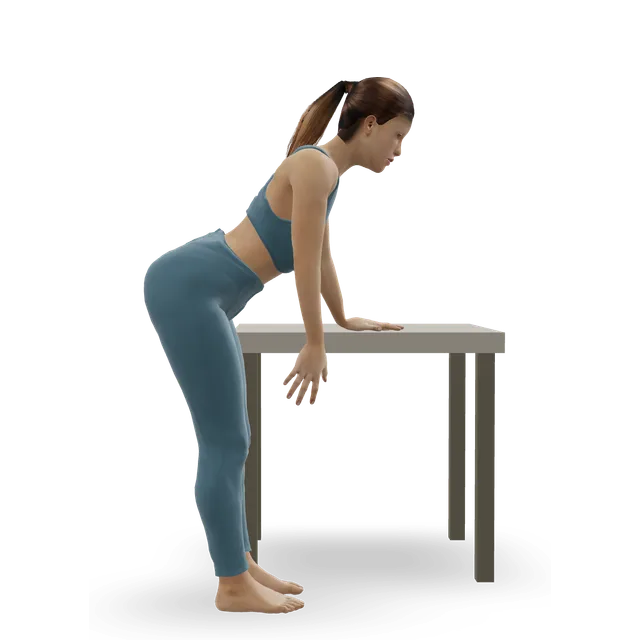
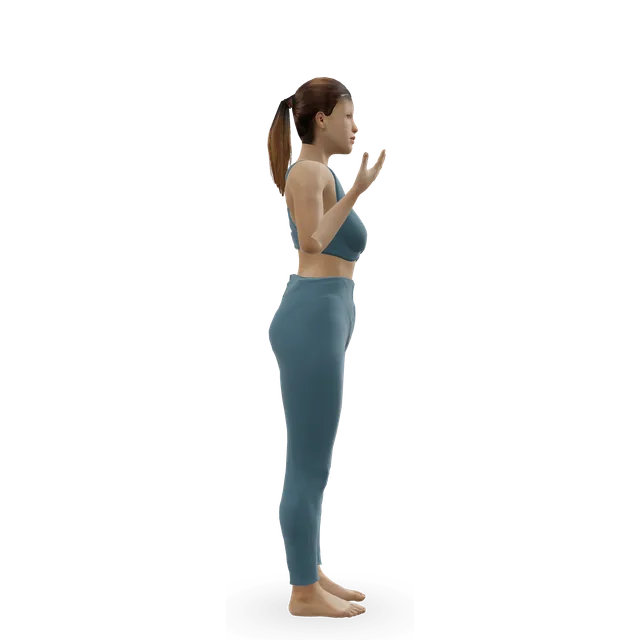
Pendulum exercise (Codman's pendulum) demonstrated on the 3D figure3D demoPendulum exercise (Codman's pendulum)Beginner · A bench or box

Small swings forwards and back, side to side and in circles: 1 to 2 minutes in all, 4 to 5 times a day · Often uncomfortable at first; it usually eases after a few swings

Harder: Table slide (seated forward reach)

Move on when: About 3 weeks have passed (one trust stops the sling at the start of week 4), the pain is settling, and your team or leaflet agrees.

Follow along: a timer, a cue and the next move, one step at a time.
Stage 2

Move: help the arm up, then lift it yourself (about weeks 3 to 6, as your team allows)

Out of the sling and back to light everyday tasks, with no heavy lifting until about 6 weeks. Doses are an NHS trust leaflet's unless marked; matching its exercises to these demos is editorial.

Table slide (seated forward reach) demonstrated on the 3D figure3D demoTable slide (seated forward reach)Beginner · A bench or box

10 slow reps, 4 to 5 times a day · The leaflets' assisted forward lift

Easier: Pendulum exercise (Codman's pendulum) · Harder: Overhead lat stretch at a bench

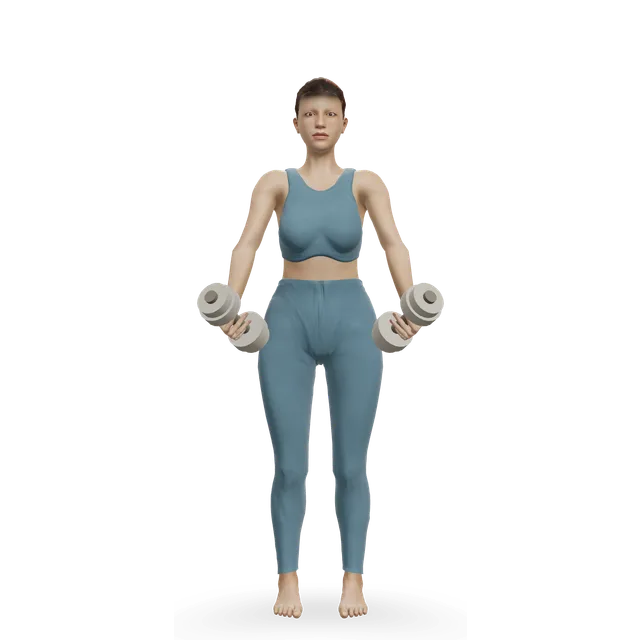
Scaption raise demonstrated on the 3D figure3D demoScaption raiseBeginner · A dumbbell

No weight: 10 reps as far as is comfortable, 4 to 5 times a day · Once the assisted moves are easy; arm forwards and slightly out, thumb up

Easier: Band lateral raise · Harder: Smith machine upright row

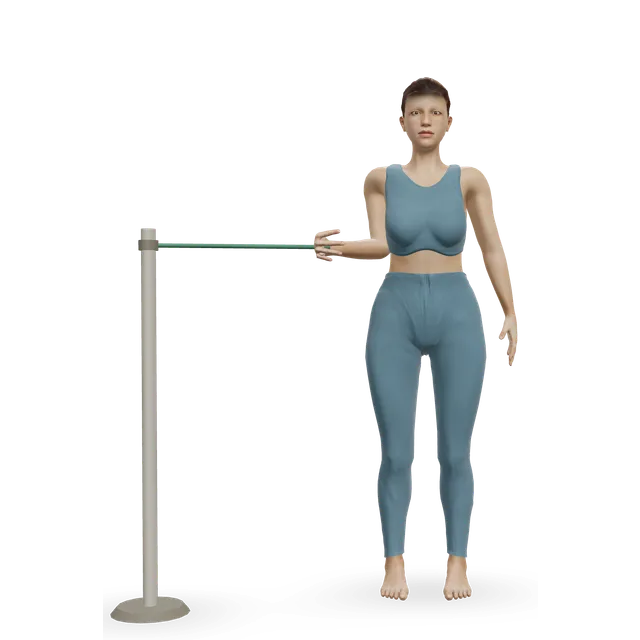
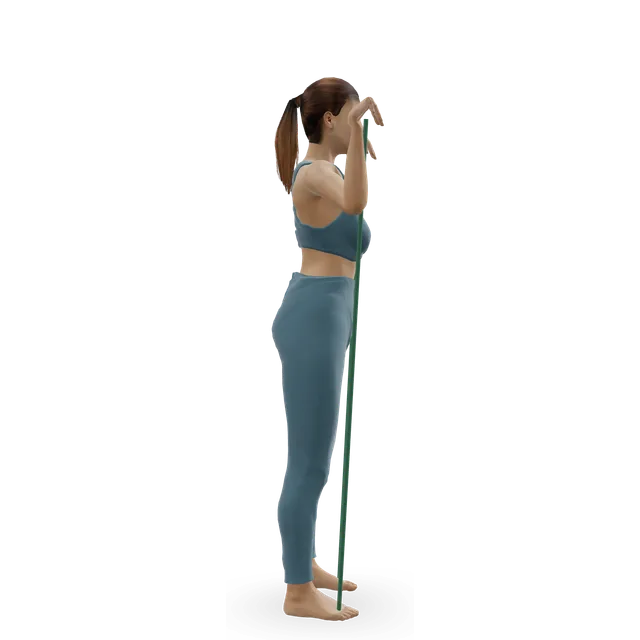
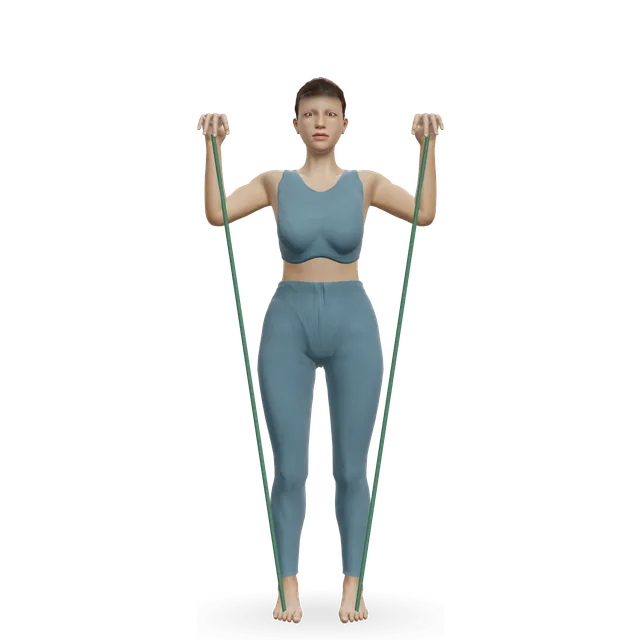
Standing band external rotation demonstrated on the 3D figure3D demoStanding band external rotationBeginner · A band + An anchor point

10 reps with no band at first · Elbow at your side; add the lightest band towards week 6 (editorial)

Harder: Side-lying external rotation

Move on when: You can lift the arm overhead and turn it out without help, about 6 weeks have passed, and the shoulder is no worse the next day.

Follow along: a timer, a cue and the next move, one step at a time.
Stage 3

Strengthen (from about 6 weeks, as your team allows; the starting point for arthritis or weightlifter's shoulder)

One NHS trust's leaflet says that from 6 weeks you can do your usual activities guided by any pain, and gradually increase what you lift and for how long. Two or three strength sessions a week, under the pain rule. Doses are editorial.

Scaption raise demonstrated on the 3D figure3D demoScaption raiseBeginner · A dumbbell

2 to 3 sets of 10 to 12, light, thumbs up, to shoulder height

Easier: Band lateral raise · Harder: Smith machine upright row

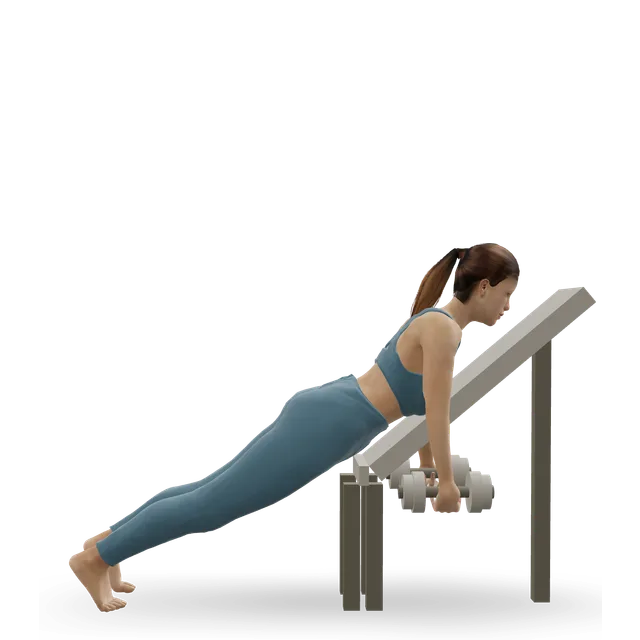
Incline push-up demonstrated on the 3D figure3D demoIncline push-upBeginner · A bench or box

2 to 3 sets of 8 to 12, in a small range at first · Start with wall push-ups if this is too much

Harder: Push-up

Move on when: Lifting at waist and chest height is comfortable, and every set passes the pain rule.

Follow along: a timer, a cue and the next move, one step at a time.
Stage 4

Back to the gym and contact sport (as your team allows)

Timing varies with the grade and the person. As an editorial guide, often from about 6 to 8 weeks after a mild sprain and about 3 months after a complete separation; after stabilisation surgery, one NHS trust allows contact sport at 12 weeks. Go by how the shoulder handles load, not the calendar. Doses are editorial.

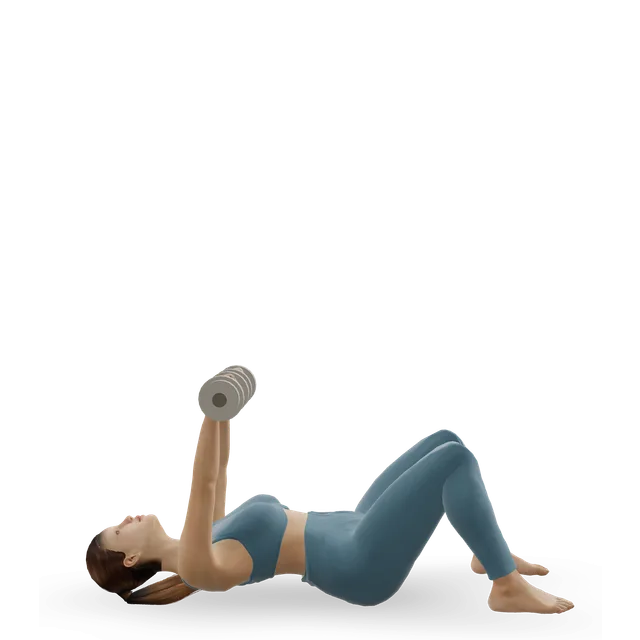
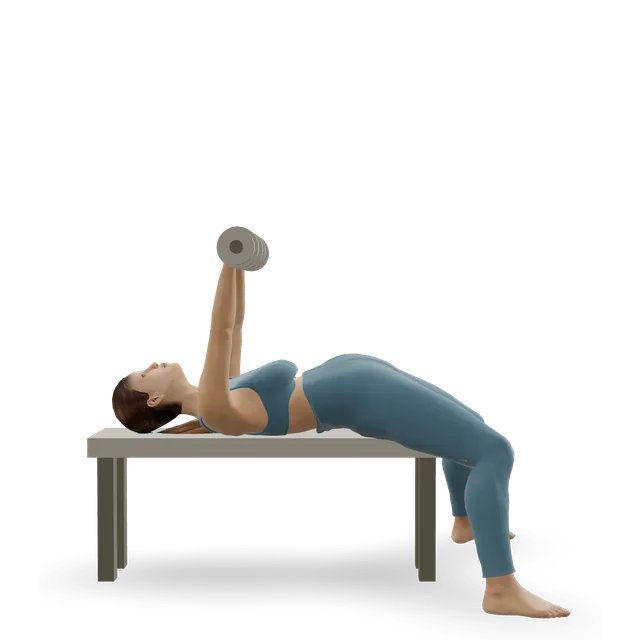
Dumbbell floor press demonstrated on the 3D figure3D demoDumbbell floor pressIntermediate · A dumbbell

2 to 3 sets of 8 to 12 · The floor limits how deep the arms go

Easier: Chest press machine · Harder: Bench press with chains

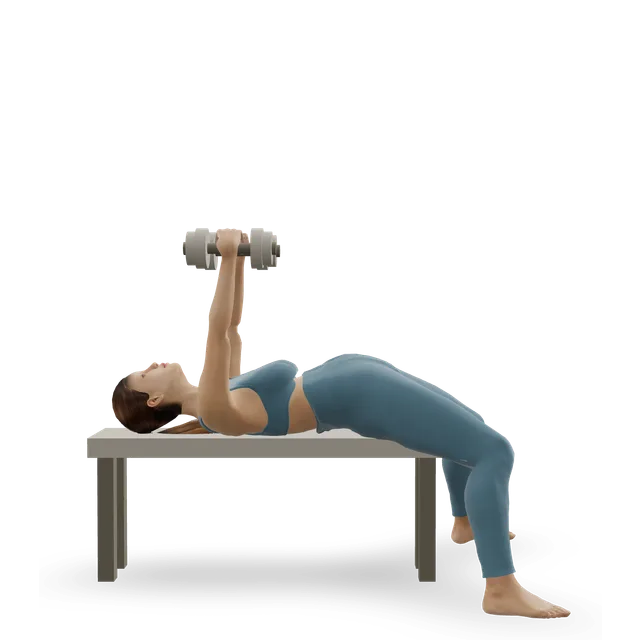
Neutral-grip dumbbell bench press demonstrated on the 3D figure3D demoNeutral-grip dumbbell bench pressIntermediate · A dumbbell + A bench or box

3 sets of 8 to 12 · Once the floor press is comfortable; palms facing each other

Easier: Barbell bench press · Harder: Bench press with bands

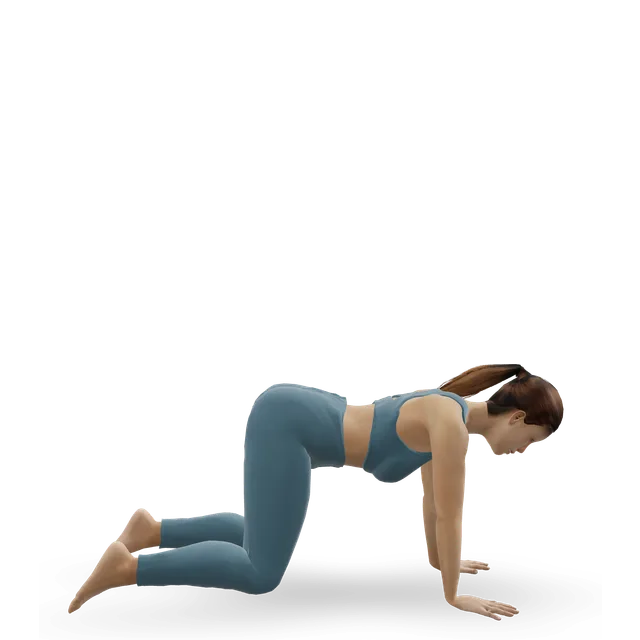
Bear Crawl demonstrated on the 3D figure3D demoBear CrawlIntermediate · No equipment

4 travels of 8 to 10 m · The move's own dose; before contact sport, to load the arms on all fours

Easier: Knee hover (Pilates tabletop hover) · Harder: Spider crawl (low push-up knee drive)

Move on when: Pressing, push-ups and crawling cause no pain on top of the shoulder the next day. For contact sport, build up falling and contact drills with your coach as well (editorial).

Follow along: a timer, a cue and the next move, one step at a time.

What to change for now

Pressing in the gym

If pressing hurts on top of the shoulder, change it rather than stop training. These swaps are editorial, built on a lab study and a review of weightlifter's shoulder:

  • Use a grip narrower than 1.5 times shoulder width, neutral-grip dumbbells or a floor press.
  • Press heavy less often for a while: pressing more than 1.5 times body weight, and weight training three or more times a week, were linked with weightlifter's shoulder.
  • Leave out deep dips, bench dips and behind-the-neck presses and pulldowns, and keep rows and rotator cuff work going.
  • Bring heavy overhead pressing back last, starting with a band press.

Sources 33, 16

After stabilisation surgery

Your surgeon's protocol comes first, and hospitals differ. One NHS trust's, for example: 6 weeks in a sling, taken off to wash or straighten the elbow; movement only up to shoulder height for those 6 weeks, then full movement; an exercise bike from 2 weeks, gentle breaststroke at 6 weeks, and freestyle swimming and contact sport at 12 weeks, depending on your rehab; no driving for about 6 weeks; and no heavy work, sport or resisted exercise for 12 weeks.

Good movement and strength usually return within 3 to 6 months, with strengthening for up to a year. Up to 1 in 10 people need a further operation because the repair fails.

Source 8

Positions to swap, and why

Habit or positionWhy it mattersInstead
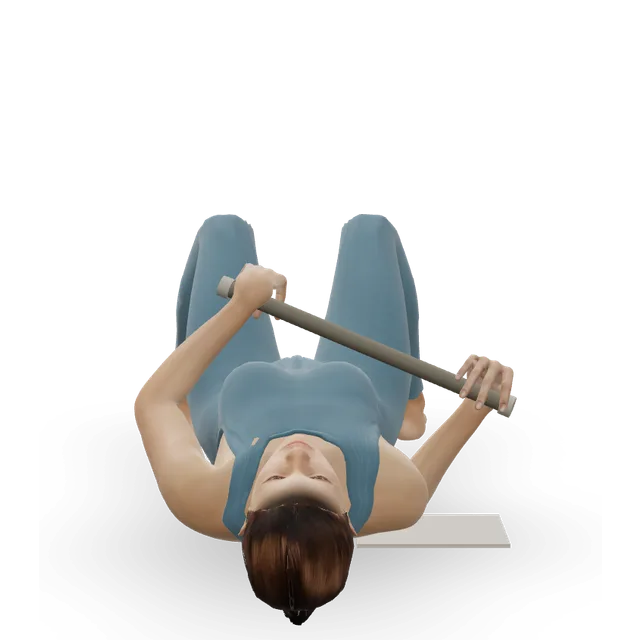
Reaching across your body to the end of the range, including the cross-body stretchIt squeezes the AC joint: reaching across the body reproduces AC joint pain, and the stretch's own page says to skip it while the top of the shoulder is sore.Turning the arm out with a stick, and table slides. Bring the stretch back when it no longer hurts on top.Try: Stick-assisted external rotation (lying)
Lifting above shoulder height in the first 2 to 3 weeks, or heavy lifting before about 6 weeksNHS trust leaflets' timings.Work at waist and chest height first.
Deep bar dips and bench dipsThey take the shoulder to the end of its range under load (editorial, as in the shoulder arthritis guide).Push-ups within a comfortable range.Try: Incline push-up
Wide-grip barbell bench pressIn a lab model, grips wider than 1.5 times shoulder width raised the load on the AC joint, and bench pressing is the lift most often behind weightlifter's shoulder.A narrower grip, neutral-grip dumbbells or a floor press.Try: Dumbbell floor press
Heavy, frequent bench pressing with weightlifter's shoulderPressing more than 1.5 times body weight, and weight training three or more times a week, were linked with it.Fewer, lighter pressing sessions for a while, keeping rows and rotator cuff work.Try: Chest-supported dumbbell row
Heavy overhead pressing in the first weeksOne leaflet starts overhead lifting at 6 to 12 weeks; heavy overhead work comes later still (editorial).A band press first, then a landmine press.Try: Shoulder press with a band
Behind-the-neck presses and pulldownsThe site's shoulder guides advise pressing and pulling in front of the head.Press and pull to the front.Try: Lat pulldown
Lying on the injured sideIt usually hurts early on.Propped up, on your back with a small pillow under the arm, or on the other side hugging a pillow (one NHS trust's advice).
Driving in the slingOne NHS trust's checks: you're out of the sling, can turn the wheel and react in an emergency without pain or hesitating, and your insurer covers you.Wait until you meet them.

Routines to follow

More moves for this area

Questions people ask

Is a separated shoulder the same as a dislocated shoulder?

No. A separated shoulder is an injury to the AC joint, where the collarbone meets the top of the shoulder blade; a dislocated shoulder is the ball of the arm bone coming out of its socket. Both usually follow a fall, and both need checking the same day if the shoulder has changed shape.

What grade is my AC joint injury, and does it matter?

Grades I and II are sprains, with the joint not out of line or only partly; grade III is a complete separation with a bump; grades IV to VI are rarer and more displaced. Grades I and II are treated without surgery, and so are most grade III injuries.

Do I need surgery for a separated shoulder?

Usually not. In trials of complete separations, surgery gave no better function at 1 to 2 years, a slower early recovery and more complications, though it leaves a neater-looking joint. Surgeons may still suggest it for the most displaced injuries, or if you're still troubled months later.

How long does an AC joint injury take to heal?

NHS leaflets say a mild sprain usually heals in 3 to 6 weeks, though symptoms can last 3 to 6 months. With more severe injuries, most people are comfortable by 6 to 12 weeks. Everyone differs, so judge it by what your shoulder can do, not the date.

How long should I wear the sling?

For comfort, usually for up to about 3 weeks, taking it off to wash, dress and exercise; you don't need it at night. Keep your hand, wrist and elbow moving from the start.

Will the bump go away?

Often not completely. After a mild injury a small, painless lump is usual, and complete separations stay more prominent without surgery. Good, pain-free function often returns even with a large bump.

When can I go back to the gym or my sport?

NHS leaflets advise no heavy lifting for about 6 weeks. In a review that mixed injury grades and studies, people treated without surgery returned to sport after about 52 days on average, against about 127 after surgery. Build back through pressing, push-ups and crawling before contact, as your team allows.

Can I bench press with AC joint pain?

Often, with changes: a narrower grip, neutral-grip dumbbells or a floor press, fewer heavy sessions, and pain on top of the shoulder as your guide. In a lab model, a grip narrower than 1.5 times shoulder width lowered the load on the AC joint, and heavy, frequent benching is linked with weightlifter's shoulder.

What is weightlifter's shoulder?

Bone stress at the end of the collarbone (distal clavicle osteolysis), mostly in people who bench press heavily. Most improve when they reduce or change their pressing, and about 1 in 6 has an operation to remove the end of the collarbone.

What exercises should I avoid with an AC joint injury?

For now: reaching across your body to the end of the range (including the cross-body stretch), deep dips, wide-grip bench press and heavy overhead pressing. In the first weeks after an injury, also avoid lifting above shoulder height for 2 to 3 weeks and heavy lifting for about 6.

Is it my AC joint or arthritis in the shoulder joint?

AC joint pain sits on the very top of the shoulder, at the end of the collarbone, and you can point to it with one finger. Arthritis of the ball-and-socket joint is a deeper ache with stiffness, especially turning the arm out, usually over 60. Scans show AC joint arthritis in many people without pain, so where it hurts matters more than the report.

When can I drive?

When you're out of the sling, can turn the wheel and react in an emergency without pain or hesitating, and your insurer covers you, as one NHS trust puts it. After stabilisation surgery, one trust says about 6 weeks.

Related exercise guides

Other pain guides

Sources

  1. AAOS OrthoInfo · Shoulder separation
  2. Tamaoki 2019 · Surgery vs conservative treatment for AC joint dislocation in adults (Cochrane review)
  3. NHS · Shoulder pain
  4. University Hospitals Sussex NHS · Minor injury to the acromioclavicular joint, grade 1 to 2 (physiotherapy leaflet, 2025)
  5. Haugaard 2023 · How common AC joint dislocations are in an urban population (prospective cohort, Shoulder Elbow)
  6. Hibberd 2016 · AC joint sprains in 25 US college sports (injury surveillance study, AJSM)
  7. Oxford University Hospitals NHS · Acromioclavicular joint (ACJ) injury (emergency department leaflet, 2026)
  8. King's College Hospital NHS · Acromioclavicular joint (ACJ) stabilisation (patient leaflet)
  9. Sherwood Forest Hospitals NHS · Acromioclavicular joint (ACJ) injury (patient leaflet)
  10. Mulhall 2024 · Other injuries found on MRI after low-grade AC joint injuries (cohort of 29, Clin J Sport Med)
  11. NHS · Broken collarbone
  12. Welch 2024 · Treatment of primary AC joint arthritis (systematic review, Shoulder Elbow)
  13. Soler 2021 · Conservative vs surgical care for AC joint arthritis (scoping review, KSSTA)
  14. Rossano 2022 · How common AC joint arthritis is in people not seeking care (systematic review, J Orthop)
  15. Ibounig 2025 · AC joint and subacromial imaging findings in shoulders without symptoms (systematic review, J Orthop Surg Res)
  16. Wilkinson 2026 · Risk factors and management of weightlifter's shoulder (distal clavicle osteolysis) (scoping review, Shoulder Elbow)
  17. Cahill 1982 · Osteolysis at the end of the collarbone in male athletes (case series of 46, JBJS Am)
  18. East Sussex Healthcare NHS · Acromioclavicular joint injury: self-management (fracture care leaflet, 2025)
  19. East Sussex Healthcare NHS · Acromioclavicular joint injury: for review (fracture care leaflet, 2025)
  20. Mouhsine 2003 · Grade I and II AC joint injuries: results of conservative treatment (case series of 33, JSES)
  21. Mikek 2008 · Long-term shoulder function after type I and II AC joint injuries (case series of 23, AJSM)
  22. Canadian Orthopaedic Trauma Society 2015 · Surgery vs non-surgical care for acute AC joint dislocation (multicentre RCT, J Orthop Trauma)
  23. Murray 2018 · Surgery vs non-surgical care for type III and IV AC joint dislocations: ACORN (RCT, JBJS Am)
  24. Lameire 2026 · Surgery vs non-surgical care for type III to V AC joint dislocations (meta-analysis of RCTs, OJSM)
  25. Wen 2026 · Surgery vs conservative care for acute type III to V AC joint dislocations (meta-analysis of RCTs, Injury)
  26. Lara 2026 · Surgery vs non-surgical care for type III AC joint dislocations: 24-month results (RCT, AJSM)
  27. Joukainen 2014 · Surgery vs non-surgical care for type III and V AC joint dislocations: 18 to 20-year follow-up (RCT, OJSM)
  28. Elliott 2025 · Return to sport after AC joint injury (systematic review, J Clin Med)
  29. Verstift 2019 · Return to sport after surgery for high-grade AC joint dislocation (systematic review, KSSTA)
  30. Farrell 2019 · Non-drug treatment and criteria for surgery in persistent AC joint arthritis (systematic review, Shoulder Elbow)
  31. Harris 2012 · Manual therapy and exercise for injection-confirmed AC joint pain (cohort of 13, JOSPT)
  32. Auge 1998 · Collarbone-end resection for osteolysis in weightlifters (case series of 10, AJSM)
  33. Noteboom 2024 · Bench press technique and shoulder loads (biomechanical model, Frontiers in Physiology)
  34. Holmgren 2012 · Specific exercise and the need for surgery in subacromial impingement (RCT, BMJ)
  35. NHS · Heart attack: symptoms
  36. NHS · Septic arthritis

Exercise education, not a diagnosis or treatment plan. It is written from the guidelines and studies listed above; review by a clinician is pending. If your pain follows an injury, is severe, is getting worse, or comes with any warning sign listed on this page, get it assessed. Health disclaimer.