Pain guide · Shoulder pain

Exercises after a broken shoulder: the sling, pendulums and getting your arm moving again

A broken shoulder usually means a break at the top of the arm bone (the proximal humerus), most often from a fall in later life. Most heal in a sling without an operation: in the UK PROFHER trial, surgery gave no better shoulder function than a sling at 2 years or at 5.

Your team's plan comes first, and hospitals differ on how long the sling stays on and when exercises start. This guide sets out the usual stages, from hand and elbow exercises in the sling through pendulums and assisted movement to strength, with a 3D demo of each move, plus the bone health and falls checks worth asking for.

When to get help first

Exercise is for pain that has been checked or is clearly mild and settling.

Get urgent medical help if

  • Call 999 or go to A&E: after a fall or injury, your shoulder looks out of place or has changed shape, or you cannot move your arm. Do not drive yourself, and do not try to put it back in yourself.
  • Call 999 or go to A&E after an injury (don't drive yourself) if the arm, wrist or hand is numb, tingling or has pins and needles; a bone is sticking out or a bad cut is bleeding heavily; or the arm or wrist has changed colour or shape, or is at an odd angle.
  • Call 999: after a fall, you may have hurt your head, neck, back or hip, or you cannot get up.
  • While it heals, get help from NHS 111 the same day if the pain gets worse, your temperature is very high or you feel hot, cold or shivery, or your fingers, wrist or arm feel numb, look swollen or turn blue or white.
  • Arm pain or swelling with breathlessness or chest pain: call 999 or go to A&E, and do not drive yourself. It can be a blood clot that has reached the lungs.
  • Throbbing pain and swelling in the arm, with red, blue or darker skin and swollen veins: ask for an urgent GP appointment or get help from NHS 111. It could be a blood clot.
  • After an operation, oozing or pus from the wound: ask for an urgent GP appointment or get help from NHS 111. If you feel unwell or feverish and the wound looks infected, go to A&E.

See a doctor or physiotherapist if

  • New numbness or weakness in the arm, or pins and needles that don't go away: tell your fracture team or physiotherapist. Nerve damage is common with these breaks and usually recovers, but they should know.
  • Still in a lot of pain and very stiff about 12 weeks after the injury: contact your fracture clinic or physiotherapy, as one NHS trust advises.
  • Struggling to get your movement back, or not referred to physiotherapy: ask, or refer yourself where your area allows.
  • You're 50 or over and broke it in a fall from standing height or less: ask your GP about a bone health check and a falls assessment.

Understand it

What a broken shoulder is

Usually a break in the top part of the upper arm bone (the humerus), next to the shoulder joint: a proximal humerus fracture, sometimes called a fractured neck of humerus. Breaks of the collarbone and the shoulder blade are different injuries; the NHS has a separate page on a broken collarbone.

Sources 1, 2, 3, 4

Who gets it

These breaks make up 5 to 6% of adult fractures. In a study of 1,027 of them, most happened in fit older people, the rate was highest in women aged 80 to 89, and about half had barely moved out of place. Most follow a fall from standing height, and NICE (the National Institute for Health and Care Excellence) counts the shoulder among the four main sites of osteoporotic fractures.

Sources 5, 6, 7

How it's recognisedEmerging evidence

Severe pain, a very swollen shoulder, very limited movement and bruising round the top of the arm, which can spread down to the elbow and hand over the first weeks. It needs an X-ray, and sometimes a CT (computed tomography) or MRI (magnetic resonance imaging) scan.

Nerves are often affected. In 143 people tested with electrical nerve studies after a low-energy break, 67% showed nerve damage, most often to the axillary nerve (58%), and more often when the bone had moved. The nerves recovered in everyone, but more slowly, shoulder function recovered less well, and an examination alone often missed the nerve damage.

Sources 3, 1, 2, 8

How it's treated: your team's choice

Most are treated in a collar and cuff or a sling. With a collar and cuff, the hand sits above the elbow so the weight of the arm helps keep the healing bone in line.

NICE advises treatment without surgery for uncomplicated displaced breaks from a low-energy fall in adults, and considering surgery for an open wound, skin tented by bone, a damaged blood vessel, a break with a dislocation, or a split in the ball of the joint. An operation means a plate, screws or pins, or a shoulder replacement.

Sources 1, 2, 9, 10, 3

What recovery looks like

The bone usually heals in 6 to 12 weeks. In one NHS trust's leaflet most of the recovery comes in the first 6 weeks, and strength can take up to a year; another says improvement continues for 12 to 18 months. Most people get back enough movement for daily activities, but some loss at the extremes often stays.

Sources 2, 9, 1

What helps, and how strong the evidence is

A sling does as well as surgery for most breaksStrong evidence

In the UK PROFHER trial, 250 adults (average age 66) with a displaced break at the neck of the humerus, including 3- and 4-part breaks, had either an operation, by surgeons experienced in it, or a sling, with the same rehabilitation for both. Over 2 years shoulder scores were almost identical (about 39 against 38 out of 48, where 5 points would matter), and complications, further operations and deaths didn't differ significantly. At 5 years there was still no difference, and surgery cost about £1,800 more per person.

Sources 11, 12, 5

The wider evidence agreesStrong evidence

A 2022 Cochrane review pooled 10 trials comparing surgery with no surgery (717 people, mostly women over 60, two-thirds with 3- or 4-part breaks). It found high-certainty evidence that surgery makes no clinically important difference to shoulder function at 1 or 2 years, and lower-certainty evidence that it leads to more repeat operations (about 38 more per 1,000 people). Evidence is lacking for people under 60, high-energy injuries and breaks with a dislocation.

Sources 13, 10

Very complex breaks in older people: a replacement is being testedEmerging evidence

In 6 mostly retrospective studies (439 people, average age 79) with 3- or 4-part breaks, a reverse shoulder replacement gave more forward lift (about 122° against 100°) and outward turn than a sling, with similar complications, but the authors call the evidence limited. The UK PROFHER-2 trial compared a reverse replacement, a half replacement and no surgery in people over 65; when its record was last updated in December 2025, no results had been published.

Sources 14, 15, 16

Starting to move early is safeEmerging evidence

In 74 people with an impacted break, gentle movement started within 3 days gave better shoulder scores at 6 weeks and 3 months than 3 weeks in a sling, and less pain at 3 months, with no slipping of the bone. In 86 people with a 2-part break, physiotherapy within a week gave less pain and better function at 16 weeks than 3 weeks in a collar and cuff; by 2 years the difference was no longer significant. In 111 people (average age 70), 1 week in a sling did as well as 3 weeks, up to 2 years.

Reviews disagree on how sure we can be. A 2025 review of 6 trials (470 people) found early movement safe and better for function at 3 months, with no difference later, and rated the evidence moderate to high; a 2021 review found the gain too small to matter; and the 2022 Cochrane review rated the evidence very low certainty. The safe reading: early, gentle movement doesn't harm the break, and may make the first months easier.

Sources 17, 18, 19, 20, 21, 22, 13

Pendulums keep the arm moving; they don't stretch itEmerging evidence

In 17 healthy volunteers, the shoulder joint itself moved only about 7° to 14° during pendulums; most of the movement came from the trunk. So they are a gentle way to keep the arm moving early on, not a way to regain range. Large swings (about 51 cm across) made the rotator cuff work at more than 15% of its maximum, more than small 20 cm swings, so keep the circles small at first. These are lab studies in people without injuries.

Sources 23, 24

Home exercise did as well as weekly physiotherapyEmerging evidence

In a Nordic trial of 72 people aged 60 and over with a 2-part break treated without surgery, 10 weeks of weekly supervised physiotherapy plus daily home exercise gave no better arm function at 3 months, or anything else at 12 months, than daily home exercise alone. A 2021 review found no evidence either way, and in PROFHER every hospital gave home exercises alongside a basic physiotherapy protocol. Ask for physiotherapy if you're struggling to regain movement.

Sources 25, 22, 26

A broken shoulder is a reason to check bones and fallsStrong evidence

After a fragility fracture at 50 or over, NICE asks for a fracture risk assessment, and it offers a bone density (DXA) scan after a single shoulder, wrist, hip or spine fragility fracture in the past 2 years. Its falls guideline recommends a full falls assessment for people who have fallen in the past year and were injured.

Exercise helps with the falls: in a Cochrane review of 59 trials (12,981 older people living at home), exercise cut the rate of falls by 23% (high certainty) and may reduce falls that break a bone by about a quarter (low certainty).

Sources 7, 27, 28

How much pain is OK while you exercise?

No forcing at first; up to about 5 out of 10 once you're strengtheningEmerging evidence

While the arm is in the sling and during the assisted-movement stage, NHS leaflets say: move within the limits of pain you can tolerate, don't force or stretch, and if an exercise brings a significant increase in pain, stop that exercise until you've asked your physiotherapist. Mild discomfort is fine.

From the strengthening stage, the shoulder pain rule applies: pain up to about 5 out of 10 during the exercises, back to where it started by your next session. If it isn't, use a lighter band or a smaller range next time, not nothing. In the Holmgren trial in rotator cuff pain, pain was not allowed above 5 out of 10 and had to settle before the next session; using that rule after a fracture is our suggestion.

Sources 2, 9, 29

The exercise plan: 4 stages

Start at the first stage. Each move opens a full guide with a 3D demo.

Stage 1

In the sling: keep the hand, elbow and neck moving

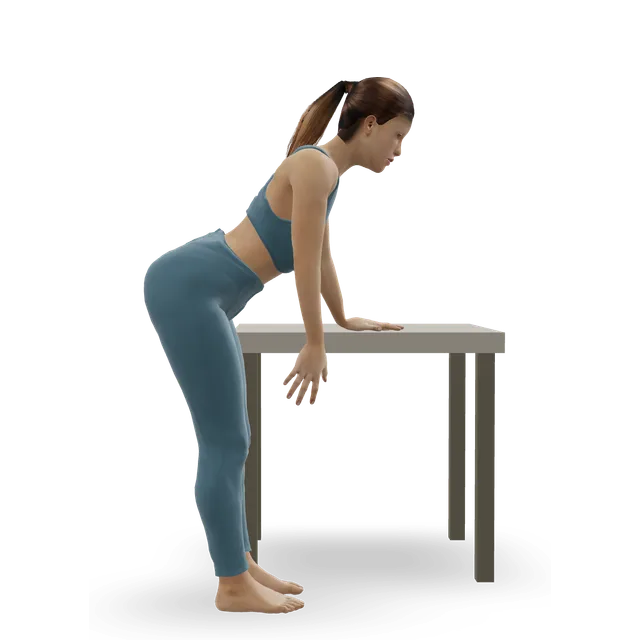
As your team allows, from the first days. Wear the sling or collar and cuff as your team says, often day and night for the first 2 to 4 weeks, and take the arm out several times a day to straighten the elbow. Sleep propped up, or on the good side with pillows. Pendulums only when your team says so: lean on a table with your good hand, keep the circles small, and leave them out if your balance is poor.

Tendon glides (hand tendon gliding exercises) demonstrated on the 3D figure3D demoTendon glides (hand tendon gliding exercises)Beginner · No equipment

5 to 10 reps, 4 to 5 times a day · Make a fist and stretch the fingers wide. An NHS leaflet's dose

Harder: Ball squeeze

Wrist & forearm flow demonstrated on the 3D figure3D demoWrist & forearm flowBeginner · No equipment

5 to 10 reps, 4 to 5 times a day · With the forearm supported. An NHS leaflet's dose

Harder: Wrist flexor stretch

Elbow bend and straighten (elbow range of motion) demonstrated on the 3D figure3D demoElbow bend and straighten (elbow range of motion)Beginner · No equipment

5 to 10 reps, 4 to 5 times a day · The other hand can help. An NHS leaflet's dose

Harder: Dumbbell biceps curl

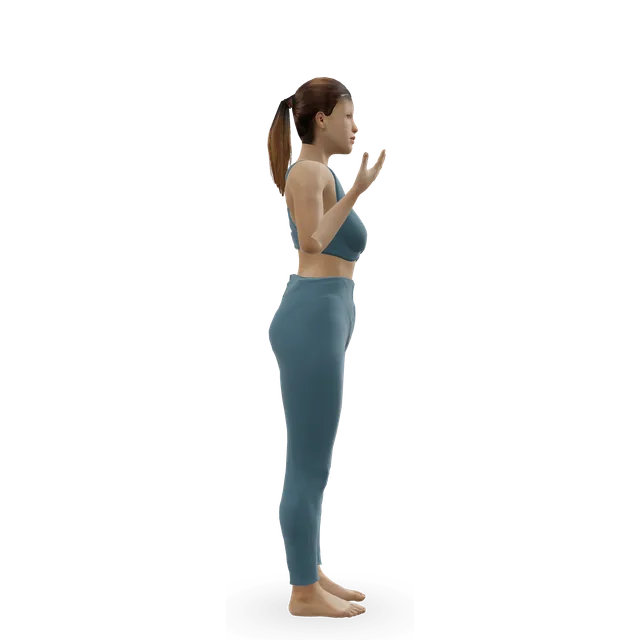
Neck CARs demonstrated on the 3D figure3D demoNeck CARsBeginner · No equipment

Separate turns, each held 5 s: 5 each way, 3 times a day · Turns rather than full circles while it's sore. An NHS leaflet's dose

Pendulum exercise (Codman's pendulum) demonstrated on the 3D figure3D demoPendulum exercise (Codman's pendulum)Beginner · A bench or box

10 small swings or circles each way, 3 times a day, when your team allows · Lean on a table with your good hand. An NHS leaflet's dose

Harder: Table slide (seated forward reach)

Move on when: Your team says the shoulder itself can start moving with help, often at 2 to 4 weeks, and the pain is settling.

Follow along: a timer, a cue and the next move, one step at a time.
Stage 2

Assisted movement: let a table, a stick or your good arm help

As your team allows, often from about 2 to 4 weeks. Take the arm out of the sling for light tasks and these exercises, and wean off it as your team advises; one NHS trust aims to stop by about 6 weeks. Don't force or stretch.

Table slide (seated forward reach) demonstrated on the 3D figure3D demoTable slide (seated forward reach)Beginner · A bench or box

5 to 10 slow reps, 3 times a day · Forwards, then out to the side. NHS leaflets' doses

Easier: Pendulum exercise (Codman's pendulum) · Harder: Overhead lat stretch at a bench

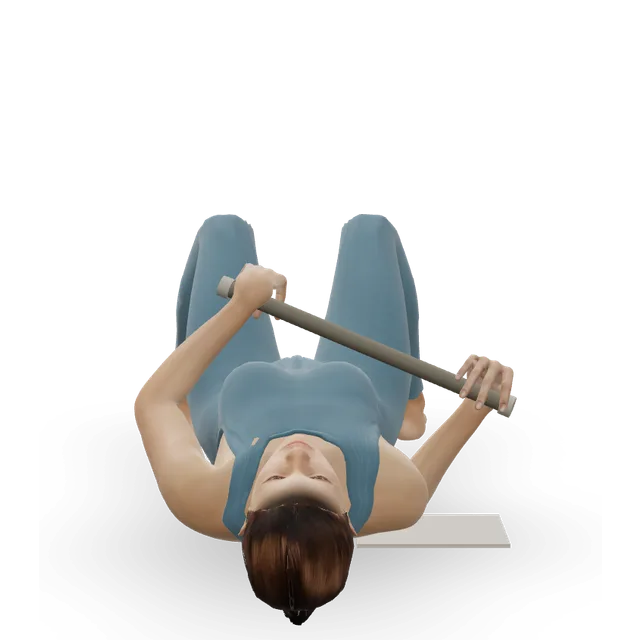
Stick-assisted external rotation (lying) demonstrated on the 3D figure3D demoStick-assisted external rotation (lying)Beginner · Other / check instructions

10 reps, twice a day · Elbow tucked in at your side; one NHS trust starts this at about 4 weeks

Harder: Standing band external rotation

Seated upper-back lift (sit tall, shoulders back) demonstrated on the 3D figure3D demoSeated upper-back lift (sit tall, shoulders back)Beginner · A bench or box

3 to 5 reps, each held 3 to 5 s, daily · Sit tall with the shoulders gently back

Easier: Elbows back · Harder: Prone Y-T-W raises

Sit to stand from a chair demonstrated on the 3D figure3D demoSit to stand from a chairBeginner · A bench or box

Up to 10, standing briskly and sitting slowly · Use your legs and the good arm, not the broken one. Editorial dose

Harder: Bodyweight squat

Move on when: The arm moves more easily with help, you're out of the sling or nearly, and your team is happy for you to use the arm on its own.

Follow along: a timer, a cue and the next move, one step at a time.
Stage 3

Active movement and early strength

As your team allows, often from about 6 weeks. Use the arm for light and then medium tasks, with no lifting above shoulder height yet. The doses at this stage are editorial.

Breath reach demonstrated on the 3D figure3D demoBreath reachBeginner · No equipment

5 slow breaths, lifting only as high as is comfortable

Wall push-up demonstrated on the 3D figure3D demoWall push-upBeginner · A wall

2 sets of 8 to 10 · Small range

Harder: Push-up

Move on when: You can lift the arm to shoulder height on your own, daily tasks are getting easier, and the exercises pass the pain rule.

Follow along: a timer, a cue and the next move, one step at a time.
Stage 4

Strength for daily life, and steadiness on your feet

As your team allows, from about 3 months; one NHS trust's guide allows heavier and overhead lifting from 3 to 6 months. Keep up leg strength and balance work, because a broken shoulder from a fall is a reason to ask for a falls assessment. The doses are editorial.

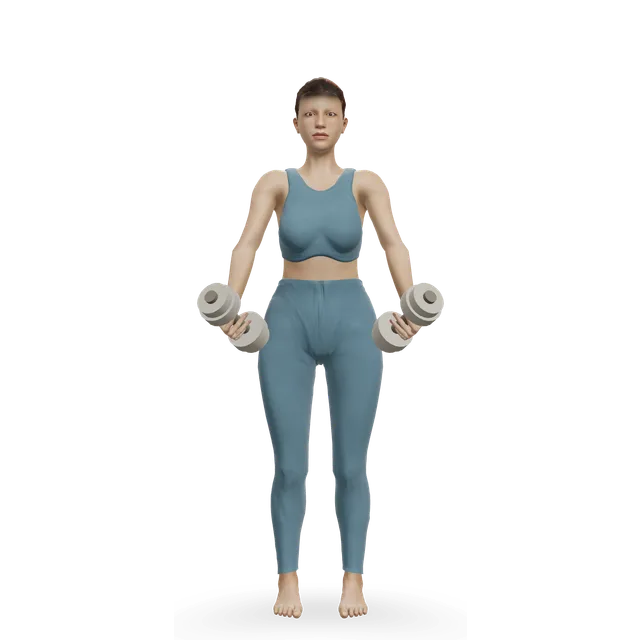
Scaption raise demonstrated on the 3D figure3D demoScaption raiseBeginner · A dumbbell

2 to 3 sets of 10, light, up to shoulder height

Easier: Band lateral raise · Harder: Smith machine upright row

Shoulder press with a band demonstrated on the 3D figure3D demoShoulder press with a bandBeginner · A band

2 to 3 sets of 8 to 12 · Once reaching overhead is comfortable

Harder: Push press

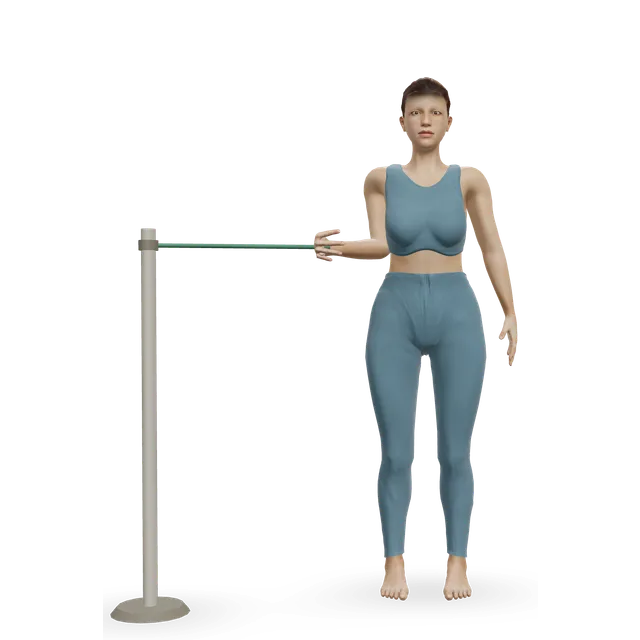
Band row demonstrated on the 3D figure3D demoBand rowBeginner · A band + An anchor point

3 sets of 10 to 15 · The move's own starting dose

Harder: Supported single-arm dumbbell row

Tandem stance and heel-to-toe walk demonstrated on the 3D figure3D demoTandem stance and heel-to-toe walkBeginner · A wall

Hold 10 to 30 s with a hand on the worktop, then without; then 10 heel-to-toe steps · Stay beside a wall or worktop

Easier: Semi-tandem stance · Harder: Single-leg stand

Move on when: Build towards your usual activities, adding a little load every week or two. Strength can take up to a year to come back.

Follow along: a timer, a cue and the next move, one step at a time.

What to change for now

Typical timings, which your team may change

These come from three NHS trusts' leaflets, and they differ. Your own team's timings come first.

  • Collar and cuff or sling: about 3 to 6 weeks in one leaflet; aim to stop by week 6 in another; about 6 to 12 weeks, day and night for the first 3 to 4, in a third.
  • Hand, wrist, elbow and neck movement: from the start.
  • Shoulder movement, including pendulums: from the first days in two leaflets, at 2 to 3 weeks in another, as your team says.
  • Assisted shoulder exercises lying down: from about 4 weeks in one leaflet.
  • Light housework from about 4 to 6 weeks, medium work with nothing above shoulder height from 6 weeks, and heavy or overhead work from 3 to 6 months (one NHS trust's guide).
  • A fracture clinic follow-up is often offered at around 6 to 8 weeks.
  • Driving: not with a sling on; one hospital suggests waiting at least 4 to 6 weeks, until you can control the car safely. Check with your insurer.

Sources 2, 9, 1

Sleeping, washing and dressing

Many people sleep propped up at first, or on the good side with a pillow in front to rest the arm on and one behind. To wash under the arm, lean forward and let it hang slightly away from your body, sitting down if your balance is poor. Put the broken arm into a sleeve first, and take it out last.

When sitting, rest the arm on a pillow with the elbow gently straightened and the hand a little higher than the elbow, to help the swelling.

Sources 1, 2, 9

The first 3 weeks

One NHS trust's guide: use the arm only for essential tasks such as washing and dressing, and avoid pushing up from a chair with it, lifting, carrying, pushing and pulling. From about 4 to 6 weeks, light housework, lifting nothing heavier than a cup of tea.

Source 1

Positions to swap, and why

Habit or positionWhy it mattersInstead
Keeping the whole arm stillThe hand, wrist and elbow stiffen, and early movement was safe in trials.Hand, wrist and elbow exercises from the start.
Big, fast pendulum swings early onLarge swings make the rotator cuff work harder; small ones keep the arm moving.Small, slow circles.
Pendulums when your balance is poorYou lean forward on one hand, and one NHS trust says leave them out if your balance is poor.Seated table slides, once your team allows.
Pushing up from a chair with the broken arm in the first weeksOne NHS trust advises against it for the first 3 weeks.Stand up using your legs and the other arm.
Lifting above shoulder height before about 3 monthsOne NHS trust allows medium work from 6 weeks, but heavy and overhead work from 3 to 6 months.Work at waist and chest height first.
Forcing a stiff shoulderNHS leaflets say don't force or stretch.Assisted movement within comfort; ask for physiotherapy if progress stalls.
Lying on the broken sideIt's painful early on.Propped up, or on the good side with pillows in front and behind.
Driving with a sling onOne NHS trust says you must not drive with a sling on.Wait until you can control the car and do an emergency stop, and check with your insurer.

Routines to follow

More moves for this area

Questions people ask

How long does a broken shoulder take to heal?

The bone usually heals in 6 to 12 weeks. Movement can take 3 months or more to come back and strength up to a year, and many people keep improving for 12 to 18 months.

Do I need surgery for a broken shoulder?

Usually not. In the UK PROFHER trial, surgery gave no better shoulder function than a sling at 2 and 5 years, and NICE advises treatment without surgery unless there is a complication such as a dislocation or a damaged blood vessel.

How long do I wear the sling?

It depends on your hospital: one NHS leaflet says about 3 to 6 weeks, another aims to stop by 6 weeks, and a third says about 6 to 12 weeks with the first 3 to 4 day and night. Follow your team; in a trial, a week in a sling did as well as 3 weeks.

When can I start pendulum exercises?

When your team says: some hospitals start them in the first days, others at 2 to 3 weeks. Lean on a table with your good hand, keep the circles small, and skip them if your balance is poor.

What exercises should I do in the first weeks?

Make a fist and stretch your fingers, move your wrist, and bend and straighten your elbow, about 5 to 10 times, 4 to 5 times a day, plus gentle neck turns. Shoulder exercises follow when your team allows.

Can I move my arm with a broken shoulder?

You should move your hand, wrist and elbow from the start. Moving the shoulder itself starts gently, often with pendulums, and starting within about a week was safe in trials, but your team will tell you when.

How should I sleep with a broken shoulder?

Many people find it easier propped up on pillows at first; otherwise lie on your good side with a pillow in front to rest the arm on and one behind you. Keep the sling on at night for as long as your team advises.

Will I get full movement back?

Most people get back enough movement for daily life, but some loss at the extremes is common. Keep up the exercises for several months, because improvement continues for 12 to 18 months.

Do I need physio, or can I exercise at home?

In older people with a 2-part break, a home programme did as well as weekly physiotherapy. Ask for physiotherapy, or refer yourself where you can, if you're struggling to regain movement.

When can I drive after a broken shoulder?

Not with a sling on, and only when you can control the car and do an emergency stop. One NHS hospital suggests waiting at least 4 to 6 weeks; check with your insurer too.

I'm older and broke my shoulder in a fall. What else should I ask for?

A bone health check, because a broken shoulder from a fall is often a fragility fracture, and a falls assessment, which NICE recommends after a fall that injured you. Balance and strength exercise cuts falls.

Other pain guides

Sources

  1. Gloucestershire Hospitals NHS · Proximal humeral fracture (trauma unit leaflet, 2024)
  2. Gateshead Health NHS · Proximal humerus fracture (patient information, 2025)
  3. AAOS OrthoInfo · Shoulder trauma (fractures and dislocations)
  4. NHS · Broken collarbone
  5. Handoll 2015 · The PROFHER trial, with its cost-effectiveness analysis (full report, Health Technol Assess)
  6. Court-Brown 2001 · The epidemiology of proximal humerus fractures (1,027 fractures, Acta Orthop Scand)
  7. NICE NG259 · Osteoporosis: risk assessment (2026), recommendations 1.1.1 and 1.4.1
  8. Visser 2001 · Nerve lesions in proximal humerus fractures (cohort of 143, J Shoulder Elbow Surg)
  9. Wrightington, Wigan and Leigh Teaching Hospitals NHS · Proximal humerus fracture (MSK leaflet, 2024)
  10. NICE NG38 · Fractures (non-complex): assessment and management (2016)
  11. Rangan 2015 · Surgery vs a sling for a displaced proximal humerus fracture: PROFHER (RCT of 250, JAMA)
  12. Handoll 2017 · PROFHER at 5 years (RCT follow-up, Bone Joint J)
  13. Handoll 2022 · Interventions for treating proximal humeral fractures in adults (Cochrane review)
  14. Lu 2025 · A reverse shoulder replacement vs a sling for 3- and 4-part fractures (meta-analysis, J Clin Orthop Trauma)
  15. Rangan 2023 · The PROFHER-2 trial protocol (Trials)
  16. ISRCTN registry · ISRCTN76296703: the PROFHER-2 trial record (last updated December 2025)
  17. Lefevre-Colau 2007 · Immediate vs delayed movement for an impacted proximal humerus fracture (RCT of 74, JBJS Am)
  18. Hodgson 2003 · Early physiotherapy after a two-part fracture of the neck of the humerus (RCT of 86, JBJS Br)
  19. Hodgson 2007 · The same trial at 2 years (J Shoulder Elbow Surg)
  20. Martínez 2021 · One vs 3 weeks in a sling for a proximal humerus fracture (RCT of 111, JBJS Am)
  21. Challoumas 2025 · Early vs delayed movement for a proximal humerus fracture (meta-analysis of 6 trials, BMC Musculoskelet Disord)
  22. Østergaard 2021 · Early movement and supervised exercise after a shoulder or wrist fracture (meta-analysis, Curr Rev Musculoskelet Med)
  23. Cunningham 2020 · Shoulder motion during Codman pendulum exercises (motion analysis, Arthrosc Sports Med Rehabil)
  24. Long 2010 · Shoulder muscle activity during pendulum exercises and light activities (JOSPT)
  25. Østergaard 2024 · Supervised vs home exercise after a proximal humerus fracture (RCT of 72, J Shoulder Elbow Surg)
  26. Handoll 2014 · Delivering rehabilitation in the PROFHER trial (Bone Joint Res)
  27. NICE NG249 · Falls: assessment and prevention in older people and in people 50 and over at higher risk (2025)
  28. Sherrington 2019 · Exercise for preventing falls in older people living in the community (Cochrane review)
  29. Holmgren 2012 · Specific exercise and the need for surgery in shoulder impingement, and its 5 out of 10 pain rule (RCT, BMJ)
  30. NHS · Dislocated shoulder
  31. NHS · Broken arm or wrist
  32. NHS · Falls
  33. NHS · DVT (deep vein thrombosis)
  34. NHS · Shoulder pain

Exercise education, not a diagnosis or treatment plan. It is written from the guidelines and studies listed above; review by a clinician is pending. If your pain follows an injury, is severe, is getting worse, or comes with any warning sign listed on this page, get it assessed. Health disclaimer.