Pain guide · Back pain

Rib pain: a bruised or broken rib, costochondritis, a strain, a nerve, and the heart and lungs

Rib pain usually comes from the chest wall: after a fall, a blow or a coughing fit it's most often a bruised or broken rib, and without an injury it's often costochondritis beside the breastbone or a strained muscle between the ribs. But the heart, the lungs and, under the ribs, the gallbladder can cause pain here too, and pain you can press on doesn't rule them out.

This guide starts with the signs that need a 999 call or help today, from accident and emergency (A&E) to the National Health Service's 111 line (NHS 111) or a general practitioner (GP), then maps the causes by the exact spot: the front beside the breastbone, the lower edge, the side, between the ribs, or a burning band on one side. It explains why you shouldn't strap your ribs, writes out the breathing exercises and supported cough that NHS leaflets teach, and gives a three-stage plan from the first days to lifting, twisting and sport.

When to get help first

Exercise is for pain that has been checked or is clearly mild and settling.

Get urgent medical help if

  • Call 999: sudden pain or discomfort in your chest that does not go away (it can feel like squeezing or pressure, burning or indigestion); pain that spreads to your left or right arm, or your neck, jaw, shoulder, stomach or back; or chest pain and you feel sweaty, sick, light-headed or short of breath. It could be a heart attack. Don't drive yourself to A&E.
  • Call 999: chest pain that started suddenly, or spreads to your arm, neck or jaw, or your chest feels tight. This could be a heart attack. Do not drive yourself to A&E.
  • Call 999: chest pain with difficulty breathing, your heart beating fast, or coughing up blood. This could be a blood clot in the lungs (pulmonary embolism).
  • Call 999 or go to A&E: you have difficulty breathing which comes on suddenly, you feel pain in your chest or upper back, your heart is beating very fast, or someone has passed out. These could be signs of a pulmonary embolism (a blood clot in the lungs) or another serious condition. Don't drive yourself.
  • Call 999: sudden chest or back pain that can feel like something being torn inside, with shortness of breath and problems walking, seeing or speaking.
  • Call 999: sudden chest pain or discomfort, or chest pain with feeling sweaty, sick, light-headed or breathless. A collapsed lung (pneumothorax) causes a sudden, sharp, stabbing pain in the chest or shoulder that gets worse when you breathe in, with breathlessness; it is more common in people aged 15 to 34, people who smoke, and tall, thin people.
  • Call 999 or go to A&E: a rib injury caused by a serious accident, such as a car accident. Don't drive yourself: ask someone to drive you or call 999.
  • Call 999 or go to A&E: with a broken or bruised rib, shortness of breath or chest pain that is getting worse, or coughing up blood. A broken rib may have damaged your lung.
  • Call 999 or go to A&E: with a broken or bruised rib, pain in your tummy or shoulder. A broken rib can damage the liver or spleen.
  • Call 999 or go to A&E: you have sudden chest pain that lasts for 15 minutes or more, sudden chest pain that spreads to your arms, back, neck or jaw, or difficulty breathing; you're coughing up more than just a few spots or streaks of blood; or you're coughing up blood and finding it hard to breathe, have a very fast heartbeat, or have pain in your chest or upper back.
  • Call 999 or go to A&E: you have sudden, severe pain in your tummy; pain that spreads from your tummy to your back, and you're being sick; your temperature is very high, or you feel hot, cold or shivery; or your skin or the white part of your eyes looks yellow. These can be signs of a problem with gallstones.
  • Call 999: with bone pain, you suddenly lose feeling in your arms or legs or can't walk or stand, suddenly feel confused, or suddenly can't control when you poo or pee. These could be signs of spinal cord compression, which needs treating immediately. Don't drive yourself to A&E.
  • Same day (urgent GP appointment or NHS 111): with a broken or bruised rib, you're coughing up yellow or green mucus, or you have a very high temperature or feel hot, cold or shivery. You may have a chest infection that needs antibiotics.
  • Same day (urgent GP appointment or NHS 111): your rib pain hasn't improved within a few weeks. You might need stronger painkillers.
  • Ask for an urgent GP appointment or get help from NHS 111: you have sharp chest pain that comes and goes, or only happens when breathing or coughing; sharp chest pain that has not got better after a few days; you've coughed up a few small spots, flecks or streaks of blood, or noticed blood in your phlegm; or you're feeling short of breath regularly. It can be pleurisy or a chest infection.
  • Ask for an urgent GP appointment or get help from NHS 111: you've had a cough for up to 3 weeks, you're coughing up yellow or green mucus, you have chest pain that comes and goes or happens when breathing or coughing, or you're feeling short of breath. Call 999 or go to A&E if you're struggling to breathe, your skin, lips or tongue are pale, blue or blotchy, you're coughing up blood, or you suddenly feel confused. Don't drive yourself.
  • Same day (urgent GP appointment or NHS 111): sharp or stabbing chest pain that gets worse when you take a deep breath in, swallow, cough or lie down, or sharp chest pain that only happens when you breathe or cough, or hasn't got better after a few days. These can be pericarditis or pleurisy.
  • Get help from NHS 111 if you think you have costochondritis. Chest pain needs checking to rule out other, more serious conditions, and costochondritis is diagnosed only once the heart and lungs have been considered.
  • Get help from NHS 111: pain or tightness in your chest, neck, shoulders, jaw or arms that comes and goes, often brought on by exercise, stress, emotion or cold and easing after a few minutes' rest. It can be angina, a sign of a heart problem.
  • Same day (urgent GP appointment or NHS 111): pain in your tummy, often in the middle or just under the ribs on the right, that lasts longer than 30 minutes; it may spread from there to your side or shoulder blade. It can be gallstones.
  • Get urgent medical help: you're pregnant or have given birth in the last few weeks and have symptoms of pre-eclampsia, such as pain below the ribs, a severe headache that does not go away with simple painkillers, vision problems such as blurred vision or seeing flashing lights, or sudden swelling of the face, hands or feet. If you're pregnant, call your maternity unit if you have the number; if you've recently given birth or cannot call your maternity unit, call 111.
  • Contact your GP or midwife urgently: back pain in the second or third trimester of pregnancy, or back pain in pregnancy with a fever, vaginal bleeding, pain when you pee, or pain in one or more of your sides (under your ribs). It could be early labour or an infection.
  • Ask for an urgent GP appointment or get help from NHS 111: you have symptoms of shingles and you're pregnant, the rash is on your eye or nose, you have changes to your vision, or you have a severely weakened immune system.
  • Same day (GP or NHS 111): pain in the lower back or side with a high temperature, burning or stinging when you pee, or needing to pee more often. It can be a kidney infection.

See a doctor or physiotherapist if

  • You're 65 or over, or have heart or lung disease, and have hurt your ribs: get it checked rather than managing alone. In hospital studies, older people with broken ribs were more likely to get pneumonia.
  • A rib broke from a cough, a sneeze or a minor bump: ask your GP about your bone health.
  • Rib pain with no injury that builds up with rowing, golf or other training: see a GP. It may be a rib stress fracture.
  • The broken rib is no better after 6 to 8 weeks: see a GP.
  • See a GP if you have chest pain that comes and goes, or that goes away quickly but still worries you.
  • Very bad pain that isn't getting better over time: see a GP. A steroid injection or a local anaesthetic may be offered.
  • A swelling over a rib joint beside the breastbone: see a GP. It is usually Tietze syndrome, but rarely an infection or a growth, especially with a fever, after chest surgery or if you inject drugs.
  • Pain at the lower front edge of your ribs with a click or a slipping feeling that keeps coming back when you bend, twist or reach: see a GP. Slipping rib syndrome is rare and easily missed; a history and an examination usually confirm it (our suggestion).
  • A burning, tingling or painful patch of skin on one side of your back or chest, with or without a rash: get advice from a pharmacist or NHS 111 as soon as possible. Shingles can cause pain a few days before the rash appears, and rarely without one. Try to see a pharmacist within 3 days of the rash appearing.
  • You smoke or used to, and have shoulder pain with a cough that will not go away, breathlessness or weight loss. See a GP if you've had a cough for longer than 3 weeks.
  • Bone pain in your ribs, back, hips or shoulders with no clear cause, especially with feeling very tired for no reason, being very thirsty and needing to pee more often, or losing weight without trying: see a GP. Rarely, it's myeloma; the NHS says these symptoms are common and can have other causes, but they need checking.
  • In pregnancy, see your doctor for rib pain that comes on after eating, especially fatty food, and spreads between your shoulder blades, with a fever and vomiting; sudden, sharp pain on the right side with dizziness, floaters or spots in your vision, headaches, or feeling or being sick; or sudden, sharp pain after a long bout of coughing.

Where does it hurt?

Location narrows the likely causes; it does not diagnose.

After a fall, a blow or a coughing fit: sharp pain when you breathe in, cough or move, and one tender spot over a rib

A bruised or broken rib.

Read: Rib injury →
Between two ribs after a twist, a reach or a coughing fit, sore to breathe deeply or twist

A pulled muscle between the ribs (an intercostal strain).

Read: Rib injury →
Low on the side of the ribs during a throw, a bowl, a serve or a sit-up, sore to twist, cough or sit up

A side strain, a tear of a trunk muscle at the lower ribs.

Read: Abdominal strain →
The side of the chest, building over weeks of rowing, golf or pitching, with no single injury

A possible rib stress fracture: see a GP.

Read: Rib injury →
Beside the breastbone, sharp or aching, worse moving, lying down, breathing deeply or pressing, with no swelling

Often costochondritis, once a clinician has thought about the heart and lungs.

Read: Costochondritis →
A visible, tender swelling over one of the upper rib joints beside the breastbone

Usually Tietze syndrome: see a GP.

Read: Costochondritis →
The lower front edge of the ribs, with a click or a slipping feeling and pain when you bend, twist or reach

Possibly slipping rib syndrome, which is rare and easily missed: see a GP.

A burning, tingling or painful band on one side of the chest or back, then a rash a few days later

Shingles: see a pharmacist within 3 days of the rash appearing.

Chest pain that feels tight, heavy or like squeezing, or spreads to an arm, the neck, jaw, stomach or back, with sweating, feeling sick or breathlessness

The heart: call 999.

Sudden breathlessness with chest or upper back pain, a very fast heartbeat or coughing up blood

A possible clot in the lungs: call 999.

A sudden, sharp, stabbing pain on one side of the chest or in the shoulder, worse breathing in, with breathlessness

A possible collapsed lung: see the warning signs.

Sharp pain when you breathe in or cough, with a fever, a cough or yellow or green phlegm

Pleurisy, a chest infection or pneumonia: get help the same day.

Sharp, stabbing chest pain that is worse lying down and better leaning forward

Possibly pericarditis: get help the same day.

Under the right ribs or in the middle of the tummy, lasting more than 30 minutes

Possibly gallstones: get help the same day.

Later in pregnancy: one side, just under the breast or on the side of the chest

Common rib pain in pregnancy. Pain below the ribs with a headache, vision problems or sudden swelling is a warning sign. Our exercise in pregnancy guide covers staying active.

The back of the ribs near the spine or between the shoulder blades, stiff and achy, easing as you move

The upper back.

Read: Upper and mid back pain →
Under or around one shoulder blade

Our shoulder blade guide maps it, including the organs that can be felt there.

Read: Pain under the shoulder blade →
The chest muscles at the front, sore to press or when you push, lift or reach, with no pop or injury

Often chest wall pain. Being sore to press doesn't rule out the heart: our chest muscle pain guide shows how to tell them apart.

Read: Chest muscle pain →
The front of the chest or the armpit after a pop while pressing

A pec strain or tear: get it checked the same day.

Read: Pec strain or tear →
The back under the ribs on one side, with a fever, burning when you pee or feeling sick

Possibly a kidney infection: get help the same day.

Read: Lower back pain on one side →
Bone pain in the ribs, back, hips or shoulders with tiredness or weight loss

Rarely myeloma or another bone condition: see a GP.

Chest or shoulder pain with a cough that won't go away, especially if you smoke or used to

See a GP: a cough lasting more than 3 weeks needs checking.

Ribs sore on both sides a day or two after a hard core, chest or rowing session, easing each day

Muscle soreness after unfamiliar exercise. Our muscle soreness guide covers what helps.

The ribs after a crash on the bike

Our cycling guide covers the crash signs.

Read: Upper back pain when cycling →

Understand it

Where it hurts is a clue, not a diagnosisStrong evidence

The NHS chest pain page says a chest sprain or strain starts after a chest injury or chest exercise, may get worse when you breathe in and feels better when you rest the muscle, and that most chest pain isn't the heart (a page past its review date). A review says pain you can reproduce by pressing, no history of heart disease, pain that isn't behind the breastbone or heavy and pressing, well-localised pain and stabbing pain all make chest wall pain more likely, but pain reproduced by pressing doesn't prove it.

So this guide says a spot points to a cause rather than proving it, and chest pain without an injury needs checking.

Sources 1, 2

After a fall, a blow or a coughing fit: a bruised or broken ribStrong evidence

The NHS says broken or bruised ribs usually follow a fall, a blow to the chest or severe coughing, with strong pain when you breathe in or cough, swelling or tenderness, sometimes bruising, and a crack you felt or heard if a rib is broken. There's often no need for an X-ray, because ribs can't easily be splinted or supported and are left to heal. An emergency department leaflet says it doesn't routinely X-ray rib fractures because the X-ray wouldn't change the treatment, and that rib injuries can hurt for 3 to 6 weeks.

Sources 3, 4

Older age makes a rib injury more seriousEmerging evidence

In 277 trauma patients aged 65 and over with broken ribs, pneumonia occurred in 31% against 17% of younger adults with similar injuries, and each extra broken rib raised the risk of pneumonia by 27% and of death by 19%. These were hospital patients with significant injuries, but they are why older people, and anyone with heart or lung disease, should get a rib injury checked.

Source 5

Beside the breastbone: costochondritis and Tietze syndromeStrong evidence

Costochondritis is inflammation where the ribs join the breastbone: sharp pain at the front or side of the chest, worse moving your upper body, lying down, breathing deeply or pressing on it, the NHS says, linked to chest injuries, repetitive upper-body movements such as lifting, a lot of coughing and infections. A review says it is commonest at 40 to 50, slightly more in women, and accounts for 6% to 13% of chest pain seen in general practice, usually at the second to fifth rib joints, without swelling.

Tietze syndrome is rarer: a visible, tender swelling, usually at one joint by the second or third rib, most often under 40.

Sources 6, 2, 7

Pressing on the pain doesn't rule out the heartStrong evidence

A clinical review says coronary artery disease was present in 3% to 6% of adults with chest pain whose chest wall was tender, and advises an electrocardiogram (ECG) for anyone over 35, at risk of heart disease or with heart or lung symptoms. A second review says most people with chest pain still need a thorough check, including an ECG at least. The NHS says get help from NHS 111 if you think you have costochondritis, so the chest pain can be checked.

Sources 7, 2, 6

Muscles: between the ribs and at the sideEmerging evidence

A review of chest wall problems in athletes says the muscles between the ribs (the intercostals) can be strained, causing tenderness between the ribs. Side strains, tears of a trunk muscle at the lower ribs, are common in fast bowlers: in 57 first-class bowlers, return to play took a mean of 39 days, 44% took more than 6 weeks, and a muscle tear on a magnetic resonance imaging (MRI) scan made more than 6 weeks 8 times more likely. No study has tested treatments for an intercostal strain.

Sources 8, 9

Rib stress fracturesEmerging evidence

Rib stress fractures build up with repeated loading rather than one injury. A review found them in 8.1% to 16.4% of elite rowers over a career, mostly in the fourth to eighth ribs at the side of the chest, and golf and baseball pitching are other causes. Rib pain with no injury that builds with training needs a GP.

Sources 10, 8

Slipping rib syndromeEmerging evidence

In slipping rib syndrome, one of the lower ribs (the 8th to 10th) moves too much at the front, causing pain at the lower edge of the rib cage that comes and goes with posture or movement, sometimes with a click. It is rare and easily missed. A review says the story and an examination usually confirm it, with an ultrasound scan done while you move as a help, and a review of athletes describes a hooking test that reproduces the pain.

Sources 11, 8

ShinglesStrong evidence

Shingles starts with a tingling or painful feeling in an area of skin, then a rash, usually on the chest and tummy, on one side of the body. The NHS says it can rarely cause pain without a rash, and to see a pharmacist within 3 days of the rash appearing.

Source 12

The lungs, the heart's lining and the gallbladderStrong evidence

Pleurisy, inflammation of the lining of the lungs, causes sharp chest pain when you breathe in, worse coughing, sneezing or moving. A clot in the lungs (pulmonary embolism) causes sudden difficulty breathing and chest pain that is worse breathing in. Asthma + Lung UK says a collapsed lung causes a sudden, sharp, stabbing pain in the chest or shoulder and breathlessness, and is more common at 15 to 34, in people who smoke and in tall, thin people. Pneumonia brings a cough, breathlessness and chest pain.

Pericarditis, inflammation of the sac around the heart, causes sharp, stabbing chest pain that is worse lying down and better leaning forward (an NHS page past its review date). Gallstone pain lasts more than 30 minutes, in the middle of the tummy or just under the ribs on the right.

Sources 13, 14, 15, 16, 17, 18

PregnancyEmerging evidence

An NHS trust's maternity physiotherapy leaflet (past its review date) says rib pain is common later in pregnancy, usually on one side just under the breast or on the side of the chest, from the growing womb, hormones, the baby's movements, breast growth and heartburn, and that most of it isn't serious. The NHS lists pain below the ribs among the symptoms of pre-eclampsia, which need checking urgently, and asks you to contact your GP or midwife urgently about back pain with pain in one or both sides under the ribs.

Sources 19, 20, 21

Rarer causesStrong evidence

Myeloma, a blood cancer, can cause bone pain in the back, hips, shoulders or ribs, with tiredness, thirst and weight loss. Lung cancer can cause chest or shoulder pain with a cough that won't go away. Bone pain that is constant or worse at night needs a GP.

Sources 22, 23, 24

When a scan or test helpsStrong evidence

A bruised or broken rib often needs no X-ray, because it wouldn't change the treatment; scans are for a serious accident or a suspected lung injury. Chest pain without an injury needs an ECG for anyone over 35, at risk of heart disease or with heart or lung symptoms, and sometimes a chest X-ray; costochondritis is a diagnosis made once other causes have been considered, and no test confirms it.

Slipping rib syndrome is usually confirmed by the story and an examination, with an ultrasound as a help. Pleurisy may need a chest X-ray, blood tests, an ultrasound or a computed tomography (CT) scan, and a suspected clot or collapsed lung is checked in hospital.

Sources 3, 4, 7, 2, 11, 13

How it usually goesEmerging evidence

Bruised or broken ribs usually get better within 2 to 6 weeks, the NHS says, and NHS trust leaflets give about 4 to 6 weeks for a broken rib to heal, with some discomfort after that; contact a GP if a broken rib is no better after 6 to 8 weeks. Costochondritis can last a few weeks to several months, and a review says most people recover with simple care.

Side strains in fast bowlers took a mean of 39 days. The shingles rash heals in up to 4 weeks, though the skin can stay painful for weeks, and pleurisy often settles in a few days. No one can promise a date.

Sources 3, 25, 26, 6, 2, 9, 12, 13

What helps, and how strong the evidence is

Breathe deeply, cough and keep movingStrong evidence

The NHS says breathe normally and cough when you need to, holding a pillow against your chest, regularly take slow, deep breaths, walk around and sometimes move your shoulders, and don't lie down or stay still for a long time. An NHS trust leaflet explains why: pain stops you breathing deeply and coughing, so phlegm sits on the chest and small areas of lung can collapse, which risks a chest infection; taking painkillers regularly lets you breathe and cough.

The leaflets give a breathing cycle of relaxed breathing, deep breaths, huffs and a supported cough, at least 4 times a day in one and 2 to 3 times an hour in another, and one says don't stay still for more than an hour at a time during the day.

Sources 3, 26, 25

Don't strap your ribsStrong evidence

An NHS trust leaflet says don't strap your ribs or chest, because it stops your lungs being able to expand, which can lead to chest infections, and the NHS says ribs can't easily be splinted or supported like other bones.

Sources 25, 3

Move within comfort, then stretch a little furtherEmerging evidence

An emergency department leaflet says keep the area moving from the day of the injury: slow, controlled movements within a comfortable range in the first few days, then after 4 to 6 days stretch a little further, producing a mild discomfort at the end of the movement. Its daily exercises are a supported cough, a chest stretch with the hands behind the head (10 times, 3 times a day), deep breathing (3 to 4 breaths, 3 times a day), bending sideways away from the sore side, and turning the upper body. Another leaflet's shoulder and turning exercises are 5 to 10 times, 2 to 3 times a day. This is NHS leaflet advice; no trial has tested exercises after a rib injury.

Sources 4, 25

Older people: get it checkedEmerging evidence

In hospital trauma patients, older people with broken ribs got pneumonia almost twice as often as younger adults with similar injuries, and the risk rose with each extra broken rib. It is a reason to get a rib injury checked from about 65, or with heart or lung disease, rather than manage alone.

Source 5

Costochondritis: simple care, with weak evidence for treatmentsEmerging evidence

The NHS suggests anti-inflammatory painkillers, with a steroid or local anaesthetic injection for very bad pain that isn't getting better. A review lists local heat, anti-inflammatory tablets or gels, capsaicin cream or lidocaine patches, and a break from what brings it on, but says none has good trial evidence; one small study found a stretching programme eased pain a little in people who had had symptoms for more than a year. Our costochondritis guide has its own plan.

Sources 2, 6

Side strains and rib stress fractures: a gradual returnEmerging evidence

In first-class fast bowlers, a side strain took a mean of 39 days to return from, and longer with a muscle tear on MRI. Rib stress fractures are a known risk in rowing. No trial has tested how to return from either, so the return to bowling, throwing, golf or rowing in this guide is gradual and editorial.

Sources 9, 10

Slipping rib syndrome: rare, and surgery isn't a sure fixEmerging evidence

Rest, physiotherapy and nerve blocks come first. A review says surgery, most often removing the loose rib cartilage, has a high rate of the pain coming back, and newer ways of fixing the rib are being tried.

Sources 11, 2

How much pain is OK while you exercise?

Breathe and cough through it; move within comfort, then to mild discomfortEmerging evidence

Breathing and coughing come first: breathe normally and cough when you need to, with a pillow held to your chest, and take slow, deep breaths regularly, even though it hurts, the NHS says. Take your painkillers regularly so you can, as NHS trust leaflets advise.

After a rib injury, move within a comfortable range in the first days; after 4 to 6 days, stretch a little further, to a mild discomfort at the end of the movement, never sharp pain, an emergency department leaflet says. If an exercise is too painful to complete, stop it and speak to a physiotherapist. Don't play sport or do exercise that makes the pain worse, and after a broken rib limit heavy lifting for at least 4 weeks and contact sport for at least 6 weeks; these are minimums, not targets.

For the strength work later on, this guide borrows our back pain guide's rule: up to about 5 out of 10, settling within an hour, no worse the next morning, with no sharp pain at the injured rib (our suggestion). With costochondritis, our costochondritis guide keeps it lower, to a mild ache of about 3 out of 10 in the spot you can press. In trials of long-lasting muscle and joint pain, exercise that allowed some pain did no worse than pain-free exercise.

Chest discomfort that comes on with effort and eases with rest, or feels tight, heavy or squeezing, breathlessness that is getting worse, coughing up blood, or pain in the tummy or shoulder after a rib injury are never pain-rule questions: see the warning signs.

Sources 3, 4, 25, 26, 27

The exercise plan: 3 stages

Start at the first stage. Each move opens a full guide with a 3D demo.

Stage 1

First days: breathe deeply, cough supported, keep moving

From the injury or the start of the pain to about day 4 to 6: take your painkillers regularly so you can breathe deeply and cough, use an ice pack wrapped in a tea towel in the first few days, sleep more upright for the first few nights (the NHS), don't stay still for more than an hour at a time during the day, and don't strap your ribs (an NHS trust leaflet). Chest pain without an injury gets checked first, and costochondritis has its own guide. If you were admitted to hospital, follow your team's plan.

Lateral breathing (Pilates breathing) demonstrated on the 3D figure3D demoLateral breathing (Pilates breathing)Beginner · No equipment

Sitting upright, 3 slow, deep breaths into the sides of the ribs, each held for 3 to 5 s if you can, as part of the breathing cycle, 2 to 3 cycles an hour through the day · The East Kent NHS leaflet's breathing cycle; the Worcestershire leaflet uses 4 deep breaths held for 2 to 3 s, at least 4 times a day. The move page's own dose (5 to 8 breaths at the start of a session) is for classes

Harder: Roll-up (Pilates)

Treadmill walking demonstrated on the 3D figure3D demoTreadmill walkingBeginner · Cardio machine

Up and walking at least once an hour through the day; short walks indoors or out · The East Kent leaflet and the NHS; walking at home counts

Harder: Treadmill jogging

Shoulder rolls demonstrated on the 3D figure3D demoShoulder rollsBeginner · No equipment

5 to 10 slow rolls, 2 to 3 times a day · The East Kent leaflet's repetitions for its shoulder exercises, applied to shoulder rolls as in our rib injury guide; the move page's dose (10 to 15 circles each way as a warm-up) is more than the first days need (our suggestion)

Harder: Shoulder CARs (controlled articular rotations)

Thoracic rotation demonstrated on the 3D figure3D demoThoracic rotationBeginner · No equipment

Seated, arms crossed: 5 to 10 small turns each side, 2 to 3 times a day, within comfort · The East Kent leaflet's seated turn and its repetitions; as in our rib injury guide

Easier: Side-lying open book · Harder: World's greatest stretch

Slow breathing (6 breaths a minute) demonstrated on the 3D figure3D demoSlow breathing (6 breaths a minute)Beginner · No equipment

At least 5 minutes, once or twice a day and when the pain makes you tense · The move page's dose (at least 5 minutes, the NHS breathing exercise for stress; once or twice a day is its editorial starting point). Breathlessness that is getting worse is a 999 call, not a breathing exercise

Easier: Breath reach · Harder: Crocodile breathing (prone diaphragmatic breathing)

Move on when: You can take a deep breath and cough with less pain, and getting in and out of bed and a chair is easier (our rib injury guide's check), usually after about 4 to 6 days.

Follow along: a timer, a cue and the next move, one step at a time.
Stage 2

From about day 4 to 6: stretch a little further

Daily: stretch a little further, to a mild discomfort at the end of each movement, never sharp pain (the emergency department leaflet). Heat from day 4 if the area isn't still warm. Keep the breathing cycle going and build up your walking, with no sport or exercise that makes the pain worse (the NHS).

Breath reach demonstrated on the 3D figure3D demoBreath reachBeginner · No equipment

10 slow reps, 3 times a day, opening the chest as far as is comfortable · The emergency department leaflet's chest stretch and its dose (sitting, hands clasped behind the head, elbows pushed back); breath reach is the closest move, as in our rib injury guide

Harder: Slow breathing (6 breaths a minute)

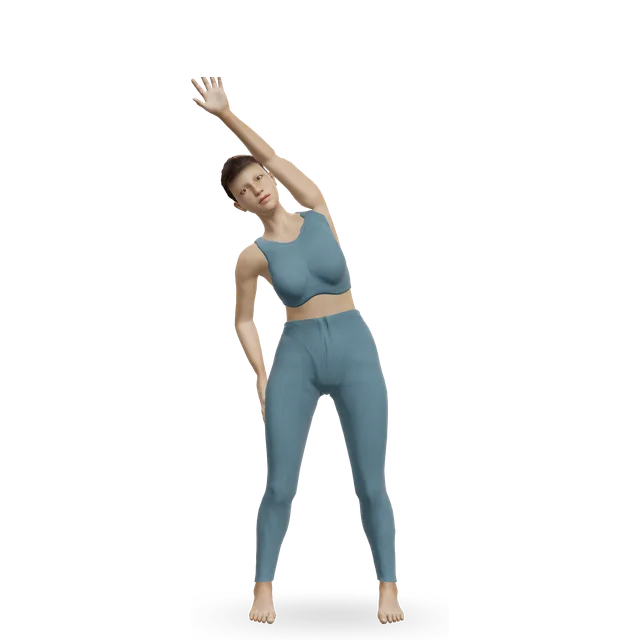
Overhead side bend demonstrated on the 3D figure3D demoOverhead side bendBeginner · No equipment

3 slow bends each side, breathing out into each · The move page's dose; seated, bending away from the sore side without twisting or leaning forward, as the emergency department leaflet describes

Easier: Seated overhead side bend · Harder: Overhead lat stretch at a bench (elbows on the bench)

Thoracic rotation demonstrated on the 3D figure3D demoThoracic rotationBeginner · No equipment

6 rotations each side, moving with the breath, turning a little further each time · The move page's dose; the emergency department leaflet's twisting exercise, which in time uses the chair back to turn further

Easier: Side-lying open book · Harder: World's greatest stretch

Side-lying open book demonstrated on the 3D figure3D demoSide-lying open bookBeginner · No equipment

8 to 10 slow openings, lying on the uninjured side, pausing 2 s at the end · The move page's dose, which it labels an editorial starting point; lying on the uninjured side, as in our rib injury guide

Harder: Thoracic rotation

Cat-cow demonstrated on the 3D figure3D demoCat-cowBeginner · No equipment

8 slow waves · The move page's dose, within a comfortable range

Harder: Half lord of the fishes (Ardha Matsyendrasana)

Treadmill walking demonstrated on the 3D figure3D demoTreadmill walkingBeginner · Cardio machine

Build up to 20 to 30 min a day · Editorial, as in our rib injury guide

Harder: Treadmill jogging

Move on when: Deep breaths, coughing, turning and reaching are comfortable most of the time (our rib injury guide's check).

Follow along: a timer, a cue and the next move, one step at a time.
Stage 3

Rebuild strength, then lifting, twisting and sport

Usually from about 4 to 6 weeks, 2 or 3 days a week: after a broken rib, limit heavy lifting and manual work for at least 4 weeks and contact sport for at least 6 weeks (an NHS trust leaflet); these are minimums, not targets. After a side strain or a rib stress fracture, build bowling, throwing, golf or rowing back gradually. Everyday lifting, twisting and sport come back by the written steps below. Doses are editorial unless marked.

Band row demonstrated on the 3D figure3D demoBand rowBeginner · A band + An anchor point

2 to 3 sets of 10 to 15, stopping 2 to 3 reps short of failure · The move page's dose (3 sets, an editorial starting point), starting at 2 sets as in our rib injury guide

Harder: Supported single-arm dumbbell row

Wall push-up demonstrated on the 3D figure3D demoWall push-upBeginner · A wall

2 to 3 sets of 10 · As in our rib injury guide; then incline push-ups

Harder: Push-up

Scapular push-up (push-up plus) demonstrated on the 3D figure3D demoScapular push-up (push-up plus)Beginner · No equipment

2 to 3 sets of 10, on a wall or bench first · As in our rib injury guide

Easier: Dumbbell shoulder-blade punch · Harder: Push-up

Dead bug demonstrated on the 3D figure3D demoDead bugBeginner · No equipment

8 slow reps each side · As in our rib injury and costochondritis guides; in pregnancy, after the first trimester, limit time flat on your back (the move page)

Easier: Dead bug heel taps · Harder: Forearm plank

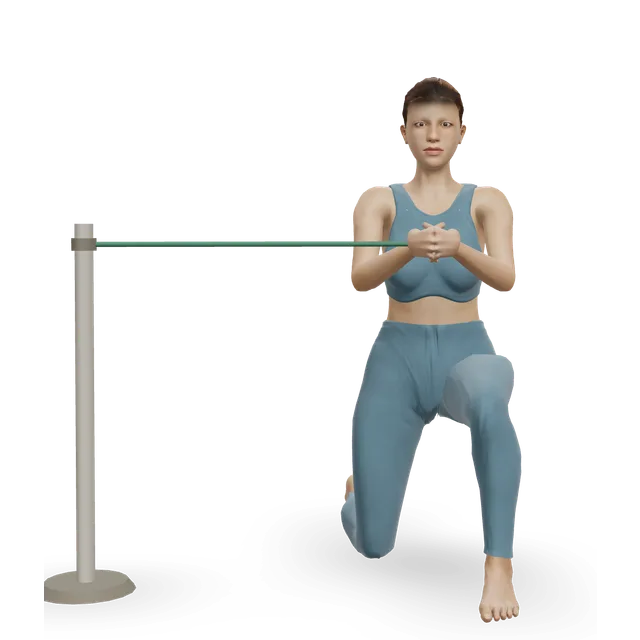
Half-kneeling Pallof press demonstrated on the 3D figure3D demoHalf-kneeling Pallof pressBeginner · A band + An anchor point

2 to 3 sets of 8 each side, with a 3 s hold · As in our rib injury guide: trunk control before twisting sport

Harder: Pallof press

Knee side plank demonstrated on the 3D figure3D demoKnee side plankBeginner · No equipment

3 holds of 10 to 20 s each side · As in our rib injury guide, for side strains at the lower ribs

Harder: Side plank

Move on when: Our suggestion: you're back to your usual lifting, training and sport without rib pain on the day or the next morning. Contact your GP if a broken rib is no better after 6 to 8 weeks (an NHS trust leaflet).

Follow along: a timer, a cue and the next move, one step at a time.

What to change for now

The breathing cycle and supported cough (written steps)

Our 3D figure can't show these, so here they are as written steps from NHS trust leaflets and the NHS.

  • 1. Sit upright with your shoulders relaxed and breathe gently in and out through your nose until your breathing is calm.
  • 2. Take three slow, deep breaths in through your nose, filling your lungs and widening your ribs; hold each for 3 to 5 seconds if you can, then breathe out through your mouth (East Kent). The Worcestershire leaflet uses 4 deep breaths, held for 2 to 3 seconds.
  • 3. Huff: breathe out quickly through an open mouth, as if steaming up a mirror.
  • 4. To cough, hug a pillow or rolled-up towel against your ribs, or put one hand over the sore area and fold the other forearm over it, and press gently as you cough or sneeze.
  • 5. Repeat the cycle 2 to 3 times an hour through the day (East Kent), or at least 4 times a day, timed with your painkillers (Worcestershire). Don't hold back a cough you need (the NHS).

Sources 25, 26, 4, 3

Sleep, work and smoking (written steps)

From the NHS and an NHS trust leaflet; where a step is our suggestion, it says so.

  • 1. Sleep more upright for the first few nights (the NHS); after that, most people find their back or the uninjured side easiest (our suggestion).
  • 2. Rest and take time off work if you need to (the NHS); if your job involves a lot of lifting, ask your employer about lighter duties until the ribs heal (East Kent).
  • 3. Don't smoke (the NHS); it can delay bone healing (East Kent).

Sources 3, 25

Lifting, twisting and sport come back (written steps)

No trial has tested how to bring these back after rib pain. These steps are our suggestion unless a source is named.

  • 1. Lifting: after a broken rib, limit heavy lifting and manual work for at least 4 weeks (Worcestershire), then build up from light loads held close to your body.
  • 2. Sport: no sport or exercise that makes the pain worse for around 4 to 6 weeks (East Kent), and no contact sport for at least 6 weeks after a broken rib (Worcestershire).
  • 3. Twisting sports: trunk control first (the stage 3 moves), then easy swings, throws or strokes, building the number before the effort. Side strains in fast bowlers took a mean of 39 days, longer with a muscle tear.
  • 4. Rowing: rib stress fractures are a known risk, so build volume back slowly and see a GP if rib pain builds with training.

Sources 26, 25, 9, 10

Rib pain in pregnancy (written steps)

From an NHS trust's maternity physiotherapy leaflet, which is past its review date.

  • 1. Eat little and often if heartburn is part of it.
  • 2. Wear a well-fitting, supportive bra.
  • 3. Try heat or ice for about 10 minutes at a time, with a layer of cloth between it and your skin.
  • 4. Sit upright rather than slumped, with a rolled-up towel at your lower back.
  • 5. Pain below the ribs with a severe headache, vision problems or sudden swelling needs urgent help, as it can be pre-eclampsia (the NHS).

Sources 19, 20

Positions to swap, and why

Habit or positionWhy it mattersInstead
Strapping or binding your ribsAn NHS trust leaflet says it stops your lungs being able to expand, which can lead to chest infections.Regular painkillers and the breathing cycle.Try: Lateral breathing (Pilates breathing)
Holding back coughs and breathing shallowlyPhlegm sits on the chest and small areas of lung can collapse, which risks a chest infection, an NHS trust leaflet says.A supported cough with a pillow, and regular deep breaths.Try: Lateral breathing (Pilates breathing)
Lying down or staying still for longThe NHS says don't, and an NHS trust leaflet says don't stay still for more than an hour at a time during the day.Up and walking at least every hour.Try: Treadmill walking
Heavy lifting, pushing or pulling that makes the pain worseThe NHS says don't strain yourself or lift heavy objects, and a trust leaflet limits heavy lifting for at least 4 weeks after a broken rib.Light rows and wall push-ups in stage 3.Try: Band row
Contact sport, or any sport or exercise that makes the pain worseTrust leaflets say no contact sport for at least 6 weeks after a broken rib, and nothing that makes the pain worse.Walking within comfort, then stage 3.Try: Treadmill walking
Rolling, massaging or trying to put back a sore ribThe chest ball release page says skip it with a recent rib injury, and no source we read supports putting a rib back.The stage 2 stretches.Try: Side-lying open book
Chest flyes, heavy pressing, push-ups and dips with costochondritisThey load the rib joints beside the breastbone, our costochondritis guide says.Walking and leg training, then wall push-ups once it settles.Try: Wall push-up
Training through chest discomfort that comes on with effort and eases with restThat is how angina behaves, so it's never a pain-rule question.Stop, and follow the warning signs.
Full-volume bowling, throwing, golf or rowing soon after a side strain or a rib stress fractureSide strains took a mean of 39 days to return from in fast bowlers, and rib stress fractures are a known risk in rowing.Trunk control first, then a gradual return.Try: Half-kneeling Pallof press
SmokingThe NHS says don't smoke with broken or bruised ribs, and a trust leaflet says it can delay bone healing.NHS stop-smoking support.

Routines to follow

More moves for this area

Questions people ask

What causes rib pain?

After a fall, a blow or a coughing fit, it's usually a bruised or broken rib; without an injury, it's often the chest wall itself, such as costochondritis beside the breastbone or a strained muscle between the ribs. Shingles, the lungs (pleurisy, pneumonia, a clot or a collapsed lung), the heart and, under the ribs, the gallbladder can also cause it.

When is rib or chest pain an emergency?

Call 999 for chest pain that feels like squeezing or pressure, spreads to your arms, neck, jaw, stomach or back, or comes with sweating, feeling sick or breathlessness, and for difficulty breathing that comes on suddenly. After a rib injury, call 999 or go to A&E if your breathlessness or pain is getting worse, you have tummy or shoulder pain, or you're coughing up blood.

How do I know if my rib is broken or just bruised?

Both cause strong pain when you breathe in or cough, tenderness and sometimes bruising, and a crack you felt or heard suggests a break. There's often no need for an X-ray, because the treatment is the same.

Should I strap or bind a broken rib?

No. An NHS trust leaflet says strapping stops your lungs being able to expand, which can lead to chest infections, and the NHS says ribs can't easily be splinted or supported. Painkillers, deep breathing and a supported cough are the treatment.

How should I sleep with rib pain?

The NHS suggests sleeping more upright for the first few nights. After that, most people find lying on their back or on the uninjured side easiest.

Why do my ribs hurt when I breathe or cough?

After an injury, a bruised or broken rib hurts most when you breathe in or cough. Without an injury, sharp pain on breathing can be pleurisy, pneumonia or a clot, so get an urgent GP appointment or call NHS 111, and call 999 if breathing becomes difficult.

Is it costochondritis or my heart?

Costochondritis causes sharp pain at the front of the chest beside the breastbone that's worse when you press on it, move or breathe deeply, but pain you can press on doesn't rule out the heart: in one review, coronary artery disease was found in 3% to 6% of adults with chest pain and a tender chest wall. The NHS says get help from NHS 111 if you think you have costochondritis, so the chest pain can be checked.

Why do my ribs hurt in pregnancy?

Rib pain is common later in pregnancy, usually on one side under the breast, from the growing womb, hormones, the baby's movements and heartburn, an NHS trust leaflet says. A supportive bra, eating little and often, heat or ice and sitting upright help; pain below the ribs with a severe headache, vision problems or sudden swelling needs urgent help, as it can be pre-eclampsia.

Can you pull a muscle between your ribs?

Yes: a strain of the muscles between the ribs causes tenderness between them, and side strains in fast bowlers took a mean of 39 days to return to play. No trial has tested treatments, so the rib injury approach applies: breathe deeply, keep moving and build back gradually.

What is slipping rib syndrome?

It's a rare condition in which one of the lower ribs moves too much, causing pain at the lower edge of the rib cage, sometimes with a click. It's diagnosed from the story and an examination, sometimes with an ultrasound scan, and surgery for it often doesn't stop the pain coming back.

How long does rib pain take to heal?

Bruised or broken ribs usually get better within 2 to 6 weeks, though some discomfort can last longer. Costochondritis can last a few weeks to several months. Contact your GP if a broken rib is no better after 6 to 8 weeks.

When can I exercise or play sport again?

Walk and move from the start, but avoid sport or exercise that makes the pain worse. After a broken rib, limit heavy lifting for at least 4 weeks and contact sport for at least 6 weeks, then build back with the staged plan.

Related exercise guides

Other pain guides

Sources

  1. NHS · Chest pain (past its review date: reviewed August 2023, review due August 2026)
  2. Mott 2021 · Costochondritis: rapid evidence review (review, Am Fam Physician)
  3. NHS · Broken or bruised ribs
  4. University Hospitals Sussex NHS Foundation Trust · Rib injury (emergency department leaflet, June 2025)
  5. Bulger 2000 · Broken ribs in 277 trauma patients aged 65 and over against younger adults (cohort study, J Trauma)
  6. NHS · Costochondritis
  7. Proulx 2009 · Costochondritis: diagnosis and treatment (review, Am Fam Physician)
  8. Gregory 2002 · Musculoskeletal problems of the chest wall in athletes (review, Sports Med)
  9. Nealon 2019 · MRI findings and return to play after side strain in 57 first-class fast bowlers (cohort study, J Sci Med Sport)
  10. McDonnell 2011 · Rib stress fractures among rowers (review, Sports Med)
  11. Madeka 2023 · Slipping rib syndrome: diagnostic and treatment updates (review, J Clin Med)
  12. NHS · Shingles
  13. NHS · Pleurisy
  14. NHS · Pulmonary embolism
  15. Asthma + Lung UK · Pneumothorax (collapsed lung)
  16. NHS · Pneumonia
  17. NHS · Pericarditis (past its review date: reviewed July 2023, review due July 2026)
  18. NHS · Gallstones
  19. Royal Berkshire NHS Foundation Trust · Rib pain in pregnancy (maternity physiotherapy leaflet; past its review date: reviewed July 2024, review due July 2026)
  20. NHS · Pre-eclampsia
  21. NHS · Back pain in pregnancy
  22. NHS · Symptoms of myeloma
  23. NHS · Symptoms of lung cancer
  24. NHS · Symptoms of bone cancer
  25. East Kent Hospitals University NHS Foundation Trust · Rib fractures (physiotherapy leaflet, December 2023)
  26. Worcestershire Acute Hospitals NHS Trust · Physiotherapy advice and exercises following rib fractures (patient leaflet)
  27. Smith 2017 · Should exercise be painful? 7 trials of long-lasting muscle and joint pain (systematic review and meta-analysis, Br J Sports Med)
  28. NHS · Heart attack
  29. NHS · Angina

Exercise education, not a diagnosis or treatment plan. It is written from the guidelines and studies listed above; review by a clinician is pending. If your pain follows an injury, is severe, is getting worse, or comes with any warning sign listed on this page, get it assessed. Health disclaimer.