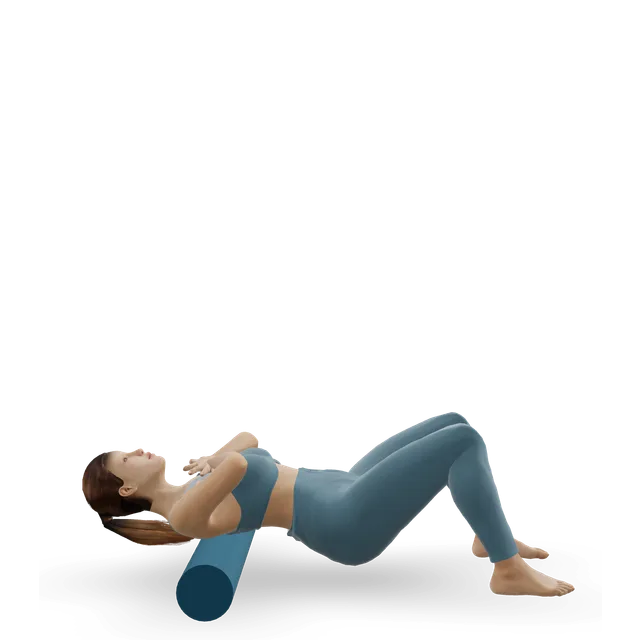
Pain guide · Back pain

Pain under the shoulder blade: the muscles, neck, ribs and shoulder, and causes that aren't the back

Pain under or around the shoulder blade most often comes from the back, the neck or the shoulder: the muscles between the blade and the spine, the joints at the top of the upper back, or a trapped nerve in the neck, which can cause shoulder-blade pain weeks before any pain in the arm. That's our inference from the studies we found, because no study has counted the causes at this spot. Whether it's on the right or the left rarely tells you the cause on its own.

Less often the pain comes from the heart, the lungs, the gallbladder or the pancreas, or from shingles, and these usually bring other clues: chest pain, breathlessness, sweating, pain when you breathe in, tummy pain or a rash. This guide starts with those warning signs, from a 999 call or accident and emergency (A&E) to the National Health Service's 111 line (NHS 111) or a general practitioner (GP), then maps the other causes by the exact spot and gives a three-stage plan, from gentle movement to shoulder-blade strength, that ends with desk days, carrying, sleeping and overhead sport.

When to get help first

Exercise is for pain that has been checked or is clearly mild and settling.

Get urgent medical help if

  • Call 999: sudden pain or discomfort in your chest that does not go away (it can feel like squeezing or pressure, burning or indigestion); pain that spreads to your left or right arm, or your neck, jaw, shoulder, stomach or back; or chest pain and you feel sweaty, sick, light-headed or short of breath. It could be a heart attack. Don't drive yourself to A&E.
  • Call 999: sudden chest or back pain that can feel like something being torn inside, and causes shortness of breath, and problems with walking, vision and speaking. It can be a tear in the wall of the body's main artery (an aortic dissection). Don't drive yourself to A&E.
  • Call 999 or go to A&E: you have difficulty breathing which comes on suddenly, you feel pain in your chest or upper back, your heart is beating very fast, or someone has passed out. These could be signs of a pulmonary embolism (a blood clot in the lungs) or another serious condition. Don't drive yourself.
  • Call 999 or go to A&E: you have sudden chest pain that lasts for 15 minutes or more, sudden chest pain that spreads to your arms, back, neck or jaw, or difficulty breathing; you're coughing up more than just a few spots or streaks of blood; or you're coughing up blood and finding it hard to breathe, have a very fast heartbeat, or have pain in your chest or upper back.
  • Call 999 or go to A&E: back pain with chest pain, or back pain that started after a serious accident, such as a car crash.
  • Call 999 or go to A&E: you have sudden, severe pain in your tummy; pain that spreads from your tummy to your back, and you're being sick; your temperature is very high, or you feel hot, cold or shivery; or your skin or the white part of your eyes looks yellow. These can be signs of a problem with gallstones.
  • Call 999 or go to A&E: you get sudden, severe pain in your tummy and the pain is spreading to your back, you have bloating that does not go away or keeps coming back, you have a fast heartbeat or difficulty breathing, or the skin around your belly button, waist or upper outer thigh appears blue or bruised. It can be acute pancreatitis.
  • Call 999: sudden, severe pain in the tummy or back, which can come with breathlessness, pale or grey skin, or collapse. It can be a burst abdominal aortic aneurysm, most common in men aged 65 or over and in people who smoke or used to smoke.
  • Call 999 or go to A&E: new problems walking, loss of bladder or bowel control, or a sudden loss of coordination, such as difficulty doing up buttons. These can be signs of pressure on the spinal cord.
  • Get help from NHS 111: pain or tightness in your chest, neck, shoulders, jaw or arms that comes and goes, often brought on by exercise, stress, emotion or cold and easing after a few minutes' rest. It can be angina, a sign of a heart problem.
  • Ask for an urgent GP appointment or get help from NHS 111: you've coughed up blood or noticed blood on a tissue you've coughed into.
  • Same day (urgent GP appointment or NHS 111): pain in your tummy, often in the middle or just under the ribs on the right, that lasts longer than 30 minutes; it may spread from there to your side or shoulder blade. It can be gallstones.
  • Ask for an urgent GP appointment or get help from NHS 111: you get sudden, severe pain in your tummy and it does not go away or keeps coming back, or you have a high temperature, or you feel hot, cold or shivery.
  • Ask for an urgent GP appointment or get help from NHS 111: you have sharp chest pain that comes and goes, or only happens when breathing or coughing; sharp chest pain that has not got better after a few days; you've coughed up a few small spots, flecks or streaks of blood, or noticed blood in your phlegm; or you're feeling short of breath regularly. It can be pleurisy or a chest infection.
  • Get urgent medical help: you're pregnant or have given birth in the last few weeks and have symptoms of pre-eclampsia, such as pain below the ribs, a severe headache that does not go away with simple painkillers, vision problems such as blurred vision or seeing flashing lights, or sudden swelling of the face, hands or feet. If you're pregnant, call your maternity unit if you have the number; if you've recently given birth or cannot call your maternity unit, call 111.
  • Ask for an urgent GP appointment or get help from NHS 111: you have symptoms of shingles and you're pregnant, the rash is on your eye or nose, you have changes to your vision, or you have a severely weakened immune system.
  • Same day (urgent GP appointment or NHS 111): severe neck pain that starts suddenly or gets worse quickly; heaviness or weakness in the arms or legs; pins and needles in an arm along with neck or arm pain; or pain between the shoulder blades.
  • Same day: clumsiness, numbness, pins and needles or weakness in one or both arms that is getting worse; problems with balance or walking since the neck pain started; or neck pain with a severe headache.
  • Same day (GP or NHS 111): sudden or very bad shoulder pain; you cannot move your arm; the arm or shoulder is badly swollen or has changed shape; pins and needles that do not go away; no feeling in the arm; the arm is hot or cold to the touch; pain that started after an injury such as a fall; or severe pain in both shoulders.
  • Same day (GP or NHS 111): back pain and you feel hot, cold, shivery or generally unwell, or severe pain that starts suddenly or is getting worse quickly.
  • Same day: you have or have had cancer, and new back pain that is severe and doesn't let up, is getting steadily worse, is worse at night and disturbs your sleep, is worse when you cough, sneeze or strain, or comes with tenderness over the spine. Contact your cancer team or GP urgently. With cancer, new weakness, difficulty walking, numbness or bladder or bowel problems are an emergency.

See a doctor or physiotherapist if

  • Pain at the top of the back, between the shoulders, rather than in the lower back.
  • A burning, tingling or painful patch of skin on one side of your back or chest, with or without a rash: get advice from a pharmacist or NHS 111 as soon as possible. Shingles can cause pain a few days before the rash appears, and rarely without one. Try to see a pharmacist within 3 days of the rash appearing.
  • You smoke or used to, and have shoulder pain with a cough that will not go away, breathlessness or weight loss. See a GP if you've had a cough for longer than 3 weeks.
  • Pins and needles or a cold arm alongside neck pain, or a new loss of strength or feeling in the arm that you cannot explain (a possible nerve problem).
  • A shoulder blade that suddenly sticks out, or new weakness lifting, pushing or carrying: see a GP. Nerve tests may be needed to find which nerve is affected and how badly.
  • An ache over the back of the shoulder blade with weakness lifting your arm or turning it outwards, or the muscle over the blade looking thinner: see a GP or physiotherapist. The nerve to those muscles can be squeezed, and it does better when it's found early (our suggestion).
  • Painful grinding, popping or clunking under the shoulder blade when you move your arm that hasn't settled after a few months of exercises: ask for a review (our suggestion).
  • An itchy, burning or tingling patch near the inner edge of one shoulder blade that keeps coming back: see a pharmacist or GP. It can be an irritated skin nerve (notalgia paraesthetica).
  • Unexplained back pain with muscle spasms, loss of height, or a curved spine or change in posture: a possible osteoporotic spinal fracture, more likely with older age or long-term steroid tablets.
  • Pain that doesn't improve with rest or is worse at night, or pain that is worse when you sneeze, cough or poo.
  • Unexplained weight loss, or a lump, swelling or change in the shape of your back.
  • Upper back or shoulder-blade ache that comes back every working day despite breaks, changes to your desk and the plan: our suggestion is to see a physiotherapist, who can check you and how you work. Ask your employer for a workstation assessment too.
  • Back pain that hasn't improved after a few weeks of looking after it at home, stops you doing day-to-day activities, or worries you.

Where does it hurt?

Location narrows the likely causes; it does not diagnose.

With chest pain, pain spreading to the arm, neck, jaw or stomach, breathlessness, sweating, or feeling sick or light-headed, on either side

A possible heart attack: call 999. Women are less likely than men to have chest pain with a heart attack.

Sudden, severe, tearing pain in the chest or back, with breathlessness or problems walking, seeing or speaking

A possible tear in the aorta, the body's main artery: call 999.

Pain in the chest or upper back with sudden breathlessness or a racing heart

A possible blood clot in the lungs: call 999.

Sharp pain when you breathe in, cough or sneeze, which may spread to the shoulders and back, or with a fever and coloured phlegm

Possibly pleurisy or pneumonia: get help the same day.

Under the right shoulder blade, with pain in the middle of the tummy or just under the right ribs lasting more than 30 minutes

Possibly gallstones: NHS inform says the pain may spread to the shoulder blade. Get help the same day.

Below the left shoulder blade or along the back, with severe pain around the top of the tummy

Possibly acute pancreatitis, which NHS inform says can be felt below the left shoulder blade: get urgent help.

A burning, tingling or painful strip on one side of the back and chest, then a rash a few days later

Shingles: try to see a pharmacist within 3 days of the rash appearing.

Shoulder or shoulder-blade pain with a cough that won't go away, breathlessness, coughing up blood or weight loss

See a GP: chest or shoulder pain is one of the NHS's lung cancer symptoms, especially if you smoke or used to.

In pregnancy or soon after giving birth, pain below the ribs with a severe headache, vision problems or sudden swelling

Possibly pre-eclampsia: get urgent help.

From the neck over or under the shoulder blade, with pain, pins and needles or numbness down the arm

A trapped nerve in the neck. The shoulder-blade pain can come first.

Read: Pinched nerve in the neck →
Above the shoulder blade or at its upper inner corner, with a stiff, sore neck, worse turning to look over that shoulder

The neck joints, or the muscles that run from the neck to the shoulder blade.

Read: Tech neck →
A stiff, sore neck that spreads to the shoulder blade

Our neck pain guide.

Read: Neck pain →
Along the inner border of the shoulder blade or between it and the spine, a dull ache or burning that eases when you move

The upper back and shoulder-blade muscles, and the joints at the top of the upper back.

Read: Upper and mid back pain →
The same ache after a day at a desk

Our upper back pain from sitting guide.

Read: Upper back pain from sitting →
The same ache on the bike

Our upper back pain when cycling guide.

Read: Upper back pain when cycling →
An ache over the back of the shoulder blade with weakness lifting or turning the arm out, often in overhead athletes

Possibly the suprascapular nerve: see a GP or physiotherapist.

Read: Shoulder pain →
Pain in the shoulder itself, worse using the arm or lying on it

The rotator cuff or the shoulder joint.

Read: Shoulder pain →
A shoulder blade that sticks out, especially when you push on a wall

Winging of the shoulder blade.

Read: Winged scapula →
Grinding, popping or clunking under the shoulder blade as the arm moves

A snapping scapula: strengthening first, and a review if it's painful and not settling.

Pain along the inner border with weakness and slight winging, and no clear neck cause

Rarely, the nerve to the rhomboid muscles (the dorsal scapular nerve): see a GP.

Sharp pain over a rib after a fall, a blow or a coughing fit, worse breathing deeply

A bruised or broken rib.

Read: Rib injury →
At the front, where the ribs meet the breastbone, sore to press

Costochondritis. Get chest pain checked first.

Read: Costochondritis →
Tingling, a cold arm or a weak grip with neck and arm pain, worse with the arms raised

Thoracic outlet syndrome (uncommon).

Read: Thoracic outlet syndrome →
An itchy, burning or tingling patch beside the inner edge of one shoulder blade

Possibly notalgia paraesthetica, an irritated skin nerve: see a pharmacist or GP.

Older age, long-term steroid tablets or known osteoporosis, with sudden mid-back pain or loss of height

A possible spinal fracture from osteoporosis.

Read: Spinal compression fracture →

Understand it

No study has counted the causes, but most are probably the back, neck or shoulderEmerging evidence

Pain in the upper (thoracic) back is common: across 33 studies, 3.5% to 34.8% of people had it over a year, more often children, teenagers and women, and it went with carrying backpacks, other muscle and joint pain and psychological stress. The NHS asks you to see a GP for back pain that comes from the top of your back, between your shoulders, and NHS inform says neck problems can cause pain in the shoulders, arms and upper back.

No study has counted the causes of pain under the shoulder blade as such. That most of it comes from the back, the neck or the shoulder is our inference from these studies and the ones below; the causes that aren't the back are rarer, but they come first on this page because they need help quickly.

Sources 1, 2, 3

The neck is a common sourceEmerging evidence

A review found 86 studies of a trapped nerve in the neck (cervical radiculopathy). Of the 81 that described where the pain was felt, 72% mentioned pain around the shoulder blade, most often with the C7 nerve root, and the review says shoulder-blade pain may come several weeks before arm pain. That figure counts studies, not people. In 25 people, the C5 nerve root was felt above the blade, C6 above it towards the back of the shoulder, C7 between the blades, and C8 between and over them.

The small joints of the neck refer pain in patterns that overlap, mapped in volunteers and in people whose pain was relieved by numbing injections. In 15 people, the joints at the top of the upper back (from the base of the neck to the third thoracic vertebra) referred pain to the area above the blade, its upper corner and the middle of the blade.

Sources 4, 5, 6, 7, 8

"A knot under the shoulder blade" is hard to pin downEmerging evidence

Tight, tender spots in the muscles (trigger points) are often blamed. But across 9 studies, examiners didn't agree reliably on finding them: agreement on a tight band in the muscle ranged from none to good, and no study tested the spots people blame for their pain. The review says examination can't currently be recommended as a reliable way to diagnose them. A sore muscle is a reasonable explanation, but not the only one, which is why this page checks the neck, the joints and the warning signs.

Source 9

The heart, the aorta and the lungsStrong evidence

The NHS lists pain that spreads to the left or right arm, or the neck, jaw, shoulder, stomach or back, among the 999 signs of a heart attack. The British Heart Foundation lists pain spreading to the upper back for women, and in a review of studies from 1990 to 2009, women were less likely than men to have chest pain with a heart attack (odds ratio 0.63) and more likely to have tiredness, neck pain, fainting, nausea, right arm pain, dizziness and jaw pain. The National Institute for Health and Care Excellence (NICE) says don't assess heart symptoms differently in men and women, and that a normal electrocardiogram (ECG) doesn't rule out a heart attack.

A tear in the aorta is rare but serious: in a registry of 464 people, sudden, severe, sharp pain was the commonest complaint, the classic signs were often missing, and the ECG was normal in 31%. The NHS lists "pain in your chest or upper back" among the 999 signs of a clot in the lungs, and says pleurisy's sharp pain when you breathe in may spread to your shoulders and back.

Sources 10, 11, 12, 13, 14, 15, 16, 17, 18, 19, 20

The gallbladder, the pancreas and shinglesStrong evidence

Gallstone pain (biliary colic) is constant pain lasting more than 30 minutes, in the middle of the tummy or just under the ribs on the right, the NHS says. NHS inform adds that it usually lasts 1 to 5 hours, may spread from there to your side or shoulder blade, is sometimes triggered by fatty food and may wake you at night; when the gallbladder is inflamed, the pain travels towards the shoulder blade, usually lasts more than 5 hours and comes with a temperature of 38C or above. The nhs.uk gallstones page doesn't mention the shoulder blade.

Acute pancreatitis causes sudden, severe tummy pain that can spread to the sides and back, the NHS says, often feeling better when you lean forward. NHS inform describes a severe, dull pain around the top of the stomach that can travel along your back or below your left shoulder blade. Shingles starts as a tingling or painful area of skin, with a rash on one side only a few days later, usually on the chest and tummy; in 503 people with shingles, the chest and upper back nerves were the commonest site (50.9%).

Sources 21, 22, 23, 24, 25, 26

Lung tumours and rarer shoulder-blade problemsEmerging evidence

The NHS lists chest or shoulder pain among the symptoms of lung cancer, with a cough that won't go away, breathlessness, coughing up blood and losing weight. A tumour at the top of the lung (a Pancoast tumour) can cause severe, constant shoulder and arm pain, with wasting of the small muscles of the hand. NICE offers people aged 40 and over an urgent chest X-ray for two or more unexplained symptoms such as a cough, breathlessness or chest pain, or for just one if they have ever smoked.

Rarer shoulder-blade problems are described mainly in case reports and small series: a trapped nerve to the rhomboid muscles (the dorsal scapular nerve), with pain along the inner border and slight winging; a squeezed nerve over the back of the blade (the suprascapular nerve), more often in overhead athletes and people with large rotator cuff tears; a grinding, snapping shoulder blade; and notalgia paraesthetica, an itchy, uncomfortable patch on the upper back from irritated skin nerves.

Sources 27, 28, 29, 30, 31, 32, 33, 34

Left or right rarely decides itEmerging evidence

The heart can send pain to either arm and to the back. Gallstone pain is more often under the right ribs, and NHS inform says it may spread to the shoulder blade; NHS inform says pancreatitis can be felt below the left shoulder blade; but both can spread across the back. Muscles, joints and the neck can be sore on either side. The side is a clue, not an answer: the other symptoms matter more.

Sources 12, 10, 21, 22, 23, 24

When a test helpsStrong evidence

A suspected heart attack needs an ECG as soon as possible and blood tests; a normal ECG doesn't rule it out. A suspected clot in the lungs is scored by a clinician, then scanned with a computed tomography (CT) pulmonary angiogram if a clot is likely. Pleurisy and pneumonia may need a chest X-ray.

Suspected gallstones need liver blood tests and an ultrasound scan, and pancreatitis is diagnosed with blood tests and sometimes a CT scan. Most back problems don't need an X-ray or a magnetic resonance imaging (MRI) scan, NHS inform says; nerve symptoms that keep getting worse or don't settle may need an MRI and a specialist's review (our pinched nerve guide).

Sources 14, 11, 35, 19, 28, 36, 23, 37

How it usually goesEmerging evidence

Most neck problems should begin to settle within 8 weeks, with the biggest change in the first couple of weeks, NHS inform says, and the NHS says back pain usually improves within a few weeks. A trapped neck nerve can start with shoulder-blade pain before the arm pain. The shingles rash can take up to 4 weeks to heal. No one can promise a date.

Sources 3, 37, 2, 25

What helps, and how strong the evidence is

Keep moving, and break up long, still spellsStrong evidence

NHS inform advises moving your neck for short periods every hour, not staying in one position for too long, carrying on with your normal activities even if more slowly, keeping generally active and staying at or returning to work as soon as you can. The NHS says use a low, firm pillow, heat or cold packs and paracetamol or ibuprofen (or ibuprofen gel), and don't wear a neck collar, because it's better to keep your neck moving. For back pain, it says don't stay in bed for long periods.

Sources 3, 38, 2

Strength training for neck and shoulder-blade muscle painStrong evidence

In 48 women with computer-heavy jobs and pain in the trapezius, the large muscle over the top of the shoulders and upper back, 10 weeks of specific strength training cut pain by about 79%, while general fitness training on a bike gave only a small, short-lived drop. A Cochrane review of 27 trials (2,485 people) found moderate-quality evidence that strength training for the neck, shoulder blades and upper body eases long-lasting neck pain by a moderate to large amount, while stretching alone or general fitness training may not (low-quality evidence), and found no evidence either way for new neck pain.

These trials were in neck and upper shoulder pain, not pain under the shoulder blade as such: the plan on this page borrows their approach, and no trial has tested exercise for this spot or for the rhomboid muscles.

Sources 39, 40

Knots and rolling: comfort, not a cureEmerging evidence

Rolling, massage and stretching can feel good, and there's no harm in using them for comfort. But examiners can't reliably agree where the knots are, and the trials that helped neck and shoulder muscle pain used strength training. Stretching on its own may not change neck pain.

Sources 9, 40

Rarer shoulder-blade problems: non-surgical care firstEmerging evidence

For a trapped dorsal scapular nerve, activity changes, rehabilitation, physiotherapy and image-guided injections come first, and surgery is described only for cases that don't settle, on limited evidence. A squeezed suprascapular nerve from movement is treated without surgery first; it is worth finding early, because long-standing cases do worse. A snapping, grinding shoulder blade is treated first with shoulder-blade strengthening, posture work and trunk endurance, with surgery for those it doesn't help. Notalgia paraesthetica has no treatment that works for everyone; physiotherapy and posture work are among the options.

Sources 30, 31, 32, 33, 34

How much pain is OK while you exercise?

Up to about 5 out of 10, no worse the next morning; arm symptoms set the limit; chest, breathing and tummy symptoms are never a pain-rule questionEmerging evidence

NHS inform's neck exercise advice: rate your pain from 0 to 10. During exercise, 0 to 3 is minimal, 4 to 5 is acceptable and 6 or more is too much. Keep within 0 to 5; if it goes higher, do fewer repetitions, move more slowly or rest longer between movements. Soreness from a new exercise should ease quickly, and your pain should be no worse the morning after.

Arm symptoms are the exception, as in our neck pain guide's rule: if an exercise sends pain, tingling or numbness further down your arm, or the extra symptoms last more than an hour afterwards, make the movement smaller or leave it out.

In trials of long-lasting muscle and joint pain, exercise that allowed some pain did no worse than pain-free exercise. Chest pain, pain spreading to the arm, jaw or neck, breathlessness, sweating, feeling sick, pain when you breathe in, a fever, tummy pain, yellow skin or eyes, or a new rash aren't pain-rule questions: see the warning signs.

Sources 41, 42

The exercise plan: 3 stages

Start at the first stage. Each move opens a full guide with a 3D demo.

Stage 1

Settle: keep the neck and upper back moving

About the first 2 weeks, daily, little and often: gentle movement of the neck and upper back through the day, heat or cold if they help, short walks, and the desk and sleep changes below, as the NHS and NHS inform advise. Chest, breathing or tummy symptoms, a rash or arm weakness get checked first; with a trapped nerve in the neck, our pinched nerve guide's plan can replace this one.

Neck CARs (controlled articular rotations) demonstrated on the 3D figure3D demoNeck CARs (controlled articular rotations)Beginner · No equipment

With a sore neck, separate turns, tilts and nods instead of full circles: 2 to 3 of each at a time, building to about 10 · NHS inform's neck movements and pacing; once the neck is easier, the move page's dose is 3 slow circles each way

Harder: Rabbit pose (Sasangasana)

Thoracic rotation demonstrated on the 3D figure3D demoThoracic rotationBeginner · No equipment

6 rotations each side, moving with the breath · The move page's dose; as in our upper back pain guide

Easier: Side-lying open book · Harder: World's greatest stretch

Side-lying open book demonstrated on the 3D figure3D demoSide-lying open bookBeginner · No equipment

8 to 10 slow openings each side, pausing 2 s at the end · The move page's dose, an editorial starting point

Harder: Thoracic rotation

Cat-cow demonstrated on the 3D figure3D demoCat-cowBeginner · No equipment

8 slow waves · The move page's dose; as in our upper back pain guide

Harder: Half lord of the fishes (Ardha Matsyendrasana)

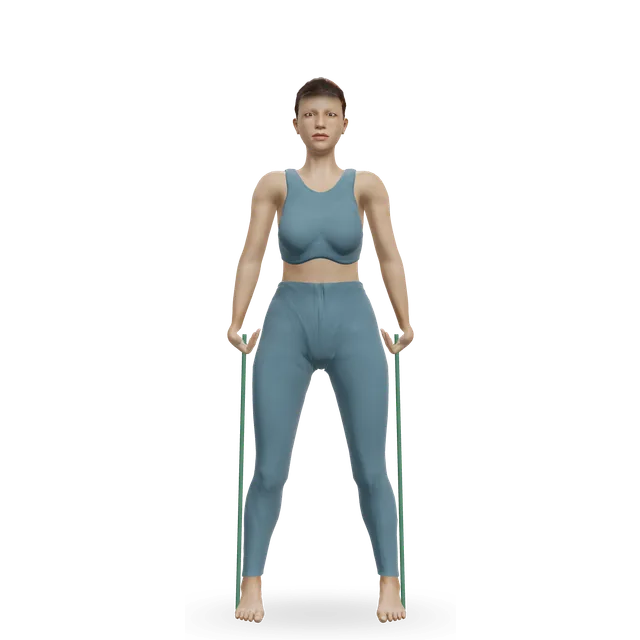
Standing band external rotation demonstrated on the 3D figure3D demoStanding band external rotationBeginner · A band + An anchor point

Without a band at first: elbows at your sides, forearms out and back, hold a few seconds; 2 to 3 at a time, building to about 10 · NHS inform's arms-out neck exercise, with its pacing; a light band comes later (our suggestion)

Easier: Stick-assisted external rotation (lying) · Harder: Side-lying external rotation

Treadmill walking demonstrated on the 3D figure3D demoTreadmill walkingBeginner · Cardio machine

10 to 20 min, letting the arms swing · As in our upper back pain guide; walking outdoors counts the same

Harder: Treadmill jogging

Move on when: Turning, reaching and looking over your shoulder are more comfortable, any arm symptoms are settling, and the pain is no worse the next morning (our upper back pain guide's check, with the neck rule's arm limit).

Follow along: a timer, a cue and the next move, one step at a time.
Stage 2

Build: shoulder-blade strength

About weeks 2 to 6, 2 or 3 sessions a week, with the stage 1 moves on other days: strength for the muscles that hold and move the shoulder blade, the type of training that helped neck and shoulder muscle pain in trials.

Band row demonstrated on the 3D figure3D demoBand rowBeginner · A band + An anchor point

3 sets of 10 to 15, stopping 2 to 3 reps short of failure, 60 to 90 s rest · The move page's dose, an editorial starting point; as in our upper back pain guide

Harder: Supported single-arm dumbbell row

Prone Y-T-W raises demonstrated on the 3D figure3D demoProne Y-T-W raisesBeginner · No equipment

2 sets of 6 to 8 of each letter · As in our upper back pain guide

Easier: Wall angel · Harder: Bent-over reverse fly

Wall angel demonstrated on the 3D figure3D demoWall angelBeginner · A wall

2 sets of 8 to 10 · As in our upper back pain guide

Easier: Table slide (seated forward reach) · Harder: Prone Y-T-W raises

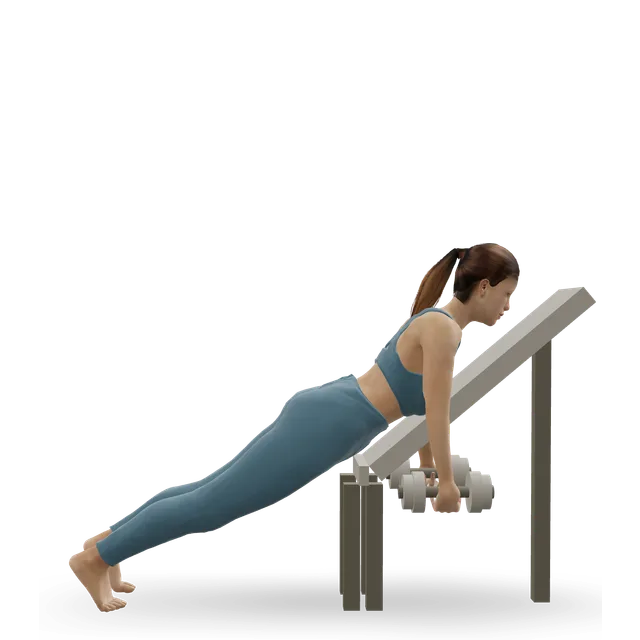
Scapular push-up (push-up plus) demonstrated on the 3D figure3D demoScapular push-up (push-up plus)Beginner · No equipment

2 sets of 8 to 12 against a wall or bench · Editorial: for the muscle that holds the blade against the ribs. Use an incline if your lower back sags, as the move page says

Easier: Dumbbell shoulder-blade punch · Harder: Push-up

Standing band external rotation demonstrated on the 3D figure3D demoStanding band external rotationBeginner · A band + An anchor point

2 to 3 sets of 12 to 15 with a light band · Editorial, building on stage 1

Easier: Stick-assisted external rotation (lying) · Harder: Side-lying external rotation

Move on when: These feel steady, the pain is no worse the next morning, and a working day or a long drive no longer brings it back by the evening (our suggestion).

Follow along: a timer, a cue and the next move, one step at a time.
Stage 3

Strengthen, then desk days, carrying, sleep and sport come back

From about week 6, 2 or 3 days a week and ongoing: heavier rows, shrugs and carries, as in our upper back pain guide, while everyday activities and sport come back by the written steps below. The trial of specific strength training for neck and shoulder muscle pain ran for 10 weeks.

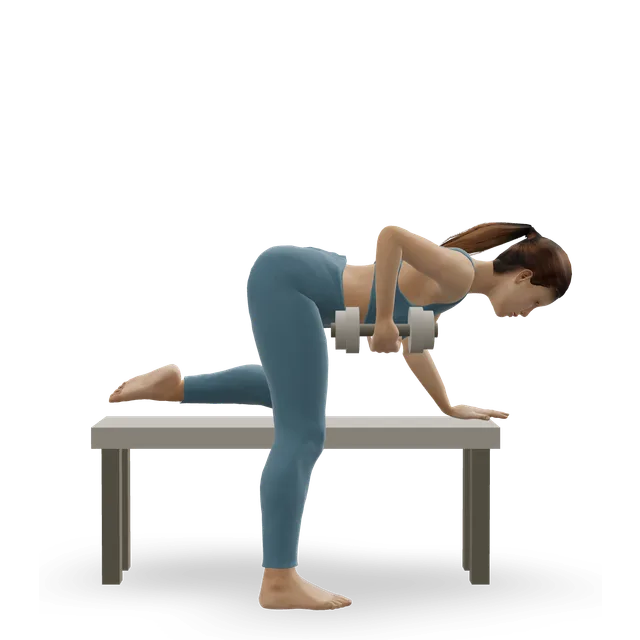
Supported single-arm dumbbell row demonstrated on the 3D figure3D demoSupported single-arm dumbbell rowIntermediate · A dumbbell + A bench or box

3 sets of 8 to 12 each side · As in our upper back pain guide

Easier: Incline ring row · Harder: Bent-over barbell row

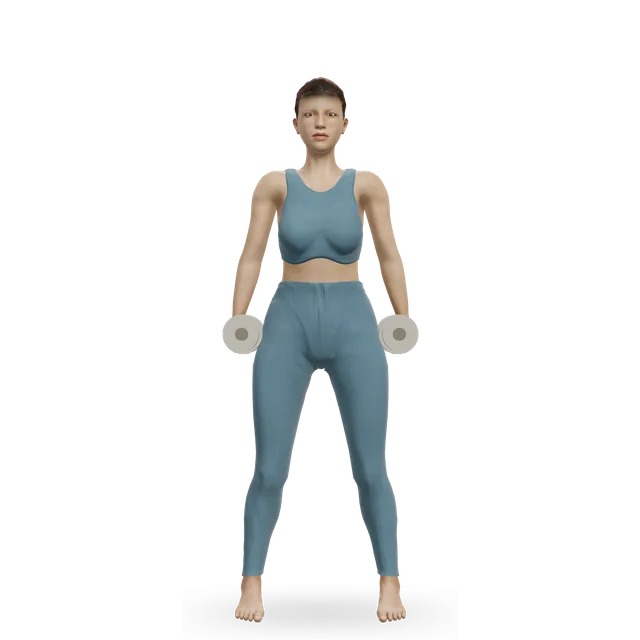
Dumbbell shrug demonstrated on the 3D figure3D demoDumbbell shrugBeginner · A dumbbell

2 to 3 sets of 8 to 12, stopping with 2 or 3 reps in reserve, pausing 1 s at the top · The move page's dose, an editorial starting point

Harder: Snatch shrug

Face pull demonstrated on the 3D figure3D demoFace pullIntermediate · A band

3 sets of 12 to 15 · As in our upper back pain guide

Easier: Prone Y-T-W raises · Harder: Tuck back lever

Farmer's carry demonstrated on the 3D figure3D demoFarmer's carryIntermediate · A dumbbell + A kettlebell

3 walks of 20 to 30 m · As in our upper back pain guide

Harder: Suitcase carry

Move on when: Our suggestion: full working days, your usual carrying and a night's sleep stay within the pain rule, with nothing worse the next morning. Keep two strength days a week; if a busy week flares it, drop back a stage for a few days rather than stopping.

Follow along: a timer, a cue and the next move, one step at a time.

What to change for now

What to change for now (written steps)

Our 3D figure can't show these changes. They come from NHS inform and the NHS; where a step is our suggestion, it says so. No trial has tested activity changes for pain under the shoulder blade as such.

  • 1. Keep moving: move your neck for short periods every hour, don't stay in one position for too long, and keep up your normal activities, even if more slowly (NHS inform).
  • 2. Heat or cold: a pack of frozen peas wrapped in a tea towel for 5 minutes, 3 times a day, or a hot water bottle wrapped in a tea towel for 20 minutes, 2 to 3 times a day (the NHS).
  • 3. Sleep: a low, firm pillow and a firm mattress, your head at the same height as the rest of your body, and not on your front (the NHS). On your side, a pillow in front of you to rest the top arm on can help (our suggestion).
  • 4. Painkillers: paracetamol or ibuprofen, or ibuprofen gel (the NHS). They're not a substitute for a check when warning signs are present.
  • 5. No neck collar or posture brace: the NHS says it's better to keep your neck moving, and no source we found supports posture braces.
  • 6. Bags: two straps, a lighter load, and swapping shoulders (our suggestion; carrying backpacks went with upper back pain in children and teenagers).
  • 7. Work: stay at or return to work as soon as you can, and ask your employer about workplace adjustments if you need them (NHS inform).
  • 8. A cough, breathlessness, tummy pain or a rash aren't things to change: they're reasons to get checked.

Sources 3, 38, 2, 1

Desk days, carrying, sleep and sport come back (written steps)

No trial has tested how to bring these back after pain under the shoulder blade. These steps are our suggestion unless a source is named.

  • 1. Desk days: move your neck for short periods every hour (NHS inform), with a short walk or a set of band rows between tasks (our upper back pain from sitting guide).
  • 2. Carrying: build from the carries in stage 3 towards heavier shopping and bags.
  • 3. Sleep: the NHS positions above; try a night on the sore side once a day's activity no longer brings the pain back.
  • 4. Driving: short trips first, with the seat upright enough to see without craning.
  • 5. Overhead and throwing sports, swimming and climbing: back last, after the stage 3 rows and carries are comfortable, with shorter sessions at first. Our swimming and climbing guides cover the sport.
  • 6. If it isn't improving within about 8 weeks, or it's getting worse, see a GP or physiotherapist; in many areas you can refer yourself (the NHS).

Sources 3, 2

Positions to swap, and why

Habit or positionWhy it mattersInstead
Putting chest pain, breathlessness or sweating down to a pulled muscleThese are the NHS's 999 signs of a heart attack, and women are less likely than men to have chest pain with one.Call 999, and don't drive yourself.
Taking painkillers for back pain that comes with tummy pain, a fever or yellow skinThese are the NHS's signs of gallstone and pancreas problems, which need checking the same day or a 999 call.Get checked the same day, or call 999 as the warning signs say.
Long, still spells at a desk or on a phoneNHS inform says avoid staying in one position for too long, and move your neck for short periods every hour.A short walk or a few rotations between tasks.Try: Thoracic rotation
Sleeping on your frontThe NHS says don't sleep on your front with neck pain.On your back or side, with a low, firm pillow and your head level with your body.
A neck collar or a posture braceThe NHS says don't wear a neck collar, because it's better to keep your neck moving; no source we found supports posture braces.Movement now, strength later.Try: Band row
Hauling your head down in neck stretchesThe move page says the hand is a guide, not a winch, and to stop if you feel tingling or numbness into the arm.Gentle turns, tilts and nods.Try: Neck CARs (controlled articular rotations)
Heavy overhead pressing in the first weeksOverhead loading can bring shoulder-blade pain on (our suggestion); rows build the blade muscles without it.Rows and wall angels first; overhead work last.Try: Wall angel
A heavy bag on one shoulderCarrying backpacks went with upper back pain in children and teenagers; for adults this is our suggestion.Two straps, a lighter load, and swapping sides.Try: Farmer's carry
Digging into a knot with a ball or roller as your main treatmentExaminers don't reliably agree where knots are, and the trials that helped used strength training.Brief, gentle rolling for comfort, then strength work.Try: Band row
Arm exercises that send pain, tingling or numbness further down the armThat's the arm-symptom limit in our neck pain guide's rule.A smaller range, or leave it out for now.Try: Neck CARs (controlled articular rotations)

Routines to follow

More moves for this area

Questions people ask

What causes pain under the shoulder blade?

Most often, as far as we can tell, the back, the neck or the shoulder: the muscles between the blade and the spine, the joints at the top of the upper back, or a trapped nerve in the neck. No study has counted the causes at this spot, so that's our inference. Less often it comes from the heart, the lungs, the gallbladder, the pancreas or shingles, which usually bring other symptoms such as chest pain, breathlessness, tummy pain or a rash.

When is pain under the shoulder blade a heart attack?

Call 999 for chest pain or discomfort that doesn't go away, pain that spreads to your arms, neck, jaw, shoulder, stomach or back, or chest pain with sweating, feeling sick, light-headed or short of breath. Women are less likely than men to have chest pain with a heart attack, and the British Heart Foundation lists pain spreading to the upper back among women's symptoms. Don't wait to see if it passes, and don't drive yourself.

What does pain under the right shoulder blade mean?

Usually the back, the neck or the shoulder, as on the left. But tummy pain just under the right ribs that lasts more than 30 minutes, sometimes after fatty food or waking you at night, can be gallstones, and NHS inform says the pain may spread to the shoulder blade. Get same-day help for tummy pain lasting more than 30 minutes, and call 999 with a very high temperature, yellow skin or eyes, or pain spreading to your back with vomiting.

What does pain under the left shoulder blade mean?

It is also usually the back, the neck or the shoulder. Because the heart can cause pain in either arm and the back, chest pain, breathlessness, sweating or sickness with it means calling 999. Severe pain at the top of the tummy that spreads to the back, which NHS inform says can be felt below the left shoulder blade, can be pancreatitis and needs urgent help.

Why does it hurt under my shoulder blade when I breathe in?

A sore muscle or rib joint can hurt on a deep breath, but sharp chest pain when you breathe in or cough can be pleurisy, which may spread to the shoulders and back. Get same-day help for that, and call 999 if you have difficulty breathing that comes on suddenly, pain in your chest or upper back, or a very fast heartbeat, which the NHS lists as possible signs of a clot in the lungs.

Is it a knot under my shoulder blade?

It might be a sore muscle, but knots are hard to pin down: examiners don't agree reliably on where they are. Pain under the blade can also come from the neck or the joints of the upper back. Rolling or massage can feel good, but strength training of the sore muscles is what helped in trials.

Can a trapped nerve in the neck cause shoulder blade pain?

Yes. A review found 81 studies of trapped nerves in the neck that described where it hurt, and 72% of them mentioned pain around the shoulder blade, which can start weeks before the arm pain. Pain, pins and needles or numbness down the arm point to the neck, and our pinched nerve guide has the plan.

Why does it hurt under my shoulder blade when I move my arm?

The muscles that move the blade, the shoulder joint itself or a nerve to the shoulder muscles can all hurt with arm movement. Grinding, popping or clunking under the blade as the arm moves can be a snapping shoulder blade, which is treated first with strengthening and posture work. An ache over the back of the blade with weakness lifting or turning the arm out needs a GP or physiotherapist.

What helps pain under the shoulder blade?

Keep moving: move your neck for short periods every hour, avoid staying in one position for too long and stay at work if you can. Strengthening the neck, shoulder blades and upper body helped long-lasting neck pain in a Cochrane review, so the plan builds from gentle movement to rows and carries. Heat or cold packs and paracetamol or ibuprofen can help in the meantime.

What stretches help pain under the shoulder blade?

Gentle neck turns, tilts and nods, and upper back rotations, are a good start. Stretches can ease stiffness, but stretching alone may not change neck pain, so pair them with strengthening. If a stretch sends pain, pins and needles or numbness down your arm, make it smaller or leave it out.

Why does my shoulder blade hurt at night or when I lie down?

Lying on a sore side can press on the shoulder and blade; the NHS advises a low, firm pillow, keeping your head level with your body and not sleeping on your front. Back pain that is constant, isn't affected by movement or is worse at night needs a GP.

Could pain under my shoulder blade be lung cancer?

Rarely, but the NHS lists chest or shoulder pain among lung cancer symptoms, alongside a cough that won't go away, breathlessness, coughing up blood and weight loss. See a GP for a cough lasting longer than 3 weeks, or shoulder pain with any of these, especially if you smoke or used to; a GP may arrange an urgent chest X-ray.

Related exercise guides

Other pain guides

Sources

  1. Briggs 2009 · Thoracic spine pain in the general population, in 33 studies (systematic review, BMC Musculoskelet Disord)
  2. NHS · Back pain
  3. NHS inform · Neck problems
  4. Carmichael 2025 · Shoulder blade pain in cervical radiculopathy across 86 studies (scoping review, N Am Spine Soc J)
  5. Mizutamari 2010 · Which neck nerve root causes which shoulder blade pain, in 25 people (clinical and cadaver study, J Orthop Surg)
  6. Cooper 2007 · Pain maps from the neck joints in people confirmed by diagnostic blocks (descriptive study, Pain Med)
  7. Dwyer 1990 · Neck joint pain patterns in volunteers (experimental study, Spine)
  8. Fukui 1997 · Where the joints at the top of the upper back refer pain, in 15 people (descriptive study, Reg Anesth)
  9. Lucas 2009 · How reliably examiners find trigger points, in 9 studies (systematic review, Clin J Pain)
  10. NHS · Angina
  11. NHS · Heart attack
  12. British Heart Foundation · Women and heart attack symptoms
  13. Coventry 2011 · Sex differences in heart attack symptoms (systematic review and meta-analysis, Heart Lung)
  14. NICE CG95 · Recent-onset chest pain of suspected cardiac origin: assessment and diagnosis (2010, updated 2016)
  15. Hagan 2000 · 464 people with acute aortic dissection in the International Registry (registry study, JAMA)
  16. Klompas 2002 · Does this patient have an acute thoracic aortic dissection? (systematic review of 21 studies, JAMA)
  17. NHS · Costochondritis
  18. NHS · Pulmonary embolism
  19. NHS · Pleurisy
  20. NHS · Pneumonia
  21. NHS · Gallstones
  22. NHS inform · Gallstones
  23. NHS · Acute pancreatitis
  24. NHS inform · Acute pancreatitis
  25. NHS · Shingles
  26. Alıravcı 2026 · Shingles in 503 people at 17 hospitals in Türkiye (retrospective cohort study, BMC Infect Dis)
  27. NHS · Symptoms of lung cancer
  28. NICE NG12 · Suspected cancer: recognition and referral (2015, updated 2026)
  29. Panagopoulos 2014 · Pancoast tumours: characteristics and assessment before surgery (review, J Thorac Dis)
  30. Afshar 2026 · Dorsal scapular nerve entrapment (systematic review, JSES Rev Rep Tech)
  31. Bozzi 2020 · Suprascapular neuropathy around the shoulder (current concepts review, J Clin Med)
  32. Warth 2015 · Scapulothoracic bursitis and snapping scapula syndrome (critical review, Am J Sports Med)
  33. Conduah 2010 · Managing scapulothoracic bursitis and the snapping scapula (review, Sports Health)
  34. Nguyen 2025 · Notalgia paresthetica (review, Curr Pain Headache Rep)
  35. NICE NG158 · Venous thromboembolic diseases: diagnosis, management and thrombophilia testing (2020, updated 2023)
  36. NICE CG188 · Gallstone disease: diagnosis and management (2014)
  37. NHS inform · Back problems
  38. NHS · Neck pain (past its review date: reviewed April 2023, review due April 2026)
  39. Andersen 2008 · Specific strength training against general fitness training for neck muscle pain in 48 women (RCT, Arthritis Rheum)
  40. Gross 2015 · Exercises for mechanical neck disorders (Cochrane review)
  41. NHS inform · Exercises for neck muscle and joint problems
  42. Smith 2017 · Should exercises be painful in chronic musculoskeletal pain? (systematic review and meta-analysis, Br J Sports Med)
  43. NHS · Chest pain (past its review date: reviewed August 2023, review due August 2026)
  44. NHS · Shoulder pain (past its review date: reviewed May 2023, review due May 2026)
  45. NHS · Pre-eclampsia
  46. NHS · Cervical spondylosis (past its review date: reviewed August 2023, review due August 2026)

Exercise education, not a diagnosis or treatment plan. It is written from the guidelines and studies listed above; review by a clinician is pending. If your pain follows an injury, is severe, is getting worse, or comes with any warning sign listed on this page, get it assessed. Health disclaimer.