Costochondritis: chest wall pain, why the heart comes first, and what helps
Costochondritis is inflammation where the ribs join the breastbone: sharp pain at the front or side of the chest, worse when you move, lie down, breathe deeply or press on it. It is common and not dangerous, but you can't tell it apart from a heart or lung problem yourself. Chest pain always needs checking first: call 999 for chest pain that started suddenly, spreads to your arm, neck or jaw, or makes your chest feel tight. Costochondritis is diagnosed only once a clinician has considered your heart and lungs.
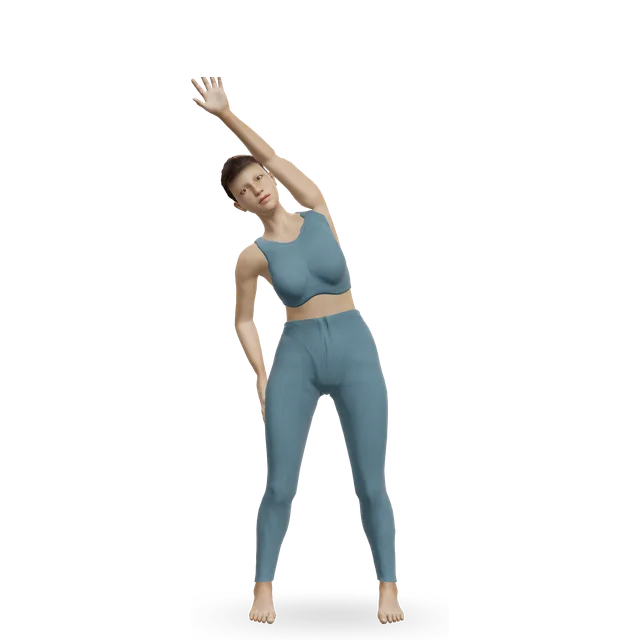
It can take weeks to months to settle, and no treatment has been tested in a trial, so this guide is honest about that. Usual care is ibuprofen if it suits you, heat and easing off what brings it on. The gentle plan here, with 3D demos, keeps you moving while it settles; it is our suggestion, not a tested treatment. Start with the warning signs.
Exercise is for pain that has been checked or is clearly mild and settling.
Get urgent medical help if
Call 999: chest pain that started suddenly, or spreads to your arm, neck or jaw, or your chest feels tight. This could be a heart attack. Do not drive yourself to A&E.
Call 999: sudden pain or discomfort in your chest that does not go away (it can feel like squeezing or pressure, burning or indigestion), or chest pain and you feel sweaty, sick, light-headed or short of breath.
Call 999: chest pain with difficulty breathing, your heart beating fast, or coughing up blood. This could be a blood clot in the lungs (pulmonary embolism).
Call 999: sudden chest or back pain that can feel like something being torn inside, with shortness of breath and problems walking, seeing or speaking.
Get help from NHS 111 if you think you have costochondritis. Chest pain needs checking to rule out other, more serious conditions, and costochondritis is diagnosed only once the heart and lungs have been considered.
Get help from NHS 111: pain or tightness in your chest, neck, shoulders, jaw or arms that comes and goes, often brought on by exercise, stress, emotion or cold and easing after a few minutes' rest. It can be angina, a sign of a heart problem.
Same day (urgent GP appointment or NHS 111): sharp or stabbing chest pain that gets worse when you take a deep breath in, swallow, cough or lie down, or sharp chest pain that only happens when you breathe or cough, or hasn't got better after a few days. These can be pericarditis or pleurisy.
See a doctor or physiotherapist if
Chest pain that comes and goes, or goes away quickly but you're still worried: see a GP.
Very bad pain that isn't getting better over time: see a GP. A steroid injection or a local anaesthetic may be offered.
A swelling over a rib joint beside the breastbone: see a GP. It is usually Tietze syndrome, but rarely an infection or a growth, especially with a fever, after chest surgery or if you inject drugs.
A tingling or painful patch of skin on one side of the chest, followed by a rash: possible shingles. See a pharmacist, ideally within 3 days of the rash appearing.
Chest pain where the ribs join the breastbone with back pain and stiffness that are worse in the morning and at night and ease with exercise: see a GP. These can be signs of ankylosing spondylitis, which usually starts between 18 and 40.
Understand it
What it is
Costochondritis is inflammation where the ribs join the breastbone. It causes sharp pain at the front or side of the chest, which may be worse when you move your upper body, lie down, breathe deeply or press on the middle of your chest or your ribs. It usually affects several joints between the 2nd and 5th ribs, without swelling; one review describes it as usually one-sided, another as pain on both sides of the breastbone.
It is also called costosternal syndrome or anterior chest wall syndrome.
Chest wall pain is the commonest cause of chest pain seen in general practice: 300 of 672 people (44.6%) in a Swiss study and 46.6% of 1,212 people aged 35 and over in a German one. Costochondritis itself accounts for 6% to 13% of chest pain in primary care, and it was diagnosed in 36 of 122 people (30%) with chest pain in one US emergency department.
It is commonest at 40 to 50 and slightly more common in women (69% of the emergency department cases were women), and teenagers get it too. The NHS links it to a chest injury, repetitive upper-body movements such as lifting, coughing a lot and infection, though often no cause is found; a review adds a recent illness with coughing, recent strenuous exercise, and activities that stress the arms and upper body.
Pain you can press on doesn't rule out the heart. In the emergency department study, 6% of people diagnosed with costochondritis were having a heart attack, against 28% of those without it. In Swiss primary care, chest wall pain went with heart disease in 19 of 300 people and with cancer in 6, and most chest wall pain was on the left. A review puts coronary heart disease at 3% to 6% of adults with chest pain and a tender chest wall.
So clinicians check the heart first: an ECG (electrocardiogram, a heart tracing) for anyone over 35, anyone at risk of heart disease and anyone with heart or lung symptoms, and sometimes a chest X-ray. The chest pain guideline from NICE (the National Institute for Health and Care Excellence) assesses for a heart cause before considering others, such as the muscles and joints. No blood test, scan or ECG finding diagnoses costochondritis: tests are there to rule other causes out.
Tietze syndrome is a rarer cousin with a visible, tender swelling. A new swelling over a rib joint should be seen by a GP: rarely it is an infection or a growth, especially after chest surgery or in people who inject drugs. The classic comparison:
How common: Tietze syndrome is rare; costochondritis is common.
Usual age in the classic description: Tietze under 40; costochondritis over 40.
Sites: Tietze is at one joint in 70% of cases; costochondritis is at more than one in 90%.
Which joints: Tietze usually the 2nd and 3rd ribs; costochondritis the 2nd to 5th.
Heart attack and angina, a blood clot in the lungs, pericarditis (inflammation around the heart, with sharp pain worse when you breathe in, swallow, cough or lie down), pleurisy, a chest infection, shingles, reflux, anxiety and panic, fibromyalgia, slipping rib syndrome, a painful tip of the breastbone, and rarely an infection or growth in the cartilage. In ankylosing spondylitis, inflamed rib joints can cause chest pain and make it hard to expand the chest when you breathe deeply.
The NHS says it can last a few weeks to several months, and a review says it usually settles within a year. A year after an emergency department visit, 11 of 21 people (55%) still had chest pain, but only a third of them still had definite costochondritis. In German primary care, 55.4% of people with chest wall pain still had some chest pain at 6 months, and in the Swiss study the outlook was good, but chest wall pain came back in about half within a year.
Two reviews found no clinical trial of any treatment for costochondritis itself. Usual care rests on experience. The NHS suggests anti-inflammatory painkillers such as ibuprofen, and a steroid injection or local anaesthetic for very bad pain that isn't getting better. One review adds heat, cutting back the activities that bring it on, a cough medicine if coughing is the trigger, and reassurance.
Another review lists heat, anti-inflammatory tablets or gels, capsaicin cream and lidocaine patches first, all on expert opinion, and warns that high-dose anti-inflammatory tablets can cause indigestion that muddies the picture.
In a small retrospective study of people with long-standing costochondritis, a stretching programme reduced pain more than in matched people who didn't stretch. It wasn't a randomised trial, the summary doesn't describe the stretches, and its numbers don't add up (51 people, then 34 treated and 34 controls); a later review calls it a small reduction in pain. It is the only exercise study we found.
Hands-on treatment helped chest wall pain in one trialEmerging evidence
In a Danish trial of 115 people whose chest pain was judged to come from the muscles and joints after a heart cause had been ruled out, 4 weeks of chiropractic care, including spinal manipulation, helped more than a self-management session at 4 and 12 weeks. By a year both groups had improved and there was no difference. This was chest wall pain in general, not costochondritis specifically.
Reassurance is part of the treatmentEmerging evidence
Chest wall pain caused a lot of anxiety and worry about the heart in the Swiss study, especially when it came on suddenly. A review advises reassuring people that it is harmless once other causes have been ruled out, and NICE asks clinicians to explain chest pain that isn't from the heart, and what to do if it comes back. The NHS lists anxiety and panic among the causes of chest pain; our anxiety guide covers breathing and exercise that help.
Mild, familiar and in the spot you can press (our rule)
No study has set a pain limit for costochondritis, so this rule is editorial. It is deliberately lower than the 5 out of 10 used in the site's other guides, because the joints are inflamed and so that a different kind of chest pain stands out.
Start only once a clinician has checked your chest pain. During breathing, stretching and strength work, a mild ache up to about 3 out of 10 is fine if it is in the same spot you can press on, settles within an hour and leaves you no worse the next morning. If it is worse, do less next time, not nothing.
Stop any exercise that brings on sharp pain at the breastbone, and leave out the movements that do for now; a review's advice is to cut back the activities that provoke it.
Chest discomfort that comes on with effort, such as brisk walking or stairs, and eases within a few minutes of rest, or feels tight, squeezing or heavy, or comes with breathlessness, sweating or feeling sick, is not a pain-rule question: that is how angina and heart attacks behave. Stop, and follow the warning signs.
Start at the first stage. Each move opens a full guide with a 3D demo.
Stage 1
Settle: calm it, keep breathing and keep moving
Weeks 0 to 2, or during a flare, and only once your chest pain has been checked. Ibuprofen if it suits you, and heat, are the usual first steps. Ease off whatever brings it on, such as heavy lifting, pressing or a lot of reaching, but keep walking and moving. This whole plan is our suggestion, not a tested treatment: no exercise programme has been trialled for costochondritis. Doses are the moves' own or editorial.
Move on when: Pressing on the sore spot hurts less, and a deep breath and turning are easier.
Follow along: a timer, a cue and the next move, one step at a time.
Stage 2
Restore: gentle chest and upper-back stretches
About weeks 2 to 6, daily. Stretching helped in one small, weak study of long-standing costochondritis; these stretches are our choices. Stretch to a mild pull, never sharp pain at the breastbone.
Move on when: These feel comfortable, and reaching, carrying shopping and a normal day don't flare it.
Follow along: a timer, a cue and the next move, one step at a time.
Stage 3
Rebuild: bring back upper-body strength gradually
From about week 6, or once it has settled, 2 or 3 days a week. Start light, change one thing at a time, and go back a step if pressing flares the breastbone. Doses are the moves' own or editorial.
Move on when: Build back towards your usual training. If the pain hasn't eased over several months, or it is very bad, see a GP: an injection or physiotherapy are options.
Follow along: a timer, a cue and the next move, one step at a time.
What to change for now
Ease off what brings it on, for now
Repetitive upper-body movements such as lifting, a lot of coughing, and recent strenuous exercise or activities that stress the arms and upper body often come before it. Heavy pressing, push-ups, chest flyes, dips and hard pulling load the joints beside the breastbone, so leave them out until it settles, then bring them back gradually.
Walking, cycling and leg training are usually fine meanwhile (our suggestion).
The NHS says the pain may be worse lying down. No study has tested positions; propping yourself up and not lying face down or on the sore side usually helps (our suggestion). If a cough is keeping it going, get the cough treated and hold a pillow against your chest when you cough.
How can I tell costochondritis from a heart attack?
You can't reliably tell yourself, so get chest pain checked. Call 999 for chest pain that started suddenly, spreads to your arm, neck or jaw, or makes your chest feel tight; otherwise get help from NHS 111. Pain you can press on doesn't rule out the heart: in one emergency department, 6% of people diagnosed with costochondritis were having a heart attack.
What does costochondritis feel like?
Sharp pain at the front or side of the chest, worse when you move your upper body, lie down, breathe deeply or press on the joints beside the breastbone. It usually affects several joints, without swelling.
How long does costochondritis last?
The NHS says a few weeks to several months. In studies, about half of people with chest wall pain still had some pain 6 months to a year later, and it came back in about half within a year, though the overall outlook was good.
What is the best treatment for costochondritis?
No treatment has been tested in a trial. Ibuprofen if it suits you, heat, easing off the activities that bring it on and reassurance are the usual care, and an injection is an option for very bad pain that isn't improving.
Do stretches or exercises help costochondritis?
There's little evidence: in one small, weak study, a stretching programme helped long-standing pain. Gentle movement, breathing and walking keep you comfortable while it settles, and upper-body strength can come back gradually, but this plan is our suggestion, not a tested treatment.
What should I avoid with costochondritis?
For now, the movements that bring on the sharp pain, such as heavy pressing, push-ups, chest flyes and hard rowing or pull-ups. Repetitive lifting and recent strenuous upper-body exercise often come before it. And stop for any chest discomfort that comes on with effort and eases with rest.
Can I go to the gym with costochondritis?
Yes, with changes: walking, cycling and leg training are usually fine, while chest and heavy upper-body work waits until it settles, then builds back gradually. That's our suggestion, and any chest pain with exertion needs checking first.
What is the best sleeping position with costochondritis?
The NHS says the pain may be worse lying down. No study has tested positions; propping yourself up and not lying on the sore side or face down usually helps.
Is costochondritis caused by anxiety?
No, but the two often go together: chest wall pain causes a lot of anxiety and worry about the heart, and anxiety and panic can themselves cause chest pain. Our anxiety guide covers breathing and exercise that help.
What is Tietze syndrome?
A rarer cousin of costochondritis with a visible, tender swelling, usually at one joint at the 2nd or 3rd rib, in younger people. A new swelling there should be seen by a GP, as rarely it is an infection or a growth.
Can costochondritis come back?
Yes: in a Swiss primary care study, chest wall pain came back in about half of people within a year, though the overall outlook was good. If it comes back, the same gentle plan applies, but get any new or different chest pain checked first.
Exercise education, not a diagnosis or treatment plan. It is written from the guidelines and studies listed above; review by a clinician is pending. If your pain follows an injury, is severe, is getting worse, or comes with any warning sign listed on this page, get it assessed. Health disclaimer.