Crocodile breathing (prone diaphragmatic breathing)
Lying face down with your forehead on your stacked hands, you breathe so the belly presses into the floor and the lower ribs widen to the sides. The floor gives feedback that slow breathing sitting up lacks. Trials of belly (diaphragmatic) breathing, mostly small and at high risk of bias, report less anxiety; the face-down position itself is untested, and a Cochrane review found no reliable trials for dysfunctional breathing.
Movement guide
Crocodile breathing (prone diaphragmatic breathing)
Loading the 3D figure…
Make it easier or harder
Choose a version that fits your control and comfort.
Easier option
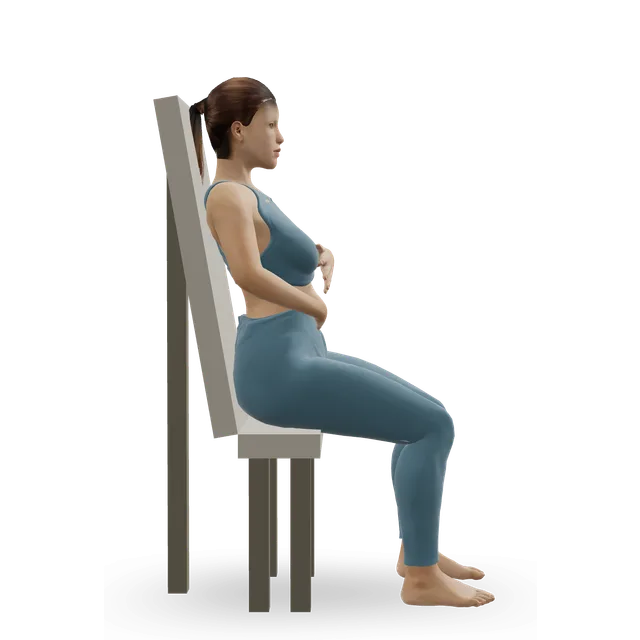 3D demoSlow breathing (6 breaths a minute)Beginner · No equipment
Suggested next step, beginner grade.
This move
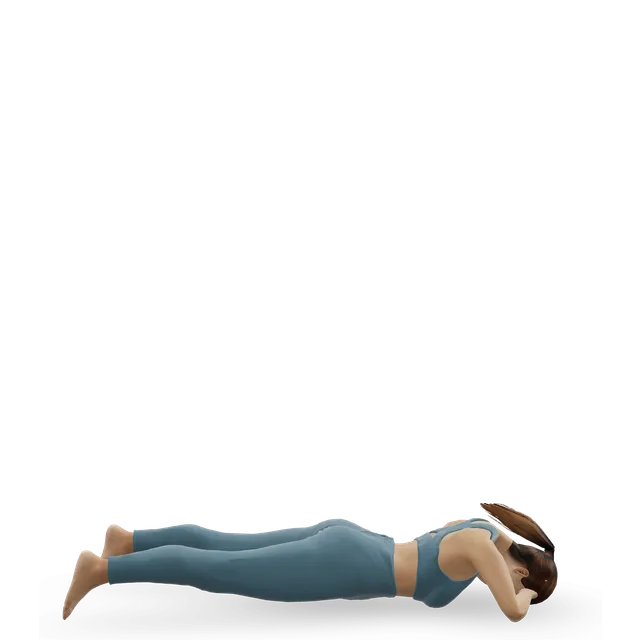 3D demoCrocodile breathing (prone diaphragmatic breathing)Beginner · No equipment
Beginner grade.
Harder option
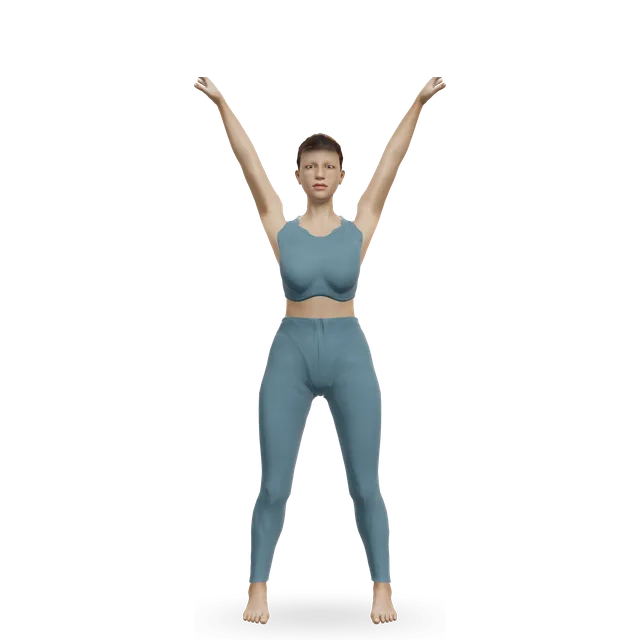 3D demoBreath reachBeginner · No equipment
Suggested next step, beginner grade.
Source-researched guide.
How to move
- Lie face down on a mat. Stack your hands, palms down, and rest your forehead on the backs of them, elbows out to the sides. Let your legs relax.
- Breathe in gently through your nose, letting your belly press into the floor and your lower ribs and back widen.
- Let the breath fall out without pushing, and pause briefly before the next breath.
- Keep your shoulders and neck quiet, and settle into about 4 seconds in and 6 out.
Form cues
- Feel the sides of your waist widen, not just your belly.
- Slow and quiet, not big.
- Avoid: lifting your shoulders or arching your low back to breathe in.
Practice and cautions
5 minutes of easy nose breathing, about 4 seconds in and 6 out (our editorial starting point): about 6 breaths a minute, the pace that raised heart rate variability most in a direct comparison of breathing patterns.
Skip lying face down late in pregnancy or with active reflux. Sit upright and use the same rib focus instead. After birth, lying face down may be uncomfortable with tender breasts or after a caesarean; sit or lie on your side instead. This is movement education, not an assessment or treatment prescription. Stop for sharp or increasing pain, dizziness, numbness or tingling; seek individual guidance for symptoms, injury or restrictions.
Sources and review status
Sources support the educational description; they do not establish that this exercise is suitable for you.
- Functional Movement Systems · Crocodile breathing with lateral expansion (face down, forehead on the stacked hands, the belly pushing into the floor and the sides of the waist widening) ↗
- Kwon 2026 · Diaphragmatic breathing in 48 randomised trials: benefits for anxiety and reflux among others, but the trials were small, varied and mostly at high risk of bias (systematic review, Complementary Therapies in Medicine) ↗
- Jones 2013 · Breathing exercises for dysfunctional breathing and hyperventilation: one small, poorly reported trial, so no credible evidence either way (Cochrane review) ↗
- Marchant 2025 · Square, 4-7-8 and 6 breaths-a-minute breathing compared in one session: 6 a minute raised heart rate variability most; none changed mood or blood pressure (84 students, Applied Psychophysiology and Biofeedback) ↗
No variation is labeled clinically validated.
What it works
Muscles
Works the chest, mid back and core. Individual muscles are not yet classified.
Equipment
None: body weight and floor space.
Level
Beginner. See the easier and harder options above.
Workouts that use it
- Breathing exercises to relax · 6 min
- Daily pelvic floor workout · 5 min
- Fascia release for the back · 15 min
- Yoga for scoliosis: a 25-minute even, both-sides sequence · 25 min
- Yoga for asthma: a 20-minute breathing-first practice · 20 min
- Yoga for bodybuilders: a 25-minute rest-day class for the chest and front of the shoulders, the upper back, hips, thighs and calves, one-leg balance and a slow wind-down · 25 min
Pain guides that use it
Part of a staged plan, with when to get help first.
- Upper back pain: exercises, and the signs it isn't your back
- Thoracic outlet syndrome: exercises, the warning signs, and when surgery helps
- Upper back pain in men: desk work, lifting and the gym, ankylosing spondylitis, and heart signs
- Upper back pain when bench pressing: between the shoulder blades, the set-up, rib joints and swaps
- Upper back pain when deadlifting: between the shoulder blades, rounding under load, ribs and swaps
Guides that use it
- Pilates for beginners guide
- Pilates for menopause guide
- Pilates for stress and anxiety guide
- Pilates for upper back pain guide
- Pilates for lymphatic drainage guide
- Pilates for asthma guide
- Pilates for the vagus nerve guide
- Yoga for anxiety and sleep guide
Show all 51 guidesShow fewer guides
- Restorative yoga guide
- Yoga for headaches and migraine guide
- Yoga for digestion guide
- Yoga for scoliosis guide
- Yoga for menopause guide
- Yoga for upper back pain guide
- Yoga for asthma guide
- Yoga for the pelvic floor guide
- Yoga for IBS guide
- Yoga for TMJ guide
- Yoga for acid reflux guide
- Yoga for lymphatic drainage guide
- Yoga for fatty liver guide
- Yoga for bodybuilders guide
- Yoga for chronic pain guide
- Yoga for the vagus nerve guide
- Yoga for opening the chest guide
- Fascia exercises guide
- Thoracolumbar fascia guide
- Psoas release guide
- Craniosacral therapy guide
- Pelvic floor guide
- Stomach guide
- Fibromyalgia guide
- Ribs guide
- Lower back guide
- Visceral manipulation guide
- Fascial adhesions guide
- Chronic pain guide
- Exercise for menopause and perimenopause
- Exercise for anxiety and panic attacks
- Pelvic floor exercises (Kegels) for women and men
- Exercise for fibromyalgia
- Exercise with long COVID
- Exercise for endometriosis
- Exercise for IBS
- Exercise with sickle cell disease, and sickle cell trait in sport
- Exercise and eating disorders
- Rib flare guide
- How to breathe when lifting guide
- Breathing when running guide
- Resting heart rate guide
- Lung capacity guide
Similar moves
Browse more
Questions people ask
What muscles does the Crocodile breathing (prone diaphragmatic breathing) work?
It works the chest, mid back and core.
What equipment do I need for the Crocodile breathing (prone diaphragmatic breathing)?
No equipment: your body weight and a little floor space.
Is the Crocodile breathing (prone diaphragmatic breathing) good for beginners?
It is graded beginner, so it suits most people starting out. When it feels easy, try the Breath reach.
What is an easier alternative to the Crocodile breathing (prone diaphragmatic breathing)?
Try the Slow breathing (6 breaths a minute). It is the suggested step down from this move.
How do I make the Crocodile breathing (prone diaphragmatic breathing) harder?
Progress to the Breath reach. Follow that guide’s technique and any stated timing.