Common and usually silent
MASLD affects about 1 in 4 adults in the UK, usually causes no symptoms, and most people only ever have the first stage, fat without damage. It was renamed from NAFLD in 2023.
Yoga guide
Fatty liver disease, now called metabolic dysfunction-associated steatotic liver disease (MASLD, formerly NAFLD), is a build-up of fat in the liver linked with things like a larger waist, type 2 diabetes and high blood pressure. It affects about 1 in 4 adults in the UK, and most people never have more than the fat. Being more active is one of the main treatments: exercise lowers liver fat even when people don't lose weight.
Yoga itself has hardly been tested: we found two small trials that graded liver fat on an ultrasound scan, and both have weaknesses. So its place is as one way to be active, chosen and paced so that it counts, not as a special liver treatment, and never in place of a medical review of your liver.
This guide explains what yoga can and can't do for your liver, how much activity the evidence supports, what the grades on a scan report mean, the claims that twists and breathing "detox" the liver, what changes with cirrhosis, which classes to follow, and the warning signs that need help.
MASLD affects about 1 in 4 adults in the UK, usually causes no symptoms, and most people only ever have the first stage, fat without damage. It was renamed from NAFLD in 2023.
In 19 trials that measured liver fat on MRI scans, interval and steady exercise each lowered it by about 3 percentage points. About 150 minutes a week of brisk walking made a meaningful fall in liver fat 3.5 times as likely, whether or not people lost weight.
We found two small randomised trials of yoga with liver results, both graded by ultrasound: 40 women with diabetes over 8 weeks, and 37 women with prediabetes over 3 months. Neither measured liver fat on MRI, and the larger effect came from the weaker trial. A US sports medicine roundtable calls yoga's place in fatty liver uncertain.
A gentle class is light activity. Guidelines ask for more than 150 minutes of moderate activity a week plus strength work twice a week, so use brisk flowing yoga and strength poses as part of that, and walk, cycle or swim too.
How much scarring (fibrosis) the liver has, not how much fat, decides how people do. A scan's grade 1, 2 or 3 is a rough estimate of fat, not of damage, and NICE recommends a scarring test for everyone with MASLD.
No study has tested twists or tummy compression on the liver, and no complementary therapy has been shown to treat MASLD. Yoga goes alongside medical care: if you take a statin, NICE says to keep taking it.
In 2023, liver societies renamed non-alcoholic fatty liver disease (NAFLD) metabolic dysfunction-associated steatotic liver disease (MASLD), defined as fat in the liver with at least 1 of 5 heart and metabolic risk factors such as a larger waist, raised blood sugar or high blood pressure. Inflammation is now called MASH (formerly NASH). The NHS page still uses NAFLD, and NICE renamed its guideline in July 2026. Many panel members felt the words "non-alcoholic" and "fatty" were stigmatising.
The NHS describes four stages: fat without damage; inflammation (MASH); fibrosis, where there is damage but the liver usually still works well; and cirrhosis, severe damage that affects how well the liver works. Liver UK says that having one stage doesn't mean you'll move to the next, and that the first stage can be fully reversed.
About 1 in 4 adults in the UK, NICE estimates about 30%, and around half of people with type 2 diabetes. People at a healthy weight can have it too. Our exercise for fatty liver guide has the full picture, including alcohol and medicines.
MASLD is defined by heart and metabolic risk factors such as a larger waist, raised blood sugar and high blood pressure, so the heart warning signs are on this page as well as the liver ones (our reading). Our exercise for fatty liver guide explains why, for most people, the heart is the bigger risk.
Source 3
An ultrasound report grades fatty liver as mild (grade 1), moderate (2) or severe (3) by how bright the liver looks and how hard it is to see the vessels and the diaphragm behind it. It's a judgement by eye, so it varies between scans and operators, and ordinary ultrasound misses about a third or more of mild fat: its sensitivity for fat above 5% is about 61% to 65%.
The grade estimates fat; the stage is about scarring, which ultrasound can't show. US liver guidance says a scan without visible fat doesn't rule out inflammation or scarring. What predicts how people do is scarring, which needs a separate test.
Yoga for grade 2 fatty liver is the same as for grade 1 or 3. What changes the advice is scarring, diabetes, heart disease or cirrhosis (our reading).
More than 80% of people with MASLD have normal routine liver blood tests, NICE notes, so they can't rule it out. ALT (called SGPT on some lab reports) is one of these tests. In reviews, exercise had no reliable effect on ALT.
The European guideline says exercise alone, without diet or significant weight loss, reduces liver fat. In 19 trials (745 people) that measured liver fat on MRI or a similar scan, interval training lowered it by 2.85 percentage points and steady moderate exercise by 3.14. A roundtable of the American College of Sports Medicine (ACSM) counted more than 25 studies, most showing falls in liver fat independent of weight loss.
In small trials, 4 weeks of cycling cut liver fat by 21% with no change in weight, 8 weeks of resistance exercise cut it by 13%, and in 48 inactive adults three different amounts of aerobic exercise each lowered it a little without meaningful weight loss.
In 14 trials (551 people), exercising at 750 MET-minutes a week or more, about 150 minutes of brisk walking, made a 30% fall in MRI-measured liver fat 3.5 times as likely, whether or not people lost more than 5% of their weight. A 30% fall matters: in 7 studies, people who reached it were more likely to improve on a liver biopsy (51% against 14%). A 2026 analysis of 24 trials found combined aerobic and strength training worked best.
If you're overweight, the European targets are at least 5% of body weight to reduce liver fat, 7% to 10% for inflammation and 10% or more for scarring. In a 293-person study, inflammation cleared in 90% of those who lost 10% or more, but only 30% lost even 5%. Eating less does most of the work on weight, as our yoga for weight loss guide explains, while exercise lowers liver fat whatever the scales say.
In 3 controlled trials (72 people) with liver biopsies, exercise alone didn't significantly improve inflammation or scarring, and the European guideline calls it unclear whether exercise can do that on its own. The trials were small and short.
In long-term studies, the stage of scarring, not the amount of fat or inflammation, predicted deaths, liver transplants and liver problems, and the risk rose with each stage. That is why a scarring test matters more than the grade on a scan.
In 40 overweight women aged 45 to 55 with type 2 diabetes in Iran, 8 weeks of yoga three times a week lowered the ultrasound grade by about 1 grade, and ALT and AST by about 14%, against usual activity. It is weak evidence: one centre, 40 women, liver fat judged only by ultrasound grade, methods that both gave everyone a calorie-reduced diet and told them not to change their diet, an HDL rise about five times what exercise usually gives, and a journal not indexed in MEDLINE.
In 37 women with prediabetes, 3 months of yoga led to "no escalation" of fatty liver on ultrasound, with no improvement reported. Beyond these, there is one case report of a man whose grade 1 fatty liver cleared on ultrasound after 3 months of yoga, and one trial still recruiting. The grade is our grade for the claim that only these two small trials exist, not for yoga working.
In two small Chinese trials in people with prediabetes, Yijinjing qigong combined with elastic band training lowered liver fat on MRI or a similar scan, by 1.91 percentage points against a rise of 0.38 in one. The qigong came with resistance training, and the people weren't chosen for fatty liver, so it says little about yoga.
The ACSM roundtable: "The appropriateness of other types of physical activity including yoga and Pilates remains uncertain." NICE says there is some evidence that exercise reduces liver fat, and the European guideline asks for activity suited to your preference and ability. Neither names yoga.
More than 150 minutes a week of moderate activity, or 75 minutes of vigorous activity, plus strength work twice a week. Liver UK: "Don't worry if you can't reach the target at first. Start small and gradually build up the amount you do over time."
Moderate activity starts at about 3 METs (3 times your energy use at rest). The 2024 Compendium of Physical Activities lists hatha yoga at 2.3 METs, vinyasa at 2.7, sun salutations at 3.5 and power yoga at 4.0, while in a lab study of 38 adults an hour of vinyasa averaged 3.6 METs, against 4.4 for brisk walking. Breathing practices use very little energy, about 1.3 METs.
So a gentle class is light activity, and only brisk flowing styles come near moderate intensity. As a rough guide (our arithmetic), the 750 MET-minutes of the liver fat trials would take about 5 hours a week of hatha yoga, against about 3 hours of brisk walking.
Walk briskly, cycle or swim on most days, and do yoga 2 or 3 times a week: one class that moves (sun salutations, a brisk flow, or our walk and yoga workout) and one that builds strength. Combined aerobic and strength work did best in the trials (our editorial starting point).
In the small trials, liver fat started to fall within 4 to 8 weeks of regular exercise. Keep going: our exercise for fatty liver guide notes the gains fade when people stop.
The same exercise advice applies. Liver UK says that if you're at a healthy weight, it's important to avoid gaining weight.
Standing march: 2 minutes, easy pace, arms swinging. Walking: 20 minutes at a pace where you can talk but not sing; brisk walking is the dose the liver fat trials used. Sun salutation A: 3 rounds, stepping back rather than jumping, knees down to lower if you need to. All three doses are from our walk and yoga workout.
Chair pose: 3 holds of 20 seconds (our walk and yoga workout), building to 3 holds of 30 to 45 seconds. Warrior II and high lunge: 5 breaths each side. Goddess pose: 12 slow pulses, knees over your toes. Warrior III: 3 to 5 breaths each side, hands on a wall at hip height. Side plank: 2 holds of 15 to 30 seconds each side, knees down for a lighter version (all our strength yoga workout). Straight-arm plank: 3 holds of 15 to 30 seconds. A suggested starting point. No trial has tested this move on its own (the move page's dose). Locust: 3 holds of 15 seconds (our walk and yoga workout). Glute bridge: 10 to 12 slow reps, breathing out as you lift (our period pain routine). Keep breathing in every hold.
 3D demoChair pose (Utkatasana)Beginner · No equipment
 3D demoWarrior II (Virabhadrasana II)Intermediate · No equipment
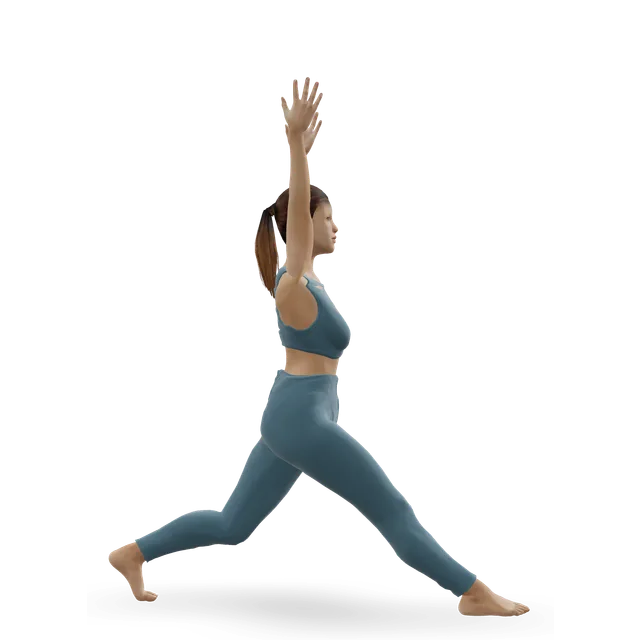 3D demoHigh lunge (crescent lunge, Ashta Chandrasana)Intermediate · No equipment
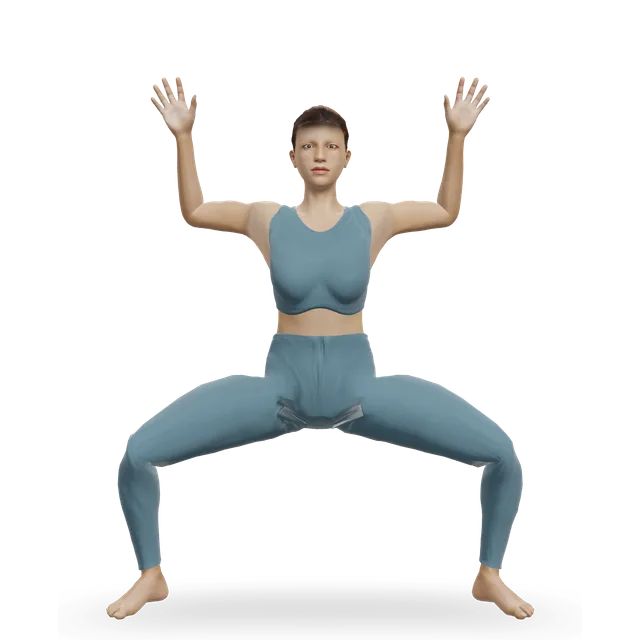 3D demoGoddess pose (Utkata Konasana)Beginner · No equipment
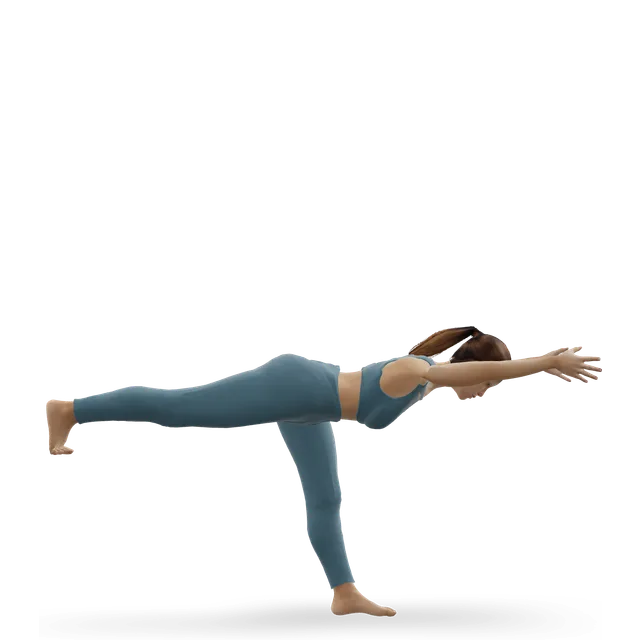 3D demoWarrior III (Virabhadrasana III)Advanced · No equipment
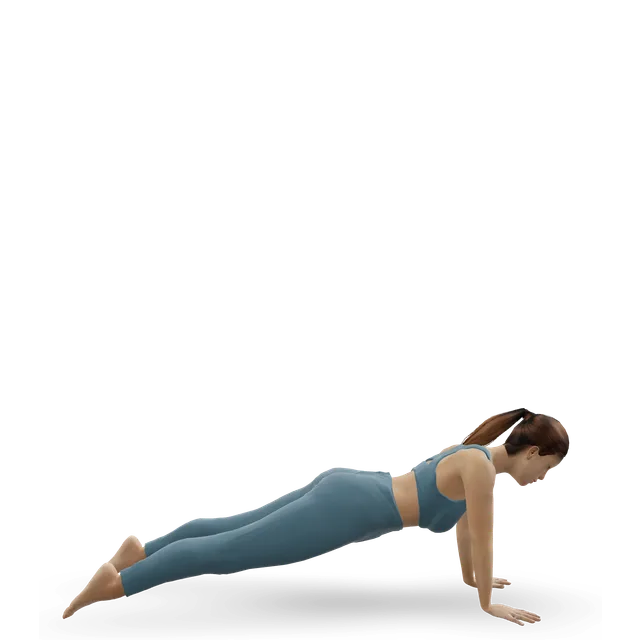 3D demoStraight-arm plank (high plank)Intermediate · No equipment
 3D demoSide plankIntermediate · No equipment
 3D demoLocust pose (Salabhasana)Beginner · No equipment
 3D demoGlute bridgeBeginner · No equipment
For a higher body weight, sore knees, frailty or cirrhosis. Sit to stand: 8 to 10 slow stands from a firm chair with its back against a wall; with a high body weight, use a sturdy chair rated for your weight and push on the arms or your thighs to start, as its page says. Wall push-up: 10, hands on the wall at chest height (both our yoga for diabetes class). Seated march: 1 minute (our yoga for circulation class; adapted from the move page's dose). Slow calf raise: 2 sets of 10 to 15, holding a worktop (our yoga for circulation class). Band row: 3 sets of 10 to 15, stopping 2 to 3 reps short of failure (adapted from the move page's dose).
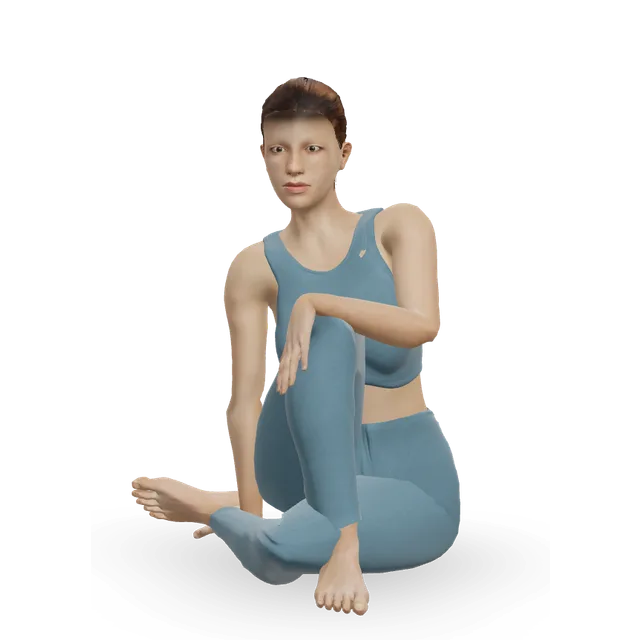
Enjoy twists for how they feel; they don't detox or massage the liver. Supine spinal twist: 45 seconds each side, knees on a cushion (our strength yoga workout). Half lord of the fishes: optional, only as far as is comfortable, easing off for a sharp pinch in the low back, as its page says. Slow breathing: 5 minutes, in for about 4 and out for about 6, with no holds (our yoga for heart health class). Corpse pose: lie still for at least 5 minutes, up to 10, usually at the end of a session: Yoga Journal's guide suggests at least 5 (the move page's dose).
With cirrhosis, ask your liver team what exercise suits you before starting or stepping up (our suggestion), and talk to your doctor before trying to lose weight, as Liver UK advises. With type 2 diabetes on insulin or a sulfonylurea, follow the hypo advice in our type 2 diabetes guide. Stop and rest if you get chest pain, unusual breathlessness, dizziness or palpitations (our suggestion).
Our suggestion, from the legs up the wall page's caution ("With heart failure, or kidney or liver disease that causes fluid build-up, ask your doctor first.") and our exercise for fatty liver guide: with fluid in the tummy (ascites), leave out lying face down (locust, bow and crocodile poses), deep folds that squash the tummy, boat pose and long plank holds, and keep breathing steadily rather than holding your breath or straining. Use the chair and wall options instead.
Ask your liver team before strength work or any new exercise, as our exercise for fatty liver guide suggests.
Kapalbhati and other "liver-cleansing" fast breathing have no evidence for the liver, and NCCIH (the US National Center for Complementary and Integrative Health) advises beginners to avoid forceful breathing. With cirrhosis and fluid in your tummy, leave out the face-down poses, deep folds, boat pose and long planks (our suggestion, above). Headstands and shoulder stands do nothing special for the liver; leave them out with glaucoma or high blood pressure that isn't under control.
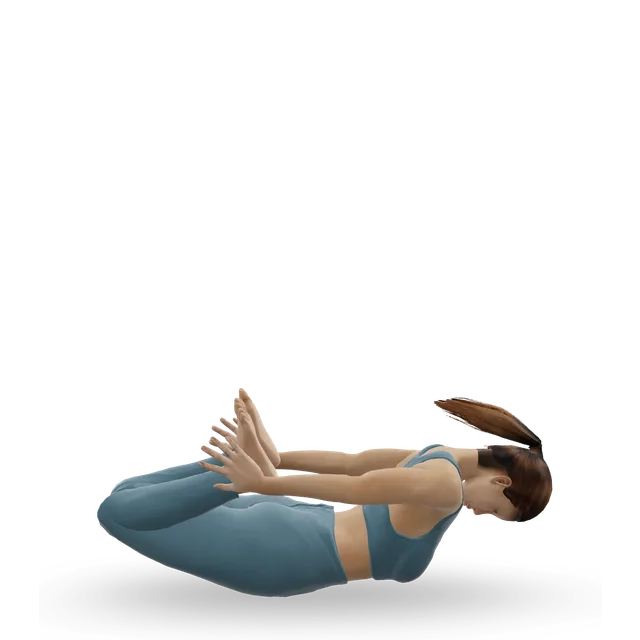 3D demoBow pose (Dhanurasana)Intermediate · No equipment
 3D demoCrocodile breathing (prone diaphragmatic breathing)Beginner · No equipment
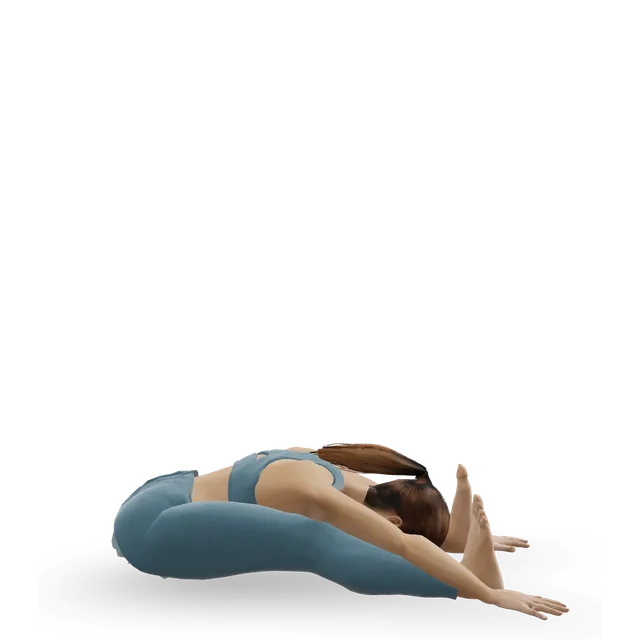 3D demoSeated forward fold (Paschimottanasana)Intermediate · No equipment
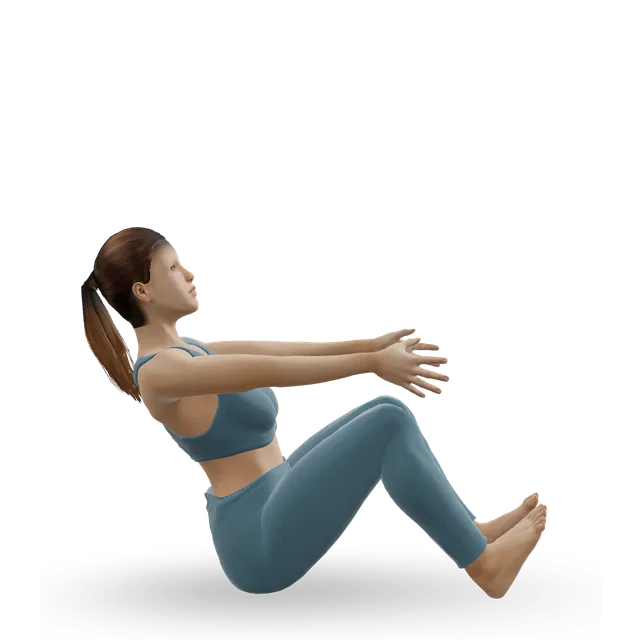 3D demoBoat pose (Navasana)Intermediate · No equipment
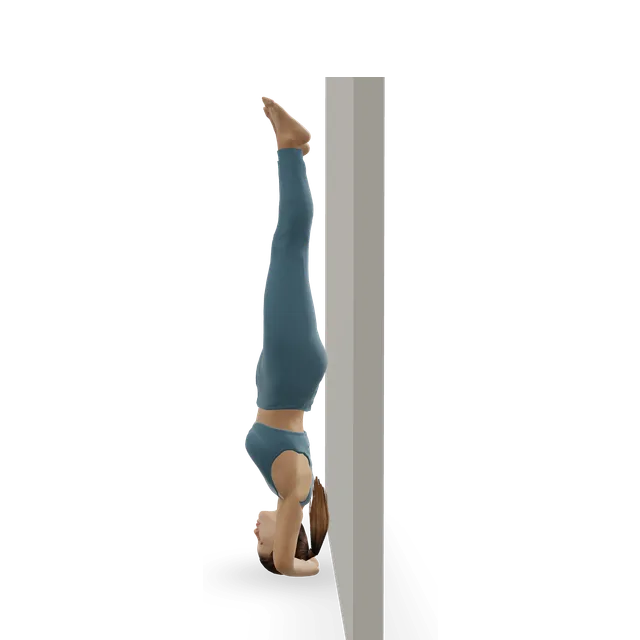 3D demoSupported headstand (Salamba Sirsasana)Expert · A wall
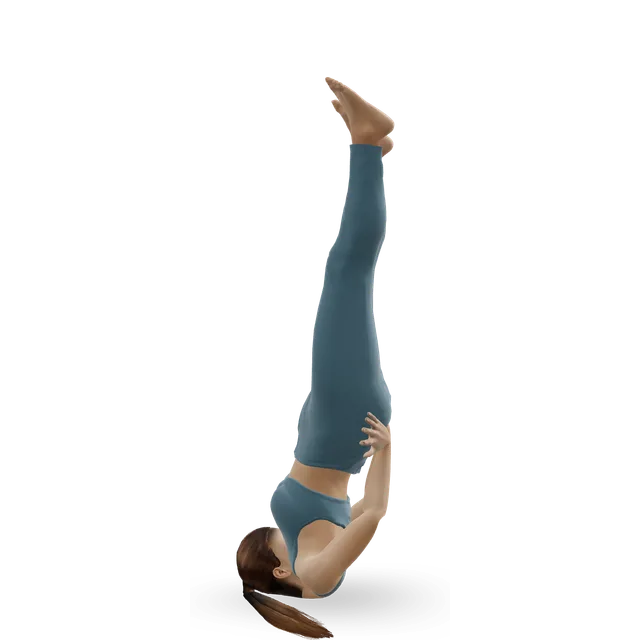 3D demoSupported shoulderstand (Salamba Sarvangasana)Advanced · No equipment
The walk and yoga workout covers the moderate minutes and some strength in one session; the strength yoga workout covers the strength days. With type 2 diabetes, the yoga for diabetes class has the hypo cues; for a higher body weight, sore knees or cirrhosis (with your liver team's agreement), the chair-to-mat and chair classes. Two or three classes a week alongside walking is our editorial starting point.
A 45-minute session for weight loss and health: a 20-minute brisk walk, which does more for the scales, then a standing yoga flow for strength and balance.
45 minBeginner12 movesCardio machineThirty-five minutes of yoga built for strength: long standing holds, slow lowering from plank, single-leg balances and a band row, with harder options.
35 minIntermediate18 movesA step, A bandA 35-minute yoga practice for diabetes that keeps your head up: slow breathing, standing strength, balance at a wall and a calm finish, with no breath holds.
35 minBeginner17 movesA bench or box, A wallA 30-minute yoga class for plus-size and bigger bodies: seated, then standing with a chair and wall, then an optional mat block, with a chair-only option.
30 minBeginner21 movesA bench or box, A stepA free 20-minute chair yoga class for older adults: slow breathing, gentle seated stretches and twists, standing poses holding the chair, and a calm finish.
20 minBeginner18 movesA bench or box, Something with weightA 25-minute gentle yoga class for complete beginners and over-50s: slow breathing, a warm-up, supported standing poses, floor poses and a closing rest.
25 minBeginner14 movesNo equipmentOur walking plan builds to 150 minutes a week over 8 weeks; add yoga on 2 or 3 days.
These are the warning signs from our exercise for fatty liver guide and our yoga guides, word for word, apart from the lines marked as our suggestion. This is general information, not a diagnosis. A&E means accident and emergency; in the US, call 911 for 999.
Call 999 for any of these, and don't drive yourself to A&E:
Call 999 if:
Liver UK lists these signs of more advanced liver disease:
Source 43
With cirrhosis, ask your liver team what exercise suits you before starting or stepping up (our suggestion), and talk to your doctor before trying to lose weight, as Liver UK advises. With type 2 diabetes on insulin or a sulfonylurea, follow the hypo advice in our type 2 diabetes guide. Stop and rest if you get chest pain, unusual breathlessness, dizziness or palpitations (our suggestion).
Source 12
NICE: "Be aware that people with MASLD who are taking statins should keep taking them." Yoga goes alongside the care your GP or liver team recommends, never in place of it.
Source 15
Call 999 or go to A&E (accident and emergency) straight away for severe difficulty breathing (gasping, choking or not able to get words out), a chest that feels tight or heavy, pain that spreads to your arms, back, neck and jaw, lips or skin turning very pale, blue or grey, or sudden confusion. If you're more short of breath than usual, or your heart is racing, fluttering or skipping beats, contact NHS 111.
Source 44
A joint pain that is sharp, gets worse during a session, lingers into the next day or changes how you move is a reason to use an easier version, and to see a GP or physiotherapist if it keeps happening (the rule in our plans). Muscle soreness for a day or two after something new is normal. In a hot class, stop if you feel dizzy, sick or unwell; our hot yoga guide lists the signs of heat illness.
You can say no to any hands-on adjustment, and a teacher registered with Yoga Alliance must get your explicit consent each time.
The NHS advises getting advice from a healthcare professional first if you have a health problem, an injury or symptoms, or have recently had a heart attack or an operation.
Source 45
We found no study of twists or tummy compression on liver function, blood flow or fat in 97 records. Liver fat falls with exercise of any kind, twists or not.
No trial has tested kapalbhati, or any breathing practice on its own, on liver fat, enzymes or grade; it appears only as one part of a trial that hasn't reported. Breathing practices also use very little energy, about 1.3 METs.
The evidence is one case report and one small, weak 8-week ultrasound trial. Exercise in general lowers liver fat, but exercise alone hasn't been shown to reverse inflammation or scarring.
Liver UK: "There are no complementary or alternative medicines that have been shown to treat or prevent MASLD. They can sometimes harm your liver, even if they come from natural ingredients." A review of detox diets found very little clinical evidence for them.
The grade is an estimate of fat on an ultrasound; the stage is about scarring, which ultrasound can't show and which is what predicts how people do.
More than 80% of people with MASLD have normal routine liver blood tests, NICE notes.
Source 15
Liver fat fell with exercise whether or not people lost more than 5% of their weight.
A gentle class is light activity, about 2.3 METs. The liver fat trials used about 150 minutes a week of moderate activity, such as brisk walking.
It can be part of what helps, as one way to be active, but it has hardly been tested on its own: two small trials graded liver fat by ultrasound only, and both are weak. What has good evidence is exercise in general, which lowers liver fat even without weight loss.
None has been shown to work better than another. Choose flowing sequences such as sun salutations that raise your heart rate, and strength poses such as chair pose, warrior poses and planks, and walk on other days.
No study shows that yoga alone does. Exercise lowers liver fat, and losing weight, if you're overweight, is what has been linked with less inflammation and scarring. Liver UK says the first stage, fat without inflammation or scarring, can be fully reversed.
The same for every grade: the grade is a rough estimate of fat on an ultrasound, not a measure of damage, and it doesn't change the exercise advice. What matters more is whether there's scarring, which needs a separate test.
No trial has tested it. Breathing practices are calming but use very little energy, and forceful breathing isn't advised for beginners.
No study supports it. Your liver doesn't need detoxing by a pose; enjoy twists for how they feel, and count the active parts of your practice towards your weekly minutes.
Aim for more than 150 minutes a week of moderate activity plus strength work twice a week. About 150 minutes of brisk walking a week made a meaningful fall in liver fat more likely in trials, and a gentle yoga class counts for less than a brisk walk.
One small, weak trial reported lower ALT after 8 weeks of yoga, but in larger reviews exercise had no reliable effect on ALT. Liver enzymes are often normal in fatty liver anyway, so they're a poor guide.
Often, gently, but ask your liver team first. With fluid in your tummy, skip lying face down and deep folds, and use chair-based options (our suggestion).
Exercise helps your liver whatever you weigh. If you're overweight, losing at least 5% of your weight reduces liver fat and 10% or more helps scarring; at a healthy weight, the advice is to stay active and avoid gaining weight.
Most people only have fat without damage, but some develop scarring, and the conditions that often come with it, such as diabetes and high blood pressure, raise the risk of heart disease. Ask your GP about a scarring test if you haven't had one.
Being active is good for the liver, and yoga can be part of that. No pose has a special effect on the liver.
Exercise education, not a personal prescription, and clinical review of these guides is pending. If you are pregnant, have a health condition such as glaucoma, high blood pressure or osteoporosis, or have had recent surgery, check with a doctor, midwife or physiotherapist before starting, and stop for sharp or increasing pain. Health disclaimer.