Posterior pelvic tilt: what a tucked pelvis means, and exercises that help
Posterior pelvic tilt means the top of your pelvis tips backwards and your tailbone tucks under, which flattens the curve in your lower back. Everyone does it when they sit, bend forward or squat deeply. Fewer people stand this way: in one sample of 120 young adults, 6% of the men and 7% of the women did. Part of any reading is bone shape: in pelvises held in the same position, the angle between the bony landmarks ranged from 0 to 23 degrees.
Tight hamstrings don't explain a tucked pelvis when you stand, and studies haven't found that it causes back pain. Exercise won't reset how you stand, but it builds control of your pelvis, the hip hinge, and back and glute strength.
This guide gives what's normal, what the studies found about hamstrings and sitting, the moves with 3D demos, a 20-minute routine and when to get your back checked.
The top of your pelvis tips back and your tailbone tucks under, which flattens your lower back while you hold it. In a lab study, tipping back as far as people could moved the pelvis 8.7 degrees and flattened the lower-back curve by 9 degrees.
Sitting rolls everyone's pelvis back. Standing tucked is less common: 6% of the men and 7% of the women in one sample of 120 young adults. Bone shape matters too: in pelvises held in the same position, the angle between the bony landmarks ranged from 0 to 23 degrees.
Men with short hamstrings stood the same as men with long ones. Stretching changed the pelvis in forward bends but not in standing, and in people with back pain, hamstring stretching or strengthening didn't change pelvic tilt.
People with and without back pain stand with the same pelvic tilt. In 600 adults, tilt wasn't linked to back pain, while the endurance of the back muscles was, and reviews find no agreement that any posture causes back pain.
You can already tilt your pelvis about 9 degrees back and 11 forward on purpose. In a review of 23 studies, stretching didn't change posture, and strengthening didn't significantly change the lower back and pelvis. The exercises build control, strength and comfort.
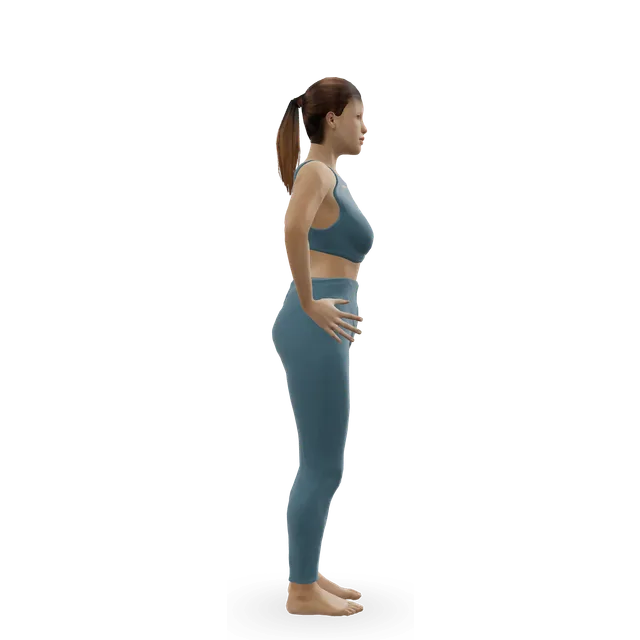
The pelvis can rock forwards and backwards on the hip joints. In a posterior tilt the top of the pelvis tips back, so the bony point at the front of the hip (the anterior superior iliac spine) rises relative to the one at the back (the posterior superior iliac spine), and the lower back flattens.
It happens whenever you sit, bend forward, curl up or reach the bottom of a deep squat. It's also the 'tuck' in pelvic tilt exercises and the 'imprint' in Pilates.
A pelvis held tucked is described as part of the flat-back and sway-back posture types. In relaxed standing, though, how far the pelvis tilts and how curved the lower back is are only loosely related, so a tucked pelvis doesn't always mean a flat back.
Mostly unknown. Bone shape plays a part, and the charts of 'tight' and 'weak' muscles drawn for each posture type come from clinical experience rather than measurement. When the spine itself tips forward, as in flatback syndrome after spinal surgery, the pelvis tips back and the hips extend to help keep the body balanced.
It isn't a lateral pelvic tilt, where one hip sits higher than the other, and it isn't the same as sway-back posture, where the hips sit forward of the ankles and the upper body leans back.
How it's measured, and what's normal
How it's measured
Clinics measure the angle between the horizontal and a line joining the bony points at the front and back of the pelvis, with a caliper or an inclinometer. A clinical review found that every practical method has 'considerable limitations'.
You can feel those bony points yourself, standing side-on to a mirror: in most people the front one sits a little lower. Treat it as a rough guide, because bone shape alone changes the reading (our editorial advice).
Standing: a backward tilt is less commonEmerging evidence
In 120 healthy young adults measured with a palpation meter (a caliper placed on those bony points), 6% of the men and 7% of the women stood with the pelvis tilted backwards. Most tilted forwards (85% of the men and 75% of the women), and the rest were level. This is a single sample of young adults, so treat the numbers as a rough guide.
In 30 pelvises held in exactly the same position, the angle between the bony points at the front and back ranged from 0 to 23 degrees. Two people standing the same way can get very different readings, so a 'posterior tilt' reading can reflect bone shape rather than posture.
The 'pelvic tilt' on an X-ray report is a different angle, used in spinal surgery, and it rises as the pelvis rolls back: it averaged 13 degrees in 300 adults standing, and rose by about 18 degrees when 50 adults sat down. Its numbers can't be compared with clinic readings.
In 50 healthy adults, sitting flattened the lower-back curve by 16.6 degrees, about half, and the pelvis rolled back about 18 degrees on X-ray. In a car seat, 8 men's curves went from 63 to 20 degrees, and in 109 people with back pain the curve averaged 49 degrees standing and 34 sitting.
The pelvis and spine change as children grow. In 656 children and teenagers without symptoms, X-ray pelvic tilt averaged about 4 degrees in younger children and 8 in teenagers, and growth spurts change the spine's curves differently in girls and boys. About 3 in 10 boys aged around 12 stood in a sway-back posture, a type in which the pelvis is level or tipped back. None of this needs correcting in a child without pain.
In a meta-analysis, standing pelvic tilt (3 studies) and the lower-back curve (8 studies) didn't differ between people with and without low back pain, though people with back pain moved less and more slowly. An umbrella review of 41 reviews found no agreement that spinal posture causes low back pain, and a review of 54 studies found no strong evidence linking the spine's front-to-back curves with spinal pain.
In 600 adults, the size of the lower-back curve, pelvic tilt and the length of the hamstrings, hip flexors and abdominal muscles weren't linked to back pain. The endurance of the back muscles was the factor most linked to it. This study looked at one point in time, so it can't show cause.
Tilting your pelvis on purpose changes the lower-back curve by about the same amount while you hold it. In relaxed standing, though, the two were only loosely related in 31 healthy adults and in 60 adults with back pain, and not related at all in 90 healthy adults.
A systematic review of 24 studies found strong, consistent evidence of no link between sitting at work and low back pain, and concluded that sitting is unlikely to cause it on its own.
In 70 people, slumped sitting flattened the lower back and lowered lung-function readings compared with upright sitting. Among 33 people with chronic back pain, those whose pain came with bending forward sat more slumped and those whose pain came with arching sat more arched, though as a whole group they sat like 34 people without pain.
A review found low-quality evidence that bending the lower back while lifting isn't a risk factor for back pain: 9 of 11 studies found no difference between people with and without pain. Our squat guide covers the tuck at the bottom of a deep squat (butt wink).
Stretching, strengthening and postureStrong evidence
A 2024 review of 23 studies (969 people) found that stretching, whether once or over weeks, didn't change spinal or pelvic posture, with moderate certainty. Strengthening improved posture overall, but the change at the lower back and pelvis wasn't significant. An international panel of stretching researchers agreed that stretching doesn't improve posture.
In 25 people, a bridge done with the pelvis tucked under produced more activity in the main glute muscle (gluteus maximus) than the other versions tested. It's a short lab study, but it means the tuck is a useful cue in bridges, not something to avoid.
Short hamstrings, same standing postureEmerging evidence
Thirty men were grouped by hamstring length. Standing, their pelvis and spine angles were the same. The differences showed only when they bent to touch their toes, where short hamstrings limited how far the pelvis tipped forward.
Stretching changes forward bends, not standingEmerging evidence
In 55 adults, one hamstring stretching session changed the pelvis in a sit-and-reach test but not in standing. In 96 cyclists, hamstring flexibility affected the pelvis in a maximal forward bend, but not in standing or on the bike. In a trial of 57 dancers, 7 weeks of hamstring stretching tipped the pelvis further forward in forward-bend tests, with no change reported in standing.
In a trial of 45 people with low back pain and tight hamstrings, 12 sessions of hamstring stretching or strengthening didn't change pelvic tilt compared with usual physiotherapy, even though the authors report that both lengthened the hamstrings.
In 103 teenage girls, no measure of muscle length was related to pelvic tilt, and hamstring length was only weakly linked with the lower-back curve. In 25 adults, how far the hip extended wasn't related to pelvic tilt either.
If you want to touch your toes or bend further, stretch: hamstring length shows up in forward bends. It just won't change how you stand. Our guide to touching your toes covers it.
Two or three sessions a week of the 20-minute routine below: pelvic tilts both ways, hip hinges, back extensions, bridges, bird dogs and dead bugs. That's our editorial starting point. In the 2024 review, strengthening improved posture where stretching didn't, though not significantly at the lower back and pelvis, and the NHS asks adults to do muscle-strengthening activity on at least 2 days a week anyway.
Use the standing pelvic tilt at the move page's dose: 5 to 10 slow tilts, up to 3 times a day, which also works as a break from sitting. Cat-cow at the move page's dose (8 waves, slower than feels natural) moves the whole spine both ways. This is a skill to practise, not a way to reset your posture.
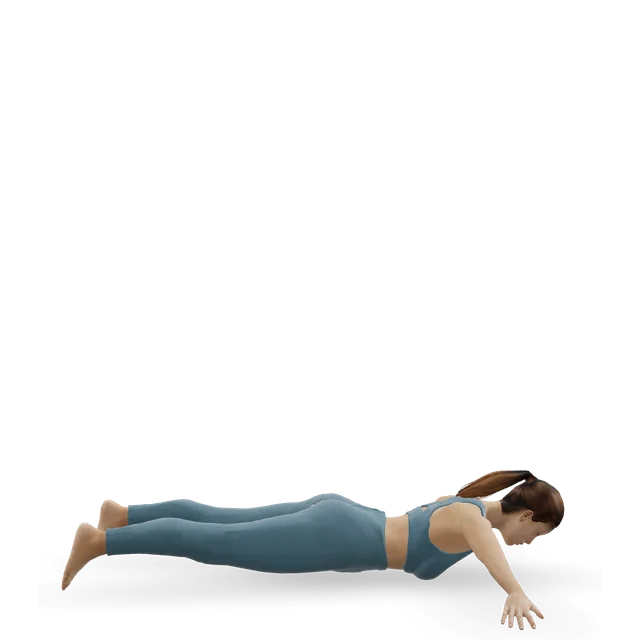
Our editorial starting points: sphinx, 30 to 60 seconds, 3 times; low cobra, 8 slow lifts with 3 breaths at the top; locust, 3 to 5 holds of 10 to 20 seconds. The prone back raise has a move page dose: 2 to 3 sets of 10 to 15 slow reps, stopping with 2 or 3 reps in reserve.
Learn the hip hinge with 2 sets of 8 to 10 slow reps, then add a dumbbell Romanian deadlift, 2 to 3 sets of 8 to 10 (editorial). Bending your back when you lift isn't a proven risk, so the hinge is a strength and skill choice, not a safety rule.
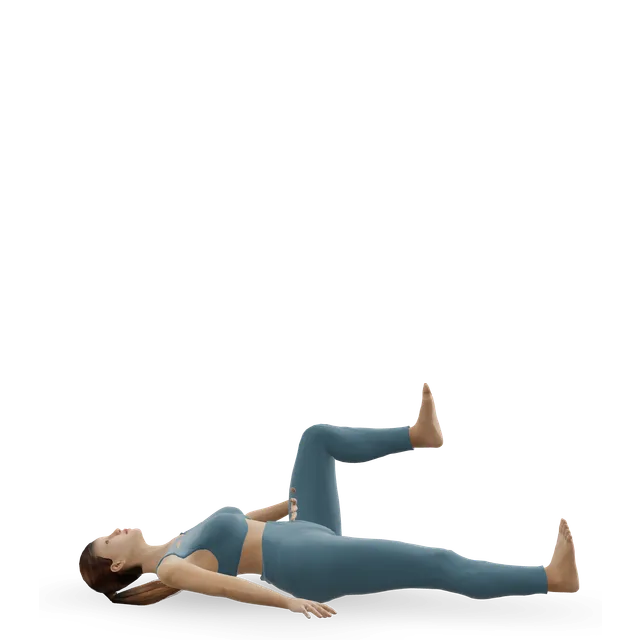
Bridges, 2 to 3 sets of 10 to 12 with a 2-second squeeze; dead bugs and bird dogs, 2 to 3 sets of 6 to 8 each side (our editorial starting points). A slight tuck at the top of the bridge helps the glutes work.
There's no single right way to sit, and sitting at work isn't a proven cause of back pain. If slumping is uncomfortable, sit back against a backrest and change position often (our editorial advice), and break up long spells of sitting, as the NHS advises for everyone. The sitting guide covers desks and chairs.
Give a programme 8 to 12 weeks and judge it by a smoother hinge, longer holds and easier sitting, not by a tilt angle, which exercise barely moves (our editorial advice).
How to do a standing pelvic tilt
The move page's dose: 5 to 10 slow tilts, up to 3 times a day. Skip the forward tilt, or keep it very small, if arching your lower back sends pain down a leg.
Stand with your feet hip-width apart, your knees slightly bent and soft, and your hands on your hips.
Tip the top of your pelvis forward so your lower back arches a little.
Tip it back the other way: your tailbone moves forward and under, and your lower back flattens.
Rock slowly forward and back a few times, breathing normally and keeping your chest and shoulders still.
Finish by holding the tuck for a breath or two, then let your pelvis settle in the middle.
Standing tilts and cat-cow at their move pages' doses; pelvic tilts into a bridge, 8 to 10 slow reps; hip hinges, 2 sets of 8 to 10 (editorial). This is practice in control, not a way to reset your posture.
Two or three times a week, at the doses above. Skip any arching move that sends pain down a leg, and stop each hinge before your back rounds (editorial).
For bending and touching your toes, not for posture: the 90/90 stretch at its move page's dose, 3 sets of 12 slow straightenings each leg, once a day. Ease off if you feel tingling or burning down the leg.
Do the posterior pelvic tilt routine 2 or 3 times a week for 8 to 12 weeks (editorial). The deadlift workout teaches the hinge with weights, and the desk break is for long days sitting.
Needing to bend your knees to stand upright, leaning further forward as the day goes on, or a stoop that is new or getting worse can be flatback syndrome, above all after spinal surgery. See a GP, who can refer you to a spinal specialist.
Back pain and stiffness that get better with exercise but not with rest, are worse in the morning and at night, or come with pain around your buttocks, especially if they started in your teens or as a young adult, can be ankylosing spondylitis. See a GP, who can refer you to a rheumatologist.
Stop any tilt, arch or hinge that sends pain, tingling or numbness down a leg, and get it checked if it doesn't settle.
Myths
"A tucked pelvis is caused by tight hamstrings."Strong evidence
Standing posture was the same with short or long hamstrings, stretching changed the pelvis only in forward bends, and hamstring work didn't change tilt in people with back pain.
"Posterior pelvic tilt causes back pain and sciatica."Emerging evidence
People with and without back pain stand with the same tilt, tilt wasn't linked with back pain in 600 adults, and reviews find no agreement that posture causes back pain. Pain down a leg needs checking whatever your posture.
The tuck is a movement to practise, not a resting position. In Pilates, 'imprint' is a teaching position for moves with both legs lifted, and most other moves start from neutral, with the lower back's natural curve.
"Stretching will straighten it out."Strong evidence
Across 23 studies, stretching didn't change spinal or pelvic posture, and stretching researchers agree it doesn't improve posture.
Sitting flattens everyone's lower back for as long as they sit, and the evidence is strongly against sitting at work causing back pain on its own. Moving between positions is sensible advice for comfort.
It's when the top of your pelvis tips backwards and your tailbone tucks under, which flattens the curve in your lower back while you hold it. Everyone does it when they sit, bend forward or reach the bottom of a deep squat. A few people also stand this way: 6% of men and 7% of women in one study of young adults.
How do I know if I have a posterior pelvic tilt?
Stand side-on to a mirror with your fingertips on the bony points at the front and back of your hip. In most people the front point sits a little lower, and in a tucked pelvis it's level or higher. Bone shape alone makes the angle between these points differ by up to 23 degrees from person to person, so treat a home check as a rough guide.
Is posterior pelvic tilt bad?
Not in itself. People with and without back pain stand with the same pelvic tilt, and reviews haven't found that posture causes back pain. How well you move and how strong you feel matter more than which way your pelvis sits.
Does posterior pelvic tilt cause back pain or sciatica?
Studies haven't shown it. In 600 adults, pelvic tilt and the size of the lower-back curve weren't linked with back pain, but back-muscle endurance was. Pain down a leg with numbness or weakness needs a GP, whatever your posture.
Is a tucked pelvis caused by tight hamstrings?
Not when you're standing. Men with short hamstrings stood the same as men with long ones, and stretching changed the pelvis only in forward bends. In people with back pain, stretching or strengthening the hamstrings didn't change pelvic tilt.
Can you fix posterior pelvic tilt?
You can change how your pelvis moves, but probably not your resting angle by much. In a review of 23 studies, stretching didn't change resting posture, and strengthening didn't significantly change the lower back and pelvis. Exercise builds control, hip-hinge skill and back and glute strength, which is what most people want.
What exercises help posterior pelvic tilt?
Standing pelvic tilts and cat-cow to move both ways, the hip hinge, back extensions such as sphinx and the prone back raise, glute bridges, bird dogs and dead bugs. Two or three sessions a week is a sensible start. The 20-minute routine on this page puts them together.
Is it normal for my pelvis to tuck under when I sit?
Yes. Sitting rolls the pelvis back about 18 degrees and flattens the lower-back curve by about a third to a half. Sitting at work hasn't been shown to cause back pain on its own, so change position often and sit back against a backrest if slumping is uncomfortable.
What's the difference between anterior and posterior pelvic tilt?
In an anterior tilt the top of the pelvis tips forward and deepens the lower-back curve; in a posterior tilt it tips back and flattens it. Most people stand with some forward tilt: 85% of men and 75% of women in one study. Neither has been shown to cause back pain.
Is butt wink a posterior pelvic tilt?
Yes: at the bottom of a deep squat the pelvis tucks under and the lower back rounds. A review found low-quality evidence that bending the lower back while lifting isn't a risk factor for back pain. Our squat guide covers how deep to go.
Is posterior pelvic tilt the same as lumbar flexion?
They go together. Tucking the pelvis flattens, or flexes, the lower back while you hold it, and tipping it forward arches the back. In relaxed standing, though, pelvic tilt and the size of the curve are only loosely linked.
Exercise education, not a diagnosis or treatment plan, and clinical review of these guides is pending. Get a curve or hunch that is new or getting worse checked, above all in a growing child or after a fall, and get urgent help for numbness or weakness in the legs or a change in bladder or bowel control. Health disclaimer.