Strength at home
Posterior pelvic tilt and flat back routine: back, hips and core
A pelvis that tucks under and a flatter lower back are common ways to stand, and neither is a proven cause of back pain. This routine trains what exercise reliably changes: control of your pelvis in both directions, the hip hinge, and back, glute and trunk strength. Stretching won't change how you stand, so the hamstring stretch at the end is optional, for comfort.
Warm up and find both tilts
- Cat-cow8 waves, slower than feels naturalBeginner · Back, Abs · 3D demoHarder: Half lord of the fishes (Ardha Matsyendrasana)
- Standing pelvic tilt8 slow tiltsBeginner · Abs, Back, Glutes · 3D demoTip forward to arch gently, then tuck under; finish in the middleHarder: Half lord of the fishes (Ardha Matsyendrasana)

Hinge
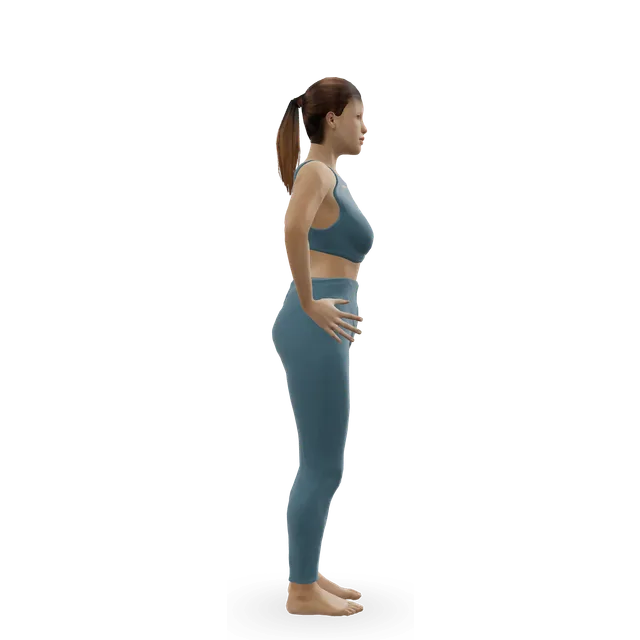
- Hip-hinge practice2 sets of 8 slow repsBeginner · Glutes, Hamstrings, Back · 3D demoHands in your hip creases; send the hips back and keep your back's natural curveHarder: Dumbbell Romanian deadlift

Back extension
- Sphinx pose (Salamba Bhujangasana)2 holds of 30 to 45 sBeginner · Back, Abs, Chest · 3D demoSkip it if arching sends pain down a legHarder: Cobra pose (Bhujangasana)
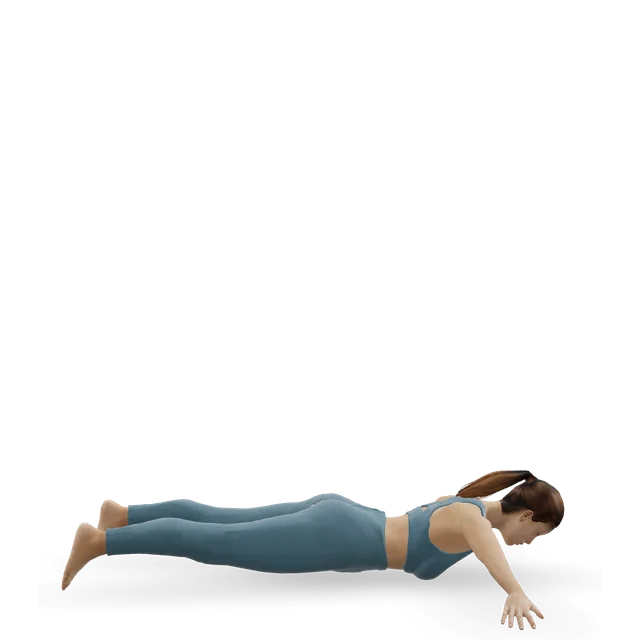
- Prone back raise, arms out to the sides2 sets of 10, stopping with 2 or 3 reps in reserveBeginner · Back, Glutes · 3D demoLift only an inch or two if arching hurtsHarder: Bow pose (Dhanurasana)

Strength circuit
2 rounds · Rest 45 to 60 s between rounds
- Glute bridge12 reps, 2 s squeeze at the topBeginner · Glutes, Hamstrings, Abs · 3D demoA slight tuck at the top helps the glutes workEasier: Pelvic tilt into bridgeHarder: Single-leg glute bridge
- Bird dog6 each side, 3 s holdBeginner · Back, Abs, Glutes · 3D demoEasier: Bird dog, one limb at a timeHarder: Bear crawl
- Locust pose (Salabhasana)3 holds of 10 to 15 sBeginner · Back, Glutes, Hamstrings · 3D demoEasier: lift the chest onlyEasier: Seated upper-back lift (sit tall, shoulders back)Harder: One-legged bow (half locust)
- Dead bug6 each sideBeginner · Abs, Hip flexors · 3D demoEasier: dead bug heel tapsEasier: Dead bug heel tapsHarder: Forearm plank




Finish
- Supine hamstring stretch with a strap2 holds of 30 s each legBeginner · Hamstrings, Calves · 3D demoOptional, for comfort: it won't change how you standEasier: Leg-up hamstring stretchHarder: Contract-relax hamstring stretch (PNF)
- Standing pelvic tilt5 slow tiltsBeginner · Abs, Back, Glutes · 3D demoFinish in a comfortable middle positionHarder: Half lord of the fishes (Ardha Matsyendrasana)

Tips
- Do it 2 or 3 times a week. Judge progress by what you can do, such as a smoother hinge or longer holds, not by a tilt angle.
- If tucking or arching sends pain, tingling or numbness down a leg, stop that move and get it checked.
- After spinal surgery, or with a stoop you can't straighten, check with your surgical team before starting.
- To progress, add dumbbell Romanian deadlifts, or a 45-degree back extension in a gym.
The doses are suggested starting points, not a prescription. Choose a range you can control and stop for sharp or increasing pain, numbness or tingling. Get individual advice after an injury or surgery, or if you are pregnant or managing a health condition.
Guides that recommend it
Find more moves like these
More strength at home



Beginner bodyweight workout
A 20-minute full-body workout with no equipment: squats, knee push-ups, bridges, lunges and planks.
20 minBeginner10 movesNo equipment


Full-body bodyweight workout
An intermediate no-equipment workout: push-ups, split squats, single-leg bridges, pike push-ups and core work.
30 minIntermediate11 movesNo equipment

Full-body dumbbell workout
A 35-minute full-body strength workout with dumbbells: goblet squats, presses, rows, Romanian deadlifts and carries.
35 minIntermediate9 movesA band, A dumbbellQuestions people ask
How long does the posterior pelvic tilt and flat back routine: back, hips and core take?
About 20 minutes, including any warm-up and cool-down listed. Shorten it by doing fewer rounds; lengthen it by adding one.
What equipment do I need?
No equipment: your body and some floor space. A mat makes floor work more comfortable.
Is it suitable for beginners?
It is written for beginners. 5 of its 10 moves have an easier option listed beside them if you need one.
How do I make it easier or harder?
Use the easier or harder option listed under each move, change the number of rounds, or adjust the rest. Progress one change at a time.