There's no minimum length
The UK guidelines count bouts of any length, including ones under 10 minutes, and the World Health Organization (WHO) dropped its old 10-minute rule in 2020. The 150 minutes a week can even come in 1 or 2 sessions.
Training guide
There's no magic number. A workout lasts as long as its warm-up, sets and rests take, and the UK guidelines count activity in bouts of any length: what matters is your total over the week, about 150 minutes of moderate activity plus strength work on 2 days.
In trials, short strength sessions built as much strength as long ones, more sets each week built more muscle, and nothing showed that training for an hour or more eats into your gains. For weight, the minutes you do each week and what you eat matter far more than the length of any one session.
This guide covers what the guidelines say, how long to train for strength, muscle, fitness and weight loss, what makes a session long or short, what you can do in 10, 20, 30, 45 or 60 minutes, and how to start if you're new.
The UK guidelines count bouts of any length, including ones under 10 minutes, and the World Health Organization (WHO) dropped its old 10-minute rule in 2020. The 150 minutes a week can even come in 1 or 2 sessions.
Build up to 150 minutes of moderate activity a week, or 75 of vigorous activity, plus strength work on 2 days. How you split it is up to you.
In trained men, three 13-minute sessions a week raised strength as much as 40 or 68-minute ones over 8 weeks, and single hard sets 2 or 3 times a week raised one-rep strength too.
In the same trial, the 68-minute group grew the most muscle. If your sessions have to be short, add a session rather than cramming more sets into one.
Each extra 30 minutes a week of aerobic exercise took off about 0.5 kg across 116 trials, and an hour a day took off no more fat than half an hour in one 13-week trial. What you eat does most of the work.
Cortisol, a stress hormone, rises with hard exercise, but a bigger rise didn't go with smaller gains, and the longest sessions grew the most muscle. Long sessions cost time and energy, not muscle.
A set of 8 to 12 reps takes under a minute; the rests between sets take most of the time. With the rests in our plans (2 to 3 minutes for heavy compound lifts, about 90 seconds to 2 minutes for other compound lifts, and 60 to 90 seconds for moves that work one joint), each set costs about 2 to 3 minutes, so 15 working sets take about 30 to 40 minutes. Add a warm-up and you have our plans' sessions of 35 to 55 minutes (our arithmetic).
A superset means going straight from one move to another that uses different muscles, then resting. Supersets, drop sets and rest-pause sets roughly halved training time while keeping the same number of sets, in a review of time-efficient training; our plans' shared notes put the saving at about a third to a half.
Source 7
A warm-up of 5 to 10 minutes, as our warm-up guide suggests, and an optional few minutes to cool down are part of a session's length.
Health, weight and muscle all respond to what you do over a week: minutes of activity for health and weight, hard sets for muscle. How you split them comes down to what you can keep doing.
Adults should aim for at least 150 minutes of moderate activity a week, such as brisk walking, or 75 minutes of vigorous activity, or a mix, plus strength work for all the major muscle groups on at least 2 days. Any activity is better than none.
The UK guidelines say small bouts, including ones under 10 minutes, bring benefits, and that the old minimum of 10 minutes is no longer needed. WHO removed its 10-minute rule in 2020 because activity of any bout length is linked with better health. The UK's 2026 update adds that 1 or 2 sessions a week still bring health benefits.
A US review found 29 relevant studies. In one cohort of 4,840 people, the links with lower death rates were similar for total activity and for activity in bouts of 5 or 10 minutes or more; the trials had only tested bouts of 10 minutes or more.
Source 3
For people starting from low levels of activity, the UK guidelines say aiming for at least 10 minutes at a time can be a useful first goal, and a step towards the full amount.
Source 1
The UK's 2026 evidence update supports strength sessions 1 to 2 times a week, with measurable health benefits from just over 30 up to 120 minutes a week, and says there isn't enough evidence to set a session length. In observational studies summarised by the American Heart Association (AHA), the biggest benefit came with 30 to 60 minutes a week.
In 34 trained young men training 3 times a week for 8 weeks, sessions of about 13 minutes (1 set per exercise), 40 minutes (3 sets) and 68 minutes (5 sets) raised squat and bench press strength, and muscular endurance, by similar amounts. Muscle grew more with more sets: the front of the thigh grew about 3.4% with the lowest volume and 12.5% with the highest. It's one trial, in young men.
Source 5
Across 5 studies of trained men, a single hard set of 6 to 12 reps, 2 to 3 times a week for 8 to 12 weeks, raised the one-rep max (the heaviest weight you can lift once) by about 12 kg overall: 17.5 kg on the squat and 8.3 kg on the bench press.
Source 6
Reviews of minimal-dose and time-efficient training found that small amounts, either heavier and less often or lighter and more often, improved strength and function in younger and older adults. One suggests at least 4 hard sets per muscle a week, with weights you could lift 6 to 15 times, built on a squat or leg press, an upper-body push and an upper-body pull.
In 416,175 adults followed for about 8 years, around 15 minutes of exercise a day went with 14% lower death rates and about 3 more years of life than doing none. In 25,241 adults who didn't exercise, about three 1 to 2-minute bursts of vigorous everyday activity a day went with 38 to 40% lower death rates. People who fitted their activity into 1 or 2 days a week had similar drops in death rates to those who spread it out (18 publications). All of these are observational, so they show links, not proof.
Exercise snacks are short bursts, often a minute or less of vigorous effort, spread through the day. In 24 inactive young adults, three brisk climbs of 60 stairs a day, 3 days a week for 6 weeks, raised fitness a little.
Two 2026 reviews (22 studies with 994 people, and 21 trials with 921) found that snacks raised fitness. But in the first, the main result was no longer significant once missing small studies were allowed for, and in the second, fitness rose in studies of younger adults but not in studies of people over 50. Neither found less body fat (the second's pooled estimate even rose slightly, with low certainty), and the first found no change in muscle or strength.
Each extra 30 minutes a week of aerobic exercise took off about 0.52 kg, 0.56 cm of waist and 0.37 percentage points of body fat in 116 trials of 6,880 adults with overweight or obesity, and more than 150 minutes a week was needed for changes that matter for health. The American College of Sports Medicine (ACSM) puts clinically important weight loss at more than 250 minutes a week, and the UK guidelines say more than 150 minutes, with eating less, may be needed.
In 61 overweight young men, about 30 and about 60 minutes of aerobic exercise a day for 13 weeks took off similar amounts of fat (4.0 and 3.8 kg): the bigger dose was partly offset by compensation. It's one trial, in young men.
Source 9
After 30 minutes of exercise in 12 trained men, cortisol changed by about 6%, 40% and 83% at 40%, 60% and 80% of their maximum oxygen use. In 56 young men training for 12 weeks, a bigger cortisol rise after exercise went with slightly larger gains in lean mass and muscle fibre size, not smaller ones.
In an old 20-week trial of men aged 20 to 35 who took up jogging, 45-minute sessions injured 54% of them, against 24% with 30 minutes and 22% with 15 minutes. Fitness rose with more running, but the authors advised beginners against 45-minute sessions.
Source 22
Two or three strength sessions of 20 to 30 minutes a week are enough for strength and health for most people (our reading of the trials and guidelines). Do your main lifts first, with 2 to 3 hard sets each.
Muscle grows with the number of hard sets each muscle gets in a week, with smaller returns as you add more, as our sets and reps guide explains. If you want more muscle and your sessions are short, add a session or use supersets rather than squeezing in more sets (our suggestion).
About 30 minutes on 5 days, or shorter bouts that add up to 150 minutes a week, meets the guideline. Even about 15 minutes a day went with lower death rates than none.
Count your weekly minutes and choose session lengths you can repeat (our reading). What you eat matters far more than how long any one session lasts. Our weight loss guide has the rest.
Our 20-minute strength workout uses two supersets, each done twice through. Done twice a week, it gives each movement about 4 hard sets a week, the least a review of time-efficient training suggests.
Source 7
One hard set per exercise, 2 or 3 times a week, raised trained men's strength in 8 to 12 weeks.
Source 6
Supersets, drop sets (going straight on with a lighter weight) and rest-pause sets roughly halve training time while keeping the volume, though long-term trials of them are few.
Source 7
A brisk climb of about 60 stairs, or 40 seconds each of sit-to-stands, calf raises and marching on the spot (our desk movement break), a few times a day, adds up. Snacks raised fitness in small trials, but don't count on them for fat loss or strength.
HIIT (high-intensity interval training: short hard efforts with easy recoveries) is a time-efficient way to raise fitness. Our HIIT guide covers how short a session can be.
Our 20-minute strength workout, step by step, with the plans' shared notes on effort and progression.
Loading the 3D figure…
The movement on the figure: Dumbbell goblet squat
The first five make the 20-minute session; the sit-to-stand, calf raise and march are 40-second snacks from our desk movement break, and stair climbing is the snack tested in a trial (3 brisk climbs of about 60 steps a day, 3 days a week).
 3D demoDumbbell goblet squatIntermediate · A dumbbell
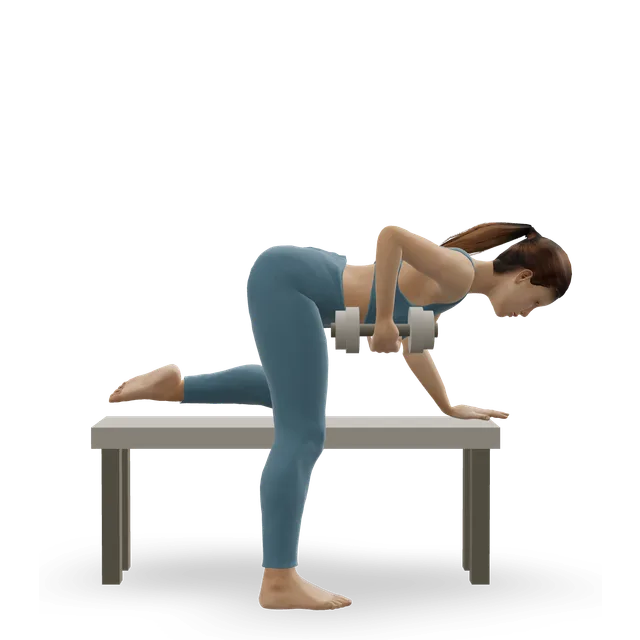 3D demoSupported single-arm dumbbell rowIntermediate · A dumbbell + A bench or box
 3D demoDumbbell Romanian deadliftIntermediate · A dumbbell
 3D demoPush-upIntermediate · No equipment
 3D demoFarmer's carryIntermediate · A dumbbell + A kettlebell
 3D demoSit to stand from a chairBeginner · A bench or box
 3D demoSlow calf raiseBeginner · A wall
 3D demoStanding marchBeginner · No equipment
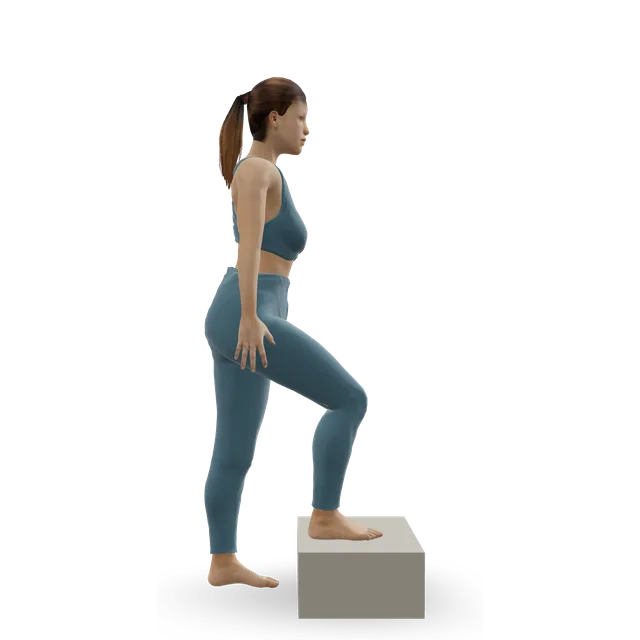 3D demoStair climbingIntermediate · A step
Cortisol rises with hard exercise, but in trials a bigger rise didn't go with smaller gains, and the group training about 68 minutes a session grew the most. No trial shows that sessions over an hour cost muscle.
Very long sessions take time, tire you so that later sets suffer, and can leave you dreading the next one (our reading). For new runners, longer sessions brought more injuries in an old trial.
Source 22
Training for an endurance event, a high-volume programme, or strength and cardio in one visit can take an hour or more. That's fine if you enjoy it and recover between sessions (our suggestion). Our guide to cardio before or after weights covers the order.
Our arithmetic, using the rests in our plans and the length of our workouts:
A session you can fit in 2 or 3 times every week beats a longer one you keep missing (our suggestion). If a week is busy, do a shorter version rather than nothing.
From a 3-minute movement break to full 45-minute gym sessions.
A 3-minute standing break to repeat every 30 to 60 minutes at your desk: sit-to-stands, calf raises, marching, an upper-back turn and chin tucks.
3 minBeginner5 movesA bench or box, A wallA 10-minute session for low-energy days: marching, sit-to-stands, wall push-ups, step-ups and bridges, then a short walk. Doing a little counts.
10 minBeginner7 movesA bench or box, A wallA 20-minute full-body dumbbell workout: two supersets of squats, rows, Romanian deadlifts and push-ups. Twice a week covers the minimum dose.
20 minBeginner8 movesA dumbbell, A bench or boxA 20-minute no-equipment HIIT workout: jumping jacks, jump squats, mountain climbers, burpees, skips and bear crawls.
20 minIntermediate10 movesNo equipmentAn intermediate no-equipment workout: push-ups, split squats, single-leg bridges, pike push-ups and core work.
30 minIntermediate11 movesNo equipmentA 35-minute full-body strength workout with dumbbells: goblet squats, presses, rows, Romanian deadlifts and carries.
35 minIntermediate9 movesA band, A dumbbellA gentle first gym workout: a bike warm-up, five machines for 2 easy sets each, a short core move and 10 minutes on the cross-trainer.
45 minBeginner11 movesCardio machine, Strength machineA beginner full-body gym workout: goblet squats, dumbbell bench press, lat pulldowns, Romanian deadlifts and dead bugs, with sets, reps and rest.
45 minBeginner12 movesCardio machine, A bandSessions last about 20 minutes in the beginner plan, 35 in the home plan, 45 in the 2-day and 3-day plans, 50 in the 4-day split and 55 in push, pull, legs.
Your first four weeks: two, then three short strength sessions a week at home plus walks, building gently to a full routine.
2 training days20 minBeginner3 days a weekThree full-body home workouts a week with dumbbells or no equipment at all, plus walks and an 8-week plan to keep progressing.
3 training days35 minBeginner2 days a weekTwo full-body strength sessions a week: the minimum that meets health guidelines, with every set, rep and rest, and an 8-week progression.
2 training days45 minBeginner3 days a weekA beginner gym plan: three full-body sessions a week, alternating workouts A and B, with sets, reps, rest and an 8-week progression.
3 training days45 minBeginner4 days a weekA 4-day upper/lower split: two upper body and two lower body gym days, each muscle trained twice a week, with sets, reps and progression.
4 training days50 minIntermediate6 days a weekA 6-day push/pull/legs plan for experienced lifters: two push, two pull and two leg days, with sets, reps, rest and lighter weeks.
6 training days55 minAdvancedStart shorter than you think: our beginner plan starts with 20-minute sessions, and our gym guide calls about 45 minutes plenty for a first gym session. Build up gradually; longer sessions brought more injuries in new joggers. Our guide to starting working out sets out the first weeks.
Source 22
The UK guidelines say bouts of any length are particularly relevant later in life. Strength and balance work can share a session, on at least 2 days a week.
Our heart disease guide asks for a warm-up of at least 15 minutes and a cool-down of at least 10, from the British Heart Foundation and UK cardiac rehabilitation standards, and says sessions can start as short as 5 or 10 minutes. So the session lasts longer than the exercise itself.
Our pregnancy guide notes, from US obstetric guidance, that hard or long sessions beyond about 45 minutes can lower your blood sugar, so eat enough beforehand or shorten the session. The NHS says not to exercise on an empty stomach.
Source 24
Some guidance, such as the American Diabetes Association's in our type 2 diabetes guide, still talks of bouts of at least 10 minutes. The UK guidelines count bouts of any length, so treat 10 minutes as a first goal, not a threshold.
Source 1
For chest pain that comes on suddenly and doesn't go away, or spreads to your arms, neck, jaw, stomach or back; severe difficulty breathing; someone who faints while exercising, can't be woken within a minute or hasn't fully recovered; or palpitations that come with chest pain, breathlessness or fainting. Don't drive yourself to A&E. During any session, stop for chest pain or pressure, unusual breathlessness, dizziness or fainting, or a racing or irregular heartbeat.
If you're more short of breath than usual, or had palpitations with chest pain, breathlessness or fainting that have now stopped. In the US, contact your doctor or urgent care.
Severe muscle pain and weakness after an unusually long or hard session, with dark (cola-coloured) or reduced urine, can be rhabdomyolysis. Get help the same day, as our rhabdomyolysis guide explains.
Falling performance for a week or two, with tiredness, poor sleep or low mood, is a sign to drop to fewer or lighter sessions for a week, as our how often guide explains. See a GP if it doesn't lift.
Slow down, drink water, and know the signs of heat exhaustion and heatstroke, which our running plans list.
The NHS suggests speaking to a GP before you start if you haven't exercised for some time, or have a medical condition or concerns. The AHA asks people with some medical conditions to get medical advice before starting strength training.
The UK guidelines say bouts of any length count, including ones under 10 minutes, and WHO dropped its 10-minute minimum; the US review behind that change found benefits from bouts of any length, in observational studies. In trained men, three 13-minute sessions a week raised strength as much as 40 or 68-minute ones.
There's no evidence for it. Cortisol rises with harder exercise, but in 56 young men a bigger rise after exercise went with slightly larger gains in lean mass, not smaller ones, and the group training about 68 minutes a session grew the most in a trial of trained men. Long sessions cost time and energy, but they don't eat muscle.
The guidelines are weekly: 150 minutes of moderate activity or 75 of vigorous activity, plus strength work on 2 days, and the 150 minutes can come in 1 or 2 sessions. In a cohort of 416,175 adults, about 15 minutes a day went with 14% lower death rates than none.
Strength gains were the same with 13, 40 or 68-minute sessions in one trial, though muscle kept growing with more sets, and an hour of cardio a day took off no more fat than half an hour in a 13-week trial. Past a point, extra minutes buy less.
Single hard sets 2 or 3 times a week raised squat and bench press strength in trained men, and the 13-minute sessions above were done by men who had lifted for years.
There's no single right length: a session lasts as long as its warm-up, sets and rests take. Most full strength sessions take 30 to 60 minutes, as in our plans, but a 20-minute strength session twice a week covers the strength guideline's 2 days, and the guidelines count activity in bouts of any length.
Muscle responds to the number of hard sets you do each week, so more or longer sessions build more, up to a point. In trained men, sessions of about 68 minutes grew the thighs more than 13-minute ones, though strength rose by the same amount. If your sessions are short, add a session rather than squeezing in more sets.
Minutes a week matter more than minutes a session: across 116 trials, each extra 30 minutes a week of aerobic exercise took off about 0.5 kg, and more than 150 minutes a week was needed for changes that matter for health. What you eat does most of the work, and in one trial, about 30 minutes of cardio a day took off as much fat as about 60.
Yes, if the sets are hard and you repeat it. Two supersets done twice through, twice a week, give each movement about 4 hard sets, the least a review of time-efficient training suggests, and 20 minutes of brisk walking or intervals counts towards your weekly 150.
For health and strength, yes: 30 minutes on 5 days meets the 150-minute guideline, and in trained men three 13-minute strength sessions a week raised strength as much as far longer ones. For the most muscle you'll need more weekly sets, which you can add with more sessions.
Not for your muscles: the group training about 68 minutes a session grew the most in one trial, and the rise in cortisol after hard exercise didn't go with smaller gains. Long sessions are about time, energy and recovery, and past a point each extra set adds less.
The guidelines are weekly: at least 150 minutes of moderate activity, which is about 20 to 30 minutes on most days, or 75 minutes of vigorous activity, plus strength work on 2 days. In a study of 416,175 adults, about 15 minutes a day went with lower death rates than none, so less still counts.
Yes. The UK guidelines say bouts of under 10 minutes still bring benefits, and in a small trial, three brisk climbs of about 60 stairs a day, 3 days a week, raised fitness in 6 weeks. Reviews of these exercise snacks found fitness gains, though the studies are small and may overstate them.
Shorter than you might think: our beginner plan starts with 20-minute sessions, and our gym guide says about 45 minutes is plenty. Build up gradually; in an old trial of new joggers, 45-minute sessions injured about twice as many men as 30-minute ones.
Mostly rest: a set takes under a minute, but you rest 1 to 2 minutes between most sets and 2 to 3 minutes for heavy lifts, so 15 sets fill about 30 to 40 minutes before the warm-up. Supersets cut session time by about a third to a half while keeping the same number of sets, though long-term trials are few.
For health, the weekly total matters more than how you split it: bouts of any length count, and people who fitted their activity into 1 or 2 days had similar health benefits to those who spread it out, in observational studies. For strength, practising a lift more often helps a little, as our how often guide explains.
From about 10 minutes, including the warm-up and a minute or so of all-out efforts, up to about 40 minutes for the Norwegian 4x4 with its warm-up. Our HIIT guide covers the detail.
Exercise education, not a personal prescription, and clinical review of these guides is pending. Check with a GP before starting hard training if you have a heart condition, chest pain, dizziness or breathlessness when active, and stop for sharp or increasing pain. Health disclaimer.