For health, the order hardly matters
The NHS says you can do muscle-strengthening activities on the same or different days as your aerobic activity, whatever's best for you. Doing both matters more than the order.
Source 1
Training guide
For health, the order hardly matters: do both, on the same day or on different days. In pooled trials, cardio didn't cost people muscle or maximal strength. If one goal matters most, give it the fresh slot: lift first, or in a separate session, if strength matters most; run or ride first if endurance does.
Order makes no reliable difference to fat loss, and the lift-first advantage for leg strength is small. Spacing hard cardio away from heavy leg work may matter more for people chasing strength or power.
This guide covers the interference effect and how big it really is, the best order for each goal, how far apart to space sessions, high-intensity interval training (HIIT), leg day, and sample weeks from our plans.
The NHS says you can do muscle-strengthening activities on the same or different days as your aerobic activity, whatever's best for you. Doing both matters more than the order.
Source 1
Across 43 studies, adding aerobic training to strength training didn't reduce muscle growth or maximal strength. It did blunt explosive strength, such as jump height, a little.
Source 2
Lifting first built slightly more leg strength in pooled trials, about 7% or 4 kg more, with the same gains in fitness and fat loss. The trials were small, and one with 3 hours between sessions found no difference by order.
A hard lifting session can leave your legs heavy for hours to days. Runners: lift more than 3 hours after a hard run, and leave at least a day before the next hard run.
Explosive gains were blunted mainly when both were done in the same session, and trained lifters lost some leg strength only in same-session designs. In rugby players, a day between sessions gave the biggest gains.
Body fat didn't differ by order in pooled trials, and studies of the afterburn disagree on which order burns more. Your total activity and what you eat matter far more.
Doing aerobic (endurance) training and strength training in the same programme, whether in one session, on the same day or on different days.
In a 1980 study, people did strength training 5 days a week plus 40 minutes of endurance training 6 days a week. Their strength rose as fast as a strength-only group's for 7 weeks, then levelled off and fell in weeks 9 and 10, while their aerobic fitness rose as much as an endurance-only group's. That was a very large amount of training.
Source 14
In 16 men, leg-press reps fell 4 and 8 hours after hard or steady cycling, but not after 24 hours, and only in the muscles the cycling had used. The other way round, a hard lifting session can impair endurance sessions for several hours to days, through changes in how muscles are recruited, less efficient movement, soreness and lower fuel stores.
Endurance exercise was once thought to switch off the signals that build muscle. Studies in people haven't consistently shown this, and several processes are probably involved together, so the mechanism isn't fully understood.
A 2022 meta-analysis of 43 studies (1,090 people) found that adding aerobic training to strength training didn't reduce muscle growth or maximal strength, whether the cardio was running or cycling, and whatever people's age or training status. Study quality was middling on average.
Cardio may even help muscle in some cases: in 10 men, 45 minutes of one-leg cycling 6 hours before knee extensions grew the quadriceps more over 5 weeks (14% against 8%). In middle-aged and older adults, combined training built as much muscle as strength training alone and cut as much fat as aerobic training alone (53 studies).
Explosive strength, measured as jump height, how fast force builds and leg-press power, rose a little less with combined training (a small effect, 18 studies). Sprinting wasn't measured.
Source 2
In trained people, adding endurance training cut leg-press and squat gains a little, but only when both were in the same session (under 20 minutes apart), not in separate sessions more than 2 hours apart. Untrained and moderately trained people showed no clear effect (27 studies, 750 people).
In 59 studies of adults aged 18 to 50, men showed a small blunting of leg strength gains and women didn't, though there were fewer data in women. An older analysis found interference grew with how often and how long people did endurance training.
Three meta-analyses of same-session training agree that lifting first gives slightly more lower-body strength: about 7% more (10 studies, 245 people), about 4 kg more on the most you can lift once, and a small advantage in a third analysis of 19 trials, clearer in older adults, women and programmes longer than 8 weeks. None found that order changed muscle growth or aerobic fitness, and the one that measured body fat found no difference.
The trials were small, and in 29 men who did intervals 3 hours before or after lifting for 9 weeks, strength, lean mass and fitness improved the same either way. The 2026 overview of reviews by the American College of Sports Medicine (ACSM) found too little evidence on same-session training to judge.
In the 43-study analysis, explosive strength was blunted when both were done in the same session but not clearly when they were at least 3 hours apart. That came from comparing groups of studies, not from a trial that tested the gap, and one trial still found blunted jump power with 3 hours between when intervals came after lifting.
In 58 amateur rugby players who always lifted first, a full day between strength and aerobic sessions gave the biggest strength gains and no gap the smallest; the authors advise leaving at least 6 hours. Our plans keep hard cardio at least 3 hours from heavy leg work, or on another day.
Adding HIIT to strength training didn't reduce muscle growth or upper-body strength in pooled trials; leg strength gains were slightly smaller.
Source 22
A 2012 analysis of 21 studies found running, not cycling, reduced gains in muscle and strength; a 2018 analysis of HIIT leaned the other way, with a non-significant trend against cycling; the largest, in 2022, found no difference. Choose the cardio you enjoy.
In 26 men aged about 65 who trained 3 times a week for 12 weeks, strength before endurance raised leg strength 35% against 22%, with the same gains in muscle thickness and aerobic fitness. Pooled trials also found the lift-first edge clearer in older adults.
Starting points, not rules. Each names its source or says it's our suggestion.
Either order, on the same day or different days. If one part tends to get skipped, do it first (our suggestion).
Source 1
Lift first, or do the cardio in a separate session. Keep the cardio steady if it comes straight after heavy leg work.
Do the key run or ride first, or on another day. Lift more than 3 hours after a hard run, and leave at least a day before the next hard run or long run, as our running plans do.
Keep hard cardio and heavy leg sessions at least 3 hours apart, ideally on different days, and put hard intervals on upper-body or rest days (our plans' rule).
Either order: pick the one that means you do both, and look at your weekly activity and food. Our weight-loss guide has the detail.
Strength first is a sensible default.
In one small trial, weights before a run kept blood glucose steadier during exercise, and lows afterwards tended to be shorter. Agree a plan with your diabetes team; our weights then cardio workout builds in the glucose checks.
Source 26
Our rule, from the trials: if leg strength or power is your priority, at least 3 hours between hard cardio and heavy leg training, or separate days. For runners, more than 3 hours after a hard run before lifting, and a day before the next one. Everyone else can do both in one session.
A few minutes of easy cardio is a good warm-up: 20 easy minutes on a bike before a leg-press test raised the maximum by 8.4% in 13 trained people. It's long or hard cardio that tires your legs for hours.
An easy walk or ride after leg training is fine. Hard cycling or intervals before heavy leg work cut the reps people could manage for up to 8 hours, so put them on another day if leg strength matters to you.
Body fat didn't differ by exercise order in pooled same-session trials. The afterburn, the extra energy used after a session, was greatest with running first in one study of 10 men and didn't differ in another of 7. In type 2 diabetes, 27 trials (965 people) found both orders improved body fat, blood sugar and cholesterol, and neither was shown to be better.
Your total activity across the week and what you eat. Do the order you'll stick to.
Walking interferes least; keep hard cycling, rowing and air-bike intervals away from heavy leg days if leg strength matters to you (our suggestion).
 3D demoTreadmill walkingBeginner · Cardio machine
 3D demoStationary cyclingBeginner · Cardio machine
 3D demoRecumbent exercise bikeBeginner · Cardio machine
 3D demoIndoor rowing (rowing machine)Beginner · Cardio machine
 3D demoElliptical trainerBeginner · Cardio machine
 3D demoTreadmill joggingIntermediate · Cardio machine
 3D demoStair climbingIntermediate · A step
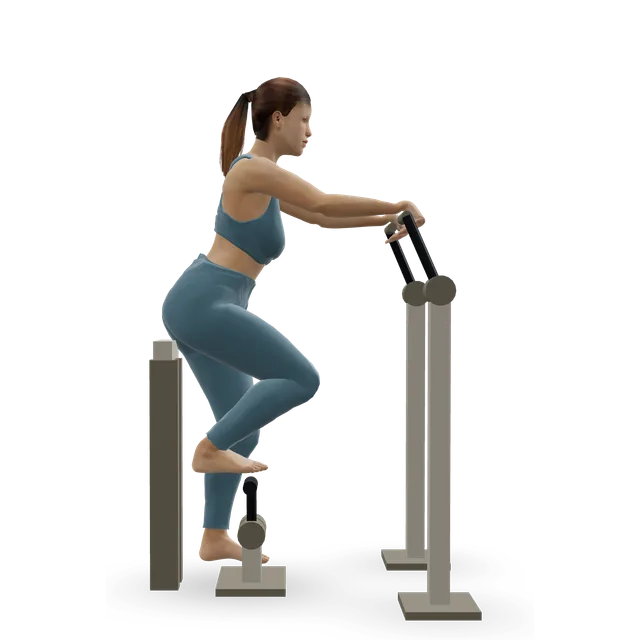 3D demoAir bike intervalsAdvanced · Cardio machine
Strength on Monday, Wednesday and Friday; easy cardio or a walk on Tuesday and Saturday (our 3-day plan).
Upper and lower days on Monday, Tuesday, Thursday and Friday; cardio on Wednesday or Saturday, with hard intervals kept away from the lower days (our 4-day split).
Lift after an easy run, or later on the day of a hard run, ideally 3 or more hours after, and never the day before intervals or a long run (our strength training plan for runners).
Lift at least 3 hours after Tuesday's hard run and keep a day between lifting and the next hard run; if you must combine them, lift first (our Hyrox plan).
Strength first, then 20 to 30 minutes of steady cardio, as in our weights then cardio workout.
Each plan places its cardio around the strength days using the rules above.
A beginner gym plan: three full-body sessions a week, alternating workouts A and B, with sets, reps, rest and an 8-week progression.
3 training days45 minBeginner4 days a weekA 4-day upper/lower split: two upper body and two lower body gym days, each muscle trained twice a week, with sets, reps and progression.
4 training days50 minIntermediate7 days a weekA full week that mixes intensities: three strength days, two cardio days, a mobility day and an easy day, never seven hard days.
3 training days45 minBeginner2 days a weekA 12-week strength plan for runners: two sessions a week of heavy lifts, single-leg work, calf raises and hops, fitted around your runs.
2 training days45 minBeginner5 days a weekA 12-week first Hyrox plan: three runs, two strength sessions and one stations-and-runs session a week, built up to race weights, with a taper and race tips.
5 training days50 minIntermediateThe weights then cardio workout does both in one session, strength first. It was built for people with type 1 diabetes, so its glucose checks apply only if you have diabetes.
Strength moves first, then 20 to 30 minutes of steady cardio, with glucose checks built in. In one small type 1 diabetes trial, weights first kept glucose steadier.
45 minBeginner11 movesA dumbbell, A bench or boxA steady 30 to 45 minute cardio session at talk-but-not-sing pace: walk, cycle, row or cross-train, counting toward weekly activity guidelines.
40 minBeginner3 movesCardio machine, A wallA 25-minute interval session on a bike or rower: one-minute hard efforts with two minutes easy, building from 4 to 8 rounds.
25 minIntermediate1 movesCardio machineA beginner full-body gym workout: goblet squats, dumbbell bench press, lat pulldowns, Romanian deadlifts and dead bugs, with sets, reps and rest.
45 minBeginner12 movesCardio machine, A bandA 45-minute gym strength workout for runners: hops, heavy squats, Bulgarian split squats, calf raises and side planks, with sets, reps and rest.
45 minIntermediate13 movesA wall, A bench or boxStopping dead after a hard effort can make you light-headed. Keep walking slowly, or lie down with your legs raised, and drink some water. See a GP after any faint.
Exercise order changes blood glucose during and after a session, so follow your diabetes team's plan and check your glucose. Our type 1 diabetes guide has more.
Source 26
Stop and call 999 (don't drive yourself to A&E) for:
Stop straight away if you feel pain or become unwell, and contact NHS 111 if a symptom worries you or doesn't go away. A joint pain that is sharp, gets worse during a set, lingers into the next day or changes how you move is a reason to use the move's easier option, and to see a GP or physiotherapist if it keeps happening (the rule in our plans). Muscle soreness for a day or two after something new is normal.
Source 36
Not muscle or maximal strength, across 43 studies. It can blunt explosive strength a little, mainly when both are in the same session.
Source 2
Order didn't change body fat in pooled trials. The afterburn was larger with running first in one study and no different in another, and it's a small amount of energy either way.
The brief rise in hormones after lifting didn't add muscle or strength in trials. Lift first because your legs are fresh, not for hormones.
Easy cardio is fine. It's hard cardio within a few hours of heavy leg work that can cost leg strength or power.
Popular articles say this of lifting after cardio, or of cardio on tired muscles, but cite no study, and we found none. Do keep your form, and stop a set when it slips.
The analyses disagree, and the largest found no difference. Choose the cardio you enjoy.
For general health it doesn't matter much. If strength or muscle matters most, lift first or do them in separate sessions: lifting first gave slightly more leg strength in pooled trials, with no difference in fitness or fat loss. If running or cycling performance matters most, do that first or on another day.
Either: in pooled trials, the order didn't change body fat, and studies of the afterburn disagree on which order burns more. Choose the order that means you actually do both; your weekly activity and what you eat matter far more.
No. Across 43 studies, adding cardio didn't reduce muscle growth or maximal strength. It slightly blunted explosive strength, such as jump height, mainly when both were done in the same session.
Yes. The NHS says strength activities can go on the same or different days as aerobic activity. If leg strength or power is your priority, keep hard cardio and heavy leg training a few hours apart, ideally on different days.
For most people, no wait is needed. For explosive power, such as jumping, our plans use at least 3 hours, though that figure comes from comparing groups of studies and one trial still found jump power blunted with 3 hours between. Runners should lift more than 3 hours after a hard run and at least a day before the next one.
Easy cardio, like a walk, is fine. Hard cycling or intervals before heavy leg training cut the reps people could manage for up to 8 hours, so put hard cardio on upper-body or rest days if leg strength matters to you.
Yes: a few minutes of easy cardio is a good warm-up, and in one study 20 easy minutes on a bike raised a leg-press maximum by 8.4%. It's long or hard cardio that tires your legs.
If the run is your priority, run first and lift later, ideally 3 or more hours after a hard run, and not the day before your next hard run or long run. If leg strength is your priority and both must go in one session, lift first.
Keep hard intervals away from heavy leg days if leg strength or power matters: adding high-intensity interval training to lifting slightly reduced leg strength gains in pooled trials, though not muscle growth. After an upper-body session, or on another day, works well.
The idea that endurance training holds back gains from strength training, first seen in 1980 with very large amounts of both. Today's evidence shows it mainly affects explosive strength and, in trained lifters, leg strength when both are done in one session.
In men around 65, doing strength before cardio gave larger leg strength gains (35% against 22% over 12 weeks), and pooled trials found the lift-first edge clearer in older adults. Fitness gains were the same either way.
It can. In one small trial, weights before a run kept blood glucose steadier during exercise, and lows afterwards tended to be shorter. Agree the plan with your diabetes team; our weights then cardio workout has the glucose checks built in.
Exercise education, not a personal prescription, and clinical review of these guides is pending. Check with a GP before starting hard training if you have a heart condition, chest pain, dizziness or breathlessness when active, and stop for sharp or increasing pain. Health disclaimer.