Training guide

How to start working out: your first week, your first month, and how to keep going

Starting is the hardest part, and it takes less than most people think. Any activity is better than none, the biggest health gains come from going from doing nothing to doing a little, and short bouts count. You don't need to be fit, young or a particular shape to begin, and most people don't need a check-up before they start walking more.

Whether you're starting to exercise for the first time or starting again after a long break, the idea is the same: begin below what you think you can do, and build up a little each week. Habits take weeks to months to form, not 21 days, so the aim of your first month is to keep turning up.

This guide covers how much activity the UK guidelines suggest and how to tell how hard you're working, who should check with a GP first, a gentle first week and first month at home or in a gym, how to make exercise a habit, what to expect over the first months, and the warning signs to stop.

The short version

Any activity is better than none

The biggest health gain comes from going from doing nothing to doing a little, even well below the guidelines, and bouts of any length count. People doing less than 30 minutes a week gain the most from each extra minute.

Sources 1, 2

What to build towards

About 150 minutes a week of moderate activity, such as brisk walking, or 75 minutes of vigorous activity, plus strength work for all your major muscles on at least 2 days. These are targets to work up to, not a starting line.

Sources 3, 1

Start small and build up

The UK, World Health Organization (WHO) and US guidelines all say to start with small amounts and build up gradually; the UK guidelines call it the safest way from doing nothing to meeting the guidelines. A first week can be two short strength sessions and a few brisk walks.

Sources 1, 2, 4

Most people don't need a check-up first

WHO says medical clearance is generally unnecessary before activity up to brisk walking. The NHS suggests speaking to a GP first if you haven't exercised for some time or have a medical condition or concerns, and the PAR-Q+ (Physical Activity Readiness Questionnaire for Everyone) shows who should check first.

Sources 2, 3, 5

Keep turning up

In one study, everyday habits took about 66 days on average to feel automatic, anywhere from 18 to 254 days, and missing a day didn't undo them. In gym members' attendance records, going to the gym took about 2 to 3 months to become a habit.

Sources 6, 7, 8, 9

Know the warning signs

Stop and get help for chest pain, feeling faint, unusual breathlessness, or a racing or irregular heartbeat. A dull ache in your muscles for a day or two after something new is normal and fades.

Sources 10, 11, 12

How much activity you need, and how hard

The UK guidelines for adults

Be active every day if you can. Over a week, aim for at least 150 minutes of moderate activity, or 75 minutes of vigorous activity, or a mix of the two, plus strength work for all your major muscles (legs, hips, back, tummy, chest, shoulders and arms) on at least 2 days. Break up long spells of sitting.

Sources 1, 3

From 65

Be active every day, even if it's light activity. Build up gradually from where you are to 150 minutes of moderate activity a week (or 75 minutes of vigorous activity if you're already active), and do activities that improve strength, balance and flexibility on at least 2 days a week.

Sources 13, 1

No minimum, and short bouts count

There's no lower limit for benefit. Bouts of any length count, and the 2026 update to the UK guidelines says the 150 minutes can come in 1 or 2 sessions if that suits your week. If you're starting from very little, aiming for at least 10 minutes at a time is a good first goal.

Sources 1, 2

Strength work counts as much

The 2026 update says strength work matters as much as the 150 minutes: 1 or 2 sessions a week bring measurable health benefits, and any strength work is better than none. Bodyweight moves, bands, free weights, machines, climbing stairs and carrying children all count.

Source 1

Moderate, vigorous and the talk test

Moderate activity raises your heart rate and makes you breathe faster and feel warmer: you can still talk, but not sing. Vigorous activity makes you breathe hard and fast: you can't say more than a few words without pausing for breath. 75 vigorous minutes give similar benefits to 150 moderate ones.

Sources 3, 1

Effort is relative

What feels light to a fit person can be moderate or vigorous for someone who is starting out or older, so judge your effort by your breathing and how you feel, not by anyone else's pace.

Source 1

Why it's worth it

The NHS says regular exercise can lower your risk of early death by up to 30%.

Source 14

Do you need to see a GP first?

Most people don't

WHO says medical clearance is generally unnecessary before light or moderate activity, up to the demands of brisk walking, if you have no reason to avoid it. US guidance agrees for healthy people who build up gradually. If new symptoms appear as you do more, see a doctor.

Sources 2, 4

When the NHS suggests a GP first

Speak to a GP first if you haven't exercised for some time, or if you have a medical condition or concerns. Get advice first, too, if you have a health problem, an injury or symptoms, have recently had a heart attack or an operation, or are pregnant or have recently given birth.

Sources 3, 15

The PAR-Q+ in plain words

The PAR-Q+ asks 7 questions. If you answer no to all of them, start slowly and build up. If you answer yes to any, its follow-up questions, a qualified exercise professional or your doctor can tell you how to start. It also says to wait until a cold or fever has passed, to talk to your doctor or midwife first if you're pregnant, and, if you're over 45 and not used to hard exercise, to check with a qualified exercise professional before very hard efforts. It asks whether:

  • A doctor has said you have a heart condition or high blood pressure.
  • You get chest pain at rest, during daily activities or when you're active.
  • You've lost your balance through dizziness, or lost consciousness, in the last 12 months.
  • You have another long-term medical condition.
  • You take prescribed medicines for a long-term condition.
  • You have a bone, joint or soft-tissue problem that more activity could make worse.
  • A doctor has said you should only be active under medical supervision.

Source 5

Heart problems during exercise are rare

The risk is highest when someone who is usually inactive suddenly does hard exercise, and lowest in people who are active regularly: another reason to build up gradually. Problems are often preceded by warning signs, which is why the signs at the end of this guide matter.

Sources 4, 16, 17

What the evidence says

Start low and build upStrong evidence

The UK, WHO and US guidelines all say to start with small amounts and to increase how often, how long and how hard you exercise over time. The UK guidelines call starting low and building up as your body adjusts the safest way from doing nothing to meeting the guidelines, and US guidance suggests making sessions longer and more frequent before making them harder.

Sources 1, 2, 4

Harder exercise brings more injury riskStrong evidence

The UK guidelines say serious harm from activity is very rare, but harder exercise carries more risk of injury, especially if you're not used to it. US guidance adds that less fit people are more likely to be injured doing the same activity, so they should build up more slowly.

Sources 1, 4

The talk test is the guidelines' measureStrong evidence

In the NHS's and the UK guidelines' own advice, talking but not singing marks moderate activity, and only managing a few words at a time marks vigorous activity. Because it goes by how you feel, it adjusts to your fitness, which suits beginners.

Sources 3, 1

It matches a breathing threshold measured in the labEmerging evidence

In 16 adults on a treadmill and a bike, the point where talking first got hard closely matched a breathing threshold measured with lab equipment, and a review found the test worked across walking, jogging, cycling, the cross-trainer and the stair-stepper. The studies are small.

Sources 18, 19, 20

Habits take weeks to monthsEmerging evidence

In 96 volunteers who repeated a daily action in the same setting for 12 weeks (82 were analysed), it took anywhere from 18 to 254 days for the action to become automatic, about 66 days on average, and missing one day didn't set it back. Simple actions became automatic sooner than long routines. It's one study, in which people chose their own action.

Sources 6, 7

Gym-going took about 2 to 3 monthsEmerging evidence

In attendance records from 30,110 members of a large gym chain, going to the gym took about 2 to 3 months to become a habit, as the authors' published correction gives it. That's an estimate across the members whose records fitted the researchers' model, not a deadline, and the cues that predicted going differed from person to person. For most of them, going on the same days each week predicted going.

Sources 8, 9

Planning, tracking and enjoyment helpEmerging evidence

Planning when, where and how to be active raised activity across 41 trials with 5,439 people, and it works best for people who already mean to exercise. Keeping a record of what you do was the most effective single technique across 122 evaluations, more so with a goal or feedback. And how good a moderate session felt predicted whether people stayed active, across 24 studies; how they felt afterwards didn't.

Sources 21, 22, 23, 24

Fitness and strength come quicklyEmerging evidence

In small trials, aerobic fitness rose within 3 weeks of cycling 3 times a week, in older and younger men alike, and strength rose within 2 to 6 weeks of lifting. In 78 adults over 6 weeks, most of those training once a week didn't improve their fitness, while everyone training 4 or 5 times a week did.

Sources 25, 26, 27

Exercise alone takes off only a little weightStrong evidence

In 116 trials of 6,880 adults with overweight or obesity, each extra 30 minutes a week of supervised aerobic exercise took off about 0.5 kg and 0.56 cm of waist, and more than 150 minutes a week was needed for changes that matter for health. The UK guidelines say diet is the important factor for weight.

Sources 28, 1

Your first week

Our editorial starting point, built from the first week of our beginner workout plan, the NHS's advice that a brisk 10-minute walk counts, and the guidelines' advice to start small and build up.

  1. Choose 2 days that aren't back to back for a short strength session: our beginner plan's workout A on one and workout B on the other, 2 rounds of each.
  2. Choose 2 or 3 other days for a brisk walk of 10 to 20 minutes, at a pace where you can talk but not sing.
  3. Before each strength session, march on the spot for a minute or two, then do a few slow practice reps of each move.
  4. Stop every set with 3 or 4 reps to spare. You should finish feeling you could have done more.
  5. Tick off each session on a calendar or a sheet of paper.
  6. Expect a dull ache in your muscles for a day or two at first; it fades. Sharp pain, or joint pain that gets worse as you go, isn't normal: ease off and use the easier version of the move.

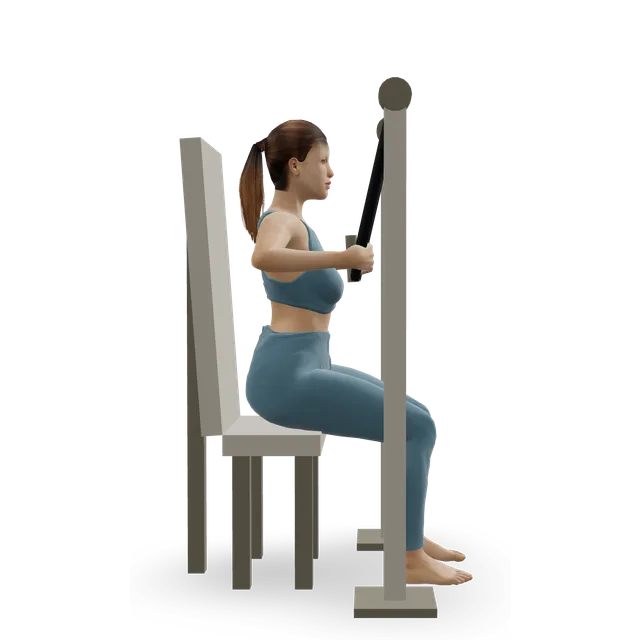
Loading the 3D figure…

Gets into position, then repeats the movement. Technical checks passed; qualified exercise review is pending.

The movement on the figure: Sit to stand from a chair

Your first month

Weeks 2 to 4

In our beginner workout plan, week 2 adds a third strength session, week 3 adds a third round, and in week 4 you switch any move that feels easy to its harder option. The walks build to about 30 minutes, at least twice a week.

A gentler route is fine

US guidance for people who have been inactive starts with 5-minute walks several times a day on most days, building to 10 minutes 3 times a day, and strength work on 1 day a week at a light or moderate effort, building to 2. Make sessions longer and more frequent before you make them harder.

Source 4

More sessions bring more progress

In one 6-week trial, most people training once a week didn't improve their fitness, while everyone training 4 or 5 times a week did. By the end of your first month, two or three strength sessions and some walking on most other days is a good aim (our suggestion); the NHS suggests spreading activity over 4 to 5 days a week, or every day.

Sources 27, 3

After the first month

Move on to our 3-day home workout plan or, with a gym, the 3-day full-body plan. Our walking plan builds your walks to about 150 minutes a week by weeks 7 and 8, and the NHS says a brisk 10-minute walk counts towards that total. Couch to 5K takes you from walking to running.

Source 29

Plans

Start with the beginner workout plan at home. The walking plan and Couch to 5K build the cardio side, and the 2- and 3-day plans come next.

2 days a week

Beginner workout plan: your first 4 weeks

Your first four weeks: two, then three short strength sessions a week at home plus walks, building gently to a full routine.

2 training days20 minBeginner
6 days a week

Walking plan for beginners: 8 weeks to 150 minutes a week

A free 8-week walking plan for beginners: build to 150 minutes of brisk walking a week, with intervals, hills and two short strength sessions.

6 training days40 minBeginner
3 days a week

Couch to 5K plan: walk to run in 9 weeks

A 9-week beginner plan with the same walk-to-run shape as Couch to 5K: three run-walk sessions a week, from 1-minute jogs to 30 minutes of running.

3 training days35 minBeginner
2 days a week

2-day full-body workout plan

Two full-body strength sessions a week: the minimum that meets health guidelines, with every set, rep and rest, and an 8-week progression.

2 training days45 minBeginner
3 days a week

3-day home workout plan

Three full-body home workouts a week with dumbbells or no equipment at all, plus walks and an 8-week plan to keep progressing.

3 training days35 minBeginner
3 days a week

3-day full-body workout plan

A beginner gym plan: three full-body sessions a week, alternating workouts A and B, with sets, reps, rest and an 8-week progression.

3 training days45 minBeginner
3 days a week

Workout plan for seniors (65 and over)

A 12-week exercise plan for over-65s: strength and balance three times a week, short balance sessions and daily walks, based on falls-prevention trials.

3 training days40 minBeginner
5 days a week

Workout plan for weight loss

A 12-week workout plan for weight loss: three strength days, two cardio days and daily steps, building to 200 minutes a week, with honest results.

3 training days45 minBeginner

At home or in a gym

Both work

The guidelines count bodyweight moves, bands, free weights and machines, and the type of equipment made no consistent difference to strength in the American College of Sports Medicine's (ACSM's) 2026 review of 137 reviews. Start wherever you're most likely to keep going.

Sources 1, 30

At home

Our beginner workout plan needs only a chair and a wall, and a resistance band adds pulling moves. The NHS's own gentle home routine uses similar moves: sit-to-stands, mini-squats, calf raises and wall press-ups, done at least twice a week and built up slowly.

Source 31

In a gym

Machines guide the weight and are quick to adjust, so they're easier to learn, and free weights can feel more intimidating at first. Our gym for beginners guide has a first session on the machines, and covers gym nerves and etiquette.

Source 32

First moves at home

For each strength session pick a squat, a push, a pull, a bridge or step-up and a core move, and do 2 rounds, stopping every set with 3 or 4 reps to spare: our beginner home workout gives the reps for each.

Workouts to follow

The beginner bodyweight and home workouts are the beginner plan's sessions A and B. The 10-minute starter is for low-energy days, and the gym sessions are for when you're ready.

Beginner bodyweight workout

A 20-minute full-body workout with no equipment: squats, knee push-ups, bridges, lunges and planks.

20 minBeginner10 movesNo equipment

Beginner home workout

A gentle 20-minute beginner home workout with a chair, a wall and a band: sit-to-stands, wall push-ups, band rows, step-ups and dead bugs.

20 minBeginner11 movesA bench or box, A wall

10-minute starter workout

A 10-minute session for low-energy days: marching, sit-to-stands, wall push-ups, step-ups and bridges, then a short walk. Doing a little counts.

10 minBeginner7 movesA bench or box, A wall

Low-impact cardio workout (no jumping)

A 25-minute standing cardio circuit with no jumping: marching, step jacks, sit-to-stands, punches, step-ups and wall push-ups, with a seated option for most moves.

25 minBeginner9 movesA bench or box, A step

Easy cardio workout

A steady 30 to 45 minute cardio session at talk-but-not-sing pace: walk, cycle, row or cross-train, counting toward weekly activity guidelines.

40 minBeginner3 movesCardio machine, A wall

10-minute walk and move after meals

A 10-minute routine for straight after a meal: an easy walk, a few simple standing moves from blood sugar trials, then a short walk to finish.

10 minBeginner6 movesCardio machine, A bench or box

10-minute dynamic warm-up

A 10-minute warm-up for any workout: raise your heart rate, move each joint through its range, rehearse the main movements, then ramp up to your first lift.

10 minBeginner12 movesA wall, A band

20-minute full-body strength workout

A 20-minute full-body dumbbell workout: two supersets of squats, rows, Romanian deadlifts and push-ups. Twice a week covers the minimum dose.

20 minBeginner8 movesA dumbbell, A bench or box

First gym workout: five machines and easy cardio

A gentle first gym workout: a bike warm-up, five machines for 2 easy sets each, a short core move and 10 minutes on the cross-trainer.

45 minBeginner11 movesCardio machine, Strength machine

Full-body gym workout A

A beginner full-body gym workout: goblet squats, dumbbell bench press, lat pulldowns, Romanian deadlifts and dead bugs, with sets, reps and rest.

45 minBeginner12 movesCardio machine, A band

Make it stick

Same days, same time, same place

Habits form by repeating an action in the same setting, so pick set days and a set time, and link exercise to something you already do, such as straight after work. In 111 new gym members, consistency, keeping it simple and enjoying it went with a stronger exercise habit, and a short workshop on these ideas raised activity at 8 weeks in another trial.

Sources 7, 33, 34

Plan when and where

Write down which days, what time and where. Planning raised activity across 41 trials, and the NHS's own tip is to think about where and on which days you're going to exercise, and when in the day you can fit it in.

Sources 21, 35

Keep a record

A tick sheet on the fridge is enough. Keeping a record was the most effective single technique across 122 evaluations, and the NHS suggests a paper checklist.

Sources 23, 7, 35

Choose something you enjoy

How good exercise felt while people were doing it predicted whether they kept going, across 24 studies. Pick activities you like, at an effort that feels all right, and finish feeling you could have done more.

Sources 24, 35

Do it with someone

Support from staff, other members and family helped people stick with exercise referral schemes (where a health professional refers you to a local exercise programme), and people with support came to beginner running groups more often. A friend, a class or a walking group all count.

Sources 36, 37, 35

Missed a session? Go at the next planned time

Missing one day didn't undo a habit in the study of everyday habits. Among gym members, the longer it had been since their last visit, the less likely they were to go, and small rewards for coming back after a missed workout raised visits most in a study of 61,293 members. Don't wait for Monday.

Sources 6, 8, 38

Give it time

About 66 days on average for everyday habits, anywhere from 18 to 254, and about 2 to 3 months for going to the gym: averages, not deadlines. If it still feels like an effort at week 6, that's normal. If low mood or ADHD makes it harder to get going, our depression and ADHD guides cover exercise with each.

Sources 6, 7, 8, 9

What to expect, and how to track it

The first two weeks

Some muscle soreness after new exercises, which fades as you repeat them. Soreness isn't a sign of progress: in 110 men it didn't reflect how much muscle was damaged, and in a training trial a gradual start avoided soreness yet built as much muscle and strength.

Sources 39, 40

Weeks 2 to 6

Strength rose within 2 to 6 weeks in a 12-week lifting trial of 37 men and women, and fitness within 3 weeks in a small cycling trial. The same walk starts to feel easier.

Sources 26, 25

Over months

In typical training studies, men gained about 1.5 kg of muscle over about 10 weeks, and adults over 50 about 1.1 kg of lean mass over about 20 weeks. Strength rose by about 30 to 50% in the first year of once-a-week training. People vary a lot, so nobody can promise a timeline: compare yourself with your own log.

Sources 41, 42, 43, 44

Weight

Exercise on its own changes weight slowly, and food does most of the work. If you want to lose weight, the NHS suggests aiming for 0.5 to 1 kg a week by eating fewer calories than you use and being more active. Your waist and fitness can improve before the scales move: strength training alone trimmed about 1.5 percentage points of body fat in pooled trials.

Sources 28, 45, 46

How to track it

Keep a log of your walks, weights and reps, and repeat a simple test every 4 to 6 weeks, such as timing the same walking route or our 6-minute walk test (our suggestion). If you want to track your body, use a tape measure: the NHS advises keeping your waist to less than half your height if your BMI (body mass index) is under 35. Bathroom scales weigh you accurately, but their body-fat figure can be 2 to 4 kg out.

Sources 46, 47, 48

Food and sleep

Sleep 7 to 9 hours

That's what adults need, the NHS says. Short sleep cut exercise performance by about 7.6% across 69 publications.

Sources 49, 50

Protein, if you're strength training

About 1.6 g of protein per kg of body weight a day is enough for most people who lift, and food can cover it. Our protein calculator works out your range.

Sources 51, 52

Starting at a higher weight, later in life, pregnant or with a condition

If you're starting at a higher body weight

The ACSM's exercise screening doesn't ask about body weight: it asks how active you are now, about any symptoms, and about any heart, kidney or metabolic disease. US guidance suggests that less fit people build up more slowly. Walking, cycling, swimming and the cross-trainer count as much as anything else, and our weight-loss guide has a plan.

Sources 17, 4

Later in life

From 65, add activities for balance and flexibility on 2 days a week. Older adults may need 2 to 4 weeks to adapt to each step up, but they still improve: older men's fitness rose at least as much as young men's in a cycling trial, and adults over 50 gained about a quarter to a third in strength in pooled trials. Our older adults guide has more.

Sources 13, 4, 25, 53

Pregnant, or recently given birth

The NHS says exercise is safe for you and your baby in pregnancy. Start any new exercise gently, with about 10 minutes a day if you're new to it, and don't start a new vigorous activity such as running. Later in pregnancy, avoid lying flat on your back for more than a few minutes, and tell any instructor you're pregnant. Our pregnancy and postpartum guides have more.

Source 54

A long-term condition

The UK guidelines say the benefits of activity outweigh the risks for most people with long-term conditions or a disability. Speak to a GP or your care team first, and read our guide for your condition, such as heart disease, high blood pressure, type 2 diabetes, arthritis, asthma or osteoporosis.

Sources 1, 3

ME/CFS

If you have ME/CFS (myalgic encephalomyelitis or chronic fatigue syndrome), NICE (the National Institute for Health and Care Excellence) advises against general exercise programmes and programmes with fixed step-by-step increases, so don't follow this guide's build-up. Our ME/CFS guide explains why.

Source 55

If exercise or eating has become a worry

If exercise or food has started to feel like a punishment or a compulsion, our eating disorders guide covers the signs and where to get help.

Warning signs: when to stop and get help

Call 999 (911 in the US)

Stop exercising and call 999 for any of these. Don't drive yourself to A&E.

  • Chest pain that comes on suddenly and doesn't go away, feels tight, heavy or like squeezing, or spreads to your arms, neck, jaw, stomach or back.
  • Chest pain with sweating, feeling sick, light-headedness or breathlessness.
  • Severe difficulty breathing: gasping, choking or not being able to get your words out.
  • Someone who faints while exercising, or who can't be woken within a minute.
  • Palpitations that don't go away, or that come with chest pain, breathlessness or feeling faint.

Sources 10, 11, 56, 12, 57

Get help the same day

Call NHS 111 or ask for an urgent GP appointment (in the US, your doctor or urgent care) for:

  • Being suddenly more short of breath than usual.
  • Chest pain with a heartbeat that races, goes too slowly, skips or flutters.
  • Throbbing pain and swelling in one leg, with red, blue or darkened skin or swollen veins. Call 999 instead if you're also short of breath or have chest pain.
  • Very sore, weak muscles with dark, red or cola-coloured pee, or much less pee than usual, after an unusually hard session.
  • Any symptom you're not sure about: NHS 111 can tell you whether you need 999.

Sources 11, 56, 58, 59, 60

During any session

Stop straight away if you feel any pain or become unwell, the NHS says, and contact 111 if your symptoms worry you or don't go away.

Source 15

See a GP

  • If you have fainted.
  • For chest pain that comes and goes.
  • For palpitations that keep coming back or last more than a few minutes.
  • For breathlessness that gets worse with everyday activity or when you lie down, or comes with swollen ankles.

Sources 12, 10, 57, 56

Soreness or something more?

A dull ache in your muscles for a day or two after something new is normal. Joint pain that's sharp, gets worse during a set or lingers into the next day means switching to the easier option, and seeing a GP or physiotherapist if it carries on (our plans' rule). Our muscle soreness guide has more.

Myths

"No pain, no gain"Emerging evidence

Soreness didn't reflect muscle damage in 110 men, and a gradual start built as much muscle and strength without the soreness. The NHS says to stop straight away if you feel pain or become unwell.

Sources 39, 40, 15

"You need to work out for an hour a day"Strong evidence

Bouts of any length count, the 150 minutes can come in 1 or 2 sessions a week, 1 or 2 strength sessions a week bring measurable benefits, and any activity is better than none.

Sources 1, 2

"You need a check-up before you start"Strong evidence

Not for most people starting with walking or light activity. The NHS suggests a GP first if you haven't exercised for some time or have a condition or concerns, and the PAR-Q+ shows who should check.

Sources 2, 3, 5

"It takes 21 days to form a habit"Emerging evidence

The 21-day figure comes from anecdotes about plastic surgery patients getting used to their new appearance, not from habit research. Everyday habits took 18 to 254 days, about 66 on average, and gym-going about 2 to 3 months.

Sources 7, 6, 8, 9

"Miss a day and you've blown it"Emerging evidence

Missing one day didn't undo a habit. What matters is going back soon: the longer it had been since their last visit, the less likely gym members were to go.

Sources 6, 8

"Stretch before every workout to avoid injury"Strong evidence

Stretching didn't reduce sports injuries across 25 trials, while strength training cut them to under a third, and stretching before exercise didn't reduce injuries in 1,538 army recruits. Our warm-up guide has a routine.

Sources 61, 62

"You can burn off a bad diet"Strong evidence

The UK guidelines say diet is the important factor for weight, and each extra 30 minutes a week of aerobic exercise took off only about 0.5 kg in trials.

Sources 1, 28

"If you're not sore, it isn't working"Emerging evidence

Soreness is a poor marker of muscle damage, and gains came without it. Your log shows your progress.

Sources 39, 40

Questions people ask

How do I start working out as a beginner?

Start small and build up: two short strength sessions and a few brisk walks in your first week, then a little more each week. Any activity is better than none, and the biggest health gains come from going from inactive to a little active. Our beginner workout plan sets out a first month at home.

How much exercise do I need?

Build up to about 150 minutes a week of moderate activity, such as brisk walking, or 75 minutes of vigorous activity, plus strength work for all your major muscles on at least 2 days. Those are targets, not a starting line: any activity counts, and bouts of any length add up.

How do I know if I'm working hard enough?

Use the talk test: at a moderate effort you can talk but not sing, and at a vigorous effort you can only say a few words before pausing for breath. In strength sessions, stop each set with 3 or 4 good reps left for your first 2 weeks.

Do I need to see a doctor before I start exercising?

Most people don't, for activity up to brisk walking. The NHS suggests speaking to a GP first if you haven't exercised for some time or have a medical condition or concerns, and the 7 questions of the PAR-Q+ show who should check first.

How often should a beginner work out?

Two or three short strength sessions a week with a day between, and some walking or other activity on most days. In one trial, most people training once a week didn't improve their fitness, while everyone training 4 or 5 times a week did.

Should I start at home or in a gym?

Either works: body weight, bands, free weights and machines all build strength, and the type of equipment made no consistent difference in trials. Start wherever you're most likely to keep going; our gym for beginners guide helps if you choose a gym.

How do I make exercise a habit?

Pick set days and a set time, plan where you'll go, keep a simple tick sheet, and choose something you enjoy, ideally with someone else. In a study of everyday habits, it took about 66 days on average for a new habit to feel automatic, with a wide range, and missing a day didn't undo it.

How long until I see results?

You'll usually feel fitter and stronger within a few weeks: in trials, strength rose within 2 to 6 weeks and fitness within 3. Changes you can see take longer and vary a lot between people, so track what you can do rather than the mirror.

Will exercise help me lose weight?

It helps, but food does most of the work: in trials, each extra 30 minutes a week of aerobic exercise took off about 0.5 kg on average. The NHS suggests aiming for 0.5 to 1 kg a week by eating fewer calories than you use and being more active, and your waist and fitness can improve before the scales move.

Is it normal to be sore after starting to exercise?

Yes: a dull ache for a day or two after something new is common, and it fades as you repeat the exercise. It isn't a sign of a good workout. Sharp pain, joint pain that gets worse, or very sore, weak muscles with dark pee are different and need checking.

Is it too late to start exercising at 50, 60 or older?

No. Adults over 50 gained about a quarter to a third in strength in trials, and older men's fitness rose at least as much as young men's in a cycling study. Older adults may need a little longer to adapt to each step up, and balance work matters more.

How do I start exercising again after a long break?

Start again with shorter sessions and lighter weights than before, then build up over a few weeks, as if you were new. If you stopped because of an illness or an injury, read our exercise when ill guide or the matching pain guide first.


Sources

  1. UK Chief Medical Officers 2019 · Physical activity guidelines (with the 2026 evidence update for adults, GOV.UK)
  2. Bull 2020 · World Health Organization 2020 guidelines on physical activity and sedentary behaviour (guideline, BJSM)
  3. NHS · Physical activity guidelines for adults aged 19 to 64
  4. US Department of Health and Human Services 2018 · Physical Activity Guidelines for Americans, 2nd edition (guideline)
  5. PAR-Q+ Collaboration 2025 · The Physical Activity Readiness Questionnaire for Everyone (PAR-Q+)
  6. Lally 2010 · How habits form in everyday life: 96 volunteers repeating a daily action for 12 weeks (study, European Journal of Social Psychology)
  7. Gardner 2012 · Making health habitual: the psychology of habit formation and general practice (review, British Journal of General Practice)
  8. Buyalskaya 2023 · How habits form: attendance records of 30,110 gym members (machine-learning study, PNAS)
  9. Buyalskaya 2023 · Correction: gym habits took about 2 to 3 months to form, not 4 to 7 (correction notice, PNAS)
  10. NHS · Chest pain (past its review date: reviewed August 2023, review due August 2026)
  11. NHS · Heart attack
  12. NHS · Fainting
  13. NHS · Physical activity guidelines for older adults
  14. NHS · Benefits of exercise
  15. NHS · How to warm up before exercising
  16. Franklin 2020 · Exercise-related acute cardiovascular events: placing the risks into perspective (AHA scientific statement, Circulation)
  17. Riebe 2015 · Updating ACSM's recommendations for exercise preparticipation health screening (consensus statement, MSSE)
  18. Persinger 2004 · The talk test and the breathing threshold in 16 adults on a treadmill and a bike (study, MSSE)
  19. Reed 2014 · The talk test for prescribing and monitoring exercise intensity (review, Current Opinion in Cardiology)
  20. Foster 2008 · The talk test as a marker of exercise training intensity (validation study, Journal of Cardiopulmonary Rehabilitation and Prevention)
  21. Peng 2022 · Planning interventions for physical activity: 41 trials (meta-analysis, IJERPH)
  22. Kompf 2020 · Implementation intentions for exercise: who do they work for? (systematic review, Journal of Physical Activity and Health)
  23. Michie 2009 · Which techniques help people eat well and be active: 122 evaluations (meta-regression, Health Psychology)
  24. Rhodes 2015 · How exercise feels and whether people keep it up: 24 studies (systematic review, Annals of Behavioral Medicine)
  25. Murias 2010 · How fast fitness rises with training in 8 older and 8 young men (trial, Journal of Applied Physiology)
  26. Abe 2000 · How fast strength and muscle thickness change over 12 weeks in 37 men and women (RCT, European Journal of Applied Physiology)
  27. Montero 2017 · Training 1 to 5 times a week and 'non-responders' in 78 adults (RCT, Journal of Physiology)
  28. Jayedi 2024 · Aerobic exercise and weight loss: 116 trials (dose-response meta-analysis, JAMA Network Open)
  29. NHS · Walking for health (past its review date: reviewed December 2022, review due December 2025)
  30. Currier 2026 · Resistance training for muscle function, size and performance in healthy adults: 137 reviews (ACSM position stand, MSSE)
  31. NHS · Strength exercises
  32. Iversen 2021 · No time to lift? Designing time-efficient training for strength and muscle (narrative review, Sports Medicine)
  33. Kaushal 2015 · Exercise habit formation in 111 new gym members (longitudinal study, Journal of Behavioral Medicine)
  34. Kaushal 2017 · A habit-formation workshop for 94 new gym members (RCT, Annals of Behavioral Medicine)
  35. NHS Better Health · How to be more active
  36. Morgan 2016 · Barriers and facilitators in UK exercise referral schemes: 33 studies (systematic review, BMC Public Health)
  37. Stevinson 2022 · Beginner running groups: attendance and health over 10 weeks (observational study, Research Quarterly for Exercise and Sport)
  38. Milkman 2021 · 54 programmes to boost gym visits tested in 61,293 members (randomised megastudy, Nature)
  39. Nosaka 2002 · Muscle soreness doesn't reflect the amount of muscle damage: 110 men (study, Scand J Med Sci Sports)
  40. Flann 2011 · Muscle damage and muscle remodelling: no pain, no gain? (trial, Journal of Experimental Biology)
  41. Benito 2020 · Resistance training and whole-body muscle growth in men: 111 studies (meta-analysis, IJERPH)
  42. Peterson 2011 · Resistance exercise and lean body mass in adults over 50: 49 studies (meta-analysis, MSSE)
  43. Steele 2023 · Strength over up to 6.8 years of once-weekly minimal-dose training in 14,690 adults (retrospective cohort, Research Quarterly for Exercise and Sport)
  44. Hubal 2005 · Variation in muscle size and strength gains after 12 weeks of arm training in 585 adults (MSSE)
  45. Wewege 2022 · Resistance training and body fat in healthy adults: 58 studies (meta-analysis, Sports Medicine)
  46. NHS · Overweight and obesity in adults
  47. Frija-Masson 2021 · How accurate smart scales are for weight and body composition (observational study, JMIR mHealth and uHealth)
  48. Siedler 2023 · Reliability and validity of 15 bioelectrical impedance devices (validation study, British Journal of Nutrition)
  49. NHS · Insomnia (how much sleep adults need)
  50. Craven 2022 · Acute sleep loss and physical performance: 69 publications (meta-analysis, Sports Medicine)
  51. Morton 2018 · Protein supplements and gains from resistance training: 49 trials (meta-regression, BJSM)
  52. Jäger 2017 · Protein and exercise (International Society of Sports Nutrition position stand, JISSN)
  53. Peterson 2010 · Resistance exercise and strength in adults over 50: 47 studies (meta-analysis, Ageing Research Reviews)
  54. NHS · Exercise in pregnancy
  55. NICE NG206 · ME/CFS: diagnosis and management, recommendation 1.11.14 (guideline, 2021)
  56. NHS · Shortness of breath
  57. NHS · Heart palpitations
  58. NHS · DVT (deep vein thrombosis)
  59. MedlinePlus (US National Library of Medicine) · Rhabdomyolysis
  60. NHS · When to call 999 (past its review date: reviewed February 2023, review due February 2026)
  61. Lauersen 2014 · Exercise programmes to prevent sports injuries: 25 trials (meta-analysis, BJSM)
  62. Pope 2000 · Stretching before exercise and leg injuries in 1,538 army recruits (RCT, MSSE)

Exercise education, not a personal prescription, and clinical review of these guides is pending. Check with a GP before starting hard training if you have a heart condition, chest pain, dizziness or breathlessness when active, and stop for sharp or increasing pain. Health disclaimer.