Pain guide · Foot pain

Heel pain: under the heel, at the back, heel spurs, a stress fracture, nerves and children

Heel pain is the most common problem affecting the foot, and most of it gets better with the right shoes, simple exercises and time, though it can take months. Where it hurts is the best clue: under the heel and worst on your first steps in the morning is usually plantar fasciitis, a bruise-like ache in the centre of the heel pad is the fat pad, and pain at the back of the heel is usually the Achilles tendon where it joins the bone.

This guide starts with the signs that need help today, from a 999 call or accident and emergency (A&E) to the National Health Service's 111 line (NHS 111) or a general practitioner (GP): a snap at the back of the heel, a fall from a height, a red, hot heel with a fever and any new foot problem if you have diabetes. It then maps the causes by the exact spot, explains what heel spurs do and don't mean, sets out the evidence for stretches, heavy heel raises, insoles, injections and shockwave, and gives a three-stage plan that ends with standing days, walking, running and sport.

When to get help first

Exercise is for pain that has been checked or is clearly mild and settling.

Get urgent medical help if

  • Call 999 or go to A&E: after an injury, you heard a crack, the foot or ankle has changed shape or points at an odd angle, a bone is sticking out, there is a bad cut over it, you're in severe pain, or the toes look blue or white, feel numb or are cold to touch. These can mean a broken bone. Don't drive yourself.
  • Call 999 or go to A&E: back pain that started after a serious accident, such as a car crash or a fall from a height, especially if you landed on your feet. The same fall that breaks a heel can break a bone in the back. Don't drive yourself.
  • Call 999 or go to A&E: a foot or leg that is suddenly cold, pale, numb, weak or very painful without an injury. A sudden loss of blood supply is a vascular emergency.
  • Call 999 or go to A&E: you have diabetes and a foot ulcer with a fever or signs of sepsis, an ulcer with poor circulation, or gangrene. NICE asks for these to go straight to hospital.
  • Call 999 or go to A&E: a red, hot, swollen foot with a very high temperature, feeling hot, cold or shivery, a fast heartbeat or fast breathing, purple patches on the skin, dizziness or confusion.
  • If you think you might have broken your heel bone, don't try to treat it yourself. Contact NHS 111 if you have severe heel pain after an injury; you feel faint, dizzy or sick from the pain; your ankle or foot has changed shape or is at an odd angle; you heard a snap, grinding or popping noise at the time; you can't walk, walk on tiptoe or walk up the stairs; or you have swelling and bruising in your calf and ankle. These might be signs of a broken heel bone or a broken ankle.
  • Same day: a sudden snap or pop at the back of the heel or calf, or a feeling of being kicked there, then walking flat-footed and being unable to push off, stand on tiptoe or climb stairs. It could be an Achilles tendon rupture or a broken heel bone. Go to A&E or a minor injuries unit, or contact NHS 111.
  • Same day (urgent GP appointment or NHS 111): after an injury, you can't put weight on it or walk more than a few steps, the pain is very bad or getting worse, there is a lot of swelling or bruising or it is getting worse, or it feels very stiff. If you think it's broken, don't treat it yourself.
  • Same day: after a twist or a fall, if you can't walk four steps, if pressing on the bony bump on the inner side of the midfoot (the navicular) or the bump halfway along the outer edge of the foot (the base of the fifth metatarsal) hurts, if the foot looks out of shape, or if you're unsure, get it checked. Clinicians use these points, the Ottawa rules, to decide who needs an X-ray.
  • Same day: the back of the heel is red, hot, swollen and very painful, especially with a high temperature or feeling hot, cold or shivery. It could be an infected bursa or a skin infection.
  • Same day: a sudden, very painful, hot, swollen, red joint, often the big toe but sometimes the middle of the foot (the midfoot) or the ankle, especially with a high temperature, feeling shivery or being unable to eat. It may be gout, but it could be a joint infection (septic arthritis), which is urgent.
  • Same day: skin on the foot that is painful, hot and swollen. It could be a skin infection (cellulitis).
  • Same day: you have diabetes and a new foot problem, such as an ulcer or wound, signs of infection, or a hot, swollen foot with a change in colour, even if it doesn't hurt. Contact your diabetes foot team or GP: NICE asks for these to reach a specialist foot service within 1 working day, and a suspected Charcot foot is kept off weight until it has been checked.
  • If you have diabetes, see your local foot team urgently, within 24 hours, for a change in the colour or shape of your foot (especially a red, hot, swollen toe, ankle or foot), part of your foot feeling much colder or hotter than usual, new blisters, cuts or wounds (especially ones you can see but don't feel), a cut or wound that smells bad or is leaking fluid or pus, or new or unexplained pain in your foot. Meanwhile sit or lie down, take the weight off it and raise it.
  • Pain, swelling, redness and warmth over a bone, or a very high temperature with feeling generally unwell: ask for an urgent GP appointment or contact NHS 111. It could be a bone infection. Take your child to a GP if they don't want to use a leg and seem irritable: young children don't always get a high temperature with a bone infection.
  • Contact a GP immediately (or NHS 111 if you can't): burning foot pain that carries on at rest, toes that go pale, then numb, then red or black, or foot wounds that won't heal. The blood supply to the foot may be failing.
  • Same day (urgent GP appointment or NHS 111): throbbing pain in one leg (rarely both), usually the calf or thigh; swelling in one leg (rarely both); red, blue or darkened skin around the painful area, which may be harder to see on brown or black skin; or swollen veins. It could be a blood clot (DVT). Watch for it after an ankle injury or time in a cast or boot.

See a doctor or physiotherapist if

  • See a GP if heel pain is severe or stopping you doing normal activities, is getting worse or keeps coming back, or hasn't improved after 2 weeks of treating it at home.
  • Heel pain after a fall, pain at night, or one spot on the heel bone you can point to: a possible stress fracture.
  • A stress fracture from ordinary activity, more than one stress fracture, periods that have stopped or become irregular, or worries that you're eating too little for your training: see a GP about bone health and energy intake.
  • Tingling or loss of feeling in the foot, or a foot that feels weak.
  • Burning, tingling, shooting pain or numbness under the heel or behind the inner ankle, especially if it builds with standing or at night: see a GP. A nerve can be trapped at the heel or the inner ankle, and it's often mistaken for plantar fasciitis (our suggestion).
  • Any foot pain if you have diabetes: foot problems can be more serious.
  • Pain where tendons attach to the heel with no clear mechanical cause that lasts, is in several places, or comes with back pain without a clear cause, psoriasis, inflammatory bowel disease, eye inflammation (uveitis), a recent gut or urinary infection, or a close relative with spondyloarthritis or psoriasis: the National Institute for Health and Care Excellence (NICE) advises a rheumatologist's assessment for spondyloarthritis, a type of inflammatory arthritis.
  • New or worse pain at the back of the heel after a steroid injection near the Achilles tendon: get it checked, because injections there carry a risk of rupture.
  • Bone pain in the heel that is constant or worse at night, or comes with a lump, swelling or weight loss you can't explain: see a GP.
  • Heel pain that keeps coming back with sport: see a GP or physiotherapist once, to confirm it's Sever's disease. It's usually diagnosed from the story and a heel squeeze, without an X-ray.
  • A child's heel or foot pain that isn't clearly linked to activity, or that comes with swelling, redness or a fever.
  • No noticeable change after 6 to 12 weeks of following the advice, or no sign of improvement within 3 months: contact your GP or an NHS podiatry service, as NHS podiatry leaflets advise.

Where does it hurt?

Location narrows the likely causes; it does not diagnose.

The inner underside of the heel, worst on the first steps in the morning or after sitting, easing as you get going, worse after long standing or walking

Plantar heel pain, usually called plantar fasciitis: the commonest cause. Raising your toes or climbing stairs often hurts too.

Read: Plantar fasciitis (plantar heel pain) →
Under the heel and spreading along the inner arch

Plantar fasciitis felt in the arch. Our arch pain guide maps the other causes there.

Read: Arch pain →
The centre of the heel pad, a deep, bruise-like ache, worse standing and walking barefoot on hard floors

Heel fat pad syndrome, which is less marked on the first steps than plantar fasciitis.

Read: Heel fat pad syndrome →
The pad tender like a bruise after stepping hard on a stone or landing heavily

A bruise of the fat pad (a stone bruise), sometimes with no colour change. It settles with rest from what hurts.

Read: Heel fat pad syndrome →
One spot on the heel bone after more walking, running or marching than usual or a harder surface, sore when the sides of the heel are squeezed, later aching at rest

A possible stress fracture of the heel bone, which early X-rays often miss: stop the activity that hurts and get it checked.

Read: Stress fracture →
After a fall from a height, a jump or a crash, landing on your feet

A possible broken heel bone: contact NHS 111 or go to A&E. The same fall can injure the back.

Read: Broken heel →
The back of the heel where the Achilles tendon joins the bone, stiff after rest, worse uphill

Achilles tendon pain where it meets the bone (insertional Achilles tendinopathy), sometimes with a bony spur.

Read: Achilles tendinopathy →
A tender bump at the back of the heel that shoes rub, sometimes red and swollen

Haglund's deformity, often with an irritated fluid sac (bursa).

Read: Haglund's deformity →
The cord a few centimetres above the heel, stiff in the morning

Achilles tendon pain higher up the tendon.

Read: Achilles tendinopathy →
A sudden snap, pop or feeling of being kicked at the back of the heel or calf, then walking flat-footed

A possible Achilles tendon rupture: get it checked the same day.

Read: Achilles rupture →
An active child aged about 8 to 15, pain at the back or underside of the heel during and after running and jumping

Sever's disease, an irritated growth area at the back of the heel bone. Children can usually keep playing.

Read: Sever's disease →
Burning, tingling, shooting pain or numbness under the heel or behind the inner ankle, worse after standing and at night

A trapped nerve: the tibial nerve behind the inner ankle (tarsal tunnel syndrome) or a small branch under the heel, which is often mistaken for plantar fasciitis at first.

Read: Tarsal tunnel syndrome →
Heel or sole tingling with back pain, or pain down the back of the leg

A nerve root in the lower back (sciatica).

Read: Sciatica →
The outer side of the heel, below and behind the outer ankle bone, along the tendons

The peroneal tendons, which run from the back of the outer ankle towards the outer edge of the foot.

Read: Peroneal tendinopathy →
The outer heel and ankle, with the ankle feeling unstable, often after repeated sprains

Sinus tarsi syndrome, worse on uneven ground.

Read: Sinus tarsi syndrome →
The inner side of the heel and ankle, with the arch dropping on one side

The tibialis posterior tendon.

Read: Posterior tibial tendon dysfunction →
Both heels, or the heels and other tendon attachments, with back pain worse at night, psoriasis, eye inflammation or a recent gut or urinary infection

Possibly inflammatory arthritis (spondyloarthritis): the National Institute for Health and Care Excellence (NICE) asks for a rheumatologist's assessment. Our exercise for ankylosing spondylitis guide covers the long-term plan.

A hard, tender patch of skin on the heel

Possibly a plantar wart: a pharmacist or GP can help.

A red, hot, swollen heel with a fever, or bone pain at night with a lump or weight loss

A possible infection or, rarely, a bone tumour: see the warning signs.

Diabetes, with a hot, swollen foot, a change in colour or a new wound

An active diabetic foot problem: contact your foot team within 24 hours.

Heel pain mostly when you run

Our foot pain when running guide.

Read: Foot pain when running →
Heel pain mostly when you walk or stand

Our foot pain when walking guide.

Read: Foot pain when walking →
Heel or foot pain on the bike

Our numb feet when cycling guide.

Read: Numb feet when cycling →
Pain on the outer side of the foot rather than the heel

Our outer foot pain guide maps it.

Read: Outer foot pain →

Understand it

Where it hurts is a clue, not a diagnosisStrong evidence

The NHS says heel pain can be caused by exercising too much, standing on hard surfaces for too long or being overweight, and asks you not to try to diagnose the cause yourself. It sorts the causes by what you notice: sudden sharp pain, swelling, a popping or snapping sound and difficulty walking point to a broken heel bone or a ruptured Achilles tendon; sharp pain between the arch and the heel that is worst when you start walking to plantar fasciitis; pain in the back of the heel, ankle and calf to the Achilles tendon; and redness and swelling with a dull ache to an irritated fluid sac (bursitis).

Heel pain is the most common problem affecting the foot, the American Academy of Orthopaedic Surgeons (AAOS) says. A family-medicine review uses the exact spot to guide the diagnosis, and its December 2025 update keeps the same map by location: under the heel, at the back, and on the inner and outer sides. So this guide says a spot points to a cause rather than proving it, and an examination decides. Most new foot problems should begin to settle within 6 weeks, NHS inform says.

Sources 1, 2, 3, 4, 5

Under the heel: plantar heel pain is the commonest causeStrong evidence

Plantar heel pain, usually called plantar fasciitis, hurts on the bottom of the foot around the heel and arch. It is worst on the first steps after sleeping or resting, eases as you get moving, and gets worse again with long standing, walking or running; raising your toes or climbing stairs can hurt too. The NHS says it is more likely between 40 and 60, with new exercise on hard surfaces, a tight calf, much more standing, walking or running than usual, poorly cushioned shoes or being overweight.

It is common. In a UK survey of 5,109 people aged 50 and over, 9.6% had plantar heel pain in the past month, and it was commoner with manual and routine work, being overweight and being less active. Dutch family doctors recorded it in about 3.8 people per 1,000 a year, more often in women, and handled it in many different ways. The 2025 review links heel pain with a higher body weight, manual jobs and an inactive lifestyle.

Sources 6, 3, 7, 8, 4

Heel spurs: common, and a poor explanation for the painEmerging evidence

A heel spur is a hook of bone under the heel that shows on an X-ray. In one study, spurs were found in 15.5% of 400 people without heel pain and in 65.9% of 82 with it. Across 23 imaging studies, spurs were more common in people with heel pain (an odds ratio of 8.52), and a plantar fascia thicker than 4 mm on ultrasound supported plantar fasciitis.

But about half of people with plantar fasciitis have a spur and it matches their symptoms poorly, the family-medicine review says, and in a hospital cohort a spur at the start made no difference to how plantar fasciitis went over 5 to 15 years. The AAOS says most people with heel spurs have no heel pain, that a spur is usually the result of the problem rather than the cause of the pain, and that spurs aren't removed to treat plantar fasciitis. So a spur on an X-ray is a sign the heel has been under strain, not the thing to treat.

Sources 9, 10, 3, 11, 12, 2

The centre of the heel pad: the fat padEmerging evidence

The fat pad is the thick cushion under the heel bone. Fat pad pain is a deep, bruise-like ache in the middle of the heel, worse standing and walking barefoot on hard floors and usually less marked on the first steps than plantar fasciitis. A scoping review found only 7 original studies of it; two suggest it may be the second commonest cause of pain under the heel, and a thin pad on ultrasound can support it.

A stone bruise is a bruise of the same pad after stepping hard on something, which can be tender without any colour change and settles with rest, the AAOS says. A very small pilot trial in 2026 tested taping for fat pad pain (see what helps); before that, no trial had tested any treatment.

Sources 13, 14, 3, 2

One spot on the heel bone: a stress fractureEmerging evidence

The heel bone is the second commonest site of a stress fracture in the foot, and its pain can be similar to plantar fasciitis, the AAOS says. It usually follows more walking, running or marching than usual, or a change to a harder surface; it hurts with activity at first and later at rest, and squeezing the sides of the heel hurts. A review calls it a frequently unrecognised cause of heel pain that can even improve a little with treatment aimed at plantar fasciitis.

Early X-rays often look normal: in Finnish military recruits, only 15% of the heel bone stress injuries found on magnetic resonance imaging (MRI) showed on plain X-rays, and the 2025 review rates MRI the preferred test. Health New Zealand says the pain can be pointed to with a fingertip, can become a constant ache even at night, and shouldn't be pushed through: as long as you can feel it, the bone is still fragile.

Sources 15, 3, 16, 17, 18, 4

The back of the heel: the Achilles tendon and Haglund'sStrong evidence

The Achilles tendon can hurt in its middle, a few centimetres above the heel, or where it joins the heel bone (insertional Achilles tendinitis), which the AAOS says can happen at any activity level, though it is most common in runners, often with a bony spur at the back of the heel and pain and stiffness in the morning. Haglund's deformity is a bump of bone at the back of the heel that shoes rub, often with an irritated fluid sac.

A sudden pain at the back of the heel or calf, sometimes with a snap or pop, often described as if someone had kicked the back of the leg, then walking flat-footed and not being able to push off or stand on tiptoe, is different: an NHS hospital leaflet says an acute Achilles injury should be treated as a complete rupture until it has been checked.

Sources 19, 3, 20

Children: Sever's diseaseEmerging evidence

In an active child aged about 8 to 15, heel pain during and after running and jumping, with a heel that is tender when squeezed, is usually Sever's disease, an irritated growth area at the back of the heel bone. Dutch family doctors saw it in 3.7 per 1,000 registered children and teenagers aged 6 to 17 a year, and the 2025 review calls it the most common cause of heel pain in active children and teenagers.

An X-ray isn't usually needed to diagnose it. An NHS hospital leaflet says it stops once the heel bone finishes growing, can come back with a growth spurt, and that there's no evidence sport causes long-term damage. Heel pain that isn't clearly linked to activity, or comes with swelling, redness or a fever, needs a GP.

Sources 21, 3, 22, 4

Burning or tingling: a nerve, or the backEmerging evidence

Burning, tingling or numbness points to a nerve rather than the plantar fascia, the family-medicine review says: branches of the tibial nerve at the heel, a small nerve to a muscle of the little toe, or a nerve root in the lower back, with or without back pain. A review calls nerve entrapment at the heel a recognised but controversial cause, and another says entrapment of a small branch of the nerve under the heel (sometimes called Baxter's nerve) is often misdiagnosed as plantar fasciitis at first.

The evidence is reviews and one surgeon's series: 89% of 69 heels did well after the nerve was released, after an average of 14 months of non-surgical care. No study opened for this guide measures how often a nerve is the cause.

Sources 3, 23, 24, 25

Both heels, or other joints too: inflammatory arthritisStrong evidence

Pain where tendons attach to the heel can be part of an inflammatory arthritis (spondyloarthritis). NICE asks for a rheumatologist's assessment when that kind of pain has no mechanical cause and lasts, is in several places, or comes with back pain without a mechanical cause, eye inflammation (uveitis), psoriasis, a gut or urinary infection, inflammatory bowel disease, or a close relative with spondyloarthritis or psoriasis. The family-medicine review suggests thinking of a body-wide condition when both heels hurt.

Sources 26, 3

A red, hot or swollen heel, or diabetesStrong evidence

A joint infection (septic arthritis) causes sudden severe pain in a joint, trouble moving it or putting weight on it, hot, swollen or red skin and often a high temperature, and needs an urgent GP appointment or NHS 111, the NHS says. A skin infection (cellulitis) makes the skin painful, hot and swollen and needs the same; call 999 or go to A&E if it comes with a very high temperature, a fast heartbeat or breathing, purple patches, dizziness or confusion.

With diabetes, a hot, swollen foot with a change in colour, painful or not, is an active foot problem that NICE asks to reach a specialist foot service within 1 working day, kept off weight until it has been checked. Diabetes UK says see your foot team within 24 hours for any new problem, including new or unexplained pain.

Sources 27, 28, 29, 30

When a scan or test helpsStrong evidence

Plantar fasciitis is diagnosed from the story and an examination, and imaging isn't required; an ultrasound showing a plantar fascia over 4 mm thick supports it when the picture is unclear. X-rays are kept for pain that lasts or doesn't fit, and MRI is rarely needed, the AAOS says.

A suspected stress fracture is different: X-rays are often normal early on, and an MRI, a bone scan or a computed tomography (CT) scan finds it. After a fall from a height, the heel usually needs an X-ray and a CT scan, and the back needs checking. Sever's disease doesn't usually need an X-ray. Both heels with other joints or back pain may need blood tests and a rheumatologist.

Sources 3, 2, 9, 16, 4, 26

How it usually goesEmerging evidence

Plantar fasciitis often takes months. The AAOS says more than 90% of people improve within 10 months of simple treatment. One study followed 174 hospital patients for 5 to 15 years: about half still had symptoms 5 years after they began, and women and people with both heels affected did worse. Hospital patients are likely to include harder cases than people treated by a GP, so read that as the slow end of the range. In a 12-week trial of heavy heel raises, only 4 of 70 people felt their heel was acceptable by the end.

Most stress fractures heal in 6 to 8 weeks. Sever's disease stops when the heel bone finishes growing. Nobody has followed fat pad pain over time. The NHS asks for a GP visit if heel pain hasn't improved after 2 weeks of looking after it at home. No one can promise a date.

Sources 12, 11, 31, 18, 22, 1
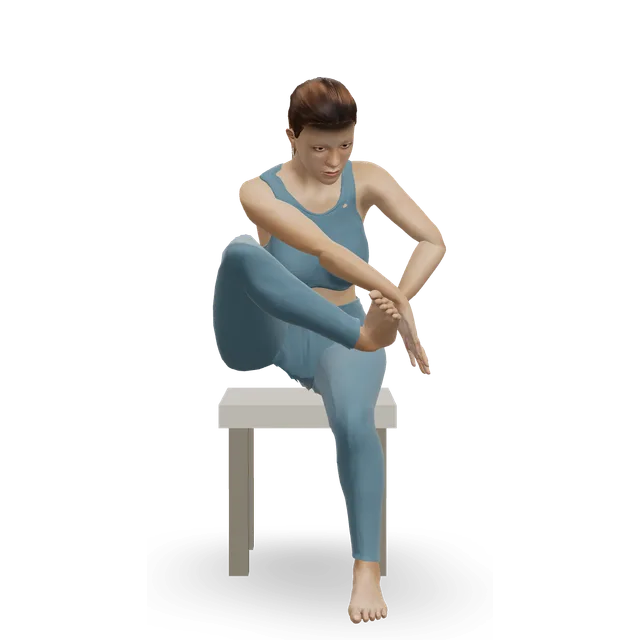
What helps, and how strong the evidence is

Shoes, heel cups and insoles: inexpensive firstEmerging evidence

The NHS advises wide, comfortable shoes with a low heel and a soft sole, cushioned heels with good arch support, and insoles or heel pads, and says not to wear high heels, tight pointy shoes, flip-flops or backless slippers, or walk barefoot on hard surfaces.

In 236 people with fairly recent heel pain who all stretched, more improved at 8 weeks with a silicone heel insert (95%), a rubber heel cup (88%) or a felt insert (81%) than with stretching alone (72%) or a custom orthosis (68%). Against dummy insoles, orthoses helped only a little and only at 7 to 12 weeks in one review of 19 trials, and not at all in another of 20; custom insoles were no better than ready-made ones in either. A best-practice guide puts footwear advice in the core care and keeps custom orthoses for people who don't improve. So start with an inexpensive heel cup, pad or ready-made insole, keep it if it helps, and see a podiatrist if it doesn't.

Sources 1, 6, 32, 33, 34, 35

Stretch the sole, then load the heelEmerging evidence

In 101 people with heel pain for 10 months or more, a seated stretch of the sole (pulling the toes back) did better at 8 weeks than a calf stretch for the worst pain and first-step pain. The best-practice guide, built on 51 trials, found stretching of the plantar fascia had the largest short-term effect on first-step pain, and the AAOS calls stretching the calf and plantar fascia the most effective way to relieve the pain.

In 48 people with plantar fasciitis, heavy single-leg heel raises with a towel under the toes every second day gave better foot function at 3 months than daily stretching, with no difference at 1, 6 and 12 months. Self-dosed and pre-set heavy-slow programmes did equally well in 70 people. In a network meta-analysis of 31 trials, exercise seemed to help mainly in the long term, and no treatment was clearly better than another. The plan on this page uses both: the stretch for first steps, the heavy raises for strength.

Sources 36, 37, 31, 35, 38, 12

Steroid injections: a small, short-lived effectEmerging evidence

A Cochrane review of 39 trials (2,492 adults) found a steroid injection may slightly reduce heel pain for up to a month compared with a dummy treatment or none, but not after that, and the evidence was low quality; 2 plantar fascia ruptures and 3 infections were reported among 699 people injected. In the SOOTHE trial of 103 people, an injection beat orthoses at 4 weeks and orthoses beat the injection at 12, though neither difference was big enough to matter much.

The AAOS says injections can weaken the plantar fascia and lead to a rupture, so doctors may limit or avoid them. In one hospital cohort, a guided injection didn't thin the fat pad. An injection is a short-term option to discuss, not a fix.

Sources 39, 40, 12, 11

Shockwave therapy: the trials disagreeMixed evidence

For heel pain that hasn't settled, shockwave therapy was no better than a dummy treatment in two large trials (166 people, and 272 people, where 34% against 30% did well), but reduced heel pain by 69% against 35% in a third trial of 250 people. Pooled across 9 trials (935 people), the odds of improving were about 2.6 times higher, but the trials differed a lot.

NICE says the evidence on how well it works is inconsistent, so it should be used only with special arrangements for consent and audit or research. The best-practice guide offers it as a step after the core care has been tried.

Sources 41, 42, 43, 44, 45, 35

Fat pad pain: cushioning first, and one very small taping trialEmerging evidence

There are no trials of heel cups for fat pad pain; cushioning, a firm heel counter and a heel cup or pad rest on NHS advice and laboratory work, as our heel fat pad guide explains. A very small pilot trial, published in 2026 and read here as an abstract only, compared loop taping with a control taping in 16 paired observations. Pain during the most painful activity straight after taping changed little, and the difference could have been chance; a foot pain questionnaire 3 days later favoured loop taping by about 21 points out of 100, and the heel pad was 1.7 mm thicker on ultrasound. A pilot this small can't show that taping works; it shows a bigger trial is worth doing.

Sources 13, 14, 1

Sever's disease: waiting, a heel raise and exercise did about equally wellEmerging evidence

In 101 children aged 8 to 15, waiting and seeing, a heel raise insole and supervised exercise all reduced heel pain, with no meaningful difference between them at 3 months. In 124 children aged 8 to 14, a heel raise did better than ready-made orthoses at 1 to 2 months, nothing differed at 6 or 12 months, and new shoes made no difference. An NHS hospital leaflet says children can keep playing, though the pain may take longer to settle, and suggests ice for 10 to 15 minutes, gel heel cups and calf stretches.

Sources 46, 47, 22

A stress fracture or a broken heel: protect the boneEmerging evidence

With a suspected stress fracture of the heel bone, stop the activity that hurts and get it checked: the authors of the recruit study advise an MRI when X-rays are normal in an active person with exercise-related heel pain. Health New Zealand says never play through the pain, and most heal in 6 to 8 weeks. With a broken heel or a stress fracture, the plan from your fracture clinic replaces this one; the loading steps here are for once the bone has healed and you've been cleared.

Sources 15, 18, 16

Surgery is rarely neededEmerging evidence

The AAOS says surgery for plantar fasciitis is generally kept for people who haven't improved after 12 months of non-surgical treatment, and that most heel pain gets better without surgery. Releasing a trapped nerve under the heel helped 89% of 69 heels in one surgeon's series, after long non-surgical care. Platelet-rich plasma (PRP) injections need more research, the AAOS says.

Sources 12, 25, 2

How much pain is OK while you exercise?

Up to about 5 out of 10, settled within an hour; tomorrow's first steps are the check; one spot on the bone must be pain-freeEmerging evidence

This guide uses the foot hub's rule. Some discomfort during exercise is fine. Aim for pain you would call mild to moderate, no more than about 5 out of 10, that settles within an hour, with no more swelling or stiffness the next morning. If it's worse the next day, do a little less (a smaller range, fewer reps, a lighter load), not nothing. NHS inform's foot exercises use the same limit: 0 to 3 is minimal, 4 to 5 acceptable and 6 or more too much, and your pain should be no worse the morning after.

Under the heel, the plantar fasciitis guide treats the plantar fascia like a tendon, borrowing the pain-monitoring rule from an Achilles trial, where carrying on with activity under the rule did no harm; it hasn't been tested for heel pain. Your first-step pain in the morning is the best guide: it should trend down week to week. Expect some soreness in the first heavy heel-raise sessions; if the heel is clearly worse the next morning, lighten the load.

At the back of the heel, use the same tendon rule: back to its usual level by the next morning, and not creeping up week on week. Pain from shoes pressing on a bump isn't a training signal: change the shoes, not the exercise (our suggestion). A child with Sever's disease keeps pain during activities to 3 out of 10 or less, as our Sever's guide explains.

The exceptions: pain in one spot on the heel bone should be pain-free, because it could be a stress fracture (Health New Zealand says that as long as you can feel the pain, the bone is still fragile); burning, tingling or numbness means stop that movement. When running comes back, move up a level of the NHS sports medicine service's walk-jog programme after a week without pain, and down a level if you get pain. In trials of long-lasting muscle and joint pain, exercise that allowed some pain did no worse than pain-free exercise.

Sources 48, 49, 50, 18, 51

The exercise plan: 3 stages

Start at the first stage. Each move opens a full guide with a 3D demo.

Stage 1

Settle: ease first-step pain and cut the pounding

About the first 2 weeks: rest and raise the foot when it aches, ice it for up to 20 minutes every 2 to 3 hours, wear wide, comfortable shoes with a low heel, a soft sole and a soft insole or heel pad, and don't walk or stand for long periods, especially barefoot, as the NHS advises. For the back of the heel, a soft or open back and a small heel lift (our Haglund's guide). One spot on the bone, a snap at the back of the heel, a fall from a height or a red, hot heel get checked first; with plantar fasciitis, fat pad pain, Haglund's, an Achilles problem, Sever's disease or a stress fracture, that guide's plan can replace this one.

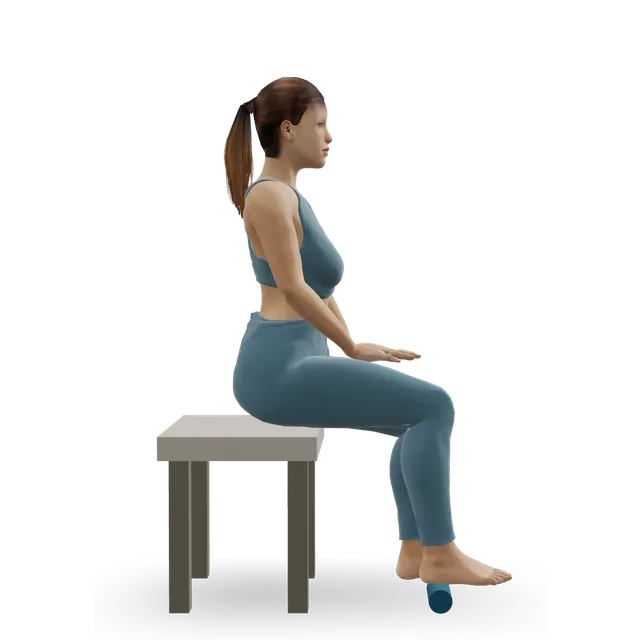
Plantar fascia stretch (seated) demonstrated on the 3D figure3D demoPlantar fascia stretch (seated)Beginner · A bench or box

3 to 5 holds of 10 to 30 s, 2 to 3 times a day, before your first steps in the morning and before standing after a long sit · The move page's dose. For pain under the heel: this stretch beat a calf stretch in a trial

Harder: Toes-tucked kneeling (toe squat)

Wall calf stretch (gastrocnemius) demonstrated on the 3D figure3D demoWall calf stretch (gastrocnemius)Beginner · A wall

Hold 20 to 30 s, 2 to 3 sets, 2 to 3 times a day · NHS inform's standing calf stretch, with its stretching dose. Go gently with sharp morning heel pain, as the move page says; leave it out if it makes the back of the heel worse (our suggestion)

Easier: Seated calf stretch with a towel · Harder: Heel-on-step calf and hamstring stretch

Seated bent-knee calf raise (soleus raise) demonstrated on the 3D figure3D demoSeated bent-knee calf raise (soleus raise)Beginner · A bench or box

2 to 3 at a time, little and often, building to sets of 8, 2 to 3 times a day, up to 2 sets of 15 · NHS inform's seated heel raise, with its pacing

Harder: Slow calf raise

Towel toe curl demonstrated on the 3D figure3D demoTowel toe curlBeginner · Other / check instructions + A bench or box

2 to 3 at a time, building to sets of 8, up to 2 sets of 15 · NHS inform's toe curl, with its pacing

Easier: Big toe press (seated toe-flexor hold) · Harder: Short foot + toe splay

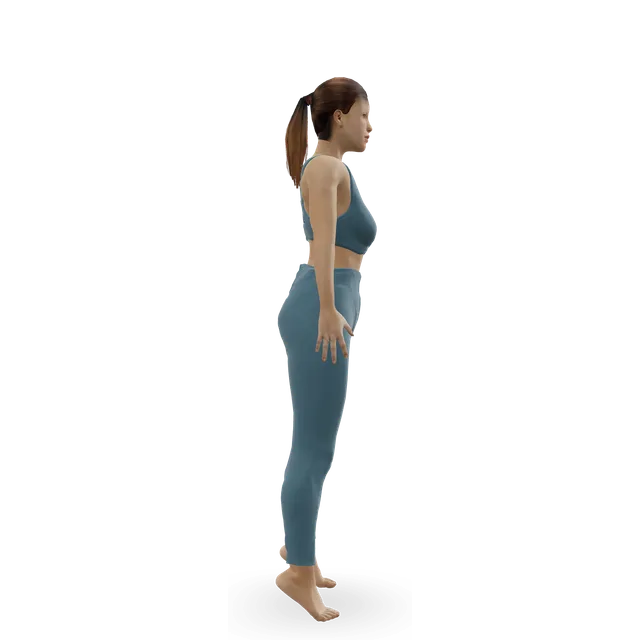
Isometric calf raise hold demonstrated on the 3D figure3D demoIsometric calf raise holdBeginner · A wall

Hold 30 to 45 s, 4 to 5 times, once or twice a day, on both feet · For pain at the back of the heel, as in our Haglund's guide (an NHS leaflet's dose)

Easier: Seated bent-knee calf raise (soleus raise) · Harder: Slow calf raise

Stationary cycling demonstrated on the 3D figure3D demoStationary cyclingBeginner · Cardio machine

20 to 30 min · In place of running and long walks, as in our heel fat pad and Haglund's guides; the time is editorial

Easier: Recumbent exercise bike · Harder: Air bike intervals

Move on when: First-step pain is easing, walking around the house in cushioned shoes is comfortable, and the heel is no worse the next morning (the plantar fasciitis guide's and the foot hub's checks, adapted).

Follow along: a timer, a cue and the next move, one step at a time.
Stage 2

Build: load the heel

About weeks 2 to 6: slow, heavy loading for the calf and the sole, with the morning sole stretch kept going, and walking time a few minutes longer each week, one change at a time (our suggestion). For pain at the back of the heel, raises stay on flat ground and the heel never drops below a step, as our Haglund's and Achilles guides advise.

Heel raise with a towel under the toes demonstrated on the 3D figure3D demoHeel raise with a towel under the toesIntermediate · A step + Other / check instructions

Every second day: both feet, then one, at a load you can lift about 12 times for 3 sets · The move page's dose, from the heavy heel-raise trial, as in our plantar fasciitis guide. For pain under the heel, not the back of it

Easier: Slow calf raise · Harder: Standing dumbbell calf raise

Slow calf raise demonstrated on the 3D figure3D demoSlow calf raiseBeginner · A wall

3 sets of 10 to 15, once a day, on flat ground · For pain at the back of the heel, as in our Haglund's guide (an NHS leaflet's level 2)

Easier: Seated bent-knee calf raise (soleus raise) · Harder: Standing dumbbell calf raise

Soleus wall stretch demonstrated on the 3D figure3D demoSoleus wall stretchBeginner · A wall

Hold 20 to 30 s, 2 to 3 sets, 2 to 3 times a day · NHS inform's stretching dose, for the bent-knee calf stretch

Easier: Seated calf stretch with a towel · Harder: Toes-tucked kneeling (toe squat)

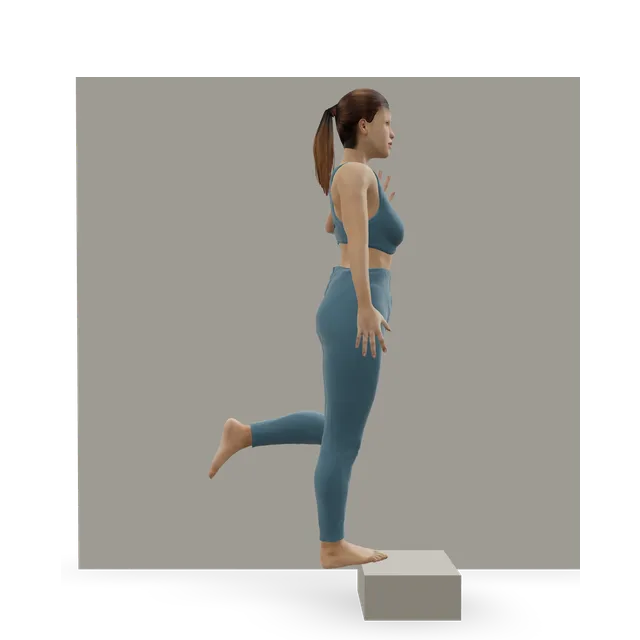
Single-leg stand demonstrated on the 3D figure3D demoSingle-leg standBeginner · A wall

3 holds of 30 s each leg, in shoes · As in our heel fat pad guide

Easier: Tandem stance and heel-to-toe walk · Harder: Single-leg reach matrix

Treadmill walking demonstrated on the 3D figure3D demoTreadmill walkingBeginner · Cardio machine

Add a few minutes of standing and walking a week, on the flat · Editorial, as in our plantar fasciitis guide; walking outdoors counts the same

Harder: Treadmill jogging

Move on when: 3 sets of 12 single-leg towel heel raises stay within the pain rule (the plantar fasciitis guide's check), or for the back of the heel, 3 sets of 15 two-leg raises with the next morning no worse (the Haglund's guide's benchmark), and 30 minutes of fast walking is pain-free, the NHS sports medicine service's starting point for running.

Follow along: a timer, a cue and the next move, one step at a time.
Stage 3

Strengthen, then standing days, walking, running and sport come back

From about week 6, the heavy work every second day: heavier and single-leg strength, then impact in small steps, while everyday activities come back by the written steps below. Expect months rather than weeks.

Heel raise with a towel under the toes demonstrated on the 3D figure3D demoHeel raise with a towel under the toesIntermediate · A step + Other / check instructions

3 sets every second day, building over several weeks from about 12 reps to about 8 heavier reps, adding a backpack or dumbbell · The move page's dose, as in the pre-set heavy-slow programme and our plantar fasciitis guide

Easier: Slow calf raise · Harder: Standing dumbbell calf raise

Single-leg calf raise from a step demonstrated on the 3D figure3D demoSingle-leg calf raise from a stepIntermediate · A step + A wall

3 sets of 10 to 15 each leg · As in our foot pain guide. On flat ground, not off a step, for pain at the back of the heel (our Haglund's guide); face the step and keep a hand on a rail, as the move page says

Easier: Slow calf raise · Harder: Single-leg pogo hops

Step-up demonstrated on the 3D figure3D demoStep-upBeginner · A step

3 sets of 8 to 10 each side · As in our heel fat pad guide

Easier: Low step-up · Harder: Dumbbell step-up

Ankle bounces (mini pogo) demonstrated on the 3D figure3D demoAnkle bounces (mini pogo)Beginner · No equipment

2 to 3 sets of 20, landing quietly · As in our heel fat pad guide. Only once the heel is comfortable and any sore spot on the bone is pain-free, as the move page says

Harder: Pogo hops

Treadmill jogging demonstrated on the 3D figure3D demoTreadmill joggingIntermediate · Cardio machine

Every other day for 30 min: jog 1 and walk 1 minute in week 1, 2 and 1 in week 2, 4 and 1 in week 3, 9 and 1 in week 4, 15 and 1 in week 5, then 30 minutes' jogging in week 6 · The NHS sports medicine service's programme: up a level after a week without pain, down a level with pain. Flat ground outdoors counts

Easier: Treadmill walking · Harder: Sprint intervals

Move on when: Our suggestion: your usual standing day, your walks and, if you run, 30 minutes' continuous jogging stay within the pain rule, with first steps no worse the next morning. Keep the heavy heel raises once or twice a week; if a busy week flares it, drop back a stage for a few days rather than stopping.

Follow along: a timer, a cue and the next move, one step at a time.

What to change for now

What to change for now (written steps)

Our 3D figure can't show these changes. They come from the NHS, NHS inform, a trial of heel inserts, the AAOS, an NHS hospital leaflet and Diabetes UK; where a step is our suggestion, it says so.

  • 1. Shoes: wide and comfortable, with a low heel, a soft sole and good arch support; a soft insole or heel pad in them (the NHS). No high heels, tight pointy shoes, flip-flops or backless slippers, and don't walk barefoot on hard floors (the NHS).
  • 2. Heel cups and insoles: try an inexpensive silicone or rubber heel cup or a ready-made insole first; in a trial they did at least as well as a custom orthosis. See a podiatrist if it doesn't help.
  • 3. Time on your feet: don't walk or stand for long periods while it's sore (the NHS); swap some walking or running for swimming or cycling. At work, break up long standing with short sits, and stand on a cushioned mat where you can (our suggestion).
  • 4. Ice: up to 20 minutes every 2 to 3 hours, wrapped in a towel (the NHS); not if you have problems with circulation or feeling in the foot (NHS inform).
  • 5. The back of the heel: a shoe with a soft, low or open back, and a small heel lift in both shoes, keep pressure off a bump (our Haglund's guide).
  • 6. One spot on the bone: stop the activity that hurts and get it checked; while you wait, keep weight off it as the AAOS advises.
  • 7. A child with Sever's disease: keep playing, cutting back the running and jumping that hurts most; gel heel cups, calf stretches and ice for 10 to 15 minutes after sport can help (an NHS hospital leaflet).
  • 8. Diabetes: check your feet every day, and see your foot team within 24 hours for any new problem (Diabetes UK).

Sources 1, 6, 32, 5, 15, 22, 30

Standing days, walking, running and sport come back (written steps)

No trial has tested how to bring these back after heel pain. These steps are our suggestion unless a source is named.

  • 1. Shoes first, as above. The OxSport leaflet says running shoes last about 300 to 500 miles.
  • 2. Standing days: build your standing time up the way you would a walk, and keep breaking it up at first.
  • 3. Walks: add distance before hills and rough ground, one change at a time, and use tomorrow's first steps as the check.
  • 4. Running: start only when 30 minutes of fast walking is pain-free, then follow the walk-jog weeks in stage 3. After week 6, add no more than 10% a week and don't add distance and time in the same week (the OxSport leaflet).
  • 5. After a stress fracture of the heel bone: your clinician's plan comes first. The bone should be pain-free to press and with everyday walking before any hopping or running (Health New Zealand: as long as you can feel the pain, the bone is still fragile).
  • 6. Jumping and court sports: last, after the running steps, with first steps no worse the next morning. For a child, our Sever's guide gives limits on how much sport a week.
  • 7. If it isn't improving: see a GP if the pain is severe, stopping normal activities, getting worse or keeps coming back, or hasn't improved after 2 weeks of looking after it at home (the NHS). In many areas you can refer yourself to physiotherapy.

Sources 51, 18, 1, 6

Positions to swap, and why

Habit or positionWhy it mattersInstead
Walking barefoot on hard floors, or in flip-flops or backless slippersThey're on the NHS's list of things not to do for plantar fasciitis, and they leave the heel pad without cushioning.Cushioned shoes or slippers with a firm heel and arch support, with an insole or heel pad.
Long spells of standing or walking in the first weeksThe NHS advises against walking or standing for long periods while it's sore.Shorter spells spread through the day, and swimming or the bike for fitness.Try: Stationary cycling
High heels or tight, pointy shoesThey're on the NHS's list of things not to do.Wide, comfortable shoes with a low heel and a soft sole.
Hopping or running through pain in one spot on the heel boneIt could be a stress fracture, which early X-rays often miss, and Health New Zealand says never play through the pain.Get it checked; cycle only if it's pain-free at the bone.Try: Stationary cycling
Heel drops off a step with pain at the back of the heelOur Haglund's and Achilles guides keep the heel on flat ground for pain where the tendon meets the bone, and the move page says a heel drop below a step may not suit some Achilles problems.Calf raises on flat ground.Try: Slow calf raise
Shoes with a stiff or high back pressing on a bump at the back of the heelPain from a shoe pressing on the bump isn't a training signal, and pressure keeps the fluid sac there irritated.A soft, low or open back and a small heel lift.
Forcing a deep calf stretch through sharp morning heel painThe move page says go gently with sharp morning heel pain and build depth over weeks.The seated sole stretch before your first steps.Try: Plantar fascia stretch (seated)
Counting on a steroid injection to fix itIt may slightly reduce heel pain for up to a month, not after, and injections can weaken the plantar fascia.Stretching and heavy heel raises first; an injection is a short-term option to discuss with a clinician.Try: Heel raise with a towel under the toes
With diabetes and numb feet, carrying on with a blister, a cut or a new hot patchDiabetes UK says see your foot team within 24 hours, and pain may not warn you.Check your feet every day, especially after exercise.
Stopping a child with Sever's disease from all sportAn NHS hospital leaflet says children can keep playing, and in a trial waiting, a heel raise and exercise all helped about equally.Cut back the running and jumping that hurts most, with gel heel cups; swimming or cycling on sore days.Try: Stationary cycling

Routines to follow

More moves for this area

Questions people ask

What causes heel pain?

The NHS says heel pain can be caused by exercising too much, standing on hard surfaces for too long or being overweight. Under the heel, the usual cause is plantar heel pain (plantar fasciitis), with the fat pad, a stress fracture and a trapped nerve less common; at the back of the heel, it's usually the Achilles tendon where it joins the bone, or a bump that shoes rub. Where exactly it hurts and how it started point to the cause, which is what the map on this page is for.

Why does my heel hurt in the morning?

Pain that is worst on your first steps after sleeping or sitting, then eases as you get going but comes back after long standing, is the classic pattern of plantar fasciitis. A seated stretch of the sole before you stand up helped more than a calf stretch in a trial. Pain and stiffness along the Achilles tendon in the morning points to the back of the heel instead.

Why does my heel hurt when I walk?

Plantar fasciitis hurts on the first steps and after long standing or walking, while a deep, bruise-like ache in the centre of the heel pad, worse barefoot on hard floors, points to the fat pad. Pain in one spot on the heel bone after more walking or running than usual, sore when the sides of the heel are squeezed, can be a stress fracture and needs checking. Wide, cushioned shoes and shorter spells on your feet help most causes.

What is the pain at the back of my heel?

Usually the Achilles tendon where it joins the heel bone, which can happen at any activity level, or Haglund's deformity, a bony bump that shoes rub. A sudden snap, or a feeling of being kicked there, then walking flat-footed, is different: it can be an Achilles rupture and needs checking the same day.

Do heel spurs cause heel pain?

Usually not. Spurs were found in 15.5% of people without heel pain in one study, about half of people with plantar fasciitis have one and it matches their symptoms poorly, and having one made no difference to how plantar fasciitis went over 5 to 15 years in a hospital cohort. Surgeons don't remove spurs to treat plantar fasciitis.

How long does heel pain take to go away?

Often months rather than weeks. American orthopaedic surgeons say more than 90% of people with plantar fasciitis improve within 10 months of simple treatment, though in one study of hospital patients, likely the harder cases, about half still had symptoms 5 years after they began. See a GP if it hasn't improved after 2 weeks of looking after it at home, or is getting worse.

What are the best exercises for heel pain?

For pain under the heel, a seated stretch of the sole before your first steps, and heavy, slow heel raises with a towel under the toes every second day, which gave better function at 3 months than stretching in a trial. NHS inform's foot exercises (a calf stretch, a toe lift, a toe curl and a seated heel raise) are a gentle start within its 0 to 5 pain scale. For the back of the heel, keep heel raises on flat ground rather than off a step.

What shoes and insoles help heel pain?

The NHS advises wide, comfortable shoes with a low heel and a soft sole, cushioned heels with good arch support, and insoles or heel pads, and no flip-flops, backless slippers, high heels or tight pointy shoes. In a trial, ready-made silicone, rubber and felt heel inserts helped at least as much as custom orthoses, and two reviews found custom insoles no better than ready-made ones. Start with an inexpensive heel cup or insole, and see a podiatrist if it doesn't help.

Why does my child's heel hurt?

In an active child aged about 8 to 15, heel pain during and after running and jumping is usually Sever's disease, an irritated growth area at the back of the heel bone. Children can keep playing, though the pain may take longer to settle, and gel heel cups, calf stretches and ice can help. Pain with swelling, redness or a fever, or a child who doesn't want to use the leg, needs an urgent GP appointment or NHS 111.

Why does my heel burn or tingle?

Burning, tingling or numbness points to a nerve rather than the plantar fascia: the nerve behind the inner ankle (tarsal tunnel syndrome), a small branch under the heel that is often mistaken for plantar fasciitis at first, or a nerve root in the lower back. See a GP for any tingling or loss of feeling in the foot, and see your foot team urgently for new foot pain if you have diabetes.

Can heel pain be a stress fracture?

Yes. A stress fracture of the heel bone usually follows more walking, running or marching than usual or a change to a harder surface, hurts with activity and later at rest, and is sore when the sides of the heel are squeezed. Early X-rays often miss it, so an MRI may be needed. Stop the activity that hurts and get it checked: as long as you can feel the pain, the bone is still fragile.

When should I worry about heel pain?

Contact NHS 111 for severe heel pain after an injury, if you feel faint, dizzy or sick from the pain, heard a snap, grinding or popping noise, can't walk, walk on tiptoe or walk up the stairs, or have swelling and bruising in your calf and ankle. Get help the same day for a red, hot, swollen heel with a high temperature, or for any new foot problem if you have diabetes. See a GP if it's severe, getting worse, keeps coming back, or hasn't improved after 2 weeks.

Related exercise guides

Other pain guides

Sources

  1. NHS · Heel pain
  2. American Academy of Orthopaedic Surgeons (OrthoInfo) · Heel pain
  3. Tu 2018 · Heel pain: diagnosis and management (clinical review, American Family Physician)
  4. Adams Morancie 2025 · Heel pain: diagnosis and management, the December 2025 update (clinical review, American Family Physician; first part read)
  5. NHS inform · Foot and toe problems
  6. NHS · Plantar fasciitis
  7. Thomas 2019 · Plantar heel pain in 5,109 adults aged 50 and over in a UK population (cross-sectional study, BMC Musculoskelet Disord)
  8. Rasenberg 2019 · Plantar heel pain in Dutch general practice: how often it's seen and how it's managed (retrospective cohort, Br J Gen Pract)
  9. McMillan 2009 · Imaging for chronic plantar heel pain: 23 studies (systematic review and meta-analysis, J Foot Ankle Res)
  10. Prichasuk 1994 · Flat feet, heel spurs and plantar heel pain in 482 people (case-control study, Clin Orthop Relat Res)
  11. Hansen 2018 · Plantar fasciitis followed for 5 to 15 years in 174 hospital patients (cohort study, Orthop J Sports Med)
  12. American Academy of Orthopaedic Surgeons (OrthoInfo) · Plantar fasciitis and bone spurs
  13. Chang 2022 · What do we know about heel fat pad syndrome? (scoping review, J Foot Ankle Res)
  14. Chang 2026 · Loop taping for heel fat pad syndrome: 16 paired observations (crossover pilot RCT, J Foot Ankle Res; abstract read)
  15. American Academy of Orthopaedic Surgeons (OrthoInfo) · Stress fractures of the foot and ankle
  16. Sormaala 2006 · Stress injuries of the heel bone found on MRI in military recruits (imaging study, J Bone Joint Surg Am)
  17. Weber 2005 · Calcaneal stress fractures (review, Clin Podiatr Med Surg)
  18. Health New Zealand · Stress fractures of the foot and shin bone
  19. American Academy of Orthopaedic Surgeons (OrthoInfo) · Achilles tendinitis
  20. Cambridge University Hospitals NHS Foundation Trust · Achilles tendon rupture: management and rehabilitation (patient information, 2026)
  21. Wiegerinck 2014 · How often Sever's disease is seen in Dutch general practice (cohort study, Eur J Pediatr)
  22. Cambridge University Hospitals NHS Foundation Trust · Sever's disease (patient information, 2024)
  23. Alshami 2008 · Plantar heel pain of nerve origin (review, Man Ther)
  24. Ferkel 2015 · Entrapment neuropathies of the foot and ankle (review, Clin Sports Med)
  25. Baxter 1992 · Releasing the first branch of the lateral plantar nerve for chronic heel pain in 69 heels (case series, Clin Orthop Relat Res)
  26. NICE NG65 · Spondyloarthritis in over 16s: diagnosis and management (2017)
  27. NHS · Septic arthritis
  28. NHS · Cellulitis
  29. NICE NG19 · Diabetic foot problems: prevention and management (2015, updated 2019)
  30. Diabetes UK · Signs of serious foot problems and foot infections
  31. Riel 2019 · Self-dosed and pre-set heavy-slow heel raises in 70 people with plantar fasciopathy (RCT, J Physiother)
  32. Pfeffer 1999 · Ready-made heel inserts against custom orthoses in 236 people with plantar fasciitis (RCT, Foot Ankle Int)
  33. Whittaker 2018 · Foot orthoses for plantar heel pain: 19 trials (systematic review and meta-analysis, Br J Sports Med)
  34. Rasenberg 2018 · Foot orthoses for plantar heel pain: 20 studies (systematic review and meta-analysis, Br J Sports Med)
  35. Morrissey 2021 · Managing plantar heel pain: a best practice guide from 51 trials, experts and patients (systematic review with consensus, Br J Sports Med)
  36. DiGiovanni 2003 · A plantar fascia-specific stretch against a calf stretch in 101 people with long-standing heel pain (RCT, J Bone Joint Surg Am)
  37. Rathleff 2015 · Heavy heel raises against stretching in 48 people with plantar fasciitis (RCT, Scand J Med Sci Sports)
  38. Babatunde 2019 · Treatments for plantar heel pain compared across 31 trials (network meta-analysis, Br J Sports Med)
  39. David 2017 · Steroid injections for plantar heel pain in adults: 39 trials (Cochrane systematic review)
  40. Whittaker 2019 · Foot orthoses against a steroid injection in 103 people with plantar heel pain: the SOOTHE trial (RCT, J Orthop Sports Phys Ther)
  41. Buchbinder 2002 · Ultrasound-guided shockwave therapy for plantar fasciitis in 166 people (RCT, JAMA)
  42. Haake 2003 · Shockwave therapy for plantar fasciitis in 272 people (multicentre RCT, BMJ)
  43. Gollwitzer 2015 · Focused shockwave therapy for chronic plantar fasciitis in 250 people (multicentre RCT, J Bone Joint Surg Am)
  44. Sun 2017 · Shockwave therapy for chronic plantar fasciitis: 9 trials (meta-analysis, Medicine)
  45. NICE HTG200 · Extracorporeal shockwave therapy for refractory plantar fasciitis (2009, first published as IPG311)
  46. Wiegerinck 2016 · Wait and see, a heel raise or physiotherapy for Sever's disease in 101 children (RCT, J Pediatr Orthop)
  47. James 2016 · Heel raises, orthoses and new shoes for Sever's disease in 124 children (factorial RCT, Br J Sports Med)
  48. NHS inform · Exercises for foot problems
  49. Silbernagel 2007 · Carrying on with sport under a pain-monitoring model for Achilles tendon pain in 38 people (RCT, Am J Sports Med)
  50. Smith 2017 · Should exercises be painful in chronic musculoskeletal pain? (systematic review and meta-analysis, Br J Sports Med)
  51. Oxford University Hospitals NHS Foundation Trust (OxSport) · Return to running programme (patient leaflet, September 2024)

Exercise education, not a diagnosis or treatment plan. It is written from the guidelines and studies listed above; review by a clinician is pending. If your pain follows an injury, is severe, is getting worse, or comes with any warning sign listed on this page, get it assessed. Health disclaimer.