Heel fat pad syndrome: a bruise-like pain in the centre of the heel
The heel fat pad is the thick cushion under your heel bone that absorbs the shock of every step. Heel fat pad syndrome is pain from that pad: a deep, bruise-like ache in the centre of the heel that builds with standing and walking, especially barefoot on hard floors. Two studies suggest it may be the second commonest cause of pain under the heel after plantar fasciitis, yet it has had very little research: there are no trials of heel cups, taping or exercise for it.
What we do know points to cushioning and holding the heel, pacing your time on your feet, and keeping fit and strong without pounding the heel. This guide shows how to tell it from plantar fasciitis, what heel cups and taping can and can't do, and a staged plan with 3D demos.
Exercise is for pain that has been checked or is clearly mild and settling.
Get urgent medical help if
Contact NHS 111: severe heel pain after an injury, feeling faint, dizzy or sick from the pain, an ankle or foot that has changed shape or is at an odd angle, a snap, grinding or popping noise at the time of the injury, not being able to walk, walk on tiptoe or climb stairs, or swelling and bruising in the calf and ankle. These might be signs of a broken heel bone or a broken ankle.
Call 999 or go to A&E: after an injury, you heard a crack, the foot or ankle has changed shape or points at an odd angle, a bone is sticking out, there is a bad cut over it, you're in severe pain, or the toes look blue or white, feel numb or are cold to touch. These can mean a broken bone. Don't drive yourself.
Same day: you have diabetes and a new foot problem, such as an ulcer or wound, signs of infection, or a hot, swollen foot with a change in colour, even if it doesn't hurt. Contact your diabetes foot team or GP: the National Institute for Health and Care Excellence (NICE) asks for these to reach a specialist foot service within 1 working day, and a suspected Charcot foot is kept off weight until it has been checked.
Same day: burning foot pain that carries on at rest, toes that go pale, then numb, then red or black, or foot wounds that won't heal. The blood supply to the foot may be failing, which needs prompt checks.
Same day: skin on the foot that is painful, hot and swollen. It could be a skin infection (cellulitis).
Same day: leg weakness that is getting worse; new leg pain with a history of cancer, HIV, TB or inflammatory arthritis; or leg pain with a fever, feeling unwell, loss of appetite, unexplained weight loss or night sweats.
See a doctor or physiotherapist if
One spot on the heel bone that hurts with every step and later at night, especially after more walking or running than usual: a possible stress fracture of the heel bone.
Burning, tingling or numbness in the heel or sole: this points to a trapped nerve rather than the fat pad. See a GP, as the NHS advises for tingling or loss of feeling in the foot.
Pain where tendons attach to the heel with no clear mechanical cause that lasts, is in several places, or comes with back pain without a clear cause, psoriasis, inflammatory bowel disease, eye inflammation (uveitis), a recent gut or urinary infection, or a close relative with spondyloarthritis or psoriasis: the National Institute for Health and Care Excellence (NICE) advises a rheumatologist's assessment for spondyloarthritis, a type of inflammatory arthritis.
Any foot pain if you have diabetes: foot problems can be more serious.
See a GP if heel pain is severe or stopping you doing normal activities, is getting worse or keeps coming back, or hasn't improved after 2 weeks of treating it at home.
No noticeable change after 6 to 12 weeks of following the advice, or no sign of improvement within 3 months: contact your GP or an NHS podiatry service, as NHS podiatry leaflets advise.
Understand it
What it isEmerging evidence
The heel fat pad is the thick cushion between the skin and the heel bone. It is made of fat held in small honeycomb chambers of tough, springy tissue, which absorb shock and spread pressure as your heel strikes the ground. Heel fat pad syndrome is pain from this pad, when it has thinned, lost its springiness, been bruised or become inflamed, sometimes with an irritated fluid-filled sac (bursa) under the heel bone.
How it differs from plantar fasciitisEmerging evidence
The two are often confused, and you can have both. In one clinic study of 250 people with heel pain, pain on long standing, pain at night or pain in both heels made fat pad syndrome far more likely than plantar fasciitis (the odds were 21 to 25 times higher), while pain on the first steps in the morning or tenderness at the front inner edge of the heel made it far less likely. That was one study, which didn't allow for age, sex or weight, so these clues guide rather than decide. NHS pathways and leaflets describe the differences:
Where: fat pad pain sits in the centre of the heel pad; plantar fasciitis is at the front inner edge of the heel bone, sometimes spreading into the arch.
How it feels: a deep, dull ache like a bruise, rather than the sharper pain of plantar fasciitis.
When: fat pad pain builds with standing and walking, especially barefoot on hard floors, and is less marked on the first steps after rest. Plantar fasciitis is worst on the first steps in the morning or after sitting, then eases.
Pressing: a thumb pressed into the centre of the heel brings on fat pad pain, and it doesn't spread. Plantar fasciitis is tender at the front inner edge of the heel.
Pulling the toes up doesn't make fat pad pain worse, but often brings on plantar fasciitis.
Two studies, both found by a 2022 scoping review, suggest it may be the second commonest cause of pain under the heel after plantar fasciitis. In a US study that examined 784 people aged 65 and over at home, 4.2% had pain and tenderness of the heel fat pad, against 6.9% with pain of the plantar fascia. In a Korean clinic's records of 250 people with heel pain, 53% had plantar fasciitis, 15% fat pad syndrome and 9% both. Research is sparse: the review found only 7 original studies of the condition.
NHS leaflets list being overweight, age, unsupportive shoes, long spells of standing or walking or a sudden increase, diabetes, inflammatory arthritis, weak foot or leg muscles, tight calves, not enough recovery between activities, and long-term steroid tablets. An NHS pathway adds repeated steroid injections into the heel and work standing on concrete, and says it is more common in older or overweight women and with diabetes. These are expert lists: the scoping review found the evidence for causes weak.
An ultrasound can measure the pad, but the findings on thickness conflict, so a measurement doesn't make the diagnosis. The diagnosis is made from the story and an examination; a scan can support it or look for something else, such as a stress fracture, an inflamed sac or a lump. The numbers:
In 375 people at a podiatry clinic, the unloaded pad was thinner in those with fat pad syndrome (7.2 against 10.4 mm). In another study, X-rays of 59 people with it showed pads no thinner than those of younger, lighter students.
In plantar heel pain more generally, painful heels had thicker, less springy pads than those of 200 people without pain in one study, and thicker pads in runners in another, but slightly thinner pads than the other foot in a third (19.5 against 19.9 mm).
In 33 adults without heel problems, older people's pads were slightly thicker but less springy than younger people's, and in a clinic study of 50 people with heel pain, pads were thicker and less springy in those over 40. So loss of springiness may matter as much as thickness.
Healthy heel pads range from about 12 to 29 mm, depending on the person and the method.
NHS Lanarkshire says most people's symptoms improve, though it can take several months, and most should start to improve within 3 months of following the advice. Bradford's NHS podiatry service suggests contacting your GP or podiatry if there's no noticeable change after 6 to 12 weeks. No study has followed the condition over time.
A 2022 scoping review found 7 original studies of heel fat pad syndrome and no randomised trial of any treatment, and called the usual advice mostly anecdotal. Everything below is NHS service advice, laboratory work or evidence borrowed from plantar heel pain, and each note says which.
NHS advice for heel pain and fat pad syndrome: shoes with cushioned heels and good arch support, insoles or heel pads, and no long periods of standing, walking barefoot on hard floors, high heels, flip-flops or backless slippers. An NHS pathway's specific advice for a thinned fat pad is a heel pad.
Laboratory work explains why holding the pad in place helps. A firm heel counter (the stiff back of a shoe) increased shock absorption at heel strike by 8.8% on average in 7 people, more in those with poor heel pads; in cadaver heels, confining the pad increased it by 29.5 to 49%. Heel cups smoothed out pressure under the heel, and on X-rays of 6 people with heel pain, a plastic cup raised the pad's thickness from 14.4 to 17.0 mm. In 50 children with Sever's disease, a heel cup increased the pad's thickness, cut peak pressure and eased pain. None of this has been tested as a treatment for fat pad syndrome itself.
Heel inserts in plantar heel pain (borrowed evidence)Emerging evidence
In a trial of 236 people with plantar fasciitis, all of whom stretched, the share who improved at 8 weeks was 95% with a silicone heel pad, 88% with a rubber heel cup, 81% with a felt insert, 72% with stretching alone and 68% with a custom-made orthosis. That was plantar fasciitis, not fat pad syndrome, so it supports trying a cheap heel pad or cup first rather than proving they work here.
Taping: short-term relief in one uncontrolled studyEmerging evidence
In the only study in fat pad syndrome (19 people, 32 feet, no comparison group), walking pain was 6.5 out of 10 barefoot, 4.2 with low-Dye taping (a supportive strapping around the heel and under the arch) and 3.5 with an extra figure-of-eight strap, and peak pressure under the heel fell. NHS Lanarkshire suggests low-Dye taping as a short-term measure, kept on for no more than 3 to 4 days at a time, and an NHS pathway notes that taping can help for a short period.
No trial has tested exercise for fat pad syndrome. NHS leaflets use the same programme as for plantar heel pain: calf and soleus stretches, a towel stretch, heel raises built up over weeks, foot-muscle strengthening, and low-impact exercise such as swimming or cycling. NHS Lanarkshire adds that if stretching makes the pain worse, you should focus on strengthening. Treat it as a sensible way to stay strong and fit while cushioning does the main work, not as a proven treatment.
An NHS pathway says steroid injections shouldn't be a first or second treatment for heel pain. Among their harms it lists thinning of the fat under the skin, nerve injury and rupture of the plantar fascia, and it names repeated injections as a cause of a thinned heel pad.
Fat grafting (moving your own fat into the pad) has been tested in one small trial of fat pad loss under the ball of the foot (25 people), which found better pain and function at a year than usual care. There is no trial in the heel, so it is experimental there.
Mild, settling, and standing getting easier week by weekEmerging evidence
This site's foot rule: mild to moderate discomfort, no more than about 5 out of 10, that settles within an hour and is no worse the next morning. The 5 out of 10 figure is an editorial starting point.
NHS podiatry services in Lanarkshire and Bradford use a 0 to 10 scale with green, amber and red zones: work mostly in the green, sometimes the amber, during your exercises and for 48 hours afterwards. If you find yourself in the red, you are likely pushing too hard and may flare it up, so pace and space your activity to get back to green.
Your best guide is how the heel feels after standing and walking, and whether that is getting easier week by week (our suggestion). If stretching makes the pain worse, drop the stretches and keep the strengthening, as NHS Lanarkshire advises. The exception: pain in one spot on the heel bone should be pain-free, because it could be a stress fracture.
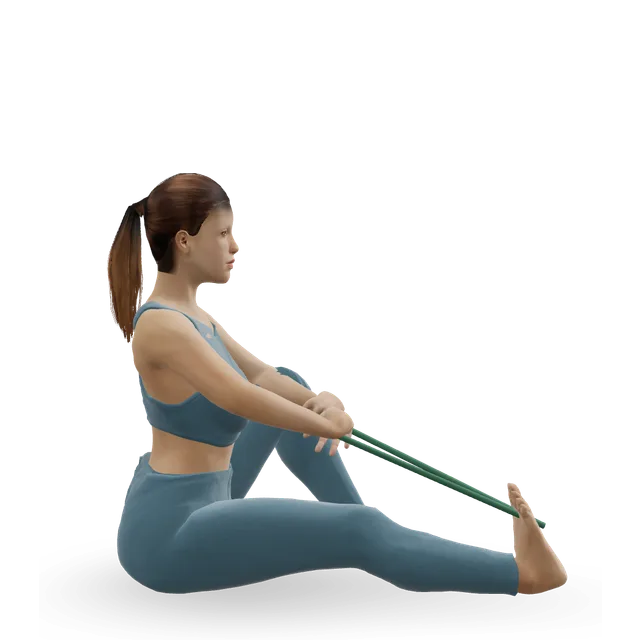
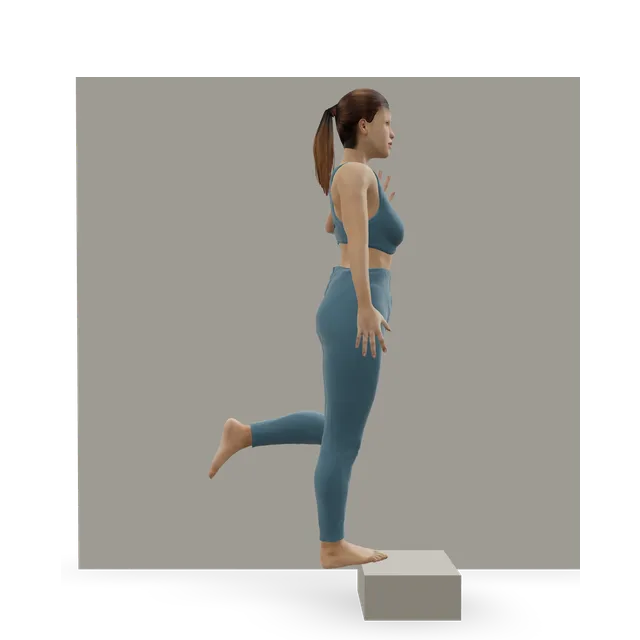
Start at the first stage. Each move opens a full guide with a 3D demo.
Stage 1
Cushion the heel and cut the pounding (about weeks 0 to 2)
Cushioned shoes with a firm heel counter, and a gel heel cup or pad in every pair you stand in, including slippers. No barefoot walking on hard floors; break up long spells of standing; cycle or swim instead of running or long walks. Low-Dye taping can give short-term relief (the steps are below). Doses come from NHS Lanarkshire's leaflet where marked; the rest are editorial.
Move on when: Everyday walking in cushioned shoes is comfortable, and pain after standing is easing week by week.
Follow along: a timer, a cue and the next move, one step at a time.
Stage 2
Build strength and standing time (about weeks 2 to 8)
Strengthen the calf and foot in cushioned shoes, and build up your time on your feet. Doses come from NHS Lanarkshire's leaflet where marked; the rest are editorial.
Move on when: Keep the cushioning in your everyday shoes. If it hasn't started to improve within 3 months, see a podiatrist, as NHS Lanarkshire advises.
Follow along: a timer, a cue and the next move, one step at a time.
What to change for now
Cushion and hold the heel
Wear cushioned shoes with a firm heel counter and a deep gel or plastic heel cup, in every pair you stand in, including at home (our suggestion, from the laboratory studies above). Avoid flip-flops, backless slippers, thin or worn soles, and walking barefoot on hard floors.
Note the contrast with a bump at the back of the heel (Haglund's deformity), where a stiff counter is the problem: the fat pad wants the heel held, and the bump wants nothing pressing on it.
Taping can't be shown on the 3D figure, so here are NHS Lanarkshire's steps. Use rigid zinc oxide tape from a pharmacy, and check for a skin allergy first, as an NHS pathway advises. A podiatrist or physiotherapist can show you, and it can help to have someone apply it.
1. Cut 3 long strips, each long enough to run from the side of the big toe joint, along the inside of the foot and round the heel, to the base of the little toe. Cut at least 8 short strips to go across the sole.
2. Point your big toe downwards.
3. Lay the first long strip from the base of the big toe joint round the heel to the base of the little toe, the second the opposite way, and the third like the first, each overlapping the one before without wrinkles.
4. Lay the short strips across the sole from the outer edge to the inner edge, starting just in front of the heel, each overlapping the last, until you reach just behind the ball of the foot.
5. It may feel slightly tight at first, which should ease. Keep each application on for no more than 3 to 4 days.
6. Take it off straight away if you get more pain, itching, irritation or pins and needles.
Pacing means breaking up standing and walking with regular breaks, and building up gradually. NHS Lanarkshire and Bradford put it, with weight loss if you need it, at the centre of self-help. Crushed ice in a damp towel for 10 to 15 minutes, 3 to 4 times a day, can ease a flare, as NHS Lanarkshire suggests. Painkillers or anti-inflammatories can help if they suit you.
Pain from the thick pad of fat under the heel bone that cushions each step: a deep, bruise-like ache in the centre of the heel. The pad may have thinned, lost its springiness or been bruised.
How is it different from plantar fasciitis?
Fat pad pain is central and bruise-like, builds with standing and walking, and is less marked on the first steps of the morning. Plantar fasciitis is sharp, at the front inner edge of the heel, and worst on those first steps. You can have both.
What causes it?
NHS leaflets list weight, age, unsupportive shoes, long spells of standing, a sudden increase in activity, diabetes, inflammatory arthritis and long-term steroid tablets, and repeated steroid injections into the heel are another. The research behind these is thin.
How is it diagnosed?
From the pattern of pain and an examination: pressing the centre of the heel brings it on, and pulling the toes up doesn't. An ultrasound can measure the pad, but studies disagree on what thickness means, so a scan supports the diagnosis rather than decides it.
Do heel cups work?
No trial has tested them for fat pad syndrome. They make sense, because holding the heel pad in place improves its shock absorption in laboratory studies, and in plantar fasciitis a silicone heel pad plus stretching helped more people than custom orthoses.
What shoes are best?
Cushioned shoes with a firm heel counter that holds the heel, and a gel heel cup or pad in every pair you stand in, including slippers. Avoid flip-flops, backless slippers and walking barefoot on hard floors.
Does taping help?
It may give short-term relief. In the only study, of 19 people with no comparison group, low-Dye taping cut walking pain from 6.5 to 4.2 out of 10. NHS Lanarkshire suggests keeping each application on for no more than 3 to 4 days.
What exercises help?
No exercise has been tested for it. NHS leaflets use calf stretches, heel raises, foot-muscle exercises and low-impact exercise such as cycling or swimming, and say to focus on strengthening if stretching makes it worse.
Can the fat pad grow back?
No exercise or insole has been shown to rebuild it. Fat grafting has been tested only under the ball of the foot, in one small trial, so it is experimental for the heel.
How long does heel fat pad syndrome last?
Most people start to improve within 3 months of following the advice, though full recovery can take several months. If it hasn't started to improve by then, see a podiatrist.
Should I have a steroid injection?
An NHS pathway doesn't use injections as a first or second treatment for heel pain, and repeated injections can thin the heel fat. Cushioning, pacing and strengthening come first.
Exercise education, not a diagnosis or treatment plan. It is written from the guidelines and studies listed above; review by a clinician is pending. If your pain follows an injury, is severe, is getting worse, or comes with any warning sign listed on this page, get it assessed. Health disclaimer.