Pain guide · Foot pain

Haglund's deformity: a painful bump at the back of the heel, and what helps

Haglund's deformity is a bony bump on the back of the heel bone that shoes with a stiff back rub against, sometimes called a pump bump. The fluid-filled sac between the bump and the Achilles tendon can become inflamed (retrocalcaneal bursitis), and the tendon can become painful where it joins the bone; together these are called Haglund's syndrome. The honest headline: bumps like this are common in heels that don't hurt, so the aim is to calm the area rather than remove the bone, and most people improve over months without surgery.

This guide covers the shoe changes that matter most, calf strengthening on flat ground (the same loading our Achilles guide uses for pain where the tendon meets the heel bone), what the evidence says about heel lifts, shockwave and injections, when surgery helps, and a staged plan with 3D demos.

When to get help first

Exercise is for pain that has been checked or is clearly mild and settling.

Get urgent medical help if

  • Go to A&E: a sudden sharp pain or snap at the back of the heel or ankle, sudden bruising or swelling after an injury, difficulty walking or putting your foot down, or not being able to stand on tiptoe. It may be an Achilles tendon rupture, which an NHS leaflet says needs checking straight away.
  • Contact NHS 111: severe heel pain after an injury, feeling faint, dizzy or sick from the pain, an ankle or foot that has changed shape or is at an odd angle, a snap, grinding or popping noise at the time of the injury, not being able to walk, walk on tiptoe or climb stairs, or swelling and bruising in the calf and ankle. These might be signs of a broken heel bone or a broken ankle.
  • Same day: the back of the heel is red, hot, swollen and very painful, especially with a high temperature or feeling hot, cold or shivery. It could be an infected bursa or a skin infection.
  • Call 999 or go to A&E: a red, hot, swollen foot with a very high temperature, feeling hot, cold or shivery, a fast heartbeat or fast breathing, purple patches on the skin, dizziness or confusion.
  • Call 999: calf or leg pain or swelling with breathlessness or chest pain. It could be a clot that has reached the lungs.
  • Same day (GP or NHS 111): throbbing pain and swelling in one calf, with red or darker skin. It could be a blood clot (a deep vein thrombosis, or DVT). Watch for it after an ankle injury or time in a cast or boot.

See a doctor or physiotherapist if

  • See a GP if heel pain is severe or stopping you doing normal activities, is getting worse or keeps coming back, or hasn't improved after 2 weeks of treating it at home.
  • Heel pain if you have diabetes, especially a blister or broken skin over the bump: foot problems can be more serious with diabetes.
  • Pain where tendons attach to the heel with no clear mechanical cause that lasts, is in several places, or comes with back pain without a clear cause, psoriasis, inflammatory bowel disease, eye inflammation (uveitis), a recent gut or urinary infection, or a close relative with spondyloarthritis or psoriasis: the National Institute for Health and Care Excellence (NICE) advises a rheumatologist's assessment for spondyloarthritis, a type of inflammatory arthritis.
  • New or worse pain at the back of the heel after a steroid injection near the Achilles tendon: get it checked, because injections there carry a risk of rupture.
  • Not improving after about 3 months of shoe changes and calf strengthening, or getting worse: ask for a physiotherapy or specialist review (our suggestion).

Understand it

What it is: a bump, a fluid sac and a tendonStrong evidence

Three things often go together at the back of the heel, and together they are called Haglund's syndrome. Our Achilles guide covers pain where the tendon meets the bone; this guide adds the bump, the fluid sac and shoes, and its loading plan is the same.

  • Haglund's deformity: a prominent upper back corner of the heel bone, which the Achilles tendon runs past to attach lower down.
  • Retrocalcaneal bursitis: swelling and irritation of the fluid-filled sac (bursa) wedged between that corner of bone and the front of the tendon. The soft tissue over the bump, just under the skin, can also swell where shoes rub: the pump bump.
  • Insertional Achilles tendinopathy: pain and thickening where the tendon joins the bone, often with a bony spur or calcium inside the tendon.

Sources 1, 2, 3, 4, 5, 6

Who gets itEmerging evidence

About 6% of people have Achilles pain at some point, and about a third of that is where the tendon meets the bone. A specialist review estimates that Haglund's syndrome affects about a quarter of the people who see a foot and ankle surgeon with that kind of pain. It happens at any activity level but is commonest in runners, and is linked with tight calves. NHS leaflets put the typical age for Achilles pain in the 40s, with 30 to 60 the commonest range.

Stiff, high heel counters (the back of the shoe), as in court shoes, men's dress shoes, and ice and roller skates, aggravate it, especially with high heels. An experimental study showed why: the slope of the heel brings the bony corner against the counter, and raising the shoe heel tips the bone away.

Sources 5, 6, 1, 2, 7, 8, 4

How it's recognised

Pain and swelling at the back of the heel, stiffness after rest that eases a little once you get moving, pain in shoes that press on the area, and a visible, sometimes red bump. It is worse with running, hills and jumping. The NHS heel pain page lists redness and swelling with a dull ache in the heel as signs of bursitis. Scans usually aren't needed to diagnose it.

Sources 7, 2, 1, 9

What an X-ray does and doesn't showMixed evidence

Bumps like this are common in heels that don't hurt, and studies disagree on whether the bump's size matters. So an X-ray can show a bump or a spur, but neither proves it's the cause of your pain. An X-ray or scan matters when the diagnosis is unclear, symptoms don't settle with good care, or surgery is being considered. The numbers:

  • Two case-control studies measured the bump in heels without pain. A 2007 study (Lu) found a positive bump measure in 42.5% of 40 painless heels, against 56.8% of painful ones. A 2026 study (Tay) found it in 57% of 37 matched people without heel pain, against 95% of heels treated with surgery. A third 2026 study found Haglund's deformity in 15% of 117 people without heel pain.
  • Two studies found no difference in the bump's angle or height (3.3 against 3.2 mm) between painful and painless heels, and three others found the bump, or its angle, more common or larger with pain where the tendon meets the bone. A 2017 review concluded that measuring heel bone shape is of doubtful use.
  • Bony spurs and calcium inside the tendon are more consistently linked with pain (calcium in 67% of painful tendons against 6% of comparison feet in one study), but spurs are also common in feet that don't hurt: 25 to 35% of people without foot pain have them.
  • A weight-bearing side X-ray can also show an inflamed fluid sac, as a loss of the clear triangle in front of the tendon. In one study it picked up 79 to 83% of cases, and was almost never positive without bursitis (98 to 100%).

Sources 10, 11, 12, 13, 14, 5, 15, 7, 1

Why pulling the foot up hurts

The pressure inside the fluid sac was much higher in 13 people with bursitis than in 15 with Achilles tendinopathy, and it rose as the ankle was bent upwards. That fits the advice to avoid dropping the heel below a step, and hard calf stretches, while it's sore.

Sources 16, 17, 7, 18

How it usually goesEmerging evidence

Most people improve gradually. One NHS hospital leaflet says most people recover within 12 months, and another that most notice some improvement within 8 to 12 weeks of exercise, though full recovery can take several months. A specialist review reports that non-surgical care fails in up to 40%, and the American Academy of Orthopaedic Surgeons (AAOS) warns that the pain may last longer than 3 months even with early treatment.

Inflammatory arthritis can also inflame these structures. The warning signs above say when to ask about it, following NICE guidance.

Sources 18, 7, 6, 1, 19

What helps, and how strong the evidence is

Shoes first: take the pressure off the bumpEmerging evidence

NHS hospital leaflets advise shoes whose backs don't rub or press on the heel, well-fitted shoes that cushion the heel, a gel heel cup or pad from a pharmacy, and soft cushioning at the back of the shoe. AAOS adds that shoes that are soft or open at the back reduce irritation, and that heel lifts reduce the strain.

Stiff, prominent counters, especially with high heels, press on the bump and the tissue over it. In an experimental model, raising the shoe heel tilted the heel bone and moved the bump away from the counter, which matches the observation that heel lifts ease symptoms. This is consistent advice with a clear reason behind it, but no trial has tested shoe changes.

Sources 18, 2, 20, 1, 8, 4

Calf strengthening on flat ground, as for insertional Achilles painEmerging evidence

In a pilot study of 27 people (34 tendons) with pain where the tendon meets the heel bone, painful heavy lowering done only to floor level (3 sets of 15, twice a day, every day for 12 weeks) left 67% satisfied and back to their activity at about 4 months. In those who were satisfied, pain fell from 70 to 21 on a 100-point scale. The study had no comparison group; its authors note that earlier work found the standard heel drop below a step gave good results in only 32% of people with this kind of pain.

A 2017 review recommends lowering only through a limited range, without dropping the heel. NHS hospital leaflets agree: holds, then two-leg and one-leg raises on flat ground, avoiding exercises that lower the heel below a step unless a physiotherapist advises them. AAOS keeps heel drops for pain higher up the tendon. This matches our Achilles guide.

Sources 17, 5, 7, 18, 20, 1

Heel lifts: may ease pain, on small evidenceMixed evidence

In laboratory work, heel lifts reduce both stretching and squeezing where the tendon attaches. In 20 people with this kind of pain, 20 mm heel lifts eased walking pain straight away (from 2.2 to 0.7 out of 10) and improved a symptom score from 52 to 60 over 2 weeks, but there was no comparison group. A small trial against sham (dummy) lifts in 26 people showed that a full trial is possible, but didn't test whether they work.

For pain higher up the tendon, heel lifts did a little better than heel-drop exercise at 12 weeks in 100 people (by 9.6 points on a 100-point score, just short of the 10 thought to matter), and in a blinded trial of 108 people the benefit over sham lifts was small (0.9 points on a 0 to 10 scale) and may not matter. An NHS leaflet says some people find heel lifts or insoles help, the evidence is weak, and they should be used alongside exercise. Use them in both shoes so you don't create a difference in leg length, as an NHS pathway advises.

Sources 5, 21, 22, 23, 24, 7, 25

Shockwave: the newer, better trials say it adds littleMixed evidence

For: in 50 people with long-standing pain where the tendon meets the bone, low-energy shockwave beat the heel drop below a step at 4 months (64% against 28% recovered or much improved), and a 2021 review of 23 mostly low-quality studies favoured it. Neither compared it with a sham treatment.

Against: in a double-blind trial of 119 people, adding shockwave to exercise made no difference at 24 weeks. In 76 people, shockwave did no better than a sham for pain straight afterwards. A 2026 meta-analysis of 9 trials (557 people) found no meaningful benefit over sham for this kind of pain, with low to moderate certainty, and recorded 2 Achilles ruptures after focused shockwave. A network meta-analysis of 9 trials had very low confidence in every non-surgical option. In a retrospective study of 67 people, shockwave helped less when a Haglund's bump was present. NHS services may still offer it when first-line care hasn't worked.

Sources 26, 27, 28, 29, 30, 31, 32, 2

Injections: a specialist decisionMixed evidence

Steroid injections into the Achilles tendon are not recommended because they can weaken it and lead to a rupture. For bursitis on its own, a review says an injection into the fluid sac, avoiding the tendon, may be considered.

In 218 image-guided injections into the sac, 63% of the 62 people followed up in the short term had a good or excellent fall in pain; 14% later had Achilles surgery, and 4 people (1.8%) had an Achilles rupture 15 to 59 days later, each just after a sudden injury. The NHS bursitis page notes that a steroid injection may be offered for bursitis, but not if it's infected.

Sources 1, 5, 33, 34

Surgery in briefEmerging evidence

Surgery is considered when symptoms persist after 3 to 6 months of good non-surgical care (AAOS suggests 6 months). It may remove the bump and the inflamed sac, either through an open cut or through small cuts with a camera (endoscopic calcaneoplasty); clean out and reattach the damaged tendon, sometimes with a tendon transfer; or cut a wedge from the heel bone to change its angle (a Zadek osteotomy).

A 2012 review of 15 studies (547 operations) found better satisfaction and fewer complications with endoscopic than open surgery, and a later review gives complication rates of 5.3% against 12.3%. These are low-level studies, and no trial has compared surgery with non-surgical care. After endoscopic surgery, satisfaction averaged 8.5 out of 10 at about 8 years, though only 28 of 55 people replied. A review of the Zadek osteotomy (10 studies, 232 people) found less pain and better function, with mostly minor complications.

In one endoscopic series, recovery took about 8 weeks and the return to sport about 11; reattaching the tendon takes longer. One study found the bump's size wasn't linked with pain, so removing the bump routinely may be unnecessary. Your surgical team's plan comes first.

Sources 6, 1, 35, 36, 37, 13
How much pain is OK while you exercise?

Up to 5 out of 10, settled by the next morningEmerging evidence

Use the same tendon rule as our Achilles guide: pain during exercise up to about 5 out of 10, back to its usual level by the next morning, and not creeping up week on week. That guide takes the figure from a trial of 38 people with Achilles pain, in which carrying on running and jumping with a pain-monitoring model did no harm. It hasn't been tested in Haglund's syndrome itself.

NHS leaflets put it in their own words. Leicestershire's traffic lights: green, below 4 out of 10, carry on and consider moving up a level; amber, around 5 to 6, usually fine if it settles within a few hours of stopping; red, above 7, do less or go back a level. A mild increase that settles within 24 hours is acceptable. Bath's leaflet: any increase in pain with exercise should settle within a few hours, and if it takes longer, work at a lower level next time.

Pain from shoes pressing on the bump isn't a training signal: change the shoes, not the exercise (our suggestion).

Sources 38, 7, 18

The exercise plan: 4 stages

Start at the first stage. Each move opens a full guide with a 3D demo.

Stage 1

Take the pressure off, and load without moving the ankle (about weeks 0 to 2)

Shoes with a soft, low or open back, a gel heel cup, pad or small heel lift in both shoes, and nothing pressing on the bump. Cut back the walking, running, hills or jumping that aggravate it, but don't rest completely. Doses come from NHS leaflets where marked; the rest are editorial.

Isometric calf raise hold demonstrated on the 3D figure3D demoIsometric calf raise holdBeginner · A wall

Hold 30 to 45 s, 4 to 5 times, once or twice a day, on both feet · The Leicestershire NHS leaflet's dose

Harder: Slow calf raise

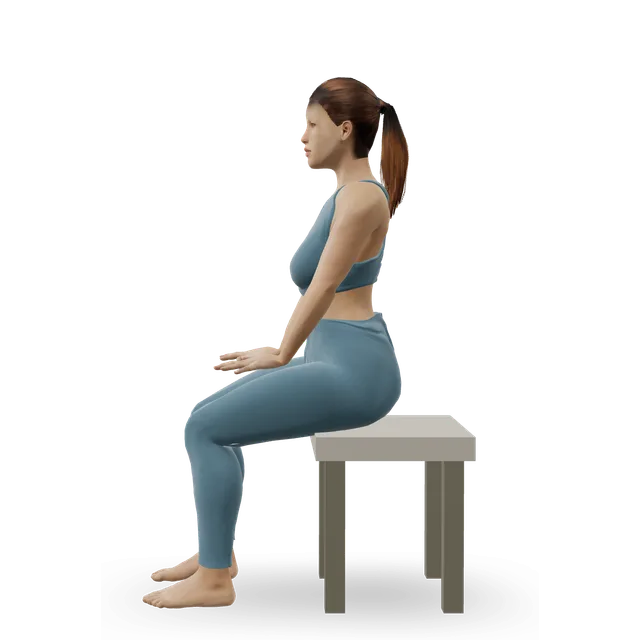
Seated bent-knee calf raise (soleus raise) demonstrated on the 3D figure3D demoSeated bent-knee calf raise (soleus raise)Beginner · A bench or box

3 sets of 10 to 15 with a weight on your knees, 3 s up, 2 s hold, 3 s down · The tempo is from the Bath NHS leaflet

Harder: Slow calf raise

Stationary cycling demonstrated on the 3D figure3D demoStationary cyclingBeginner · Cardio machine

20 to 30 min · In place of running and hills; the time is ours

Harder: Air bike intervals

Move on when: Walking in your changed shoes is comfortable, morning stiffness is stable or easing, and the exercises stay within the pain rule.

Follow along: a timer, a cue and the next move, one step at a time.
Stage 2

Build: calf raises on flat ground (about weeks 2 to 6)

Heel raises on the floor, never dropping the heel below a step, as in our Achilles guide for pain where the tendon meets the bone.

Slow calf raise demonstrated on the 3D figure3D demoSlow calf raiseBeginner · A wall

3 sets of 10 to 15, once a day, knees straight and then slightly bent · On flat ground. Leicestershire's level 2 dose, with Bath's 3 s up, 2 s hold, 3 s down

Easier: Seated bent-knee calf raise (soleus raise) · Harder: Standing dumbbell calf raise

Isometric calf raise hold demonstrated on the 3D figure3D demoIsometric calf raise holdBeginner · A wall

4 to 5 holds of 30 to 45 s, shifting your weight onto the sore leg, then on one leg · The Bath leaflet moves the hold onto one leg

Harder: Slow calf raise

Seated bent-knee calf raise (soleus raise) demonstrated on the 3D figure3D demoSeated bent-knee calf raise (soleus raise)Beginner · A bench or box

3 sets of 10 to 15, adding weight on the knees · Editorial

Harder: Slow calf raise

Move on when: 3 sets of 15 two-leg raises stay within the pain rule, and the next morning is no worse (our benchmark, matching the Achilles guide).

Follow along: a timer, a cue and the next move, one step at a time.
Stage 3

Strengthen: one leg and heavier, still on the flat (about weeks 6 to 12)

Heavier and single-leg calf work, with the heel lowered only to the floor. Doses are editorial unless marked.

Single-leg calf raise from a step demonstrated on the 3D figure3D demoSingle-leg calf raise from a stepIntermediate · A step + A wall

3 sets of 10 to 15 each leg, once a day, knee straight and slightly bent · On flat ground, not a step: Leicestershire's level 3 dose, as in our Achilles guide

Easier: Slow calf raise · Harder: Single-leg pogo hops

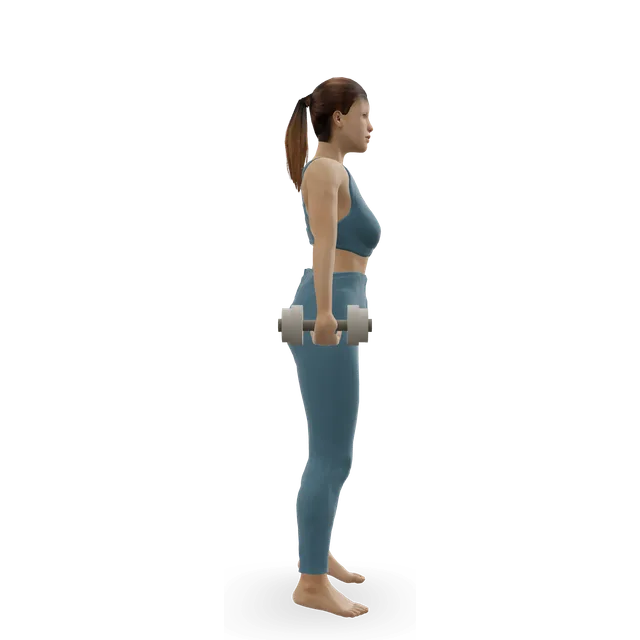
Standing dumbbell calf raise demonstrated on the 3D figure3D demoStanding dumbbell calf raiseIntermediate · A dumbbell

3 to 4 sets of 6 to 10, heavy · Heels down to the floor only

Easier: Slow calf raise · Harder: Single-leg pogo hops

Seated one-leg calf raise with a dumbbell demonstrated on the 3D figure3D demoSeated one-leg calf raise with a dumbbellBeginner · A dumbbell + A bench or box

3 sets of 8 to 12 · Ball of the foot on the floor or a very low block, the heel never dropping below level

Harder: Slow calf raise

Step-up demonstrated on the 3D figure3D demoStep-upBeginner · A step

3 sets of 8 to 10 each side

Easier: Low step-up · Harder: Dumbbell step-up

Move on when: About 20 to 25 single-leg raises with good height on each side (the Achilles guide's benchmark), and you can walk several miles without tendon pain, which the Bath leaflet suggests before jogging.

Follow along: a timer, a cue and the next move, one step at a time.
Stage 4

Return: spring, then running (from about weeks 8 to 12)

Build impact gradually, adding distance before speed and hills last. Keep two calf-strength sessions a week once you've recovered. Doses are editorial unless marked.

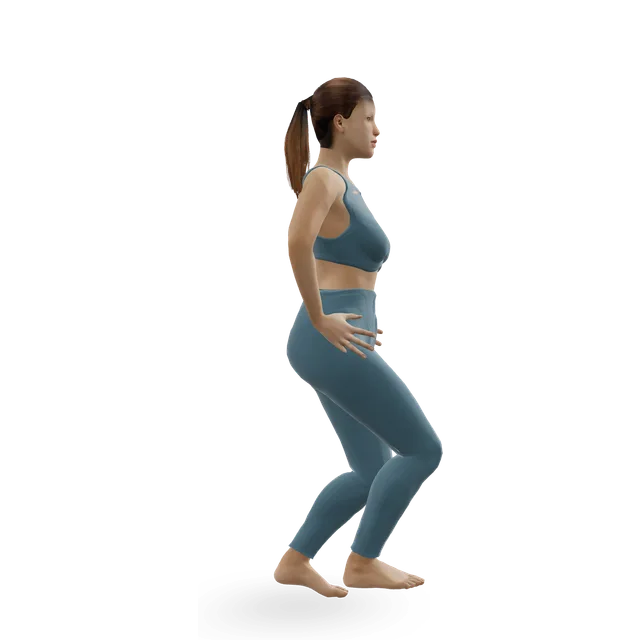
Ankle bounces (mini pogo) demonstrated on the 3D figure3D demoAnkle bounces (mini pogo)Beginner · No equipment

3 sets of 20 quick, quiet contacts · Skip it while heel pain is acute

Harder: Pogo hops

Pogo hops demonstrated on the 3D figure3D demoPogo hopsIntermediate · No equipment

3 sets of 20 · Once ankle bounces are easy

Easier: Ankle bounces (mini pogo) · Harder: Single-leg pogo hops

Single-leg pogo hops demonstrated on the 3D figure3D demoSingle-leg pogo hopsAdvanced · No equipment

3 sets of 10 each leg · The Bath leaflet ends with mini hops on the spot; the dose is ours

Easier: Pogo hops

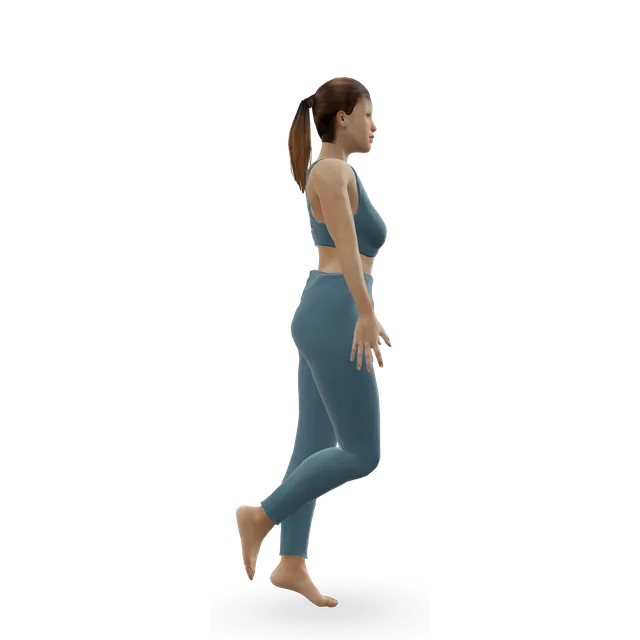
Treadmill jogging demonstrated on the 3D figure3D demoTreadmill joggingIntermediate · Cardio machine

Walk-jog intervals on alternate days · Once you can walk several miles without tendon pain

Easier: Treadmill walking · Harder: Sprint intervals

Move on when: Running and hopping stay within the pain rule on the day and the next morning. If you've made little progress after about 3 months, ask for a specialist review.

Follow along: a timer, a cue and the next move, one step at a time.

What to change for now

Shoes and padding

Choose shoes with a soft, low or open back, or a back you can soften or pad. A gel heel cup or pad from a pharmacy, or a small heel lift in both shoes, takes the bump away from the counter. Our suggestions: backless shoes or clogs while it's sore; laces that stop the heel slipping up and down; a ring-shaped or gel pad over the bump; and padding inside skates or ski boots.

Sources 18, 2, 20, 1, 25

Ice and painkillers

An ice pack wrapped in a damp towel for about 10 minutes can ease the pain; wait at least an hour before using it again. Simple painkillers or creams from a pharmacist may help, as the Bath leaflet says.

Source 18

Cut back, but don't stop

Complete rest is usually not helpful. Limit the activity that aggravates it for about 6 weeks, then build back up over a month or two. Cycling, the cross-trainer and swimming keep you fit. A walking boot may be used briefly for severe pain, but AAOS discourages long use because it weakens the calf.

Sources 7, 18, 1

Positions to swap, and why

Habit or positionWhy it mattersInstead
Shoes with a stiff, high back, especially with high heelsThey press on the bump and the fluid sac.Soft, low or open backs, with a gel heel cup or a heel lift.
Heel drops off a stepDropping below a step squeezes the area where the tendon meets the bone; NHS leaflets and AAOS advise against it for pain at the heel.Calf raises on flat ground.Try: Slow calf raise
Hard calf stretches, especially with the heel hanging off a stepPulling the foot up raises the pressure in an inflamed sac, and stretching can irritate the tendon near the heel.Gentle, flat-footed stretches if at all, and holds to load the calf instead.Try: Isometric calf raise hold
Hills, sprints and jumping early onThey load the tendon hardest.Cycling and flat walking, with hills added last.Try: Stationary cycling
Complete rest, or weeks in a boot without adviceComplete rest is usually not helpful, and long spells in a boot weaken the calf.Keep loading within the pain rule.Try: Isometric calf raise hold
Rubbing or massaging the bump hardIt may inflame the fluid sac further (our caution).Ice, padding and shoe changes.
A steroid injection into or around the Achilles tendonAAOS advises against injections into the tendon because of the risk of rupture, and ruptures followed 1.8% of image-guided injections into the sac in one series.A specialist decision, image-guided and into the sac only, after exercise has had a fair trial.

Routines to follow

More moves for this area

Questions people ask

What is Haglund's deformity?

A bony bump on the upper back corner of the heel bone that shoes with a stiff back rub against. It often comes with an inflamed fluid-filled sac (bursitis) and pain where the Achilles tendon joins the bone; together these are called Haglund's syndrome.

What causes it?

The shape of the heel bone plays a part, and stiff, high shoe backs, such as court shoes, dress shoes and skates, aggravate it, especially with high heels. Running, hills and tight calves load the area.

Is it Haglund's deformity or Achilles tendonitis?

Often both: Haglund's syndrome includes pain where the Achilles tendon meets the heel bone. A visible bump that shoes rub suggests Haglund's; pain and stiffness at the tendon's attachment is the tendon itself. The treatment overlaps, and our Achilles guide has the full loading programme.

What shoes are best for Haglund's deformity?

Shoes with a soft, low or open back that don't press on the bump, a gel heel cup or pad, and a small heel lift in both shoes. Backless shoes or clogs can help while it's sore.

What exercises help Haglund's deformity?

Calf strengthening on flat ground: holds on tiptoe, then two-leg and one-leg calf raises, built up over 12 weeks or more. Don't drop the heel below a step: in a small study, lowering only to the floor satisfied 67% of people, while earlier work found the standard heel drop below a step gave good results in only 32%.

Should I stretch my calf?

Gently, if at all. Strengthening matters more, stretching can irritate the tendon near the heel, and pulling the foot up squeezes an inflamed fluid sac. Don't hang your heel off a step.

Do heel lifts help?

They may ease pain by reducing the strain at the heel, and they're cheap to try in both shoes. The best trial, in pain higher up the tendon, found only a small benefit over dummy lifts, so use them alongside exercise rather than instead of it.

Does shockwave therapy work for Haglund's?

Probably not much. Trials against a sham treatment and a 2026 meta-analysis found no meaningful benefit for pain where the tendon meets the bone, and it helped less when a Haglund's bump was present.

Is a steroid injection safe?

Injections into the Achilles tendon are not recommended because they can weaken it. Image-guided injections into the fluid sac eased pain in the short term in 63% in one series, but 1.8% had a later Achilles rupture, so it's a specialist decision.

How long does Haglund's deformity take to settle?

Months. Most people notice improvement within 8 to 12 weeks of exercise and most recover within 12 months, but up to 40% don't settle without surgery.

When is surgery needed, and how long is recovery?

When 3 to 6 months of good non-surgical care hasn't worked. Endoscopic removal of the bump had fewer complications than open surgery, and one series returned to sport at about 11 weeks; reattaching the tendon takes longer. Your surgical team will give you its own plan.

Will the bump go away?

The bone won't change without surgery, and bumps like it are common in heels that don't hurt. The aim is a calm fluid sac and a strong tendon, so the bump stops causing pain.

Related exercise guides

Other pain guides

Sources

  1. American Academy of Orthopaedic Surgeons (OrthoInfo) · Achilles tendinitis
  2. Milton Keynes University Hospital NHS · Achilles tendinopathy (patient information)
  3. Pavlov 1982 · The Haglund syndrome: diagnosis and differential diagnosis (case series, Radiology)
  4. Heneghan 1984 · The Haglund painful heel syndrome: heel tilt and the shoe counter (experimental study, Clinical Orthopaedics and Related Research)
  5. Chimenti 2017 · Insertional Achilles tendinopathy (current concepts review, Foot & Ankle International)
  6. Hall 2024 · Minimally invasive surgery for Haglund's deformity and insertional Achilles tendinopathy (review, Foot & Ankle International)
  7. Leicestershire Partnership NHS Trust · Achilles tendinopathy (MSK physiotherapy leaflet, 2026)
  8. Stephens 1994 · Haglund's deformity and retrocalcaneal bursitis (review, Orthopedic Clinics of North America)
  9. NHS · Heel pain
  10. Lu 2007 · Angle analysis of Haglund syndrome (case-control study, Foot & Ankle International)
  11. Tay 2026 · Haglund deformity and heel bone shape in insertional Achilles tendinopathy (matched case-control study, Journal of Foot and Ankle Surgery)
  12. Dadir 2026 · Haglund deformity and heel spurs in insertional Achilles tendinopathy (case-control study, Journal of Foot and Ankle Research)
  13. Lee 2023 · Haglund deformity size and insertional Achilles tendinopathy (case-control study, Foot & Ankle International)
  14. Kızkapan 2026 · X-ray measures linked with insertional Achilles tendinopathy (case-control study, Journal of Foot and Ankle Surgery)
  15. van Sterkenburg 2010 · The weight-bearing side X-ray in retrocalcaneal bursitis (diagnostic study, Acta Orthopaedica)
  16. Lohrer 2014 · Pressure in the retrocalcaneal bursa in bursitis and Achilles tendinopathy (pressure study of 28, Clinical Biomechanics)
  17. Jonsson 2008 · Calf lowering to floor level for insertional Achilles tendinopathy (pilot study of 27, British Journal of Sports Medicine)
  18. Royal United Hospitals Bath NHS · Advice and exercises for insertional Achilles tendinopathy (physiotherapy leaflet, 2021)
  19. NICE · Spondyloarthritis in over 16s: diagnosis and management (NG65)
  20. University Hospitals Coventry and Warwickshire NHS · Achilles tendinopathy (patient leaflet, 2023)
  21. Alghamdi 2024 · In-shoe heel lifts in insertional Achilles tendinopathy (case series of 20, Orthopaedic Journal of Sports Medicine)
  22. Bourke 2024 · Heel lifts for insertional Achilles tendinopathy (feasibility RCT of 26, Journal of Foot and Ankle Research)
  23. Rabusin 2021 · Heel lifts compared with heel drops for mid-portion Achilles tendinopathy (RCT of 100, British Journal of Sports Medicine)
  24. Bourke 2025 · Heel lifts for mid-portion Achilles tendinopathy (blinded RCT of 108, Journal of Orthopaedic & Sports Physical Therapy)
  25. NHS Greater Glasgow and Clyde · MSK foot and ankle pathway: plantar heel (Right Decisions, 2025)
  26. Rompe 2008 · Heel drops compared with shockwave for insertional Achilles tendinopathy (RCT of 50, Journal of Bone and Joint Surgery)
  27. Zhi 2021 · Non-surgical treatment of insertional Achilles tendinopathy (systematic review, Journal of Orthopaedic Surgery and Research)
  28. Mansur 2021 · Shockwave added to heel drops for insertional Achilles tendinopathy (double-blind RCT of 119, Journal of Bone and Joint Surgery)
  29. Alsulaimani 2026 · Radial shockwave and immediate pain in insertional Achilles tendinopathy (sham-controlled RCT of 76, Clinical Rehabilitation)
  30. Korakakis 2026 · Shockwave for mid-portion and insertional Achilles tendinopathy (meta-analysis, Journal of Orthopaedic & Sports Physical Therapy)
  31. Ko 2023 · Non-surgical treatments for insertional Achilles tendinopathy compared (network meta-analysis, BMC Musculoskeletal Disorders)
  32. Wu 2016 · Shockwave for insertional Achilles tendinopathy with and without Haglund's deformity (retrospective study of 67, BioMed Research International)
  33. Boone 2021 · Image-guided steroid injections into the retrocalcaneal bursa (retrospective study of 218 injections, Skeletal Radiology)
  34. NHS · Bursitis
  35. Wiegerinck 2012 · Surgical treatment of chronic retrocalcaneal bursitis (systematic review of 15 studies, Arthroscopy)
  36. Opdam 2021 · Long-term results of endoscopic calcaneoplasty for retrocalcaneal bursitis (case series, Knee Surgery, Sports Traumatology, Arthroscopy)
  37. Poutoglidou 2023 · The Zadek heel bone osteotomy for insertional Achilles tendinopathy (systematic review and meta-analysis, Foot and Ankle Surgery)
  38. Silbernagel 2007 · Continued sport with a pain-monitoring model in Achilles tendinopathy (RCT of 38, American Journal of Sports Medicine)

Exercise education, not a diagnosis or treatment plan. It is written from the guidelines and studies listed above; review by a clinician is pending. If your pain follows an injury, is severe, is getting worse, or comes with any warning sign listed on this page, get it assessed. Health disclaimer.