Achilles tendon rupture: recovery with or without surgery
An Achilles rupture is a tear of the tendon above the heel, usually during a sudden push-off: a snap or a feeling of being kicked, then walking flat-footed and being unable to stand on tiptoe. Get it checked the same day.
Many NHS hospitals now treat it in a boot rather than with an operation: in trials, both gave similar function at about a year, while surgery meant fewer re-tears and more wound and nerve problems. This guide sets out what the trials found, the usual stages from the boot to sport, and why the heel raise needs work for months. Your team's plan comes first.
Exercise is for pain that has been checked or is clearly mild and settling.
Get urgent medical help if
Same day: a sudden snap or pop at the back of the heel or calf, or a feeling of being kicked there, then walking flat-footed and being unable to push off, stand on tiptoe or climb stairs. It could be an Achilles tendon rupture or a broken heel bone. Go to A&E or a minor injuries unit, or contact NHS 111.
Call 999: breathlessness or chest pain, especially while you're in a boot or cast, with or without calf pain or swelling. It could be a blood clot that has reached the lungs. Do not drive yourself to A&E.
Same day: in the boot, a sudden cramp-like pain in the calf, thigh or groin, or a sudden increase in swelling. Seek medical advice: it could be a blood clot (deep vein thrombosis, DVT).
Same day: in a cast or boot, pain that is getting worse, toes that are numb or burning, a cast that feels too tight, toes that are swollen, blue or white, or a bad smell from under the cast.
Same day: a new snap or pop, or a sudden loss of push-off, during recovery. Contact your fracture clinic: the tendon may have torn again.
After surgery, same day (urgent GP appointment or NHS 111): a very high temperature or feeling hot, cold or shivery, or a wound that is red, hot, swollen or oozing. These can be signs of an infection.
See a doctor or physiotherapist if
Skin rubbing or sores under the boot: contact the fracture clinic, and check your skin every day.
A suspected rupture that was never examined, or a weak push-off weeks after what seemed to be a sprain or calf strain: ask for an assessment. A rupture found late may need different treatment.
During rehab, pain that doesn't settle by the next morning, or that climbs week on week: tell your physiotherapist.
Still limping, or unable to start heel raises on the injured side, months into rehab: ask your physiotherapist to review your plan.
Understand it
What it is and who gets itStrong evidence
The Achilles tendon joins the calf muscles to the heel bone and is the largest tendon in the body. A rupture is a tear, usually right through the tendon a few centimetres above the heel; sometimes it pulls away from the bone. Partial tears are rare, so a sudden Achilles injury is treated as a complete rupture until it has been checked.
Most happen in sport, with a sudden push-off, sprint or jump in stop-start games such as tennis, badminton, squash, netball, basketball and football. It is commonest between 30 and 50 and in men. Past Achilles tendinopathy, starting a new sport or building up too fast, being overweight, steroid medicines or injections, some antibiotics (such as ciprofloxacin or levofloxacin) and conditions such as rheumatoid arthritis or diabetes raise the risk.
A sudden pain at the back of the heel or calf, often with a snap or pop, or a feeling of being kicked. The pain may settle quickly to a dull ache. Then you walk flat-footed and can't push off, stand on tiptoe or climb stairs well, and there may be swelling and bruising.
A clinician feels for a gap above the heel and does the calf squeeze test, also called the Simmonds or Thompson test: lying face down, squeezing the calf normally points the foot down, and with a rupture the foot doesn't move. In 174 patients, the calf squeeze test picked up 96% of ruptures, and at least two tests were positive in every one. Scans are usually only needed if the diagnosis is unclear.
Reviews often say that 20 to 25% of Achilles ruptures are missed at first. A 2026 Swedish study of 958 ruptures paints a different picture: 11% were treated more than 2 weeks after the injury, mostly because people waited to seek help as the pain settled, while a missed diagnosis at the first visit happened in about 1%. In Norwegian compensation claims, a delayed or missed diagnosis was the commonest reason a claim was accepted.
Either way, a suspected rupture needs examining rather than waiting to see.
Each team sets its own timings, but NHS pathways are broadly similar: a boot or cast for about 8 to 10 weeks, with the foot pointing down at first and brought gradually up to neutral (a right angle to the leg); physiotherapy from around the end of the boot phase; jogging from about 4 to 6 months; and sport at about 4 to 12 months, depending on the sport. One trust says full recovery can take 18 to 24 months.
Calf strength often stays down for years. In one trial, the injured side did about 53 to 58% of the other side's heel-raise work at a year and about 60% after 4.5 years, though the height of the heel raise recovered better (82%). A tendon that heals longer than before goes with a lower heel raise, and a big height deficit at a year went with poorer ankle movement in walking, jogging and jumping 6 years later.
That's why teams protect the tendon from stretching early on and ask you to keep strengthening the calf long after discharge.
Surgery or a boot: similar function at about a yearStrong evidence
In trials, surgery and non-surgical treatment with early movement gave similar everyday function at 1 to 2 years. In a Norwegian trial of 554 people, scores on an Achilles questionnaire changed by about the same amount at 12 months after non-surgical treatment, open repair or keyhole (minimally invasive) repair. Meta-analyses of randomised trials agree that function, return to sport and the ability to do a heel raise don't clearly differ.
Surgery means fewer re-tears but more complicationsStrong evidence
Across 29 studies of 15,862 people, the tendon tore again in 2.3% after surgery and 3.9% without, a difference of under 2 in 100. Other complications were commoner after surgery (4.9% against 1.6%), mainly infection. In the Norwegian trial, re-tears were 0.6% after either operation against 6.2% without surgery, but nerve injuries were 5.2% after keyhole surgery, 2.8% after open repair and 0.6% without surgery.
When non-surgical care included accelerated rehab and early movement, the gap in re-tears was no longer clear. In a trial of 144 people who all had that kind of rehab, 2 tore again after surgery and 3 without, while surgery had 13 complications against 6, mainly wound problems.
Surgery may bring back a little more strengthEmerging evidence
In a trial of 60 people with the same rehab, calf strength was 10 to 18% greater after surgery at 18 months, though overall scores were similar. One NHS trust offers surgery to elite athletes for this reason, as well as to people seen late (after 2 to 3 weeks), re-tears and tendons that have pulled off the bone.
A trial of 300 people tested the Copenhagen approach of choosing surgery only when an ultrasound scan showed a wide gap or a lengthened tendon. Re-tears were 3% against 11% with routine non-surgical care, with 36% fewer operations than operating on everyone. It's one trial.
Walking early in a boot is as good as a castStrong evidence
In UKSTAR, run in 39 UK hospitals with 540 people treated without surgery, a functional brace that allowed early weight-bearing did as well as a plaster cast at 9 months, with re-tears in 5% against 6%, at slightly lower cost. In a smaller trial of 60, taking full weight from day 1 did as well as 6 weeks without weight, still with no difference at 4.5 years. The Leicester protocol, an 8-week boot with full weight from the start, reported re-tears in 2% of 442 people.
The American orthopaedic guideline from 2010 rated none of its recommendations strong; its two moderate ones supported early protected weight-bearing and devices that allow movement after surgery.
Settles by the next morning, and never sharpEmerging evidence
One NHS trust's rehab protocol says pain after exercise should settle to its normal level by the next morning, with no increase in pain from week to week. If it doesn't, change the exercises until it does.
Another says occasional twinges and a pulling feeling at the back of the heel or calf can be normal while the tendon heals. Don't force the foot up towards you or stretch the calf hard.
So mild discomfort or a gentle pull is fine if it has settled by the next morning and isn't creeping up week on week (this site's reading of those leaflets). Sharp pain, a snap or a sudden loss of push-off means stop and contact your team. The 5 out of 10 rule in the Achilles tendinopathy guide is for a painful but intact tendon, and doesn't apply in the first months after a rupture.
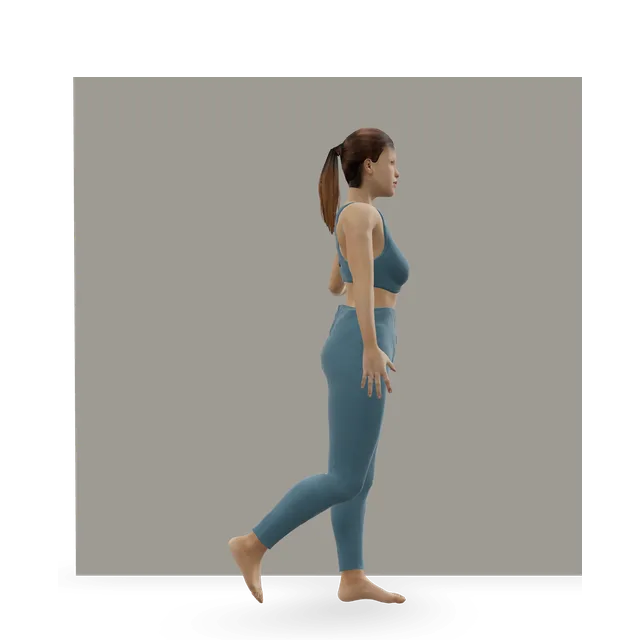
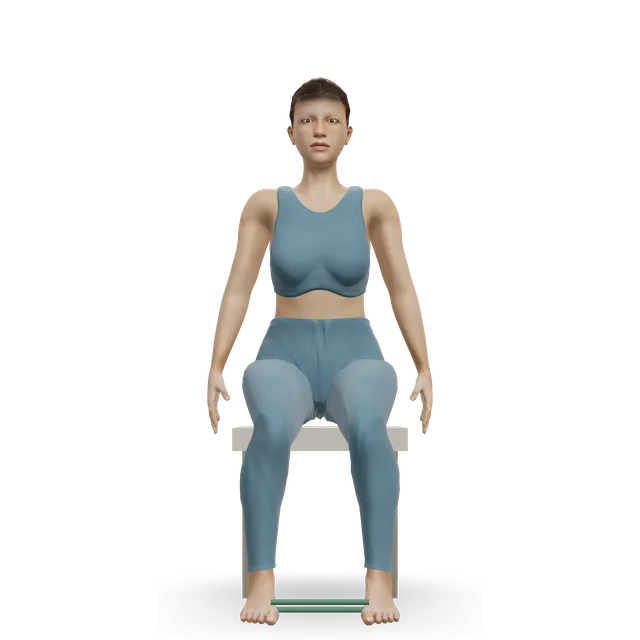
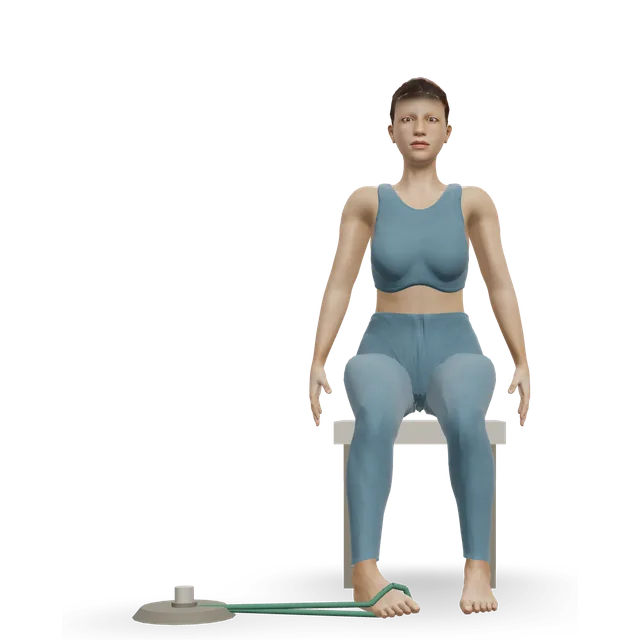
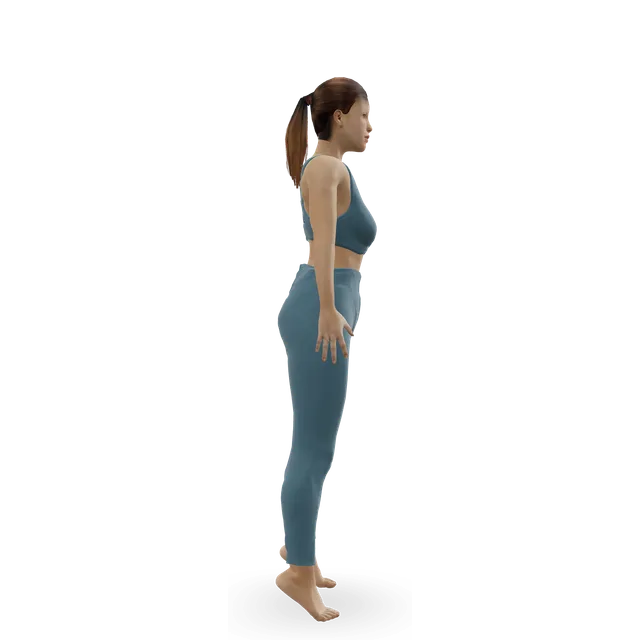
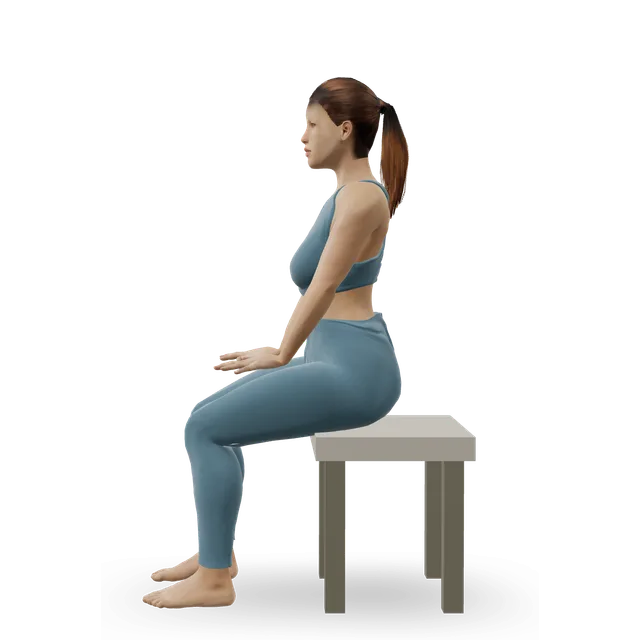
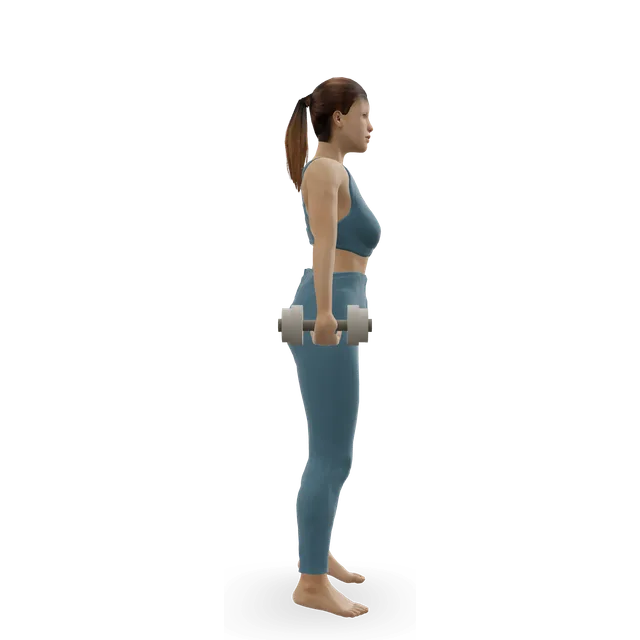
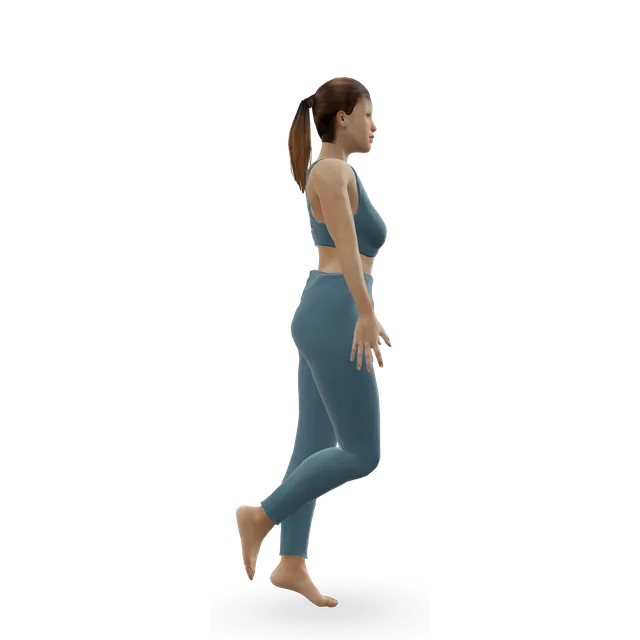
Start at the first stage. Each move opens a full guide with a 3D demo.
Stage 1
In the boot: protect the tendon, keep the rest strong (about weeks 0 to 8, as your team allows)
Wear the boot or cast exactly as your team says, usually day and night at first. Many NHS teams let you take full weight in the boot from the start, with crutches as needed; some start with a cast and no weight. Don't stand on the foot out of the boot, and keep the toes pointing down whenever it's off. Do these exercises in the boot unless told otherwise. The hold times are one NHS trust's; the repetitions are editorial.
Move on when: Your team takes you out of the boot, typically at 8 to 10 weeks.
Follow along: a timer, a cue and the next move, one step at a time.
Stage 2
Out of the boot: walk well, wake the calf up (about weeks 8 to 16, as your team allows)
Walk without a limp, weaning off crutches, with the heel raise or gel pad in your shoes if you were given one. On stairs, put your whole foot on the step. No strong calf stretches, no heel drops off a step, and no running, hopping, hills or brisk walking yet: one NHS trust says you're most vulnerable to a re-tear in the first 8 weeks out of the boot. Doses are editorial unless named.
Move on when: You walk and climb stairs normally without a limp, and heel raises on both feet are comfortable.
Follow along: a timer, a cue and the next move, one step at a time.
Stage 3
Single-leg strength, then jogging (about months 4 to 6, as your team allows)
Work towards heel raises on the injured leg alone, on the floor, and small amounts of two-footed jumping. Jog only when your physiotherapist agrees: one NHS trust starts from about 16 to 24 weeks, first on a trampette, another at about 6 months. Still no heel drops off a step or sharp changes of direction. Doses are editorial.
Move on when: You can do 15 to 20 single-leg heel raises on the injured side with good height, and jog for 20 to 30 minutes without the pain building (this site's targets).
Follow along: a timer, a cue and the next move, one step at a time.
Stage 4
Full range, power and sport (about months 6 to 12, as your team allows)
Calf raises and stretches past neutral, hopping and skipping, sport drills and return-to-sport tests, as your team allows. Don't jump down from a height. Keep calf strengthening going after you're discharged. Doses are editorial.
Move on when: Your team clears you for sport, usually 4 to 12 months after the injury. Heel raises, hops and sport drills should be close to the other side.
Follow along: a timer, a cue and the next move, one step at a time.
What to change for now
Surgery or a boot: deciding with your team
Both routes give similar everyday function at about a year. Surgery lowers the chance of the tendon tearing again, by about 2 to 6 in 100 depending on the study, but brings wound, infection and nerve risks. Many NHS hospitals now start with a boot: one trust calls non-surgical care the accepted default, and another keeps surgery for people seen late, re-tears, tendons pulled off the bone and elite athletes. Your team will weigh your age, health, sport and how soon you were seen.
Keep the boot on to stand and walk, and plan washing so you don't need to stand without it. Check your skin every day and tell the fracture clinic if the boot rubs. Teams often prescribe blood-thinning injections for about 6 weeks after checking your risk of a clot; follow your team's advice.
One NHS trust says not to drive a manual car for at least 9 weeks; another says about 12 weeks, unless it's your left leg and you drive an automatic. You must be able to do an emergency stop, and you should tell your insurer. Desk work may be possible after about 2 weeks, though going back once the boot is off is often easier; physical jobs usually take 12 to 16 weeks.
NHS teams ask you not to stretch the calf past neutral (the foot at a right angle to the leg) or drop the heel off a step until the final phase. A tendon that heals long goes with a lower, weaker heel raise, so getting the strength back matters more than getting the stretch back early.
A sudden pain at the back of the heel or calf, often with a snap or a feeling of being kicked, then walking flat-footed and being unable to push off, stand on tiptoe or climb stairs well. Get it checked the same day at A&E or a minor injuries unit, or through NHS 111.
What is the Thompson (Simmonds) test?
The clinician squeezes your calf while you lie face down. With an intact tendon the foot points down; with a rupture it doesn't move. In one study of 174 patients, it picked up 96% of ruptures.
Can you walk with a ruptured Achilles?
Usually, but flat-footed and without push-off. Because the pain can settle quickly, some people wait before getting it checked, and coming in late can make treatment harder.
Do I need surgery for a ruptured Achilles?
Not necessarily. In trials, function at about a year was similar with surgery or with a boot and early rehab; surgery cut re-tears by about 2 to 6 in 100, depending on the study, but added wound, infection and nerve problems. Many NHS hospitals start with a boot and keep surgery for people seen late, re-tears and some athletes.
What are the chances of it tearing again?
About 4 in 100 without surgery and 2 in 100 with it, across 29 studies, and about 5 to 6 in 100 in the UK boot-or-cast trial. With accelerated rehab and early movement, the gap between surgery and no surgery was not clear.
Can I walk in the boot?
Many teams let you take full weight in the boot from the start, with crutches as needed, and early weight-bearing in a brace did as well as a cast in a trial of 540 people. Some teams start with a cast and no weight. Follow your own team's instructions.
How long will I be in a boot?
Usually 8 to 10 weeks, with the foot pointing down at first and brought gradually up to a right angle with the leg. Teams differ in the details: one removes the heel wedges one at a time from about week 4, and another adjusts the boot every 5 days and lets you sleep without it from week 6.
When can I drive?
One NHS trust says not a manual car for at least 9 weeks; another says about 12 weeks, unless it's your left leg and you drive an automatic. You must be able to do an emergency stop, and you should tell your insurer.
When can I run or play sport again?
Jogging usually starts at about 4 to 6 months, when your physiotherapist agrees. Return to sport is usually 4 to 12 months after the injury, depending on the sport, and full recovery can take longer.
Will my calf ever be as strong?
Often not completely. In one trial, the injured side did about 53 to 58% of the other side's heel-raise work at a year and about 60% after 4.5 years. Keep strengthening long after discharge.
Can I stretch my calf?
Not past neutral (the foot at a right angle to the leg), and no heel drops off a step, until your team says so, usually in the final phase. A tendon that heals long goes with a weaker heel raise.
Is it a rupture or Achilles tendinopathy?
Tendinopathy builds up gradually, with pain and stiffness that are often worst in the morning; a rupture is sudden, often with a snap, and you lose push-off. Repeated tendinopathy raises the risk of a rupture. Our Achilles tendinopathy guide covers it.
Exercise education, not a diagnosis or treatment plan. It is written from the guidelines and studies listed above; review by a clinician is pending. If your pain follows an injury, is severe, is getting worse, or comes with any warning sign listed on this page, get it assessed. Health disclaimer.